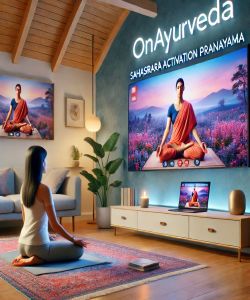
Overview of Sahasrara Activation Pranayama
Sahasrara Activation Pranayama represents the apex of yogic breathwork, a formidable and highly specialised discipline engineered for the explicit purpose of stimulating and awakening the crown chakra, known as Sahasrara. This is not a practice for the uninitiated or the merely curious; it is a rigorous methodology reserved for dedicated practitioners who have already established a profound foundation in preliminary pranayama and meditative techniques. Its central thesis posits that through the meticulous and systematic regulation of prana—the vital life force—one can direct this energy upwards through the central channel of the subtle body, Sushumna Nadi, to culminate at the cerebral apex. The practice involves a sophisticated synthesis of intense breath retention (kumbhaka), focused intention (dharana), and specific energetic locks (bandhas) to purify the nadis and overcome the psychic knots (granthis) that impede the ascent of consciousness. Its ultimate objective transcends mere physiological well-being or mental placidity; it is a direct and uncompromising assault on the limitations of ego-bound consciousness. The goal is the attainment of a state of non-dual awareness, a direct experiential union with the universal consciousness, thereby dissolving the illusion of a separate self. This is a path of spiritual alchemy, transforming the base elements of ordinary human awareness into the gold of transcendental realisation. It demands absolute discipline, unwavering focus, and the guidance of an authentic master, for its potent effects are as transformative as they are challenging. The practitioner engages in a deliberate and controlled process to unlock the final gateway to spiritual liberation, making it one of the most profound and demanding practices within the entire canon of yogic science.
What is Sahasrara Activation Pranayama?
Sahasrara Activation Pranayama is an advanced and esoteric form of yogic respiratory control designed with the singular objective of awakening the highest energy centre in the subtle body, the Sahasrara or crown chakra. This practice operates on the principle that the manipulation of breath is the most direct method for controlling and directing prana, the fundamental life force energy. By orchestrating specific patterns of inhalation, exhalation, and, most critically, breath retention, the practitioner systematically builds and channels a powerful current of energy upwards along the spinal axis. It is a precise science, not a vague meditative exercise, employing a combination of physical and mental techniques to achieve its goal.
Its core components can be elucidated as follows:
Sahasrara: This is the thousand-petalled lotus, the seventh primary chakra located at or slightly above the crown of the head. It is considered the seat of pure consciousness, the point of connection between individual awareness (Jivatman) and universal consciousness (Paramatman). Its activation is synonymous with enlightenment, Samadhi, and spiritual liberation.
Activation: This term refers to the process of stimulating this dormant energy centre until it becomes fully functional and expressive. In its latent state, Sahasrara's potential is unrealised. The activation process involves clearing energetic blockages throughout the system to allow a free and sustained flow of refined prana to this apical point.
Pranayama: This is the yogic science of breath regulation. It is far more than simple deep breathing; it is the conscious and deliberate extension and control of the breath's dimensions—its length, frequency, depth, and the pauses between cycles. In the context of Sahasrara activation, pranayama becomes a high-calibre tool for generating intense psychic heat (tapas) and directing a concentrated stream of energy with surgical precision.
Therefore, Sahasrara Activation Pranayama is the methodical application of advanced breathwork to channel purified vital energy to the crown of the head, with the intent to shatter the final barriers of conditioned consciousness and achieve a state of transcendent unity.
Who Needs Sahasrara Activation Pranayama?
Advanced yogic practitioners who have achieved complete mastery over preliminary and intermediate pranayama techniques and are seeking the culminating practice for spiritual realisation. These individuals must have already purified their nervous and energetic systems to withstand the intensity of the practice.
Individuals who have reached a plateau in their spiritual development, feeling a profound sense of existential stagnation despite consistent practice in other disciplines. They require a potent catalyst to break through to higher states of consciousness.
Those who are systematically working through the chakra system and have successfully balanced and activated the lower six chakras. The activation of Sahasrara is the logical and necessary final step in the ascent of Kundalini energy.
Spiritual seekers who are no longer concerned with worldly attainments, psychological comfort, or phenomenal powers (siddhis), but are driven by the singular, uncompromising goal of attaining enlightenment or moksha (liberation).
Practitioners who experience a persistent feeling of disconnection from a higher purpose or universal intelligence, and who seek a direct, experiential method to bridge this perceived gap rather than relying on philosophical or religious dogma.
Individuals under the direct guidance of a qualified guru who has determined they possess the requisite physical stamina, mental stability, and spiritual maturity to undertake this formidable practice safely and effectively.
Those who have cultivated a state of profound dispassion (vairagya) and non-attachment, and are therefore psychologically prepared to navigate the dissolution of the egoic self that this practice is designed to facilitate.
Practitioners of Jnana Yoga (the path of knowledge) who wish to complement their intellectual understanding of non-duality with a direct, corporeal experience of that ultimate reality, thereby transforming theoretical knowledge into lived wisdom.
Origins and Evolution of Sahasrara Activation Pranayama
The origins of Sahasrara Activation Pranayama are deeply embedded within the esoteric strata of ancient Indian spiritual traditions, specifically the Tantric and Vedic schools of thought. Its foundational principles are alluded to in seminal texts such as the Upanishads and various Yoga Sutras, which speak of the ascent of prana and the awakening of higher consciousness. However, explicit, systematised techniques were seldom committed to public scripture. This knowledge was considered exceptionally potent and potentially hazardous, and was therefore transmitted directly from guru to disciple as part of a highly guarded oral tradition. The practice was never intended for the masses but was reserved for the most dedicated and prepared ascetics and yogis committed to the path of liberation.
In its primordial form, the practice was likely less a formalised sequence and more an intuitive exploration by advanced rishis and siddhas who had already achieved profound states of self-mastery. Through deep meditation and rigorous self-discipline, they discovered the intrinsic link between breath, mind, and the flow of subtle energy. They charted the map of the nadis (energetic channels) and chakras (psychic centres) through direct perception, identifying Sahasrara as the ultimate destination for the awakened Kundalini-Shakti. These early forms were raw, immensely powerful, and inextricably linked to a lifestyle of extreme austerity and renunciation.
Over centuries, as various yogic lineages formalised their teachings, these once-intuitive practices were codified and structured. Schools of Hatha Yoga, particularly those stemming from the Nath tradition, developed specific pranayamas, bandhas (energetic locks), and mudras (seals) that could more reliably and systematically prepare the body and mind for the upward surge of energy. The evolution was one of refinement and systematisation. Techniques were categorised, preparatory stages were established, and contraindications were meticulously documented. The focus shifted from spontaneous discovery to a replicable, albeit demanding, methodology. This evolution did not dilute the practice's potency but rather created a more structured, though still intensely difficult, path for reaching the same transcendental goal, ensuring its preservation for initiates deemed worthy across generations.
Types of Sahasrara Activation Pranayama
Shakti Chalana Pranayama: This is a dynamic and forceful method focused on the vigorous awakening of the dormant Kundalini Shakti at the base of the spine. It employs powerful, rapid breathing techniques akin to Bhastrika (Bellows Breath) combined with precise muscular contractions (Ashwini Mudra and Mula Bandha). The explicit goal is to generate intense psychic heat and pressure, compelling the energy to enter the central channel (Sushumna) and begin its ascent towards Sahasrara. This type is considered highly advanced and requires supreme physical and neurological conditioning.
Murcha Pranayama (Swooning Breath): This variant focuses on inducing a state of conscious, blissful fainting or super-conscious awareness by extending the inhalation and incorporating a sustained, comfortable breath retention at the top (antara kumbhaka) with Jalandhara Bandha (throat lock). The prolonged retention, combined with intense focus on the crown, is designed to suspend ordinary thought processes and egoic identification, allowing the practitioner's awareness to merge with the consciousness seated in Sahasrara. It is a subtle yet extremely potent technique for dissolving the mind.
Kevala Kumbhaka Pranayama: This represents the ultimate, spontaneous form of Sahasrara activation. It is not a technique one actively performs but a state that arises from the perfection of other pranayamas. Kevala Kumbhaka is the cessation of breath without any effort, where inhalation and exhalation halt for extended periods. In this state of perfect pranic equilibrium, the mind becomes utterly still, and the veil to Sahasrara dissolves naturally. Achieving this state is the objective of many other preparatory pranayama types.
Nada Anusandhana Pranayama (Exploration of the Inner Sound): While often classified as a meditative practice, this method uses pranayama as its foundation. After performing calming pranayama like Nadi Shodhana, the practitioner uses Shanmukhi Mudra to block the senses and directs their attention inward, focusing on subtle inner sounds (nadas). The breath becomes exceedingly fine and slow, and the concentration on the evolving internal sound guides awareness upwards through the chakras, culminating in the silent, soundless state of Sahasrara.
Benefits of Sahasrara Activation Pranayama
Attainment of Non-Dual Consciousness: The primary and ultimate benefit is the direct, experiential realisation of Samadhi, a state of unity where the distinction between the observer, the observed, and the act of observation dissolves. This transcends intellectual understanding, offering a definitive experience of universal oneness.
Transcendence of the Ego: The practice systematically dismantles the egoic structure and its associated limitations, fears, and attachments. It leads to the cessation of the relentless internal dialogue and the false identification with the body-mind complex.
Liberation from the Cycle of Rebirth (Moksha): Within yogic philosophy, the full and sustained activation of Sahasrara is considered the key to liberation from samsara, the perpetual cycle of birth, death, and rebirth, by resolving all accumulated karmas.
Unlocking of Supreme Intuitive Knowledge: With the opening of the crown chakra, the practitioner gains access to a level of intuition and wisdom that is not derived from sensory input or logical reasoning. This is a direct knowing, a spontaneous flood of universal truth.
Profound and Abiding Inner Peace: The activation leads to a state of unshakable serenity and bliss (ananda) that is independent of external circumstances. This is not a fleeting emotional high but a fundamental shift in one's baseline state of being.
Cessation of Psychological Suffering: All forms of psychological distress, such as anxiety, depression, and existential dread, which are rooted in the illusion of a separate and vulnerable self, are permanently eradicated.
Mastery Over Prana: The practitioner achieves ultimate control over the life force energy within the body, leading to radiant health, vitality, and the potential development of higher human capacities (siddhis), though these are to be regarded as mere by-products.
Complete Integration of Consciousness: The practice unifies all disparate aspects of the self—physical, mental, emotional, and spiritual—into a single, coherent, and fully realised whole.
Core Principles and Practices of Sahasrara Activation Pranayama
Urdhva Retas (Upward Flow of Energy): The foundational principle is the reversal of the natural, downward and outward flow of prana. All techniques are engineered to redirect this vital energy, transforming its base expressions into a refined spiritual force and compelling it to ascend through the central energy channel, Sushumna Nadi, towards the crown.
Nadi Shuddhi (Channel Purification): It is an absolute prerequisite that the practitioner’s entire network of 72,000 nadis, particularly the three primary channels of Ida, Pingala, and Sushumna, be completely purified. Impurities or blockages would make the ascent of the powerful energy generated not only impossible but dangerous. This is achieved through preliminary pranayamas and kriyas.
The Application of Bandhas (Energetic Locks): The three primary interior locks are non-negotiable components. Mula Bandha (root lock) prevents the downward escape of prana. Uddiyana Bandha (abdominal lock) pushes the energy upwards from the solar plexus. Jalandhara Bandha (throat lock) prevents the pranic charge from dissipating in the head and concentrates it within the upper energy centres. Their combined application (Maha Bandha) is crucial.
Dharana (Unwavering Concentration): The practitioner’s mind must be sharpened to a single point of focus. This concentration is directed initially towards the breath itself and then transferred to the Sahasrara chakra at the crown of the head. Any lapse in concentration will dissipate the energetic charge and render the practice ineffective.
Kumbhaka (Breath Retention): The cornerstone of the practice is prolonged and controlled breath retention, both after inhalation (Antara Kumbhaka) and, in some variations, after exhalation (Bahya Kumbhaka). It is during this static phase that prana is accumulated, intensified, and directed. The duration and quality of kumbhaka determine the potency of the practice.
Vairagya (Dispassion and Non-Attachment): A core psychological principle is the cultivation of absolute detachment from the results of the practice and from all sensory experiences that may arise. Any attachment to phenomena, whether blissful or terrifying, will create new obstacles and ensnare the practitioner, halting their progress. The goal is transcendence, not experience.
Guru Kripa (Guidance of a Master): The principle of proceeding only under the direct tutelage of a competent and realised master cannot be overstated. The energies invoked are immensely powerful, and self-experimentation is a direct route to physical, psychological, and energetic derangement. The guru provides the essential guidance, transmission, and corrective measures.
Online Sahasrara Activation Pranayama
Unprecedented Accessibility to Esoteric Knowledge: The online format dismantles geographical barriers, providing dedicated practitioners with access to authentic, high-calibre instruction from masters who may be located anywhere in the world. This democratises access to a discipline that was once confined to remote ashrams or exclusive lineages.
Creation of a Controlled and Sanctified Personal Environment: Practitioners can engage with the practice within their own private, controlled space. This eliminates the distractions, social dynamics, and potential energetic interference inherent in a group physical setting, allowing for a deeper and more focused introspective journey. The individual is solely responsible for sanctifying their environment, a discipline in itself.
Enhanced Focus on Subtle Energetic Instruction: The online medium, particularly with high-quality audio, necessitates a heightened focus on the guide's verbal instructions, intonation, and pranic guidance. This cultivates a more profound level of auditory sensitivity and internal awareness, as the practitioner cannot rely on physical imitation of others in a class.
Absolute Practitioner Accountability: Without the physical presence of a teacher to make constant minor corrections, the online practitioner is forced to cultivate a higher degree of self-awareness, discipline, and honesty in their practice. They must master posture, breath, and focus through internal feedback, fostering a more robust and self-reliant practice.
Efficient and Direct Transmission of Theory: Complex philosophical and theoretical underpinnings of the practice can be delivered with exceptional clarity through dedicated online modules, presentations, and direct discourse. This ensures a strong intellectual foundation is built without the time constraints or distractions of a physical group class format.
Privacy and Anonymity for Profound Processes: The activation process can trigger profound and intensely personal psychological and emotional releases. The privacy of an online session allows the practitioner to navigate these experiences without self-consciousness or fear of judgment from others, ensuring the process remains authentic and uninhibited.
Reinforcement through Recorded Sessions: Reputable online programmes may offer access to recordings of sessions. This allows the practitioner to revisit specific instructions and guided practices, reinforcing learning and enabling them to refine their technique with a precision that a single, ephemeral offline class cannot offer.
Sahasrara Activation Pranayama Techniques
Step 1: Asana Sthiram (Establishment of a Stable Posture): Assume a firm, erect meditative posture, such as Padmasana (Lotus Pose) or Siddhasana (Accomplished Pose). The spine must be perfectly straight, from the base to the neck, to allow for the unimpeded flow of energy through the Sushumna Nadi. The body must remain absolutely motionless throughout the entire practice.
Step 2: Preliminary Nadi Shodhana (Alternate Nostril Purification): Commence with several rounds of Nadi Shodhana without breath retention. This purifies the Ida and Pingala nadis and establishes a calm, rhythmic breathing pattern, preparing the nervous system for the more intense techniques to follow. This phase must not be rushed.
Step 3: Inhalation with Ujjayi and Mula Bandha (Puraka): Engage Mula Bandha (the root lock). Commence a slow, deep, and controlled inhalation (Puraka) through both nostrils, employing Ujjayi Pranayama (the victorious breath) to create a gentle, audible sound in the back of the throat. Visualise drawing prana from the base of the spine upwards with the breath.
Step 4: Full Retention with Maha Bandha (Antara Kumbhaka): Upon completing the inhalation, add Jalandhara Bandha (the throat lock) and Uddiyana Bandha (the abdominal lock) to create Maha Bandha (the great lock). Hold the breath. The entire focus of the mind (dharana) must be directed with unwavering intensity to the Sahasrara chakra at the crown of the head. This is the critical phase where the pranic charge is concentrated.
Step 5: Conscious Exhalation (Rechaka): When the retention can no longer be held without strain, release the locks in reverse order: first Uddiyana, then Jalandhara, and finally Mula Bandha. Execute a long, slow, and completely controlled exhalation (Rechaka), again using Ujjayi breath. Maintain awareness at the crown.
Step 6: Integration and Repetition: Pause briefly after the exhalation, observing the effects in a state of stillness. This constitutes one complete cycle. Commence the next cycle, systematically increasing the duration of the breath retention (Kumbhaka) over time, as directed by a qualified guide. The practice is concluded with a period of silent meditation to integrate the generated energy.
Sahasrara Activation Pranayama for Adults
Sahasrara Activation Pranayama is a discipline exclusively suited for mature adults, demanding a level of psychological stability, emotional resilience, and intellectual discernment that is seldom present in younger individuals. The practice is not a form of physical exercise or a simple relaxation technique; it is a direct and potent tool for deconstructing the very fabric of the egoic personality. An adult practitioner brings a life of experience, which, while potentially creating more conditioned patterns to overcome, also provides the necessary context to understand the profound philosophical implications of the work. The maturity required is not merely chronological but psychological. It presupposes an individual who is no longer swayed by fleeting emotional states, who has a stable and well-ordered life, and who can approach the practice with the gravity and unwavering commitment it commands. The energies and psychic phenomena that can be unleashed are powerful and can be deeply disorienting for a mind that is not firmly anchored. An adult is better equipped to differentiate between genuine spiritual insight and psychological projection, and to navigate potential 'dark night of the soul' phenomena without succumbing to crisis. Furthermore, the discipline requires patience and a long-term perspective, virtues that are typically cultivated over years of adult life. The intent must be pure—focused on liberation rather than the acquisition of powers or novel experiences. Only an adult mind, having likely exhausted the promises of worldly satisfaction, can typically muster such a singular and uncompromising intention.
Total Duration of Online Sahasrara Activation Pranayama
The mandated total duration for a single, guided online session of Sahasrara Activation Pranayama is precisely 1 hr. This temporal constraint is not arbitrary; it is a critical parameter established to ensure maximum efficacy while safeguarding the practitioner's psycho-physiological integrity. A duration of less than 1 hr is insufficient to move beyond preliminary stages of relaxation and purification, failing to build the requisite pranic charge necessary for any meaningful impact on the higher chakras. The initial phases of postural stabilisation, Nadi Shodhana, and gradual deepening of the breath demand their allotted time and cannot be abbreviated without compromising the entire practice. Conversely, extending the formal guided practice beyond 1 hr in an online context introduces significant risks. The intensity of the techniques can lead to nervous system exhaustion, energetic over-stimulation, and potential psychological disorientation if sustained for too long without the immediate physical intervention of a master. The 1 hr framework is meticulously structured to include a preparatory phase, a core intensive practice phase where the activation techniques are performed, and a crucial concluding phase for integration and grounding. This ensures the potent energies that are aroused are properly assimilated and stabilised, allowing the practitioner to return to their ordinary state of consciousness safely and without detrimental after-effects. This duration is absolute and non-negotiable for structured online tutelage.
Things to Consider with Sahasrara Activation Pranayama
It is imperative to approach Sahasrara Activation Pranayama with the utmost gravity and a comprehensive understanding of its demanding nature. This is not a discipline to be trifled with or adopted casually from a book or an unverified source. The primary consideration must be the absolute necessity of a qualified, authentic guide. The energetic and psychological forces unleashed by this practice are formidable, and attempting to navigate them without the oversight of a master who has already traversed the path is an act of extreme folly that can lead to severe energetic imbalance or psychological derangement. Secondly, one's own readiness must be rigorously assessed. This involves not only technical proficiency in foundational asana and pranayama but also a stable and resilient psychological constitution. The practice is designed to dissolve the ego, a process that can be terrifying and disorienting. Any pre-existing psychological instabilities will be magnified, not healed. A stable lifestyle, free from major emotional turmoil and substance use, is a non-negotiable prerequisite. Furthermore, the practitioner must clarify their intention. If the motivation is the acquisition of psychic powers (siddhis), ego-inflation, or spiritual escapism, the practice will inevitably lead one astray. The only valid intention is the uncompromising pursuit of spiritual liberation for its own sake, devoid of attachment to any experiential phenomena that may arise during the process. One must be prepared for a long, arduous, and often unglamorous journey that demands total commitment.
Effectiveness of Sahasrara Activation Pranayama
The effectiveness of Sahasrara Activation Pranayama is absolute and unequivocal, contingent entirely upon the precision of its application and the preparedness of the practitioner. Its efficacy is not a matter of faith, belief, or placebo effect; it is a direct consequence of a sophisticated psycho-energetic science refined over millennia. When the constituent elements—correct posture, purified nadis, mastery of bandhas, unwavering concentration, and properly executed kumbhaka—are brought together under the guidance of a competent master, the results are as certain as any law of physics. The methodology operates on the verifiable principle that prana follows thought and is directed by breath. By systematically controlling these elements, the practitioner generates a tangible and potent upward current of energy that has a direct and measurable impact on the nervous system and the subtle anatomy. The practice is a direct assault on the neurological and energetic patterns that sustain ego-consciousness. Its effectiveness lies in its power to overload and short-circuit these habitual patterns, creating a state of neurological silence and pranic equilibrium that allows a higher state of consciousness to dawn. This is not a gentle persuasion but a forceful re-engineering of one's entire energetic being. Therefore, any perceived lack of effectiveness can be traced directly back to a flaw in the practitioner's discipline, a lack of prerequisite purification, or incorrect technical execution—never to a deficiency in the science of the practice itself. Its results are immutable when the conditions are met.
Preferred Cautions During Sahasrara Activation Pranayama
It is imperative that any individual undertaking this formidable practice adheres to a strict and uncompromising set of cautions. This is not a domain for experimentation or casual exploration. The primary caution is against any form of self-instruction; proceeding without the continuous, vigilant oversight of a realised guru is a direct invitation to disaster, potentially leading to irreversible neurological damage, chronic pranic imbalances, or severe psychological fragmentation. The practitioner must exhibit absolute honesty regarding their physical and mental health, disclosing any history of respiratory ailments, cardiovascular issues, or psychological disorders such as psychosis or severe anxiety, as these conditions are absolute contraindications. During the practice itself, the principle of non-violence (ahimsa) must be applied internally; there must be no straining or forcing of the breath. Any sensation of dizziness, sharp pain, or extreme pressure is an immediate signal to cease the technique and return to normal breathing. The temptation to push beyond one's capacity in a quest for rapid results must be ruthlessly suppressed, as this ego-driven ambition is the primary source of injury. Furthermore, one must remain vigilant against the seduction of any psychic phenomena or blissful states that may arise. Attachment to such experiences creates new and more subtle forms of bondage, derailing the ultimate objective of liberation. Post-practice, a period of quiet integration is mandatory; immediately engaging in strenuous or mentally taxing activities can dissipate the generated energy and shock the system.
Sahasrara Activation Pranayama Course Outline
Module One: Foundational Principles and Preparatory Purification
Theoretical Framework: The Science of Prana, Nadis, and Chakras.
The Anatomy and Symbolism of Sahasrara Chakra.
Ethical Precepts (Yamas and Niyamas) as a Non-Negotiable Foundation.
Intensive Shatkriya Practice: Neti, Dhauti, Nauli, and Kapalbhati for gross physical and energetic purification.
Module Two: Asana and Bandha Mastery
Cultivation of a Stable Meditative Posture (Asana Siddhi).
Spinal Alignment and Neurological Stillness Techniques.
Systematic and Isolated Mastery of the Three Primary Bandhas: Mula, Uddiyana, and Jalandhara.
Integration of the Bandhas into Maha Bandha.
Module Three: Intermediate Pranayama and Concentration
Advanced Nadi Shodhana with Extended Ratios and Kumbhaka.
Proficiency in Ujjayi, Bhastrika, and Surya Bhedana Pranayama.
Development of Unbroken Concentration (Dharana) through Trataka and Ajapa Japa.
Techniques for Withdrawing the Senses (Pratyahara).
Module Four: Core Sahasrara Activation Techniques
Introduction to Shakti Chalana and Murcha Pranayama under strict supervision.
The Synthesis of Pranayama, Bandha, and Dharana for Urdhva Retas (upward energy flow).
Guided Practice focusing on directing the pranic charge to the crown.
Navigating Energetic Phenomena and maintaining Vairagya (dispassion).
Module Five: Integration, Subtlety, and Spontaneity
Techniques for stabilising and integrating the awakened energy.
Introduction to Nada Anusandhana (meditation on inner sound).
Deepening the Practice Towards Kevala Kumbhaka (spontaneous breath cessation).
Living with an Awakened Consciousness: Practical Application in Daily Life.
Detailed Objectives with Timeline of Sahasrara Activation Pranayama
Months 1-3: Establishment of an Unshakeable Foundation.
Objective: To achieve complete physical and energetic purity, and absolute stability in a chosen meditative asana for a minimum of one hour without discomfort. To master the mechanics of all three bandhas individually.
Timeline: By the end of month three, the practitioner will demonstrate proficiency in all major Shatkriyas and maintain a perfect, motionless posture. They will be able to engage and hold each bandha with precision and control.
Months 4-6: Mastery of Pranic Regulation and Concentration.
Objective: To develop the capacity for extended breath retention (kumbhaka) within intermediate pranayamas like Nadi Shodhana, and to achieve single-pointed concentration (dharana) for sustained periods.
Timeline: By the end of month six, the practitioner will comfortably practise advanced pranayama ratios and will be able to hold their attention on a single point without significant mental wandering for the duration of the practice session.
Months 7-12: Initiation into and Stabilisation of Core Activation Techniques.
Objective: To safely learn and begin practising the specific pranayamas for Sahasrara activation, integrating breath, bandhas, and crown-focused awareness into a unified process.
Timeline: Within this period, the practitioner will be initiated into the core techniques. The primary objective is not dramatic results, but the flawless and safe execution of the methodology, and the ability to manage the initial energetic surges without fear or excitement.
Year 2 Onwards: Deepening of Practice and Integration.
Objective: To systematically increase the intensity and duration of the core practice, leading to more profound and sustained states of absorption. To cultivate the ability to integrate the heightened states of awareness into daily life.
Timeline: This is an ongoing process. Progress is measured not by phenomenal experiences but by a tangible and permanent increase in inner peace, wisdom, dispassion, and the gradual dissolution of the egoic self. The ultimate objective, the full and stable activation of Sahasrara, has no fixed timeline and is contingent upon grace, karma, and the practitioner's total surrender.
Requirements for Taking Online Sahasrara Activation Pranayama
Verifiable Prerequisite Experience: Demonstrable and substantial prior training in classical Hatha Yoga is mandatory. This includes long-term, dedicated practice in foundational asanas, and proven proficiency in preliminary pranayama techniques such as Nadi Shodhana and Ujjayi. A theoretical understanding is insufficient; embodied experience is required.
A High-Fidelity, Uninterrupted Digital Connection: The practitioner must possess a reliable, high-speed internet connection. Any lag, disconnection, or poor audio/video quality presents a significant risk, as it could interrupt a critical phase of the practice and disrupt sensitive energetic processes.
A Dedicated and Sanctified Physical Space: A private, silent, and consistently available room is non-negotiable. This space must be free from any potential interruptions from family members, pets, or electronic devices. It must be treated as a sacred space for the duration of the course.
Appropriate Audio-Visual Equipment: The practitioner must use a high-quality webcam and microphone. The instructor must be able to clearly see the practitioner’s posture and physical state, and hear their breath, to provide necessary guidance and ensure safety. The use of high-quality headphones is strongly recommended to eliminate external noise and enhance focus on the guide's voice.
Absolute Commitment to Punctuality and Discipline: The online format demands an even higher level of personal discipline. The practitioner must commit to being prepared and logged in well before the session begins, and to follow all instructions with military precision and without deviation.
Psychological and Emotional Stability: The candidate must be in a state of sound mental health. A screening process to ascertain psychological readiness is a standard requirement. Any ongoing emotional crisis, dependency, or psychological disorder is a firm contraindication.
Willingness to Remain Under Guidance: The practitioner must formally agree to follow the instructor’s guidance exclusively for the duration of the training and to not mix these potent techniques with other systems or self-experimentation.
Things to Keep in Mind Before Starting Online Sahasrara Activation Pranayama
Before commencing this advanced discipline in an online format, it is crucial to engage in a period of rigorous self-assessment and logistical preparation. One must understand with absolute clarity that this is not a wellness activity or a course in stress management. It is a formidable spiritual technology with the power to radically alter one's perception of reality. You must investigate the credentials and lineage of the online instructor with uncompromising diligence. The anonymity of the internet is rife with unqualified individuals; ensure your guide is authentic and possesses a verifiable history of mastery and safe teaching. You must be brutally honest about your own self-discipline. The online environment places the onus of creating a sacred, interruption-free space entirely upon you. If your home life is chaotic or you lack the will to enforce absolute boundaries for your practice time, you are not a suitable candidate. Consider the technological aspect as a part of the practice itself; a stable, high-quality connection is as essential as a straight spine. Finally, you must examine your own motivations. Are you seeking an escape, a new experience, or a badge of spiritual accomplishment? Any such egoic drivers will poison the practice from the outset. You must be prepared to confront your deepest psychological patterns without the physical comfort of a present teacher. The journey is internal, and online, you are in many ways profoundly alone with the process, guided only by a voice and an image on a screen.
Qualifications Required to Perform Sahasrara Activation Pranayama
The authority to guide others in Sahasrara Activation Pranayama is not conferred by any standard academic institution or weekend certification programme. It is earned through decades of relentless personal practice, direct experiential realisation, and the explicit sanction of one's own guru. An authentic instructor is not merely a teacher but a living embodiment of the state to which the practice leads. They must possess a profound and granular understanding of the subtle body, not from texts, but from direct perception. Their qualifications are not pieces of paper but tangible qualities of presence, wisdom, and energetic stability. Nevertheless, certain benchmarks must be met:
Direct Lineage Transmission (Guru Parampara): The instructor must have received the knowledge directly from a recognised and authentic lineage. This ensures the techniques have not been diluted, misinterpreted, or dangerously modified. They must be able to name their guru and lineage without hesitation.
Extended and Intensive Personal Sadhana: A minimum period of intensive, dedicated personal practice, often spanning several decades, is an absolute prerequisite. They must have navigated the full spectrum of challenges and breakthroughs inherent in the practice within their own being before they can safely guide another.
Demonstrable State of Realisation: The instructor should exhibit clear signs of profound spiritual attainment. This manifests as unshakable equanimity, deep compassion, penetrating insight, and a palpable aura of peace and authority. Their life must be a testament to the principles they teach.
Comprehensive Knowledge of Allied Sciences: A deep, scholarly, and practical knowledge of yogic philosophy (especially Vedanta and Tantra), Sanskrit, human anatomy, and psychology is essential to provide the necessary context and safeguards for the student.
The Blessing to Teach: In a traditional context, a master does not simply decide to teach. They are given a specific mandate or blessing (Adesha) by their own guru when they are deemed to have reached a sufficient level of maturity and realisation to do so responsibly.
Online Vs Offline/Onsite Sahasrara Activation Pranayama
Online
The online modality for this advanced practice offers a unique set of advantages and challenges rooted in its structure. Its primary strength lies in its capacity to transcend geographical limitations, granting access to elite-level instruction that would otherwise be inaccessible. The practitioner operates within their own meticulously controlled environment, free from the social pressures, competitive dynamics, and energetic disturbances of a group setting. This fosters a profound sense of self-responsibility and introspective focus. The reliance on verbal instruction sharpens auditory perception and internal awareness, compelling the student to cultivate a deeper connection to their own subtle feedback mechanisms rather than depending on external visual cues. However, the format's principal limitation is the absence of direct physical intervention and energetic transmission (shaktipat) from the guide. The instructor cannot make subtle physical adjustments to the practitioner's posture, nor can they directly perceive the student's pranic field to the same degree, introducing a higher element of risk that must be mitigated by the practitioner's discipline and the instructor's expertise in remote guidance.
Offline/Onsite
The traditional offline, or onsite, approach provides an immersive and contained environment under the direct, physical presence of the master. This is its definitive advantage. The guide can offer immediate, hands-on corrections to posture and bandhas, ensuring technical perfection and safety. More importantly, the direct presence of a realised teacher allows for the subtle, non-verbal transmission of energy and consciousness, which can significantly accelerate a student's progress. The collective energy of a dedicated group (sangha) can also create a powerful, supportive field that helps individuals push past their limitations. The disadvantages, however, can be significant. The practitioner may become dependent on the guru's physical presence or the group's energy, failing to cultivate a self-reliant practice. The logistics of travelling to and residing at a specific location can be prohibitive, and the presence of other students can, for some, be a source of distraction or egoic comparison, hindering the deeply internal work required.
FAQs About Online Sahasrara Activation Pranayama
Question 1. What exactly is the Sahasrara chakra?
Answer: It is the seventh and highest primary energy centre in the yogic subtle body, located at the crown of the head. It is considered the seat of pure consciousness and the gateway to spiritual liberation.
Question 2. Is this practice suitable for beginners?
Answer: Absolutely not. This is an advanced practice requiring extensive prior mastery of foundational yoga, pranayama, and meditation.
Question 3. Can this practice be dangerous?
Answer: Yes. If performed incorrectly, without proper guidance, or by an unprepared individual, it can lead to severe psychological, neurological, and energetic imbalances.
Question 4. How do I find a qualified online instructor?
Answer: Scrutinise their lineage, demand evidence of long-term personal practice, and seek testimonials from other advanced practitioners. Avoid anyone promising quick or easy results.
Question 5. What physical fitness level is required?
Answer: You must be able to hold a steady, erect meditative posture for over an hour without any physical discomfort or restlessness. Excellent respiratory health is also mandatory.
Question 6. Will I see lights or have visions?
Answer: Phenomenal experiences may or may not occur. They are irrelevant by-products. The goal is transcendence of all phenomena, not the pursuit of them.
Question 7. What technology do I need?
Answer: A reliable high-speed internet connection, a high-quality webcam, and a microphone are non-negotiable.
Question 8. How is an online session structured?
Answer: It typically includes a preparatory phase of purification and calming techniques, a core phase of the specific activation pranayama, and a concluding phase of integration and meditation.
Question 9. What if I miss an online session?
Answer: Due to the sequential and cumulative nature of the practice, missing a session is highly discouraged and may require a review session to ensure you can proceed safely.
Question 10. Can this practice inflate my ego?
Answer: If approached with the wrong intention, the power and experiences it generates can lead to a state of 'spiritual ego,' which is a significant obstacle. This is why dispassion is a core principle.
Question 11. Is this a religious practice?
Answer: It originates from a spiritual tradition but is a technology of consciousness. It can be practised by individuals of any or no religious affiliation, provided they respect its principles.
Question 12. How long does it take to see results?
Answer: This question is based on a false premise. The focus is on the precision of the practice itself, not on a timeline for 'results'. Progress is slow, methodical, and non-linear.
Question 13. Can I practise this on my own after the course?
Answer: Only after receiving explicit permission from your guide, who has deemed you competent and stable enough to proceed independently.
Question 14. What is the difference between this and simple deep breathing?
Answer: They are fundamentally different. This is a highly complex system involving specific breath ratios, retentions, energetic locks, and mental focus, designed for a specific spiritual outcome.
Question 15. Why is the posture so important?
Answer: A perfectly straight spine is required for the central energy channel (Sushumna) to be open, allowing the awakened prana to ascend without obstruction.
Question 16. What should I do if I feel overwhelmed during a session?
Answer: You must immediately signal your instructor, cease the technique, and return to gentle, normal breathing.
Conclusion About Sahasrara Activation Pranayama
In conclusion, Sahasrara Activation Pranayama stands as a definitive and uncompromising spiritual discipline. It is the pinnacle of pranic science, a methodical and formidable technology designed not for comfort, but for the total transmutation of human consciousness. Its purpose is singular and absolute: to systematically dismantle the illusion of the separate self and facilitate a direct, abiding union with the universal, non-dual reality. The practice demands nothing less than the practitioner's total commitment, unwavering discipline, and a degree of psychological resilience far beyond the norm. Its rigorous protocols, from the purification of the nadis to the mastery of the bandhas and the unwavering focus of dharana, are not arbitrary rules but essential safeguards and functional components of a potent energetic circuit. To approach this path is to declare war on one's own limitations, to consciously step into a process of profound and often tumultuous change. It is not a path for the curious, the dabbler, or the seeker of esoteric thrills. It is a severe and sacred science reserved for those who, having exhausted all other avenues, are prepared to invest their entire being in the ultimate pursuit of liberation. The final realisation it offers is the supreme prize of the human experience, but it is a prize that must be earned through relentless effort, profound surrender, and the indispensable guidance of an authentic master.