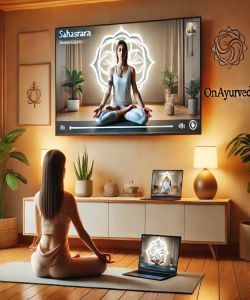
1. Overview of Sahasrara Chakra Breathing Practices
Sahasrara Chakra breathing practices represent a pinnacle of esoteric yogic discipline, designed explicitly to stimulate, purify, and activate the crown energy centre, the thousand-petaled lotus located at the apex of the skull. This is not a rudimentary wellness exercise; it is a profound and demanding system of pranayama (breath control) intricately interwoven with advanced techniques of dharana (concentration) and dhyana (meditation). The fundamental objective of these practices is to facilitate the upward flow of prana (life force energy) through the central energetic channel, the Sushumna Nadi, culminating in its arrival at the Sahasrara. This process is understood within yogic physiology to be the precursor to states of elevated consciousness, non-dual awareness, and the dissolution of the egoic self into a universal continuum. The methodologies employed are rigorous and precise, demanding absolute commitment and unwavering focus from the practitioner. They involve specific breathing ratios, retentions (kumbhaka), and visualisations that direct subtle energy with surgical precision. The practice transcends mere physical respiration, transforming the breath into a potent vehicle for psycho-spiritual transformation. It is a discipline reserved for the serious aspirant, one who has already established a firm foundation in preliminary yogic practices and possesses the requisite mental and emotional stability to navigate the powerful energetic shifts that can be instigated. The ultimate aim is not therapeutic in the conventional sense, but transformative; it seeks to unlock the highest potential of human consciousness, moving the practitioner from a state of limited identification to one of unbounded, transcendent reality. It is the methodical and deliberate process of uniting the individual consciousness (Jivatman) with the supreme consciousness (Paramatman) through the master key of controlled, intention-driven respiration directed at the highest psychic centre.
2. What are Sahasrara Chakra Breathing Practices?
Sahasrara Chakra breathing practices are a specialised and advanced subset of yogic pranayama that focus exclusively on the seventh primary energy centre, the Sahasrara or crown chakra. These are not general breathing exercises but highly specific techniques engineered to influence the subtle energetic anatomy of the human system. The core premise is that by manipulating the rhythm, depth, and retention of the breath, one can directly influence the flow of prana, guiding it upwards towards the cerebral apex, thereby stimulating this ultimate vortex of consciousness. The practice is a composite discipline, integrating several key components into a unified and potent methodology.
These components include:
- Targeted Pranayama: This involves the use of specific breathing patterns, such as Viloma (interrupted breathing) or Nadi Shodhana (alternate nostril breathing) executed with a specific mental focus on the crown. The ratios of inhalation (puraka), retention (kumbhaka), and exhalation (rechaka) are precisely calibrated to create an energetic pressure that encourages an upward trajectory of prana.
- Sophisticated Visualisation: The practitioner is required to maintain a powerful and unwavering mental image of the Sahasrara Chakra, often visualised as a luminous, thousand-petaled lotus, either inverted and showering nectar or upright and radiant. This act of dharana (concentration) acts as a magnetic focal point for the energy being manipulated by the breath.
- Energetic Locks (Bandhas): The application of Mula Bandha (root lock) and Jalandhara Bandha (throat lock) is often integral. These physiological locks prevent the dissipation of prana, containing and redirecting its accumulated force upwards through the Sushumna Nadi, the central energy channel, towards its final destination at the Sahasrara.
- Mantra and Sound Vibration: In certain variations, specific seed mantras (bija mantras) or sonic frequencies are mentally chanted in synchrony with the breath. The vibration is believed to resonate with the Sahasrara's specific energetic signature, further purifying and activating it from within.
In essence, these practices are a form of high-level internal alchemy, using the tangible tool of the breath to enact profound and deliberate changes within the non-physical, subtle body, with the explicit goal of awakening the highest spiritual centre.
3. Who Needs Sahasrara Chakra Breathing Practices?
- Individuals who have established a comprehensive and stable foundation in preliminary and intermediate yogic disciplines, including asana, basic pranayama, and introductory meditation. This practice is not for novices; it is a sequential progression for those already well-versed in managing their physical and energetic systems.
- Serious spiritual aspirants committed to the path of self-realisation and the exploration of non-ordinary states of consciousness. The explicit aim of this practice is transcendental, and it therefore demands a corresponding level of serious intent and dedication.
- Practitioners seeking to move beyond the limitations of the egoic mind and personality structure. The activation of the Sahasrara is directly associated with the dissolution of the individual self into a broader, universal awareness, making it suitable for those actively engaged in this work.
- Yogis and advanced meditators who have successfully navigated the purification and balancing of the lower six chakras and are now prepared to address the culmination of the kundalini-shakti process. Attempting to activate the crown without this preparatory work is both ineffective and ill-advised.
- Those experiencing a sense of spiritual stagnation or who have reached a plateau in their existing practice. The intensity and specific focus of Sahasrara techniques can provide the necessary impetus to break through such barriers and access deeper levels of insight.
- Individuals under the direct guidance of a qualified and experienced spiritual teacher (guru) who has deemed them ready for this advanced stage of practice. Unsupervised engagement with these potent techniques is strongly discouraged due to their powerful psychological and energetic effects.
- Practitioners of Raja Yoga or Jnana Yoga who wish to supplement their path of mental discipline or intellectual inquiry with a powerful experiential technique. This practice provides a direct, felt experience of the concepts they may be exploring philosophically.
- Those with a robust and stable psychological disposition. The practice can induce profound shifts in perception and reality, which requires a resilient and well-integrated psyche to process and assimilate in a healthy and constructive manner. Individuals with a history of psychosis or severe mental instability must abstain.
4. Origins and Evolution of Sahasrara Chakra Breathing Practices
The origins of Sahasrara Chakra breathing practices are deeply embedded within the ancient esoteric traditions of India, primarily Tantra and the subsequent codifications found in Hatha and Raja Yoga. These practices were not conceived in isolation but form the apex of a sophisticated and holistic system of human energetic anatomy. The earliest conceptual underpinnings can be traced to the Vedic literature, with its allusions to prana, the subtle body, and the pursuit of higher consciousness. However, it was within the tantric schools, which flourished from the 5th century CE onwards, that the chakra system, including the Sahasrara, was meticulously mapped and elaborated upon. Texts such as the Sat-Cakra-Nirupana and the Padaka-Pancaka provided detailed descriptions of the chakras as psychic-energy centres and laid the groundwork for practices designed to awaken them.
The evolution from concept to practice was further crystallised in the Hatha Yoga tradition. The Hatha Yoga Pradipika, one of the most seminal texts, details various pranayama techniques and bandhas (energy locks) that, while not always explicitly named for the Sahasrara, form the essential toolkit for directing prana upwards through the Sushumna Nadi. The goal of Hatha Yoga was always to create the conditions necessary for Raja Yoga (the royal path of meditation), and the culmination of this process was the union of Shakti (dynamic energy) with Shiva (pure consciousness) in the Sahasrara. The breathing practices were the very engine of this union, the means by which the dormant Kundalini-Shakti energy at the base of the spine could be awakened and guided on its journey to the crown.
In the modern era, the evolution has been one of interpretation and accessibility. Historically, these techniques were transmitted secretly from guru to a select few disciples deemed worthy and prepared. The global proliferation of yoga in the last century has brought these concepts into the public domain, though often in a simplified or decontextualised form. Contemporary masters and authentic lineages continue to teach these advanced pranayamas, but there is now a greater emphasis on preparatory stages and psychological readiness. The evolution has thus been from a guarded, esoteric secret to a more openly discussed, albeit still highly advanced, discipline, with modern instruction often integrating contemporary understandings of psychology and physiology to support the profound transformations the practice is designed to induce.
5. Types of Sahasrara Chakra Breathing Practices
The methodologies for stimulating the Sahasrara through breath are specific and potent. They are not interchangeable exercises but distinct techniques with unique focuses and energetic signatures. The primary types are as follows:
- Brahmarandhra Pranayama (Breath of the Divine Aperture): This practice focuses on the sensation of breath entering and exiting through the Brahmarandhra, a point at the fontanelle or soft spot on the crown of the head. Whilst the physical breath still occurs through the nostrils, the practitioner's entire concentration (dharana) is fixed on this psychic gateway. The technique involves a slow, subtle breath (Ujjayi) with the mental feeling that prana is being drawn directly from the cosmos into the Sahasrara on the inhale, and individual consciousness is being released into the cosmos on the exhale. It is a highly meditative and subtle practice.
- Sahasrara Bhedana Pranayama (Crown Piercing Breath): This is a more forceful technique. It involves a specific form of Bhastrika (bellows breath) or Kapalbhati (shining skull breath) performed whilst maintaining Mula Bandha (root lock) and Jalandhara Bandha (throat lock). The rapid, powerful exhalations are intended to generate intense pranic heat and pressure in the lower body, which is then directed upwards in a powerful surge towards the crown during a prolonged post-exhalation retention (bahya kumbhaka). The objective is to use pranic force to 'pierce' through any energetic blockages leading to the Sahasrara.
- Murcha Pranayama (Swooning or Fainting Breath): This advanced technique is named for its capacity to induce a state of conscious, blissful 'swooning' or temporary cessation of egoic awareness. It involves a very slow, deep inhalation through both nostrils, followed by the application of a firm Jalandhara Bandha. The breath is retained for as long as is comfortable whilst focusing intently on the Sahasrara. The retention causes a build-up of pressure in the brain, leading to a light-headed, expanded state of awareness that is directed towards the crown. The exhalation is performed extremely slowly only when the retention can no longer be held. This practice requires expert guidance.
- Shakti Chalana Pranayama (Energy Conduction Breath): This practice explicitly combines breath, bandhas, and visualisation to actively move Kundalini-Shakti. After preliminary purificatory breathing, the practitioner inhales deeply, engages Mula Bandha, and visualises a thread of golden energy rising from the base of the spine with the breath. The breath is retained, and the energy is mentally 'held' and intensified at each chakra sequentially before being guided into the Sahasrara. The exhale is a controlled release, grounding the energy back down.
6. Benefits of Sahasrara Chakra Breathing Practices
- Cultivation of Non-Dual Consciousness: The primary benefit is the progressive dissolution of the subject-object dichotomy, leading to experiential states of unity, where the sense of an isolated, individual self diminishes and is replaced by an awareness of interconnectedness with all existence.
- Induction of Profound Meditative States: These practices serve as a direct gateway to deep states of Dhyana (meditation) and Samadhi (contemplative absorption). They pacify the ceaseless activity of the mind (vrittis), creating a profound stillness and mental silence that is the bedrock of advanced meditation.
- Transcendence of Egoic Limitations: By activating the energy centre beyond the scope of personality, fear, and desire, the practice facilitates a liberation from the constraints of the ego. This leads to a more expansive, compassionate, and detached perspective on life circumstances.
- Enhancement of Neuro-Cognitive Function: The intense focus and direction of prana to the cerebral region are understood to clarify and sharpen cognitive functions. Practitioners often report heightened intuition, clarity of thought, and an enhanced capacity for insight and wisdom.
- Integration of the Complete Energetic System: The Sahasrara is the culmination point of the entire chakra system. Its activation helps to harmonise and integrate the functions of all the lower chakras, leading to a state of holistic energetic balance and psycho-spiritual coherence.
- Access to Inner Wisdom and Guidance: The Sahasrara is considered the seat of higher knowing. Regular and dedicated practice can unlock a deep wellspring of innate wisdom and intuitive guidance, providing clarity on one's purpose and path (dharma).
- Development of Supreme Dispassion (Vairagya): Through the experience of a consciousness that is complete and whole in itself, attachment to transient worldly pleasures and pains naturally lessens. This fosters a state of profound inner peace and equanimity, regardless of external conditions.
- Liberation from the Cycle of Rebirth (Moksha): Within the yogic philosophical framework, the ultimate benefit of fully and permanently awakening the Sahasrara Chakra is Moksha, or spiritual liberation. It signifies the complete and final union of the individual soul (Jivatman) with the universal consciousness (Brahman).
7. Core Principles and Practices of Sahasrara Chakra Breathing Practices
- Principle of Urdhva Retas (Upward Flow): The foundational principle is the conscious reversal and redirection of the flow of prana and consciousness. Instead of flowing outwards and downwards into sensory experience and worldly engagement, energy is deliberately channelled inwards and upwards through the central axis of the body.
- Prana-Apana Samyukta (Union of Pranic Currents): The practice aims to unite the two primary pranic currents: prana vayu (the upward-moving energy governing inhalation) and apana vayu (the downward-moving energy governing elimination and exhalation). Their union at the base of the spine is the trigger that awakens the dormant Kundalini-Shakti.
- Sushumna Nadi Jagrati (Awakening the Central Channel): The primary pathway for this upward journey is the Sushumna Nadi, the central energetic channel that runs through the spinal cord. A core practice involves purifying the Ida and Pingala nadis (the lunar and solar channels) through techniques like Nadi Shodhana, thereby creating the conditions for prana to enter and ascend through Sushumna.
- Dharana (Unwavering Concentration): The mind must be disciplined to hold a single, unwavering point of focus. In this context, the focus is the Sahasrara Chakra itself, often visualised as a radiant, thousand-petaled lotus at the crown. This mental focus acts as a magnet, drawing the ascending prana to its intended destination.
- Bandha Traya (The Three Energetic Locks): The application of Mula Bandha (root lock), Uddiyana Bandha (abdominal lock), and Jalandhara Bandha (throat lock) is a critical practice. These locks prevent the leakage of prana, build energetic pressure, and systematically guide the accumulated force upwards, level by level, through the Sushumna.
- Kumbhaka (Breath Retention): The deliberate and prolonged retention of breath is the engine of the practice. It is during the state of kumbhaka (either after inhalation or exhalation) that prana is absorbed, consolidated, and directed. The duration and quality of the retention are paramount to the practice's efficacy.
- Mantra Japa (Mental Repetition of Sound): The use of a specific Bija (seed) mantra, such as 'OM', or other potent sounds, is often integrated. The mantra is repeated mentally in synchrony with the breath and focus, its subtle vibrations working to purify and resonate with the frequency of the Sahasrara Chakra, accelerating its activation.
- Vairagya (Dispassion and Detachment): A core psychological principle is the cultivation of detachment from the results of the practice and from sensory distractions. The practitioner must engage with intensity and precision but remain unattached to any specific experience, whether blissful or challenging, maintaining a state of witnessing awareness.
8. Online Sahasrara Chakra Breathing Practices
- Geographical Independence and Unrestricted Access: The online modality removes all geographical barriers, granting practitioners access to highly specialised and authentic instruction that might otherwise be entirely unavailable. An individual can engage with a master teacher from anywhere in the world, provided they have a stable digital connection. This democratises access to an otherwise exclusive and localised discipline.
- Creation of a Controlled and Personalised Sacred Space: Practitioners have absolute control over their environment. They can ensure complete silence, optimal lighting, and freedom from the potential distractions of a group setting. This ability to curate a personal sanctuary is highly conducive to the deep inward focus required for such advanced practices.
- Enhanced Consistency and Discipline: The structure of an online course demands a high degree of self-discipline and personal accountability. This fosters a robust and consistent practice schedule, which is paramount for achieving tangible results with pranayama. The need to show up and engage fully, without the physical presence of a group, strengthens inner resolve.
- Facility for Repetition and Reinforcement: Online sessions can be recorded and reviewed. This allows the practitioner to revisit specific instructions, refine their understanding of a technique, or repeat a guided practice multiple times. This capacity for reinforcement is a significant advantage over a one-off, in-person session, enabling deeper integration of the teachings.
- Focused Auditory Guidance: In an online setting, the instructor's voice is often delivered directly via headphones. This creates an immersive and highly focused auditory experience, minimising external sonic distractions and allowing the verbal guidance to penetrate the practitioner's awareness more profoundly, which is critical for subtle visualisation and breath control.
- Anonymity and Reduced Self-Consciousness: For some, the relative anonymity of an online format can be liberating. It removes the element of social comparison or self-consciousness that can arise in a physical group class, allowing the practitioner to focus entirely on their internal experience without concern for external appearances or perceived performance.
- Direct but Non-Invasive Observation: Through a high-quality video link, a skilled instructor can observe the practitioner's posture, breathing rhythm, and general state without being physically intrusive. This allows for precise, tailored feedback and correction while respecting the practitioner's personal space, which is vital during intense energetic work.
9. Sahasrara Chakra Breathing Practices Techniques
This is a structured technique designed for practitioners with an established pranayama foundation. It must be performed with precision and unwavering focus.
- Step 1: Preparation (Asana and Sankalpa): Assume a stable, upright meditative posture, such as Padmasana (Lotus Pose) or Siddhasana (Accomplished Pose), ensuring the spine is perfectly erect. Close the eyes and allow the body to become completely still. Formulate a clear and concise intention (Sankalpa) to direct your prana and consciousness to the Sahasrara Chakra for the purpose of spiritual awakening. Maintain this intention throughout the practice.
- Step 2: Initial Purification (Nadi Shodhana): Perform at least twelve rounds of Nadi Shodhana (Alternate Nostril Breathing) without breath retention. The breath should be slow, deep, and silent. The objective is to balance the flow of prana in the Ida and Pingala nadis, creating the prerequisite state of energetic equilibrium necessary for prana to enter the central Sushumna channel. Conclude by breathing naturally through both nostrils.
- Step 3: Crown-Focused Ujjayi Inhalation: Begin to practise Ujjayi Pranayama (Victorious Breath), creating a soft, audible sound in the back of the throat. Inhale slowly and deeply, and as you do so, visualise a stream of brilliant white or golden light being drawn up from the base of your spine, ascending through the central axis of your body with the breath. The focus of this ascending light must be its final destination at the crown of the head.
- Step 4: The Ascent with Internal Kumbhaka (Antara Kumbhaka): At the peak of the inhalation, retain the breath. Simultaneously, engage Mula Bandha (Root Lock) by contracting the perineum, and then Jalandhara Bandha (Throat Lock) by dropping the chin to the chest. During this retention, your entire awareness must be fiercely concentrated on the Sahasrara Chakra. Visualise it as a thousand-petaled lotus, radiant and vibrant, being energised by the retained prana. Hold the retention only for as long as it remains comfortable.
- Step 5: Controlled Exhalation and Release: Before exhaling, release Jalandhara Bandha first, then Mula Bandha. Exhale with extreme slowness and control, maintaining the Ujjayi sound. As you exhale, visualise the light at the crown gently diffusing, showering down as a blissful nectar, permeating your entire being with peace and stillness. Maintain a passive awareness of the crown area.
- Step 6: Integration and Repetition: Pause for a few moments in stillness after the exhalation, observing the subtle energetic sensations at the crown. This completes one cycle. Begin the next cycle with the Ujjayi inhalation. Perform a designated number of rounds, ensuring the quality of focus does not degrade. Conclude the final round by sitting in silent meditation for a sustained period, absorbing the effects of the practice.
10. Sahasrara Chakra Breathing Practices for Adults
Sahasrara Chakra breathing practices are, by their very nature, an advanced discipline exclusively appropriate for mature adults. This stipulation is not arbitrary; it is rooted in a profound understanding of human psycho-spiritual development. The practice is designed to systematically deconstruct the conventional ego structure and induce states of consciousness that transcend ordinary reality. Such a process requires a stable, well-formed psychological foundation, which is typically absent in adolescence and early adulthood. A mature individual has navigated sufficient life experience to develop a degree of emotional regulation, self-awareness, and resilience. They possess a more consolidated sense of self, which, paradoxically, is the necessary platform from which to safely explore its dissolution. Attempting these potent techniques without this psychic ballast can lead to disorientation, psychological fragmentation, or spiritual bypassing, where profound experiences are misinterpreted or used to avoid unresolved emotional issues. Furthermore, the energetic shifts catalysed by Sahasrara pranayama can be intense, impacting the nervous and endocrine systems. An adult physiology is better equipped to handle and integrate these powerful fluctuations. The practice demands immense patience, discipline, and a capacity for subtle introspection—qualities that are cultivated over time. It is not a quest for fleeting experiences or a spiritual thrill but a sober and committed undertaking. It presupposes that the individual has already engaged with the more worldly and relational challenges associated with the lower chakras and is now genuinely prepared to address the ultimate questions of existence. Therefore, this is not a matter of ageism but of prerequisite developmental readiness. The crown chakra represents the culmination of a life's journey of integration, and its deliberate activation is the work of a conscious, responsible, and mature adult mind.
11. Total Duration of Online Sahasrara Chakra Breathing Practices
The total duration for a standard, structured online session of Sahasrara Chakra breathing practices is rigorously fixed at precisely 1 hr. This specific timeframe is not arbitrary but is methodically designed to maximise efficacy whilst ensuring the practitioner's safety and capacity for integration. The session is meticulously partitioned to allow for a full and complete arc of practice, commencing with essential preparatory stages and culminating in a period of silent absorption. A duration shorter than 1 hr would necessitate the truncation of either the vital purification and centering techniques at the outset, or the crucial integration phase at the conclusion, both of which would severely compromise the practice's integrity and potential benefits. Conversely, extending the formal guided practice beyond 1 hr for most individuals in an unsupervised online setting would risk energetic and psychological exhaustion, potentially leading to diminishing returns or adverse effects. The 1 hr container provides the optimal balance, affording sufficient time for a deep and focused engagement with the core techniques without overwhelming the nervous system. It allows for a gradual entry into the practice, a sustained period of intense focus on the primary pranayama, and a gentle, structured return to ordinary awareness, ensuring the profound energetic work is properly grounded before the session concludes. This precise duration enforces a discipline and focus that is paramount to this advanced work, making every moment of the session purposeful and potent.
12. Things to Consider with Sahasrara Chakra Breathing Practices
Before embarking upon the formidable discipline of Sahasrara Chakra breathing practices, a number of critical factors must be rigorously considered. This is not a casual endeavour to be undertaken lightly; it is a potent form of internal alchemy that demands respect, preparation, and a profound degree of self-awareness. Foremost is the necessity of a stable and robust psychological foundation. These techniques are designed to alter consciousness and can unearth latent psychological material; they must not be attempted by individuals with a history of psychosis, severe anxiety, or other significant mental health instabilities. Furthermore, one must possess a solid grounding in foundational yogic practices. A comprehensive familiarity with asana for postural stability, basic pranayama for breath regulation, and introductory meditation for mental discipline is an non-negotiable prerequisite. Attempting to activate the crown chakra without first purifying and balancing the lower energetic centres is a flawed and potentially disruptive strategy. The practitioner must also evaluate their motivation. If the goal is mere escapism, the pursuit of psychic phenomena, or egoic aggrandisement, the practice will be corrupted from the outset. The only valid intention is a sincere and humble aspiration for spiritual insight and self-realisation. Finally, the importance of qualified guidance cannot be overstated. Engaging with these powerful methods without the oversight of an experienced teacher who can provide context, offer correction, and support the integration of experiences is an act of profound imprudence. One must be prepared for a disciplined, patient, and often unspectacular process, understanding that true progress is subtle and cumulative, not a series of dramatic events.
13. Effectiveness of Sahasrara Chakra Breathing Practices
The effectiveness of Sahasrara Chakra breathing practices is absolute, provided they are executed with unwavering precision, sustained commitment, and within the correct context. Their efficacy is not a matter of belief but of direct, verifiable experience for the dedicated practitioner. However, this effectiveness must be understood in its proper terms: it is not a panacea for worldly ailments or a quick fix for psychological distress. Its purpose is highly specific—to facilitate the evolution of consciousness towards states of non-dual awareness and spiritual union. When approached correctly, the practice systematically purifies the energetic pathways, pacifies the incessant fluctuations of the mind, and redirects the life force towards the highest psychic centre. This process yields demonstrable results, including profound states of mental stillness, heightened intuition, and a palpable sense of peace and interconnectedness that transcends ordinary emotional states. The key to this effectiveness lies in its methodical nature. It is a science of the interior, where the breath acts as a surgical instrument to influence the subtle body. The combination of controlled respiration, energetic locks, and focused visualisation creates a powerful synergistic effect that invariably leads to the intended energetic and conscious shifts. The results are not always dramatic or instantaneous; more often, the effects are cumulative, building gradually over a period of consistent and disciplined application. Therefore, the question is not whether the practice is effective, but whether the practitioner possesses the requisite discipline, patience, and purity of intention to unlock its profound and transformative potential. For those who do, its power to catalyse spiritual awakening is undeniable.
14. Preferred Cautions During Sahasrara Chakra Breathing Practices
It is imperative that any individual engaging in Sahasrara Chakra breathing practices adheres to a strict set of cautions, as the potency of these techniques demands a corresponding level of prudence and respect. This is not a domain for casual experimentation or spiritual tourism. Foremost, this practice must be avoided absolutely by anyone with a personal or familial history of psychosis, schizophrenia, bipolar disorder, or severe dissociative disorders. The deliberate induction of altered states of consciousness can act as a powerful trigger for latent psychopathologies, with potentially calamitous consequences. Furthermore, individuals experiencing acute emotional turmoil, deep depression, or unmanaged anxiety must abstain until a state of psychological equilibrium has been firmly re-established. The practice is intended to transcend a stable ego, not to shatter a fragile one. On a physiological level, those with uncontrolled high blood pressure, serious cardiovascular conditions, epilepsy, or recent surgery must not undertake these exercises, particularly those involving forceful breathing or prolonged breath retention. The cardinal rule is to never force the breath or the retention (kumbhaka). The moment strain or discomfort arises, the practitioner must immediately release the technique and return to normal, gentle respiration. The adage 'less is more' is critically important here; progress is born of consistency and subtlety, not aggression. Finally, engaging in this practice without the direct, real-time guidance of a deeply experienced and qualified instructor is an act of extreme negligence. These cautions are not suggestions; they are commands, essential for ensuring that this profound path of spiritual ascent remains one of liberation and not a descent into chaos.
15. Sahasrara Chakra Breathing Practices Course Outline
- I: Foundational Principles and Energetic Anatomy
- Session 1: The Yogic Conception of Consciousness and Prana.
- Session 2: Detailed Anatomy of the Chakra System, with a Specific Focus on the Sahasrara and the Sushumna Nadi.
- Session 3: The Indispensable Role of Vairagya (Dispassion) and Abhyasa (Consistent Practice).
- Session 4: Safety Protocols, Contraindications, and the Establishment of a Sacred Practice Space.
- II: Preparatory Techniques and Purification
- Session 1: Mastery of Stable Meditative Posture (Siddhasana/Padmasana) and Spinal Alignment.
- Session 2: Advanced Nadi Shodhana (Alternate Nostril Breathing) for Balancing Ida and Pingala.
- Session 3: Introduction to and Perfection of Ujjayi Pranayama (The Victorious Breath).
- Session 4: The Theory and Initial, Gentle Practice of Mula Bandha (The Root Lock).
- III: Core Sahasrara Breathing Protocol
- Session 1: Introduction to Brahmarandhra Dhyana (Meditation on the Crown Aperture).
- Session 2: The Technique of Crown-Focused Inhalation with Antara Kumbhaka (Internal Retention).
- Session 3: Integration of Mula Bandha and Jalandhara Bandha (Throat Lock) with the Core Breath.
- Session 4: A Complete Guided Practice Integrating all Components into a Seamless Flow.
- IV: Advanced Refinements and Integration
- Session 1: Introduction to Murcha Pranayama (The Swooning Breath) – Theory and Cautious Application.
- Session 2: The Role of Bija Mantra (Seed Sound) and its Synchronisation with the Breath.
- Session 3: Techniques for Managing Intense Energetic Experiences and Psychic Phenomena.
- Session 4: Deep Integration, Grounding Practices, and Establishing a Sustainable Personal Sadhana.
16. Detailed Objectives with Timeline of Sahasrara Chakra Breathing Practices
Phase One: Foundation and Purification (Initial Period)
- Objective 1: By the end of the first week, the practitioner shall demonstrate the ability to maintain a perfectly stable and erect meditative posture for a sustained duration without physical discomfort or agitation.
- Objective 2: The practitioner shall achieve proficiency in Nadi Shodhana Pranayama, executing it with a silent, smooth, and controlled rhythm, thereby establishing a tangible sense of balance between the left and right energetic channels.
- Objective 3: The practitioner will have internalised all safety protocols and contraindications and established a consistent, dedicated time and space for their daily practice.
Phase Two: Introduction to Core Techniques (Intermediate Period)
- Objective 4: The practitioner shall master the Ujjayi breath, being able to sustain it throughout the practice duration with consistent tone and without strain.
- Objective 5: The practitioner will achieve consistent and correct engagement of Mula Bandha, isolating the perineal contraction without engaging surrounding musculature.
- Objective 6: The practitioner shall be able to perform the basic Crown-Focused Ujjayi Inhalation, synchronising the visualisation of ascending energy with the physical breath with unwavering concentration.
Phase Three: Deepening and Retention (Advanced Period)
- Objective 7: The practitioner will demonstrate the ability to incorporate Antara Kumbhaka (internal breath retention) into the practice safely and without physical or mental strain, gradually extending its duration.
- Objective 8: The practitioner shall achieve the simultaneous application of Mula Bandha and Jalandhara Bandha during the retention phase, effectively locking and directing prana.
- Objective 9: A palpable and consistent sensation of energy, warmth, or pressure at the Sahasrara Chakra during and after the practice will be established.
Phase Four: Integration and Autonomy (Culmination)
- Objective 10: The practitioner will be able to seamlessly integrate all components of the practice—posture, breath, bandhas, and visualisation—into a single, fluid meditative process.
- Objective 11: The practitioner will have cultivated a state of witnessing awareness, able to observe any arising sensations or mental states with equanimity and detachment.
- Objective 12: By the course's conclusion, the practitioner shall possess the knowledge and experiential understanding to continue a safe, effective, and autonomous Sahasrara breathing practice as part of their ongoing spiritual discipline (sadhana).
17. Requirements for Taking Online Sahasrara Chakra Breathing Practices
- A Stable, Uninterrupted, High-Speed Internet Connection: The integrity of the instruction and the safety of the practitioner demand a flawless digital link. Any latency, freezing, or disconnection is unacceptable as it can disrupt a critical phase of the practice.
- A High-Quality Audio-Visual Interface: The practitioner must possess and utilise a high-definition webcam and a clear microphone or headset. This is non-negotiable, as it allows the instructor to accurately observe the subtleties of posture, breath, and physical response, and enables clear, immediate communication.
- A Dedicated and Absolutely Private Practice Space: The practitioner must commit to using a space that is guaranteed to be silent and free from any and all interruptions from other people, pets, or notifications for the entire duration of the session. This is a sacred undertaking that requires a sanctified environment.
- Prerequisite Yogic Competency: Verifiable prior experience and proficiency in foundational asana (for stable seating), basic pranayama (e.g., Ujjayi, Nadi Shodhana), and silent meditation practices are mandatory. This is not an introductory course.
- A Mature and Stable Psychological Disposition: The practitioner must attest to being in a state of sound mental health, free from conditions such as psychosis, severe anxiety, or unmanaged depression. A capacity for emotional self-regulation is essential.
- Absolute Commitment to the Schedule: Punctuality and full attendance are required. The progressive nature of the course means that missing a session compromises the entire learning sequence.
- Appropriate Attire and Equipment: The practitioner must wear comfortable, non-restrictive clothing that allows for free movement and clear observation of the body's posture and breathing mechanics. A suitable meditation cushion or bench to ensure spinal alignment is also required.
- An Attitude of Humility and Receptivity: The practitioner must be willing to set aside pre-existing notions and receive the instruction with an open, disciplined, and non-argumentative mind. The ego must be checked at the door.
18. Things to Keep in Mind Before Starting Online Sahasrara Chakra Breathing Practices
Before commencing an online course in Sahasrara Chakra breathing practices, it is crucial to internalise a number of realities specific to the remote learning environment. The absence of a physically present instructor places a far greater onus of responsibility and self-discipline upon the practitioner. You are solely responsible for creating and defending your sacred space; this requires a level of domestic negotiation and personal resolve that must not be underestimated. Your commitment cannot waver when the doorbell rings or a telephone vibrates. You must cultivate an unwavering internal locus of control. Furthermore, understand that whilst a camera provides a visual link, it cannot transmit the subtle energetic presence of a master teacher or the collective resonance of a group. You must be prepared to generate your own spiritual momentum and trust in the potency of the techniques themselves, guided by clear verbal instruction. This requires a shift from passive reception to active engagement. You must also be brutally honest with yourself and the instructor regarding your physical and psychological state. In an online setting, subtle signs of distress may be less apparent, so transparent communication becomes a critical safety measure. Prepare yourself mentally to follow instructions with absolute precision, without deviation or personal improvisation. The techniques are designed as a complete system, and online guidance relies on your faithful execution of what is taught. Finally, accept that this format, while convenient, demands a higher degree of personal integrity. The commitment to show up, not just physically in front of a screen, but with your full, undivided attention, is the primary determinant of your success.
19. Qualifications Required to Perform Sahasrara Chakra Breathing Practices
The authority to guide others in the potent and advanced discipline of Sahasrara Chakra breathing practices is not conferred by a weekend certificate or a superficial interest in spirituality. It must be earned through years of dedicated personal practice, deep theoretical understanding, and direct lineage transmission. An individual qualified to perform, and more importantly, to teach these techniques must possess a specific and rigorous set of credentials, both tangible and intangible. The foundational requirement is a profound and sustained personal practice (sadhana) spanning many years, if not decades. The instructor must have navigated the territory themselves, having experienced the energetic shifts, psychological challenges, and transcendent states that the practice can induce. This embodied wisdom is non-negotiable and cannot be substituted with mere book knowledge.
Furthermore, the following qualifications are indispensable:
- Advanced Certification from a Recognised Yogic Lineage: The instructor must have trained extensively under a master or within a traditional school (parampara) that has a proven history of teaching advanced pranayama and meditative arts. This ensures they are not improvising but are transmitting a time-tested and safe methodology.
- Expert Knowledge of Yogic Anatomy and Physiology: This includes a sophisticated understanding of the nadis, chakras, prana vayus, and the physiological effects of pranayama and bandhas on the nervous and endocrine systems. They must be able to explain the 'why' behind every technique.
- Psychological Maturity and Insight: The guide must possess a high degree of psychological stability and insight, able to recognise potential contraindications in students and skilfully handle the powerful emotional and psychological material that can surface during practice.
- Verifiable Teaching Experience: They must have a demonstrable track record of successfully and safely guiding students through preliminary and intermediate stages of yoga before even attempting to teach these crown-focused practices.
Ultimately, a true guide for this work is less a 'performer' and more a 'steward' of a sacred technology, embodying the stillness, clarity, and humility that the practice itself is designed to cultivate.
20. Online Vs Offline/Onsite Sahasrara Chakra Breathing Practices
Online The online modality for Sahasrara Chakra breathing practices offers a distinct set of advantages rooted in accessibility and personal control. Its primary strength is the dissolution of geographical constraints, providing access to elite, specialised instruction that would otherwise be unattainable for the vast majority of practitioners. This format demands and cultivates a high degree of self-discipline and personal responsibility, as the individual is solely in charge of creating and maintaining their practice environment. This leads to the benefit of a perfectly controlled space—a personal sanctuary free from the social dynamics, comparisons, and potential distractions of a group setting. The practitioner can ensure absolute silence and privacy, which is highly conducive to the deep, inward journey required. Furthermore, online sessions offer the possibility of recording and review, allowing for methodical reinforcement of complex instructions and techniques. The auditory experience can be more direct and immersive via headphones, focusing the mind on the guide's voice with unparalleled clarity. However, it lacks the direct energetic transmission (shaktipat) that can occur in a teacher's physical presence and places a greater burden on the practitioner to self-motivate and honestly self-assess their state.
Offline/Onsite The traditional, offline or onsite approach to learning these practices provides an entirely different, yet equally valid, set of benefits. The most significant of these is the physical presence of the instructor. A master teacher's subtle energetic field can have a profound, stabilising, and uplifting effect on the practitioner's own energy body, a phenomenon that cannot be replicated digitally. Immediate, hands-on correction of posture and physical technique is possible, ensuring a level of precision that can be challenging to achieve remotely. The group dynamic, or 'satsang,' creates a powerful collective energy field that can support and deepen individual practice, carrying participants into states they might struggle to reach alone. The commitment is also more tangible; being physically present in a dedicated space (ashram or shala) removes the practitioner from their daily life and its associated distractions, allowing for total immersion in the process. The primary limitations are geographical availability, cost, and scheduling constraints. The presence of others can also be a source of distraction or self-consciousness for some, detracting from the internal focus that is paramount. Each modality demands a different type of commitment and offers a unique pathway to the same ultimate goal.
21. FAQs About Online Sahasrara Chakra Breathing Practices
Question 1. Is this practice a form of religion? Answer: No. Whilst its origins are in Indian spiritual traditions, the practice itself is a technology of consciousness. It is a system of psycho-physiological techniques that can be undertaken by individuals of any or no religious persuasion.
Question 2. How is this different from simple deep breathing? Answer: The difference is absolute. Simple deep breathing is a general relaxation tool. This is a precise, advanced system involving specific ratios, energetic locks (bandhas), and focused visualisations designed to manipulate subtle energy (prana) for a specific spiritual outcome.
Question 3. Are there any physical movements involved? Answer: The core practice is performed in a stationary, seated meditative posture. The only physical 'movements' are the subtle internal contractions of the bandhas and the controlled action of the respiratory muscles.
Question 4. Is it safe to practise alone after the course? Answer: Upon successful completion of a comprehensive course under a qualified instructor, a practitioner will have the necessary tools to continue a safe, autonomous practice. However, periodic consultation is always advised.
Question 5. What sensations should I expect to feel? Answer: Sensations vary. Common reports include warmth, tingling, or a feeling of pressure at the crown of the head. Others may experience profound stillness, bliss, or see internal light. A state of detached observation is key.
Question 6. What if I feel nothing? Answer: This is not uncommon, especially initially. The effects are cumulative. A lack of dramatic sensation does not signify a lack of progress. Consistency and precision are more important than chasing experiences.
Question 7. Can this practice cause headaches? Answer: If performed incorrectly, with excessive force or strain, it can lead to headaches or dizziness. This is a signal to stop immediately and return to gentler, normal breathing. Never force the practice.
Question 8. What is the role of mantra in this practice? Answer: In some variations, a specific seed (bija) mantra is used. Its subtle vibration is believed to resonate with the Sahasrara's frequency, helping to purify and awaken it.
Question 9. Do I need to be a vegetarian? Answer: Whilst not a strict prerequisite for an online course, a light, sattvic diet is highly recommended as it supports the subtlety and clarity required for the practice.
Question 10. Can I do this practice lying down? Answer: No. An erect spine is absolutely essential for the proper upward flow of prana through the Sushumna Nadi. Practising lying down will render it ineffective and may lead to sleep.
Question 11. How quickly will I see results? Answer: This is not a relevant metric. The focus must be on the process, not the results. Progress is subtle and depends entirely on the individual's diligence, constitution, and past preparations.
Question 12. Is this practice related to Kundalini Yoga? Answer: Yes. This practice is a key component of the Kundalini Yoga system, as it pertains to the final destination of the awakened Kundalini energy.
Question 13. Can this practice make me feel 'spaced out'? Answer: It can induce altered states. This is why grounding practices and a stable psychological disposition are critical. If you feel ungrounded, the practice must be moderated or paused.
Question 14. What is 'Brahmarandhra'? Answer: It is the 'Cave of Brahman' or the Divine Aperture, a psychic centre at the crown of the head, often associated with the fontanelle, considered the gateway to higher consciousness.
Question 15. Do I need previous meditation experience? Answer: Yes. A solid foundation in concentration (dharana) and meditation (dhyana) is a non-negotiable prerequisite to manage the mind during this potent practice.
Question 16. Can women practise during menstruation? Answer: It is generally advised to avoid forceful pranayama techniques and the application of bandhas during the menstrual cycle. A gentler, more meditative approach should be adopted.
22. Conclusion About Sahasrara Chakra Breathing Practices
In conclusion, Sahasrara Chakra breathing practices constitute a paramount and formidable discipline within the vast corpus of yogic science. They are not to be mistaken for palliative wellness exercises or casual meditative diversions. This is a rigorous, demanding, and highly specialised system engineered for a single, ultimate purpose: the deliberate cultivation of transcendent states of consciousness and the final integration of the individual self with the universal whole. The methodology is precise, requiring the seamless unification of controlled breath (pranayama), unwavering mental focus (dharana), and sophisticated energetic locks (bandhas). Its successful execution demands more than mere technical proficiency; it requires a bedrock of psychological maturity, emotional stability, and an unshakeable commitment to the path of spiritual inquiry. The practice is, therefore, the preserve of the serious and dedicated aspirant, one who has diligently prepared the physical, mental, and energetic groundwork through foundational yogic training. To approach this work with arrogance, impatience, or a lack of qualified guidance is to court futility and potential disruption. When undertaken with the requisite respect, humility, and discipline, these breathing practices serve as a master key, capable of unlocking the highest potential of human awareness and revealing the profound, silent reality that resides at the crown of our being. It is the final ascent, the culmination of the yogic journey from division to unity, and must be regarded with the profound reverence it commands.