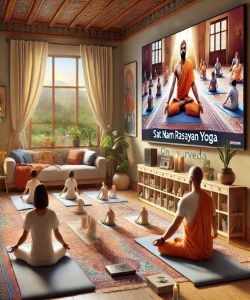
Overview of Sat Nam Rasayan Yoga
Sat Nam Rasayan represents a formidable and ancient healing modality, meticulously preserved within the lineage of Kundalini Yoga. It operates on the fundamental principle that healing is facilitated not through active intervention, but through the attainment of a specific state of consciousness known as Shuniya, or the 'zero point'. Within this profound state of meditative neutrality, the practitioner’s awareness becomes a finely calibrated instrument, capable of perceiving and resolving energetic imbalances, or 'resistances', within the recipient's system. This is not an energy transmission technique; it is a discipline of profound stillness and heightened sensory perception. The practitioner learns to stabilise their mind in a state of 'sacred space', an inner sanctuary of complete non-judgement and non-reaction. From this vantage point, they can hold the client within their contemplative awareness, allowing the inherent healing intelligence of the client’s own body and mind to self-correct. The process is subtle yet exceptionally powerful, addressing the root causes of physical, mental, and emotional afflictions by dissolving the underlying energetic tensions that sustain them. It demands rigorous training, unwavering discipline, and the cultivation of an unshakeable inner silence. The art lies in the practitioner's capacity to simply be with the sensation of resistance until it surrenders to the vastness of the neutral space. This discipline, therefore, is as much a path of self-mastery for the practitioner as it is a potent healing tool for others, demanding a complete surrender of the ego and a profound trust in the silent, universal intelligence that orchestrates all of existence. It is a direct and uncompromising path to experiencing the nature of consciousness and its inherent capacity to restore equilibrium, making it one of the most sophisticated and demanding contemplative arts.
What is Sat Nam Rasayan Yoga?
Sat Nam Rasayan is a sophisticated and highly refined healing art derived from the traditions of Kundalini Yoga. The name itself translates from Sanskrit to 'deep relaxation in the True Identity', which directly indicates its core mechanism. It is fundamentally a practice of meditative healing, where the primary tool is the consciousness of the practitioner, stabilised in a state of profound neutrality and stillness. This state, known as Shuniya (the zero point), is a space of pure awareness, devoid of judgement, preference, or the impulse to act. It is from this silent, expansive inner state that the practitioner perceives and interacts with the recipient’s energetic field. Unlike modalities that involve the transmission of energy, Sat Nam Rasayan operates on the principle of resonance and release. The practitioner enters the 'sacred space' of their meditative mind and simply becomes aware of the recipient. In doing so, they perceive any sensations, tensions, or resistances within the recipient's system as if they were occurring within their own. The discipline lies in maintaining absolute neutrality towards these sensations. By holding the resistance in this stable, non-reactive awareness, the practitioner allows the blockage to resolve itself. The healing is not 'done' by the practitioner; rather, the practitioner provides the precise conscious environment in which the recipient’s inherent self-correcting wisdom can function optimally.
This modality can be understood through two key components:
The State of Shuniya: This is the foundational element. It is a cultivated state of deep inner silence and receptivity, where the practitioner's mind is completely still and transparent. Achieving and maintaining this state is the primary focus of the training.
The Process of Dissolution: This refers to the active application of the Shuniya state. The practitioner learns to identify a 'resistance'—be it physical pain, an emotional blockage, or a mental pattern—and to hold it within their neutral awareness. The unwavering stability of the practitioner's consciousness acts as a catalyst, allowing the entangled energy of the resistance to unravel and return to a state of harmonious flow.
Who Needs Sat Nam Rasayan Yoga?
Individuals Experiencing Chronic Stress and Burnout: Those subjected to relentless professional or personal pressure, who find conventional relaxation methods insufficient to penetrate their deep-seated tension. This modality directly addresses the physiological and energetic roots of stress, promoting a systemic recalibration that is otherwise difficult to achieve.
Healthcare Professionals and Therapists: Practitioners in caring professions who are susceptible to compassion fatigue and energetic depletion. Sat Nam Rasayan provides them with a formidable tool for self-regulation, boundary maintenance, and the ability to work with clients from a place of unshakeable neutrality, thereby enhancing their professional efficacy and personal resilience.
Those with Persistent Physical Ailments: Individuals suffering from chronic conditions, pain, or functional disorders that have not responded adequately to conventional treatments. Sat Nam Rasayan works on the subtle energetic blueprint that underlies physical form, often resolving imbalances that are the precursors to manifest illness.
Individuals Navigating Emotional and Psychological Turmoil: Persons grappling with anxiety, depression, grief, or trauma. The practice facilitates the release of deeply held emotional blockages without the need for extensive verbal processing, offering a direct pathway to emotional equilibrium and inner peace.
Meditators and Spiritual Seekers: Practitioners of any contemplative discipline who wish to deepen their meditative capacity and achieve a more profound and stable state of consciousness. The training provides a structured and powerful method for mastering the mind and accessing the state of Shuniya.
Yoga Teachers and Bodywork Practitioners: Professionals seeking to enhance their diagnostic intuition and the subtle effectiveness of their work. Sat Nam Rasayan cultivates a level of sensory awareness that allows them to perceive their students' or clients' needs with unparalleled clarity and precision.
Leaders and Decision-Makers: Individuals in positions of authority who require supreme mental clarity, emotional stability, and intuitive insight. The practice hones the ability to remain centred and decisive amidst complexity and pressure, fostering a leadership presence grounded in awareness rather than reactivity.
Origins and Evolution of Sat Nam Rasayan Yoga
The origins of Sat Nam Rasayan are deeply embedded in the yogic tradition of India, tracing their lineage back through millennia of esoteric knowledge. This sacred healing art was historically a guarded secret, passed down directly and silently from master to chosen disciple. The tradition holds that its energetic current was anchored by Guru Ram Das, the fourth Sikh Guru, who embodied the principles of profound compassion and neutral service. For centuries, the practice remained largely uncodified, transmitted not through written texts but through direct experiential initiation. It was considered a supreme gift, a method by which a master could utilise their perfected state of consciousness to alleviate the suffering of others, maintaining an unbroken chain of mastery through pure awareness.
The modern evolution and global dissemination of Sat Nam Rasayan are directly attributable to two key figures. The first is Yogi Bhajan, the master of Kundalini Yoga who brought this vast body of teachings to the West in the late 20th century. While he taught Kundalini Yoga openly, he recognised the unique potency and demanding nature of Sat Nam Rasayan, initially reserving its instruction for his most dedicated students. He understood that its power required a foundation of immense personal discipline and spiritual maturity. The responsibility for systemising this once-secret art and developing a formal, replicable training methodology fell to his designated successor in the practice, Guru Dev Singh Khalsa.
Under the stewardship of Guru Dev Singh, Sat Nam Rasayan was transformed from a hidden esoteric practice into a structured, accessible, yet rigorously disciplined school of healing. He meticulously deconstructed its core principles, creating a pedagogical framework that could guide students progressively towards the mastery of the state of Shuniya. He travelled the world relentlessly, establishing a global community of practitioners and teachers, ensuring the purity and integrity of the lineage were maintained. His work guaranteed that this profound technology for healing and self-realisation would not be lost, but would instead evolve to meet the needs of the contemporary world, while remaining firmly anchored in its ancient and sacred origins.
Types of Sat Nam Rasayan Yoga
While Sat Nam Rasayan is a singular, unified discipline, its application can be delineated into distinct forms or levels of practice, each demanding progressively deeper mastery of the foundational state of consciousness. These are not separate "styles" but rather expanding spheres of application.
Self-Application (Atma Rasayan): This is the foundational and most critical form of the practice. Before a practitioner can effectively facilitate healing for another, they must first master the art of applying Sat Nam Rasayan to their own being. This involves turning the contemplative awareness inward to identify and dissolve personal resistances, physical tensions, emotional blockages, and limiting mental patterns. It is the rigorous process of clearing one's own instrument, ensuring that the practitioner's consciousness is a clear, stable, and untroubled medium. This stage is non-negotiable and continuous, forming the bedrock of all subsequent applications.
Dyadic Application (Practitioner-Recipient): This is the most recognised form of Sat Nam Rasayan, involving a dedicated session between a practitioner and a recipient. The practitioner enters the sacred space of Shuniya and holds the recipient within their awareness, either in person or at a distance. They become sensitive to the resistances in the recipient's field and, by maintaining a state of profound neutrality, facilitate their release. This application requires a high degree of concentration, stability, and the ability to differentiate between one's own sensations and those of the other.
Group Application: A more advanced practice wherein a skilled practitioner works with multiple individuals simultaneously. This demands an expanded and exceptionally stable state of awareness, capable of holding the complex energetic matrix of a group. The practitioner does not focus on individuals sequentially but rather perceives the group as a single entity, identifying and addressing the most prominent or shared resistances within the collective field. This form is often utilised in teaching environments or healing workshops.
Environmental and Abstract Application: This represents a highly esoteric level of mastery. Here, the practitioner applies the principles of Sat Nam Rasayan to non-human elements, such as harmonising the energy of a physical space, a project, or even an abstract concept. The practitioner establishes a relationship with the object of their awareness and works to dissolve any inherent resistances or disharmonies within it. This demonstrates the universal applicability of consciousness to influence and restore balance to any aspect of reality.
Benefits of Sat Nam Rasayan Yoga
Profound Stress Reduction: Directly mitigates the root causes of systemic stress by dissolving the underlying psycho-energetic tensions that fuel the body’s stress response, inducing a state of deep physiological and mental calm that transcends conventional relaxation.
Enhanced Mental and Emotional Stability: Cultivates a state of unshakeable inner neutrality, reducing emotional reactivity and mental turbulence. Practitioners and recipients report a significantly increased capacity to navigate life's challenges from a place of centred and clear awareness.
Alleviation of Physical Discomfort: Addresses chronic pain and functional disorders by resolving the subtle energetic blockages that often precede or perpetuate physical symptoms. It facilitates the body’s innate capacity for self-healing and restoration of homeostatic balance.
Increased Sensory Awareness and Intuition: The rigorous training sharpens the practitioner’s perception of subtle energies and internal states, both in themselves and in others. This heightened awareness translates into a more intuitive and insightful engagement with the world.
Deepening of Meditative States: Provides a structured and potent methodology for achieving and stabilising profound states of meditation. It trains the mind to access Shuniya (the zero point), a state of pure, silent awareness that is the goal of many contemplative traditions.
Improved Interpersonal Relationships: By fostering a state of non-judgemental awareness, the practice transforms how one relates to others. It allows for clearer communication and a deeper understanding of interpersonal dynamics, free from the distortions of personal projection and reactivity.
Release of Subconscious Patterns and Trauma: Facilitates the gentle and non-invasive release of deeply embedded traumas and limiting subconscious patterns. By holding these resistances in a neutral space, they are allowed to surface and dissolve without the need for re-traumatising catharsis.
Strengthened Self-Mastery and Discipline: The practice is an exacting discipline of the mind. Its consistent application builds formidable mental fortitude, focus, and the unwavering ability to command one's own inner state, irrespective of external circumstances.
Core Principles and Practices of Sat Nam Rasayan Yoga
The Primacy of Shuniya: The absolute core principle is the attainment of Shuniya, the state of zero. This is a cultivated state of profound meditative stillness where the mind ceases its fluctuations, judgements, and identifications. It is not an empty void, but a state of pure, potent, and receptive awareness. All healing capacity within this modality stems directly from the practitioner's ability to achieve and maintain this state. The practice is, first and foremost, the mastery of this inner silence.
The Sacred Space: The practitioner must learn to establish and inhabit a 'sacred space' within their own consciousness. This is an internal environment of complete neutrality and acceptance. Within this space, all sensations are allowed to exist without preference or aversion. It is a sanctuary of non-reaction, and it is from this stable container that the practitioner operates. The integrity of this space determines the efficacy of the healing.
Sensation and Resistance: The primary mode of perception in Sat Nam Rasayan is sensation. The practitioner learns to become exquisitely sensitive to any and all feelings, both within themselves and in relation to the recipient. A 'resistance' is defined as any sensation that tends to pull the practitioner out of their state of neutrality. It can be a physical pain, an emotional charge, or a mental distraction. The practice is to recognise these resistances without engaging with them.
The Law of Resonance and Release: This modality does not involve sending energy. Instead, the practitioner establishes a contemplative relationship with the recipient and allows the recipient's resistances to be perceived within their own sensory field. The core practice is to remain absolutely stable and neutral in the face of this perceived resistance. By holding the sensation in the vast, silent field of Shuniya, the resistance, deprived of the energy of reaction, naturally dissolves and releases.
The Surrender of the Ego: Effective practice demands the complete suspension of the practitioner's desire to 'fix' or 'change' anything. The ego, with its intentions and analyses, is the primary obstacle. The practitioner must trust entirely in the process and in the inherent intelligence of the system to self-correct once the resistance is dissolved. The healing is a consequence of the practitioner's stillness, not their action.
Unwavering Stability and Concentration: The ability to sustain focus and maintain the state of Shuniya amidst intense or distracting sensations is paramount. This requires formidable mental discipline, cultivated through rigorous and consistent meditation. The stability of the practitioner's mind is the anchor that allows the entire process to unfold.
Online Sat Nam Rasayan Yoga
Transcendence of Physical Proximity: The fundamental principle of Sat Nam Rasayan is that it operates through consciousness, not physical touch or bio-electric fields. The online environment provides definitive proof of this principle. Healing is facilitated through the practitioner's stable, meditative awareness establishing a connection with the recipient, a process that is entirely independent of geographical location. The digital medium merely serves as a focal point for this connection, not a conduit for a physical force.
Enhanced Focus on Subtlety: The absence of physical presence compels both practitioner and recipient to attune to more subtle levels of perception. Without the distractions of a shared physical space—body language, ambient sounds, physical adjustments—the awareness is directed more intensely towards the internal sensory landscape. This can lead to a more profound and focused experience of the energetic shifts as they occur.
Creation of a Controlled Healing Environment: The recipient participates from their own chosen space, allowing them to create an environment of maximal comfort, safety, and privacy. This eliminates the potential stress of travel and unfamiliar clinical settings, enabling the recipient to be more receptive and relaxed, which is highly conducive to the healing process. They retain full control over their personal sanctuary.
Increased Accessibility and Consistency: The online format removes geographical barriers, granting access to highly qualified practitioners regardless of the client's location. This allows individuals in remote areas or with mobility limitations to receive treatment. Furthermore, it facilitates greater consistency in practice, as sessions can be scheduled with more flexibility, unhindered by travel time or logistical complications.
Intensified Practitioner Discipline: For the practitioner, working online demands an even greater degree of mental stability and focus. They must establish and maintain the sacred space and the connection with the recipient without any physical or sensory reinforcement. This requires an exceptionally disciplined and well-honed consciousness, thereby strengthening the practitioner's own meditative mastery and ensuring the purity of the healing intervention.
Sat Nam Rasayan Yoga Techniques
The application of Sat Nam Rasayan follows a precise, disciplined, and internal protocol. The external form is one of stillness, while the internal process is one of dynamic awareness.
Step One: Establishing the Self: The practitioner begins by centring their own being. This is achieved through specific Kundalini Yoga meditations and pranayama (breath control) exercises designed to still the mind and gather the consciousness. The objective is to transition from the ordinary, discursive mind to a state of heightened presence and internal quietude. This is a non-negotiable preparatory phase.
Step Two: Opening the Sacred Space: With the mind stabilised, the practitioner intentionally cultivates the 'sacred space'. This is the inner state of Shuniya—absolute neutrality, non-judgement, and receptivity. It is an act of consciously creating a vast, silent container within their own awareness, a space where any and all sensations can arise and pass without causing a reaction. This space is the operational field for the entire healing process.
Step Three: Establishing the Connection: The practitioner gently brings the recipient into their awareness. This is not an act of intense focus but a soft, inclusive intention. In an in-person session, this may involve light physical contact, but in essence, it is purely an act of consciousness. The practitioner establishes a contemplative relationship, a silent agreement to be present with the recipient's entire being.
Step Four: Perceiving the Resistance: Within the stabilised sacred space, the practitioner simply waits and perceives. They allow the sensations of the recipient's energetic field to manifest within their own. A 'resistance' will become apparent—it may be a feeling of heat, pressure, tingling, an emotion, or a distracting thought. This is the target for the healing.
Step Five: Holding and Allowing: This is the core of the technique. The practitioner identifies the most prominent resistance and includes it within their sacred space. They do not try to change it, analyse it, or push it away. They simply allow it to be, holding it in a state of unwavering, neutral awareness. Their stability becomes the catalyst.
Step Six: The Release: By being held in this state of profound non-reaction, the energy that was bound up in the resistance begins to unravel. The practitioner will perceive a shift—the sensation may dissolve, change, or simply lose its 'charge'. This indicates that the resistance has been resolved. The practitioner then waits for the next resistance to appear and repeats the process until a state of deep peace and equilibrium is reached.
Sat Nam Rasayan Yoga for Adults
Sat Nam Rasayan offers a uniquely potent and sophisticated modality for adults navigating the complex pressures of modern existence. For the adult mind, often conditioned by years of stress, responsibility, and ingrained behavioural patterns, this practice provides a direct and powerful means of systemic recalibration. It bypasses the often-ineffective loop of cognitive analysis and intellectual problem-solving, instead addressing the fundamental energetic and nervous system imbalances that underpin so many adult afflictions, from chronic anxiety and burnout to persistent physical ailments. The discipline required to learn and practise Sat Nam Rasayan cultivates a profound level of self-mastery and emotional resilience. It equips adults with the capacity to maintain a state of internal calm and clarity, irrespective of external chaos or professional demands. This fosters not only improved personal well-being but also enhanced effectiveness in leadership, interpersonal relationships, and decision-making. Furthermore, as a healing modality received by an adult, it facilitates the release of long-held emotional burdens and traumas that may have been carried since childhood, offering a path to resolution that is gentle yet deeply transformative. It respects the adult's capacity for self-awareness and provides a mature, non-dogmatic framework for profound spiritual and psychological growth, making it an exceptionally relevant and powerful tool for anyone committed to navigating their adult life with greater awareness, purpose, and equilibrium. It is not a passive therapy but an active engagement with the deep architecture of one's own consciousness, demanding a level of maturity and commitment that is perfectly suited to the adult seeker of genuine transformation.
Total Duration of Online Sat Nam Rasayan Yoga
The standard and professionally mandated duration for a dedicated online Sat Nam Rasayan session is precisely 1 hr. This specific timeframe is not arbitrary; it is structured to facilitate a complete and effective therapeutic arc. The initial phase of the session is dedicated to establishing a clear and stable connection between the practitioner and the recipient, allowing the recipient's system to settle and become receptive to the subtle work being undertaken. The central, most substantial portion of the 1 hr is allocated to the core healing process, wherein the practitioner enters the state of Shuniya and works systematically to perceive and dissolve the recipient's energetic resistances. This deep, intensive work requires a sustained period of uninterrupted focus. The final segment of the session is reserved for a period of integration, a crucial phase where the recipient’s system is given time to assimilate the energetic shifts and stabilise in its newly achieved state of equilibrium. Concluding the session prematurely would truncate this vital integration process, diminishing the lasting impact of the work. Conversely, extending it unnecessarily can lead to energetic fatigue for both parties. Therefore, the 1 hr structure is a rigorously tested and optimised container, ensuring a process that is both profound in its depth and complete in its execution, providing a professional and powerful framework for remote healing.
Things to Consider with Sat Nam Rasayan Yoga
Engaging with Sat Nam Rasayan, whether as a practitioner-in-training or as a recipient, demands a significant paradigm shift from conventional models of health and healing. It is imperative to understand that this is not a passive or quick-fix therapy. It is a profound discipline that operates on the subtle yet powerful level of consciousness itself. Prospective participants must be prepared to relinquish the expectation of overt, dramatic interventions; the work is silent, internal, and its effects often unfold with a subtlety that can be initially perplexing to a mind accustomed to gross-level stimuli. A foundational level of patience and trust is non-negotiable. Furthermore, the practice requires a commitment to cultivating self-awareness. For the recipient, this means developing the sensitivity to notice the subtle shifts in their internal state post-session. For the student, it demands a rigorous and unwavering dedication to the daily meditation practice required to build the mental stability necessary to even begin the work. One must consider their readiness to confront their own internal 'resistances'—the mental chatter, emotional reactivity, and physical discomforts that the practice will inevitably bring into sharp focus. This is not a path of avoidance but one of courageous, neutral observation. It is a serious and demanding art form that rewards discipline and sincerity with profound transformation, but it offers little to the casual or impatient seeker.
Effectiveness of Sat Nam Rasayan Yoga
The effectiveness of Sat Nam Rasayan is rooted in its direct and uncompromising approach to the fundamental nature of imbalance. Its efficacy does not depend on belief systems, psychological analysis, or physical manipulation, but on the universal principle that awareness itself is a powerful agent of change. By guiding the practitioner to a state of profound meditative neutrality, Shuniya, the modality creates a unique environment where the recipient's own self-healing mechanisms can operate without interference. The practice is exceptionally effective in addressing conditions that are psychosomatic or stress-related in origin, as it works directly on the subtle energetic patterns that underpin both psychological states and physiological responses. Its power lies in its subtlety; it resolves the 'resistance' before it fully manifests as a chronic physical or emotional symptom. Reports from recipients consistently highlight outcomes such as the dissolution of chronic pain, a marked reduction in anxiety and emotional reactivity, enhanced mental clarity, and a deep, abiding sense of inner peace. For the practitioner, its effectiveness is measured by the tangible increase in their own stability, intuitive capacity, and mastery over their inner state. The modality’s success is not predicated on a forceful intervention but on creating the precise conscious conditions for a systemic return to harmony. Its effectiveness is, therefore, a direct function of the practitioner's discipline and the recipient's receptivity to this profound, silent process of re-calibration.
Preferred Cautions During Sat Nam Rasayan Yoga
A rigorous and uncompromising approach to safety and propriety is paramount when engaging with Sat Nam Rasayan. This is not a casual wellness activity but a potent energetic discipline, and it must be treated with the requisite seriousness. Firstly, this practice is absolutely contraindicated for individuals experiencing acute psychosis, severe psychiatric instability, or those not in stable contact with reality. The deep internal states accessed can be profoundly disorienting without a stable psychological foundation. Secondly, practitioners must exercise extreme caution and maintain unimpeachable ethical boundaries. The state of receptivity induced in a client is profound, and any attempt to influence, manipulate, or project personal intentions onto the client constitutes a gross violation of the practice’s core principle of neutrality. The practitioner’s ego must be entirely absent from the equation. Thirdly, this art should only be learned under the direct guidance of a certified and lineage-connected instructor. Attempting to master this discipline from books or videos alone is not only ineffective but potentially hazardous, as it lacks the essential transmission and corrective feedback of a qualified teacher. Recipients, in turn, must ensure their practitioner is legitimately qualified. Finally, Sat Nam Rasayan must never be presented as a substitute for necessary medical or psychological treatment. It is a complementary modality that works on the subtle energetic body, and any claims to 'cure' specific diseases are irresponsible and contrary to the spirit of the practice.
Sat Nam Rasayan Yoga Course Outline
Module 1: Foundations of Stillness
Introduction to the theory and lineage of Sat Nam Rasayan.
Core concepts: Shuniya, The Sacred Space, and Resistance.
Intensive practice of foundational Kundalini Yoga meditations to develop concentration and silence the internal dialogue.
Mastery of specific pranayama (breathing techniques) to stabilise the mind and nervous system.
Module 2: The Art of Perception
Developing sensory awareness: Learning to feel and identify sensations within one's own body with precision.
Techniques for establishing and maintaining the Sacred Space under pressure.
Introduction to the contemplative relationship: How to include another person in one's awareness without losing neutrality.
Guided exercises in perceiving gross and subtle resistances.
Module 3: The Healing Dyad
Protocols for working with a partner.
Practical application: Identifying, holding, and allowing the release of resistances in another person.
Techniques for differentiation: Discerning between one's own sensations and those of the recipient.
Ethical considerations and maintaining professional boundaries in a healing context.
Module 4: Advanced Techniques and Distant Healing
Working with complex and deeply held resistances (emotional, ancestral, and karmic patterns).
Introduction to the principles and practice of distant healing.
Techniques for working with groups and environmental energies.
Managing practitioner fatigue and maintaining energetic hygiene.
Module 5: Integration and Mastery
Deepening the state of Shuniya: Moving from a state that is held to a state that is lived.
The art of teaching: How to transmit the core principles of Sat Nam Rasayan to others.
Supervised clinical practice and case study analysis.
Final assessment of stability, neutrality, and practical application to determine certification readiness.
Detailed Objectives with Timeline of Sat Nam Rasayan Yoga
Weeks 1-4: Cultivating the Foundation
Objective: To establish a stable and consistent daily meditation practice.
Timeline: By the end of the first month, the student must be able to sit in silent meditation for a sustained period, successfully quiet the internal monologue, and demonstrate a rudimentary ability to establish the 'sacred space' of neutrality within their own consciousness. The focus is entirely internal; no healing of others is attempted.
Weeks 5-8: Developing Sensory Acuity
Objective: To refine the ability to perceive subtle sensations and identify 'resistances' within one's own system.
Timeline: During this period, the student will learn to map their own sensory landscape with precision. They will be able to identify and label different qualities of sensation (e.g., heat, pressure, vibration) and recognise which of these sensations challenge their neutrality. They will begin supervised partner exercises, focusing solely on perception, not intervention.
Months 3-6: Mastering the Healing Process
Objective: To apply the core technique of holding a resistance in neutral awareness until it releases, first with a partner and then with increasing complexity.
Timeline: The student will now actively engage in dyadic healing practice. By the end of this phase, they must demonstrate the capacity to maintain their own state of Shuniya while being present with another's discomfort, and to facilitate a tangible release or shift in their partner's state through this stable presence.
Months 7-12: Deepening and Expansion
Objective: To work with more complex resistances, including strong emotional charges and mental patterns, and to begin the study of distant healing.
Timeline: The student's stability will be tested with more challenging scenarios. They will learn to work without the reinforcement of physical presence, relying solely on the power of their consciousness. Successful completion of a supervised distant healing practicum is required.
Year 2 and Beyond: Integration and Specialisation
Objective: To fully integrate the state of Shuniya into daily life and to begin exploring advanced applications such as group or environmental healing.
Timeline: This is the path to mastery. The practitioner is expected to live in a state of heightened awareness. They will be assessed on their ability to apply the principles of Sat Nam Rasayan to any situation, demonstrating an unshakeable inner silence and a profound capacity to facilitate harmony through their presence alone.
Requirements for Taking Online Sat Nam Rasayan Yoga
Unyielding Personal Commitment: An absolute and non-negotiable dedication to a rigorous and consistent daily meditation practice is the foremost requirement. The online format demands an even higher degree of self-discipline than in-person training.
A Dedicated and Sacrosanct Space: Participants must secure a private, silent, and entirely undisturbed physical space for the duration of all sessions and personal practice. This environment must be free from any potential interruptions from family, pets, or digital notifications.
Robust and Stable Technology: A high-speed, reliable internet connection is mandatory. Participants must have access to a device (computer or tablet, not a phone) with a high-quality webcam and microphone, ensuring clear and uninterrupted audio-visual communication.
Technical Proficiency: A functional competence in using the required online platforms (e.g., Zoom) is expected. The focus must be on the practice itself, not on troubleshooting technical issues.
Psychological Stability: A baseline of robust mental and emotional health is required. This is an intensive discipline, not a therapeutic substitute for professional psychological care. Individuals in acute emotional distress must seek appropriate support before undertaking this training.
Willingness to Follow Strict Protocol: Participants must agree to adhere precisely to the instructions and protocols delivered by the instructor. The online environment necessitates an exacting level of discipline and adherence to the established framework to be effective.
Sincere Intent: A genuine and serious intention to learn a profound healing art is required. This is not a course for the casually curious or for those seeking mere relaxation techniques. It is a demanding path of self-mastery.
Things to Keep in Mind Before Starting Online Sat Nam Rasayan Yoga
Before embarking upon the study or reception of Sat Nam Rasayan in an online format, it is crucial to internalise a number of critical realities. The absence of a shared physical space demands a significantly heightened level of personal discipline and responsibility from the participant. You must be prepared to create your own sanctuary, a space that is not merely quiet but energetically sealed from the chaos of your daily environment. This is your primary task. Understand that the connection forged is one of consciousness, not bandwidth; your technological setup must be impeccable to the point of invisibility, ensuring it does not become a distraction or an obstacle. You must also be prepared for a different kind of intensity. Without the physical presence of a teacher or group to co-regulate your nervous system, your own internal stability will be tested more rigorously. This requires an unwavering commitment to the preparatory meditations and a radical self-honesty in assessing your own internal state. The convenience of the online format is deceptive; it demands more, not less, of your focus and dedication. Finally, you must relinquish any scepticism about the efficacy of distant healing. The entire premise of this modality rests on the non-local nature of consciousness. To enter the process harbouring doubt is to erect a formidable resistance from the outset. Your full and sincere engagement is not merely requested; it is the fundamental prerequisite for any meaningful outcome.
Qualifications Required to Perform Sat Nam Rasayan Yoga
The authority to perform Sat Nam Rasayan as a practitioner is not casually conferred; it is earned through a rigorous, multi-levelled training and certification process rooted in direct lineage. The qualifications are exacting, ensuring the integrity and safety of this potent healing art. An individual must have undergone extensive and direct instruction from a certified teacher who is themselves a recognised part of the lineage passed down by Guru Dev Singh Khalsa. Self-study or attendance at introductory workshops is categorically insufficient.
The qualification pathway typically involves the following distinct stages:
Level 1 Certification: This initial level requires the completion of a comprehensive training program, typically spanning one to two years. The student must demonstrate a consistent daily meditation practice, a proficient understanding of the core theoretical principles, and, most importantly, the ability to reliably achieve and maintain the state of Shuniya. They must pass a practical examination where their ability to work with a subject under direct supervision is assessed for stability, neutrality, and efficacy.
Level 2 Certification: This advanced qualification demands several years of consistent practice and clinical experience following Level 1 certification. The practitioner must demonstrate mastery over more complex cases, proficiency in distant healing, and a deeper integration of the meditative state into their daily life. This level often requires participation in advanced retreats, further study, and mentoring junior students.
Instructor Qualification: To be qualified to teach Sat Nam Rasayan is the highest level of responsibility. This requires an invitation from the senior lineage holders and involves a lengthy apprenticeship. The candidate must not only be an impeccable practitioner but must also possess the clarity, humility, and communicative skill to transmit the subtle essence of the teachings without distortion.
Ultimately, the true qualification is not a certificate but the practitioner’s demonstrable, unshakeable stability in the silent, neutral awareness of the sacred space.
Online Vs Offline/Onsite Sat Nam Rasayan Yoga
Online
The online delivery of Sat Nam Rasayan represents a pure and demanding application of its core principles. It operates on the foundational premise that the healing mechanism is consciousness itself, which is non-local and unbound by physical proximity. Its primary advantage is universal accessibility, removing all geographical constraints and allowing individuals to connect with master practitioners from anywhere in the world. The online environment necessitates a heightened state of internal focus and discipline from both practitioner and recipient, as it strips away the sensory cues and co-regulatory support of a shared physical space. This can lead to a more profound development of subtle sensory perception. The recipient benefits from the absolute comfort and security of their own environment, which can facilitate a deeper state of relaxation and receptivity. However, the modality demands impeccable technological reliability, as any disruption can shatter the fragile, contemplative connection. It is the ultimate test of the practitioner's ability to establish and hold the sacred space through pure, focused intention alone.
Offline/Onsite
The traditional, onsite practice of Sat Nam Rasayan offers a different, though not necessarily superior, texture of experience. The shared physical presence creates a powerful energetic container, and the collective resonance of a group can amplify the healing field, making it easier for beginners to access the meditative state. The option for light, neutral physical contact can serve as a potent anchor for the practitioner's focus and can be reassuring for the recipient. The instructor can provide immediate, direct physical and verbal feedback, which is invaluable during the initial stages of training. The potential disadvantages include logistical challenges of travel, the potential discomfort of an unfamiliar environment for the recipient, and the risk of distraction from others in a group setting. While the fundamental mechanism remains the same, the onsite experience is more grounded in the sensory world, providing a different set of supports and challenges compared to the pure, consciousness-focused discipline of the online format.
FAQs About Online Sat Nam Rasayan Yoga
Question 1. What exactly is Online Sat Nam Rasayan?
Answer: It is a sophisticated healing modality practised remotely, where the practitioner uses their highly developed state of meditative neutrality to perceive and resolve energetic imbalances in the recipient via a live video connection.
Question 2. How can it possibly work without physical presence?
Answer: The practice operates on the principle that consciousness is non-local. The healing connection is one of focused awareness, not physical proximity. The online platform simply serves as a focal point for this connection.
Question 3. Do I need any previous yoga or meditation experience?
Answer: No. While experience can be helpful, it is not a prerequisite for receiving a session. You only need to be willing to relax and be receptive.
Question 4. What will I feel during a session?
Answer: Experiences vary. You may feel deep relaxation, subtle physical sensations like tingling or warmth, emotional releases, or you may simply feel a profound sense of peace. Some people feel very little during the session but notice significant shifts afterwards.
Question 5. What technology is required?
Answer: A stable, high-speed internet connection, a computer or tablet with a working webcam and microphone, and a quiet, private space where you will not be disturbed.
Question 6. Do I need to do anything to prepare?
Answer: Ensure your technology is working, your space is prepared, and you have silenced all notifications. Approach the session with an open and receptive mind.
Question 7. Is this a religious practice?
Answer: No. While it originates from a yogic lineage, Sat Nam Rasayan is a universal technology of consciousness. It requires no adherence to any dogma or belief system.
Question 8. Can it help with physical pain?
Answer: It is often highly effective for conditions rooted in energetic or stress-related imbalances, which can include many forms of chronic pain.
Question 9. What is the practitioner doing? They seem to be just sitting silently.
Answer: The practitioner is engaged in an intense internal process of maintaining a state of profound meditative neutrality (Shuniya) while being aware of you, allowing your system to recalibrate.
Question 10. How long is a typical online session?
Answer: A standard professional session is one hour to allow for connection, deep work, and integration.
Question 11. Is it safe?
Answer: Yes, when performed by a properly certified and qualified practitioner. It is a non-invasive and gentle process.
Question 12. Can it be used for emotional issues like anxiety?
Answer: Yes, it is particularly effective for anxiety, stress, and emotional blockages, as it helps to calm the nervous system and release stored tensions.
Question 13. What if I fall asleep during the session?
Answer: That is perfectly acceptable. The work is being done on a subtle level and will be effective whether you are conscious or asleep.
Question 14. How many sessions will I need?
Answer: This is highly individual and depends on your specific condition and goals. Some people experience significant shifts in one session, while others benefit from a series.
Question 15. Can I learn to do this myself online?
Answer: Yes, there are rigorous online training programs available from certified instructors. It requires immense dedication and discipline.
Question 16. Is online as effective as in-person?
Answer: Yes. For a skilled practitioner, the modality is equally potent regardless of the format.
Question 17. What should I do after the session concludes?
Answer: It is advisable to rest, drink water, and allow time for integration. Avoid strenuous activity or stressful situations immediately afterwards.
Conclusion About Sat Nam Rasayan Yoga
In conclusion, Sat Nam Rasayan stands apart as a formidable and exacting discipline of consciousness, not merely a therapeutic technique. It posits that the most powerful instrument of healing is a mind returned to its original state of silent, neutral, and unshakeable presence. Its entire praxis is an uncompromising journey into this state of Shuniya, demanding from its practitioners a level of self-mastery and internal discipline that is rare and profound. The modality challenges the conventional materialistic view of healing, demonstrating with elegant precision that profound transformation can be catalysed through the silent, non-interventional field of pure awareness. It is a path that dissolves the artificial boundary between self-development and the service of others, for the capacity to heal another is shown to be a direct consequence of healing and mastering oneself. Whether practised online or in person, Sat Nam Rasayan remains a testament to the latent power within the human consciousness to perceive, resonate with, and restore harmony. It is not a path for the dilettante but a serious, lifelong commitment for those dedicated to exploring the furthest reaches of the mind and its inherent capacity to bring relief from suffering through the formidable power of stillness. It is, in its purest form, the science of being present and the art of allowing healing to happen.