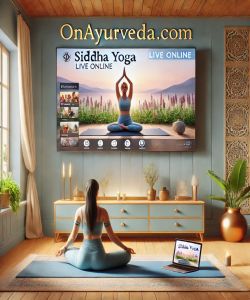
Overview of Siddha Yoga
Siddha Yoga is a formidable spiritual path predicated on the direct experience of the inner Self, a state of divine consciousness considered to be the birthright of every human being. It is not a path of mere intellectual study or philosophical debate; rather, it is a rigorous, experiential discipline activated through the grace of a living spiritual master, a Satguru. The central and most defining event in this tradition is Shaktipat, the spiritual initiation wherein the dormant spiritual energy, known as Kundalini, is awakened within the seeker by the Guru. This awakening is the catalyst for an internal process of purification and transformation that unfolds spontaneously. The practitioner’s primary role is to nurture this awakened energy through a dedicated regimen of specific spiritual practices. These include meditation, chanting of sacred mantras, selfless service, and contemplation of the Guru’s teachings. The entire framework of Siddha Yoga is designed to turn the individual’s awareness inward, away from the distractions and limitations of the external world, towards the recognition of their own inherent divinity. It is a path that demands unwavering commitment, profound sincerity, and a willingness to surrender the ego to a higher power, embodied by the Guru’s grace. The ultimate objective is not the acquisition of supernatural powers or worldly acclaim, but the stable, abiding realisation of the supreme Self, which is understood to be a state of perfect freedom, unending bliss, and universal love. This journey is self-contained, requiring the seeker to engage with their own inner landscape under the precise and authoritative guidance of the Siddha Yoga lineage.
What are Siddha Yoga?
Siddha Yoga is a spiritual path whose core purpose is the direct, unmediated experience of the divine Self, which is understood to reside within every individual. The name itself is profoundly descriptive: Siddha translates from Sanskrit as ‘perfected’ or ‘one who is accomplished’, referring to a perfected spiritual master, the Siddha Guru, who has realised their identity with the supreme reality. Yoga means ‘union’, signifying the union of the individual self with this absolute reality. Therefore, Siddha Yoga is the ‘yoga of the perfected masters’. It operates on the fundamental principle that this state of perfection is not something to be created or earned, but is an inherent truth to be uncovered.
The mechanism for this unveiling is grace, specifically transmitted through an act known as Shaktipat, or spiritual awakening. This is not a symbolic gesture but a tangible transference of spiritual energy from the Guru to the disciple, which awakens the dormant Kundalini Shakti at the base of the spine. Once awakened, this intelligent energy begins its work of systematically purifying the seeker’s entire being—physical, mental, and emotional—to facilitate spiritual evolution.
To support this inner process, Siddha Yoga prescribes a set of core practices:
Meditation (Dhyana): The primary practice for turning the awareness inward to experience the silent, blissful consciousness of the Self.
Chanting (Svadhyaya): The repetition of Sanskrit mantras, which are considered to be potent sound formulas that vibrate with divine energy, purifying the mind and environment.
Selfless Service (Seva): The practice of offering one’s time and skills without expectation of personal gain, which serves to diminish the ego and cultivate a sense of unity.
Contemplation (Vichara): The deep reflection upon the teachings of the Guru and sacred texts to integrate spiritual wisdom into one’s understanding and daily life.
Ultimately, Siddha Yoga is not a religion with a fixed dogma, but a direct, interior path of transformation, guided entirely by the grace and authority of the Guru.
Who Needs Siddha Yoga?
Individuals who are fundamentally dissatisfied with a purely materialistic or intellectual approach to life and who possess an inexorable yearning for direct, tangible spiritual experience. This path is not for the casual inquirer but for the determined seeker who demands an experiential, rather than theoretical, answer to life’s ultimate questions.
Persons seeking a structured and disciplined spiritual framework under the guidance of a living, authentic lineage. Those who recognise the inherent limitations of self-guided spiritual exploration and understand the necessity of a qualified master to navigate the complexities of inner transformation will find this path compelling.
Practitioners who feel a profound connection to the principle of Guru Kripa, or the Guru’s grace, as the primary agent of spiritual progress. This path is for those who are prepared to cultivate the virtues of surrender, trust, and devotion towards a spiritual master as the conduit for divine awakening.
Individuals prepared to undertake a rigorous commitment to specific spiritual practices, including meditation, chanting, and selfless service. It is intended for those who understand that grace must be met with consistent personal effort and who are willing to integrate these disciplines into the fabric of their daily existence.
Seekers who are ready to confront and transcend the limitations of their own ego. The practices and teachings are designed to systematically dismantle false identification with the mind and body, a process that requires significant courage, honesty, and a resolute will to achieve self-realisation above all other goals.
Those who are drawn to the devotional and esoteric traditions of Indian spirituality. Siddha Yoga is deeply rooted in the philosophical and practical tenets of Kashmir Shaivism, and is therefore most suitable for individuals who resonate with its powerful emphasis on divine consciousness (Shiva) and spiritual energy (Shakti).
Origins and Evolution of Siddha Yoga
The origins of the Siddha Yoga path are deeply rooted in the ancient and venerable tradition of Indian masters, specifically the lineage of Siddhas, or perfected yogis. While its philosophical underpinnings draw from timeless scriptures and the non-dual philosophy of Kashmir Shaivism, its modern manifestation is traced directly through a succession of revered spiritual masters. The foundational figure in the contemporary lineage is the great saint Bhagavan Nityananda of Ganeshpuri, a master of extraordinary spiritual stature who was recognised as a living embodiment of divine consciousness. His presence and silent teachings drew countless seekers, and it was he who transmitted the spiritual power and authority of the lineage to his foremost disciple, Swami Muktananda.
It was Swami Muktananda who was principally responsible for the global dissemination of the Siddha Yoga path. From the 1970s onwards, he undertook world tours, conducting large-scale programmes and granting Shaktipat initiation to thousands of Westerners who were hitherto unfamiliar with such a direct and potent form of spiritual transmission. He systemised the teachings and practices, making them accessible to a global audience while preserving their traditional integrity. He established ashrams and meditation centres worldwide, creating a formalised structure through which the lineage could be perpetuated. His autobiography, "Play of Consciousness," became a seminal work, documenting the profound and often tumultuous process of Kundalini awakening and providing a roadmap for seekers on the path.
Upon his passing, Swami Muktananda appointed his successor, Swami Chidvilasananda, also known as Gurumayi, to lead the Siddha Yoga lineage. Under her stewardship, the path has continued to evolve, adapting to the demands of the modern era without compromising its core principles. She has placed a strong emphasis on making the teachings available through modern technology, including global webcasts and online courses, thereby ensuring the continuity and accessibility of the path for a new generation of practitioners. The evolution has been one of adaptation in form, not of dilution in substance. The path remains today what it has always been: a grace-bestowed discipline focused on the awakening of inner spiritual energy and the ultimate realisation of the Self, under the absolute authority of the living Satguru of the Siddha lineage.
Types of Siddha Yoga
The Siddha Yoga path is a unified and integral discipline rather than a collection of disparate ‘types’ in the manner of distinct physical yoga styles. However, its comprehensive framework is composed of several essential and non-negotiable categories of practice, each representing a crucial pillar of the spiritual journey. These are not optional modules but integrated components of a singular transformative process.
Shaktipat Initiation (The Yoga of Grace): This is the foundational event and the very gateway to the Siddha Yoga path. It is not a technique performed by the seeker but an act of grace bestowed by the Guru. Through Shaktipat, the Guru awakens the dormant Kundalini energy within the disciple. This transmission of spiritual power is the catalyst for all subsequent inner experiences and purification. It is the core element that defines and distinguishes this path.
Dhyana Yoga (The Yoga of Meditation): This is the central practice for stabilising the mind and turning awareness inward. Following Shaktipat, meditation ceases to be a mere mental exercise of concentration and becomes a dynamic process guided by the awakened Kundalini Shakti. The practitioner learns to sit in stillness, witnessing the inner play of thoughts and energies, and is gradually drawn into the silent, conscious source of their own being.
Svadhyaya Yoga (The Yoga of Self-Study and Chanting): This practice involves two primary activities. Firstly, the study and contemplation of the Guru’s teachings and sacred texts to deepen intellectual and spiritual understanding. Secondly, and more centrally, it involves the practice of chanting Sanskrit mantras. Chanting is not simply musical expression; it is a powerful technique for purifying the subtle body, focusing the mind, and invoking divine vibrations. The mantra Om Namah Shivaya is particularly central to the tradition.
Seva Yoga (The Yoga of Selfless Service): This is the practice of offering one’s actions, skills, and energy for the benefit of the larger community and in service to the Guru’s mission, without any expectation of reward or recognition. Seva is a potent method for dissolving the ego, cultivating humility, and experiencing the divine presence in the field of action, thereby integrating spiritual practice into everyday life.
Benefits of Siddha Yoga
Direct Spiritual Awakening: The primary and most profound benefit is the possibility of a direct and tangible spiritual awakening through Shaktipat initiation. This event transcends theoretical knowledge, providing the practitioner with an immediate, experiential entry point into their own inner spiritual dimension.
Cultivation of Inner Stillness and Mental Clarity: Through the consistent practice of meditation, the relentless agitation of the mind is progressively subdued. This leads to a state of deep inner quietude, enhanced focus, and a significant reduction in mental and emotional turbulence.
Systematic Purification of the Being: The awakened Kundalini energy works systematically to purify the entire human system—clearing deep-seated emotional blockages, mental conditioning, and physical tensions. This process, known as kriya, unfolds spontaneously and leads to greater overall well-being.
Development of Profound Self-Awareness: The path demands and cultivates a heightened state of introspection and self-observation. Practitioners learn to witness the workings of their own mind, ego, and emotions without identification, leading to a deeper understanding of their true nature beyond the limited personality.
Access to an Established Spiritual Lineage: Engagement with Siddha Yoga provides access to the accumulated wisdom, energy, and guidance of an authentic and unbroken lineage of spiritual masters. This provides a secure and authoritative container for the practitioner’s spiritual journey.
Integration of Spirituality into Daily Life: Through practices like Seva (selfless service) and contemplation, the insights gained in meditation are not confined to the meditation seat. The path provides a robust framework for living a life of purpose, integrity, and spiritual awareness amidst worldly responsibilities.
Reduction of Fear and Anxiety: As the practitioner becomes more established in the experience of the inner Self—a reality that is changeless and eternal—the fear of death and the anxieties associated with life’s uncertainties are fundamentally diminished, replaced by a stable foundation of inner peace and resilience.
Core Principles and Practices of Siddha Yoga
The Primacy of the Guru and Grace (Guru Kripa): The absolute core principle is that self-realisation is not achieved through personal effort alone but is bestowed through the grace of a living, perfected master (Satguru). The Guru is the conduit for divine power, and the disciple’s receptivity, trust, and surrender are paramount. The practice, therefore, is to align oneself with this grace.
The Inner Self is Divine and Already Perfect: Siddha Yoga is founded on the non-dualistic principle that the true identity of every individual is divine consciousness (Shiva). The spiritual journey is not one of becoming something new, but of removing the veils of ignorance that obscure this pre-existing reality. The practice is to turn awareness inward to recognise this truth.
Shaktipat Initiation as the Catalyst for Transformation: The path is explicitly an initiatory one. The spiritual awakening (Shaktipat) granted by the Guru is the definitive event that ignites the practitioner’s dormant Kundalini energy. This awakened energy (Shakti) is the intelligent, guiding force that drives all subsequent spiritual progress. The practice is to honour and cooperate with this inner force.
The Indispensability of Spiritual Practice (Sadhana): While grace is primary, it must be met with diligent and consistent practice. The seeker is required to engage in a disciplined regimen of meditation, chanting, and selfless service. This sadhana serves to purify the mind and body, making them a suitable vessel for the unfolding of divine consciousness.
The Practice of Meditation (Dhyana): Daily meditation is a non-negotiable pillar of the path. It is the primary means by which the practitioner turns inward, quiets the mind, and directly experiences the silent, blissful state of the Self. It is not a technique to be mastered, but a state to be entered into through the grace of the awakened inner energy.
The Power of the Mantra: The repetition of sacred Sanskrit mantras, particularly Om Namah Shivaya, is a central practice. The mantra is not merely a string of words but a living vibration of consciousness. Its repetition purifies the mind, protects the practitioner, and attunes their awareness to the divine.
The Integration of Practice Through Seva and Dakshina: The path must be lived. Selfless service (Seva) is the practice of offering one’s actions to the divine, thereby dissolving the ego. The offering of Dakshina is the practice of expressing gratitude and reverence to the source of the teachings, an act that deepens the disciple’s connection to the Guru’s grace.
Online Siddha Yoga
Global Accessibility and Dissemination of Grace: The online platform eradicates geographical barriers, making the Guru’s teachings, grace, and presence accessible to dedicated seekers anywhere in the world. Through live webcasts of chanting and meditation sessions, the transmission of spiritual energy (shakti) is not constrained by physical proximity, allowing for a global community to participate in sacred events simultaneously.
Structured Digital Programmes and Courses: The path offers meticulously structured online courses and immersions that provide a systematic and in-depth exploration of Siddha Yoga philosophy and practice. These digital programmes serve as a formal means for both new and experienced practitioners to deepen their understanding and stabilise their practice under the direct guidance of the lineage.
The Establishment of a Virtual Ashram: The online environment functions as a virtual ashram, creating a focused and sacred space for spiritual practice amidst the distractions of daily life. It provides a consistent schedule of events, access to a library of teachings, and a sense of connection to a global community (satsang), thereby replicating the core functions of a physical spiritual centre.
Cultivation of Self-Discipline and Inner Authority: Engaging with the path online demands a heightened level of personal responsibility and self-discipline. The practitioner must proactively create a sacred space, minimise distractions, and commit to the schedule without the external reinforcement of a physical group. This fosters a powerful sense of inner authority and strengthens the practitioner's resolve.
Direct Engagement with the Living Master: Online webcasts provide a direct and potent means of being in the presence of the Guru. These events are not passive broadcasts but are considered powerful sessions of darshan (beholding the master) and satsang (being in the company of the truth), which are central to the transmission of grace and spiritual upliftment within the tradition. The digital medium serves as a conduit for this essential connection.
Siddha Yoga Techniques
The following outlines the fundamental technique for engaging in Siddha Yoga meditation, a practice predicated on inner receptivity rather than forceful mental effort.
Step 1: Establish a Sanctified and Stable Foundation: Select a specific time and location for your practice that will remain consistent and free from interruption. The space should be clean, quiet, and reserved exclusively for spiritual practice. Assume a comfortable, seated posture with an erect but relaxed spine. This physical stability is a prerequisite for mental stillness. Close your eyes gently.
Step 2: Conscious Invocation and Intention: Begin by consciously acknowledging the purpose of the practice. Mentally offer your session to the divine and invoke the grace of the Guru and the Siddha lineage. This act of setting a sacred intention shifts the practice from a mundane activity to a spiritual offering and aligns your awareness with the flow of grace.
Step 3: Anchor Awareness with the Breath and Mantra: Turn your attention to the natural rhythm of your breath. Observe the cool air entering the nostrils and the warm air leaving. Do not control or manipulate it; simply witness it. As your awareness settles, begin the silent, internal repetition of the mantra given within the Siddha Yoga tradition. Coordinate the mantra with the breath, allowing it to become a continuous, effortless internal vibration.
Step 4: Witness the Inner Unfolding with Detachment: As the awakened Kundalini energy moves within, various phenomena may arise: thoughts, emotions, memories, or physical sensations (kriyas). The technique is not to suppress, analyse, or engage with these occurrences. Your sole task is to remain a neutral, detached witness. Maintain your anchor in the mantra and the breath, allowing the inner energy to perform its purifying work without interference from the ego or intellect.
Step 5: Gradual Transition and Integration: As the allotted time for meditation concludes, do not end the practice abruptly. Gently release the focus on the mantra and become aware of your body and your surroundings. Sit in silence for a few moments, absorbing the stillness and peace cultivated during the session. Conclude by offering a silent prayer of gratitude before slowly and deliberately resuming your external activities, carrying the meditative state with you.
Siddha Yoga for Adults
Siddha Yoga is a spiritual path unequivocally designed for mature individuals who possess the capacity for profound self-reflection, discipline, and sustained commitment. It is not a system of simple maxims or palliative reassurances; rather, it is a rigorous and demanding discipline that requires the practitioner to take full responsibility for their inner state. For adults navigating the complexities of career, family, and societal obligations, the path offers not an escape, but a powerful means of anchoring oneself in a stable, internal reality amidst external flux. The teachings compel an adult to move beyond blaming external circumstances for their lack of peace and to turn inward to the source of all experience. The practices of meditation and self-inquiry demand a level of introspection that is typically developed only through life experience. Furthermore, the central principle of the Guru-disciple relationship requires a sophisticated understanding of trust, surrender, and the discerning ability to distinguish genuine spiritual authority from mere personality. An adult practitioner is expected to engage with the philosophy not as a passive recipient, but as a serious student, integrating timeless wisdom into the practical, often challenging, decisions of daily life. The path's emphasis on selfless service (Seva) and financial offering (Dakshina) presupposes a level of personal agency and resourcefulness characteristic of adulthood. It is a path for those who are no longer seeking to be saved, but are actively prepared to undertake the formidable work of saving themselves through grace and disciplined effort.
Total Duration of Online Siddha Yoga
The engagement with the Siddha Yoga path, whether online or in person, is not a finite course with a predetermined endpoint; it is a lifelong commitment to spiritual evolution. Therefore, to speak of a ‘total duration’ is a fundamental misunderstanding of the discipline. The path is a journey, not a destination to be reached within a set timeframe. However, the structure of online engagement is often organised around specific units of practice. A core online event, such as a global webcast for chanting and meditation, is typically structured to last for approximately 1 hr. This 1 hr session is not a complete measure of the practice but a single, potent instance of engagement. It is a designated period for focused immersion in the key disciplines of the path under the direct guidance transmitted through the digital medium. The true measure of the path’s duration is the lifetime of the practitioner. The consistent, daily repetition of these practices, including the dedication of at least 1 hr for formal sessions when available, is what constitutes the path. The effectiveness of Siddha Yoga is contingent not on completing a curriculum, but on the unwavering, day-by-day, year-by-year application of its principles and techniques, with each 1 hr session serving as a vital point of reconnection and realignment with the ultimate goal of self-realisation. The duration is, in essence, from the moment of sincere commitment until the final, stable abidance in the Self.
Things to Consider with Siddha Yoga
Embarking upon the Siddha Yoga path requires sober and deliberate consideration of its fundamental tenets and demands. This is not a casual spiritual hobby but a profound and life-altering commitment. Foremost, a prospective practitioner must honestly assess their readiness to engage in a Guru-disciple relationship. The path is unequivocally Guru-centric; progress is predicated on the grace and guidance of the living spiritual master of the lineage. An inability or unwillingness to accept this hierarchical structure of spiritual authority will prove an insurmountable obstacle. One must investigate the lineage and be prepared to place one's trust in its authority. Secondly, the commitment to regular, disciplined practice is non-negotiable. The path's transformative potential is only unlocked through consistent daily meditation, chanting, and study. A romantic or intermittent approach to practice will yield negligible results. One must be prepared to carve out dedicated time from daily life, regardless of moods or external pressures. Furthermore, the financial principle of Dakshina—the offering of a portion of one’s resources in gratitude for the teachings—is an integral aspect of the practice. Prospective followers must understand and accept this principle of reciprocal energy exchange. Finally, one must be prepared for a potentially intense and challenging inner journey. The awakening of Kundalini is a powerful process of purification that can bring latent psychological and emotional patterns to the surface to be confronted and released. This requires courage, stability, and a resolute commitment to face oneself without flinching.
Effectiveness of Siddha Yoga
The effectiveness of the Siddha Yoga path cannot be measured by conventional external metrics such as material success, social status, or even the acquisition of paranormal abilities. Its efficacy is an entirely internal and subjective phenomenon, contingent upon a confluence of three critical factors: the grace of the Guru, the sincerity of the practitioner, and the diligence of their practice. The path is supremely effective for those who are able to cultivate a state of profound receptivity to the spiritual transmission offered through Shaktipat initiation. For such individuals, the path serves as a powerful and direct means of awakening their dormant spiritual potential, leading to tangible shifts in consciousness, a marked decrease in mental agitation, and a growing sense of inner peace and wholeness. Its effectiveness is witnessed in a practitioner’s increased capacity to remain centred and resilient amidst life's challenges, and in a fundamental reorientation of their values from the ephemeral to the eternal. However, for an individual who approaches the path with scepticism, a lack of commitment, or an ego-driven desire for spiritual phenomena, its effectiveness will be severely limited. The teachings and practices act as a mirror, reflecting the practitioner’s own state of being. Therefore, the path’s potency is not an abstract quality inherent in the techniques themselves, but is unlocked and actualised only through the practitioner’s unwavering devotion, disciplined effort, and profound surrender. Ultimately, its success is defined by its stated goal: the stable, abiding realisation of the divine Self.
Preferred Cautions During Siddha Yoga
Engagement with the Siddha Yoga path necessitates a rigorous and uncompromising adherence to certain cautions to ensure the practitioner’s journey remains grounded, safe, and aligned with the ultimate purpose of self-realisation. The primary caution is against the inflation of the ego. The powerful spiritual experiences, or kriyas, that can arise from the awakened Kundalini must never be mistaken for personal achievements or signs of spiritual superiority. They are products of grace and purification, and to claim ownership over them is a grave spiritual error that reinforces the very egoic structure the path seeks to dismantle. Practitioners must exercise constant vigilance, grounding these experiences in humility and continued practice. A second critical caution is to avoid spiritual bypassing—the tendency to use spiritual ideas and practices to evade unresolved psychological issues, emotional wounds, or worldly responsibilities. The path is intended to integrate the spiritual with the mundane, not to create a dissociated state of denial. It is imperative that practitioners continue to address their human challenges with honesty and maturity. Furthermore, one must be cautious of developing an obsessive dependency on spiritual phenomena or a craving for extraordinary experiences. The true goal is the stable, silent awareness of the Self, not a constant stream of inner fireworks. An attachment to experience, no matter how sublime, becomes another form of bondage. Finally, it is essential to follow the specific instructions and guidelines of the lineage precisely and not to mix techniques from other paths indiscriminately, as this can dilute the efficacy and create energetic confusion.
Siddha Yoga Course Outline
A foundational online course in Siddha Yoga would be structured to provide a systematic immersion into the core principles and practices of the path.
Module 1: The Foundation – The Siddha Lineage and the Principle of the Guru
Introduction to the concept of a perfected spiritual lineage.
Study of the lives and teachings of Bhagavan Nityananda, Swami Muktananda, and Gurumayi Chidvilasananda.
Exploration of the Guru-disciple relationship as the central axis of the spiritual path.
The principle of grace (Kripa) as the primary agent of transformation.
Module 2: The Catalyst – Understanding Shaktipat and Kundalini Shakti
Detailed explanation of the doctrine of Shaktipat, the awakening of spiritual energy.
The nature and function of Kundalini Shakti as the inner evolutionary force.
Understanding the spontaneous physical and mental purifications (kriyas) that may occur after awakening.
The role of the practitioner in cooperating with this awakened energy.
Module 3: The Core Practice – The Art and Science of Meditation
Instruction in the Siddha Yoga method of meditation.
Guidance on establishing a stable and consistent daily meditation practice.
Techniques for working with the mind and maintaining focus.
The goal of meditation: moving from active thinking to silent witnessing.
Module 4: The Power of Sound – Mantra Japa and Chanting
Introduction to the science of sacred sound and the power of Sanskrit mantras.
Specific instruction on the repetition (Japa) of the mantra Om Namah Shivaya.
Participation in guided group chanting sessions (Kirtan).
Understanding the purifying and protective qualities of the mantra.
Module 5: The Integration – Seva, Dakshina, and Living the Teachings
The principle of Selfless Service (Seva) as a means of dissolving the ego.
The principle of Dakshina as an expression of gratitude and support for the lineage.
Guidance on how to apply the philosophical teachings of non-duality and self-awareness to the challenges of daily life.
Concluding session on maintaining the discipline and momentum of practice beyond the course structure.
Detailed Objectives with Timeline of Siddha Yoga
The objectives of a foundational engagement with the Siddha Yoga path are oriented towards establishing a firm basis for a lifelong spiritual practice.
Initial Phase (First Month): Establishment of Foundational Discipline
Objective: To establish a non-negotiable, consistent daily meditation practice. The practitioner will successfully complete a seated meditation session every day, beginning with a manageable duration and progressively stabilising the routine.
Objective: To achieve a basic intellectual understanding of the core principles of the path, including the roles of the Guru, grace, and Shaktipat, through prescribed study materials.
Objective: To learn and correctly pronounce the primary mantra, Om Namah Shivaya, and begin its regular, silent repetition during meditation and at other designated times.
Intermediate Phase (Months Two to Six): Deepening of Practice and Understanding
Objective: To move beyond mechanical practice towards a more receptive and subtle state in meditation, learning to witness inner phenomena without engagement.
Objective: To participate regularly in online chanting and teaching events (satsangs) to deepen the connection with the community and the source of the teachings.
Objective: To begin the practice of conscious self-observation during daily activities, applying the principle of witnessing to thoughts, emotions, and actions outside of formal meditation.
Objective: To engage in a meaningful act of selfless service (Seva), either through formal programmes or by adopting a service-oriented attitude in daily life.
Consolidation Phase (Months Six to Twelve): Integration and Embodiment
Objective: To have a firmly integrated and self-sustaining spiritual practice (sadhana) that is no longer dependent on external motivation.
Objective: To demonstrate a clear understanding of how to navigate common obstacles in meditation, such as restlessness or lethargy, with skill and perseverance.
Objective: To cultivate a tangible sense of inner stillness and resilience that begins to permeate daily life, leading to a noticeable reduction in reactivity and stress.
Objective: To establish a mature and devotional relationship with the path and the lineage, understanding it not as a self-improvement project, but as a profound journey of surrender and self-discovery.
Requirements for Taking Online Siddha Yoga
To engage fruitfully with the Siddha Yoga path in an online format, the following requirements are absolute and non-negotiable.
Technical and Environmental Prerequisites: The practitioner must possess a reliable, high-speed internet connection and a suitable electronic device (computer, tablet) capable of streaming high-quality video and audio without interruption. It is imperative to have a designated physical space that is private, quiet, and can be maintained as a sanctified area for the duration of the practice, free from all domestic and professional distractions.
Unyielding Personal Discipline: The online format demands a significantly higher degree of self-motivation and discipline than in-person engagement. The practitioner must possess the internal resolve to adhere strictly to the schedule of online events, create a sacred atmosphere for themselves, and resist the pervasive distractions of the digital environment.
Sincere and Receptive Attitude: A fundamental requirement is a sincere desire for spiritual growth and a profound openness to the principles of the Siddha Yoga path. The practitioner must be willing to suspend intellectual cynicism and approach the teachings with an attitude of reverence, humility, and a genuine readiness to receive the grace being transmitted.
Commitment to the Full Spectrum of Practices: The practitioner must be prepared to engage with all the prescribed practices, not only the parts they find appealing. This includes meditation, chanting, study of the teachings, and an understanding and acceptance of the principles of selfless service (Seva) and the offering of gratitude (Dakshina).
Respect for the Sanctity of the Transmission: The practitioner must understand that an online teaching event is not passive entertainment but a sacred transmission. It is required that one attends with the same level of respect and focus as if they were in the physical presence of the Guru, which includes appropriate attire, a dedicated posture, and full, undivided attention.
Things to Keep in Mind Before Starting Online Siddha Yoga
Before commencing with the Siddha Yoga path through its online platform, it is imperative to conduct a rigorous self-assessment and internalise several key realities of this mode of practice. One must fundamentally understand that the screen is merely a conduit, not the source of the teachings or the grace. The entire purpose of the technology is to facilitate a connection to the living presence of the Guru and the power of the lineage. Therefore, an attitude of profound reverence and focus must be cultivated to pierce through the mundane nature of the digital medium. The practitioner is solely responsible for creating and defending the sanctity of their practice space; the online format will not provide the external container of an ashram. This demands a robust and unwavering self-discipline. Furthermore, one must be prepared for the unique challenge of confronting oneself in the relative isolation of online practice. Without the immediate physical presence of a community, the inner journey can feel more intense and solitary. One must cultivate a strong inner resilience and a deep trust in the guidance provided through the teachings. It is also crucial to recognise that while the accessibility is a great benefit, it can also lead to a casual or inconsistent approach. A firm, unshakeable commitment must be made internally before the first session is ever streamed, treating the online schedule with the same gravity as a binding, in-person appointment. The convenience of the format must never be allowed to dilute the seriousness of the undertaking.
Qualifications Required to Perform Siddha Yoga
To ‘perform’ Siddha Yoga in the sense of authoritatively teaching it or acting as a formal guide within the tradition is not a matter of acquiring professional qualifications, academic credentials, or external certifications. The authority to transmit the teachings and practices of this path is not self-arrogated nor is it conferred by any external institution; it flows exclusively and directly from the grace and sanction of the living Satguru of the Siddha Yoga lineage. This is an esoteric and hierarchical system where spiritual authority is bestowed, not earned in a conventional sense.
An individual designated to lead practices or impart teachings must demonstrate a profound and verifiable embodiment of the path's principles. This is not a role for the novice or the intellectually gifted student, but for the seasoned and devoted practitioner whose life has been thoroughly transformed by the discipline. The specific, non-negotiable qualifications, while internal, can be delineated as follows:
Direct Sanction from the Guru: The foremost and absolute requirement is to have received a direct and unambiguous mandate from the Guru to teach or lead. Any attempt to do so without this specific authorisation is considered a serious breach of the tradition's protocol.
Extensive and Deep Personal Practice: The individual must have a long-standing, stable, and mature personal practice (sadhana). They must have navigated the depths of meditation and confronted the complexities of their own inner landscape over many years, not just months.
Thorough Assimilation of the Teachings: A deep, lived understanding of the philosophical framework of the path, primarily the non-dual scriptures of Kashmir Shaivism as interpreted by the lineage, is essential. This is an embodied wisdom that goes far beyond mere rote memorisation.
Exemplary Personal Conduct: The individual must exemplify the virtues espoused by the path, including humility, integrity, selflessness, and an unwavering devotion to the Guru. Their life must be a clear and consistent reflection of the teachings they purport to share.
Online Vs Offline/Onsite Siddha Yoga
Online
The primary advantage of engaging with Siddha Yoga online is its profound and unparalleled accessibility. It removes all geographical, logistical, and often financial barriers that might prevent a sincere seeker from connecting with the teachings and the Guru. This format allows practitioners to integrate potent spiritual events, such as global webcasts and structured courses, directly into their daily lives without the need for extensive travel or time away from personal and professional responsibilities. The online environment demands and fosters a high degree of self-reliance and internal discipline. The individual must take full responsibility for creating a sacred space and maintaining focus, thereby strengthening their own resolve and inner authority. It provides a direct, albeit mediated, connection to the Guru's presence and allows for participation in a global community, fostering a sense of unity across continents. The online platform serves as an invaluable tool for maintaining continuity of practice and staying connected to the current of the lineage’s energy, regardless of one’s physical location.
Offline/Onsite
The offline or onsite experience, typically within an ashram or meditation centre, offers an intensity and immersive quality that is unique. The most significant element is the power of the collective physical presence of the Guru and the community (satsang). The concentrated spiritual energy (Shakti) in such an environment is palpable and can profoundly accelerate a practitioner’s inner process. The ashram setting provides a complete container, removing the distractions of worldly life and allowing for total immersion in a disciplined schedule of meditation, chanting, and selfless service. This structured environment powerfully reinforces the practitioner’s efforts. Direct, personal interaction with experienced teachers and swamis provides invaluable opportunities for clarification and guidance. The experience of performing Seva (selfless service) within the physical machinery of the ashram deepens the practice of ego-transcendence in a very tangible way. The onsite experience is a powerful spiritual crucible, designed for deep, focused periods of transformation.
FAQs About Online Siddha Yoga
Question 1. What is the core purpose of Online Siddha Yoga?
Answer: Its purpose is to make the grace, teachings, and practices of the Siddha Yoga lineage accessible to a global audience, allowing individuals to engage in a formal spiritual path from anywhere in the world.
Question 2. Is the online transmission of Shaktipat as effective as in person?
Answer: Within the tradition, it is held that the Guru's grace and power are not limited by time or space. The transmission is considered equally potent, with its reception being dependent on the sincerity and openness of the individual.
Question 3. Do I need prior experience in meditation to participate?
Answer: No. Online programmes and introductory sessions are designed for individuals at all levels of experience, from complete beginners to advanced practitioners.
Question 4. What technology is required?
Answer: A stable, high-speed internet connection and a computer or modern mobile device capable of streaming video and audio are essential.
Question 5. How do I create a sacred space at home?
Answer: Choose a clean, quiet, and dedicated area. It can be a room or even a corner. Keep it free from clutter and daily distractions, using it only for your spiritual practice.
Question 6. Is there a dress code for online events?
Answer: While not policed, it is strongly recommended to wear modest, clean, and comfortable clothing as a sign of respect for the sanctity of the event.
Question 7. Can I interact with the teacher during a live webcast?
Answer: Generally, live webcasts are one-way transmissions. Interaction is typically facilitated through structured online courses or specific Q&A formats, not during large global events.
Question 8. What is the main mantra used?
Answer: The primary mantra given within the Siddha Yoga path is Om Namah Shivaya.
Question 9. How does online chanting work?
Answer: Participants join a live webcast and chant along with the lead chanter. While you cannot hear others, the focus is on contributing to the collective energy and experiencing the vibrations personally.
Question 10. Are the online sessions free?
Answer: Some global events may be offered freely, but structured courses and immersions operate on the principle of Dakshina, requiring a financial contribution.
Question 11. What if I miss a live session?
Answer: Depending on the specific event, a replay may be available for a limited time for registered participants.
Question 12. Is Online Siddha Yoga a replacement for visiting an ashram?
Answer: It is a powerful and valid way to practice, but it is not intended to replace the immersive and potent experience of an in-person ashram stay. They are complementary.
Question 13. How do I maintain discipline when practicing alone?
Answer: Establish a firm routine, treat your practice times as non-negotiable appointments, and constantly remind yourself of your sincere intention for spiritual growth.
Question 14. Is this a religious practice?
Answer: Siddha Yoga is a spiritual path, not a religion. It is rooted in the philosophy of Kashmir Shaivism but is open to people of all faiths or no faith.
Question 15. How long is a typical online session?
Answer: A standard global webcast for chanting and meditation is often scheduled for approximately one hour.
Question 16. Can my family be in the room while I practice?
Answer: It is strongly advised to practice alone in a private space to ensure you are free from any distractions and can fully immerse yourself.
Question 17. Where do I find the schedule for online events?
Answer: The official Siddha Yoga path website is the authoritative source for all schedules and registration information for online events.
Conclusion About Siddha Yoga
In conclusion, Siddha Yoga stands as a formidable and uncompromising spiritual discipline dedicated to the single, ultimate aim of self-realisation. It is not a path for the spiritually ambivalent or the seeker of mere comfort, but a rigorous, grace-bestowed journey for the individual who is resolutely committed to discovering their own divine nature. Its entire structure, from the pivotal event of Shaktipat initiation to the daily regimen of meditation, chanting, and service, is meticulously designed to turn the practitioner’s awareness inward, away from the transient illusions of the external world and towards the eternal, blissful reality of the Self. The path's insistence on the absolute necessity of a living Satguru is its defining and most challenging characteristic, demanding a profound level of trust and surrender from the disciple. While its practices are potent, the tradition consistently asserts that it is the Guru’s grace, and not personal effort alone, that ultimately fuels the transformative process. Whether engaged with in the immersive environment of an ashram or through the disciplined focus of its online platforms, the core demand remains the same: unwavering dedication, profound sincerity, and the courage to face the inner workings of one’s own mind and ego. It is, in its essence, a direct, experiential, and authoritative science of inner transformation, offering a clear and well-trodden path for those who genuinely seek to answer the fundamental question of human existence: "Who am I?".