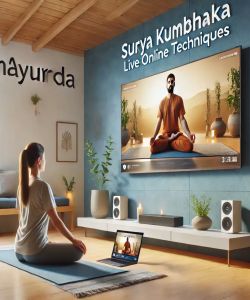
1. Overview of Surya Kumbhaka Techniques
Surya Kumbhaka represents a formidable and highly specialised branch of yogic pranayama, engineered with the singular objective of activating and augmenting the body’s solar, or heating, energetic pathways. It is not a passive breathing exercise but a disciplined, forceful methodology for internal transformation. The practice is fundamentally concerned with the manipulation of Prana, the vital life force, through a highly structured pattern of inhalation, retention, and exhalation. Specifically, it commands the flow of breath through the Pingala Nadi, the right energetic channel, which is traditionally associated with the sun, vitality, physical power, and the logical, rational aspects of the mind. By deliberately engaging this channel and incorporating Kumbhaka, the intentional retention of breath, the practitioner builds a profound internal pressure and heat, known as ‘tapas’. This process is designed to incinerate physical and energetic impurities, dissolve lethargy, and sharpen the intellect to a razor’s edge. Its application extends beyond mere physiological enhancement; it is a preparatory tool for deeper states of meditation and heightened consciousness. The technique demands unwavering focus, physical stillness, and a rigorous adherence to its procedural form. Misapplication or a casual approach is not merely ineffective but counterproductive. Therefore, Surya Kumbhaka must be understood as a potent instrument of self-mastery, requiring respect, discipline, and expert guidance. It is the definitive yogic practice for cultivating internal fire, invigorating the entire human system, and systematically dismantling the inertia that impedes human potential. Its mastery signifies a significant step towards command over one's own autonomic and energetic functions, a cornerstone of advanced Hatha Yoga.
2. What are Surya Kumbhaka Techniques?
Surya Kumbhaka techniques are a precise and potent form of pranayama (breath control) rooted in classical Hatha Yoga, designed specifically to stimulate the solar energetic channel of the body. The name itself provides a clear definition: ‘Surya’ translates to ‘Sun’, and ‘Kumbhaka’ means ‘breath retention’ or ‘pot-like containment’. The core mechanism of this practice is the exclusive inhalation through the right nostril, which corresponds to the Pingala Nadi. This energetic pathway is intrinsically linked to the sympathetic nervous system, responsible for activating the body’s 'fight or flight' responses, increasing metabolic rate, and generating physical heat.
The technique involves a rigorous and controlled process:
- Puraka (Inhalation): A deep, steady, and complete inhalation is drawn exclusively through the right nostril, while the left nostril is sealed. This action is intended to draw Prana (vital energy) directly into the Pingala Nadi.
- Antara Kumbhaka (Internal Retention): Following the inhalation, both nostrils are sealed, and the breath is held within the lungs. This is the most critical phase. The retained Prana builds internal pressure and heat, stimulating the entire system and purifying the nadis (energetic channels). The duration and intensity of this retention are key variables in the practice’s potency.
- Rechaka (Exhalation): The exhalation is performed slowly and with absolute control, typically through the left nostril (Ida Nadi), which is associated with cooling and calming energies. This completes one full cycle.
In essence, Surya Kumbhaka is a method for generating internal fire (Agni). It systematically increases vitality, counteracts sluggishness, and sharpens mental faculties. It is not merely a breathing exercise; it is a deliberate act of energetic engineering. By prioritising the solar channel, the practitioner consciously shifts their physiological and psychological state from passive to active, from cool to hot, and from quiescent to dynamic. It is a foundational practice for any individual seeking to build internal power and cleanse the system of inertia and impurities through the disciplined application of breath.
3. Who Needs Surya Kumbhaka Techniques?
- Individuals exhibiting chronic lethargy, torpor, or a pervasive lack of physical and mental energy. The technique is specifically engineered to counteract sluggishness by stimulating the body's inherent vital forces.
- Practitioners suffering from a slow or inefficient metabolism and poor digestion. Surya Kumbhaka is designed to stoke the internal digestive fire (Jathara Agni), thereby enhancing metabolic processes and nutrient absorption.
- Persons engaged in professions or activities that demand high levels of mental acuity, focus, and analytical capability. The practice sharpens the intellect and dispels mental fog, promoting clarity and decisive thought.
- Individuals living in cold climates or those who naturally possess a cold constitution (Prakriti), as the technique systematically generates internal body heat, providing a powerful antidote to external cold.
- Those experiencing excessive production of phlegm or kapha-related imbalances, such as sinus congestion or respiratory dullness. The heating nature of the practice helps to liquefy and eliminate such accumulations.
- Students of advanced yoga and meditation who require a potent method for purifying the energetic channels (Nadis) in preparation for more subtle and profound spiritual practices, such as raising Kundalini energy.
- Individuals seeking to overcome patterns of introversion, timidity, or passivity. By activating the solar, masculine, and extroverted qualities associated with the Pingala Nadi, the practice fosters confidence and dynamism.
- Athletes and physical performers requiring a method to increase stamina, physical power, and invigorate the nervous system prior to demanding activities, acting as a natural stimulant.
- Anyone whose work or lifestyle involves predominantly sedentary activity, leading to physical stagnation. The practice serves as a powerful internal workout, revitalising the entire system from within.
- Yogis who have identified an imbalance where the lunar, cooling energy of the Ida Nadi is overactive. Surya Kumbhaka is the specific corrective measure to restore energetic equilibrium by forcefully activating the solar counterpart.
4. Origins and Evolution of Surya Kumbhaka Techniques
The origins of Surya Kumbhaka are firmly embedded within the corpus of classical Hatha Yoga, with its foundational principles articulated in seminal texts such as the Hatha Yoga Pradipika and the Gheranda Samhita. In these ancient treatises, the practice, often referred to as Surya Bhedana Pranayama, was not presented as a mere wellness exercise but as an indispensable tool for profound spiritual transformation. Its primary purpose was the purification of the Nadis—the intricate network of subtle energy channels—and the deliberate manipulation of Prana to awaken higher states of consciousness. The technique was a critical component of a larger, integrated system designed to prepare the physical and energetic body for the rigours of advanced meditation and the eventual awakening of Kundalini Shakti.
Historically, the practice was transmitted under the strict supervision of a Guru to a deserving disciple. The emphasis was on precision, correct ratio (matra) of breath, and the integration of Bandhas (energetic locks) to maximise the internal generation of ‘tapas’, or spiritual heat. This heat was considered the ultimate purifying agent, capable of burning away karmic impurities and physical ailments that obstructed the path to enlightenment (Samadhi). The technique was specifically intended to activate the Pingala Nadi, the solar channel, to counteract any excess of the lunar, cooling Ida Nadi, thereby bringing the central channel, Sushumna Nadi, into a state of activation.
In its evolution into the modern era, Surya Kumbhaka has undergone a significant shift in application, though its core mechanics remain unchanged. While traditional yogis sought spiritual liberation, contemporary practitioners often seek more immediate physiological and psychological benefits. The technique is now widely employed to combat lethargy, enhance athletic performance, improve metabolic function, and sharpen mental focus. This secularisation has made the practice more accessible but also risks diluting its original, profound purpose. Modern online platforms and yoga studios have further broadened its reach, yet this accessibility places a greater onus on the individual to approach the practice with the rigour and respect it has always commanded, ensuring its potent transformative power is harnessed safely and effectively, rather than being reduced to a simple breathing exercise.
5. Types of Surya Kumbhaka Techniques
The fundamental structure of Surya Kumbhaka is invariable, yet its intensity and complexity can be modulated through specific variations. These are not disparate techniques but progressive stages of mastery, each building upon the last.
- Sama Vritti Surya Kumbhaka (Equal Ratio Practice): This is the foundational form, where the duration of inhalation (Puraka), internal retention (Antara Kumbhaka), and exhalation (Rechaka) are kept equal. For example, a practitioner might establish a consistent count for each phase. This type focuses on establishing rhythm, control, and acclimatising the nervous system to the practice of retention without undue strain. It builds the necessary groundwork for more advanced applications.
- Vishama Vritti Surya Kumbhaka (Unequal Ratio Practice): This represents the next level of proficiency. The ratios are deliberately made unequal to amplify the technique's effects, with a primary focus on extending the retention phase. A common progression is to a 1:2:2 ratio (inhalation:retention:exhalation) and advancing towards a 1:4:2 ratio. This variant significantly increases the generation of internal heat and pranic pressure, demanding greater capacity and stability from the practitioner. It is the standard for achieving the technique’s full physiological and energetic benefits.
- Surya Kumbhaka with Jalandhara Bandha (Chin Lock): In this type, the Jalandhara Bandha is applied during the breath retention phase. The practitioner drops the chin to the sternal notch, effectively sealing the upper end of the torso. This lock prevents the pranic energy stimulated during Kumbhaka from dissipating upwards into the head, instead directing it downwards towards the navel centre. It also regulates blood pressure in the head, making the retention safer and more potent.
- Surya Kumbhaka with Maha Bandha (The Great Lock): This is an advanced and highly powerful variation, reserved for seasoned practitioners. During the breath retention phase, all three primary locks are engaged simultaneously: Jalandhara Bandha (chin lock), Uddiyana Bandha (abdominal lock), and Mula Bandha (root lock). The application of Maha Bandha creates an intense internal energetic seal, concentrating the full force of the generated Prana and heat at the body’s core. This type dramatically accelerates the purification process and is a direct preparatory practice for Kundalini awakening.
6. Benefits of Surya Kumbhaka Techniques
- Systematic Elevation of Vitality: Directly stimulates the sympathetic nervous system, combating chronic fatigue, lethargy, and general listlessness by flooding the body with invigorating energy.
- Augmentation of Digestive Fire (Agni): The practice generates intense internal heat, which powerfully stokes the metabolic and digestive processes, improving nutrient absorption and eliminating digestive sluggishness.
- Purification of Energetic Channels: Forcefully cleanses the Pingala Nadi and, through its heating action, helps to purify the entire network of 72,000 Nadis, removing energetic blockages and ensuring the smooth flow of Prana.
- Enhanced Mental Clarity and Focus: By dispelling mental dullness (Tamas), the technique sharpens the intellect, improves concentration, and fosters a state of heightened alertness and decisiveness, making it ideal for analytical and demanding mental work.
- Generation of Internal Body Heat: Serves as a potent internal furnace, making it exceptionally beneficial for individuals in cold environments or for those with a naturally cold constitution, providing warmth from within.
- Alleviation of Kapha Imbalances: The heating and drying qualities of the practice are a direct antidote to conditions of excess Kapha dosha, such as sinus congestion, excess mucus, and respiratory heaviness.
- Stimulation of the Cardiovascular System: Provides a controlled, rigorous workout for the heart and circulatory system, improving circulation and oxygenation of the blood when practised correctly and within safe limits.
- Development of Willpower and Discipline: The rigorous nature of holding the breath under pressure (Kumbhaka) systematically builds mental fortitude, self-control, and resilience.
- Preparation for Advanced Yogic Practices: By activating the solar channel and purifying the energetic system, it serves as an essential prerequisite for higher states of meditation and practices aimed at awakening Kundalini energy.
- Balancing of the Nervous System: While it primarily stimulates the sympathetic nervous system, the controlled exhalation through the left nostril provides a counterbalancing effect, ultimately leading to a more resilient and adaptable autonomic nervous system.
7. Core Principles and Practices of Surya Kumbhaka Techniques
- Nadi Shuddhi (Channel Purification) as Prerequisite: The fundamental principle is that Surya Kumbhaka is not for the unprepared system. A practitioner must first establish a degree of balance and purity in the energetic channels through preparatory pranayama, such as Anuloma Viloma (Alternate Nostril Breathing), before attempting this forceful technique. Attempting to force Prana through obstructed channels is counterproductive and hazardous.
- Dominance of Pingala Nadi (The Solar Channel): The practice is axiomatically defined by its exclusive use of the right nostril for inhalation. This is a non-negotiable principle. The objective is to isolate and vigorously activate the Pingala Nadi, the conduit of solar, heating, and active energy, to deliberately create a state of heightened physiological and mental activity.
- Kumbhaka as the Apex of the Practice: The retention of breath is not an optional extra; it is the core of the technique. The principle is that during Kumbhaka, Prana is absorbed, assimilated, and transformed. The internal pressure and heat generated during this phase are the primary agents of purification and energisation. Mastery is measured by the quality and duration of a stable, calm retention.
- Application of Bandhas (Energetic Locks): The integration of Jalandhara Bandha (Chin Lock), and later Mula Bandha (Root Lock), is a core practice for safety and efficacy. The principle is one of containment and direction. Bandhas prevent the pranic charge from dissipating and instead direct its potent force with precision within the torso, amplifying the effects and protecting the brain from excessive pressure.
- Steadfast Posture (Sthira Asana): The practice must be performed in a stable, comfortable, and upright meditative posture, such as Siddhasana or Padmasana. The principle is that a straight spine is essential for the unimpeded flow of Prana along the Sushumna Nadi. Any slouching or physical instability will compromise the technique’s integrity and effectiveness.
- Controlled Exhalation (Sthira Rechaka): The exhalation, typically through the left nostril (Ida Nadi), must be slower than the inhalation and executed with absolute control. The principle here is one of controlled release and integration. A hurried or jerky exhalation dissipates the accumulated energy chaotically. A slow, smooth exhalation allows the system to absorb and stabilise the pranic charge.
- Mindful Awareness (Sakshi Bhava): Throughout the practice, the practitioner must maintain a state of detached, focused awareness. The principle is to observe the sensations of heat, energy, and pressure without becoming entangled in them. This mental discipline prevents agitation and transforms the physical exercise into a meditative practice.
8. Online Surya Kumbhaka Techniques
- Unparalleled Accessibility and Convenience: Online platforms dismantle geographical and logistical barriers. A practitioner can access authoritative instruction from a qualified expert anywhere in the world, eliminating the need for travel and accommodating demanding personal and professional schedules. The practice can be integrated into daily life with maximum efficiency.
- Structured and Progressive Learning Programmes: Reputable online courses deliver the technique within a meticulously structured curriculum. s are presented in a logical sequence, ensuring that foundational principles and preparatory practices are mastered before advancing to more potent variations involving extended Kumbhaka and Bandhas. This systematic approach mitigates the risks associated with improper practice.
- Opportunity for Repetition and Reinforcement: A primary advantage of the online format is the ability to review instructional content repeatedly. Complex details regarding posture, hand mudras, breath ratios, and the application of Bandhas can be re-watched until they are fully understood and internalised. This facility for repetition is critical for mastering a technique of this precision.
- A Controlled and Private Practice Environment: Learning online allows the practitioner to create an ideal environment free from the potential distractions or self-consciousness of a group class. This privacy is conducive to the deep inward focus required for pranayama and allows the individual to progress at their own pace without external pressure or comparison.
- Direct Access to Supporting Theoretical Material: Online courses typically supplement practical instruction with a wealth of downloadable resources, including theoretical texts, anatomical diagrams, and explanations of the underlying yogic philosophy. This integration of theory and practice provides a comprehensive and intellectually robust understanding of the technique.
- Self-Paced Progression: The online format empowers the practitioner to take full responsibility for their progress. One can spend as long as necessary on a particular stage of the practice, ensuring it is fully assimilated before moving forward. This contrasts sharply with the fixed pace of a group class, which may be too fast or too slow for an individual’s unique capacity.
- Global Community and Expert Support: Many online platforms foster a sense of community through dedicated forums or Q&A sessions. This allows practitioners to seek clarification directly from the instructor and share experiences with peers, creating a network of support that transcends physical location.
9. Surya Kumbhaka Techniques
The execution of Surya Kumbhaka is a formal, non-negotiable procedure. Adherence to this sequence is imperative for safety and efficacy.
- Assume a Correct Meditative Posture (Asana): Sit erect on the floor in a stable meditative posture such as Siddhasana, Siddha Yoni Asana, or Padmasana. The spine, neck, and head must be held in a perfectly straight line to facilitate an unimpeded flow of energy. The hands should rest on the knees in Jnana or Chin mudra.
- Prepare the Body and Mind: Close the eyes and stabilise the body. Observe the natural breath for several cycles until it becomes calm and rhythmic. Set a firm intention to remain focused and present throughout the entire practice. This preparatory stillness is not optional.
- Adopt Vishnu Mudra: Raise the right hand towards the face. Fold the index and middle fingers into the palm, leaving the thumb, ring finger, and little finger extended. This is the Vishnu Mudra, the prescribed hand position for controlling the nostrils during pranayama.
- Seal the Left Nostril: Use the ring and little fingers of the right hand to gently but firmly close the left nostril. The pressure should be sufficient to completely block airflow without causing strain or distorting the face.
- Inhale Through the Right Nostril (Puraka): Inhale slowly, deeply, and without sound through the open right nostril. Fill the lungs to their complete capacity in a smooth, continuous flow. The focus must be entirely on the stream of air entering the right side.
- Retain the Breath (Antara Kumbhaka): After completing the inhalation, seal the right nostril with the thumb. Both nostrils are now closed. Hold the breath for the prescribed duration. If incorporating Bandhas, apply Jalandhara Bandha (Chin Lock) at this stage. Remain perfectly still and internally focused.
- Release the Lock and Prepare for Exhalation: Before exhaling, release Jalandhara Bandha (if applied) and raise the head back to a neutral position. Maintain the seal on both nostrils for a moment.
- Exhale Through the Left Nostril (Rechaka): Release the pressure from the ring and little fingers and exhale slowly and with complete control through the left nostril. The exhalation should ideally be longer than the inhalation. Empty the lungs completely. This completes one full round.
- Commence the Next Round: Without pausing, begin the next cycle by again inhaling through the right nostril. Continue for the designated number of rounds, maintaining unwavering procedural discipline.
10. Surya Kumbhaka Techniques for Adults
For the adult practitioner, navigating the relentless demands of professional careers, familial responsibilities, and the physiological realities of ageing, Surya Kumbhaka offers a formidable and highly relevant tool for systemic revitalisation. The adult condition is often characterised by an accumulation of stress, a gradual decline in metabolic efficiency, and a pervasive mental fatigue born of constant decision-making and digital overstimulation. Surya Kumbhaka directly confronts these challenges. Its primary function—the vigorous stimulation of the sympathetic nervous system and the generation of internal heat—acts as a powerful antidote to the sedentary lifestyles that dominate modern adulthood, counteracting the resultant physical and mental inertia. It is a rigorous internal discipline that restores a sense of agency over one's own energy levels. For the professional, the practice sharpens the intellect, cuts through the 'brain fog' that can plague a long work week, and cultivates the mental clarity required for complex problem-solving and strategic thinking. For the ageing individual, its capacity to stoke the digestive fire (Agni) supports a slowing metabolism, enhancing the body’s ability to process food and maintain a healthy weight. Furthermore, the practice demands and builds immense willpower and focus, qualities that are directly transferable to every other facet of adult life. It is not a gentle palliative but a proactive, commanding technique for adults who are unwilling to passively accept a decline in vitality and who seek a disciplined method to actively manage and elevate their physical and cognitive performance. It is a means of reclaiming the dynamic energy that is often eroded by the pressures of adult existence.
11. Total Duration of Online Surya Kumbhaka Techniques
A comprehensive and responsible online session dedicated to the practice of Surya Kumbhaka techniques must be structured with a total duration of 1 hr. This specific timeframe is not arbitrary; it is a clinical necessity dictated by the potent and systemic nature of the practice itself. To engage in the core technique without adequate preparation and conclusion is both reckless and ineffective. The 1 hr session is therefore logically partitioned. A significant initial portion must be allocated to preparatory practices, including joint mobilisation (Pawanmuktasana series) and foundational pranayama, such as Kapalabhati for cleansing and Anuloma Viloma for establishing a baseline of energetic balance. This phase is non-negotiable, as it prepares the physical body and the nervous system for the intensity of Surya Kumbhaka. The central part of the session, dedicated to the Surya Kumbhaka practice itself, can then be undertaken safely. The duration of this core practice will vary based on the practitioner's proficiency but is performed within the protective container of the hour-long structure. Following the powerful stimulation of the core technique, a concluding phase is imperative. This must include a cooling-down period, involving counter-balancing pranayama like Chandra Bhedana or Sheetali, and a final, deep relaxation in Shavasana (Corpse Pose). This allows the nervous system to down-regulate and the profound energetic effects of the practice to be integrated smoothly throughout the entire human system. Therefore, the 1 hr duration is the minimum standard for a complete, safe, and effective guided practice.
12. Things to Consider with Surya Kumbhaka Techniques
Before embarking upon the practice of Surya Kumbhaka, a rigorous and honest self-assessment is not merely advisable but imperative. This is a powerful technique with significant physiological and energetic consequences, and it must be approached with informed caution. Firstly, one must consider their fundamental physical constitution and current state of health. This practice is heating in nature and is therefore contraindicated for individuals with conditions related to excess heat (Pitta) in the system, such as high blood pressure, heart disease, hyperthyroidism, peptic ulcers, or chronic acidity. It is equally unsuitable during fever, acute inflammation, or for individuals prone to anger, anxiety, or hyperactivity. A foundational understanding of one’s own body is the primary gatekeeper. Secondly, a practitioner’s prior experience with yoga, and specifically pranayama, must be considered. Surya Kumbhaka is not a technique for absolute beginners. One must have already established a stable and comfortable meditative posture and have achieved proficiency in more basic breathing techniques like full yogic breathing and Anuloma Viloma (alternate nostril breathing). Without this preparatory groundwork, the body and nervous system will be ill-equipped to handle the forceful retention of breath (Kumbhaka). Finally, the necessity for qualified guidance cannot be overstated. Attempting to learn this practice from a written text or an unqualified instructor invites risk. An experienced teacher is essential to provide correct instruction on ratios, the application of Bandhas (energetic locks), and to offer personalised guidance based on the practitioner’s capacity and limitations. Ignoring these considerations is to treat a potent medicine like a common beverage, an act of profound imprudence.
13. Effectiveness of Surya Kumbhaka Techniques
The effectiveness of Surya Kumbhaka is not a matter of subjective belief but is rooted in its direct and verifiable impact on the human autonomic nervous system and metabolic processes. Its potency is derived from its precise and uncompromising methodology. By mandating inhalation exclusively through the right nostril, the practice systematically and forcefully stimulates the Pingala Nadi, the energetic channel directly correlated with the sympathetic nervous system. This activation is not gentle or suggestive; it is a command that triggers a cascade of physiological responses: an increase in heart rate, a rise in core body temperature, and an enhancement of metabolic activity. The inclusion of Kumbhaka, the deliberate retention of breath, amplifies this effect exponentially. Holding the breath under pressure dramatically increases the partial pressure of oxygen and carbon dioxide in the blood, creating a powerful stimulus for the entire cardiovascular and respiratory system while supercharging the absorption of Prana (vital energy) into the practitioner’s system. Its effectiveness in combating lethargy, mental fog, and poor digestion is therefore a direct consequence of this scientifically observable mechanism. The technique acts as an internal furnace, incinerating physical and mental sluggishness. When practised with discipline, correct form, and respect for its contraindications, Surya Kumbhaka is an unequivocally effective and powerful tool for engineering a desired physiological and psychological state of heightened energy, clarity, and internal power. Its results are not hoped for; they are produced.
14. Preferred Cautions During Surya Kumbhaka Techniques
The practice of Surya Kumbhaka demands unwavering respect for its potent nature; consequently, a strict adherence to cautions is non-negotiable. This technique must be avoided absolutely by individuals diagnosed with hypertension or any form of heart disease, as the practice deliberately increases internal pressure and cardiovascular activity. It is strictly contraindicated for those suffering from anxiety disorders, panic attacks, or high-strung temperaments, as its stimulating nature can exacerbate these conditions to a critical degree. Practitioners with epilepsy or those who have experienced a recent stroke must not attempt it under any circumstances. Furthermore, it is forbidden during pregnancy and for individuals with hiatal hernias, glaucoma, or peptic ulcers, where any increase in intra-abdominal or intra-cranial pressure poses a significant risk. The practice must be suspended immediately during fever, infection, or any acute inflammatory condition, as its heating effect would be dangerously counterproductive. It is imperative that one never practises to the point of strain, gasping, or significant dizziness. Any sensation of discomfort, excessive heat, or agitation is a clear signal to cease the practice immediately and rest. The technique should ideally be practised on an empty stomach and preferably in the morning hours; performing it late at night can severely disrupt sleep patterns. Disregarding these cautions is an act of gross negligence that can lead to serious physiological and psychological harm. Safety through informed discipline is the paramount principle.
15. Surya Kumbhaka Techniques Course Outline
1: Foundational Principles and Theoretical Framework
Introduction to Pranayama: The Science of Breath Control.
The Triad of Nadis: Understanding Ida, Pingala, and Sushumna.
The Concept of Prana and Agni (Internal Fire).
Detailed Analysis of Surya Kumbhaka: Purpose, Contraindications, and Cautions.
2: Preparatory Practices and Physical Stabilisation
Mastery of a Stable Meditative Asana (Posture).
Techniques for Spinal Alignment and Core Stability.
Nadi Shodhana Pranayama (Alternate Nostril Breathing) for balancing the energetic system.
Kapalabhati Kriya (Skull Shining Breath) for preliminary cleansing.
3: Core Technique: Surya Kumbhaka without Retention
Mastery of Vishnu Mudra (Hand Gesture).
Introduction to Surya Bhedana: Inhalation through the right nostril, exhalation through the left.
Establishing a Smooth, Rhythmic, and Controlled Breath Flow.
Synchronising Breath with Mindful Awareness.
4: Introduction to Kumbhaka (Breath Retention)
The Principle of Sama Vritti (Equal Ratio) Breathing.
Safe and Gradual Introduction of Antara Kumbhaka (Internal Retention).
Technique for Building Retention Capacity without Strain.
Self-assessment and Monitoring for Signs of Overexertion.
5: Integration of Jalandhara Bandha (The Chin Lock)
Theoretical and Practical Instruction on Jalandhara Bandha.
The Purpose of the Lock: Containing Prana and Protecting the Head.
Synchronising the Application and Release of the Lock with Kumbhaka.
Practising Surya Kumbhaka with Jalandhara Bandha.
6: Advanced Practice and Integration
Introduction to Vishama Vritti (Unequal Ratios) to amplify intensity.
Guidance on the progressive lengthening of the Kumbhaka phase.
Introduction to Mula Bandha (The Root Lock) for advanced practitioners.
Developing a sustainable and disciplined personal practice programme.
Concluding with cooling practices and deep relaxation (Shavasana).
16. Detailed Objectives with Timeline of Surya Kumbhaka Techniques
- Week 1 Objective: Establish Foundational Stability and Breath Awareness.
- By the end of this week, the practitioner will demonstrate consistent mastery of a single, stable meditative posture (Asana) for a sustained period. They will be proficient in full yogic breathing and will have established a daily practice of at least ten rounds of Nadi Shodhana Pranayama to balance the baseline energy.
- Week 2 Objective: Master the Core Breath Pathway of Surya Bhedana.
- The practitioner will achieve fluid, controlled inhalation exclusively through the right nostril and exhalation through the left, without any breath retention (Kumbhaka). The focus is on perfecting the mechanics of Vishnu Mudra and eliminating any jerkiness or sound from the breath, completing twenty continuous rounds with ease.
- Week 3 Objective: Introduce and Stabilise Internal Retention (Kumbhaka).
- The practitioner will safely introduce Antara Kumbhaka (internal retention) using a comfortable Sama Vritti (equal ratio) count. The objective is to achieve a stable and calm retention without any physical or mental agitation. The focus is on quality over quantity, establishing a baseline retention capacity.
- Week 4 Objective: Integrate Jalandhara Bandha (The Chin Lock).
- The practitioner will correctly apply and release Jalandhara Bandha during the Kumbhaka phase of the practice. The objective is to synchronise the lock with the breath retention seamlessly, noting the internalisation of energy. The practice ratio will remain conservative to focus on the new component.
- Week 5 Objective: Begin Progressive Extension of Kumbhaka.
- Having mastered the components, the practitioner will begin to cautiously extend the duration of the Kumbhaka phase, moving towards a Vishama Vritti (unequal ratio) structure. The objective is to increase the ratio of retention relative to inhalation while maintaining absolute stability and control.
- Week 6 Objective: Consolidate the Practice and Develop Autonomy.
- The practitioner will be able to perform a complete, self-directed session of Surya Kumbhaka, incorporating the appropriate ratio and Bandha for their capacity. The objective is to create a sustainable personal practice routine and to understand the cooling counter-practices necessary for integration and balance.
17. Requirements for Taking Online Surya Kumbhaka Techniques
- A Non-Negotiable Commitment to Discipline and Self-Responsibility: The practitioner must possess the maturity to follow instructions with absolute precision and the integrity to practise within their own limits, without the immediate physical supervision of an instructor.
- A Stable and High-Speed Internet Connection: Consistent, uninterrupted connectivity is mandatory. Any buffering or disconnection during critical instructional phases, particularly concerning breath retention or Bandhas, compromises safety and learning.
- A Functional Audio-Visual Device: A laptop, tablet, or desktop computer with a clear screen and functional speakers is required. A device with a camera is also essential for any interactive sessions where the instructor must visually assess the practitioner’s posture and form.
- A Dedicated and Uncluttered Practice Space: The practitioner must secure a quiet, private, and clean area where they will not be disturbed for the full duration of the session. This space must be large enough to accommodate a yoga mat and allow for unimpeded movement.
- Appropriate Attire and Equipment: This includes a non-slip yoga mat, a firm cushion or block for elevating the hips to ensure correct posture, and comfortable, non-restrictive clothing that allows for full diaphragmatic breathing.
- Prior Experience in Foundational Yoga: An absolute prerequisite is existing familiarity with basic yogic principles, the ability to hold a stable meditative posture, and prior practice with introductory pranayama such as Nadi Shodhana. This is not a course for novices.
- A Sincere Willingness to Adhere to All Cautions: The practitioner must have thoroughly read and understood all contraindications and safety warnings associated with the practice and must pledge to adhere to them strictly.
- An Empty Stomach: It is a strict requirement to practise on an empty stomach. The practitioner must ensure a gap of at least three to four hours between their last meal and the commencement of the online session.
18. Things to Keep in Mind Before Starting Online Surya Kumbhaka Techniques
Before commencing an online programme in Surya Kumbhaka, it is imperative to internalise several critical realities of the digital learning environment. Foremost is the principle of heightened self-responsibility. In the absence of a physically present instructor, the onus of safety, discipline, and honest self-assessment falls entirely upon the practitioner. You, and you alone, are the final arbiter of your limits. There is no teacher to physically correct your posture or to observe the subtle signs of overexertion. Therefore, you must cultivate an unwavering capacity to listen to your body’s signals and to resist the ego’s push to exceed your current capacity. Secondly, understand that the online format demands a greater degree of environmental control. You must proactively create a sanctuary for practice—a space free from digital notifications, household interruptions, and other distractions that would shatter the deep concentration required for this pranayama. Thirdly, one must set realistic expectations. Mastery of a potent technique like Surya Kumbhaka is a gradual, non-linear process. There will be days of perceived progress and days of seeming stagnation. The online format, with its potential for both intense focus and easy abandonment, requires a robust, pre-established commitment to consistency. Finally, acknowledge the limitations of the medium. While excellent for delivering structured information, it cannot replicate the energetic transmission or the subtle, intuitive corrections of an in-person Guru. Approach the practice with intelligence, humility, and the firm understanding that you are the sole guardian of your own well-being throughout this powerful journey.
19. Qualifications Required to Perform Surya Kumbhaka Techniques
The authority to guide others in the practice of Surya Kumbhaka is not conferred lightly and demands a specific and rigorous set of qualifications that extend far beyond a basic yoga teacher certificate. The instructor must be a seasoned practitioner first and a teacher second. A foundational requirement is extensive, long-term, and dedicated personal experience with the technique itself. They must have intimately explored its nuances, its power, and its potential pitfalls within their own body and mind over a period of years, not months. This embodied wisdom is non-negotiable.
Furthermore, the instructor must possess formal, advanced certification from a reputable and classically-oriented yoga institution. This qualification must include specialised, in-depth training in pranayama as a distinct discipline. Specific qualifications should include:
- Advanced Pranayama Certification: Demonstrable, certified training that specifically covers the theory, practice, contraindications, and teaching methodology of advanced pranayama techniques, including various forms of Kumbhaka and the application of Bandhas.
- Deep Knowledge of Yogic Anatomy and Physiology: A thorough, demonstrable understanding of the subtle body, including the Nadis (Ida, Pingala, Sushumna), Chakras, and the effects of pranayama on the autonomic nervous and endocrine systems.
- Extensive Teaching Experience: A proven track record of teaching foundational yoga and pranayama, demonstrating the ability to guide students safely and progressively towards more advanced practices.
- Capacity for Clear and Precise Instruction: The ability to articulate complex instructions with absolute clarity, particularly in an online format where physical cues are absent.
In summary, the qualified individual is not merely someone who knows the steps of the technique. They are a deeply experienced practitioner with advanced, specialised training who understands the profound responsibility of transmitting this powerful practice. They must be capable of assessing a student’s readiness and guiding them with unwavering attention to safety and classical yogic principles.
20. Online Vs Offline/Onsite Surya Kumbhaka Techniques
Online
The online modality for learning Surya Kumbhaka offers a distinct set of advantages rooted in accessibility and self-paced learning. Its primary strength lies in its ability to transcend geographical limitations, providing practitioners access to expert instruction that might otherwise be unavailable. The structure of online courses permits a methodical, repeatable learning process; complex instructions regarding breath ratios or the application of Bandhas can be reviewed indefinitely until fully comprehended. This format fosters a private, controlled environment, free from the social pressures or distractions of a group setting, which is highly conducive to the deep introspection required for pranayama. However, the online approach is not without its significant drawbacks. The most critical deficiency is the absence of direct physical feedback from a qualified instructor. A teacher cannot physically adjust a student’s posture or observe the subtle, non-verbal cues of strain or improper technique. This places the full burden of safety and correct execution squarely on the practitioner, demanding a high degree of self-awareness and discipline. The potential for technical disruptions also presents a tangible risk to the continuity and focus of the practice.
Offline/Onsite
The traditional, offline or onsite method of instruction offers an irreplaceable dynamic. The direct physical presence of a Guru or experienced teacher is its paramount advantage. This allows for immediate, personalised corrections to posture and technique, ensuring safety and maximising efficacy. The instructor can perceive a student’s energetic state and tailor the practice accordingly, providing guidance that is impossible to replicate through a screen. The shared energy of a group (satsang) can create a powerful, focused atmosphere that supports and deepens individual practice. The opportunity for immediate verbal clarification of doubts removes ambiguity and fosters a more robust understanding. The primary limitations of the offline model are logistical. It demands physical presence, entailing travel and adherence to a fixed schedule, which can be prohibitive for many. The cost may also be a barrier. Furthermore, some individuals may feel self-conscious or pressured in a group environment, which can inhibit the deeply personal process of pranayama. The choice between the two is therefore a trade-off between convenience and personalised, direct supervision.
21. FAQs About Online Surya Kumbhaka Techniques
Question 1. What exactly is Surya Kumbhaka? Answer: It is a powerful yogic breathing technique involving inhalation through the right nostril, holding the breath (Kumbhaka), and exhaling through the left, designed to generate internal heat and vitality.
Question 2. Is this technique suitable for a complete beginner to yoga? Answer: No. It is an advanced pranayama. A practitioner must have a solid foundation in basic yoga postures (asanas) and introductory breathing techniques like Nadi Shodhana before attempting it.
Question 3. What is the primary purpose of this practice? Answer: Its primary purpose is to activate the Pingala Nadi (the solar energy channel), increase the body’s metabolic fire (Agni), burn impurities, and overcome physical and mental lethargy.
Question 4. Can I practise Surya Kumbhaka at night? Answer: It is strongly discouraged. As a highly stimulating and energising practice, performing it at night will severely interfere with sleep patterns. Morning is the ideal time.
Question 5. What does ‘Kumbhaka’ mean? Answer: Kumbhaka is the Sanskrit term for breath retention. It is the most critical component of the technique, where the energetic benefits are maximised.
Question 6. What if I feel dizzy or lightheaded during the practice? Answer: Cease the practice immediately. Lie down in Shavasana (Corpse Pose) and breathe normally. Dizziness is a clear sign of overexertion or improper technique.
Question 7. Why is inhalation only through the right nostril? Answer: The right nostril is the gateway to the Pingala Nadi, the energetic channel associated with the sun, heat, and active, masculine energy. The technique's purpose is to specifically stimulate this channel.
Question 8. Is this practice safe for someone with high blood pressure? Answer: Absolutely not. It is strictly contraindicated for anyone with hypertension, heart conditions, or anxiety, as it increases internal pressure and heart rate.
Question 9. Does this technique help with weight loss? Answer: By significantly stimulating the metabolism and digestive fire (Agni), it can be a powerful supporting practice within a comprehensive weight management programme, but it is not a standalone solution.
Question 10. What is a ‘Bandha’? Answer: A Bandha is an energetic lock or seal applied using muscular contraction. In this practice, Jalandhara Bandha (the chin lock) is used to contain and direct energy during breath retention.
Question 11. How is this different from Chandra Bhedana Pranayama? Answer: They are opposites. Surya Kumbhaka is heating and energising (inhale right, exhale left). Chandra Bhedana is cooling and calming (inhale left, exhale right).
Question 12. Do I need to be on a special diet to practise this? Answer: While not mandatory, a light, Sattvic (pure) diet supports the practice by reducing the body’s toxic load. Practising on an empty stomach is a strict requirement.
Question 13. What is the main benefit of learning this online? Answer: The main benefits are accessibility to expert instruction regardless of location, the ability to review material repeatedly, and the convenience of practising in a private, controlled environment.
Question 14. What is the biggest risk of learning online? Answer: The biggest risk is the lack of direct physical supervision and correction from an instructor, which places the entire responsibility for safety and correct form on the practitioner.
Question 15. How long until I see results? Answer: With disciplined, correct, and consistent practice, the energising effects can be felt almost immediately. Deeper, more transformative results develop over months and years of dedicated practice.
Question 16. Can women practise this technique? Answer: Yes, women can practise it. However, it is strictly forbidden during pregnancy and should be approached with awareness of its effects on the menstrual cycle.
Question 17. What does Pingala Nadi represent? Answer: It represents the solar, active, logical, and masculine principle within the energetic body. It governs the left hemisphere of the brain and the sympathetic nervous system.
22. Conclusion About Surya Kumbhaka Techniques
In conclusion, Surya Kumbhaka stands as a testament to the profound and uncompromising science of Hatha Yoga. It is not a gentle suggestion for well-being but a formidable instrument for radical self-transformation, engineered with the explicit purpose of activating the body’s latent solar power. Its methodology is precise, its effects are potent, and its demands on the practitioner are significant. To engage with this practice is to make a conscious decision to move from a state of passivity to one of dynamic, energised existence. The technique systematically dismantles inertia, incinerates impurities through the generation of internal fire, and sharpens the intellect to a state of focused clarity. Its mastery is a mark of true yogic discipline, signifying a practitioner’s ability to consciously command their own autonomic nervous system and manipulate the flow of Prana. However, this power necessitates an equal measure of respect and intelligence. Approached with insufficient preparation, discipline, or awareness of its contraindications, it can be counterproductive. Therefore, Surya Kumbhaka must be viewed not as an isolated exercise but as a peak practice within a holistic system, demanding a foundation of stability, purity, and expert guidance. It is, ultimately, a direct and powerful pathway for any serious practitioner seeking to transcend their limitations and harness the full, blazing potential of their own inner sun.