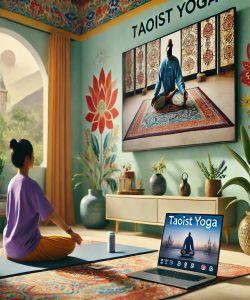
Overview of Taoist Yoga
Taoist Yoga, known historically as Tao Yin, represents a sophisticated and ancient system of self-cultivation originating from the philosophical and spiritual traditions of Taoism in China. It is an uncompromising discipline fundamentally concerned with the harmonisation of the body, mind, and spirit to align the practitioner with the natural order of the universe, the Tao. Unlike many Western-appropriated forms of yoga that prioritise muscular exertion and acrobatic postures, Taoist Yoga is an internal art. Its primary objective is the cultivation, circulation, and preservation of Qi, the vital life force energy that animates all living things. The practice is a meticulous integration of gentle, flowing movements, specific static postures, focused breathing techniques, and profound meditative states. It operates on the intricate map of the body’s energy channels, or meridians, seeking to dissolve blockages and restore a smooth, unimpeded flow of Qi. This restoration is believed to be the cornerstone of physical health, emotional equilibrium, and spiritual insight. The practice is not a mere fitness regimen; it is a profound methodology for nurturing the Three Treasures—Jing (essence), Qi (vitality), and Shen (spirit)—which are considered the fundamental substances of life. Through its deliberate and mindful techniques, Taoist Yoga guides the practitioner away from a state of internal friction and depletion towards one of effortless power, resilience, and deep connection with the fundamental rhythms of nature. It is, therefore, a path to longevity and wisdom, demanding patience, subtlety, and an unwavering commitment to internal exploration over external performance. It is a rigorous journey inward, designed to unlock the body’s innate capacity for self-healing and to foster a state of profound inner peace and vitality that resonates through every aspect of one’s being.
What are Taoist Yoga?
Taoist Yoga, or Tao Yin, constitutes a comprehensive system of psycho-physiological practices designed to cultivate and balance the fundamental life force, known as Qi. It is not a singular discipline but rather an integrated methodology that encompasses a range of techniques rooted in ancient Taoist philosophy. Its core purpose transcends mere physical fitness, aiming instead for the profound harmonisation of an individual’s internal energy with the greater flow of the cosmos, the Tao. The practice is fundamentally internal, focusing on sensation, breath, and the subtle currents of energy within the body rather than on the external aesthetic of a posture. It operates on the principle that physical and emotional health are direct manifestations of the state of one's Qi. Therefore, its techniques are meticulously designed to purify, strengthen, and circulate this vital energy through the body’s network of meridians.
The primary components of this discipline include:
Tao Yin Movements: These are often translated as "guiding and pulling." They consist of gentle, deliberate stretches and movements synchronised with the breath, designed to open the joints, release tension in the connective tissues, and guide the flow of Qi to specific areas of the body, nourishing the internal organs.
Qigong: This component, meaning "energy work," involves specific breathing patterns and physical exercises to actively build and manage the body's Qi. These practices can be both dynamic and static, each set designed to achieve a particular energetic effect, such as purging stale energy or tonifying a specific organ system.
Neigong (Internal Work): This refers to the more advanced, meditative aspect of the practice, where the focus shifts entirely inward. It involves techniques such as visualising and guiding Qi through specific pathways, like the Microcosmic Orbit, to refine the body's energetic signature and cultivate the Three Treasures: Jing, Qi, and Shen.
Who Needs Taoist Yoga?
Individuals Seeking Profound Internal Balance and Stress Reduction. Those subjected to chronic stress, anxiety, or a persistent state of mental agitation will find this practice indispensable. Its deliberate focus on deep, diaphragmatic breathing and mindful movement directly regulates the autonomic nervous system, shifting the body from a state of sympathetic dominance (fight-or-flight) to parasympathetic activation (rest-and-digest), thereby fostering a deep sense of calm and resilience.
Practitioners of Martial Arts and Other Demanding Physical Disciplines. Martial artists, athletes, and dancers require more than just brute strength; they require supple power, efficient energy usage, and rapid recovery. Taoist Yoga is not a supplementary practice but a foundational one, cultivating the internal energy (Qi) and pliable strength in the joints and connective tissues that are essential for advanced performance, injury prevention, and longevity in their primary discipline.
Those Focused on Long-Term Health, Vitality, and Healthy Ageing. The practice is expressly designed to promote longevity by preserving the body’s essential energy (Jing) and ensuring the smooth functioning of the internal organs. It directly addresses the stiffness, decreased mobility, and energetic depletion that often accompany ageing, offering a sustainable methodology for maintaining vitality, flexibility, and robust health well into later life.
Individuals Experiencing Physical Stagnation or Chronic Pain. People suffering from conditions related to blockages in the body, such as persistent joint pain, back stiffness, or poor circulation, will derive significant benefit. The techniques are specifically engineered to open the energy channels (meridians), release deep-seated tension in the fascia and connective tissues, and promote the free flow of blood and Qi, addressing the root cause of stagnation rather than merely its symptoms.
Seekers of Deeper Meditative States and Spiritual Insight. For those who find seated meditation challenging or who wish to integrate mindfulness into movement, Taoist Yoga provides a direct pathway. It is a form of moving meditation that cultivates profound interoceptive awareness and a state of inner stillness. It is a practical application of Taoist philosophy, offering a direct, embodied experience of concepts like Wu Wei (effortless action) and the harmonisation of Yin and Yang.
Origins and Evolution of Taoist Yoga
The origins of Taoist Yoga, or Tao Yin, are deeply embedded in the soil of ancient Chinese civilisation, predating many formalised systems of health and spirituality. Its earliest roots can be traced to the shamanistic practices of the Zhou Dynasty, where ritual dances and movements were performed to harmonise humanity with the forces of nature and the spirit world. These proto-forms of Qigong and Tao Yin were not merely exercises but sacred acts of communion, designed to exorcise illness-causing spirits and align the individual with the celestial currents of the cosmos.
With the emergence of Taoist philosophy during the era of the Hundred Schools of Thought, particularly with the seminal texts attributed to Laozi (the Tao Te Ching) and Zhuangzi, these rudimentary practices began to acquire a sophisticated philosophical framework. The focus shifted from external ritual to internal cultivation. The goal was no longer just to placate external forces but to embody the Tao—the ineffable, natural order of the universe—within oneself. Early medical texts, such as the Huangdi Neijing (The Yellow Emperor's Inner Canon), further codified the understanding of Qi, Yin-Yang theory, and the meridian system, providing a precise anatomical and energetic map upon which these practices could be refined.
During the Han and subsequent dynasties, Taoist adepts, seeking longevity and spiritual immortality, developed these arts into a highly structured discipline known as Yang sheng, or "nurturing life." They meticulously documented breathing techniques, physical postures, and meditative visualisations designed to cultivate the "Three Treasures": Jing (essence), Qi (vital energy), and Shen (spirit). This period saw the crystallisation of specific Tao Yin and Qigong sets, many of which are still practised today. The evolution continued through the Tang and Song dynasties, with the development of Neidan, or internal alchemy, which represented the pinnacle of Taoist internal practice—a complex meditative technology for transmuting the fundamental energies of the body into a state of spiritual radiance. In the modern era, Taoist Yoga has been influenced by, and has influenced, global health and wellness movements, with some of its principles being integrated into contemporary practices like Yin Yoga, whilst still retaining its core identity as a profound art of internal transformation.
Types of Taoist Yoga
Tao Yin (Guiding and Pulling): This is the foundational practice from which the broader discipline derives its name. Tao Yin consists of a series of gentle, flowing stretches and self-massage techniques performed in conjunction with deep, conscious breathing. Its primary function is to "guide" Qi to specific areas and "pull" or stretch the tissues to open the body’s energy channels, or meridians. Unlike dynamic yoga styles, the emphasis is not on muscular effort but on releasing deep-seated tension in the joints, tendons, and fascia. The movements are often slow, deliberate, and designed to wring out stagnation from the tissues, promoting the smooth circulation of blood, lymph, and Qi, thereby nourishing the internal organs and calming the nervous system.
Qigong (Energy Cultivation): Qigong is a more explicit practice of "energy work." It encompasses a vast array of exercises, both static and dynamic, that are specifically designed to build, balance, and circulate Qi. Qigong sets, such as the famous Ba Duan Jin (Eight Brocades) or Yi Jin Jing (Muscle/Tendon Changing Classic), involve a sequence of coordinated movements, breathing patterns, and focused intention. Each movement has a precise energetic purpose, such as purging toxic Qi from a particular organ, tonifying the body’s overall energy field, or gathering universal Qi from the environment. It is a direct and powerful method for managing one’s vital energy.
Neidan (Internal Alchemy): This represents the most advanced and esoteric aspect of Taoist internal arts. Neidan is a predominantly meditative practice focused on transforming the "Three Treasures" of Jing (generative essence), Qi (vital energy), and Shen (spirit). Through sophisticated techniques of visualisation, breath control, and deep internal awareness, practitioners learn to gather and circulate energy along specific pathways, most notably the Microcosmic Orbit. The alchemical goal is to progressively refine these energies, transmuting the gross into the subtle, with the ultimate aim of achieving a state of profound health, longevity, and spiritual enlightenment or "immortality" in the Taoist sense.
Yin Yoga (Modern Derivative): While a modern innovation developed in the West, Yin Yoga draws its core theoretical framework directly from Taoist principles. It applies the Taoist understanding of meridian theory and the nature of Yin tissues (connective tissues like ligaments, bones, and fascia). The practice involves holding floor-based postures passively for extended periods, typically several minutes. This prolonged, gentle stress stimulates and strengthens the deep connective tissues, which are often neglected in more active, muscle-focused (Yang) practices. Yin Yoga is, in essence, a modern application of the Taoist emphasis on stillness, patience, and the targeting of deep energetic pathways.
Benefits of Taoist Yoga
Profound Regulation of the Autonomic Nervous System: The practice’s emphasis on slow, deliberate movement and deep, diaphragmatic breathing acts as a powerful tool for shifting the nervous system from a state of sympathetic (fight-or-flight) arousal to parasympathetic (rest-and-digest) dominance. This results in a significant reduction in chronic stress, anxiety, and the physiological markers associated with them.
Enhanced Circulation of Qi and Blood: The core objective of Taoist Yoga is to dissolve energetic blockages within the meridian system. By systematically opening these channels through gentle stretching and targeted movements, the practice ensures the unimpeded flow of Qi, which in turn promotes robust circulation of blood and lymph, nourishing the internal organs and tissues.
Increased Joint Health, Flexibility, and Connective Tissue Resilience: Unlike conventional exercise that focuses on muscles, Taoist Yoga specifically targets the joints, ligaments, tendons, and fascia. The gentle, sustained stresses applied in the postures stimulate these ‘Yin’ tissues, promoting hydration, increasing range of motion, and building long-term resilience against injury and age-related stiffness.
Cultivation of Deep Inner Stillness and Mental Clarity: Taoist Yoga is fundamentally a meditative practice. By demanding a high degree of interoceptive awareness—the ability to feel and sense the internal state of the body—it trains the mind to become quiet, focused, and present. This cultivates a state of mental clarity and emotional equilibrium that extends far beyond the practice session.
Harmonisation and Tonification of Internal Organs: According to Taoist and Traditional Chinese Medicine theory, each meridian is associated with a specific internal organ. By stimulating these pathways, the practice directly enhances the function and vitality of the corresponding organs, promoting better digestion, respiration, detoxification, and overall systemic health from the inside out.
Preservation of Jing (Essence) and Promotion of Longevity: The discipline places a strong emphasis on conserving and cultivating Jing, the body’s deep, constitutional energy reserve, which is believed to govern vitality and lifespan. By reducing stress, improving energetic efficiency, and avoiding excessive exertion, Taoist Yoga is considered a primary practice for "nurturing life" (Yang sheng) and promoting robust longevity.
Core Principles and Practices of Taoist Yoga
Wu Wei (Effortless Action): This is the paramount principle, dictating that all movements and postures must be approached with a sense of yielding and non-struggle. Instead of forcing the body into a shape, the practitioner allows the body to open naturally, acting in harmony with its current state. It is the art of achieving maximum effect with minimum effort, finding the path of least resistance, and moving with the grace and intelligence of water. This principle requires the complete abandonment of ego-driven ambition and competition.
Cultivation of the Three Treasures (Jing, Qi, Shen): This is the central alchemical work of the practice. Jing is the deep, constitutional essence; Qi is the vital life force energy that animates the body; and Shen is the spirit or consciousness. The practices are meticulously designed to first conserve Jing, then transmute it into abundant Qi, and finally refine Qi into luminous Shen. This process is the foundation of health, vitality, and spiritual insight within the Taoist framework.
Meridian Theory and Qi Flow: The practice is not based on Western anatomical models of muscles and bones alone, but on the intricate energetic map of the meridians. Every posture and movement is intended to stimulate specific energy channels to dissolve blockages and encourage the smooth, unimpeded flow of Qi. A practitioner must therefore cultivate interoceptive sensitivity to feel these subtle currents and work with them intelligently.
Yin and Yang Balance: Taoist Yoga seeks to create a dynamic equilibrium between the opposing yet complementary forces of Yin and Yang. This manifests as balancing activity (Yang) with receptivity (Yin), strength with flexibility, and the outer physical form with the inner energetic experience. The practice itself often alternates between flowing, dynamic movements (Yang) and long, static holds (Yin) to harmonise these fundamental polarities within the body and mind.
Ziran (Spontaneity and Naturalness): This principle encourages the practitioner to connect with their own innate, natural state, free from artificiality and conditioning. The practice should feel authentic and intrinsic, not like an imposed discipline. It involves listening deeply to the body’s wisdom and allowing it to guide the practice, fostering a state of being that is spontaneous, genuine, and perfectly aligned with its own nature.
The Primacy of the Breath: The breath is regarded as the crucial link between the mind and the body, and the primary vehicle for guiding Qi. All practices are synchronised with deep, slow, and natural breathing, typically originating from the Lower Dantian (the energy centre below the navel). Controlled, conscious breathing anchors the mind, calms the nervous system, and directly influences the movement of energy within the body.
Online Taoist Yoga Benefits
Unparalleled Accessibility to Authentic Instruction: The online format dismantles all geographical barriers, providing practitioners with direct access to highly specialised and authentic instructors who may be located anywhere in the world. This is of critical importance for a niche discipline like Taoist Yoga, where qualified teachers are scarce. It allows a dedicated student to learn from a genuine lineage holder or a deeply experienced master without the necessity of expensive and time-consuming travel.
Creation of a Controlled and Personalised Practice Sanctuary: Practising from one's own home allows for the meticulous cultivation of an ideal environment free from the external distractions and social pressures of a public studio. The practitioner can control the lighting, temperature, and ambient sound, creating a personal sanctuary that is wholly conducive to the deep, internal focus that Taoist Yoga demands. This eliminates the potential for comparison with others and fosters a more intimate, non-performative relationship with the practice.
Enhanced Development of Interoceptive Awareness: Without the physical presence of an instructor to provide constant hands-on adjustments, the online practitioner is compelled to develop a far greater degree of self-reliance and internal sensitivity. They must learn to interpret their body’s subtle signals and sensations with heightened acuity, leading to a more rapid and profound development of interoception. This self-referential learning is a cornerstone of advanced internal arts.
Facilitation of Unwavering Consistency and Routine: The convenience of online practice removes many of the logistical hurdles—such as commuting and scheduling conflicts—that often disrupt consistent practice. This ease of access makes it significantly simpler to integrate the discipline into a daily routine, and it is through such unwavering, regular practice, rather than sporadic intensive sessions, that the deep, cumulative benefits of Taoist Yoga are truly realised.
Cost-Effectiveness and Resource Availability: Online platforms frequently offer a more cost-effective means of study compared to private or group in-person classes. Furthermore, they provide a repository of recorded sessions and supplementary materials that can be reviewed at any time. This ability to revisit specific instructions, techniques, and lectures allows for a layered and repetitive learning process that deepens understanding and refines the execution of the practice over time.
Taoist Yoga Techniques
The following outlines the foundational technique of activating and feeling the Lower Dantian, a crucial first step in all internal arts.
Step 1: Assume the Foundational Stance.
Stand with the feet parallel and shoulder-width apart, ensuring the weight is distributed evenly across the soles. Soften the knees slightly, ensuring they do not extend past the toes. Tuck the tailbone gently to lengthen the lower back and align the spine. The head should feel as if suspended from above, with the chin slightly tucked. Allow the arms to hang loosely at the sides. This posture, known as Wuji, creates a state of centred and receptive stillness.
Step 2: Establish Abdominal Breathing.
Place both hands gently over the abdomen, approximately two inches below the navel. Close the eyes or soften the gaze. Abandon all forms of chest breathing. As you inhale slowly and deeply through the nose, consciously allow the lower abdomen to expand outward, as if inflating a soft ball. As you exhale, allow the abdomen to gently fall back towards the spine. The entire focus must remain on this deep, rhythmic abdominal movement.
Step 3: Centre the Mind in the Lower Dantian.
Maintain the deep abdominal breathing. Now, shift your mental focus from the external movement of the hands to the space deep inside the body, behind the navel and in front of the spine. This is the energetic location of the Lower Dantian, the body's primary reservoir of Qi. With each inhalation, visualise or feel a warm, radiant energy gathering and brightening within this centre. With each exhalation, feel this energy condensing, becoming more solid and potent.
Step 4: Cultivate the Sensation of Warmth and Fullness.
Continue this process with unwavering concentration. The objective is to move from a purely intellectual visualisation to a tangible, physical sensation. Be patient and persistent. The initial signs of successful activation are often a distinct feeling of warmth, a subtle pulsing, or a sense of pleasant fullness and pressure in the lower abdomen. Do not strain or force this sensation; allow it to arise naturally from the combination of posture, breath, and focused intention.
Step 5: Conclude and Gather the Energy.
After a dedicated period of practice, prepare to conclude. Perform a final, deep inhalation, gathering the energy. On the exhalation, gently press the hands over the Lower Dantian. For men, the right hand covers the left; for women, the left hand covers the right. Hold this position for several breaths, consciously sealing the cultivated Qi within its reservoir. Slowly open the eyes and release the posture.
Taoist Yoga for Adults
Taoist Yoga is an exceptionally suitable and potent practice for adults across the entire lifespan, offering a sophisticated alternative to more aggressive, performance-oriented exercise systems. Its intrinsic value lies in its low-impact nature and its profound focus on internal health, vitality, and systemic balance, which are paramount concerns for the mature individual. The discipline rigorously eschews the high-impact, competitive, and often depleting movements that can lead to injury and burnout. Instead, it employs gentle, deliberate stretches and flowing motions that are specifically designed to lubricate the joints, hydrate the connective tissues, and release the chronic tension that accumulates over decades of physical and emotional stress. This makes it an ideal methodology for managing and reversing the common effects of ageing, such as stiffness, reduced mobility, and postural decline. For adults navigating the high pressures of professional and personal life, the practice serves as a powerful antidote to the relentless demands on the nervous system. Its meditative core and emphasis on deep, diaphragmatic breathing provide an immediate and effective tool for stress regulation, promoting mental clarity and emotional equilibrium. Furthermore, Taoist Yoga is not about achieving an idealised external form but about cultivating a deep, internal awareness and sensitivity. This inward focus fosters a more compassionate and intelligent relationship with one's own body, encouraging adults to work with their unique physical constitution and limitations rather than against them. It is a sustainable, lifelong practice that nurtures the body’s innate healing capacities, preserves vital energy, and supports a journey towards greater health, resilience, and wisdom through all phases of adult life.
Total Duration of Online Taoist Yoga
A standard, effective online session of Taoist Yoga is rigorously structured to last for a total duration of 1 hr. This timeframe is not arbitrary; it is deliberately calibrated to allow for a complete and balanced practice that addresses all essential components of the discipline without inducing fatigue or rushing the subtle processes of internal adjustment. The 1 hr is meticulously allocated to ensure a logical progression from preparation to deep practice and finally to integration. The initial phase is dedicated to arriving and grounding, using several minutes for the practitioner to mentally disengage from external concerns and establish a connection with their breath and physical presence. This is followed by a period of gentle Tao Yin warm-ups, designed to slowly open the joints, awaken the energy channels, and prepare the body’s tissues for deeper work. The central, most substantial portion of the 1 hr session is then dedicated to the core practice, which may consist of a specific Qigong set, a series of long-held Yin postures, or a combination thereof, targeting particular meridians or energetic objectives. This main segment requires sufficient time to allow the practitioner to move beyond superficial sensation and access the deeper energetic layers of the body. Following this peak, a dedicated period is reserved for stillness and meditation, allowing the cultivated Qi to circulate, settle, and integrate throughout the system. The final minutes of the 1 hr are then used for a gentle cool-down and a concluding practice of gathering and storing the energy in the Lower Dantian, ensuring the practitioner leaves the session feeling centred, revitalised, and contained, rather than energetically scattered. This comprehensive, hour-long structure is imperative for achieving the full therapeutic and transformative potential of the art.
Things to Consider with Taoist Yoga
Engaging with Taoist Yoga demands a significant paradigm shift away from the prevailing Western fitness mentality. It is imperative to understand that this is not a practice of acquisition, but one of cultivation and refinement. The goal is not to conquer difficult poses or achieve external benchmarks, but to foster a deep, internal sensitivity and to harmonise the flow of one's own life force. Progress is measured not in visible flexibility or strength, but in subtle, internal shifts: a calmer nervous system, improved vitality, and a more profound sense of inner peace. This requires immense patience and the relinquishing of the ego's desire for rapid, demonstrable results. One must consider that the practice operates on the subtle body, working with the energy channels, or meridians, as understood in Traditional Chinese Medicine. This requires a willingness to engage with a conceptual framework that may be unfamiliar and to develop interoception—the ability to feel what is happening inside the body—as the primary tool of navigation. Furthermore, the practice can stir and release not only physical tension but also deeply held emotional and energetic patterns. The practitioner must be prepared to face these releases with equanimity and non-judgement. Finally, the importance of a qualified and authentic instructor cannot be overstated. Given the subtlety and potential potency of the work, guidance from a teacher with a genuine lineage and a deep, embodied understanding of the principles is not a luxury but an absolute necessity for safe and effective practice.
Effectiveness of Taoist Yoga
The effectiveness of Taoist Yoga is profound and multifaceted, though it must be assessed by its own criteria rather than those of conventional exercise. Its efficacy lies not in its capacity to generate significant muscle hypertrophy or cardiovascular endurance, but in its unparalleled ability to optimise the body's self-regulating systems and cultivate a state of robust, resilient health from the inside out. The practice is exceptionally effective at regulating the autonomic nervous system, systematically down-regulating the stress-induced sympathetic response and promoting a dominant parasympathetic state. This has far-reaching consequences, leading to measurable improvements in stress resilience, sleep quality, and digestive function. Its primary mechanism of action—the dissolution of blockages in the meridian system—enhances the flow of Qi and blood, which is the foundation of health in the Taoist paradigm. This improved circulation effectively nourishes the internal organs, hydrates the connective tissues, and facilitates the body’s innate detoxification processes. On a psycho-emotional level, its effectiveness is demonstrated by a marked increase in mental clarity, emotional stability, and interoceptive awareness. By training the mind to inhabit the body with focused, non-judgemental attention, it systematically unwinds patterns of mental agitation and emotional reactivity. The ultimate effectiveness of Taoist Yoga, however, is realised over the long term, in its capacity to "nurture life" (Yang sheng) by preserving the body’s deep energy reserves and promoting a state of vitality and graceful ageing. It is a strategic investment in one’s fundamental constitutional health.
Preferred Cautions During Taoist Yoga
The practice of Taoist Yoga, while gentle, is potent and demands an uncompromising respect for the body’s intrinsic intelligence and limitations. It is imperative that the practitioner immediately discards any mindset of competitive striving or the ambition to push beyond sensible boundaries. The cardinal rule is to differentiate meticulously between the therapeutic stress of a beneficial stretch on connective tissue and the sharp, burning, or electrical signal of pain that indicates strain and potential injury. The latter must be retreated from without hesitation or self-judgement. One must never force a posture or movement; the principle of Wu Wei, or effortless action, is not a philosophical suggestion but a non-negotiable safety directive. Particular caution is required for individuals with pre-existing conditions such as joint hypermobility, severe osteoporosis, recent surgery, or specific spinal issues. Such practitioners must proceed only with explicit guidance from a qualified instructor and a knowledgeable healthcare provider. Furthermore, forcing the breath or attempting advanced energetic circulation techniques like the Microcosmic Orbit without proper foundational work and expert supervision is contraindicated and potentially harmful. The energy must be coaxed, never commanded. The practitioner must remain vigilant against dizziness or nausea, which can indicate overexertion or the stirring of deep energetic blockages, and should ease out of the practice if such symptoms arise. The body's wisdom is the ultimate authority, and any instruction that contradicts its clear signals must be disregarded.
Taoist Yoga Course Outline
Module 1: Foundational Principles and Posture.
This module establishes the core philosophical framework. It provides a rigorous introduction to the concepts of the Tao, Yin-Yang theory, Wu Wei (effortless action), and the Three Treasures (Jing, Qi, Shen). The practical component focuses exclusively on mastering the foundational Wuji stance and establishing deep, diaphragmatic breathing from the Lower Dantian.
Module 2: Introduction to Tao Yin – Guiding and Pulling.
Practitioners are introduced to the primary movements of Tao Yin. The focus is on a series of gentle, targeted stretches and self-massage techniques designed to open the major joints of the body—ankles, knees, hips, spine, shoulders, and wrists. The objective is to release superficial tension and begin sensitising the body to the pathways of the meridians.
Module 3: The Art of Stillness – Foundational Yin Postures.
This module introduces the practice of holding passive, floor-based postures for extended durations. The focus is on postures that target the primary meridians of the lower body, such as the kidney, liver, and spleen channels. Students are instructed on the precise principles of finding an appropriate edge, remaining still, and observing sensation without judgement.
Module 4: Foundational Qigong – The Eight Brocades (Ba Duan Jin).
Students will learn, step-by-step, the complete sequence of the Ba Duan Jin. This classic Qigong set consists of eight distinct movements that systematically stretch the tendons, massage the internal organs, and regulate the Qi of the entire body. Emphasis is placed on the meticulous coordination of movement, breath, and intention.
Module 5: Introduction to Neigong – The Microcosmic Orbit.
This module introduces the foundational meditative practice of internal alchemy. After ensuring a stable connection to the Lower Dantian, students are guided through the initial stages of visualising and feeling the circulation of Qi up the Governing Vessel (Du Mai) along the spine and down the Conception Vessel (Ren Mai) along the front of the body.
Module 6: Integration and Daily Practice.
The final module focuses on synthesising the learned techniques into a coherent personal practice. Guidance is provided on how to structure a daily routine that balances dynamic (Qigong) and still (Yin) elements, and how to apply the core principles of Taoist Yoga to daily life for continuous cultivation of health and harmony.
Detailed Objectives with Timeline of Taoist Yoga
Initial Phase (First Month): Foundational Embodiment and Nervous System Regulation.
The primary objective during this period is to establish a consistent practice and learn the fundamental mechanics. The practitioner will master the Wuji stance, achieve consistent diaphragmatic breathing, and learn a basic set of Tao Yin movements. The key outcome is a tangible shift in the autonomic nervous system, with a noticeable reduction in baseline stress and an increased capacity for relaxation. The practitioner will begin to differentiate between muscular effort and fascial tension.
Intermediate Phase (Months Two to Six): Energetic Sensitisation and Meridian Awareness.
The objective shifts from gross physical movements to subtle energetic perception. The practitioner will deepen their understanding and practice of Yin postures and Qigong sets. The key outcome is the ability to tangibly sense the flow of Qi, or at least the effects of its movement, such as warmth, tingling, or a feeling of fullness along specific meridian lines. Awareness will start to move from the external shape of a pose to the internal energetic pathways being stimulated.
Consolidation Phase (Months Seven to Twelve): Dantian Cultivation and Internal Integration.
The practitioner’s primary objective is to develop a stable and potent connection to the Lower Dantian, making it the conscious centre of all movement and stillness. They will begin to work with more subtle Neigong techniques, such as the Microcosmic Orbit, with greater consistency. The key outcome is a palpable sense of a consolidated energy centre in the lower abdomen and the ability to maintain a calm, centred state of mind even amidst external challenges. The principles of the practice will begin to integrate into daily life.
Advanced Practice (Year Two and Beyond): Refinement and Effortless Expression.
The objective moves from conscious practice to spontaneous, embodied expression. The practitioner will refine their Neigong skills and may explore more advanced Qigong forms or meditative techniques. The key outcome is the internalisation of the core principles to the point where the practice becomes an effortless aspect of being. The state of harmony, balance, and vitality cultivated on the mat becomes the practitioner’s default state, and the distinction between formal practice and daily life begins to dissolve.
Requirements for Taking Online Taoist Yoga
Unwavering Self-Discipline and Personal Accountability: The online format necessitates a high degree of intrinsic motivation. The practitioner must possess the discipline to attend sessions consistently, to practise diligently without external supervision, and to take full responsibility for their own safety by listening to their body's signals with absolute honesty.
A Dedicated and Sacrosanct Practice Space: A quiet, private, and uncluttered area is non-negotiable. This space must be free from household distractions, interruptions, and background noise. It must be large enough to allow for unrestricted movement and should be treated as a sacred space dedicated solely to the practice during the session.
Reliable and High-Quality Technical Equipment: A stable, high-speed internet connection is imperative to ensure an uninterrupted session. The practitioner must have a functional device (computer, tablet) with a clear screen and audible speakers. A webcam is also required so the instructor can provide at least visual feedback on posture and alignment.
Essential and Appropriate Props: The practitioner is responsible for procuring their own equipment. A high-quality yoga mat is fundamental. Additionally, a set of props is required for the Yin aspects of the practice, including at least one bolster, two yoga blocks, and one or more blankets to support the body and facilitate deep release.
The Maturity to Prioritise Internal Sensation Over External Form: The practitioner must possess the emotional and mental maturity to abandon the ego's desire to achieve a perfect-looking posture. The primary requirement is a willingness to turn one's focus inward and engage with the subtle, and sometimes uncomfortable, sensations that arise, using them as the sole guide for the practice.
A Commitment to Foundational Study: A willingness to engage with the theoretical and philosophical underpinnings of the practice is essential. This is not mere physical exercise; understanding the basic concepts of Qi, meridians, and Yin-Yang theory is required for the practice to be performed with the correct intention and to yield its full benefits.
Things to Keep in Mind Before Starting Online Taoist Yoga
Before embarking on the online study of Taoist Yoga, it is imperative to conduct a rigorous vetting of the prospective instructor. You must scrutinise their credentials, lineage, and depth of experience, as the digital medium can obscure a lack of authentic, embodied knowledge. Seek testimonials and, if possible, engage in direct communication to assess their understanding and teaching philosophy. It is crucial to recognise that the online format places a far greater onus of responsibility for safety squarely upon the practitioner. Without the immediate, hands-on correction of an in-person guide, you must cultivate an uncompromising honesty with yourself, respecting your body’s limits and never pushing into pain for the sake of conforming to a visual instruction. Furthermore, one must set realistic and appropriate expectations. The path of Taoist Yoga is one of subtle, incremental cultivation, not of dramatic, instantaneous transformations. Progress is measured in internal states of calm, clarity, and vitality, which may not be immediately apparent or externally visible. Prepare to create and fiercely protect a dedicated practice space, ensuring it is a sanctuary free from the digital and domestic distractions that will otherwise completely undermine the internal focus required. Finally, understand that this discipline demands consistency over intensity. The commitment is not to a single, powerful session, but to a steady, patient, and regular practice that gradually re-patterns the body’s energetic and neurological systems over time.
Qualifications Required to Perform Taoist Yoga
The authority to teach Taoist Yoga is not conferred by a single, centralised, and universally recognised governing body. Instead, authenticity and qualification are derived from a combination of deep personal immersion, direct lineage, and comprehensive knowledge. A credible instructor must be more than a mere technician of postures; they must be an embodiment of the principles they profess to teach. An absolute prerequisite is a long-term, dedicated, and profound personal practice. This is non-negotiable, as the subtle energetic understandings of the art can only be grasped through years of direct, personal experience, not through weekend certifications or academic study alone. Beyond this, several key markers of qualification are imperative:
Direct Lineage and Transmission: The instructor should be able to demonstrate a clear and verifiable line of study under a recognised master or within an established and respected school of Taoist arts. This ensures that the knowledge being transmitted is not a modern invention but is rooted in a tradition of proven efficacy.
Comprehensive Theoretical Knowledge: A qualified teacher must possess a deep and integrated understanding of the foundational principles of Taoist philosophy (Tao, Wu Wei, Yin-Yang), as well as the core tenets of Traditional Chinese Medicine, including meridian theory, the Five Elements, and the functions of the internal organs.
Anatomical and Physiological Competence: While the practice is energetic, it occurs within a physical body. A competent instructor must therefore have a robust working knowledge of functional anatomy and physiology to provide safe and effective guidance and to modify practices for individuals with specific physical limitations or conditions.
While specific certifications in Qigong, Yin Yoga, or other related modalities can provide a useful baseline, they are secondary to the undeniable evidence of deep, long-term immersion and direct transmission from an authentic source.
Online Vs Offline/Onsite Taoist Yoga
Online
The online modality for practising Taoist Yoga offers a distinct set of advantages centred on autonomy and accessibility. It provides unparalleled convenience, removing all logistical barriers such as travel time and geographical location, which makes consistent, daily practice far more attainable. This format allows the practitioner to create a highly controlled and personalised environment, a personal sanctuary that can be optimised for quiet and deep internal focus, free from the social dynamics and potential distractions of a group class. This can be particularly beneficial for an internal art, as it encourages the practitioner to develop a strong sense of interoceptive awareness and self-reliance, forcing them to listen more intently to their own body’s signals rather than depending on external adjustments. Furthermore, online platforms grant access to a global network of highly specialised and authentic instructors who would otherwise be inaccessible, allowing students to study directly with masters in their field regardless of physical proximity. The primary drawback is the absence of hands-on, physical correction from the instructor, which places a greater burden of safety and precise self-assessment on the practitioner.
Offline/Onsite
The traditional offline, or onsite, method of instruction provides an irreplaceable dimension to the practice. The most significant benefit is the direct physical presence of a qualified instructor who can provide immediate, tactile feedback and hands-on adjustments. This ensures a higher degree of safety and can accelerate the understanding of subtle physical and energetic alignments. Practising within a group setting also creates a palpable shared energy field, or group Qi field, which can amplify the experience and provide a strong sense of community and collective focus. The instructor can observe students from all angles, identifying and correcting misalignments that may not be visible through a two-dimensional camera lens. The commitment of travelling to a specific location for practice can also create a powerful ritualistic boundary between everyday life and dedicated cultivation. The disadvantages, however, include the constraints of a fixed schedule, the time and cost associated with travel, and the potential for the studio environment to be distracting or foster a sense of comparison and competition, which is antithetical to the Taoist spirit.
FAQs About Online Taoist Yoga
Question 1. Is Taoist Yoga a religion?
Answer: No. It is a system of self-cultivation rooted in Taoist philosophy, but it does not require adherence to any religious dogma or belief system.
Question 2. Do I need to be flexible to start?
Answer: No. Flexibility is a result of the practice, not a prerequisite. The practice meets you where you are.
Question 3. Is it the same as Yin Yoga?
Answer: Not precisely. Yin Yoga is a modern practice that draws heavily on Taoist principles. Taoist Yoga is a broader, ancient system that includes Yin-style postures, but also Qigong (energy work) and Neigong (internal alchemy).
Question 4. Is this an intense workout?
Answer: No. It is a low-impact, internal practice focused on cultivating energy, not on cardiovascular intensity or muscular exertion.
Question 5. What is Qi?
Answer: Qi (or Chi) is the vital life force energy that, according to Taoist theory, flows through the body and animates all living things.
Question 6. What are meridians?
Answer: Meridians are the energetic pathways or channels through which Qi circulates within the body.
Question 7. Is it safe for beginners online?
Answer: Yes, provided you choose a qualified instructor and practise with mindful self-awareness, always prioritising safety over ambition.
Question 8. What equipment is essential?
Answer: A yoga mat, a stable internet connection, and a device. For Yin aspects, a bolster, blocks, and blankets are required.
Question 9. Can I practise every day?
Answer: Yes. A consistent, gentle daily practice is more beneficial than infrequent, intense sessions.
Question 10. How is it different from Indian Hatha Yoga?
Answer: It originates from a different philosophical and medical system (Taoism/TCM vs. Vedanta/Ayurveda) and focuses more on Qi circulation through meridians than on muscular engagement or complex postures.
Question 11. What is the main goal?
Answer: To harmonise body, mind, and spirit, cultivate vitality and longevity, and align oneself with the natural flow of the Tao.
Question 12. Will I lose weight?
Answer: While possible due to stress reduction and improved organ function, weight loss is not a primary objective.
Question 13. Is it suitable for seniors?
Answer: It is exceptionally suitable for seniors due to its gentle, low-impact nature and focus on joint health and vitality.
Question 14. Can it help with anxiety?
Answer: Yes. Its focus on deep breathing and mindful movement is highly effective for regulating the nervous system and reducing anxiety.
Question 15. What is the Dantian?
Answer: It is the body’s primary energy centre and reservoir of Qi, located in the lower abdomen.
Question 16. Can I do it if I have an injury?
Answer: You must consult with a healthcare professional and inform your instructor. Many aspects can be modified, but caution is paramount.
Conclusion About Taoist Yoga
In conclusion, Taoist Yoga stands as a profound and comprehensive system for the cultivation of life itself, far transcending the narrow definition of modern exercise. It is a rigorous internal art, a practical application of the deep wisdom of Taoist philosophy, designed not to conquer the body but to bring it into a state of profound harmony with the mind and spirit. Its uncompromising focus on the cultivation and circulation of Qi, the life force energy, offers a direct pathway to enhanced vitality, emotional equilibrium, and mental clarity. Through its integrated practices of Tao Yin, Qigong, and Neigong, it systematically addresses the root causes of energetic depletion and stagnation that underlie much of modern disease and discontent. The discipline demands patience, subtlety, and a radical shift in perspective from external achievement to internal awareness. It is not a quick fix or a superficial aesthetic pursuit; it is a lifelong path of self-refinement, a methodology for nurturing the body’s innate intelligence and resilience. In a world increasingly characterised by stress, distraction, and disconnection, the ancient yet timeless principles of Taoist Yoga offer a powerful and effective means of returning to a state of centredness, balance, and effortless power. It is, ultimately, a strategic art for navigating life with greater skill, wisdom, and vitality, aligning the microcosm of the self with the macrocosm of the Tao.