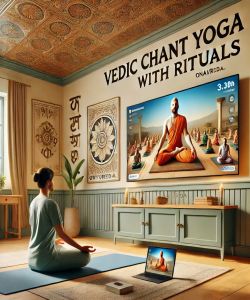
1. Overview of Vedic Chant Yoga with Rituals
Vedic Chant Yoga with Rituals constitutes a profound and esoteric discipline, deeply rooted in the primordial traditions of the Indian subcontinent. It is an exacting synthesis of sacred sound (Mantra), structured ceremony (Yajna or Puja), and the integrative philosophy of Yoga, aimed not merely at physical well-being but at comprehensive spiritual alignment and self-realisation. This practice is fundamentally distinct from modern, asana-centric forms of yoga, demanding rigorous adherence to the phonetic and metrical precision of Vedic chanting as its core component. The chants are not arbitrary hymns but are considered sonic manifestations of cosmic principles, whose vibrational efficacy is unlocked through meticulous pronunciation and intention. The accompanying rituals are not superstitious acts but are sophisticated, symbolic technologies designed to purify the practitioner’s environment, mind, and subtle-energy body, thereby creating a consecrated space for communion with higher states of consciousness. It is a path of unwavering discipline, where the practitioner engages directly with the foundational energies of creation through the tripartite action of mind (intention), speech (chant), and body (ritual action). The ultimate objective is to transcend mundane identification and achieve a state of holistic integration, harmonising the individual self (Jivatman) with the universal consciousness (Paramatman), thereby fulfilling the ultimate purpose of yogic science. This is not a practice for the casually interested; it is a demanding and transformative system for those committed to the most authentic and potent forms of spiritual development.
2. What are Vedic Chant Yoga with Rituals?
Vedic Chant Yoga with Rituals is an advanced spiritual system that integrates three fundamental pillars of ancient Vedic practice into a singular, cohesive discipline. It is not a modern fusion but a traditional methodology that understands these components as inseparable for profound transformation.
- Vedic Chanting (Mantra Yoga): This is the cornerstone of the practice. It involves the precise and disciplined recitation of hymns and verses from the Vedas, the most ancient scriptures of Hinduism. The focus is on perfect pronunciation (Shiksha), metre (Chandas), and intonation (Svara), as it is believed that the power of the mantra lies in its exact vibrational signature. This is a science of sound, intended to restructure the practitioner's consciousness and energetic field, rather than being simple devotional singing. The chants are a direct conduit to the divine principles they represent.
- Ritual (Karma Yoga/Kriya): This component involves the performance of structured ceremonies, such as Yajna (fire ceremony) or Puja (ritual offerings). These are not mere symbolic gestures. They are meticulously designed procedures that engage the practitioner physically and mentally, creating a sacred environment and invoking specific energies. Rituals serve to purify the self and the space, focus the mind, and externalise the internal intention, making the spiritual work tangible and potent. The actions of the ritual anchor the vibrational energy of the chant into the material plane.
- Yoga (Union): Within this context, ‘Yoga’ refers to the ultimate goal of union and the inner state of meditative absorption required to perform the chant and ritual effectively. It is the discipline of one-pointed focus (Dharana) and sustained meditation (Dhyana) that allows the practitioner to become a clear vessel for the energies being invoked. It moves beyond physical postures to encompass the mental and spiritual discipline necessary to ensure the chants and rituals are not performed mechanically but with full, conscious presence and unwavering intention.
3. Who Needs Vedic Chant Yoga with Rituals?
- Dedicated Spiritual Seekers: Individuals who have explored conventional spiritual or yogic paths and now seek a more profound, authentic, and disciplined framework for self-realisation. They are those who require a structured system that engages the entirety of their being—mind, body, and speech—in a singular, focused pursuit of higher consciousness.
- Practitioners of Traditional Yoga: Yogis and yoginis committed to the classical roots of yoga, who understand that the practice extends far beyond physical asana. They are individuals who wish to integrate the potent sciences of Mantra Yoga and Karma Yoga into their existing discipline to accelerate spiritual progress and deepen their understanding of yogic philosophy.
- Scholars and Students of Vedic Philosophy: Those who study the Vedas, Upanishads, and other related texts academically and wish to move from theoretical knowledge to direct, experiential understanding. This practice provides the practical application of the metaphysical principles they have studied, transforming intellectual comprehension into lived reality.
- Individuals Seeking Mental and Emotional Purification: Persons grappling with deep-seated mental patterns, anxieties, or emotional turbulence that superficial methods have failed to address. The rigorous discipline of chanting and the purifying nature of the rituals provide a powerful mechanism for clearing subconscious impediments and establishing profound psychological stability.
- Healers and Energetic Practitioners: Individuals working in therapeutic modalities who wish to understand and harness the foundational principles of sound and intention. This practice offers the original science of sacred vibration, equipping them with a powerful tool for personal energetic hygiene and for elevating the potency of their own work.
- Custodians of Cultural and Spiritual Heritage: People of Indian descent or others who feel a strong calling to preserve and embody the most ancient and powerful traditions of Sanatana Dharma. They are driven by a duty to maintain the integrity and continuity of these sacred practices for future generations.
4. Origins and Evolution of Vedic Chant Yoga with Rituals
The origins of Vedic Chant Yoga with Rituals are inextricably linked to the very dawn of Vedic civilisation, dating back several millennia. This practice is not a later invention but represents the primordial, integrated spiritual methodology of the ancient Rishis, the seer-sages to whom the Vedas were revealed. In its earliest form, the practice was centred around the Yajna, or the fire sacrifice, which was the principal mode of communication with the divine forces, or Devas. The Yajna was a complex orchestration of meticulous ritual action (Kriya), the precise recitation of hymns from the Rigveda and Samaveda (Mantra), and a state of deep inner focus and intention (Yoga). These three elements were never considered separate; they were a unified whole, where the chant gave power to the ritual, and the yogic state of mind gave authenticity to both.
Over centuries, as the philosophical landscape of ancient India evolved, particularly with the development of the Upanishads, the emphasis began to shift from external, large-scale public rituals to internalised, personal practices. The great fire altars of the Yajna were metaphorically reconstructed within the consciousness of the practitioner. The external fire became the inner fire of yogic discipline (Tapas), and the ritual offerings became the sensory inputs and mental modifications offered up for purification. The chanting, however, retained its central importance, its rules of pronunciation and metre preserved with unparalleled fidelity through oral traditions (Guru-Shishya Parampara).
This evolution did not discard the external rituals but rather added a profound esoteric dimension to them. The practice became dual-faceted: it could be performed externally as a communal ceremony or internally as a potent meditative discipline. This allowed the system to survive and adapt through changing social and political climates. In the modern era, whilst the grand public Yajnas have become less common, the integrated practice of chant, personal ritual, and yogic meditation has been preserved by dedicated lineages. It stands today as a direct, unbroken link to the spiritual technologies of the Vedic Rishis, a testament to its enduring power and sophistication.
5. Types of Vedic Chant Yoga with Rituals
- Shrauta Rituals with Chanting: This represents the most ancient and orthodox form, directly derived from the revealed Vedic texts (the Shruti). These are complex, large-scale ceremonies, often involving multiple priests and meticulously constructed fire altars. The chanting is highly technical, drawing from the Samaveda and Yajurveda, and must be executed with absolute precision. The objective is typically for the well-being of the community, the cosmos, or to appease specific Vedic deities for universal harmony.
- Grihya Rituals with Chanting: These are domestic rituals, prescribed by the Grihya Sutras, to be performed by the householder. They cover rites of passage and daily obligations (samskaras). Whilst smaller in scale than Shrauta rituals, they still demand strict adherence to procedure and the correct chanting of specific mantras. The yogic component is the focused intention and devotion required to consecrate daily life and family milestones.
- Tantric Vedic Rituals: This type represents a later synthesis where Vedic mantras and ritual frameworks are integrated with principles and methodologies from the Tantras. The focus shifts more intensely towards the internal manipulation of subtle energy (prana) and the awakening of Kundalini. The rituals might involve yantras (sacred geometry) and more complex visualisations alongside the Vedic chants, aiming for rapid spiritual transformation and the acquisition of spiritual powers (siddhis).
- Pauranic Puja with Vedic Chants: This is the most common form found in contemporary Hinduism. It involves the worship (Puja) of Pauranic deities like Shiva, Vishnu, or Devi, using a structured ritual procedure (e.g., the 16-step Shodashopachara Puja). The core of these pujas is often fortified with powerful Vedic hymns, such as the Purusha Suktam or Sri Rudram, lending them ancient authority and vibrational potency. The yogic element is primarily devotional (Bhakti Yoga).
- Internalised Yajna (Antar-Yajna): This is a purely meditative practice, primarily for advanced yogis and renunciates. Here, the entire ritual is performed mentally. The body is visualised as the altar, the breath as the offering, and the inner psychic fire (Jatharagni) as the sacrificial flame. The Vedic chants are recited mentally (manasika japa), directing their vibrational power inward to purify the subtle body and awaken higher consciousness. This is considered the pinnacle of ritual practice, fully integrating Karma, Jnana, and Bhakti Yoga.
6. Benefits of Vedic Chant Yoga with Rituals
- Profound Mental Clarification: The rigorous discipline of precise chanting compels the mind into a state of one-pointed concentration (Ekagrata), systematically dismantling mental clutter, anxiety, and cyclical thought patterns. This process establishes a foundation of unwavering mental stillness and clarity.
- Energetic and Psychic Purification: The sonic vibrations of Vedic mantras, combined with the sanctifying actions of ritual, work directly on the subtle-energy body (Pranamaya Kosha). This purifies the nadis (energy channels), neutralises negative psychic impressions (samskaras), and creates a resilient and luminous energetic field.
- Enhanced Cognitive Function: The meticulous attention required for learning and reciting chants with correct intonation (Svara) and metre (Chandas) acts as a powerful neurological exercise. This has been observed to improve memory, focus, and overall cognitive acuity, strengthening the intellect (Buddhi).
- Cultivation of Vocal Power and Presence: The practice fundamentally re-engineers the practitioner's use of voice, transforming it from a mere tool of communication into an instrument of power and intention. This cultivates a commanding vocal presence and an enhanced ability to articulate with clarity and impact.
- Deepened Spiritual Connection: The integrated nature of the practice provides a direct, experiential pathway to connect with the divine principles embedded within the Vedic tradition. It moves beyond theoretical belief into a tangible communion with higher consciousness, fostering authentic spiritual development.
- Harmonisation with Natural Rhythms: The rituals are often synchronised with cosmic and natural cycles (e.g., sunrise/sunset, phases of the moon). This practice systematically re-aligns the practitioner’s biorhythms with these larger universal patterns, promoting a state of profound balance and well-being.
- Development of Unwavering Discipline and Willpower: The commitment required to master the chants and perform the rituals correctly instils a powerful sense of inner discipline (Tapas) and strengthens willpower (Sankalpa Shakti). This fortitude extends into all other areas of the practitioner's life, enabling greater achievement and self-mastery.
7. Core Principles and Practices of Vedic Chant Yoga with Rituals
- Shraddha (Unwavering Faith): The foundational principle is an absolute and unshakable faith in the efficacy of the Vedas, the mantras, and the ritual process. This is not blind belief but a deep trust that provides the necessary psychic energy for the practice to yield results. Without Shraddha, the actions remain hollow.
- Shabda Brahman (The Absolute as Sound): The core metaphysical principle is the understanding that the ultimate reality (Brahman) is not silent but manifests as primordial sound. The Vedic chants are considered direct sonic expressions of this reality, and by reproducing them perfectly, one attunes oneself to the cosmic order.
- Purity (Shaucha): This principle operates on multiple levels. It demands external purity of the body and the ritual space, as well as internal purity of mind and intention. All practices begin with purification rites to ensure the practitioner is a clean vessel for the sacred energies invoked.
- Svara and Chandas (Pronunciation and Metre): An uncompromising adherence to the correct pronunciation, intonation, pitch, and rhythm of the chants is paramount. It is held that even a minor error can alter the vibrational effect of the mantra, rendering it ineffective or even detrimental. This necessitates rigorous training under a qualified Guru.
- Sankalpa (Focused Intention): Before any chant or ritual begins, the practitioner must formulate a clear and resolute intention. This Sankalpa acts as the guiding force for the entire practice, directing the generated energy towards a specific objective, whether it be spiritual liberation, worldly benefit, or universal peace.
- Agni (The Sacred Fire): Fire is a central element, serving as the divine messenger that carries the offerings and the energetic essence of the chants to the celestial realms. Whether an external fire (Yajna) or the internal fire of awareness (Jnana-Agni), it is the agent of transformation and purification.
- Samarpana (The Act of Offering): The practice is fundamentally an act of offering. This includes the physical offerings (ghee, grains) in a ritual, but more importantly, the offering of one's ego, time, and attention. The culmination of the practice is the offering of the fruits of one's actions to a higher power, which cultivates detachment (Vairagya).
- Guru-Shishya Parampara (The Master-Disciple Lineage): The authentic transmission of this knowledge is exclusively through a direct lineage from a qualified teacher to a dedicated student. This ensures the integrity, energetic potency, and correct methodology of the practice are preserved without corruption across generations.
8. Online Vedic Chant Yoga with Rituals
- Requirement for High-Fidelity Audio: The absolute priority in an online setting is the capacity for lossless, high-fidelity audio transmission. The efficacy of Vedic chanting is contingent upon the precise replication of subtle intonations (Svaras). Standard compressed audio from typical video conferencing software is inadequate and risks corrupting the transmission of the mantra.
- Visual Clarity for Ritual Components: A stable, high-resolution video connection is non-negotiable. The practitioner must be able to observe the Guru’s mudras (hand gestures), nyasas (energetic placements), and the specific arrangement of ritual items with perfect clarity. This visual precision is essential for correct replication and for maintaining the integrity of the ceremony.
- Establishment of a Sacred Personal Space: The practitioner bears the full responsibility for creating and maintaining a consecrated space in their own location. This environment must be physically clean, quiet, and free from all mundane distractions. This disciplined preparation is crucial to compensate for the lack of a shared, physically consecrated temple or shala.
- Increased Demand for Self-Discipline: The online format necessitates a far greater degree of self-motivation and discipline. Without the physical presence of a Guru and fellow practitioners, the onus is entirely on the individual to remain focused, resist distractions, and uphold the rigour of the practice with unwavering commitment.
- Direct but Remote Guru Guidance: Technology enables direct, real-time instruction and correction from a qualified Guru, regardless of geographical separation. This allows for the authentic transmission of knowledge that would otherwise be inaccessible. The Guru can observe the practitioner’s posture, pronunciation (as best as audio allows), and ritual actions, providing immediate feedback.
- Accessibility of Authentic Lineages: The primary advantage of the online format is its ability to connect dedicated students with authentic, often reclusive, teachers and lineages from around the world. It removes the significant logistical and financial barriers of travel, making profound and rare teachings available to a global audience.
- Energetic Connection Through Focused Intention: Whilst physical co-presence is absent, a potent energetic link can still be forged through the power of synchronised intention (Sankalpa). When the Guru and student(s) engage in the practice simultaneously with a shared, focused purpose, a unified field of consciousness is created that transcends physical distance.
9. Vedic Chant Yoga with Rituals Techniques
- Achamana (Initial Purification): Begin by performing a ritual purification of the self. Sit in a stable meditative posture. Take a small amount of water in the right palm and, whilst reciting specific purificatory mantras, sip the water three times. This act symbolises the purification of body, speech, and mind, preparing the vessel for the sacred work ahead.
- Sankalpa (Statement of Intention): Formulate a clear, concise, and resolute intention for the practice. Hold a flower and a small amount of water in your cupped right hand. State your name, your lineage (if applicable), and the specific purpose of the chant and ritual you are about to perform. This declaration directs all subsequent energy towards the stated goal.
- Pranayama and Nyasa (Breathwork and Energetic Placement): Engage in several rounds of controlled breathing, such as Nadi Shodhana (alternate nostril breathing), to balance the flow of prana. Follow this with Nyasa, the practice of placing mantras onto different parts of the body with specific hand gestures (mudras). This infuses the physical form with divine energy and creates an inner armour of protection.
- Guru Vandana and Invocation: Recite preliminary chants to honour the lineage of Gurus, ensuring their grace and guidance. Then, perform the invocation of the primary deity or cosmic principle associated with the main chant. This is often an invocation to Ganesha to remove obstacles, followed by the specific invocation for the core practice.
- Mantra Japa (The Core Chant Recitation): Begin the main chanting sequence. This must be done with unwavering focus on the precise pronunciation, metre, and intonation as taught by the Guru. The recitation can be Vaikhari (aloud), Upamshu (whispered), or Manasika (mental), depending on the specific instruction. Maintain a steady rhythm and complete concentration throughout.
- Dravya Samarpana (Ritual Offering): If the practice includes an external ritual, this is the point where physical offerings are made. This may involve offering ghee, grains, herbs, or incense into a ritual fire (Homa) or placing flowers, fruit, and water before a representation of the deity (Murti), all whilst continuing the prescribed chants. Each offering is a concrete reinforcement of the mantra's energy.
- Kshama Prarthana and Shanti Patha (Prayer for Forgiveness and Peace Chant): Conclude the practice by chanting a prayer for forgiveness for any inadvertent errors made during the ritual or recitation. Follow this with a Shanti Patha, a universal peace chant, to dedicate the merits and energy generated by the practice to the well-being of all beings. This seals the practice and integrates its effects.
10. Vedic Chant Yoga with Rituals for Adults
Vedic Chant Yoga with Rituals is an exceptionally potent discipline for adults, as it demands a level of maturity, psychological stability, and life experience that is typically absent in younger individuals. The practice is not a recreational activity but a serious and demanding spiritual technology. For the adult practitioner, it offers a direct and systematic method to address the complex existential questions and deep-seated psychological patterns that accumulate over a lifetime. The rigorous focus required for mastering the chants provides a powerful antidote to the scattered, anxious modern mind, forcing it into a state of profound, restorative concentration. The structured nature of the rituals provides a tangible framework for imposing order upon the chaos of daily life, transforming mundane existence into a consecrated and purposeful journey. Furthermore, adults often possess the discipline and patience, forged through professional and personal challenges, that are prerequisites for this path. They are better equipped to understand the necessity of unwavering commitment and to appreciate the subtle yet profound transformations that unfold over a sustained period of dedicated practice. It is a system for those who are no longer seeking superficial solutions but are prepared to engage in the deep, methodical work of self-purification and self-realisation. This is a path of responsibility, calling for the practitioner to become a stable anchor of positive, coherent energy within their family and community. It is, therefore, a practice eminently suited for the mature individual ready to undertake the ultimate project: the conscious re-engineering of the self.
11. Total Duration of Online Vedic Chant Yoga with Rituals
The designated duration for a single, complete session of Online Vedic Chant Yoga with Rituals is meticulously structured to be precisely 1 hr. This temporal framework is not an arbitrary allocation but a carefully considered container designed to facilitate a potent and integrated spiritual practice without inducing fatigue or mental dissipation. Within this one-hour unit, a full energetic cycle is initiated, executed, and concluded. The session is not merely an hour of continuous chanting; it is a holistic sequence that typically commences with preparatory rites of purification and intention-setting (Sankalpa), which establish the sacred foundation for the work. This is followed by the core segment of the practice, dedicated to the intensive recitation of the specific Vedic hymns, which constitutes the main body of the session. The final phase within the 1 hr duration is dedicated to concluding practices, such as prayers of gratitude, peace chants (Shanti Pathas), and acts of dedication, which serve to properly ground the powerful energies that have been invoked. This ensures the practitioner is not left in an agitated or ungrounded state. Adherence to the 1 hr structure is therefore critical, as it provides the necessary discipline and focus, ensuring that every moment is purposefully utilised to build towards a complete and harmoniously resolved energetic and spiritual experience, perfectly suited for the online format.
12. Things to Consider with Vedic Chant Yoga with Rituals
Engaging with Vedic Chant Yoga with Rituals necessitates a sober and comprehensive consideration of its profound demands and implications. This is not a casual pursuit and must be approached with the utmost seriousness and preparation. Foremost is the imperative of securing a qualified, authentic Guru. The transmission of this knowledge, particularly the subtle nuances of chanting, is impossible without guidance from a teacher belonging to a legitimate lineage (parampara). Self-study from books or unqualified sources is not only ineffective but potentially hazardous, as incorrect chanting can create dissonant and disruptive energetic patterns. A prospective practitioner must rigorously assess their own capacity for sustained discipline and unwavering commitment. The practice requires consistent, daily engagement over many years to yield its deeper fruits; it offers no shortcuts or instant gratification. Furthermore, one must be prepared to embrace a worldview rooted in the concept of Shabda Brahman (the Absolute as sound) and the efficacy of ritual action, which may challenge modern, purely materialistic paradigms. An individual must also evaluate their lifestyle and environment, as the practice demands a certain degree of purity (shaucha) in diet, conduct, and surroundings to be truly effective. It is a holistic system that will invariably demand adjustments in one's personal life. Finally, the practitioner must cultivate a robust sense of humility and patience, understanding that this is a sacred science of immense depth, and mastery is a lifelong journey, not a destination to be quickly reached.
13. Effectiveness of Vedic Chant Yoga with Rituals
The effectiveness of Vedic Chant Yoga with Rituals is absolute and unequivocal, provided it is undertaken with unwavering adherence to its core principles and methodologies. Its potency is not a matter of belief or subjective experience but is predicated on a sophisticated, time-tested science of vibration, intention, and sacred action. The practice operates on the fundamental premise that consciousness and matter are responsive to specific sonic frequencies. The precise, disciplined recitation of Vedic mantras generates a powerful, coherent energetic field that systematically restructures the practitioner’s own psychic and physiological systems, dissolving disharmonious patterns and entraining the mind to a higher state of order. The integration of ritual acts as a powerful amplifier, grounding the subtle energy of the chant into tangible reality and creating a consecrated psycho-physical environment that is conducive to profound transformation. The effectiveness is directly proportional to the purity of the practitioner’s intention, the precision of their chanting, and the fidelity of their ritual execution. When these conditions are met under the guidance of a genuine Guru, the results are not speculative; they are observable and profound. The practice yields measurable improvements in mental clarity, emotional stability, and cognitive function, alongside a deepened and authentic spiritual realisation. Its effectiveness is therefore not a question of 'if', but a direct consequence of the practitioner's willingness to meet its rigorous, non-negotiable demands. It is a powerful engine of change for those with the discipline to operate it correctly.
14. Preferred Cautions During Vedic Chant Yoga with Rituals
It is imperative to approach Vedic Chant Yoga with Rituals with a profound sense of caution and respect, as it is a powerful spiritual technology capable of producing significant effects, both positive and negative. The foremost caution is against undertaking this practice without the direct, consistent guidance of a qualified Guru from an authentic lineage. Attempting to learn complex Vedic chants or perform rituals from books, videos, or unverified sources is an act of extreme folly. The mispronunciation of a single syllable or an error in ritual procedure can corrupt the energetic integrity of the practice, leading to mental agitation, emotional disturbance, or other unforeseen adverse consequences. Practitioners must exercise extreme vigilance regarding the purity (shaucha) of their person, their space, and their intention. Engaging in this sacred work whilst in a state of anger, arrogance, or with manipulative intent will inevitably pollute the practice and attract undesirable energies. A further caution lies in the avoidance of ego-inflation. As one gains proficiency, there is a distinct danger of developing spiritual pride, which is the most insidious obstacle to genuine progress. The practitioner must constantly cultivate humility and remember that they are a servant to the tradition, not its master. Finally, one must be cautious not to treat the practice as a transactional tool for purely materialistic gain. Whilst it can bring worldly benefits, its ultimate purpose is spiritual liberation, and this higher aim must remain the unwavering focus. Disregarding these cautions is to trifle with forces that demand and deserve absolute reverence.
15. Vedic Chant Yoga with Rituals Course Outline
One: Foundational Principles and Purification
Introduction to the philosophy of Shabda Brahman and the role of Shraddha (faith).
Instruction in personal and spatial purity (Shaucha).
Techniques of basic purification: Achamana (ritual sipping) and Asana Shuddhi (seat purification).
Learning the correct meditative posture and establishing stability.
Introduction to Sankalpa: the art of formulating a potent intention.
Two: The Science of Sacred Sound (Shiksha)
Detailed study of the Sanskrit alphabet and its precise points of articulation.
Introduction to the primary rules of Vedic chanting: Udatta, Anudatta, and Svarita (the three main accents).
Drills and exercises for vocal conditioning and breath control (Pranayama) specific to chanting.
Learning simple, single-line invocatory mantras with perfect intonation.
Three: Basic Invocation and Ritual Structure
Mastery of the preliminary chants: Guru Vandana (salutations to the lineage) and Ganesha invocation.
Learning the basic structure of a simple Puja (ritual worship).
Instruction in fundamental mudras (hand gestures) and their significance.
Practice of a complete, short ritual sequence integrating a simple learned chant.
Four: Study of a Foundational Vedic Hymn
Verse-by-verse instruction of a core Vedic hymn (e.g., a section of the Gayatri Mantra or a simple Suktam).
Deep dive into the meaning and metaphysical significance of the chosen hymn.
Intensive practice of the hymn until flawless recitation is achieved.
Understanding the specific benefits and applications of the hymn.
Five: Integration of Chant and Ritual
Techniques for integrating the learned Vedic hymn into the ritual structure.
Instruction on Nyasa: placing mantras on the body to energise the self.
Learning the proper method for making offerings (Samarpana) whilst chanting.
Execution of a full, integrated practice of chant and personal ritual.
Six: Concluding Rites and Sustained Practice
Mastery of concluding prayers (Kshama Prarthana) and peace chants (Shanti Pathas).
Guidance on establishing a consistent daily personal practice (Sadhana).
Principles for maintaining the energy and purity of the practice over the long term.
Final assessment of chanting precision and ritual execution.
16. Detailed Objectives with Timeline of Vedic Chant Yoga with Rituals
- Initial Phase (First Period of Study):
- Objective: Establish Foundational Discipline and Vocal Purity.
- Actions: The practitioner will achieve mastery of a stable, seated meditation posture for extended periods. They will learn and internalise the core principles of personal and spatial purity (Shaucha). They will master the precise articulation of the entire Sanskrit alphabet from the correct points in the mouth. The practitioner will demonstrate flawless recitation of at least three primary invocatory mantras.
- Developmental Phase (Second Period of Study):
- Objective: Acquire Competence in a Core Vedic Hymn and Basic Ritual.
- Actions: The practitioner will commit a significant Vedic hymn (minimum 10-12 verses) to memory with perfect Svara (intonation) and Chandas (metre). They will demonstrate a comprehensive understanding of the hymn's meaning and symbolism. Concurrently, they will achieve proficiency in the sequence and execution of a 16-step basic Puja, including all associated mudras and procedures.
- Integration Phase (Third Period of Study):
- Objective: Synthesise Chant and Ritual into a Cohesive Practice.
- Actions: The practitioner will be able to perform a complete, unbroken ritual, seamlessly integrating the recitation of the mastered Vedic hymn at the appropriate points. They will demonstrate proficiency in Nyasa, correctly placing the sonic vibrations of the mantras onto the corresponding parts of their own body to create an energetic shield.
- Embodiment Phase (Fourth Period of Study):
- Objective: Internalise the Practice and Establish a Self-Sustaining Sadhana.
- Actions: The practitioner will have established a non-negotiable daily practice (Sadhana) without external prompting. They will exhibit tangible signs of the practice's effects, such as increased mental clarity, emotional equanimity, and vocal power. They will be able to independently formulate a correct Sankalpa (intention) and conclude their practice with the appropriate peace chants.
- Advanced Phase (Ongoing Study):
- Objective: Deepen Knowledge and Begin Study of Complex Texts.
- Actions: Having mastered the foundational hymn, the practitioner will commence the study of a more complex and lengthy Vedic text, such as the Sri Rudram or Purusha Suktam. They will learn the associated, more intricate ritual procedures, demonstrating a capacity for sustained, high-level practice and a profound embodiment of the tradition's principles.
17. Requirements for Taking Online Vedic Chant Yoga with Rituals
- Unyielding Commitment: A non-negotiable, pre-existing commitment to long-term, disciplined spiritual practice. Casual interest is insufficient. The applicant must demonstrate a serious intention to dedicate substantial time and effort.
- High-Fidelity Audio Equipment: A professional-grade external microphone (USB or XLR) is mandatory. The internal microphone of a laptop or webcam is unacceptable due to its inability to capture the crucial subtleties of Vedic intonation for the Guru’s assessment. High-quality headphones are also required to discern the Guru's instruction clearly.
- Stable, High-Speed Internet Connection: A reliable, wired Ethernet connection is strongly preferred over Wi-Fi. The connection must support consistent, high-bitrate video and audio streaming without interruption, lag, or data loss to maintain the integrity of the teaching session.
- Dedicated and Uncluttered Practice Space: A specific, private room or area that can be permanently or semi-permanently designated for practice. This space must be clean, quiet, and absolutely free from the possibility of intrusion by family, pets, or other distractions during the online session.
- A Stable, Clear Video Source: A high-definition webcam positioned to provide a clear, well-lit view of the practitioner from the waist up. The Guru must be able to clearly see the practitioner's posture, mouth movements, and any ritual actions or hand gestures (mudras).
- Capacity for Absolute Punctuality and Preparation: The practitioner must be logged in and fully prepared in their sacred space before the session's scheduled start time. This includes having all necessary ritual items, texts, and water ready. Tardiness is a sign of disrespect and is not tolerated.
- Coachability and Humility: A fundamental willingness to receive direct, critical feedback and to subordinate one's own ego to the instructions of the Guru. The practitioner must be prepared to unlearn preconceived notions and adhere strictly to the methodology being taught.
- Basic Technological Competence: The ability to independently set up, test, and troubleshoot one's own audio and video equipment. The Guru's time will not be spent on resolving the practitioner's technical issues.
18. Things to Keep in Mind Before Starting Online Vedic Chant Yoga with Rituals
Before embarking upon the online practice of Vedic Chant Yoga with Rituals, it is imperative to conduct a rigorous self-assessment and prepare with absolute diligence. This is not a passive learning experience; it is an active, demanding engagement that requires significant personal investment. You must understand that the online format places the burden of creating a sacred environment entirely upon you. The sanctity of a shared physical temple must be replicated in your own home through unwavering discipline, cleanliness, and the removal of all mundane distractions. Investigate and secure the required high-fidelity audio and stable video technology well in advance; technical failures are your responsibility and will not be accommodated. Critically evaluate your own schedule and commitments. This practice demands consistent, non-negotiable time slots, not just for the online sessions but for the daily personal practice that is essential for progress. Be prepared for the intensity of direct, remote instruction. A genuine Guru will be exacting and will not dilute the teachings for convenience; you must be ready to receive correction with humility. Acknowledge that while technology bridges distance, it cannot fully replicate the energetic transmission of physical co-presence. You must therefore compensate with heightened focus, intention, and self-discipline to forge a potent connection with the teacher and the teachings. Finally, affirm your long-term commitment. This is a profound path, not a short course. You must be mentally and emotionally prepared to dedicate years, if not a lifetime, to its mastery.
19. Qualifications Required to Perform Vedic Chant Yoga with Rituals
To perform Vedic Chant Yoga with Rituals with any degree of authenticity and efficacy, an individual must possess a stringent set of qualifications that extend far beyond mere interest or intellectual knowledge. The authority to perform and, more importantly, to teach this sacred science is not self-arrogated but is earned through years of rigorous training and direct transmission. The primary qualification is initiation and prolonged study under a recognised, legitimate Guru who is a member of an established Guru-Shishya Parampara (master-disciple lineage). This is non-negotiable. This training must encompass:
- Svara Jnana (Knowledge of Accents): Absolute mastery of the complex system of Vedic intonation. The practitioner must be able to chant lengthy passages flawlessly, with each syllable bearing the correct pitch and accent as prescribed by the tradition. This is typically assessed through rigorous oral examination.
- Chandas Jnana (Knowledge of Metre): A deep, ingrained understanding of the various poetic metres used in the Vedas. The practitioner's chanting must conform perfectly to these rhythmic structures, which are considered integral to the mantra's power.
- Karma Kanda Proficiency (Ritual Expertise): A comprehensive, practical knowledge of the associated ritual procedures. This includes the correct construction of altars (where applicable), the identity and use of all ritual implements, the precise execution of mudras (hand gestures), and the proper sequence of offerings.
- Sanskrit Proficiency: A strong working knowledge of Sanskrit is essential, not merely for pronunciation but for understanding the profound meaning and context of the chants and ritual injunctions.
Beyond these technical skills, the practitioner must exhibit unwavering personal qualities such as deep-seated faith (Shraddha), a disciplined and pure lifestyle (Shaucha), and profound humility (Vinayam). Without these inner qualifications, even the most technically perfect performance remains a hollow, mechanical act, devoid of the spiritual potency that is the ultimate aim of the practice.
20. Online Vs Offline/Onsite Vedic Chant Yoga with Rituals
Online
The online modality of Vedic Chant Yoga with Rituals offers unprecedented accessibility, removing the geographical barriers that have historically limited these teachings to a select few. It allows a dedicated practitioner anywhere in the world to connect with a genuine, lineage-holding Guru. This format demands an exceptionally high degree of personal responsibility and self-discipline. The practitioner must single-handedly create and maintain a sacred space, free from domestic and digital distractions. The onus is on the individual to invest in and manage the high-fidelity audio and video technology that is essential for the subtle transmission of chanting and the clear observation of ritual action. Whilst direct, real-time feedback is possible, the energetic element is different; the connection is forged through focused, synchronised intention rather than shared physical presence. This modality is ideal for the highly motivated, self-sufficient individual who possesses the discipline to practice rigorously without the immediate support of a physical group environment. It is a testament to the practitioner's inner commitment.
Offline/Onsite
The traditional, offline or onsite method of learning offers an irreplaceable and profoundly potent experience. The primary advantage is the direct physical presence of the Guru, which allows for a level of energetic transmission (Shaktipat) and subtle correction that technology cannot fully replicate. Learning within a consecrated space, such as a temple or a Guru's ashram, immerses the practitioner in a powerful, pre-existing field of sacred energy that accelerates progress. The communal aspect is also significant; practicing with a group (satsang) creates a shared resonance that amplifies the power of the chants and provides mutual support and motivation. The Guru can physically adjust posture and immediately correct pronunciation with a nuance that is lost remotely. However, this modality is logistically demanding, often requiring significant travel, expense, and a complete reorganisation of one's life. It is the superior method for deep immersion and authentic transmission, but its practical constraints make it inaccessible to many.
21. FAQs About Online Vedic Chant Yoga with Rituals
Question 1. Is this a religious practice? Answer: It originates from the Vedic tradition, the root of Hinduism, but is approached as a spiritual science of sound and consciousness. It requires respect for the tradition, not conversion.
Question 2. Must I be a Hindu to practice? Answer: No. Practitioners from any background are welcome, provided they approach the practice with sincere respect, humility, and faith in the process.
Question 3. Is knowledge of Sanskrit a prerequisite? Answer: No, it is not a prerequisite to begin. You will learn the correct pronunciation of the chants as part of the training. A desire to learn is beneficial.
Question 4. What is the main difference from other yoga? Answer: The primary focus is on the precise science of sacred sound (mantra) and ritual, not physical postures (asana). It is a discipline for the mind and subtle body.
Question 5. Why is the pronunciation so strict? Answer: The power of a mantra is believed to be in its exact vibrational signature. Incorrect pronunciation alters this vibration, rendering the chant ineffective or even disruptive.
Question 6. What kind of rituals are involved? Answer: The rituals are typically personal and internalised, involving offerings of water, flowers, light, and focused intention, all synchronised with specific chants.
Question 7. Is this practice physically demanding? Answer: No. The main physical requirement is the ability to sit in a stable, comfortable meditative posture for the duration of the session.
Question 8. What technology is absolutely essential? Answer: A high-quality external microphone, good headphones, and a stable, high-speed internet connection.
Question 9. Can I learn this from recordings? Answer: No. Live, real-time instruction from a qualified Guru is non-negotiable for correction and authentic transmission.
Question 10. What if I make a mistake in the chant? Answer: A qualified Guru will provide immediate correction. The practice includes prayers for forgiveness for any unintentional errors.
Question 11. How long does it take to become proficient? Answer: Basic competence takes months of dedicated practice. True proficiency is a lifelong journey.
Question 12. What is the purpose of the ritual offerings? Answer: They are symbolic actions that focus the mind, create a sacred atmosphere, and act as physical anchors for the spiritual energy of the chant.
Question 13. Will this practice help with anxiety? Answer: The intense focus required by chanting is a powerful method for calming the mind and has been shown to be highly effective in reducing anxiety.
Question 14. Is there a risk in this practice? Answer: The only risk comes from incorrect practice without a qualified Guru, which can lead to mental or energetic imbalance.
Question 15. What is a ‘lineage’ or ‘Parampara’? Answer: It is an unbroken chain of teacher-to-student transmission that guarantees the authenticity and integrity of the teachings.
Question 16. Can this practice be done silently? Answer: Advanced stages involve mental recitation (Manasika Japa), but beginners must practice aloud for the Guru to correct their pronunciation.
22. Conclusion About Vedic Chant Yoga with Rituals
In conclusion, Vedic Chant Yoga with Rituals stands as a formidable and uncompromising spiritual discipline, a direct inheritance from one of humanity’s most ancient and sophisticated wisdom traditions. It is fundamentally not a practice for the dilettante or the seeker of facile comforts. Its path is one of rigorous discipline, meticulous precision, and unwavering commitment. The synthesis of mantra (sacred sound), kriya (ritual action), and yoga (focused union) creates a powerful, holistic system for profound self-transformation that engages every level of the practitioner’s being. It demands a subordination of the ego to the authority of the lineage and the sanctity of the process. While the advent of online modalities has made its technical instruction more accessible, it has simultaneously increased the burden of personal responsibility, demanding that the practitioner cultivate a sanctuary of discipline within their own life. The effectiveness of this path is not in question; it is a potent and proven technology for purifying the mind, energising the subtle body, and forging an unshakeable connection to the divine. It remains, for those who are prepared to meet its stringent demands, one of the most direct and authentic routes to self-realisation and spiritual mastery available today.