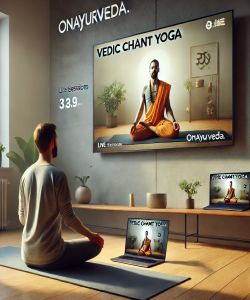
Overview of Vedic Chant Yoga
Vedic Chant Yoga represents a profound and ancient discipline, fundamentally distinct from the modern, predominantly physical forms of yoga. It is an exacting practice centred on the precise and disciplined recitation of the Vedas, the most ancient sacred texts of India. This is not merely singing or chanting; it is a highly structured system of sound and vibration, where every syllable, pitch, and rhythm is meticulously prescribed and executed to invoke a specific energetic, psychological, and physiological state. The practice posits that the universe is composed of vibration, and by authentically reproducing the primordial sounds of the Vedas, the practitioner aligns their own consciousness with the fundamental structures of reality. It is a path of internal purification, mental clarification, and spiritual attunement, demanding unwavering dedication, rigorous training, and absolute fidelity to the lineage-based transmission of the chants. Unlike asana-focused practices which work from the outside in, Vedic Chant Yoga works from the inside out, utilising the power of sound (nāda) and breath (prāna) to regulate the nervous system, sharpen the intellect, and cultivate a state of deep meditative absorption. It is an uncompromising discipline for those who seek to engage with the very roots of yogic tradition, demanding not physical flexibility, but rather vocal precision, mental fortitude, and a profound respect for the sanctity of the spoken word. This sophisticated practice serves as a powerful tool for self-transformation, offering a direct, experiential pathway to the core philosophical and spiritual insights embedded within the Vedic tradition, making it one of the most potent and authentic forms of yoga available to the serious practitioner.
What is Vedic Chant Yoga?
Vedic Chant Yoga, known traditionally as Veda Adhyayanam, is a spiritual and therapeutic discipline grounded in the oral recitation of the sacred Vedic texts of ancient India. It is a branch of yoga that prioritises sound, breath, and vibration over physical postures, operating on the principle that precise sonic patterns can profoundly influence human consciousness and physiology. This practice is not an improvisational or devotional form of singing; rather, it is a highly codified and technical system of chanting where adherence to specific rules is paramount. Each chant is governed by strict regulations concerning pronunciation, pitch, duration, and rhythm, which must be replicated with absolute fidelity to the way they have been transmitted through an unbroken teacher-student lineage (paramparā).
The core components of this discipline are:
Sanskrit Phonetics (Śikṣā): Mastery of the precise articulation of every Sanskrit alphabet, ensuring the sound is produced from the correct point in the vocal apparatus. This ensures the chant's vibrational integrity.
Pitch and Intonation (Svara): The application of specific musical tones—typically a main tone, a lower tone, and a higher tone—to different syllables. The accuracy of this svara is considered critical to the chant's efficacy.
Rhythm and Metre (Chandas): Adherence to the prescribed rhythmic structure and poetic metre of the Vedic hymns, which dictates the flow and duration of the syllables.
Breath Integration (Prānāyāma): The conscious and controlled use of breath to support the chant, ensuring sustained delivery, clarity, and the proper flow of vital energy (prāna) throughout the body.
Ultimately, Vedic Chant Yoga is a form of deep meditation in action. It demands and cultivates single-pointed concentration (ekāgratā), as the practitioner must simultaneously manage breath, pronunciation, pitch, and rhythm. It is a powerful method for purifying the mind, strengthening the respiratory system, and creating a state of internal harmony and resonance with the foundational principles of the Vedic worldview.
Who Needs Vedic Chant Yoga?
Individuals seeking a profound and authentic spiritual discipline that transcends purely physical exercise, connecting them directly to the foundational texts and oral traditions of yoga.
Practitioners of modern postural yoga who wish to deepen their understanding of the tradition's philosophical and energetic roots, moving beyond asana to explore the subtler dimensions of yogic practice.
Scholars, Indologists, and students of Sanskrit who require an experiential, embodied understanding of the Vedic texts, complementing their academic study with the living, sonic form of the tradition.
Therapists, counsellors, and healthcare professionals seeking to integrate sound-based healing modalities into their practice, utilising the scientifically observable effects of chant on the autonomic nervous system and cognitive function.
Public speakers, vocalists, and educators who depend on vocal strength, clarity, and respiratory endurance, and who seek a systematic method for cultivating exceptional vocal and breath control.
Persons experiencing high levels of mental agitation, stress, or anxiety, who require a structured and disciplined practice to calm the mind, regulate emotions, and cultivate sustained mental focus.
Those searching for a powerful memory-enhancement tool, as the rigorous memorisation and recitation of complex Vedic passages has been shown to significantly improve cognitive recall and neuroplasticity.
Individuals who, due to physical limitations or injury, are unable to engage in strenuous physical yoga but still desire a potent and transformative yogic practice.
Seekers of self-knowledge and personal transformation who are prepared to undertake a demanding and rigorous practice that systematically works to purify the mind and refine consciousness.
Devotees and spiritual aspirants from Indian traditions who wish to correctly learn and recite the sacred hymns central to their cultural and spiritual heritage, ensuring authenticity and respect for tradition.
Origins and Evolution of Vedic Chant Yoga
The origins of Vedic Chant Yoga are inextricably linked with the origins of the Vedas themselves, dating back to an era of unrecorded antiquity in the Indian subcontinent. The Vedas were considered śruti, or "what is heard"—divine revelations perceived by ancient sages (rishis) in states of deep meditation. From the outset, the primary method of preserving and transmitting these sacred revelations was not written but oral. This established an uncompromising tradition of aural-oral learning, where the sonic form of the text was deemed as sacred and potent as its meaning. To prevent any corruption of these powerful sounds, a sophisticated and rigorous system of recitation was developed, forming the bedrock of what we now term Vedic Chant Yoga.
In its earliest form, this practice was the exclusive domain of the priestly Brahmin class, whose duty it was to memorise and perfectly recite the hymns during complex rituals and ceremonies (yajñas). To ensure absolute fidelity across generations and vast geographical distances, a body of ancillary sciences known as the Vedāṅgas (limbs of the Veda) was developed. Amongst these, Śikṣā (phonetics) and Chandas (metre) were paramount, codifying the precise rules of pronunciation, accent, and rhythm. This system was so effective that the Vedic texts chanted today are considered virtually identical to those recited thousands of years ago.
The evolution of Vedic chanting from a purely ritualistic practice to a more personal, therapeutic, and spiritual discipline for a wider audience is a more recent development, largely credited to the pioneering work of twentieth-century masters such as T. Krishnamacharya and his son, T.K.V. Desikachar. They challenged the traditional exclusivity of the practice, arguing that the healing and transformative power of the chants should be accessible to all dedicated students, irrespective of their background. They integrated the principles of Vedic chanting with the therapeutic applications of yoga, adapting this ancient discipline for the needs of the modern individual. This evolution preserved the uncompromising rigour of the tradition whilst expanding its application, framing it as a potent tool for personal health, mental well-being, and spiritual growth—a practice known today as Vedic Chant Yoga.
Types of Vedic Chant Yoga
The "types" of Vedic Chant Yoga are not stylistic variations in the modern sense but are more accurately defined as prescribed, increasingly complex methods of reciting the Vedic texts. These methods, known as pāṭhas, were developed to ensure the flawless preservation and memorisation of the scriptures. Each represents a distinct structural pattern for recitation.
Samhitā-pāṭha
This is the most fundamental and natural form of recitation. The Sanskrit words are chanted continuously in their original sentence form, following the strict rules of euphonic combination (sandhi). It is the base text upon which all other, more complex patterns are built, representing the uninterrupted flow of the sacred hymn.
Pada-pāṭha
In this method, the continuous text of the Samhitā is broken down word by word. Each word is recited individually, free from the sandhi rules that connect them in sentences. This approach clarifies the constituent parts of the hymn, serving as a critical tool for analysis, memorisation, and understanding the text's structure.
Krama-pāṭha
The "step-by-step" method, Krama-pāṭha, involves a more intricate pattern. It combines words in a sequential, overlapping sequence of pairs: the first word is chanted with the second, the second with the third, the third with the fourth, and so on (ab, bc, cd, ...). This method significantly reinforces memory and ensures the correct sequence of the words.
Jatā-pāṭha
Known as the "woven-text" method, Jatā-pāṭha further increases the complexity. It follows a pattern where a pair of words is recited in its original order, then in reverse order, and then in the original order again (ab, ba, ab; bc, cb, bc; ...). This demands immense concentration and is a powerful tool for cognitive enhancement.
Ghana-pāṭha
This is considered one of the most complex and advanced forms of recitation. The pattern is exceptionally intricate, involving multiple repetitions and permutations of the text's words, such as ab, ba, abc, cba, abc. A practitioner who has mastered the Ghana-pāṭha is honoured with the title Ghanapāṭhin and is recognised as having achieved the highest level of Vedic recitation expertise.
Benefits of Vedic Chant Yoga
Profound Regulation of the Autonomic Nervous System: The controlled, diaphragmatic breathing and sustained vocalisation directly stimulate the vagus nerve, inducing a powerful parasympathetic (rest-and-digest) response that systematically counteracts the effects of chronic stress.
Enhanced Cognitive Function and Memory: The rigorous demands of memorising and accurately reciting complex Sanskrit texts, with precise intonation and rhythm, function as a formidable neurological exercise, demonstrably improving memory retention, concentration, and overall mental acuity.
Cultivation of Exceptional Respiratory Control: The practice necessitates deep, controlled, and efficient use of the entire respiratory apparatus. This leads to a significant increase in lung capacity, improved gaseous exchange, and a strengthened diaphragm and intercostal muscles.
Systematic Calming of Mental Agitation: The single-pointed focus required to manage the multiple variables of chanting—pitch, pace, pronunciation, and breath—leaves no cognitive space for distracting or anxious thoughts, leading to a state of profound mental quietude.
Improved Vocal Strength, Clarity, and Resonance: The consistent and precise use of the vocal cords and resonating chambers of the head and chest strengthens the entire vocal mechanism, resulting in a more powerful, clear, and resonant speaking and singing voice.
Direct Experiential Connection to Yogic Philosophy: Unlike purely academic study, chanting allows the practitioner to experience the vibrational essence of the sacred texts, providing an embodied understanding of the philosophical concepts contained within them.
Increased Emotional Resilience and Stability: By regulating the nervous system and calming the mind, the practice fosters a stable inner environment, enabling the practitioner to navigate external challenges with greater equanimity and reduced emotional reactivity.
Energetic Purification and Internal Alignment: According to yogic principles, the specific sound vibrations of the chants work to purify the subtle energy channels (nāḍīs) of the body, promoting a harmonious flow of vital energy (prāna).
Core Principles and Practices of Vedic Chant Yoga
Absolute Fidelity to the Source (Śruti): The practitioner must approach the Vedic texts with the unwavering understanding that they are sacred, revealed knowledge. There is no room for personal interpretation, emotional embellishment, or alteration of the text. The chant must be reproduced exactly as received.
Unyielding Adherence to Svara (Pitch Accent): The precise application of the three primary Vedic pitches—udātta (raised), anudātta (lowered), and svarita (circling)—is non-negotiable. Correct svara is considered essential for the chant's vibrational efficacy and authenticity.
Rigorous Mastery of Śikṣā (Phonetics): The practitioner must dedicate themselves to mastering the exact pronunciation of every Sanskrit syllable, including the precise points of articulation in the mouth, the quality of aspiration, and the length of vowels. Errors in pronunciation are believed to nullify the chant's intended effect.
Integration of Breath with Sound (Prāna): The breath is not merely fuel for the voice but is a vehicle for vital energy. The practice involves conscious, diaphragmatic breathing that is seamlessly synchronised with the phrases of the chant, ensuring power, sustainability, and energetic potency.
Submission to the Paramparā (Lineage): Authentic knowledge of Vedic chanting can only be received directly from a qualified teacher who is part of an unbroken lineage of transmission. Self-teaching from books or recordings is deemed insufficient and illegitimate, as it lacks the essential subtle corrections and energetic transmission of a living guru.
Cultivation of Ekāgratā (Single-Pointed Concentration): The complexity of simultaneously managing pitch, rhythm, pronunciation, and breath demands the practitioner's total and undivided attention. This focus is a central practice in itself, training the mind to remain stable and present.
Dispassionate and Objective Recitation: The aim is not emotional expression or performance. The practitioner acts as a clear and pure channel for the sacred sounds. The practice is an act of discipline and devotion to precision, not a platform for personal artistic interpretation.
Consistent and Disciplined Practice (Abhyāsa): Sporadic effort yields no results. The core principle of progress is daily, dedicated, and repetitive practice. It is through this consistent repetition that the chant becomes ingrained in the practitioner's body, mind, and consciousness.
Online Vedic Chant Yoga
Unrestricted Access to Authentic Lineage: The online modality demolishes geographical barriers, granting practitioners access to highly qualified teachers from established lineages who might otherwise be inaccessible. This ensures the transmission of authentic knowledge, which is the cornerstone of this discipline, regardless of the student's physical location.
Enhanced Auditory Focus: The use of high-quality headphones in an online session isolates the practitioner from external auditory distractions. This creates an immersive sound environment where the student can focus with exceptional clarity on the subtle nuances of the teacher's pronunciation, pitch (svara), and rhythm, which is critical for accurate learning.
Facility for Repetitive, Disciplined Self-Practice: Online sessions can be recorded (with the teacher's permission), providing an invaluable resource for correct repetition and self-correction between live sessions. The student can meticulously review the teacher's instruction, reinforcing learning and accelerating mastery in a way that is impossible with memory alone.
Creation of a Controlled, Personalised Learning Environment: The practitioner can establish a dedicated, quiet, and sacred space within their own home, free from the potential distractions or self-consciousness of a group physical setting. This fosters a deeper state of internal focus and introspection, which is highly conducive to the meditative nature of the practice.
Efficient and Focused Use of Time: By eliminating the need for travel to and from a physical location, the online format allows for a more efficient integration of this demanding practice into a busy schedule. This facilitates the consistency and regularity of practice (abhyāsa) that is non-negotiable for progress.
Intensified Teacher-Student Auditory Connection: In a one-to-one online setting, the teacher's attention is focused solely on the student's vocal output. Through a high-fidelity microphone, the teacher can detect even the most subtle errors in pronunciation or intonation, allowing for immediate and precise feedback that might be diluted in a group environment.
Vedic Chant Yoga Techniques
Establishment of a Stable and Dignified Posture (Āsana): Assume a seated position on the floor, preferably in a cross-legged posture such as Sukhāsana or Padmāsana, or on a firm chair if required. The spine must be held erect and elongated, yet free from tension. This posture facilitates optimal diaphragmatic movement and mental alertness. The hands rest on the knees, and the gaze is softened.
Initiation of Conscious Diaphragmatic Breathing: Before chanting, bring complete awareness to the breath. Inhale deeply, allowing the abdomen to expand, and exhale fully, drawing the abdomen gently inwards. Establish a slow, steady, and rhythmic breathing pattern. This technique ensures the breath is sourced from the diaphragm, providing the necessary power and control for sustained chanting.
Focused Auditory Reception (Śravaṇa): The initial and most critical step in learning a chant is listening. Listen with absolute, unwavering attention as the teacher recites a short phrase. The objective is to absorb not just the words but the precise melody, rhythm, and vibrational quality of the sound. This is an act of pure reception, without any internal analysis or judgment.
Precise Vocal Replication (Uccāraṇa): After listening, replicate the phrase exactly as it was heard. The focus must be on precision in pronunciation, matching the teacher's intonation (svara) and the duration of each syllable. This is not an act of singing but of disciplined vocal reproduction. The mouth, tongue, and lips must be trained to form the Sanskrit sounds with exacting accuracy.
Synchronisation of Breath and Chant: Integrate the established diaphragmatic breath with the vocalisation. Each phrase of the chant should be initiated on an exhalation, using a single, controlled outward breath. Inhalations are taken silently and efficiently between phrases. The goal is a seamless, uninterrupted flow where the breath becomes the vehicle for the sound.
Systematic Repetition and Memorisation: Repeat steps 3 through 5 relentlessly. The teacher will offer a phrase, and the student will repeat it multiple times until it is reproduced with complete fidelity. Through this disciplined repetition, the chant is progressively committed to memory, moving from conscious effort to an ingrained, effortless recitation.
Vedic Chant Yoga for Adults
Vedic Chant Yoga is an exceptionally suitable and potent discipline for adults, as it directly addresses the complex challenges and capacities of the mature mind and body. Unlike physically demanding yoga styles that may become less accessible with age, this practice requires no athletic prowess. Instead, its primary requisites are qualities that are often more developed in adulthood: discipline, patience, intellectual curiosity, and the capacity for sustained focus. The adult practitioner, often navigating significant professional and personal responsibilities, will find the practice to be a formidable tool for stress mitigation. The deep, diaphragmatic breathing and resonant sound production directly stimulate the parasympathetic nervous system, providing a powerful and immediate antidote to the chronic state of high alert that defines much of modern adult life. Furthermore, the intellectual rigour of the practice offers a profound challenge and stimulation for the adult mind. The process of learning the precise phonetics of Sanskrit, memorising complex textual passages, and mastering intricate rhythmic and melodic patterns serves as a powerful form of cognitive training, enhancing memory, concentration, and mental clarity. It provides a structured, meaningful pursuit that transcends mere relaxation, offering a deep sense of purpose and a direct connection to a timeless tradition of wisdom. For adults seeking a practice that engages the whole person—intellectually, emotionally, and physiologically—without demanding physical contortion, Vedic Chant Yoga presents a sophisticated, effective, and deeply rewarding path. It is a mature practice for the mature individual, offering not an escape, but a tool for masterful self-regulation and profound inner alignment.
Total Duration of Online Vedic Chant Yoga
The standard and prescribed total duration for a single, focused online session of Vedic Chant Yoga is precisely 1 hr. This specific timeframe is not arbitrary but is structured to maximise learning, assimilation, and physiological benefit whilst preventing vocal or mental fatigue. The 1 hr session is meticulously allocated to ensure a complete and balanced practice. It typically commences with a preparatory phase dedicated to establishing a stable posture, calming the mind, and engaging in specific breathing exercises (prānāyāma) to prepare the respiratory and vocal systems. The central, most substantial portion of the hour is dedicated to the core practice of chanting itself—the call-and-response learning of new material and the revision of previously studied texts. This intensive work demands unwavering concentration and vocal precision. The final segment of the session is reserved for a cool-down period, which may involve chanting a simple, calming mantra or sitting in silent meditation to absorb the vibrational effects of the practice. This 1 hr structure provides sufficient time for deep engagement with the material without overwhelming the student's cognitive or vocal capacity. It respects the demanding nature of the discipline, ensuring that each session is a potent, effective, and sustainable unit of practice within a long-term learning trajectory. Any duration significantly shorter would be insufficient for meaningful immersion, whilst a longer session risks diminishing returns and potential strain. Therefore, the 1 hr duration is upheld as the optimal standard for effective online instruction and practice.
Things to Consider with Vedic Chant Yoga
Engaging with Vedic Chant Yoga requires a sober and well-informed approach, as it is a demanding and highly specific discipline, not a casual recreational activity. The foremost consideration must be the authenticity of the instruction. It is imperative to seek a teacher who belongs to a recognised and verifiable lineage (paramparā), as the entire practice hinges on the correct transmission of sound, pitch, and rhythm. Self-study from books or generic online videos is not only ineffective but can lead to the ingrained habit of incorrect recitation, which is exceptionally difficult to undo. A prospective practitioner must honestly assess their own capacity for discipline and long-term commitment. Progress in this field is incremental and demands consistent, daily practice; it does not offer instant gratification. Furthermore, one must be prepared to subordinate the ego. The practice is not about beautiful singing or personal expression; it is about becoming a clear, unadulterated channel for a sacred tradition. The focus is on precision and replication, not improvisation. One must also consider the need for a suitable practice environment—a quiet, private space where one can chant without inhibition or external disturbance. Finally, it is crucial to manage expectations. While the benefits for mental clarity and nervous system regulation are profound, they are the fruits of sustained effort. One must approach Vedic Chant Yoga not as a quick fix, but as a profound, lifelong path of study, practice, and self-refinement.
Effectiveness of Vedic Chant Yoga
The effectiveness of Vedic Chant Yoga is both profound and multi-faceted, operating simultaneously on physiological, neurological, psychological, and energetic levels. Its efficacy is not a matter of subjective belief but is grounded in the systematic application of sound, breath, and focused attention—principles whose effects are increasingly being validated by contemporary scientific inquiry. Physiologically, the practice is incontrovertibly effective in regulating the autonomic nervous system. The elongated exhalations and deep diaphragmatic movements inherent in chanting directly stimulate the vagus nerve, shifting the body out of a stress-induced sympathetic state (fight-or-flight) and into a parasympathetic state (rest-and-digest). This results in measurable reductions in heart rate, blood pressure, and cortisol levels. Neurologically, its effectiveness as a cognitive enhancement tool is formidable. The rigorous process of memorising and flawlessly reciting complex sequences of sounds with specific pitches and rhythms creates new neural pathways, enhances neuroplasticity, and has been demonstrated to improve memory, focus, and executive function. Psychologically, the practice is a powerful method for achieving mental quietude. The sheer cognitive load required to chant correctly leaves no room for the ruminative, anxious thought patterns that plague the modern mind, effectively inducing a state of deep, single-pointed concentration. On a subtler, energetic level, as described by yogic tradition, the specific vibrational frequencies of the chants are held to purify the body's energy channels (nāḍīs), dissolving blockages and promoting a state of internal harmony and vitality. Thus, its effectiveness is not singular but holistic, making it a comprehensive and potent system for cultivating well-being and transforming consciousness.
Preferred Cautions During Vedic Chant Yoga
This practice is not a casual pastime and must be approached with the utmost seriousness and respect; it is a rigorous spiritual discipline. It is imperative that practitioners avoid straining the voice. Chanting should be executed with controlled breath support from the diaphragm, not with muscular tension in the throat. Volume should be moderate and natural, never forced. Any sensation of hoarseness, rasping, or discomfort is a definitive signal to cease immediately and rest the voice. Furthermore, one must guard against the insidious intrusion of the ego. The objective is precise replication, not performance or a demonstration of vocal beauty. The practitioner is a conduit for the sacred sound, not its originator. Any tendency towards self-aggrandisement or comparison with others is toxic to the practice and must be actively dismantled. It is also crucial to avoid intellectualisation during the act of chanting itself. While understanding the meaning of the text is valuable, the primary focus during recitation must be on the sonic form—the sound, pitch, and rhythm. Over-analysing the meaning while chanting fractures the necessary single-pointed concentration. Above all, the most critical caution is against learning from unqualified or unverified sources. The mispronunciation of these potent sounds is considered not merely ineffective but potentially detrimental. Adherence to an authentic, living lineage is not a preference; it is a non-negotiable requirement for safe and effective practice. The practitioner must remain a humble, dedicated, and vigilant student at all times.
Vedic Chant Yoga Course Outline
Module 1: Foundational Principles and Sanskrit Phonetics (Śikṣā)
Introduction to the origins and purpose of Vedic Chanting.
Establishing correct posture (āsana) and diaphragmatic breathing (prānāyāma).
Systematic study of the Sanskrit alphabet, focusing on the five primary points of articulation (sthāna).
Drills for mastering vowels (svara), consonants (vyañjana), and specific phonetic qualities like aspiration.
Module 2: Introduction to Vedic Pitch (Svara) and Simple Mantras
Detailed instruction on identifying and producing the three core Vedic notes: udātta, anudātta, and svarita.
Practice exercises for vocal flexibility and pitch accuracy.
Learning and recitation of simple, single-line invocatory mantras (e.g., Ganesha, Saraswati mantras).
Integration of breath, phonetics, and pitch in basic chanting.
Module 3: Study of a Foundational Vedic Hymn (Short Sūktam)
Introduction to a complete, short hymn from the Vedas (e.g., a section of the Taittirīya Upaniṣad or a simple sūktam).
Line-by-line instruction using the traditional call-and-response (adhyāpanam) method.
Focus on mastering the flow, rhythm (chandas), and consistent application of svara throughout the hymn.
Memorisation techniques for retaining longer passages.
Module 4: Rules of Combination (Sandhi) and Continued Textual Study
Systematic introduction to the basic rules of sandhi, the euphonic changes that occur when words are joined in a sentence.
Practice in applying sandhi rules to dissect and understand the structure of the Samhitā-pāṭha (continuous text).
Continuation of the textual study from Module 3, now with an understanding of sandhi.
Introduction to the Pada-pāṭha (word-by-word) version of the studied hymn to reinforce learning.
Module 5: Consolidation, Refinement, and Sustained Practice
Full recitation of the learned hymn from memory.
Intensive focus on refining pronunciation, controlling breath for longer phrases, and achieving a smooth, uninterrupted flow.
Guidance on establishing a consistent personal practice (svādhyāya).
Concluding session on the philosophical context and deeper significance of the chanted texts, integrating the experiential practice with intellectual understanding.
Detailed Objectives with Timeline of Vedic Chant Yoga
Within the Initial Phase (First Month):
Achieve correct and stable seated posture for the full duration of a practice session.
Demonstrate consistent and controlled diaphragmatic breathing, distinct from shallow chest breathing.
Accurately produce all vowels and consonants of the Sanskrit alphabet from their correct points of articulation.
Distinguish aurally and vocally between the three primary Vedic pitches (svara) on isolated syllables.
By the Midpoint of the Foundational Course (Third Month):
Recite several short, invocatory mantras with complete accuracy in pronunciation, pitch, and rhythm.
Successfully learn and recite, through call-and-response, the first half of a designated short Vedic hymn.
Sustain a chant for a minimum of two full lines on a single, controlled exhalation, demonstrating breath integration.
Begin to identify and apply basic sandhi (euphonic combination) rules within the learned text.
Upon Completion of the Foundational Course (Sixth Month):
Recite the entirety of the designated short Vedic hymn from memory, with no more than minor, infrequent errors in pitch or pronunciation.
Demonstrate the ability to self-correct minor mistakes by referencing the principles of śikṣā and svara.
Explain and apply the primary sandhi rules relevant to the studied hymn.
Establish a disciplined and consistent daily self-practice routine (svādhyāya).
Within the First Year of Consistent Practice (Advanced Objective):
Achieve a state of effortless flow in reciting the foundational hymn, where conscious effort is replaced by ingrained accuracy.
Begin the study of a second, more complex Vedic text, learning at an accelerated pace.
Demonstrate an understanding of the Pada-pāṭha (word-by-word) recitation for the initial hymn, showing analytical comprehension of the text's structure.
Requirements for Taking Online Vedic Chant Yoga
A Reliable, High-Speed Internet Connection: A stable and robust broadband connection is non-negotiable. Any latency, lag, or disconnection severely disrupts the precise call-and-response nature of the instruction, making accurate learning impossible.
A High-Fidelity External Microphone: The computer's built-in microphone is insufficient. A quality external USB or condenser microphone is required to capture the subtle nuances of the practitioner's voice, enabling the teacher to provide precise feedback on pronunciation and pitch.
High-Quality Headphones or Earphones: To eliminate ambient noise and ensure the practitioner can clearly hear every detail of the teacher's instruction, the use of over-ear headphones or in-ear monitors is mandatory. This facilitates focused, immersive listening.
A Dedicated, Quiet, and Private Space: The practitioner must have access to a room where they can be completely free from interruptions, background noise, and distractions for the entire duration of the session. This space must be treated as a sacred place for learning.
A Device with a Stable Video-Conferencing Platform: A desktop computer, laptop, or tablet capable of running platforms like Zoom or Skype without crashing is essential. The screen must be large enough to clearly see the teacher and any shared textual materials.
Unwavering Personal Discipline and Commitment: The online format requires a higher degree of self-motivation than in-person classes. The practitioner must possess the discipline to prepare their space, be punctual for every session, and undertake consistent self-practice between lessons.
A Willingness to Follow Protocol: The practitioner must agree to adhere to the teacher's specific protocols for online learning, which may include rules regarding muting/unmuting, camera positioning, and the use of session recordings.
Access to Course Materials: The ability to download, print, or view PDF documents or other digital resources provided by the teacher, containing the transliterated texts for study.
Things to Keep in Mind Before Starting Online Vedic Chant Yoga
Before embarking upon the disciplined path of online Vedic Chant Yoga, a prospective practitioner must engage in a period of rigorous self-assessment and logistical preparation. This is not a casual online course to be sampled lightly; it is a serious commitment to a demanding tradition. First and foremost, one must scrutinise one's own motivation and capacity for sustained, solitary discipline. The online format, while convenient, removes the external accountability of a physical group setting. Progress is therefore entirely dependent on one's own internal drive to practise consistently and diligently between sessions. One must be prepared to create and defend a sacred time and space within the home, ensuring that this commitment is respected by others and is free from the pervasive distractions of the domestic environment. It is crucial to conduct thorough due diligence on the prospective teacher, verifying their lineage and expertise, as the integrity of the entire practice rests upon the quality of instruction. Technologically, one must ensure that one's equipment—internet connection, microphone, headphones—is not merely adequate but excellent, as any technical deficiency creates an insurmountable barrier to the precise auditory transmission required. Finally, one must adopt a mindset of profound patience and humility. Mastery is a journey of years, not weeks. The online screen must be viewed not as a barrier, but as a portal to a sacred and ancient discipline that demands unwavering respect, focus, and dedication.
Qualifications Required to Perform Vedic Chant Yoga
The qualifications required to teach, or "perform" in the sense of authentically embodying and transmitting, Vedic Chant Yoga are exceptionally rigorous and are not conferred by any standard academic or yoga-studio certification. The entire system is predicated on the principle of paramparā, an unbroken lineage of direct teacher-to-student transmission. Therefore, the absolute, non-negotiable prerequisite is that the instructor has studied for a significant and extensive period under a recognised master who is themselves part of such a lineage. Within this framework, several specific competencies are mandatory:
Direct Transmission from a Recognised Lineage: The teacher must be able to name their guru and trace their lineage. This is the primary mark of authenticity and ensures the knowledge being shared is not self-taught or corrupted.
Profound Knowledge of Sanskrit Phonetics (Śikṣā): The teacher must possess an expert, embodied understanding of Sanskrit phonetics, including the precise points of articulation for every sound and the subtle rules governing their combination. They must be able to instantly detect and correct even the most minute phonetic errors in a student.
Mastery of Vedic Prosody (Chandas) and Intonation (Svara): Complete command over the rules of Vedic metre, rhythm, and, most critically, the correct application of the pitch accents (svara) is essential. The teacher's own chanting must be a flawless demonstration of these principles.
Extensive Personal Practice and Memorisation: A qualified teacher has not merely learned about chanting; they have spent years, if not decades, in dedicated personal practice (svādhyāya), committing vast portions of the Vedic texts to memory through disciplined recitation.
Pedagogical Skill: Beyond personal mastery, the teacher must possess the ability to effectively transmit this complex knowledge to students. This includes the patience to break down complex rules, the acuity to diagnose a student's specific difficulties, and the skill to guide them systematically towards accuracy.
Lacking these qualifications, an individual cannot be considered a legitimate performer or teacher of Vedic Chant Yoga, regardless of any other academic or yogic credentials they may hold.
Online Vs Offline/Onsite Vedic Chant Yoga
Online
The online modality for learning Vedic Chant Yoga offers a unique set of uncompromising advantages centred on precision, accessibility, and focused auditory learning. Its primary strength lies in its ability to transcend geographical limitations, providing students with access to world-class, lineage-based teachers who would otherwise be entirely out of reach. This is paramount in a discipline where the quality of the source is everything. The online environment, particularly with the use of high-quality headphones, creates a controlled auditory field that is exceptionally conducive to learning. It isolates the student from external noise, forcing a heightened focus on the teacher's every subtle vocal nuance—the precise articulation, the exact pitch, and the rhythmic cadence. This sharpens the student's listening skills (śravaṇa), which is the foundation of the practice. Furthermore, the ability to record sessions (with permission) provides an invaluable tool for repetition and self-correction, allowing the student to meticulously review the instruction and reinforce their learning between classes, ensuring a higher degree of accuracy in their personal practice.
Offline/Onsite
The traditional, offline method of instruction provides a different, yet equally powerful, set of benefits rooted in physical presence and collective energy. Learning directly in the physical presence of a master teacher allows for a form of transmission that goes beyond the purely auditory. The teacher can observe the student's entire physical state—their posture, their breath mechanics, the tension in their body—and offer holistic corrections that are not always possible via a screen. There is an energetic resonance and a level of subtle communication that is unique to in-person interaction. Furthermore, learning within a group (saṅgha) creates a powerful collective field of energy. Chanting together with other dedicated practitioners amplifies the vibrational effect of the practice, fostering a strong sense of community and shared purpose. The immediate, live feedback loop is instantaneous and organic, and the discipline of physically attending a class at a specific time and place instills a different quality of commitment. While online excels in auditory precision and access, offline excels in somatic feedback and the potent dynamic of shared presence.
FAQs About Online Vedic Chant Yoga
Question 1. Is this a religious practice?
Answer: Whilst its origins are in the sacred texts of the Hindu tradition, the practice itself is a discipline of sound, breath, and mind. It can be undertaken by any individual, regardless of their personal faith or lack thereof, as a tool for mental and physiological well-being.
Question 2. Do I need to know Sanskrit before I start?
Answer: No. A qualified teacher will instruct you in the precise pronunciation of every syllable as part of the training. The learning process is oral/aural; no prior academic knowledge of Sanskrit is required.
Question 3. Is this just a form of singing?
Answer: Absolutely not. Singing often involves emotional expression and artistic interpretation. Vedic chanting is a precise, technical discipline with immutable rules for pitch, rhythm, and pronunciation. The objective is faithful replication, not personal expression.
Question 4. Can I learn from a book or an app?
Answer: No. This is unequivocally discouraged. The subtle nuances of pronunciation and pitch cannot be learned from a static medium. It is an oral tradition that requires the live feedback and correction of a qualified teacher.
Question 5. What if I believe I have a "bad" voice?
Answer: The quality of one's singing voice is entirely irrelevant. This practice is not about producing a beautiful tone but about producing an accurate sound. The training itself will strengthen and stabilise your vocal apparatus.
Question 6. Is it different from chanting mantras like 'Om'?
Answer: Yes. While chanting 'Om' is a powerful practice, Vedic chanting involves the recitation of entire complex hymns with highly specific and intricate rules of melody and rhythm that go far beyond a single-syllable mantra.
Question 7. Are the physical benefits as significant as in asana yoga?
Answer: The benefits are different but equally profound. It does not build muscular strength or flexibility, but it powerfully strengthens the respiratory system, regulates the nervous system, and enhances cognitive function in ways that asana practice may not.
Question 8. How quickly will I see results?
Answer: The calming effects on the nervous system can be felt from the very first session. However, mastery of even a short hymn is a long-term commitment requiring months of disciplined practice. This is not a quick-fix discipline.
Question 9. Is it necessary to understand the meaning of the chants?
Answer: Initially, the focus is exclusively on the correct production of the sound. The tradition holds that the sound itself has an inherent power. Understanding the meaning is a secondary, albeit valuable, stage of study.
Question 10. How much daily practice is required?
Answer: A minimum of 20-30 minutes of consistent, focused daily practice is required to make meaningful progress and integrate the lessons.
Question 11. Can children learn Vedic chanting?
Answer: Yes, the tradition of teaching children is ancient. The discipline is highly beneficial for developing concentration and memory in young minds.
Question 12. Will this practice conflict with my other spiritual or meditation practices?
Answer: On the contrary, the deep concentration cultivated through chanting will almost certainly enhance any other meditative discipline you undertake.
Question 13. Is there a risk of vocal strain?
Answer: Yes, if practiced incorrectly without proper breath support. A qualified teacher will ensure you are using your diaphragm correctly to prevent any strain on the throat.
Question 14. Why is the lineage of the teacher so important?
Answer: The lineage (paramparā) is the sole guarantee of authenticity. It ensures that the chants have been transmitted faithfully from master to student without corruption over centuries.
Question 15. What is the main challenge for a beginner?
Answer: The main challenge is twofold: subordinating the ego's desire to "sing" expressively, and cultivating the patience and discipline for meticulous, repetitive practice.
Question 16. Can I practise whilst doing other activities?
Answer: No. The practice demands your complete and undivided attention. It is a form of deep, active meditation.
Conclusion About Vedic Chant Yoga
In conclusion, Vedic Chant Yoga stands as a formidable and uncompromisingly authentic discipline, offering a direct conduit to the foundational principles of the yogic tradition. It is a rigorous science of sound, a sophisticated system of breath control, and a powerful method for the cultivation of unwavering mental focus. Distancing itself from the contemporary emphasis on physical prowess, this practice demands a different kind of strength: the fortitude to pursue precision over performance, the discipline to engage in consistent, repetitive practice, and the humility to act as a faithful channel for a sacred, ancient wisdom. Its effects are not superficial; they are profound, systemic changes that recalibrate the nervous system, enhance cognitive function, and foster a deep sense of internal order and tranquillity. To engage with Vedic Chant Yoga is to undertake a serious and transformative journey—one that works from the innermost vibratory level of one's being outwards. It is not merely a practice to be performed, but a discipline to be embodied, offering the dedicated practitioner a timeless and powerful tool for self-mastery and profound spiritual insight. It remains one of the most potent, undiluted, and effective forms of yoga available to those who are willing to meet its exacting demands.