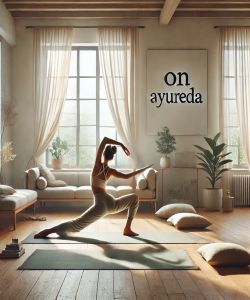
1. Overview of Vinyasa Yoga
Vinyasa Yoga represents a dynamic and rigorous discipline, fundamentally characterised by the synchronisation of movement with breath. It is an assertive and fluid practice that stands in stark contrast to more static forms of yoga, demanding both physical stamina and profound mental concentration from its practitioners. The term 'Vinyasa' itself translates from Sanskrit to mean 'to place in a special way,' a direct reference to the intentional and intelligent sequencing of postures, or asanas, that define a session. Each movement is a deliberate transition, seamlessly linked to the next by an inhale or an exhale, creating a continuous and uninterrupted flow. This method transforms the practice from a series of disconnected poses into a moving meditation, where the rhythm of the breath dictates the pace and intensity of the physical exertion. The inherent creativity of Vinyasa means that no two classes are identical; instructors are afforded the freedom to choreograph unique sequences that challenge the body and focus the mind in novel ways. This adaptability makes it a formidable tool for building comprehensive fitness, targeting strength, flexibility, and cardiovascular health simultaneously. It is not a gentle or passive pursuit; it is a powerful system designed to cultivate internal heat, purify the body, and forge an unshakeable connection between mind, body, and breath. The practice insists upon presence, discipline, and a willingness to engage with physical and mental thresholds, establishing it as a pre-eminent and demanding form of modern yoga practice for those who seek tangible, holistic results without compromise.
2. What is Vinyasa Yoga?
Vinyasa Yoga is a formidable and physically demanding style of yoga distinguished by its emphasis on continuous, flowing sequences of postures, intrinsically linked to the breath. The very essence of the practice is this deliberate and unbroken connection, where each movement is initiated by an inhale or an exhale, creating a powerful, dance-like quality. Unlike static yoga disciplines that hold poses for extended periods, Vinyasa is defined by its dynamic transitions, which build internal heat, elevate the heart rate, and challenge both muscular endurance and cardiovascular capacity. The term 'Vinyasa' not only describes the overall style but also refers to a specific sequence of movements—commonly comprising Chaturanga Dandasana (four-limbed staff pose), Urdhva Mukha Svanasana (upward-facing dog), and Adho Mukha Svanasana (downward-facing dog)—that is frequently used as a transitional thread between other postures and sides of the body. This structure ensures the practice remains vigorous and propulsive.
Key characteristics that define this discipline include:
- Breath Synchronisation: The foundational principle is that breath dictates movement. Ujjayi pranayama, or 'victorious breath,' is typically employed to create an audible, rhythmic guide that centres the mind and generates internal warmth.
- Creative and Varied Sequencing: There is no fixed series of postures in Vinyasa. Instructors possess the autonomy to design unique, intelligent sequences that may focus on specific anatomical areas, work towards a peak posture, or explore a particular philosophical theme, ensuring that practitioners remain mentally engaged and physically challenged.
- Fluid Transitions: The emphasis is not solely on the asanas themselves but equally on the quality of movement between them. These transitions are executed with the same level of mindfulness and physical control as the poses, demanding core strength, balance, and coordination.
- Moving Meditation: The relentless focus required to synchronise complex movements with a steady breath forces the practitioner into a state of heightened awareness and presence, effectively silencing extraneous thought and transforming the physical practice into a profound meditative experience.
3. Who Needs Vinyasa Yoga?
-
Individuals Seeking a Rigorous Physical Discipline: Those who demand a yoga practice that delivers a comprehensive physical challenge will find it in Vinyasa. It is not for the passive. Its continuous flow functions as a cardiovascular workout, building stamina and endurance whilst simultaneously sculpting lean muscle mass through dynamic, weight-bearing postures. It directly serves those who view physical fitness as a non-negotiable component of their well-being.
-
Practitioners Requiring Enhanced Mental Focus and Discipline: The unrelenting synchronisation of breath and movement necessitates absolute concentration. Individuals whose minds are prone to distraction or who operate in high-stress environments require this practice. It forces a state of singular focus, acting as a potent tool for honing mental acuity and cultivating an unwavering presence that translates directly into professional and personal life.
-
Athletes and Physically Active Persons: This discipline is essential for athletes seeking to improve performance and prevent injury. Vinyasa builds functional strength, enhances flexibility in key muscle groups, improves balance, and promotes core stability. It serves as a critical cross-training modality that addresses muscular imbalances and increases range of motion, which are paramount for any serious physical endeavour.
-
Experienced Yoga Practitioners Desiring Creative and Dynamic Expression: For those already well-versed in asana and who feel constrained by fixed-sequence styles like Ashtanga, Vinyasa is a necessity. It provides a platform for exploration and creativity, where the body can move with intelligence and freedom. It is for the practitioner who has mastered the fundamentals and now seeks a more intuitive and challenging physical narrative.
-
Individuals Aiming for Holistic Efficiency: Time-constrained professionals who require a practice that efficiently integrates a physical workout with mental clarification and stress reduction need Vinyasa. It consolidates multiple benefits—strength, flexibility, cardiovascular health, and mindfulness—into a single, potent session, making it a supremely efficient and effective system for total mind-body optimisation.
4. Origins and Evolution of Vinyasa Yoga
The origins of Vinyasa Yoga are not found in a single ancient text but are rather the product of a powerful evolution from older, more rigid systems. Its direct lineage can be traced to the teachings of Tirumalai Krishnamacharya, a formidable Indian scholar and yoga master who is widely regarded as the father of modern yoga. In the early 20th century, Krishnamacharya revived and adapted ancient yogic principles for the modern era, emphasising a personalised approach to practice. He taught that the method should be adapted to the individual, a radical departure from the one-size-fits-all dogmas of the time. This foundational concept of intelligent adaptation laid the groundwork for Vinyasa's inherent flexibility.
From Krishnamacharya’s tutelage emerged several influential students, most notably Pattabhi Jois and B.K.S. Iyengar, who developed their own distinct styles. Pattabhi Jois codified the Ashtanga Vinyasa system, a highly structured practice with fixed sequences of postures linked by breath and the specific 'vinyasa' transition. It is from this rigorous Ashtanga system that modern Vinyasa Yoga directly derives its dynamic, flowing character. Ashtanga provided the engine—the synchronisation of breath (Ujjayi), movement (asana), and gaze (drishti)—that powers the Vinyasa practice. However, where Ashtanga insisted upon an unvarying sequence that practitioners had to master, the subsequent evolution of Vinyasa embraced freedom and creativity.
In the latter half of the 20th century, as yoga migrated to the West, teachers began to deconstruct the rigid structure of Ashtanga. They retained its core principles of flow and breath-synchronisation but abandoned the fixed sequences. This liberation allowed for the development of classes tailored to different levels, anatomical focuses, or thematic intentions. This new form, now simply called Vinyasa or 'Flow,' became immensely popular for its accessibility and variety. It maintained the physical intensity and meditative depth of its predecessor but offered an adaptable framework that could be continuously reinvented. This evolution marks a definitive shift from rigid tradition to intelligent, modern application, establishing Vinyasa as a potent and highly relevant discipline for the contemporary world.
5. Types of Vinyasa Yoga
-
Power Yoga: An athletic and vigorous Western adaptation of Ashtanga Vinyasa. This type dispenses with the fixed sequences of its progenitor, instead focusing on building internal heat and physical strength through a demanding, high-intensity flow. It emphasises muscular endurance and cardiovascular fitness, often incorporating longer holds and more challenging variations of asanas. It is unequivocally a workout, designed for those seeking a formidable physical challenge.
-
Slow Flow: A deliberately paced variation of Vinyasa that maintains the core principle of linking breath to movement but reduces the speed of transitions. This slower tempo allows for a deeper exploration of postures, a greater focus on precise alignment, and a more meditative experience. It is no less demanding, as holding poses for longer durations builds muscular strength and mental fortitude, but its focus shifts from cardiovascular intensity to mindful stability.
-
Jivamukti Yoga: A physically rigorous and intellectually stimulating style co-founded by David Life and Sharon Gannon. While firmly a Vinyasa practice in its flowing, breath-led structure, it integrates a broader philosophical framework. Each class is built around a specific theme, supported by scriptural study, chanting, meditation, and music. It is a comprehensive system that insists on integrating the physical practice with ethical and spiritual principles, including veganism and social activism.
-
Baptiste Yoga: Developed by Baron Baptiste, this is a heated Power Vinyasa style that is both accessible and intensely challenging. The practice is founded upon three core elements: Asana (the physical practice), Meditation (the focus of the mind), and Inquiry (the exploration of self). It is performed in a heated room to facilitate detoxification and deeper stretching, and it follows a structured but adaptable sequence designed to empower practitioners and create tangible personal transformation.
-
Prana Vinyasa Flow: A style created by Shiva Rea that emphasises the energetic and elemental aspects of the yoga practice. It is an evolutionary and liberated form of Vinyasa that moves beyond linear sequencing. Instead, it incorporates fluid, circular, and spiralling movements that mimic the natural rhythms of the body and the elements. It is a deeply embodied and intuitive practice, encouraging practitioners to connect with the flow of 'prana' or life-force energy.
6. Benefits of Vinyasa Yoga
-
Enhanced Cardiovascular Health: The continuous, flowing nature of the practice elevates the heart rate, providing a robust cardiovascular workout that improves circulation, lowers blood pressure, and enhances overall heart function. It is a demanding discipline that builds stamina and endurance.
-
Increased Muscular Strength and Tone: Vinyasa utilises bodyweight resistance through a wide range of postures. The dynamic transitions, particularly the repeated execution of the Chaturanga-Upward Dog-Downward Dog sequence, systematically build strength in the core, arms, shoulders, and back, leading to a lean, toned, and functionally strong physique.
-
Improved Flexibility and Range of Motion: The practice moves the body through its full range of motion, dynamically stretching muscles and lubricating joints. The internal heat generated during the flow allows for safer and deeper access to flexibility, systematically reducing stiffness and increasing mobility over time.
-
Profound Stress Reduction and Mental Clarity: The mandatory synchronisation of breath with movement forces a state of intense mental focus, effectively silencing incessant mental chatter. This 'moving meditation' calms the nervous system, reduces levels of the stress hormone cortisol, and cultivates a state of calm, present-moment awareness.
-
Enhanced Mind-Body Connection: Vinyasa demands a high level of proprioception and interoception—the awareness of the body's position in space and its internal state. This constant, focused attention forges a powerful and intuitive connection between the mind and the physical body, leading to improved coordination, balance, and physical intelligence.
-
Detoxification and Purification: The vigorous movement and generation of internal heat stimulate the circulatory and lymphatic systems, promoting the efficient elimination of metabolic waste and toxins. The Ujjayi breath itself is considered a purifying technique, cleansing the energetic channels of the body.
-
Adaptability and Prevention of Repetitive Strain: Unlike fixed-sequence yoga, the varied and creative nature of Vinyasa ensures that the body is challenged in new and different ways in each session. This variety prevents the repetitive strain injuries associated with rigid movement patterns and ensures balanced, holistic physical development.
7. Core Principles and Practices of Vinyasa Yoga
-
Breath as the Primary Guide (Pranayama): The absolute, non-negotiable foundation of Vinyasa is the primacy of the breath. Movement does not exist independently; it is initiated and sustained by the breath. Specifically, Ujjayi Pranayama (the 'Victorious Breath') is employed. This technique involves a slight constriction at the back of the throat, creating an audible, ocean-like sound that serves as an anchor for focus. It generates internal heat, calms the nervous system, and provides a consistent rhythm to which the physical movements are synchronised. Every transition from one asana to the next is inextricably linked to either an inhalation or an exhalation.
-
Continuous Flow (Vinyasa Krama): The practice is defined by its seamless, uninterrupted flow of movement. There are no prolonged pauses between postures. This dynamic linkage of asanas transforms the practice into a 'moving meditation.' The term 'Vinyasa Krama' refers to the intelligent and progressive sequencing of postures, where each asana prepares the body for the one that follows. This creates a logical and safe progression that builds intensity, culminating in more complex peak poses before moving into a cooling sequence.
-
Mindfulness and Presence (Dharana): Due to the demanding nature of coordinating complex physical movements with a specific breathing pattern, the practitioner is forced into a state of unwavering present-moment awareness. The mind has no capacity to dwell on past events or future anxieties; its entire bandwidth is consumed by the immediate task. This intense concentration (Dharana) is a core practice, training the mind to remain focused and stable amidst physical exertion and challenge.
-
Bandhas and Drishti: To support the practice, internal energy locks (Bandhas) and a focused gaze (Drishti) are utilised. Mula Bandha (root lock) and Uddiyana Bandha (abdominal lock) provide core stability, create lightness in the body, and help to direct the flow of prana (life-force energy). Drishti, the practice of fixing the gaze on a specific point during each posture, further enhances concentration, improves balance, and prevents the mind from wandering. These are not optional additions but integral components of an authentic practice.
8. Online Vinyasa Yoga
-
Unparalleled Accessibility and Convenience: The primary and most commanding benefit of online Vinyasa Yoga is its obliteration of geographical and temporal constraints. Practitioners are no longer bound by studio schedules or locations. A rigorous, high-quality practice can be undertaken from any location with an internet connection, at any time of day or night. This empowers individuals with demanding schedules, frequent travel commitments, or limited local options to maintain a consistent and disciplined practice without compromise.
-
Autonomy and Personalised Pacing: The online environment grants the practitioner complete autonomy. One can select the instructor, style, intensity level, and duration that precisely meets their current needs. Furthermore, the ability to pause, rewind, and review instructions for complex postures is a significant advantage over a live class, where the group pace dictates progression. This facilitates a deeper, more nuanced understanding of alignment and technique, allowing individuals to master challenging asanas at their own pace.
-
Cultivation of Self-Discipline and Internal Motivation: Without the external accountability of a physical studio and instructor, the online practitioner is compelled to cultivate a powerful sense of self-discipline. The motivation to practise must come from within. This environment forges a more resilient and self-reliant practitioner, one whose commitment to the discipline is not dependent on external factors but is rooted in genuine internal drive and a clear understanding of its benefits.
-
Reduced Inhibition and Enhanced Focus: For many, practising in a group setting can be intimidating, leading to self-consciousness and comparison. The private, controlled environment of an online session eliminates these distractions. This allows the individual to focus entirely on their own physical sensations, breath, and alignment without the external pressure of being observed. This uninhibited state can lead to significant breakthroughs in both the physical and mental aspects of the practice.
-
Access to Elite, Global Instruction: The online platform democratises access to world-class instruction. A practitioner is no longer limited to the teachers in their immediate vicinity. They can learn directly from globally recognised masters and specialists whose teachings would otherwise be inaccessible. This provides an unparalleled opportunity to deepen one's understanding and refine one's practice under the guidance of the industry's most respected authorities.
9. Vinyasa Yoga Techniques
-
Establish the Foundation: Ujjayi Pranayama: Before any movement commences, the breath must be established. Sit or stand in a stable position. Begin to inhale and exhale deeply through the nostrils. Gently constrict the back of the throat, specifically the glottis, as if whispering. This action will create a soft, audible, oceanic sound. Maintain this breathing technique throughout the entire practice. The sound serves as a metronome, and the technique builds the internal heat necessary for a safe and deep practice. This is not optional; it is the engine of Vinyasa.
-
Initiate Movement from the Breath: Every single movement must be a direct consequence of the breath. An inhalation initiates expansive, upward, or opening movements. For example, lifting the arms overhead in Urdhva Hastasana is driven by a full inhale. An exhalation initiates contracting, downward, or twisting movements. For example, folding forward into Uttanasana is driven by a complete exhale. There must be no lag; the movement and breath must be perfectly synchronised as one unified action.
-
Execute the Vinyasa Transition with Precision: The core transitional sequence must be mastered. From a high plank (Phalakasana), exhale and lower the body with control into Chaturanga Dandasana (four-limbed staff pose), keeping the elbows tucked in. Inhale and press through the hands, rolling over the toes to lift the chest into Urdhva Mukha Svanasana (upward-facing dog), with thighs off the floor. Exhale, engage the core, and lift the hips up and back into Adho Mukha Svanasana (downward-facing dog). This sequence is the connective tissue of the practice and must be performed with integrity and strength.
-
Integrate Bandhas for Core Stability: Engage the internal energy locks to support the flow. Actively lift the pelvic floor to engage Mula Bandha (root lock). Gently draw the lower abdomen in and up, towards the spine, to engage Uddiyana Bandha (abdominal lock). These locks must be maintained subtly throughout the practice. They provide a foundation of core stability, create a sense of lightness, and protect the lower back, particularly during dynamic transitions.
-
Maintain a Focused Gaze (Drishti): For every asana, there is a designated point of focus, or Drishti. In Downward-Facing Dog, the gaze may be towards the navel. In Warrior II, it is over the front fingertips. This technique is critical for maintaining balance and, more importantly, for concentrating the mind. By fixing the gaze, you prevent the eyes from wandering, which in turn prevents the mind from wandering. It anchors your awareness firmly in the present moment and the current posture.
10. Vinyasa Yoga for Adults
Vinyasa Yoga presents an uncompromising and highly effective methodology for adults seeking to combat the physical and mental decrepitude associated with a sedentary lifestyle and the relentless pressures of modern professional life. It is not a gentle stretching routine; it is a rigorous, athletic discipline that directly addresses the primary concerns of adult well-being. The practice systematically builds functional strength by using the body's own weight as resistance, targeting the core, back, and major muscle groups essential for maintaining posture, stability, and a robust physical frame. This is crucial for counteracting the musculoskeletal imbalances and chronic pain that arise from prolonged periods of sitting. Simultaneously, the dynamic, flowing sequences provide a significant cardiovascular challenge, enhancing heart health, improving metabolic function, and managing weight—all critical factors in adult longevity and vitality. Beyond the purely physical, Vinyasa is a potent antidote to mental fatigue and stress. The absolute focus required to synchronise breath with a complex series of movements acts as a powerful form of active meditation, forcing the mind into a state of present-moment awareness and interrupting the cycle of anxious, ruminative thought. This cultivates mental resilience, enhances cognitive function, and provides a structured outlet for stress that is both productive and empowering. For the modern adult, Vinyasa is not merely exercise; it is an integrated system for optimising physical performance, sharpening mental acuity, and building the fortitude required to navigate the complexities of contemporary existence with strength and composure. It is a pragmatic and powerful tool for self-mastery.
11. Total Duration of Online Vinyasa Yoga
The standard and most effective total duration for a comprehensive online Vinyasa Yoga session is unequivocally established at 1 hr. This specific timeframe is not arbitrary; it is a meticulously structured duration designed to facilitate a complete and balanced practice that addresses all essential components without being either perfunctory or excessive. A session of 1 hr allows for a logical and safe progression through the distinct phases of the discipline. It provides adequate time for an initial period of centering and breathwork (pranayama), followed by a thorough warm-up sequence, often incorporating several rounds of Sun Salutations (Surya Namaskar) to build internal heat and prepare the joints and muscles for more demanding work. The central portion of the 1 hr session is dedicated to the main Vinyasa flow, where creative and challenging sequences of standing postures, balances, and transitions are explored. This is the apex of the physical and cardiovascular challenge. Following this peak, the 1 hr structure allocates sufficient time for a carefully designed cool-down period, which includes deeper stretches, seated postures, and counter-poses to release tension and regulate the nervous system. Critically, this duration culminates in a period of complete rest in Savasana (corpse pose), an indispensable component for integrating the physical and energetic benefits of the practice. While shorter sessions may serve as supplementary practices, the 1 hr duration remains the industry benchmark for a complete online class that effectively delivers the full spectrum of physical, mental, and physiological benefits inherent to the Vinyasa system, ensuring practitioners emerge challenged, balanced, and restored.
12. Things to Consider with Vinyasa Yoga
Engaging with Vinyasa Yoga demands a frank and pragmatic assessment of one's physical condition and mental commitment. This is a fast-paced, physically intensive discipline, and it is imperative to acknowledge that it may not be suitable for absolute beginners with no prior athletic or movement experience, or for individuals with significant pre-existing injuries, particularly in the wrists, shoulders, or lower back. The repetitive nature of the 'vinyasa' transition—plank, chaturanga, upward-facing dog—places considerable strain on these joints, and without a solid foundation of strength and correct alignment, the risk of injury is substantial. One must possess a degree of baseline fitness and bodily awareness to navigate the practice safely. Furthermore, the emphasis on flow can, for the undisciplined practitioner, lead to a sacrifice of form for speed. There is a real danger of moving through the sequences with momentum rather than muscular control, thereby negating the benefits and increasing risk. It is critical to prioritise precision over pace. The creative and varied nature of the practice also means a lack of standardisation between instructors and classes. One must be prepared to encounter a wide spectrum of intensity and style, requiring a discerning approach to selecting a class that aligns with one's capabilities and objectives. Finally, Vinyasa demands unwavering mental presence. It is not an activity that can be performed passively or with a distracted mind; to do so is to court injury and miss the profound meditative benefits. A serious practitioner must be prepared to commit their full attention for the duration of the practice.
13. Effectiveness of Vinyasa Yoga
The effectiveness of Vinyasa Yoga as a holistic system for physical and mental conditioning is unequivocal and empirically demonstrable. Its primary efficacy lies in its integrated, multi-faceted approach. Physically, it is brutally effective. The constant flow from one posture to another constitutes a formidable cardiovascular workout, enhancing stamina and promoting heart health in a manner comparable to more conventional forms of aerobic exercise. Simultaneously, its reliance on bodyweight postures, held and transitioned through with muscular control, builds significant functional strength across the entire musculoskeletal system. Unlike isolated weight training, Vinyasa develops a cohesive, integrated strength, improving core stability, balance, and proprioception. This results in a lean, powerful, and agile physique, resilient to injury. The discipline's effectiveness extends profoundly into the mental realm. The mandatory synchronisation of a specific breathing pattern with a complex and continuous sequence of movements demands absolute, unwavering concentration. This process acts as a potent form of active meditation, interrupting the incessant stream of discursive thought and anchoring the practitioner firmly in the present moment. This has a direct and measurable impact on stress reduction, lowering cortisol levels and regulating the autonomic nervous system. The practice systematically trains the mind to remain calm and focused under physical duress, a skill that is directly transferable to managing the pressures of professional and personal life. Therefore, its effectiveness is not limited to a single domain but is comprehensive, forging a resilient body and a disciplined, focused mind. It is a supremely efficient and potent system for total human optimisation.
14. Preferred Cautions During Vinyasa Yoga
It is imperative that any practitioner of Vinyasa Yoga operates with a heightened sense of self-awareness and strict adherence to established safety protocols. This is a vigorous and demanding discipline, and complacency is a direct precursor to injury. Foremost, one must resist the ego-driven impulse to push beyond rational physical limits. The objective is not to achieve the most extreme expression of a posture but to maintain structural integrity and correct alignment within one's current capacity. Pain is not a signal of progress; it is a definitive command to cease or modify the action. Particular caution must be exercised with the wrists, shoulders, and lower back, as these are the areas most vulnerable to strain from the repetitive chaturanga sequence and deep flexion or extension postures. Proper form in Chaturanga Dandasana is non-negotiable; elbows must remain close to the body and shoulders must not dip below the elbows. If fatigue compromises form, the practitioner must modify by dropping the knees or forgoing the sequence entirely. Hydration before and after the practice is critical, but one should avoid practising on a full stomach. Individuals with specific medical conditions, such as hypertension, glaucoma, or disc herniations, must seek medical clearance and inform their instructor, modifying or avoiding contraindicated poses like inversions and deep twists. The 'flow' state must never be an excuse for mindless movement; every transition must be executed with muscular control and conscious awareness. The practitioner bears the ultimate responsibility for their own safety.
15. Vinyasa Yoga Course Outline
-
Module 1: Foundational Principles and Breathwork
- Introduction to the Philosophy and Lineage of Vinyasa Yoga.
- Mastery of Ujjayi Pranayama: The Engine of the Practice.
- Introduction to Bandhas (Energy Locks): Mula and Uddiyana.
- The Concept of Drishti (Focused Gaze) and its Role in Concentration.
-
Module 2: Surya Namaskar A & B (Sun Salutations)
- Deconstruction of Surya Namaskar A: Precise Alignment in Each Posture.
- Deconstruction of Surya Namaskar B: Integration of Utkatasana and Virabhadrasana I.
- Technique and Drills for the Vinyasa Transition: Plank, Chaturanga, Upward-Facing Dog, Downward-Facing Dog.
- Building Stamina and Flow through Repetitive Sun Salutation Practice.
-
Module 3: Standing and Balancing Asanas
- Detailed Alignment Workshop for Foundational Standing Postures: Warrior Series (I, II, III), Triangle, Extended Side Angle.
- Principles of Balance: Engaging the Core and Utilising Drishti.
- Practice of Key Balancing Postures: Tree Pose, Eagle Pose, Half-Moon Pose.
- Sequencing and Transitioning Between Standing Postures with Fluidity.
-
Module 4: Seated Postures, Twists, and Hip Openers
- Techniques for Safe and Effective Forward Folds and Hamstring Flexibility.
- Anatomy and Application of Spinal Twists.
- Exploration of Deep Hip-Opening Postures: Pigeon Pose, Lizard Pose, Bound Angle Pose.
- Integrating Seated Postures into a Vinyasa Flow Context.
-
Module 5: Backbends, Inversions, and Peak Poses
- Principles of Safe Backbending: Engaging the Legs and Protecting the Lumbar Spine.
- Preparatory Postures for Inversions: Building Shoulder and Core Strength.
- Introduction to Headstand (Sirsasana) and Forearm Stand (Pincha Mayurasana) with appropriate safety measures.
- The Art of Sequencing: Building a Class Towards a Peak Pose.
-
Module 6: The Art of Flow and Savasana
- Principles of Vinyasa Krama: Intelligent and Creative Sequencing.
- Practicum: Designing and Leading a Short Vinyasa Flow.
- The Cool-Down Sequence: Counter-Posing and Nervous System Regulation.
- The Critical Importance of Savasana (Corpse Pose) for Integration and Relaxation.
16. Detailed Objectives with Timeline of Vinyasa Yoga
-
Weeks 1-2: Establish Foundational Integrity.
- Objective: To achieve mastery of the Ujjayi breath as a continuous and stable anchor throughout practice. The practitioner shall demonstrate the ability to link every movement to an inhale or exhale without exception.
- Objective: To execute the core components of Surya Namaskar A with precise anatomical alignment, particularly in Plank, Chaturanga Dandasana, and Downward-Facing Dog, demonstrating the strength to avoid common alignment errors.
-
Weeks 3-4: Develop Stamina and Flow.
- Objective: To execute multiple, uninterrupted rounds of both Surya Namaskar A and B, maintaining the integrity of breath and alignment without significant fatigue.
- Objective: To demonstrate seamless and controlled transitions between the foundational standing postures of the Warrior series (Virabhadrasana I & II) and Triangle Pose (Trikonasana), led by the breath.
-
Weeks 5-6: Cultivate Balance and Deeper Openness.
- Objective: To hold fundamental balancing postures, such as Tree Pose (Vrksasana) and Eagle Pose (Garudasana), for a minimum of five complete Ujjayi breaths with stability and a steady Drishti.
- Objective: To demonstrate a tangible increase in flexibility in the hamstrings and hips, safely accessing deeper variations of forward folds and hip-opening postures like Pigeon Pose (Eka Pada Rajakapotasana) while maintaining structural integrity.
-
Weeks 7-8: Build Core Strength and Explore Inversions.
- Objective: To hold challenging core-centric postures, such as Navasana (Boat Pose), for extended durations and demonstrate the core control necessary for inversion preparation.
- Objective: To safely practise preparatory stages for key inversions like Headstand (Sirsasana) against a wall, demonstrating a clear understanding of the required shoulder stability and alignment principles, without placing undue pressure on the cervical spine.
-
Weeks 9-12: Integrate and Embody the Practice.
- Objective: To autonomously flow through a complex 30-minute sequence, incorporating a variety of standing postures, balances, and seated poses with consistent breath synchronisation and minimal external cueing.
- Objective: To exhibit a profound understanding of the practice as a moving meditation, demonstrating unwavering focus and the ability to remain present and composed even during physically demanding segments of the class.
17. Requirements for Taking Online Vinyasa Yoga
-
Dedicated and Uncluttered Physical Space: The practitioner must designate a specific area for practice that is free from furniture, hazards, and domestic distractions. The space must be large enough to accommodate the full range of motion required, including extending the limbs in all directions without obstruction. A flat, stable surface is non-negotiable.
-
High-Quality, Non-Slip Yoga Mat: This is not an optional accessory; it is essential equipment. A standard exercise or Pilates mat is insufficient. A dedicated yoga mat designed for grip, especially when exposed to sweat, is required to prevent slipping and ensure stability in postures like Downward-Facing Dog and the Warrior series.
-
Stable, High-Speed Internet Connection: The integrity of the online class experience is wholly dependent on a reliable and uninterrupted internet connection. A weak or intermittent signal will result in frozen video, garbled audio, and a complete breakdown of the instructional flow, rendering the session ineffective and frustrating.
-
Appropriate Audio-Visual Hardware: A device with a screen large enough to clearly view the instructor's demonstrations is necessary. A laptop or tablet is preferable to a small smartphone screen. The device's audio must be clear enough to comprehend verbal cues and instructions without strain.
-
Freedom from Distractions and Interruptions: The practitioner must commit to the full duration of the class without interruption. This requires silencing all notifications on electronic devices, informing cohabitants of the need for privacy, and ensuring that pets or children will not disrupt the session. The online space must be treated with the same sanctity as a physical studio.
-
A Baseline of Physical Fitness and Bodily Awareness: Online Vinyasa is not suitable for individuals who are completely new to physical exercise or who lack basic proprioception. The absence of a hands-on instructor means the practitioner must possess the ability to interpret verbal cues and have a fundamental understanding of their own body's limits to practise safely.
-
An Attitude of Self-Discipline and Personal Accountability: The online practitioner is solely responsible for their own safety and consistency. This requires a mature, disciplined mindset, the ability to self-motivate, and the wisdom to modify or rest when necessary, without the external governance of a teacher in the same room.
18. Things to Keep in Mind Before Starting Online Vinyasa Yoga
Before commencing an online Vinyasa Yoga practice, it is imperative to conduct a rigorous self-assessment and prepare one's environment with tactical precision. This is not a passive viewing experience; it is an active physical and mental discipline undertaken without the immediate safety net of a present instructor. Therefore, personal accountability is paramount. You must honestly evaluate your current physical condition. If you have pre-existing injuries, particularly in the wrists, shoulders, or spine, or if you are entirely new to vigorous physical activity, starting with a fast-paced online Vinyasa class is ill-advised. You must take full responsibility for understanding your body’s signals and limitations, and possess the discipline to modify or omit poses that cause pain, rather than forcing your body to match the image on the screen. The selection of an instructor and platform is not a trivial matter. You must research the credentials of the instructor to ensure they are properly qualified, experienced, and provide clear, precise alignment cues suitable for an online format. The environment you create is critical to your success. Your practice space must be non-negotiable territory—a dedicated zone free from all potential interruptions, be they electronic notifications, family members, or pets. This space must be safe, with adequate room to move and a non-slip surface. Finally, you must approach the practice with a mindset of discipline rather than convenience. The flexibility of online practice can easily lead to inconsistency. A firm commitment to a regular schedule must be established and adhered to, treating your online sessions with the same gravity as you would an in-person appointment.
19. Qualifications Required to Perform Vinyasa Yoga
The safe and effective instruction of Vinyasa Yoga is a serious responsibility that demands rigorous, formalised training and certification. It is wholly insufficient for an individual to simply possess a long-standing personal practice. Professional instruction requires a deep and nuanced understanding of anatomy, physiology, biomechanics, and pedagogy, which can only be acquired through a structured and comprehensive teacher training programme. The baseline, non-negotiable qualification is a certification from a Yoga Alliance registered school (or an equivalent, reputable governing body). This ensures the instructor has completed a curriculum that meets established international standards.
Specifically, a credible instructor must be credentialed in the following areas, typically as part of a foundational 200-hour training programme (RYT-200), with more advanced instructors holding 500-hour (RYT-500) or specialised certifications:
- Techniques, Training, and Practice: Mastery of asana, pranayama, and meditation, not just in personal execution but in the ability to break down and teach these techniques to others with precision.
- Anatomy and Physiology: A thorough understanding of the human musculoskeletal system, biomechanics, and the physiological effects of yoga practice. This knowledge is critical for providing safe alignment cues and modifications to prevent injury.
- Yoga Humanities: A solid grounding in yoga philosophy, ethics, and lifestyle as described in classical texts. This provides the context and depth that separates a yoga class from a mere physical workout.
- Professional Essentials: Competence in teaching methodology, sequencing, and the practical and ethical aspects of being a yoga instructor. This includes the ability to hold space, manage group dynamics, and communicate effectively.
Without these formal qualifications, an individual is not an instructor; they are merely a practitioner leading a class, and they pose a significant risk to the safety and development of their students.
20. Online Vs Offline/Onsite Vinyasa Yoga
Online
The online modality for Vinyasa Yoga is defined by autonomy, convenience, and accessibility. Its primary strength lies in its ability to transcend the logistical barriers of time and geography. A practitioner can access elite instruction from anywhere in the world, at any time, fitting a rigorous practice into a demanding schedule. This format cultivates profound self-discipline, as the onus for motivation, consistency, and safety rests squarely on the individual. The practitioner has complete control over their environment, eliminating the potential for distraction or self-consciousness that can arise in a group setting. Furthermore, online platforms provide the ability to pause, rewind, and study complex postures, allowing for a more detailed and self-paced technical development than is possible in a live, flowing class. However, its principal limitation is the absence of physical feedback. The instructor cannot provide hands-on adjustments or offer nuanced alignment corrections based on direct observation of the practitioner's three-dimensional form. This places a greater demand on the individual’s bodily awareness and increases the risk of reinforcing poor alignment habits if the practitioner is not diligent. It is a format that excels for the self-motivated, disciplined, and experienced practitioner.
Offline/Onsite
The offline, or onsite, Vinyasa Yoga experience is fundamentally communal and sensory. Its greatest asset is the direct presence of a qualified instructor who can provide immediate, personalised feedback, including verbal cues tailored to the individual's body and, where appropriate, hands-on adjustments to correct and deepen postures. This direct oversight significantly enhances safety and accelerates the learning of correct alignment. The energy of a group practising in unison—breathing and moving together—creates a powerful, collective focus and motivation that cannot be replicated in isolation. The studio provides a dedicated, purpose-built sanctuary, free from the distractions of a domestic environment, which facilitates a deeper immersion into the practice. The disadvantages, however, are logistical. The practitioner is bound by a fixed schedule and location, which can present a significant barrier. Classes can be crowded, potentially limiting personal space and individual attention. The pace is set by the instructor for the group, offering less flexibility for individual exploration or modification compared to the online format. It is a modality that is particularly advantageous for beginners who require direct guidance and for those who thrive on communal energy and external accountability.
21. FAQs About Online Vinyasa Yoga
Question 1. Is online Vinyasa Yoga suitable for complete beginners?
Answer: It is generally not recommended. Beginners benefit most from in-person instruction for foundational alignment and safety. If it is the only option, seek out specific, clearly labelled 'beginner' or 'foundations' courses online.
Question 2. What equipment is absolutely essential?
Answer: A high-quality, non-slip yoga mat. All other items, such as blocks or straps, are auxiliary but highly recommended for modification and support.
Question 3. How do I ensure I am practising with correct alignment?
Answer: Choose instructors who provide exceptionally clear and detailed verbal cues. Utilise a mirror or record yourself to self-assess your form against the instructor's. Prioritise stability and integrity over depth in a pose.
Question 4. Can I build significant strength with online Vinyasa alone?
Answer: Yes. The discipline is a form of bodyweight resistance training. Consistent practice, particularly in more dynamic and 'Power' style classes, will build substantial functional strength.
Question 5. What is the biggest risk of practising online?
Answer: The primary risk is injury due to poor alignment that goes uncorrected due to the lack of an in-person instructor. Ego-driven practice without listening to the body's signals is a close second.
Question 6. How often should I practise online Vinyasa?
Answer: For tangible results, a consistent practice of 3-5 times per week is recommended. Consistency is more important than duration.
Question 7. What if I cannot perform a certain pose?
Answer: Do not force it. A good online class will offer modifications or alternative postures. The goal is not to perform every pose perfectly but to work intelligently within your current capacity.
Question 8. How do I choose a good online platform or instructor?
Answer: Research their qualifications (e.g., RYT-500). Read reviews from other students. Take advantage of trial periods to see if their teaching style, pacing, and cueing suit your needs.
Question 9. Is a live online class better than a pre-recorded one?
Answer: Live classes offer a sense of community and real-time energy. Pre-recorded classes offer ultimate flexibility and the ability to pause/rewind. The better option depends on your personal preference and schedule.
Question 10. Can I lose weight with online Vinyasa?
Answer: Yes. The cardiovascular and muscle-building aspects of a vigorous Vinyasa practice contribute to an increased metabolic rate, which, when combined with a sensible diet, can lead to weight loss.
Question 11. What should I do if I feel pain during a pose?
Answer: Immediately and carefully back out of the posture. Sharp, shooting, or joint pain is a definitive signal to stop. Muscular fatigue is different; learn to distinguish between the two.
Question 12. Do I need a large space?
Answer: You need enough space to stretch your arms and legs out fully in all directions from the centre of your mat without hitting any obstacles.
Question 13. How can I stay motivated to practise at home?
Answer: Schedule your practice sessions as non-negotiable appointments in your calendar. Designate a specific, appealing practice space. Set clear, achievable goals for your practice.
Question 14. What is 'Ujjayi' breath and is it necessary?
Answer: It is a breathing technique with a slight throat constriction, creating an oceanic sound. It is not merely suggested; it is a foundational technique in Vinyasa for building heat and focus.
Question 15. Can I practise if I am pregnant?
Answer: You must consult your doctor first. If cleared, you must seek out specific prenatal yoga classes, as a standard Vinyasa class contains many contraindicated movements.
Question 16. What is the point of Savasana (corpse pose) at the end?
Answer: It is the most important pose. It allows your nervous system to regulate and your body and mind to absorb and integrate the benefits of the physical practice. Do not skip it.
22. Conclusion About Vinyasa Yoga
In conclusion, Vinyasa Yoga stands as a formidable and highly efficient system for the cultivation of a superior state of physical and mental fitness. It is not a passive or gentle pursuit but an assertive, dynamic discipline that demands rigour, focus, and an unwavering commitment from its practitioners. Its core methodology—the synchronisation of breath with continuous, flowing movement—is a potent formula for building comprehensive, functional strength, enhancing cardiovascular endurance, and developing profound flexibility. The practice systematically dismantles physical limitations while simultaneously forging an unshakeable mind-body connection. Beyond its significant physiological benefits, Vinyasa functions as a powerful tool for mental conditioning. The relentless demand for present-moment awareness transforms the physical exertion into a moving meditation, training the mind to remain stable and focused under duress. This cultivates a mental fortitude and clarity that is directly transferable to the challenges encountered outside the confines of the yoga mat. The adaptability of its sequencing prevents physical plateaus and mental boredom, ensuring that the practice remains a perpetually challenging and evolving discipline. For the individual who is prepared to engage with its demands, Vinyasa Yoga offers not merely an exercise regimen but a comprehensive and transformative pathway to achieving a state of integrated strength, mental acuity, and profound physical intelligence. It is, without question, a premier methodology for holistic human optimisation in the modern world