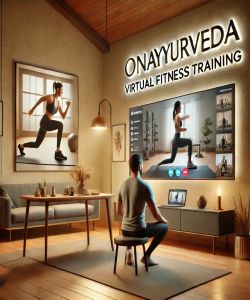
1. Overview of Virtual Fitness Training
Virtual Fitness Training represents a paradigm shift in the delivery and execution of personalised physical conditioning. It is an advanced, technology-mediated modality that eradicates geographical constraints, connecting certified fitness professionals with clients through digital platforms for real-time, interactive coaching. This is not to be confused with passive, pre-recorded content; it is a dynamic and responsive training environment. The discipline mandates a symbiotic relationship between the trainer's expert guidance and the client's unwavering commitment, facilitated by high-definition video, clear audio, and often, integrated biometric data from wearable technology. This format demands an exceptionally high level of professional competence from the trainer, who must possess the skill to assess movement, correct form, and motivate clients effectively without physical proximity. For the client, it requires a significant degree of self-discipline, personal accountability, and the provision of a safe, suitable training space. The overarching structure of Virtual Fitness Training is built upon the same foundational principles as elite in-person coaching: comprehensive assessment, bespoke programme design, progressive overload, and meticulous attention to safety and technique. It is a rigorous, results-oriented discipline that leverages technology not as a substitute for quality, but as a powerful enabler of it. This evolution in fitness delivery offers unparalleled accessibility and personalisation, positioning itself as a formidable and permanent fixture within the modern health and wellness landscape. It is the definitive solution for individuals who demand expert guidance but operate under constraints of time, location, or a preference for privacy, making elite fitness coaching more attainable than ever before, provided the participant is prepared to meet its exacting standards.
2. What are Virtual Fitness Training?
Virtual Fitness Training constitutes a sophisticated method of delivering professional, individualised or group-based exercise instruction remotely via digital communication technologies. At its core, it is a live, synchronous interaction between a qualified trainer and one or more clients, conducted through a video conferencing platform. This modality fundamentally replicates the dynamic of an in-person training session, allowing for real-time visual and auditory feedback, immediate form correction, and personalised motivation. It is imperative to distinguish this from the passive consumption of pre-recorded fitness videos or apps that lack this live, interactive component. The essence of virtual training lies in its responsive and tailored nature.
Its primary components can be defined as follows:
- Live, Synchronous Interaction: The cornerstone of the practice is the real-time connection. The trainer observes the client’s performance and provides immediate, actionable coaching cues, just as they would in a physical gym. This ensures that exercises are performed safely and effectively, maximising results and minimising the risk of injury.
- Bespoke Programme Design: Virtual training is not a one-size-fits-all solution. Each session is, or should be, part of a broader, meticulously planned programme designed to meet the client's specific goals, whether they relate to strength gain, fat loss, improved mobility, or athletic performance. The trainer adapts the programme based on the client's progress and feedback.
- Technology as a Medium, Not the Focus: While enabled by technology such as cameras, microphones, and streaming software, the technology itself is merely the conduit. The focus remains squarely on the principles of exercise science, biomechanics, and expert coaching. The technology facilitates the delivery of this expertise across any geographical distance.
- Accountability and Professional Oversight: A key function of virtual training is to provide the structure and accountability that many individuals lack when training alone. The presence of a dedicated professional ensures commitment to the programme and adherence to proper form.
3. Who Needs Virtual Fitness Training?
The Time-Constrained Professional: Individuals with demanding careers and unpredictable schedules who cannot commit to the rigid timetables of a physical gym. Virtual training eliminates travel time and offers unparalleled scheduling flexibility, allowing high-calibre workouts to be integrated seamlessly into a packed agenda.
Individuals in Remote or Underserved Locations: Those residing in rural areas or regions lacking access to high-quality fitness facilities and certified trainers. This modality provides them with direct access to elite coaching expertise that would otherwise be geographically unattainable.
Clients Requiring Privacy and Discretion: High-profile individuals, or those who feel self-conscious or intimidated by a traditional gym environment, find the privacy of their own home to be a more conducive setting for focused training. It removes the element of public scrutiny, allowing for complete concentration on personal performance.
Persons with Specific Health or Mobility Challenges: Individuals managing chronic conditions, recovering from injury, or requiring specialised modifications to their exercise programmes. A virtual setting allows for a highly controlled and customised environment, where a specialist trainer can provide focused, attentive coaching without external distractions.
Frequent Travellers: Professionals, such as consultants or sales executives, who are consistently on the move. Virtual training provides continuity and consistency in their fitness regimen, enabling them to train with their dedicated coach from any hotel room or temporary location in the world, provided they have an internet connection.
Parents and Carers with At-Home Responsibilities: Individuals who are primary caregivers for children or other family members find it exceptionally difficult to leave the home for personal activities. Virtual training removes this barrier entirely, making it possible to engage in a structured, professional workout without compromising their domestic duties.
Advanced Athletes Seeking Niche Expertise: Athletes who require coaching from a world-leading specialist in a particular discipline (e.g., kettlebell sport, powerlifting technique) who may be located on another continent. Virtual training makes this hyper-specialised coaching accessible.
4. Origins and Evolution of Virtual Fitness Training
The conceptual origins of Virtual Fitness Training predate the ubiquitous internet, finding their genesis in the home-exercise phenomena of the latter twentieth century. The proliferation of workout videotapes, led by celebrity fitness figures, first introduced the idea of receiving exercise guidance within the domestic sphere. Whilst rudimentary and non-interactive, these programmes established a market for at-home fitness, proving that a significant segment of the population desired an alternative to the traditional gymnasium model. This foundational stage was purely one-way communication: the user simply followed a pre-recorded, generic routine.
The advent of the public internet and subsequent improvements in bandwidth began to sow the seeds for a more dynamic evolution. Early iterations were asynchronous; a client might record their workout and email it to a trainer for critique, or follow a static, text-based programme delivered via email. This was a marginal improvement, introducing a feedback loop, yet it still lacked the immediacy and corrective power of live interaction. The process was cumbersome and the feedback delayed, limiting its overall effectiveness and failing to address critical safety concerns related to real-time form correction.
The true revolutionary leap occurred with the mainstream adoption of high-speed broadband internet and the development of robust, accessible video conferencing platforms. Technologies initially designed for corporate telepresence were repurposed for fitness, finally enabling the synchronous, two-way audio-visual communication that defines modern virtual training. This technological maturation transformed the model from a passive, delayed-feedback system into a live, interactive, and highly personalised coaching experience. Trainers could now observe, instruct, and correct clients in real time, effectively replicating the core functions of an in-person session. The final stage of this evolution, which is currently ongoing, involves the integration of wearable biometric sensors, providing trainers with live data on heart rate, calorie expenditure, and performance metrics, further enhancing the precision and personalisation of remote coaching.
5. Types of Virtual Fitness Training
One-to-One Live Personal Training: This is the pinnacle of virtual fitness coaching. It involves a single client and a single trainer interacting in real time via a private, secure video link. This format allows for the highest degree of personalisation, with the programme and in-session coaching tailored precisely to the individual's goals, abilities, and daily readiness. It is the direct virtual equivalent of a traditional personal training session, offering unparalleled attention to detail, form correction, and client-trainer rapport.
Live Small-Group Training: This model involves one trainer leading a limited number of clients (typically a small group) through a workout in a live, interactive virtual setting. Whilst not as individualised as one-to-one coaching, it fosters a sense of community and friendly competition. The trainer can still provide individual feedback and modifications, but the attention is divided. It represents a balanced approach, combining elements of personalisation with the motivational dynamic of a group environment.
On-Demand Virtual Fitness Classes: This type consists of a vast library of pre-recorded workout sessions that users can access at any time. Unlike live training, there is no real-time interaction or feedback from a coach. The user selects a workout based on type, duration, or intensity and follows the on-screen instructor. Whilst offering maximum flexibility, it lacks the safety, accountability, and personalisation of live coaching and is more accurately categorised as digital fitness content rather than true virtual training.
Hybrid Virtual Training: This model blends different types of virtual and sometimes in-person training. A client might, for instance, have a primary one-to-one virtual coach who designs their master programme, supplemented by periodic in-person check-ins for detailed assessments. Alternatively, their programme might include a mix of live one-to-one sessions for technique-heavy work and on-demand classes for cardiovascular conditioning, providing a comprehensive and varied training solution.
6. Benefits of Virtual Fitness Training
Unparalleled Convenience and Efficiency: Eliminates all travel time associated with visiting a physical fitness facility. Sessions can be conducted from home, an office, or a hotel room, allowing for seamless integration into the most demanding of schedules and maximising time efficiency.
Global Access to Elite Expertise: Clients are no longer restricted to the pool of trainers in their immediate geographical vicinity. Virtual training grants access to world-class coaches and specialists from across the globe, ensuring the client can partner with a professional who perfectly matches their specific needs and goals.
Enhanced Focus and Privacy: Training in a private, controlled environment removes the potential for self-consciousness, intimidation, or distractions commonly found in a busy gym. This allows for superior concentration and a stronger mind-muscle connection during workouts.
Superior Accountability and Consistency: The structure of scheduled, one-to-one appointments with a dedicated professional fosters a powerful sense of accountability. This consistency is a critical driver of long-term results, preventing the lapses in motivation that are common with unsupervised training.
Cost-Effectiveness: Whilst not compromising on the quality of expertise, this modality often presents a more economically viable solution. It eradicates ancillary costs such as gym memberships, travel expenses, and parking fees, focusing the investment purely on professional coaching.
Personalised and Adaptive Programming: The focused nature of virtual sessions, often augmented by data from wearable technology, allows for highly bespoke programme design. Trainers can make real-time adjustments based on the client’s performance, energy levels, and feedback, ensuring every session is optimised for progress.
Improved Health and Safety: In the context of public health concerns, virtual training provides a completely isolated and secure environment, eliminating any risk of exposure to communicable illnesses. It also ensures the client uses their own equipment in a familiar space.
7. Core Principles and Practices of Virtual Fitness Training
Uncompromising Professionalism and Punctuality: The virtual environment demands an even higher standard of professionalism. The trainer must be fully prepared, logged in, and ready to commence the session before the scheduled start time. All communication must be clear, articulate, and maintain a professional boundary. This principle establishes the authority and seriousness of the engagement from the outset.
Rigorous Initial Assessment: A comprehensive virtual assessment is non-negotiable. This must include a detailed consultation on goals, medical history, and lifestyle, alongside a functional movement screening conducted via video. The trainer must be adept at visually identifying movement patterns, asymmetries, and potential limitations through the camera to inform safe and effective programme design.
Bespoke and Progressive Programme Design: Generic, one-size-fits-all programmes are unacceptable. Every training plan must be tailored to the individual client's assessment results, goals, available equipment, and physical space. The principle of progressive overload must be systematically applied, ensuring the programme continually challenges the client to drive adaptation and prevent plateaus.
Mastery of Verbal and Visual Cueing: Without the ability to use tactile (hands-on) correction, the virtual trainer must be an exceptional communicator. They must master the art of precise verbal cueing and be able to demonstrate movements with perfect form. Their instruction must be unambiguous, enabling the client to understand and execute complex movements safely and effectively.
Constant and Meticulous Observation: The trainer's focus must be entirely on the client for the duration of the session. This involves scrutinising every repetition of every exercise, monitoring for signs of fatigue, and observing form from multiple angles if possible. The trainer’s gaze must be as analytical and corrective as it would be in person.
Prioritisation of a Safe Training Environment: Before commencing any programme, the trainer is responsible for instructing the client on how to create a safe workout space. This includes ensuring adequate floor space, removing hazards, checking equipment for safety, and establishing clear emergency protocols in the unlikely event of an incident.
Structured Feedback and Accountability Systems: The engagement must extend beyond the live session. The trainer must implement systems for tracking progress, gathering client feedback, and maintaining accountability. This includes session summaries, programme updates, and regular check-ins to ensure the client remains committed and on track towards their objectives.
8. Online Virtual Fitness Training
Eradication of Geographical Barriers: The online nature of this discipline fundamentally democratises access to elite fitness coaching. A client in a remote village has the exact same access to a world-renowned strength coach in a major metropolis as someone living next door to them. This dissolves all geographical limitations, creating a global marketplace of expertise where the sole criteria for selection are qualification, specialisation, and rapport, rather than proximity.
Real-Time Data Integration: Sophisticated online platforms allow for seamless integration with wearable biometric devices. A trainer can receive live, on-screen data streams of a client's heart rate, heart rate variability, and movement metrics. This transforms coaching from a purely observational practice into a data-driven science, allowing for precise, objective adjustments to intensity and volume based on the client's real-time physiological response.
Enhanced Visual Learning and Correction: High-definition video streams, when utilised correctly, offer a unique analytical advantage. The trainer can instruct the client to record a specific lift from multiple angles, then use screen-sharing and analysis tools to draw lines and highlight areas for improvement. This ability to pause, replay, and annotate video provides a level of technical feedback that can sometimes surpass the fleeting nature of in-person observation.
Creation of Robust Digital Records: Every session, every programme, and every piece of feedback can be digitally logged and archived. This creates a comprehensive training history that both client and trainer can review to track progress, identify long-term trends, and make informed decisions about future programming. This systematic record-keeping is far more rigorous than the often-informal notes taken in a gym setting.
Facilitation of Specialist Communities: Online platforms enable the formation of dedicated groups of individuals with shared, specific goals. A trainer can create a private online community for their clients, fostering peer support, shared motivation, and accountability that transcends the individual sessions. This digital ecosystem reinforces commitment and creates a powerful sense of belonging to a focused training group.
9. Virtual Fitness Training Techniques
Step One: The Comprehensive Virtual Consultation and Assessment. Initiate the engagement with a mandatory, in-depth video consultation. This is not a casual chat; it is a clinical intake. Discuss medical history, injury background, lifestyle factors, and establish sharply defined, measurable goals. Follow this with a live, guided Functional Movement Screen. Instruct the client to perform a series of foundational movements (e.g., bodyweight squat, lunge, push-up) whilst you observe meticulously from multiple angles to identify asymmetries, mobility restrictions, and stability issues. This assessment forms the unshakeable foundation of the programme.
Step Two: Environmental and Technical Set-Up. Before the first active session, conduct a dedicated technical and safety check. Instruct the client on optimal camera placement to ensure their entire body is visible for all planned exercises. Mandate a clear, uncluttered, and hazard-free training space. Verify that their audio and video technology functions flawlessly to prevent any communication breakdown during the session. This step is non-negotiable for safety and quality assurance.
Step Three: The Execution of the Live Session. Begin each session with a structured, dynamic warm-up, personally guided by you. During the main workout, provide a clear demonstration of each new exercise. Then, shift focus entirely to the client. Utilise precise, commanding verbal cues to direct their movement (e.g., "Drive your heels into the floor," "Brace your core as if expecting a punch"). Your instructions must be economical and impactful. Observe every repetition without distraction, providing immediate corrective feedback.
Step Four: Real-Time Adaptation and Monitoring. Remain hyper-vigilant to the client’s level of exertion and technical proficiency. Be prepared to modify the session plan instantly. If form breaks down due to fatigue, regress the exercise immediately to a simpler variation. If an exercise appears too easy, be ready with a progression. This dynamic adaptability is the hallmark of an expert coach, virtual or otherwise.
Step Five: The Post-Session Debrief and Forward Planning. Conclude with a structured cool-down and mobility sequence. Immediately follow this with a concise debrief. Provide feedback on their performance, highlighting both successes and areas for improvement. Clearly outline the focus for the next session and provide any "homework," such as mobility drills or nutritional reminders. This reinforces the session's impact and maintains momentum.
10. Virtual Fitness Training for Adults
Virtual Fitness Training for the adult demographic must be approached with a heightened sense of responsibility and strategic precision. The adult client is not a blank slate; they present with a unique combination of life stressors, potential pre-existing medical conditions, accumulated postural habits from years of professional life, and often, significant time constraints. Therefore, a generic, high-intensity programme is not only inappropriate but also hazardous. The virtual modality, when executed by a competent professional, is uniquely suited to address these complexities. It allows for a level of privacy and customisation that can be difficult to achieve in a public gym. The initial assessment must be exceptionally thorough, probing into occupational demands, sleep patterns, and any orthopaedic or metabolic concerns. Programme design must prioritise foundational strength, corrective exercise to counteract the effects of sedentary behaviour, and joint-friendly conditioning methods. The trainer’s role transcends that of a simple instructor; they become a strategic partner in managing the client’s overall wellness. The flexibility of virtual scheduling is a critical asset, enabling the integration of consistent, effective training into a life already burdened with professional and familial obligations. The focus must be on sustainable, long-term health improvements, injury prevention, and building robust functional capacity for daily life, rather than on short-term, aggressive performance goals that may be unsuitable for the adult body. It is a mature, intelligent approach to fitness for a mature and discerning clientele.
11. Total Duration of Online Virtual Fitness Training
The industry standard and professionally recommended total duration for a single, high-impact online virtual fitness training session is precisely one hour. This 60-minute timeframe is not an arbitrary figure but a strategically determined duration grounded in physiological and psychological principles. It is structured to permit a comprehensive and unhurried execution of all necessary training components, ensuring maximal effectiveness without inducing excessive fatigue or diminishing returns. A typical session of this length is logically partitioned: the initial phase is dedicated to a dynamic warm-up and mobility work, preparing the body for the demands to come. The central, and largest, portion of the hour is allocated to the main workout, focusing on the primary objectives of strength, conditioning, or skill development. The final phase is reserved for a crucial cool-down period and targeted stretching, which aids in recovery and mitigates muscle soreness. This 60-minute duration is also optimal for maintaining peak client focus and concentration. Shorter sessions risk being superficial and incomplete, whilst significantly longer sessions can lead to a decline in technical proficiency due to mental and physical fatigue, thereby increasing the risk of injury. The one-hour structure provides the requisite time for the trainer to deliver detailed instruction, provide corrective feedback, and address client questions, making it the uncompromising benchmark for a complete, professional, and effective virtual training experience. It represents a full and robust investment in a single, focused block of quality work.
12. Things to Consider with Virtual Fitness Training
Before committing to a virtual fitness training programme, a number of critical factors must be rigorously evaluated. Foremost amongst these is the imperative to vet the trainer’s credentials with uncompromising diligence. The digital veil can obscure a lack of proper qualification; therefore, prospective clients must demand proof of recognised, high-level certifications and adequate professional liability insurance that explicitly covers remote coaching. Secondly, a realistic self-assessment of one's own technological competence and equipment is essential. A stable, high-speed internet connection and a device with a clear camera and microphone are non-negotiable prerequisites. Any failure in this domain will severely compromise the quality and safety of the training. Furthermore, one must honestly appraise their physical training environment. Is there sufficient, uncluttered space to perform dynamic movements safely? Is the flooring suitable? The absence of a physically present trainer transfers a greater onus of environmental safety onto the client. Finally, the individual must consider their own capacity for self-motivation and discipline. Virtual training, for all its benefits, removes the ambient energy of a gym and the physical presence of a coach. The client must possess the internal drive to perform with intensity and integrity when no one else is in the room. A failure to consider these practical and psychological elements will undermine the entire endeavour, regardless of the trainer's expertise.
13. Effectiveness of Virtual Fitness Training
The effectiveness of Virtual Fitness Training is not a matter of debate; it is a proven certainty, contingent entirely upon the calibre of its application. When executed with professional rigour, its efficacy is unequivocally comparable, and in certain respects superior, to traditional in-person coaching. Its success hinges on three critical pillars: the competence of the trainer, the adherence of the client, and the quality of the programme design. A highly skilled virtual coach, who is a master of communication and observational analysis, can dissect movement, correct form, and motivate with surgical precision through a digital medium. Client adherence is magnified by the sheer convenience and accountability of the format, leading to greater consistency—the most crucial variable for achieving results. Furthermore, the systematic and often data-enriched nature of virtual programming allows for meticulous tracking and progressive overload, which are the scientific bedrock of all physiological adaptation. The notion that effectiveness is diluted by distance is a fallacy rooted in an outdated understanding of coaching. The focused, one-to-one attention in a distraction-free environment ensures that every cue is heard and every movement is scrutinised. Therefore, when these conditions of professional excellence and client commitment are met, Virtual Fitness Training is not merely an alternative; it is a powerful, efficient, and exceptionally effective modality for achieving significant and lasting fitness outcomes.
14. Preferred Cautions During Virtual Fitness Training
During the execution of any virtual training session, a state of heightened awareness and uncompromising caution is mandatory. The client must operate under the strict understanding that their personal safety is a shared responsibility. It is absolutely imperative that any onset of pain, sharp or unfamiliar, is communicated to the trainer immediately and without hesitation. There is to be no stoicism or "working through the pain," as the trainer lacks the ability to make a physical assessment. Any ambiguity in instruction must be clarified before an exercise is attempted; assumption is the precursor to injury. The training environment, confirmed as safe beforehand, must be maintained as such; no pets, children, or other potential hazards should be permitted to enter the workout space mid-session. If at any point a technical failure, such as a frozen video stream or distorted audio, obscures the trainer's ability to see or hear the client clearly, the client is to cease all activity immediately and await instruction. Continuing a complex lift or dynamic movement without clear professional oversight is an unacceptable risk. Finally, the client must resist the urge to push beyond the prescribed intensity in a misguided attempt to impress. The programme is designed with specific parameters for a reason, and adherence to these is a non-negotiable component of a safe and progressive training protocol.
15. Virtual Fitness Training Course Outline
1: Foundational Intake and Strategic Goal Architecture. This initial phase is dedicated to a comprehensive client assessment. It includes a detailed health and injury history review, lifestyle analysis, and a live functional movement screening via video. The primary objective is to establish baseline metrics and collaboratively define clear, measurable, and realistic short-term and long-term goals.
2: Movement Competency and Corrective Strategy. This focuses on mastering foundational human movement patterns (squat, hinge, push, pull, carry). Emphasis is placed on perfect execution and motor control. Any dysfunctional patterns identified in the assessment are systematically addressed through a targeted corrective exercise strategy to build a robust and injury-resistant foundation.
3: Strength and Conditioning Protocols. With a solid foundation established, this introduces progressive overload principles to systematically increase strength and build lean muscle mass. Programme variables (intensity, volume, frequency) are manipulated based on the client's progress and goals. This includes instruction on major compound lifts and appropriate assistance exercises, tailored to the client's available equipment.
4: Metabolic Conditioning and Cardiovascular Health. This focuses on improving the body's energy systems. It incorporates various forms of cardiovascular and high-intensity interval training (HIIT) designed to enhance work capacity, improve cardiovascular health markers, and support body composition goals. The intensity and modality are prescribed according to the client's fitness level and preferences.
5: Nutritional Principles and Lifestyle Integration. This non-prescriptive provides essential education on foundational nutrition principles that support training goals, such as macronutrient roles, hydration, and meal timing. It also addresses crucial lifestyle factors like sleep hygiene and stress management, coaching the client on how to integrate healthy habits for holistic, long-term success.
6: Performance Review and Long-Term Programming. This involves a periodic, formal review of progress against the initial goals. Re-assessment of key performance indicators is conducted to quantify improvements. Based on this review, the long-term training strategy is adjusted, and new goals are established to ensure continuous progress and prevent plateaus.
16. Detailed Objectives with Timeline of Virtual Fitness Training
Phase One: Foundation (Weeks 1-4).
Objective: To establish technical proficiency in all prescribed foundational movements with zero pain and excellent form.
Timeline: By the end of the first month, the client must demonstrate flawless execution of bodyweight squats, lunges, planks, and basic hinging and rowing patterns. They will have established a consistent routine, attending all scheduled sessions, and will have mastered the technological and environmental setup for training. The primary outcome is neuromuscular adaptation and behavioural consistency.
Phase Two: Intensification (Weeks 5-12).
Objective: To achieve measurable increases in key performance indicators for strength and work capacity.
Timeline: By the end of the first quarter, the client will demonstrate a quantifiable increase in strength (e.g., increased load on key lifts, or progression to more advanced exercise variations). They will also show improved cardiovascular fitness, evidenced by a lower resting heart rate or improved recovery time during interval training. The focus shifts from learning movements to progressively loading them.
Phase Three: Transformation (Months 4-6).
Objective: To realise significant progress towards primary body composition and/or performance goals.
Timeline: By the six-month mark, tangible results in line with the client’s main objectives (e.g., measurable fat loss, muscle gain, or achieving a specific performance benchmark) should be clearly evident. The client will have internalised key nutritional and lifestyle habits and will demonstrate a high degree of autonomy and understanding of their own training process.
Phase Four: Optimisation and Autonomy (Months 7+).
Objective: To maintain and build upon results whilst transitioning to a more advanced and intuitive training state.
Timeline: In this ongoing phase, the client will work with the trainer to fine-tune their programme, perhaps targeting more advanced skills or new goals. They will have developed the ability to auto-regulate their training based on daily readiness. The objective is to cement fitness as a permanent, integrated part of their lifestyle, ensuring sustained, long-term health and performance.
17. Requirements for Taking Online Virtual Fitness Training
A Stable, High-Speed Internet Connection: This is the most critical and non-negotiable requirement. An unreliable or slow connection will result in lagging video, poor audio, and communication breakdowns, rendering the session ineffective and unsafe. A wired Ethernet connection is strongly preferred over Wi-Fi for maximum stability.
A Capable Electronic Device: The client must possess a laptop, tablet, or desktop computer equipped with a high-quality webcam and a functional microphone. The device's screen must be large enough to clearly see the trainer's demonstrations. A smartphone is generally considered a suboptimal, last-resort option due to its small screen size and instability.
An Adequate and Safe Training Space: A dedicated area with a minimum of two by three metres of clear, level floor space is required. This area must be completely free of furniture, trip hazards, and other obstructions. The flooring should be stable and not excessively slippery or soft. Good lighting is also essential for the trainer to see clearly.
Commitment to Uninterrupted Sessions: The client must ensure that their scheduled session time is protected from all interruptions. This means arranging for childcare, silencing phones, and informing other household members that they are not to be disturbed. The session is a formal appointment and must be treated with the same respect.
Possession of Prescribed Equipment: The client must acquire any basic equipment deemed necessary by the trainer during the initial consultation. Whilst many programmes can be designed using only bodyweight, items such as resistance bands, dumbbells, or a kettlebell may be required to achieve specific goals. This equipment must be in good, safe working order.
Appropriate Attire: The client must wear proper athletic attire that allows for a full range of motion and enables the trainer to clearly observe their body's alignment and muscle engagement. Loose, baggy clothing can obscure critical visual information about form and technique.
18. Things to Keep in Mind Before Starting Online Virtual Fitness Training
Before embarking on an online virtual fitness training programme, a period of sober self-reflection and practical preparation is essential. It is imperative to conduct a frank internal audit of your own discipline and commitment. This modality, whilst convenient, places a significant onus on your personal accountability. You must be prepared to show up, both mentally and physically, with the same rigour as you would for an in-person appointment. Furthermore, it is crucial to establish crystal-clear expectations with your chosen trainer from the outset. This involves clarifying communication channels, feedback methods, and cancellation policies before the first payment is made. Do not proceed on assumptions. You must also proactively familiarise yourself with the required technology; conduct a trial run of the video conferencing software to ensure you are comfortable with its functions, thereby preventing technical delays from eroding valuable session time. A critical preparatory step is to define what success looks like for you. Go beyond vague aspirations and set concrete, realistic initial goals. This provides an immediate sense of direction and purpose, which is vital for maintaining motivation during the initial adaptation phase. Neglecting this groundwork is to set a course for frustration and failure; a disciplined approach begins long before the first repetition is ever performed.
19. Qualifications Required to Perform Virtual Fitness Training
The qualifications required to perform professional and safe Virtual Fitness Training are stringent and non-negotiable. The digital format, far from lowering the bar, demands a higher echelon of competence to compensate for the lack of physical proximity. It is an absolute imperative that the practitioner holds credentials that are both recognised and relevant to this specific mode of delivery. At a minimum, a trainer must possess:
A Nationally Recognised Level 3 Personal Training Qualification: This is the foundational benchmark in the British fitness industry (or its international equivalent). It ensures the trainer has a core understanding of anatomy, physiology, programme design, and client assessment. Operating without this is unequivocally unprofessional and dangerous.
Specialist Public Liability and Professional Indemnity Insurance: The trainer's insurance policy must explicitly state that it provides coverage for online and remote coaching. Standard gym-based insurance is often insufficient, and a failure to hold appropriate cover exposes both the trainer and the client to significant risk.
A Proven Track Record and Verifiable Testimonials: Qualifications on paper are meaningless without demonstrated application. A competent virtual trainer must be able to provide evidence of successful client outcomes achieved through remote coaching. This substantiates their ability to translate theoretical knowledge into tangible results in the virtual environment.
Advanced Communication Skills and Technological Proficiency: Whilst not a formal certificate, this is a critical qualification. The trainer must be an expert communicator, capable of delivering precise verbal cues and effective visual demonstrations. They must also be thoroughly proficient with the hardware and software used for training delivery.
A failure to meet any of these standards disqualifies an individual from professionally marketing themselves as a Virtual Fitness Trainer. Clients are strongly advised to demand verification of these qualifications before entering into any coaching agreement.
20. Online Vs Offline/Onsite Virtual Fitness Training
Online
Online training represents the apex of convenience and accessibility in professional fitness coaching. Its primary advantage is the complete dissolution of geographical and logistical barriers. Clients gain access to a global pool of elite specialists, enabling them to select a coach based purely on expertise rather than location. This modality eliminates all time wasted on travel, allowing for seamless integration of rigorous training into the most demanding schedules. The online environment facilitates meticulous data tracking, with easy integration of wearable technology and digital logging of every workout, creating a rich performance history. It offers unparalleled privacy, providing a secure and focused setting for individuals who may feel intimidated or distracted by a traditional gym. Communication is highly focused and efficient, relying on precise verbal and visual instruction. However, it places a greater onus on the client's self-discipline and requires them to ensure their own training space is safe and equipped. It is the definitive choice for the self-motivated individual who values efficiency, privacy, and access to hyper-specialised coaching.
Offline/Onsite
Offline, or onsite, training is the traditional, established model of fitness coaching conducted within a physical facility. Its principal strength lies in the trainer's ability to provide immediate, hands-on, tactile feedback. This kinesthetic cueing can be invaluable for teaching complex movements and correcting subtle errors in form that may be less apparent on camera. Onsite training provides access to a comprehensive range of heavy and specialised equipment, from squat racks and barbells to complex cable machines, which may not be feasible for a home setup. The physical presence of the coach and the ambient energy of the gym environment can provide a powerful source of external motivation for some individuals. It also eliminates any potential for technical failures related to internet connectivity or hardware. However, it is inherently limited by geography, restricting client choice to local trainers. It necessitates travel time, is subject to the gym's operating hours, and offers less privacy than the online alternative. It is the ideal choice for individuals who thrive on in-person interaction, require hands-on correction, or need access to extensive commercial-grade equipment.
21. FAQs About Online Virtual Fitness Training
Question 1. Is virtual training as effective as in-person training? Answer: Yes, its effectiveness is contingent on the trainer's quality and the client's commitment. For many, the increased consistency and focus lead to superior results.
Question 2. What technology do I absolutely need? Answer: A device with a good camera and microphone (laptop or tablet is best), and a stable, high-speed internet connection.
Question 3. How does the trainer correct my form without being there? Answer: Through expert visual assessment and precise, detailed verbal and visual cueing. Master trainers are skilled at guiding you into the correct position remotely.
Question 4. Is it safe? Answer: Yes, provided you work with a qualified professional who conducts a thorough assessment and instructs you on creating a safe, clear workout space.
Question 5. What if my internet connection fails mid-session? Answer: Professional trainers have a protocol. Typically, you will cease activity immediately and attempt to reconnect. The trainer will advise on how any lost time is handled.
Question 6. Do I need a lot of space? Answer: You need enough clear space to perform exercises without obstruction, typically an area of at least 2x3 metres.
Question 7. What if I have no equipment? Answer: A good trainer can design an exceptionally effective programme using only your bodyweight. They will advise if basic equipment is needed to meet specific goals.
Question 8. How do I choose the right virtual trainer? Answer: Verify their Level 3 (or higher) qualification, check for specific online coaching insurance, and ask for testimonials from other virtual clients.
Question 9. Can virtual training help with weight loss? Answer: Absolutely. A comprehensive programme will combine effective workouts with nutritional guidance to support your body composition goals.
Question 10. Is it suitable for complete beginners? Answer: Yes. One-to-one virtual training is excellent for beginners as it provides focused, private instruction on foundational movements.
Question 11. How long is a typical session? Answer: The professional standard is one hour to allow for a proper warm-up, main workout, and cool-down.
Question 12. How is this different from a free workout video? Answer: It is live, interactive, and completely personalised to you. The trainer watches you and provides real-time feedback, which a video cannot do.
Question 13. Can I train with a partner? Answer: Many trainers offer small-group or partner sessions. You must clarify this with them beforehand.
Question 14. What if I have a prior injury? Answer: A qualified trainer will conduct a thorough assessment and design a programme to work around the injury safely, often incorporating corrective exercises.
Question 15. Is my privacy protected? Answer: Professional trainers use secure platforms and have strict confidentiality policies. Your sessions are private.
Question 16. How do I stay motivated without a trainer physically present? Answer: The accountability of a scheduled appointment and the regular feedback and progress tracking from your coach are powerful motivators.
22. Conclusion About Virtual Fitness Training
In conclusion, Virtual Fitness Training has firmly established itself not as a temporary substitute or a lesser alternative, but as a permanent and powerful pillar of the modern health and fitness industry. It is a sophisticated discipline that leverages technology to dissolve the traditional barriers of geography and time, making elite, personalised coaching more accessible than ever before. Its effectiveness, however, is not automatic; it is forged in the crucible of professional rigour and client commitment. The modality demands an exceptional calibre of trainer—one who is not only an expert in exercise science but also a master of remote communication and observational analysis. For the client, it mandates a high degree of self-discipline, integrity, and a proactive approach to creating a safe and focused training environment. When these symbiotic elements converge, virtual training delivers results that are potent, measurable, and lasting. It represents a definitive evolution in how we approach physical betterment, offering a structured, accountable, and supremely efficient pathway to achieving robust health and peak performance. It is not the future of fitness; it is a formidable and indispensable component of its present.