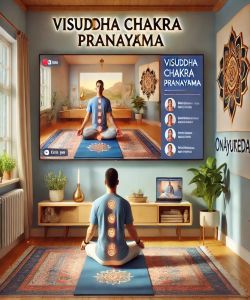
1. Overview of Visuddha Chakra Pranayama
Visuddha Chakra Pranayama constitutes a specialised and formidable category of yogic breathing disciplines engineered to purify, activate, and balance the fifth primary energy centre, the throat chakra. Located in the cervical plexus region, the Visuddha chakra governs the domains of communication, authentic self-expression, creativity, and purification on both physical and etheric levels. This practice is not a singular technique but an umbrella term for various pranayama methods that direct the flow of prana, or life force energy, specifically towards this vital nexus. The fundamental objective is to dismantle energetic blockages that manifest as communicative inhibition, creative stagnation, and a disconnect from one’s personal truth. Through the meticulous regulation of breath—its rhythm, depth, and retention—the practitioner systematically cleanses the nadis (energy channels) associated with this centre. This process facilitates an enhanced capacity for clear, coherent, and impactful expression, moving beyond mere speech to encompass all forms of creative output. It is a rigorous discipline demanding unwavering focus and physiological control, particularly involving the subtle constriction of the glottis to produce resonant sound and internal vibration. The practice is predicated on the yogic principle that mastering the breath is tantamount to mastering the mind and the subtle energies that animate the human system. Consequently, engagement with these techniques yields profound effects, influencing not only vocal quality and confidence but also fostering a state of inner listening and heightened intuitive awareness. It is, therefore, a sophisticated tool for personal transformation, targeting the very seat of expression to unlock a more resonant and truthful existence, demanding absolute diligence from those who seek its profound and substantive rewards.
2. What are Visuddha Chakra Pranayama?
Visuddha Chakra Pranayama represents a targeted classification of respiratory control techniques within the broader science of yoga, designed with the explicit purpose of stimulating the throat energy centre. The term itself is a composite of three Sanskrit words, each carrying significant weight. ‘Visuddha’ translates to ‘especially pure’ or ‘purification,’ signifying the practice's primary function of cleansing. ‘Chakra’ means ‘wheel’ or ‘vortex,’ referring to the spinning centres of subtle energy that are understood to regulate the body’s psycho-physiological functions. ‘Pranayama,’ derived from ‘prana’ (life force) and ‘ayama’ (extension or regulation), is the science of controlling the breath to manage and direct this vital energy throughout the system.
Therefore, Visuddha Chakra Pranayama are not one single exercise, but rather a collection of breathing methodologies that share a common focus on the anatomical and energetic region of the throat. The core mechanism of these practices involves manipulating the breath to create specific vibrations, pressures, and energetic flows that directly interact with the Visuddha chakra. This is often achieved through:
- Laryngeal Contraction: A deliberate and subtle tightening of the throat muscles, particularly the glottis, as seen in Ujjayi Pranayama. This action generates an audible, resonant sound that vibrates the targeted area, effectively ‘massaging’ the chakra from within.
- Vocalised Resonance: The use of sound, or mantra, in conjunction with the breath, as exemplified by Brahmari Pranayama. The humming vibration produced is a powerful tool for activating dormant energy and calming the nervous system via the vagus nerve, which is heavily clustered in this region.
- Energetic Locks (Bandhas): The application of Jalandhara Bandha, the throat lock, which involves pressing the chin firmly to the chest. This potent practice redirects the flow of prana, preventing its dissipation and concentrating its purifying power within the Visuddha centre.
These techniques are precise instruments for enhancing communication, creativity, and the ability to express one’s authentic self with clarity and conviction.
3. Who Needs Visuddha Chakra Pranayama?
- Professionals Reliant on Vocal Communication: This category includes public speakers, executives, barristers, educators, and leaders for whom clarity, resonance, and vocal stamina are non-negotiable assets. The practice fortifies the vocal cords, enhances projection, and instils a commanding yet calm quality in the voice, enabling sustained and impactful communication under pressure. It mitigates vocal fatigue and cultivates an audible authority that compels attention.
- Individuals Experiencing Communicative Inhibition: Persons who struggle to articulate their thoughts and feelings, who feel unheard or misunderstood, or who exhibit patterns of shyness and social reticence find this discipline indispensable. It works directly on the energetic root of these blockages, systematically dismantling the fear of expression and fostering the confidence required to speak one’s truth clearly and without apology.
- Artists, Writers, and Creative Practitioners: Those engaged in creative pursuits who face periods of stagnation, or ‘creative block,’ will find the practice uniquely beneficial. The Visuddha chakra is the nexus of creativity and expression. Purifying this centre dissolves impediments to imaginative flow, allowing for a more fluid and authentic channel for creative ideation and execution across any medium.
- Practitioners of Meditation and Deeper Yogic Disciplines: Individuals seeking to advance their spiritual practice require a purified Visuddha chakra. This centre is considered the gateway to higher states of consciousness. An unblocked throat chakra is essential for the upward flow of kundalini energy and for developing the capacity for ‘divine hearing’ (clairaudience) and receiving subtler, intuitive insights.
- Persons with a Tendency Towards Dishonesty or Inauthenticity: This includes those who habitually engage in gossip, exaggeration, or who find it difficult to align their words with their actions. The purifying nature of the practice instils a powerful inclination towards truthfulness (satya), fostering an internal environment where inauthentic expression becomes dissonant and intolerable.
- Individuals with Physical Imbalances in the Throat Region: Those experiencing chronic minor ailments related to the throat, thyroid, or parathyroid glands (within a non-clinical, holistic framework) may utilise these techniques. The increased circulation and energetic stimulation in the cervical region can support the body’s natural regulatory functions, promoting a state of localised equilibrium and vitality.
4. Origins and Evolution of Visuddha Chakra Pranayama
The conceptual underpinnings of Visuddha Chakra Pranayama are deeply embedded in the ancient esoteric traditions of India, with roots traceable to foundational yogic and tantric texts. The earliest scriptures, such as the Upanishads, laid the philosophical groundwork by introducing the concepts of prana (vital life force) and the nadis (energetic channels) through which it flows. While these texts may not have explicitly detailed a practice named ‘Visuddha Chakra Pranayama,’ they established the core principle that life could be regulated and consciousness expanded through mastery of the breath.
The systematisation of these ideas gained significant momentum with the emergence of Tantra and Hatha Yoga. Classical Hatha Yoga texts, most notably the Hatha Yoga Pradipika and the Gheranda Samhita (circa 15th and 17th centuries, respectively), provided the first explicit, technical descriptions of practices that directly target the throat centre. These scriptures detailed techniques such as Ujjayi Pranayama, with its characteristic glottal friction, and Jalandhara Bandha (the throat lock), presenting them as powerful tools for redirecting pranic flow and achieving higher states of awareness. The chakra system itself, a central tenet of Tantra, provided the map upon which these practices were applied, identifying Visuddha as the fifth centre of purification and expression.
In these early contexts, the practices were not merely physical exercises but were part of a holistic system of spiritual development. They were taught secretively, from guru to a worthy disciple, and were inextricably linked with mantra, mudra, and intense meditative focus. The objective was unambiguously transcendental: to purify the being to a degree that it could handle the ascent of Kundalini energy and attain liberation (moksha).
The evolution into the modern era has seen a significant shift in both accessibility and application. Twentieth-century yoga masters, instrumental in transmitting yoga to the global stage, began to de-mystify these potent techniques, framing them in terms of their psychological and physiological benefits. This led to their integration into mainstream yoga classes and therapeutic applications. While the esoteric goals remain for dedicated practitioners, the contemporary emphasis has broadened to include tangible benefits such as improved communication, stress reduction, and enhanced creativity. The evolution, therefore, marks a transition from a guarded, esoteric discipline to a more widely available, though no less potent, methodology for personal and energetic refinement.
5. Types of Visuddha Chakra Pranayama
- Ujjayi Pranayama (The Victorious Breath): This is the foundational pranayama for the Visuddha chakra. It is executed by creating a gentle but deliberate constriction at the back of the throat (the glottis), which produces a soft, audible, oceanic sound during both inhalation and exhalation. This controlled friction generates a subtle internal heat (tapas) and a continuous vibration that directly stimulates the throat region, cleansing and energising the Visuddha chakra. It demands constant awareness to maintain a smooth, even sound, making it a powerful tool for concentration.
- Brahmari Pranayama (The Bee Breath): This technique involves producing a low-pitched, resonant humming sound, akin to that of a bee, during a prolonged exhalation. The ears are typically sealed with the fingers to intensify the internalisation of the sound vibration. This potent vibratory action has a profound soothing effect on the nervous system and directly massages the entire throat and cranial area. For the Visuddha chakra, Brahmari is a powerful purifying agent, releasing pent-up emotional energy and clearing communicative blockages through sonic resonance.
- Simhasana (Lion’s Pose with Breath): While technically an asana (posture), its primary power lies in its associated pranayama. The practitioner kneels, places hands on knees, and on a forceful exhalation, opens the mouth wide, extends the tongue out and down towards the chin, and emits a powerful "Haa" sound from the back of the throat while gazing upwards. This explosive release is exceptionally effective at clearing stagnant energy from the Visuddha chakra, relieving tension in the jaw and throat, and eradicating inhibitions related to expression.
- Kirtan and Mantra Japa (Chanting): The repetitive chanting of mantras or sacred sounds is a dynamic form of Visuddha-focused pranayama. The act of producing specific sound vibrations, especially seed (bija) mantras like ‘Ham’ (the sound associated with Visuddha), requires controlled exhalation and precise articulation. This practice directly activates the throat centre, purifies speech, and aligns the practitioner’s personal vibration with higher frequencies, enhancing both communication and spiritual connection.
- Jalandhara Bandha (The Throat Lock): This is an advanced energetic lock, not a standalone breathing technique, but an indispensable component used in conjunction with other pranayamas, particularly during breath retention (kumbhaka). It is performed by dropping the head forward and pressing the chin firmly against the jugular notch. This action physically and energetically seals the upper end of the central energy channel, preventing prana from escaping upwards and concentrating its purifying force within the trunk, with a profound impact on the Visuddha chakra. It must only be learned under expert guidance.
6. Benefits of Visuddha Chakra Pranayama
- Enhanced Clarity and Authenticity in Communication: The primary benefit is the systematic dismantling of energetic impediments to expression. This results in a marked improvement in the ability to articulate thoughts, emotions, and ideas with precision, confidence, and truthfulness. Speech becomes more resonant, coherent, and impactful.
- Unlocking of Creative Potential: As the centre for creativity, the purification of the Visuddha chakra directly dissolves creative blocks. Practitioners often report a renewed and fluid access to inspiration, innovative thinking, and the courage to execute creative projects across various mediums, from writing to performance arts.
- Cultivation of Refined Listening Skills: The practice fosters not only expressive capacity but also receptive capacity. By balancing the throat centre, one develops a heightened ability to listen actively and deeply, both to others and to one’s own inner wisdom and intuition, leading to more meaningful interpersonal exchanges and sounder judgement.
- Strengthening of Vocal Health and Stamina: The controlled use of the throat muscles and the resonant vibrations produced during techniques like Ujjayi and Brahmari act as a form of internal physiotherapy for the vocal apparatus. This fortifies the vocal cords, improves tonal quality, and increases vocal stamina, which is invaluable for professional speakers and singers.
- Regulation of the Thyroid and Parathyroid Glands: From a yogic physiological perspective, the focused stimulation of the throat region through breath and vibration enhances blood circulation and pranic flow. This energetic nourishment is understood to support the optimal functioning of the thyroid and parathyroid glands, which are critical for metabolic regulation.
- Release of Suppressed Emotions: The throat is often a repository for unexpressed grief, anger, and fear. The purifying action of these pranayamas provides a safe and structured mechanism for releasing these long-held emotional energies, preventing them from manifesting as physical or psychological distress.
- Fostering of Fearlessness (Abhaya): By directly addressing the energetic root of the fear of judgement and the inability to speak one's truth, this discipline cultivates a profound sense of inner security and fearlessness. This allows the practitioner to engage with the world from a position of authentic strength and integrity.
- Gateway to Higher Consciousness: Within the yogic framework, a purified Visuddha chakra is a prerequisite for the safe and effective ascent of prana to the higher chakras (Ajna and Sahasrara). It acts as a crucial checkpoint, purifying negative energies before they can distort higher perceptions.
7. Core Principles and Practices of Visuddha Chakra Pranayama
- Sankalpa (Resolute Intention): Before commencing any practice, the practitioner must establish a clear and unwavering intention. This is not a casual wish but a potent, focused resolve to purify the Visuddha centre and embrace authentic expression. This mental and energetic alignment is critical, as it directs the flow of prana with purpose and magnifies the technique's efficacy.
- Dharana (Concentrated Focus): Unwavering concentration on the locus of the Visuddha chakra—the pit of the throat—is non-negotiable. Throughout the practice, all sensory awareness must be withdrawn from external distractions and directed internally to this specific point. This focused attention acts like a magnet, drawing prana to the area and activating it.
- Asana Sthira (Stable Posture): A correct and stable seated posture is an absolute prerequisite. The spine must be erect, from the coccyx to the crown of the head, to allow for the unimpeded flow of prana through the central channel (Sushumna Nadi). Postures such as Padmasana (Lotus Pose), Siddhasana (Accomplished Pose), or a simple cross-legged position on a firm cushion are mandated. Slouching will obstruct energy flow and render the practice ineffective.
- Controlled Laryngeal Articulation: The cornerstone of many Visuddha practices is the subtle and sustained control of the glottis. This is not a forceful strangulation but a refined muscular action that narrows the airway to produce a smooth, consistent, and resonant sound (as in Ujjayi). Mastering this control is fundamental to generating the specific vibration required for stimulation.
- Rhythmic and Measured Respiration: The breath must be consciously regulated. This involves maintaining a consistent and often equalised ratio between inhalation (puraka) and exhalation (rechaka). Any jerky, shallow, or uncontrolled breathing defeats the purpose. The rhythm must be deliberate, calm, and sustained, transforming the autonomic process of breathing into a conscious, disciplined act.
- Integration of Jalandhara Bandha (The Throat Lock): For intermediate and advanced practitioners, the application of the throat lock during breath retention is a core practice. This potent technique, performed under qualified guidance, seals pranic energy within the trunk, preventing its upward dissipation and dramatically intensifying its purifying effect on the Visuddha chakra.
- Vibrational Resonance through Sound (Mantra/Nada): The use of sound is a key practice. This can be the internal sound of the Ujjayi breath or the external, vocalised humming of Brahmari or chanting of the Bija mantra ‘Ham’. Sound is vibration, and this vibration is the primary tool used to dislodge energetic stagnation and tune the chakra to its optimal frequency.
8. Online Visuddha Chakra Pranayama
- Unparalleled Accessibility to Specialised Instruction: The online modality eradicates geographical barriers, granting practitioners access to highly qualified, authentic, and experienced instructors from anywhere on the globe. This is particularly crucial for a specialised practice like Visuddha Chakra Pranayama, for which expert guidance may not be locally available. It allows the discerning student to select a teacher based on lineage and expertise rather than proximity.
- Cultivation of Supreme Self-Discipline and Autonomy: Practising in a remote environment demands and cultivates a superior level of personal responsibility and discipline. Without the external pressure of a physical group, the practitioner must rely solely on internal motivation and commitment. This fosters a robust and self-reliant practice, which is the hallmark of a serious yogi. The home environment becomes a dedicated crucible for personal transformation.
- Focused and Undistracted Internalisation: The solitude of online practice minimises social distractions and the tendency for comparison inherent in a group setting. This allows for a deeper and more profound internal journey. The practitioner can focus exclusively on the subtle internal sensations, the sound of the breath, and the vibratory resonance within the throat, leading to a more potent and introspective experience.
- Creation of a Controlled and Personalised Practice Environment: The practitioner has absolute control over their practice space. They can regulate the lighting, temperature, and sound to create an optimal sanctuary for deep work. This ability to customise the environment ensures minimal external interference, allowing for the sensitive and subtle energetic work of pranayama to unfold with maximum efficacy.
- Enhanced Learning Through Repetition and Review: Reputable online courses provide access to recorded sessions. This is a significant advantage over single, live classes. The practitioner can review complex instructions, refine their technique, and revisit foundational principles at their own pace. This capacity for repetition solidifies understanding and ensures correct, safe execution of the techniques over time.
- Consistent Practice Despite External Demands: The flexibility of online scheduling allows for the integration of this demanding practice into a professional and personal life with greater ease. It removes the logistical challenges of travel and fixed class times, enabling the practitioner to maintain the consistency that is absolutely essential for achieving tangible results from any form of pranayama.
9. Visuddha Chakra Pranayama Techniques
The following steps detail the execution of Ujjayi Pranayama, a foundational technique for activating the Visuddha chakra. This must be approached with precision and respect.
- Establish a Stable and Erect Posture: Assume a formal seated meditation posture, such as Siddhasana or Padmasana. If these are inaccessible, sit cross-legged on a firm cushion, ensuring the knees are below the hips. The spine must be held absolutely straight and vertical, creating a clear channel for energy to flow. The hands rest on the knees in Jnana Mudra (thumb and index finger touching). The body must remain perfectly still throughout.
- Relax the Physical Form and Focus the Mind: Close the eyes. Deliberately release any physical tension from the body, particularly in the jaw, shoulders, and facial muscles. Withdraw the mind from external concerns. Bring the entirety of your awareness to the natural, autonomic flow of your breath for several cycles, simply observing without control.
- Initiate the Laryngeal Constriction: Shift your awareness to the back of the throat, to the location of the glottis. Gently and subtly contract the muscles in this area, as if you were about to whisper a secret. This action should be refined, not forceful. It is the same muscular engagement used to fog a mirror with your breath.
- Commence Controlled Ujjayi Inhalation: Maintaining this gentle throat constriction, begin to inhale slowly and deeply through both nostrils. The constriction will create a soft, smooth, and audible hissing or oceanic sound. The sound should be consistent and even throughout the inhalation. The focus must remain on the sound and the sensation of the breath passing over the back of the throat.
- Execute Controlled Ujjayi Exhalation: Upon reaching the peak of the inhalation without strain, begin to exhale slowly, again through both nostrils, while maintaining the exact same constriction in the throat. The sound produced during exhalation should match the sound of the inhalation in tone and volume. Ensure the exhalation is at least as long as, or longer than, the inhalation.
- Establish a Rhythmic Cycle: Continue this cycle of controlled, resonant inhalation and exhalation. The objective is to create a seamless, uninterrupted loop of sound and breath. The mind must remain single-pointedly focused on the sound, which acts as an anchor. Any deviation in the sound indicates a lapse in concentration or control, which must be immediately rectified.
- Conclude the Practice with Awareness: After a predetermined number of cycles, release the throat constriction and return to natural breathing. Do not move immediately. Remain seated in stillness for several moments, observing the residual vibratory effects in the throat and the state of calmness in the mind.
10. Visuddha Chakra Pranayama for Adults
The application of Visuddha Chakra Pranayama for the adult practitioner is a matter of profound strategic importance, addressing the specific and complex challenges inherent to mature life. For adults navigating the demanding spheres of professional careers, familial responsibilities, and intricate social networks, the capacity for clear, authoritative, and authentic communication is not a luxury but a fundamental necessity. This discipline directly hones that capacity, transforming hesitant or ambiguous expression into a tool of precision and influence. It provides the energetic foundation for leadership, negotiation, and effective articulation of vision. Furthermore, the adult experience is often characterised by an accumulation of unexpressed emotions and psychological baggage—the disappointments, compromises, and griefs that become lodged as energetic blockages in the throat centre. Visuddha Chakra Pranayama acts as a potent solvent for this psychic residue, offering a structured, non-cathartic method for its release, thereby preventing the long-term corrosion of mental and physical well-being. It confronts the creative stagnation that can accompany the routine of adult life, reopening channels of inspiration and innovation essential for personal growth and professional relevance. For the adult seeking deeper meaning beyond the material, it is a gateway practice, purifying the instrument of expression so that one’s inner truth can be not only realised but also communicated with integrity. The discipline demands the very qualities that adulthood seeks to cultivate—patience, consistency, and a commitment to rigorous self-development—making it a perfectly aligned and powerful technology for the conscious adult individual.
11. Total Duration of Online Visuddha Chakra Pranayama
The mandatory duration for a single, complete session of online Visuddha Chakra Pranayama is precisely 1 hr. This temporal framework is not arbitrary; it is a meticulously structured container designed to ensure the practice is approached with the requisite depth, safety, and efficacy. A duration of less than 1 hr is insufficient to move beyond superficial muscular control into the subtle energetic realms where the true work of purification occurs. The allocated time is systematically partitioned to accommodate the essential phases of the discipline. The initial segment is dedicated to establishing physical stillness (asana sthira) and mental one-pointedness (ekagrata), a preparatory phase that cannot be truncated without compromising the entire session. The central, most substantial portion of the 1 hr is reserved for the core pranayama techniques themselves, allowing for a sufficient number of cycles to generate the necessary vibratory resonance and pranic accumulation within the Visuddha chakra. This requires sustained, uninterrupted effort. Following the main practice, a critical phase of integration is required, where the practitioner sits in silent observation, allowing the awakened energies to settle and harmonise within the system. Finally, the session concludes with a formal closing, grounding the practitioner before they return to external activities. To attempt this potent work in a hurried or abbreviated fashion is to court inefficiency and potential energetic imbalance. Therefore, the 1 hr structure stands as a non-negotiable standard, a testament to the seriousness and profundity of the undertaking, demanding a full and unwavering commitment of time from the practitioner.
12. Things to Consider with Visuddha Chakra Pranayama
Engaging with Visuddha Chakra Pranayama demands a serious and informed approach, as these are potent techniques with profound systemic effects. It is imperative, first and foremost, to secure guidance from a genuinely qualified and experienced instructor. The subtleties of laryngeal control and the application of energetic locks like Jalandhara Bandha cannot be safely or effectively learned from text or video alone; they require direct, expert feedback to prevent strain or injury. Practitioners must possess a stable foundation in basic, gentle pranayama before attempting these more specialised forms. A nervous system unaccustomed to breath regulation can be easily overwhelmed, leading to agitation rather than calm. One must rigorously assess their physical condition. Individuals with high blood pressure, heart conditions, glaucoma, or active throat or ear infections must abstain from these practices or proceed only with explicit medical consent and under the most cautious expert supervision. The psychological ramifications must also be considered. The purification of the throat chakra can catalyse the release of long-suppressed emotions, such as grief or anger. The practitioner must be prepared to face this emotional material with equanimity and have the maturity to process it constructively, without becoming destabilised. The practice is not a panacea but a powerful tool; its forceful application to an unprepared system is counterproductive. A mindset of patience, respect for the process, and a commitment to consistency over intensity is the only correct and sustainable path to unlocking its benefits.
13. Effectiveness of Visuddha Chakra Pranayama
The effectiveness of Visuddha Chakra Pranayama is not a matter for conjecture or belief; it is a direct and verifiable consequence of disciplined, correct, and sustained application. Its efficacy is rooted in empirical principles of yogic science, which posit a direct, causal link between the regulation of breath, the flow of vital energy (prana), and the state of one’s psycho-physiological being. When a practitioner meticulously adheres to the prescribed techniques—maintaining an erect spine, executing precise laryngeal control, and sustaining unwavering mental focus—the results are inevitable and tangible. The constant, subtle vibration generated by a practice like Ujjayi Pranayama systematically stimulates the nerve plexuses, endocrine glands, and subtle energy channels in the cervical region. This is not a metaphysical abstraction but a physiological event. The outcome is a measurable improvement in vocal resonance, a palpable release of tension in the jaw and throat, and a distinct enhancement in the clarity of thought and expression. The effectiveness is directly proportional to the practitioner’s diligence. Sporadic, half-hearted, or incorrect practice will yield negligible results and may even be counterproductive. However, for the individual who commits to a regular, rigorous, and respectful engagement with the discipline under qualified guidance, the transformation of the Visuddha chakra from a state of blockage to one of vibrant, expressive purity is an observable and powerful reality. Its effectiveness is, therefore, a testament not to the magic of the practice, but to the unyielding law of cause and effect when applied with disciplined intelligence.
14. Preferred Cautions During Visuddha Chakra Pranayama
During the active execution of Visuddha Chakra Pranayama, a state of hyper-vigilant self-awareness is mandatory. The foremost caution is the absolute avoidance of any form of strain. The breath must never be forced, and the constriction in the throat for Ujjayi must be subtle and refined, not a harsh, grating action that causes irritation or coughing. If at any point the practice induces dizziness, light-headedness, shortness of breath, or a significant increase in blood pressure, it must be ceased immediately, and the practitioner must return to natural, calm breathing. The application of Jalandhara Bandha (throat lock), particularly in conjunction with breath retention (kumbhaka), is strictly for advanced practitioners and must only be performed under the direct, real-time supervision of a master teacher. Attempting this potent lock without proper preparation and guidance can lead to serious injury or energetic disruption. Furthermore, one must remain acutely aware of the body’s signals; any sharp pain in the throat, ears, or head is an unequivocal command to stop. The practice is to be performed on a completely empty stomach; a minimum of three to four hours should have passed since the last meal. Practising with food in the digestive system diverts essential energy and can cause extreme discomfort and nausea. This is a non-negotiable rule. The mental and emotional state must also be monitored; if the practice triggers overwhelming anxiety or emotional distress, it is wiser to halt and seek guidance than to push through into a state of instability. Discipline, not force, is the key.
15. Visuddha Chakra Pranayama Course Outline
I: Foundational Principles and Energetic Anatomy
Introduction to the concepts of Prana, Nadis, and the Chakra system.
Detailed theoretical study of the Visuddha Chakra: its location, elemental association (ether), function (communication, creativity), and psycho-emotional correlates.
Instruction in establishing a stable and correct seated posture (Asana Sthira) for pranayama.
II: Introduction to Core Techniques - Ujjayi Pranayama
Systematic, step-by-step instruction in the mechanics of Ujjayi Pranayama (The Victorious Breath).
Focus on mastering the subtle art of glottal control to produce a smooth, resonant sound.
Practice of Ujjayi without breath retention, focusing on rhythmic evenness between inhalation and exhalation.
III: Resonance and Release - Brahmari Pranayama
Detailed instruction in Brahmari Pranayama (The Bee Breath), including Shanmukhi Mudra to internalise the vibration.
Exploration of different pitches and their effects on the nervous system and throat centre.
Practice in combining Ujjayi and Brahmari for comprehensive stimulation.
IV: The Energetic Seal - Introduction to Jalandhara Bandha
Theoretical and anatomical explanation of Jalandhara Bandha (The Throat Lock).
Safe, preparatory exercises for the neck and cervical spine.
Initial, supervised practice of Jalandhara Bandha on the exhalation, without breath retention, to understand the physical mechanics.
V: Integration with Breath Retention (Kumbhaka)
Introduction to Antara Kumbhaka (internal breath retention) following inhalation.
Supervised integration of Jalandhara Bandha during brief periods of retention within Ujjayi cycles.
Emphasis on safety, avoiding strain, and understanding personal capacity.
VI: The Power of Sound - Bija Mantra and Chanting
Introduction to the Bija (seed) mantra for Visuddha: ‘Ham’.
Practice of Mantra Japa, coordinating the chanting of ‘Ham’ with the exhalation.
Exploration of how vocalised sound purifies the channels of expression.
VII: Advanced Application and Synthesis
Combining pranayama, bandha, and mantra into a unified, flowing practice.
Techniques for directing the awakened prana with focused intention (Dharana).
Guidance on integrating the practice into daily life to maintain communicative clarity and creative flow.
16. Detailed Objectives with Timeline of Visuddha Chakra Pranayama
- Objective 1: Mastery of Foundational Technique (Initial Phase: Weeks 1-2)
- By the end of the second week of consistent, daily practice, the practitioner will demonstrate the ability to perform Ujjayi Pranayama for a sustained period of ten minutes. This includes maintaining a continuous, smooth, and resonant sound without conscious effort, and establishing an even rhythm between inhalation and exhalation. The posture will remain stable and erect throughout.
- Objective 2: Successful Integration of Vibrational Resonance (Median Phase: Weeks 3-4)
- By the end of the fourth week, the practitioner will achieve proficiency in Brahmari Pranayama. They will be able to sustain the resonant hum for the entire duration of a slow exhalation and effectively use Shanmukhi Mudra to internalise the vibration, reporting a tangible sense of calm and clarity post-practice.
- Objective 3: Safe Application of the Energetic Lock (Median Phase: Weeks 5-6)
- Upon completion of the sixth week, and under direct supervision, the practitioner will demonstrate the correct and safe application of Jalandhara Bandha (Throat Lock) during exhalation and, subsequently, during brief, comfortable periods of breath retention (Antara Kumbhaka) not exceeding a pre-approved count. There will be no sign of physical strain, facial tension, or breathlessness.
- Objective 4: Demonstrable Improvement in Vocal Quality (Consolidation Phase: Weeks 7-8)
- By the eighth week, tangible changes in vocal quality will be evident. This includes increased resonance, improved projection without effort, and enhanced vocal stamina during speech. The practitioner will report a greater sense of confidence and ease in verbal communication.
- Objective 5: Consistent Access to Creative Flow and Authentic Expression (Advanced Phase: Weeks 9-10)
- Towards the culmination of the foundational course, the practitioner will be able to articulate a clear and consistent connection between the practice and their capacity for creative ideation and authentic self-expression. They will provide specific examples of having overcome previous inhibitions or creative blocks.
- Objective 6: Autonomous and Integrated Practice (Conclusion: Weeks 11-12)
- Upon conclusion, the practitioner will be capable of designing and executing a self-directed, 30-minute Visuddha Chakra Pranayama session, intelligently sequencing the learned techniques. The practice will be fully autonomous, demonstrating a deep integration of its principles into their personal discipline.
17. Requirements for Taking Online Visuddha Chakra Pranayama
- Unyielding Personal Commitment: An absolute, non-negotiable commitment to disciplined, daily practice is the foremost requirement. The practitioner must possess the self-motivation to adhere to the schedule and techniques without the physical presence of an instructor. Casual or inconsistent engagement is unacceptable.
- A Dedicated and Sacrosanct Space: A private, quiet, and consistently available space is mandatory. This area must be free from all potential interruptions, including family members, pets, and electronic notifications. It is to be treated as a formal practice sanctuary, not a multi-purpose room.
- Robust and Reliable Technology: The practitioner must possess a high-speed, stable internet connection. A high-quality webcam and microphone are also required. The video feed must be clear enough for the instructor to observe subtle postural alignments and signs of physical strain. Audio must be sufficient to transmit the sound of the breath for diagnostic feedback. Technical failures are the practitioner’s responsibility to resolve.
- Appropriate Attire and Equipment: Unrestrictive, modest, and comfortable clothing that allows for full diaphragmatic breathing and spinal elongation must be worn. A firm meditation cushion or bench to ensure correct pelvic tilt and spinal posture is essential. A yoga mat should be used to define the practice space.
- A Foundational Level of Physical Health: The practitioner must be in a state of good general health. They must honestly disclose any pre-existing conditions, particularly cardiovascular, respiratory, or neurological issues, to the instructor prior to commencement. This practice is not a substitute for medical treatment.
- Prerequisite Yogic Experience: A basic-to-intermediate understanding of yoga is required. The practitioner should already be comfortable holding a steady seated posture for at least 20 minutes and have prior experience with simple pranayama techniques like Dirga (three-part breath) or Nadi Shodhana (alternate nostril breathing). This is not a course for absolute beginners to yoga.
- A Receptive and Disciplined Mindset: The practitioner must approach the course with an attitude of humility, respect for the lineage of the teachings, and a willingness to receive and implement precise instructions without argument. An analytical or overly sceptical mind will impede the subtle energetic process.
18. Things to Keep in Mind Before Starting Online Visuddha Chakra Pranayama
Before embarking on the rigorous discipline of Visuddha Chakra Pranayama in an online format, it is crucial to engage in a period of serious and pragmatic preparation. The convenience of the digital medium must not be mistaken for a lack of intensity; indeed, online learning demands a superior degree of self-governance. The first and most critical step is to conduct thorough due diligence on the prospective instructor. Investigate their credentials, lineage, and experience specifically in teaching advanced pranayama. Seek testimonials and, if possible, engage in a preliminary conversation to assess their professionalism and authenticity. You must understand that you are placing your energetic well-being in their hands. Secondly, one must perform an honest self-assessment of their own discipline and readiness. Are you prepared to dedicate a specific time and a sacrosanct space to this practice every single day, without fail? The online format removes external accountability, placing the onus of commitment squarely on your shoulders. Thirdly, set realistic and mature expectations. Profound change does not occur overnight; it is the result of patient, consistent, and methodical effort. Avoid the pursuit of dramatic experiences and focus instead on the gradual, tangible refinement of your breath, voice, and communicative clarity. Finally, prepare your technological and physical environment meticulously in advance. Ensure your internet, camera, and audio are flawless. Prepare your space so that once a session begins, the external world ceases to exist. Approaching this potent practice with anything less than this level of foresight and preparation is to disrespect its power and court failure.
19. Qualifications Required to Perform Visuddha Chakra Pranayama
The authority to guide others in the potent techniques of Visuddha Chakra Pranayama is not to be assumed lightly; it must be earned through rigorous training, extensive personal practice, and a profound understanding of the subtle energetic body. An individual qualified to teach this discipline is not merely a fitness instructor but a custodian of a sophisticated yogic technology. Their credentials must be impeccable and verifiable. Fundamentally, they must possess:
- Advanced Certification from a Recognised Yogic Lineage: A standard 200-hour certification is grossly insufficient. The instructor must hold an advanced qualification, such as an RYT 500 or its equivalent, from a reputable school that places a strong emphasis on classical pranayama, yogic philosophy, and energetics. Crucially, their training must include specific, in-depth s on the chakra system and the safe application of bandhas.
- A Deep and Sustained Personal Practice: The instructor cannot teach what they have not mastered. They must have a long-standing, dedicated personal practice of the very techniques they intend to teach. This personal experience is what provides the nuanced understanding of the practice’s effects, challenges, and subtleties that cannot be learned from books alone.
- Comprehensive Knowledge of Yogic and Physical Anatomy: A thorough understanding of the respiratory system, the nervous system (particularly the vagus nerve), and the endocrine glands of the cervical region is non-negotiable. This must be complemented by an equally deep knowledge of the subtle anatomy of nadis, prana vayus, and chakras.
- Demonstrable Teaching Experience with Progressive Instruction: They must have significant experience in teaching pranayama, demonstrating an ability to break down complex techniques into safe, manageable steps. They must be skilled at observing students, even via a screen, to detect signs of strain or incorrect application and provide clear, corrective feedback.
- Unwavering Ethical Integrity: The instructor must operate with the highest level of professional ethics, demonstrating a commitment to student safety above all else. This includes the wisdom to know when a student is not ready for a particular technique and the integrity to refuse to teach it until they are.
Anything less than this comprehensive set of qualifications renders an individual unfit to guide others in this powerful work.
20. Online Vs Offline/Onsite Visuddha Chakra Pranayama
Online
The online modality for engaging with Visuddha Chakra Pranayama presents a unique set of strengths tailored for the autonomous and disciplined practitioner. Its primary advantage is the dissolution of geographical constraints, providing access to a global pool of elite, specialised instructors who would otherwise be unreachable. This ensures the practitioner is not limited to local availability but can seek out true mastery. The online environment demands and forges a high degree of self-reliance and internal discipline. Without the physical presence of a teacher or the group dynamic, the impetus to practise rests solely with the individual, cultivating a robust and deeply personal commitment. Furthermore, the inherent solitude of remote practice facilitates a profound internalisation of awareness. Free from the social distractions and subtle comparisons of a group class, the practitioner can direct their entire focus to the subtle sensations within the throat, the resonant sound of the breath, and the internal energetic shifts, leading to a more potent and introspective experience. The ability to record and review sessions provides a powerful tool for technical refinement, allowing for repeated study of complex instructions, which is a significant advantage over the ephemeral nature of a single onsite class.
Offline/Onsite
The traditional offline, or onsite, method of learning Visuddha Chakra Pranayama offers a different, yet equally valid, set of advantages centred on direct human interaction and environmental control. The most significant benefit is the presence of the instructor, who can offer immediate, hands-on adjustments and direct, nuanced feedback that is impossible to replicate fully online. The teacher can physically observe the student’s posture, listen directly to the quality of their Ujjayi breath, and perceive subtle signs of strain in real-time. The collective energy, or satsang, of a group practising together can be powerfully motivating and uplifting, creating a shared field of focused intention that can deepen individual experience. The dedicated studio or shala provides a controlled, sanctified space specifically designed for practice, free from the domestic distractions that can plague an online session. This physical transition into a dedicated space helps to mentally demarcate the practice from daily life, enhancing focus. For techniques as potent and subtle as Jalandhara Bandha, the immediate physical presence of a master teacher provides an unparalleled layer of safety and confidence for the practitioner.
21. FAQs About Online Visuddha Chakra Pranayama
Question 1. Is it truly safe to learn advanced pranayama online? Answer: Yes, provided the instructor is exceptionally qualified and the student is disciplined and honest. A competent teacher can observe breath, posture, and signs of strain via high-quality video. Safety is contingent on student compliance with instructions and transparent communication about their experience.
Question 2. What technology is absolutely essential? Answer: A stable, high-speed internet connection, a high-definition webcam, and a clear microphone. Non-negotiable.
Question 3. How can an instructor correct my Ujjayi breath without being there? Answer: Through high-quality audio. A trained ear can discern the quality, consistency, and location of the Ujjayi sound, identifying if it is too harsh, too weak, or originates from the nose instead of the glottis.
Question 4. What if I feel dizzy during the practice? Answer: You must cease the technique immediately, return to natural breathing, and signal your instructor. This is a clear sign of over-effort or an incorrect ratio of breath.
Question 5. Can I practise if I have a common cold or sore throat? Answer: No. Any active inflammation or infection in the throat is a strict contraindication. Practice must be suspended until you are fully recovered.
Question 6. Is this practice suitable for complete beginners to yoga? Answer: No. A foundational understanding of asana for stable seating and experience with basic pranayama is a firm prerequisite.
Question 7. Will this practice make me emotional? Answer: It can. The purification of the throat centre may release suppressed emotions. A professional course will prepare you for this possibility and provide a framework for processing it.
Question 8. What is Jalandhara Bandha and is it taught online? Answer: It is the throat lock, a powerful energetic seal. Reputable instructors will only teach its preparatory stages online. The full practice with long retention is best learned in person.
Question 9. How long until I notice results in my communication? Answer: With diligent, daily practice, subtle changes in vocal resonance and confidence can be noticed within a few weeks. Substantive, lasting change requires months of consistent effort.
Question 10. Does this help with a fear of public speaking? Answer: Yes. It directly addresses the energetic root of this fear by building confidence in the instrument of expression and calming the nervous system.
Question 11. What is the Bija Mantra for Visuddha? Answer: The seed sound mantra is ‘Ham’ (pronounced as a resonant hum).
Question 12. Must my camera be on for the entire class? Answer: Absolutely. It is a mandatory requirement for safety and for the instructor to provide any meaningful guidance.
Question 13. Can I eat before an online class? Answer: No. A minimum of 3-4 hours must pass after a meal. Pranayama on a full stomach is ineffective and can cause illness.
Question 14. What if my internet connection fails during a critical instruction? Answer: Reputable courses provide session recordings, allowing you to review any missed information. It is your responsibility to ensure a stable connection.
Question 15. Is there a difference between male and female practice? Answer: The core techniques are identical. However, hormonal considerations, particularly during pregnancy or menstruation, require modifications that a qualified instructor will provide.
Question 16. Can this practice improve my singing voice? Answer: Yes, it strengthens the vocal apparatus, improves breath control, and enhances resonance, all of which are directly beneficial for singing.
Question 17. How often should I practise? Answer: A short, daily practice is far superior to a long, weekly one. Consistency is the key to progress.
22. Conclusion About Visuddha Chakra Pranayama
In conclusion, Visuddha Chakra Pranayama stands as a formidable and highly sophisticated discipline within the vast science of yoga. It is far more than a collection of esoteric breathing exercises; it is a precise and potent technology for the purification and empowerment of the human being’s core instrument of expression. By systematically directing prana through controlled breath, sound, and energetic locks, the practitioner engages in a profound process of transformation that extends from the physiological to the psychological and spiritual. The practice demands unwavering discipline, absolute respect for its intricate mechanics, and the guidance of a truly qualified master. Its objectives are ambitious: to dissolve communicative inhibition, to unlock the floodgates of creativity, to cultivate unimpeachable authenticity, and to forge a voice that is not only heard but felt. It is a path for the serious individual who understands that true power lies not in loud proclamation, but in the clear, resonant, and truthful expression of a purified inner world. The mastery of Visuddha Chakra Pranayama is, therefore, the mastery of the threshold between the inner self and the outer world, a critical and noble undertaking for anyone committed to a life of integrity, impact, and profound self-awareness.