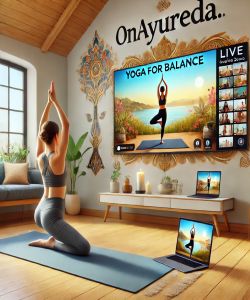
Overview of Yoga for Balance
Yoga for Balance is a highly specialised and rigorous discipline engineered to cultivate profound physical and mental equilibrium. It transcends the generalised practice of Hatha yoga, focusing with forensic precision on the intricate interplay between the body’s proprioceptive, vestibular, and neuromuscular systems. This is not a practice of mere flexibility or aesthetic posturing; it is a systematic re-education of the body's intrinsic ability to orient itself in space, maintain its centre of gravity, and respond with instantaneous, controlled adjustments to any destabilising force. The methodology is built upon a triad of non-negotiable principles: the establishment of an unshakeable foundation (Pada Bandha), the relentless engagement of the core musculature (Uddiyana Bandha), and the unwavering focus of the mind through a fixed gaze (Drishti). Through the sustained holding of challenging unilateral stances and the execution of controlled, mindful transitions, the practice forces the nervous system to forge stronger, more efficient pathways. It systematically strengthens the small, intrinsic stabiliser muscles surrounding the joints, which are fundamental to injury prevention and functional movement. This discipline is therefore not simply a physical pursuit but a profound mental conditioning. It demands absolute presence, unwavering concentration, and the subjugation of the ego to the reality of the body's current capabilities. The ultimate objective is the achievement of sthira, a state of unwavering steadiness that permeates not only the physical form on the mat but also the practitioner's cognitive and emotional state. It is a direct and potent methodology for forging resilience, control, and an unassailable sense of internal stability in a constantly fluctuating world. It is, in essence, the masterful command of stasis amidst motion, a fundamental skill for high-performance living.
What is Yoga for Balance?
Yoga for Balance is a targeted yogic discipline meticulously designed to enhance the body's capacity for stability and equilibrium. It is a precise science of movement and stillness, distinct from general yoga streams, that systematically conditions the physiological and neurological systems responsible for maintaining postural control. Its function is to recalibrate the body’s relationship with gravity through a focused and demanding regimen. The practice is predicated on several key operational components that work in concert to produce a state of superior physical and mental steadiness.
Proprioceptive Refinement: This is the core of the practice. Proprioception is the body's intrinsic sense of its own position and movement in space, an internal GPS managed by receptors in muscles, joints, and tendons. Yoga for Balance intentionally challenges this system through unilateral (single-limb) stances and reduced visual input, forcing the body to heighten its internal awareness and refine its sensory feedback loops. This results in more precise, intuitive, and efficient movement patterns.
Neuromuscular Optimisation: The discipline directly targets the communication pathway between the central nervous system and the muscular system. By demanding constant, minute adjustments to maintain stability in a posture, the practice strengthens and accelerates these neural signals. This enhances reaction time and improves the body's ability to recruit the correct muscles with the appropriate force to counteract destabilising forces instantly.
Core-Centric Stabilisation: It places a relentless emphasis on the engagement of the deep core musculature, including the transverse abdominis, multifidus, and pelvic floor. This muscular corset acts as the body's central anchor, providing a stable base from which all limb movements can be initiated with control and power. A weak core is the primary point of failure in balance; this practice rectifies that deficiency.
Cognitive Anchoring through Drishti: The practice mandates the use of Drishti, an unmoving focal point for the gaze. This technique is not merely about looking at something; it is a method for stilling the fluctuations of the mind. A scattered mind creates a scattered body. By locking the gaze, the practitioner stabilises the primary sensory input related to balance, which in turn calms the nervous system and solidifies the physical posture.
Who Needs Yoga for Balance?
Ageing Individuals: This demographic requires this discipline as a non-negotiable strategy for mitigating the natural, age-related decline of the vestibular and proprioceptive systems. It directly counteracts sarcopenia and improves neuromuscular response time, thereby fundamentally reducing the risk of falls, which are a leading cause of serious injury and loss of independence in later life.
Athletes and Sports Professionals: For this group, superior balance is not a luxury but a competitive imperative. The practice enhances agility, refines motor control for complex movements, and fortifies the stabiliser muscles around key joints like the ankles and knees. This leads to improved performance, greater movement efficiency, and a significant reduction in the incidence of career-threatening injuries such as ligament sprains.
Individuals in Post-Rehabilitation: Following injury or surgery, particularly to the lower limbs or spine, the body's proprioceptive mapping is often compromised. Yoga for Balance, when prescribed as part of a structured recovery programme, is a potent tool for safely and effectively retraining these neural pathways, restoring motor confidence, and rebuilding functional strength.
Sedentary and Desk-Bound Professionals: Prolonged sitting cultivates profound muscular imbalances, postural deviations, and a severely weakened core. This discipline systematically addresses these issues by reactivating dormant gluteal and core muscles, correcting posture, and re-establishing a healthy mind-body connection that has been degraded by a static lifestyle.
Practitioners of Mindfulness and Meditation: For those seeking to deepen their contemplative practices, a stable physical foundation is essential. Yoga for Balance cultivates sthira (steadiness), providing a grounded and unwavering physical vessel that allows the mind to achieve deeper states of concentration (Dharana) and meditation (Dhyana) without physical distraction.
Performers in Physically Demanding Arts: Dancers, gymnasts, martial artists, and other performers for whom exceptional equilibrium is an absolute prerequisite for their craft will find this practice essential. It provides the specific, targeted conditioning required to execute demanding movements with grace, precision, and control.
Individuals with Neurological Conditions: Under strict medical supervision, individuals with certain neurological conditions that affect motor control and coordination may utilise this practice to help manage symptoms and retrain neural pathways, thereby improving functional capacity and quality of life.
Origins and Evolution of Yoga for Balance
The conceptual roots of Yoga for Balance are deeply embedded within the classical traditions of Hatha Yoga. Ancient texts like the Hatha Yoga Pradipika and the Yoga Sutras of Patanjali did not isolate ‘balance’ as a distinct category but integrated it as an intrinsic quality of a mastered asana. The famous sutra Sthira Sukham Asanam (the posture should be steady and comfortable) posits stability as a fundamental prerequisite for any meaningful yoga practice. Postures such as Garudasana (Eagle Pose) and Natarajasana (Dancer's Pose) were not merely physical challenges but tools for cultivating Ekagrata, or one-pointed concentration. The act of balancing was a direct, practical method for stilling the relentless fluctuations of the mind. In this classical context, physical equilibrium was seen as an external manifestation of internal, mental equilibrium.
The evolution from this integrated principle to a specialised discipline occurred primarily in the 20th and 2 идеальныйst centuries, driven by the Westernisation of yoga and its intersection with modern science. As yoga was introduced to the West, pioneers began to deconstruct its practices and analyse them through the lenses of anatomy, physiology, and biomechanics. This scientific scrutiny shifted the focus from a purely spiritual or holistic goal towards achieving specific, measurable physiological outcomes. The understanding of the body’s proprioceptive and vestibular systems, and the crucial role of the core musculature in providing spinal stability, began to inform a more targeted and systematic approach to teaching balance.
In its contemporary form, Yoga for Balance has evolved into a highly refined discipline. It is no longer just a component of a general yoga class but is offered as a specialised modality in its own right. It is now heavily integrated into complementary medical fields, including physiotherapy, sports science, and gerontology. Modern instructors utilise precise anatomical cueing and an evidence-based understanding of how to challenge and retrain the body's balancing mechanisms. The practice has evolved from an implicit philosophical concept into an explicit, science-informed methodology for optimising human performance, preventing injury, and maintaining functional independence. This modern iteration respects its ancient origins in mental focus while leveraging contemporary scientific insight to deliver potent and predictable results in physical control.
Types of Yoga for Balance
Static Unilateral Yoga: This is the foundational type, concentrating on the mastery of holding single-leg or single-arm balancing postures for extended durations. The objective is to achieve absolute stillness (sthira) within a challenging asana. Examples include Vrksasana (Tree Pose), Virabhadrasana III (Warrior III), and Ardha Chandrasana (Half-Moon Pose). This method builds immense muscular endurance in the stabilising muscles, fortifies joint integrity, and cultivates profound levels of mental concentration and unwavering focus (Drishti). The prolonged holds force the neuromuscular system to make continuous, minute adjustments, thereby refining its feedback loops and enhancing proprioceptive acuity.
Dynamic Balance Yoga: This type challenges equilibrium through controlled, deliberate movement and transitions. Rather than holding a single pose, the practitioner flows with precision from one balancing posture to another, for example, moving from a High Lunge into Warrior III and then into Standing Splits. The focus is on maintaining core stability and control while the body’s centre of gravity is in constant, managed flux. This directly translates to improved coordination and agility in real-world activities, training the body to remain stable not just in stillness but also through motion.
Proprioceptive-Intensive Yoga: This advanced form systematically reduces the body’s reliance on external cues, particularly vision, to force a heightened dependence on its internal sense of position. This is achieved by practising familiar balancing poses with the eyes closed for brief intervals, or by performing them on a slightly unstable surface such as a folded blanket or a specialised balance cushion. This method aggressively stimulates and sharpens the proprioceptive receptors in the joints and muscles, leading to a superior and more deeply internalised sense of balance.
Core-Centric Balance Yoga: While all balance yoga involves the core, this specific type makes core strengthening its primary, explicit focus. It incorporates a high volume of postures and drills that directly target the deep muscles of the abdomen, back, and pelvis, such as various Plank Pose variations, Navasana (Boat Pose), and contralateral limb lifts. The principle is that all stability originates from the body's centre; by fortifying this central pillar, the capacity for all other forms of balance is dramatically enhanced.
Restorative Balance Yoga: This gentler approach utilises props extensively to support the body and make balancing postures more accessible. A practitioner might perform Tree Pose with a hand against a wall or use blocks under the hands in Half-Moon Pose. The aim is to allow individuals with significant balance deficits, or those in recovery, to safely experience the neuromuscular patterns of balancing poses, gradually building strength and confidence without the high risk of falling.
Benefits of Yoga for Balance
Radically Enhanced Proprioception: The practice systematically forces the body to refine its internal awareness of its position in space. This results in superior motor control, more precise movements, and a heightened intuitive understanding of one’s own physical presence, which is crucial for all physical activities.
Significant Injury Prophylaxis: By strengthening the intricate network of stabiliser muscles around vulnerable joints—particularly the ankles, knees, hips, and spine—the discipline acts as a powerful preventative measure against common injuries such as sprains, strains, and falls.
Correction of Postural Deviations: The relentless emphasis on core engagement and proper skeletal alignment actively counteracts the detrimental effects of a sedentary lifestyle, such as kyphosis and forward head posture, leading to a more efficient, upright, and commanding physical bearing.
Optimised Neuromuscular Efficiency: The practice improves the speed and accuracy of communication between the brain and the muscles. This leads to quicker reaction times and a more coordinated response to unexpected physical challenges, enhancing overall agility.
Augmented Cognitive Function: The mandatory requirement for intense, unwavering focus (Drishti) on a single point is a direct form of concentration training. This skill is transferable off the mat, leading to improved attention span, mental clarity, and the ability to remain composed under pressure.
Profound Core Strength Development: It builds functional strength in the deep, intrinsic core muscles that support the spine and pelvis. This is not superficial abdominal strength but a deep, integrated stability that forms the foundation for all powerful and controlled movement.
Improved Athletic and Physical Performance: The combined benefits of enhanced stability, coordination, core strength, and mental focus provide a distinct competitive advantage in any athletic pursuit, from running and team sports to martial arts and dance.
Effective Stress and Anxiety Regulation: The necessity of slow, controlled breathing (Pranayama) and intense mental focus actively down-regulates the sympathetic nervous system (the ‘fight or flight’ response) and stimulates the parasympathetic nervous system, inducing a state of calm and mental equilibrium.
Increased Bodily Confidence and Self-Command: Mastering challenging physical postures that require immense control fosters a profound sense of self-efficacy and physical confidence. This mastery over the physical form translates into a greater sense of command in other areas of life.
Core Principles and Practices of Yoga for Balance
Pada Bandha: The Foundation Lock: This is the non-negotiable starting point. It involves the active and intelligent engagement of the feet with the ground. The practitioner must consciously distribute their weight across all four corners of the standing foot—the base of the big toe, the base of the little toe, and the inner and outer edges of the heel. The arch of the foot is actively lifted to create a stable, dynamic base. This principle transforms the foot from a passive support into an active, gripping foundation, which is the bedrock of all stability.
Uddiyana Bandha: The Core Anchor: This refers to the constant, subtle engagement of the deep abdominal muscles, specifically the transverse abdominis. It is performed by drawing the lower abdomen inwards and upwards towards the spine. This action stabilises the entire lumbo-pelvic region, creating a rigid and powerful centre from which the limbs can move with control. Without this core anchor, all attempts at balance will be inefficient and ultimately fail.
Drishti: The Unwavering Gaze: This is the practice of fixing the eyes on a single, non-moving point in the external environment. This technique is a neurological tool used to eliminate visual distractions and still the mind. An unsteady gaze creates sensory noise that disrupts the brain's ability to process balance information. By locking the gaze, the practitioner creates a powerful feedback loop: a steady gaze calms the mind, and a calm mind stabilises the body.
Controlled Diaphragmatic Breathing: The breath is the master regulator of the nervous system. The practice demands slow, even, and deliberate breathing into the diaphragm. Shallow, erratic, or held breath triggers a stress response, increasing muscle tension and destabilising the body. A controlled breath pattern calms the nervous system, reduces extraneous muscular tension, and anchors the practitioner firmly in the present moment, which is essential for maintaining composure in a challenging pose.
Mindful and Precise Transitions: The movement between balancing postures is as important as the postures themselves. The practitioner must execute these transitions with deliberate slowness and absolute control, avoiding any use of momentum. This practice of moving consciously through states of instability is what builds true, functional, and dynamic balance.
Sthira and Sukha: The Duality of Effort: The practice embodies the principle of balancing effort with ease. Sthira is the steady, active engagement required to hold the pose, while Sukha is the sense of ease or comfort within that effort. The practitioner must find the point of challenge without introducing excessive tension, struggle, or aggression, which are counterproductive to stability.
Online Yoga for Balance
Unconditional Geographic and Temporal Autonomy: The online format eradicates all geographical and scheduling barriers. It provides immediate access to specialised balance instruction for any individual, regardless of their physical location or proximity to a qualified studio. This autonomy allows for a practice schedule dictated by personal need and availability, not by a fixed external timetable.
Creation of a Controlled, High-Focus Environment: Practising online allows the individual to construct a private, distraction-free space. This eliminates the social pressures, visual distractions, and potential for self-consciousness inherent in a group class setting. This controlled sanctuary is highly conducive to cultivating the deep internal focus and concentration that are prerequisites for mastering balance.
Mastery Through Repetition and Deconstruction: The digital platform offers the unique advantage of being able to pause, rewind, and repeat segments of instruction. This allows the practitioner to meticulously deconstruct challenging postures or transitions at their own pace, ensuring a thorough and safe understanding of alignment and muscular engagement without the pressure of keeping up with a live class.
Facilitation of Unwavering Consistency: The sheer convenience of accessing a class from one's own home significantly reduces the friction involved in maintaining a regular practice. This ease of access promotes higher frequency and consistency, which are the most critical factors in the neuro-muscular adaptation process required to build and maintain advanced balance skills.
Access to Elite, Specialised Instruction: The online model provides access to a global roster of highly specialised instructors who focus exclusively on the biomechanics of balance. Practitioners are no longer limited to the generalist teachers in their local area but can seek out and learn from leading experts in the field, ensuring the highest quality of guidance.
Personalised Progression and Adaptation: Online programmes often provide a library of content catering to various skill levels. This allows the practitioner to select sessions that precisely match their current ability and target specific weaknesses. They can progress linearly or repeat foundational modules as needed, creating a truly personalised and adaptive training journey.
Resource-Efficient Training Modality: Online yoga typically presents a more financially sustainable model compared to the recurring and often substantial costs of studio memberships. This cost-effectiveness lowers the barrier to entry and supports a long-term, uninterrupted commitment to the discipline, which is essential for achieving lasting results.
Yoga for Balance Techniques
Establish the Foundation: Begin in Tadasana (Mountain Pose). Your feet must be parallel, either together or hip-width apart. Methodically press the four corners of each foot—the mound of the big toe, the mound of the little toe, the inner heel, and the outer heel—firmly into the mat. Actively engage the quadriceps to lift the kneecaps and create a solid, energised base from the ground up. This is not a passive stance; it is an act of deliberate grounding.
Activate the Central Powerhouse: Engage Uddiyana Bandha by drawing your navel firmly towards your spine. This action must be deep and internal, stabilising the lumbar spine and pelvis. This core contraction is your central anchor; it must be maintained with unwavering consistency throughout the entire duration of the posture and its transitions. It is the source of your stability.
Secure the Visual Anchor (Drishti): Select a non-moving point directly in front of you at eye level. Fix your gaze upon this point with absolute, unblinking intensity. This visual lock minimises sensory distraction and provides the brain with a constant reference point, which is critical for calming the nervous system and maintaining physical equilibrium. Do not allow your focus to drift.
Execute a Controlled Weight Transfer: With your core engaged and gaze fixed, begin to transfer your body weight with deliberate slowness onto the designated standing leg. This is not a sudden shift but a mindful, gradual process. Feel the pressure increase through the sole of the standing foot as the other foot becomes progressively lighter. Ensure the standing leg's hip does not jut out to the side; maintain a level pelvis.
Initiate the Limb Movement: Once your weight is fully and securely established on the standing leg, initiate the movement of the non-standing leg into the desired asana (e.g., lifting the knee for Tree Pose or extending the leg back for Warrior III). This movement must be driven from your core and executed with muscular control, entirely devoid of momentum or jerky actions.
Hold, Adjust, and Breathe: As you hold the posture, the body will naturally make micro-movements to maintain balance. Do not resist them. Instead, make subtle, conscious counter-adjustments from your foot and core. Throughout the hold, maintain a steady, deep, and even breath. The breath is your primary tool for managing tension and maintaining focus. An erratic breath will lead to an unstable body.
Execute a Disciplined Exit: Exit the posture with the same degree of control and mindfulness with which you entered. Slowly and deliberately reverse the sequence of movements, lowering the raised limb with muscular control until you return to the starting foundational pose. Avoid collapsing or stumbling out of the posture. The exit is as much a part of the technique as the hold itself.
Yoga for Balance for Adults
For the adult population, and particularly for ageing individuals, the disciplined practice of Yoga for Balance is not merely a beneficial form of exercise but an essential strategy for maintaining functional independence and enhancing overall quality of life. As the human body ages, there is a natural and well-documented decline in the efficacy of the proprioceptive and vestibular systems, leading to diminished spatial awareness and slower reaction times. This degradation, combined with age-related muscle loss (sarcopenia), creates a high-risk scenario for falls, which can have catastrophic consequences. Yoga for Balance directly and aggressively counters these effects. The practice systematically re-stimulates and re-calibrates the body’s internal balancing mechanisms. By challenging the body with unilateral stances and mindful movements, it forces the neuromuscular system to remain sharp, adaptive, and responsive. The weight-bearing nature of the postures helps to maintain bone density, mitigating the risk of osteoporosis. Furthermore, the relentless focus on strengthening the core and the stabiliser muscles around the joints provides a robust support structure for the skeleton, improving posture and reducing chronic aches and pains often associated with muscular imbalance. Beyond the profound physical benefits, the cognitive demands of the practice are equally significant. The required level of intense concentration (Drishti) acts as a form of mental conditioning, helping to preserve cognitive function, improve focus, and reduce stress. It is a low-impact, high-yield methodology for comprehensively addressing the primary physical and cognitive challenges faced by adults, empowering them with the strength, stability, and confidence to lead active and self-reliant lives.
Total Duration of Online Yoga for Balance
The professionally mandated and maximally effective duration for a complete online Yoga for Balance session is precisely 1 hr. This specific timeframe is not a matter of preference but a calculated necessity, meticulously structured to align with physiological and neurological requirements for optimal adaptation and skill acquisition. A session of 1 hr is the minimum duration required to encompass all critical phases of a safe and productive practice. It allows for an initial, thorough warm-up period, which is essential for increasing blood flow, preparing the joints, and activating the specific muscle groups that will be called upon to stabilise the body. This preparation phase is non-negotiable for injury prevention. The central portion of the 1 hr session is dedicated to the core practice: the rigorous work of entering, holding, and transitioning between challenging balancing asanas. This substantial time block is necessary to provide sufficient volume and intensity to stimulate the neuromuscular system, challenge proprioceptive acuity, and build muscular endurance. Rushing this phase would be utterly counterproductive. Crucially, the 1 hr structure also allocates adequate time for a comprehensive cool-down and savasana (corpse pose). This final phase is vital for down-regulating the nervous system, allowing the body to integrate the work it has done, and facilitating muscular recovery. Any duration less than 1 hr would necessitate compromising one or more of these essential components, rendering the practice incomplete, less effective, and potentially unsafe. Conversely, for most non-professional practitioners, extending much beyond this timeframe risks inducing the kind of muscular fatigue that actively degrades balance control. Therefore, the 1 hr duration stands as the industry standard, representing the ideal balance between rigorous challenge and safe, sustainable practice.
Things to Consider with Yoga for Balance
Before embarking on the practice of Yoga for Balance, several critical factors must be rigorously considered to ensure both safety and efficacy. Firstly, a comprehensive and honest self-assessment of one's physical condition is paramount. Individuals with pre-existing medical issues, particularly those affecting equilibrium such as vertigo, inner ear disorders, low blood pressure, or significant joint instability, are mandated to seek explicit medical clearance from a qualified healthcare professional. To proceed without such clearance is to court unnecessary risk. The practice environment itself demands meticulous preparation. A clear, uncluttered space, entirely free of potential obstacles, is non-negotiable. The surface must be firm and level, and the use of a high-quality, non-slip yoga mat is a fundamental requirement, not an optional accessory. One must also consider the appropriate use of props. A wall or a sturdy chair should be viewed not as a crutch, but as an intelligent tool for risk management, particularly for beginners or during the exploration of more challenging postures. It is imperative to approach the practice with a mindset devoid of ego. The objective is not to achieve a perfect aesthetic shape, but to cultivate internal stability. Pushing the body beyond its current capacity out of impatience or comparison is the most direct path to injury. Finally, the practitioner must recognise that progress is inherently non-linear. There will be days of profound stability and days of frustrating inconsistency. A disciplined, patient, and non-judgmental attitude is a crucial psychological component for long-term success in this demanding discipline.
Effectiveness of Yoga for Balance
The effectiveness of Yoga for Balance is not a matter of anecdotal evidence or esoteric belief; it is a demonstrable outcome rooted in the established principles of neuroscience and exercise physiology. Its potency lies in its direct and systematic targeting of the three primary pillars of human equilibrium: the visual system, the vestibular (inner ear) system, and the proprioceptive (somatic sensory) system. The practice rigorously conditions these interconnected systems in a way that most conventional forms of exercise do not. By mandating a fixed gaze (Drishti), it trains the brain to stabilise the visual field, reducing sensory 'noise' that can disrupt balance. Through dynamic movements, gentle inversions, and shifts in head position, it stimulates and refines the vestibular apparatus. Most critically, by utilising unilateral (single-limb) stances and challenging postures, it forces an intense and continuous dialogue between the proprioceptors in the muscles and joints and the central nervous system. This constant feedback and adjustment forges stronger, faster, and more efficient neuromuscular pathways. The result is a marked improvement in both static balance (the ability to hold still) and dynamic balance (the ability to remain stable while in motion). Its effectiveness is further amplified by its relentless focus on building profound functional strength in the core and the small stabiliser muscles around the joints. This creates a more resilient and responsive physical structure. Therefore, the discipline's effectiveness is comprehensive, yielding quantifiable improvements in postural control, coordination, fall prevention, and athletic agility, validating its status as a premier methodology for the mastery of physical equilibrium.
Preferred Cautions During Yoga for Balance
It is imperative that the practice of Yoga for Balance is undertaken with an uncompromising commitment to safety and risk mitigation. The practitioner must operate within a meticulously prepared environment, entirely devoid of furniture, sharp corners, or any other physical hazards that could inflict harm during an unforeseen loss of stability. The use of a superior-grade, non-slip yoga mat on a hard, level surface is not a recommendation but a strict mandate; any compromise on this foundational element is an unacceptable risk. Throughout the practice, the individual must maintain a state of heightened somatic awareness, listening intently to the body's signals. The distinction between a constructive muscular challenge and the onset of pain must be clearly understood and respected without exception. Pushing into sharp, sudden, or radiating pain is strictly forbidden. Muscular fatigue is a direct precursor to compromised control and potential injury; therefore, one must have the discipline to rest or exit a posture before the point of exhaustion. Individuals with any pre-existing medical conditions that could affect their equilibrium or joint integrity, including but not limited to vertigo, hypotension, or hypermobility, are required to obtain unequivocal medical consent prior to commencing practice. Furthermore, the intelligent use of support, such as a wall or a sturdy chair, is not a concession but a professional safety protocol, particularly when exploring new or highly challenging postures. Any disregard for these fundamental cautions constitutes a serious breach of safe practice protocol and must be avoided at all costs.
Yoga for Balance Course Outline
Module 1: Foundational Grounding and Core Ignition:
Objective: Master the principles of creating a stable base and activating the deep core.
Content: In-depth instruction on Pada Bandha (foot lock) and Uddiyana Bandha (abdominal lock). Practice of Tadasana (Mountain Pose) and other two-footed poses to feel the upward flow of energy. Introduction to the concept and application of Drishti (focused gaze).
Module 2: Introduction to Static Unilateral Stances:
Objective: Develop stability and endurance in basic one-legged balancing postures.
Content: Detailed breakdown and practice of Vrksasana (Tree Pose), Standing Figure-Four, and preparatory stages of Garudasana (Eagle Pose). Emphasis is on alignment, duration of hold, and maintaining core engagement.
Module 3: Dynamic Stability and Controlled Transitions:
Objective: Cultivate the ability to maintain balance while moving the body’s centre of gravity.
Content: Practice of controlled shifts from High Lunge to Virabhadrasana III (Warrior III). Introduction to sequences that link standing poses with balancing poses, focusing on precision and avoiding momentum.
Module 4: Hip Stabilisation and Open-Hip Balances:
Objective: Strengthen the gluteal muscles and master open-hip balancing postures.
Content: Focus on strengthening the gluteus medius. Detailed instruction for Ardha Chandrasana (Half-Moon Pose) and its variations, utilising blocks for support to ensure correct alignment.
Module 5: Enhancing Proprioception and Sensory Challenge:
Objective: Refine the body's internal sense of position by reducing reliance on vision.
Content: Practice of familiar, simple balancing poses (e.g., Tree Pose near a wall) with eyes closed for short, controlled intervals. Introduction to subtle weight shifts and movements to challenge stability.
Module 6: Building Power for Advanced Balances:
Objective: Develop the requisite core and upper body strength for more demanding postures.
Content: Introduction to arm balances such as Bakasana (Crow Pose), focusing on preparatory drills, weight distribution on the hands, and overcoming fear. Practice of strength-building postures like Plank and Dolphin Pose.
Module 7: Mastery of Complex Stances and Endurance:
Objective: Execute more complex balancing postures and increase the duration of all holds.
Content: Instruction for advanced poses such as Utthita Hasta Padangusthasana (Extended Hand-to-Big-Toe Pose) and its variations. Focus on holding all key postures for a significantly extended timeframe to build mental and physical fortitude.
Module 8: Integration and Fluidity in Practice:
Objective: Seamlessly integrate all learned principles into a continuous, challenging flow.
Content: A culminating Vinyasa-style practice that weaves together static holds, dynamic transitions, core work, and advanced balances. The final assessment of the practitioner's ability to maintain equilibrium, focus, and control throughout a complex sequence.
Detailed Objectives with Timeline of Yoga for Balance
Weeks 1-2: Foundational Mastery.
Objective: To internalise and consistently apply the core principles of Pada Bandha (foot engagement), Uddiyana Bandha (core lock), and Drishti (fixed gaze). The practitioner shall demonstrate the ability to maintain absolute stillness and correct alignment in basic two-footed poses, such as Tadasana and Utkatasana, for a minimum of ten full breaths. Success is measured by the absence of fidgeting and the presence of unwavering focus.
Weeks 3-4: Achievement of Basic Unilateral Stability.
Objective: To hold Vrksasana (Tree Pose) and a supported Virabhadrasana III (Warrior III) on both left and right sides for a continuous thirty-second period without losing balance or requiring external support. The objective is to establish a solid foundation in single-leg standing and to begin rectifying any significant imbalances between the two sides of the body.
Weeks 5-6: Development of Controlled Dynamic Transitions.
Objective: To execute a slow, mindful, and controlled transition from a High Lunge directly into Virabhadrasana III and back again, three times consecutively on each side, without touching the back foot to the floor. This demonstrates the acquisition of dynamic balance and the ability to manage a shifting centre of gravity with precision.
Weeks 7-8: Acquisition of Open-Hip Balance Control.
Objective: To enter, hold for five full breaths, and exit Ardha Chandrasana (Half-Moon Pose) with control, using a block for hand support if necessary. The primary goal is to maintain a level plane across the hips and torso, demonstrating strength in the standing leg's hip abductors and refined spatial awareness.
Weeks 9-10: Enhancement of Proprioceptive Acuity.
Objective: To hold a basic Tree Pose, positioned near a wall for safety, with eyes closed for a period of fifteen continuous seconds. This forces a shift from visual dependence to proprioceptive and vestibular reliance, marking a significant advancement in the internalisation of balance control.
Weeks 11-12: Integration and Strength Application.
Objective: To demonstrate the upper body and core strength necessary for arm balancing by holding a supported Bakasana (Crow Pose) preparatory position, with knees on triceps and toes on the floor, for twenty seconds. The final objective is to integrate all learned skills into a short, fluid sequence, demonstrating a comprehensive and functional command of equilibrium.
Requirements for Taking Online Yoga for Balance
Uninterrupted, High-Bandwidth Internet Connectivity: A robust and reliable internet connection is non-negotiable. The ability to stream high-definition video without buffering or disconnection is essential for receiving clear, real-time visual and auditory instruction, which is critical for safety and correct alignment.
A Suitable Digital Viewing Device: A laptop, tablet, or monitor with a screen of sufficient size is required. Attempting to follow complex postural instruction on a small smartphone screen is inadequate and unsafe, as it prevents clear visibility of the instructor’s subtle alignment cues.
A Dedicated and Secure Practice Space: The practitioner must designate a specific area for practice that is entirely free from furniture, clutter, and potential hazards. A minimum clear radius equivalent to one's own height is required around the mat to allow for full, unimpeded movement in all directions.
A Professional-Grade, Non-Slip Yoga Mat: This is a mandatory piece of safety equipment. The mat must provide sufficient grip on a hard, level floor to create a secure and stable foundation. Practising on carpet, rugs, or a slippery mat is strictly prohibited due to the high risk of instability.
Functional, Non-Restrictive Attire: Clothing must allow for a complete and unrestricted range of motion. It should be form-fitting enough not to become entangled or obscure the practitioner’s view of their own limbs and alignment, yet not so tight as to constrict movement or breath.
Immediate Access to a Stability Prop: A sturdy, unmoving wall or a heavy, stable chair must be within arm's reach at all times during the practice session. This prop serves as an essential safety tool for support and risk mitigation, particularly when learning new or challenging postures.
Absolute Personal Accountability and Self-Discipline: The online format necessitates a high degree of personal responsibility. The practitioner must possess the maturity to listen to their body, work within their own limitations, and resist the ego-driven urge to attempt poses for which they are not prepared. The onus for safety rests entirely on the individual.
Things to Keep in Mind Before Starting Online Yoga for Balance
Prior to commencing any online Yoga for Balance programme, a disciplined and realistic self-appraisal is not merely advisable, it is imperative. The practitioner must first secure unequivocal medical clearance if they have any pre-existing conditions that could impact their stability, including but not limited to vertigo, inner ear issues, neurological disorders, or acute joint injuries. To neglect this step is to demonstrate a reckless disregard for one's own well-being. The selection of an instructor and platform demands rigorous vetting; one must choose a highly qualified professional with verifiable expertise in anatomy and biomechanics, as the remote nature of the instruction places a premium on precise and unambiguous cueing. It is crucial to commit to creating a sacrosanct practice environment, a space that is not only physically clear of obstacles but also digitally and mentally free from distractions. Phones must be silenced, notifications disabled, and household members informed that the practice time is non-negotiable. The individual must internalise the understanding that progress in this discipline is rarely linear. Frustration is a common and expected part of the process, and the ability to meet instability with a calm, analytical, and non-reactive mind is a skill that must be cultivated alongside physical prowess. Finally, the practitioner must assume absolute and total ownership of their safety. This means proactively using a wall or chair for support, never attempting a posture that feels inherently unsafe, and prioritising the mastery of foundational skills over the pursuit of advanced, aesthetically impressive poses.
Qualifications Required to Perform Yoga for Balance
To instruct Yoga for Balance with the requisite level of competence and safety, a professional must possess a set of qualifications that significantly surpasses the baseline requirements for teaching general yoga. The specialised nature of this discipline, with its direct impact on the neuromuscular and vestibular systems, demands a profound and evidence-based understanding of the human body. An instructor without this depth of knowledge is a liability. The absolute minimum credentials for a qualified professional in this field must include:
Advanced Foundational Certification: A 500-hour level certification (e.g., RYT-500) from a globally recognised yoga organisation is the mandatory starting point. A basic 200-hour training is fundamentally insufficient, as it lacks the necessary depth in anatomy, physiology, and teaching methodology required for such a specialised application.
In-Depth, Verifiable Anatomy and Biomechanics Training: The instructor must demonstrate advanced, specialised education in human anatomy, kinesiology, and the biomechanics of movement. This may be in the form of dedicated yoga anatomy certifications, academic qualifications in a related field like physiotherapy or exercise science, or extensive continuing education. They must be able to articulate precisely which muscles are being engaged, how joints are being stabilised, and the neurological mechanisms at play.
Certification in a Therapeutic or Specialised Modality: Verifiable qualifications in therapeutic yoga, adaptive yoga, or yoga for specific populations (such as seniors) are critically important. This training equips the instructor with the skills to modify postures safely, understand contraindications, and cater to individuals with varying physical limitations and conditions.
Substantial and Demonstrable Teaching Experience: The instructor must have a significant and proven track record of teaching balance-focused classes. Theoretical knowledge is useless without the practical experience of observing, cueing, and correcting a wide variety of human bodies as they navigate the challenges of instability.
An instructor who cannot produce evidence of this multi-faceted and advanced qualification profile is not to be considered a credible or safe guide for this demanding practice.
Online Vs Offline/Onsite Yoga for Balance
Online
The online modality for Yoga for Balance is defined by its provision of ultimate autonomy and accessibility. It allows the practitioner to transcend the limitations of geography and schedule, offering access to elite, specialised instructors from anywhere in the world at any time. This format empowers the individual to create and control their own practice environment, ensuring it is free from the potential distractions and social pressures of a public studio, which is highly conducive to the deep concentration required. The ability to pause, rewind, and meticulously review instructions is a significant pedagogical advantage, permitting a self-paced and thorough approach to mastering complex alignments. Furthermore, the convenience inherent in this model drastically reduces barriers to consistent practice, which is the single most important factor for neurological adaptation and skill development in balance. However, this autonomy comes with the significant caveat of absolute personal responsibility. The practitioner alone is accountable for their safety, motivation, and the correct interpretation of cues. The critical element of hands-on, tactile adjustments from a present instructor is entirely absent, which can slow the correction of subtle but important misalignments.
Offline/Onsite
Offline, or onsite, instruction provides the invaluable benefit of direct, expert supervision. A qualified instructor in the room can provide immediate, personalised feedback, including verbal cues tailored to the individual's body and, where appropriate, hands-on physical adjustments. This real-time correction mechanism can significantly accelerate learning and enhance safety, preventing the reinforcement of improper movement patterns. The structured environment of a professional studio offers a purpose-built space with appropriate flooring and a full complement of props, removing the onus of environmental preparation from the practitioner. The communal energy of a group setting can also serve as a powerful motivator for some, fostering a sense of shared purpose and discipline. Conversely, the offline model is inherently restrictive. It is bound by a fixed schedule and limited by the geographical availability of qualified instructors. The class pace is typically set for the group average, which may not be optimal for every individual. For some, the public nature of a studio class can be a source of self-consciousness, inhibiting the focused, internal state required for balance work. Finally, the financial investment for in-person classes is typically substantially higher than for online alternatives.
FAQs About Online Yoga for Balance
Question 1. Is online Yoga for Balance genuinely effective?
Answer: Yes, its effectiveness is contingent upon the practitioner's discipline and the instructor's quality. With commitment, it is a highly effective modality.
Question 2. What is the single most essential piece of equipment?
Answer: A high-quality, non-slip yoga mat. Your foundation is paramount; do not compromise on it.
Question 3. Can I start if I have very poor balance?
Answer: Yes, but you must begin by using a wall or a sturdy chair for constant support and must have medical clearance for any underlying conditions.
Question 4. What is the recommended frequency of practice?
Answer: For tangible and lasting results, a minimum of three dedicated sessions per week is the required standard. Consistency surpasses intensity.
Question 5. Is it safe to close my eyes as the instructor suggests?
Answer: This is an advanced technique. Only attempt it once you have mastered a pose with your eyes open and are positioned next to a wall for immediate support.
Question 6. I don't own yoga blocks. What can I use instead?
Answer: A stack of sturdy, large books or a low, stable stool can serve as a substitute. However, professional equipment provides superior stability.
Question 7. How can I check my alignment without a teacher present?
Answer: Practice in front of a mirror to compare your form to the instructor’s. Alternatively, record yourself on video for critical self-review.
Question 8. Is this suitable for someone who has never done yoga before?
Answer: Yes, provided you select a course explicitly designed for absolute beginners and you commit to mastering the foundational techniques before attempting anything complex.
Question 9. How quickly will I notice an improvement?
Answer: Minor neurological adaptations can be perceived within a few weeks, but significant, reliable improvements in balance require months of consistent, dedicated practice.
Question 10. Can this practice assist with conditions like vertigo?
Answer: It has the potential to, by retraining the vestibular system. However, it is absolutely mandatory to proceed only under the direct guidance and with the explicit approval of your physician.
Question 11. What exactly is the purpose of 'Drishti'?
Answer: Drishti is the yogic technique of fixing the gaze on a single point. Its purpose is to eliminate visual distraction, which stills the mind and, in turn, stabilises the body.
Question 12. How much space do I need for an online class?
Answer: You require an uncluttered area that allows you to extend your arms and legs to their full length in every direction without making contact with any object.
Question 13. What is the primary reason for falling out of a pose?
Answer: A lapse in mental concentration, a disengaged core, or a wandering gaze are the most frequent causes of failure. Balance is a mental state first.
Question 14. Can I practice on my carpeted floor?
Answer: This is strongly discouraged. A soft, padded surface like a carpet is inherently unstable and undermines the very foundation you are trying to build. Use a mat on a hard floor.
Question 15. Should I avoid eating before a balance session?
Answer: Yes. It is best to practice on a relatively empty stomach. Wait at least two to three hours after a main meal to avoid digestive discomfort.
Question 16. What is the greatest risk of practicing online?
Answer: The greatest risk is an injury caused by ego-driven ambition—attempting a pose that is beyond your current capacity without proper supervision or support.
Question 17. Will this practice build visible muscle?
Answer: It will build deep, functional strength, particularly in the core, legs, and back, which leads to improved muscle tone, but it is not a hypertrophy-focused discipline.
Conclusion About Yoga for Balance
In conclusion, Yoga for Balance must be understood not as a gentle or peripheral aspect of yoga, but as a rigorous and fundamental discipline in its own right. It is a highly specific and systematic methodology for the advanced training of the body’s complex neuromuscular and sensory systems. The practice is engineered with precision to cultivate superior physical control, unwavering mental focus, and a profound state of internal equilibrium. The tangible outcomes—which include significant injury prevention, radical enhancements in athletic performance, and the long-term maintenance of functional independence—are not incidental benefits but the direct and predictable results of its structured and demanding protocols. Whether undertaken through the autonomous and accessible medium of online instruction or within the supervised environment of an onsite class, the path to mastery demands unwavering discipline, profound patience, and an absolute commitment to its core principles of foundation, core engagement, and focused gaze. Ultimately, Yoga for Balance represents a proactive and powerful investment in one's lifelong physical resilience and cognitive acuity. It is the definitive practice for mastering the intricate, dynamic relationship between a commanded mind and a steady body, equipping the practitioner with the tools to navigate both the challenges on the mat and the inherent instabilities of life with unshakeable composure and self-command.