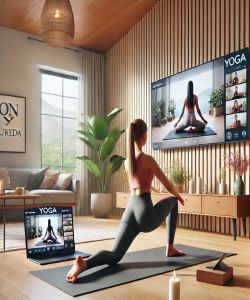
Overview of Yoga for Busy Professionals
Yoga for busy professionals constitutes a non-negotiable strategic intervention, engineered to systematically dismantle the physiological and psychological detriments of a demanding corporate existence. It is not a recreational pursuit but a disciplined methodology for optimising human performance under sustained pressure. This practice transcends rudimentary physical exercise, establishing itself as an integral component of executive wellness and cognitive enhancement. Its framework is meticulously adapted to address the specific pathologies of the modern professional: chronic stress, sedentary-induced physical degradation, and a persistent state of mental overstimulation. The core objective is to cultivate a state of profound internal equilibrium, thereby fortifying the individual against the erosive effects of occupational demands. By integrating targeted physical postures (asanas), controlled breathing techniques (pranayama), and focused mindfulness, this discipline directly counteracts the neurochemical imbalances triggered by high-stakes environments. It is a proactive, rather than reactive, approach to maintaining peak operational capacity, enhancing decision-making clarity, and fostering a resilient mindset. The methodology is deliberately streamlined for maximum impact within minimal time constraints, acknowledging the relentless pace of a professional schedule. It is, in essence, a high-performance tool for mental and physical armouring, ensuring that ambition is sustained by vitality, not compromised by exhaustion. This is not about escapism; it is about building an unshakeable foundation from which to engage more powerfully and effectively with professional challenges. The practice mandates discipline and consistency, rewarding a practitioner's commitment with unequivocally superior levels of focus, stress tolerance, and overall executive function. It is the definitive protocol for those who refuse to allow the pressures of their career to dictate the limits of their potential, offering a robust pathway to achieving sustainable, long-term success without the collateral damage of burnout.
What are Yoga for Busy Professionals?
Yoga for Busy Professionals is a highly specialised and pragmatic adaptation of classical yogic principles, rigorously tailored to meet the exacting demands and constraints of the corporate and executive world. It is a targeted system designed to counteract the specific stressors, physical ailments, and mental fatigue endemic to high-pressure, often sedentary, professional roles. This is not the esoteric, lengthy practice of ancient tradition, but a distilled, results-oriented methodology focused on efficiency and tangible outcomes. The core of this practice is functionality. It prioritises techniques that can be integrated seamlessly into a congested schedule, including short, potent sequences, desk-based modifications, and powerful mindfulness exercises that require mere minutes to execute.
The system operates on three primary fronts:
Physical Restoration: It directly addresses the musculoskeletal issues arising from prolonged sitting and computer use. Postures are specifically selected to alleviate tension in the neck, shoulders, and back; to counteract the negative effects of poor posture; and to release tightness in the hips and hamstrings. This is preventative maintenance for the professional’s physical infrastructure.
Mental Decompression: The practice employs sophisticated breath control (pranayama) and meditation techniques to regulate the autonomic nervous system. This systematically shifts the body from a state of chronic stress (sympathetic nervous system dominance) to one of calm and focus (parasympathetic activation). The goal is to reduce cortisol levels, enhance cognitive clarity, and improve emotional regulation, which are critical assets in any professional arena.
Performance Enhancement: Beyond mere stress reduction, this form of yoga is a tool for sharpening the mind. By cultivating present-moment awareness and improving concentration, practitioners enhance their ability to focus, make complex decisions, and innovate. It builds mental resilience, enabling individuals to navigate challenges with composure and strategic foresight.
In essence, Yoga for Busy Professionals is a strategic wellness protocol. It reframes yoga as an essential component of a professional’s toolkit for maintaining peak performance, safeguarding health, and ensuring career longevity. It is a disciplined, no-nonsense application of ancient wisdom to solve distinctly modern problems, delivering measurable improvements in both well-being and professional efficacy.
Who Needs Yoga for Busy Professionals?
Senior Executives and C-Suite Leaders: Individuals in these positions operate under immense pressure, with accountability for high-stakes decisions. This practice is imperative for maintaining the cognitive clarity, emotional stability, and resilience required to lead effectively without succumbing to burnout.
Entrepreneurs and Business Owners: The relentless uncertainty, long hours, and significant personal investment inherent in entrepreneurship demand an exceptional level of mental fortitude. This yoga provides the tools to manage stress, sustain energy, and foster the creativity necessary for innovation and growth.
Legal and Financial Professionals: Barristers, solicitors, accountants, and investment bankers consistently face stringent deadlines and adversarial environments. The discipline is essential for mitigating the chronic stress and mental fatigue that can impair judgement and degrade performance.
Medical and Healthcare Practitioners: Surgeons, doctors, and nurses endure emotionally and physically taxing work. This practice offers a critical mechanism for decompression, preventing compassion fatigue and maintaining the sharp focus necessary for patient care.
Technology and IT Professionals: Those in roles requiring intense concentration and long hours of screen time are susceptible to physical strain and mental exhaustion. Yoga provides a direct antidote to postural issues, eye strain, and the cognitive load associated with deep, analytical work.
Consultants and Project Managers: The constant travel, tight deadlines, and need to manage complex client relationships create a uniquely stressful professional landscape. This discipline provides a portable and effective system for grounding and re-centring amidst a fluctuating schedule.
Academics and Researchers: The intellectual rigour and pressure to publish, coupled with often sedentary work, necessitate a practice that supports both mental acuity and physical health. It aids in managing the long-term stress of deep intellectual engagement.
Creative Professionals: Individuals in advertising, design, and writing depend on clear, innovative thinking. Yoga is a powerful tool for overcoming creative blocks, reducing performance anxiety, and fostering a mental environment conducive to original thought.
Any Professional Experiencing Burnout Symptoms: Irrespective of their specific role, any individual exhibiting signs of chronic fatigue, cynicism, or reduced professional efficacy requires this intervention as a corrective and preventative measure.
Origins and Evolution of Yoga for Busy Professionals
The genesis of Yoga for Busy Professionals is not an ancient phenomenon but a distinctly modern adaptation, born from the collision of Eastern philosophy with the relentless demands of 20th and 21st-century corporate culture. While its foundational principles are rooted in the millennia-old traditions of classical yoga from the Indian subcontinent, its current form is a direct response to the specific pathologies of the modern workplace. The journey began as yoga migrated to the West, where it was gradually stripped of much of its spiritual and esoteric context, repositioned instead as a system for physical fitness and psychological well-being.
During the latter half of the 20th century, as the corporate world intensified and the concept of "burnout" entered the lexicon, pioneering wellness advocates began to recognise the profound applicability of yogic techniques to the challenges faced by professionals. The initial applications were rudimentary, often consisting of generic yoga classes offered as a peripheral employee benefit. However, this early model lacked the targeted precision required to address the unique pressures of executive life. It was a one-size-fits-all approach to a highly specific set of problems.
The true evolution occurred at the turn of the millennium, driven by a growing body of scientific research validating the effects of yoga and mindfulness on stress reduction, cognitive function, and physiological health. This evidence-based foundation legitimised yoga within the sceptical, results-driven corporate environment. Visionary instructors and wellness consultants began to deconstruct the practice, isolating its most potent elements and re-engineering them for maximum efficiency and accessibility. They created truncated sequences that could be performed in an office setting, developed chair-based modifications, and emphasised breathing and meditation techniques that delivered immediate, measurable calming effects. The language was also modified, shifting from spiritual jargon to the pragmatic terminology of performance enhancement, stress management, and resilience-building. This modern iteration is a highly refined system, a product of rigorous adaptation, designed not for spiritual enlightenment but for professional survival and optimisation. It has evolved from a general wellness activity into a strategic tool for maintaining a competitive edge in a world that demands constant peak performance.
Types of Yoga for Busy Professionals
Chair Yoga: This is the most pragmatic and accessible form for the corporate environment. It involves modifying traditional yoga postures so they can be performed while seated in an office chair. Its primary function is to provide immediate, targeted relief from the physical strains of desk work, such as neck tension, shoulder tightness, and lower back pain. It requires no special attire or equipment, making it a highly efficient intervention that can be seamlessly integrated into the workday to improve circulation and reset posture without leaving the workstation.
Hatha Yoga: For professionals seeking a foundational and methodical practice, Hatha is ideal. It focuses on holding basic postures (asanas) for several breaths, emphasising precise alignment and deliberate movement. This slower pace is highly effective for building body awareness, correcting postural imbalances caused by sedentary habits, and cultivating a steady, focused mind. It provides a structured and non-intimidating entry point to the physical discipline of yoga.
Vinyasa Yoga (Adapted): A streamlined version of Vinyasa, often termed 'Power Yoga' or 'Flow Yoga', is suited for professionals who require a more dynamic and physically engaging practice. This style synchronises movement with breath, creating a continuous flow between postures. For the busy professional, sequences are typically shorter and more intense, designed to build heat, release physical tension, and clear the mind efficiently. It acts as a powerful antidote to mental stagnation, boosting energy and focus.
Restorative Yoga: This practice is a direct countermeasure to chronic stress and burnout. It utilises props such as bolsters, blocks, and blankets to support the body in deeply comfortable postures, which are held for extended periods. The objective is not to stretch or strengthen, but to trigger the parasympathetic nervous system, promoting profound relaxation and mental decompression. It is a critical tool for nervous system regulation and recovery from sustained high-pressure states.
Mindfulness and Meditation: While not a physical style, this is an indispensable component of yoga for professionals. It involves guided practices focused on breath awareness, body scans, and cultivating non-judgemental presence. These techniques are the most portable and potent for managing stress in real-time, enhancing emotional regulation, and sharpening cognitive functions like attention and decision-making.
Benefits of Yoga for Busy Professionals
Systematic Stress Reduction: Directly mitigates the physiological impact of chronic stress by down-regulating the sympathetic nervous system and reducing cortisol levels, fostering a state of calm resilience.
Enhanced Cognitive Function: Sharpens focus, improves concentration, and enhances executive functions such as decision-making and problem-solving through disciplined mindfulness and breath control.
Correction of Postural Imbalances: Actively counteracts the detrimental physical effects of prolonged sitting, alleviating chronic pain in the neck, shoulders, and lower back, and restoring healthy spinal alignment.
Improved Emotional Regulation: Cultivates greater awareness of emotional triggers and responses, equipping the professional with the tools to maintain composure and respond to challenges with strategic poise rather than reactivity.
Increased Physical Energy and Vitality: Boosts circulation, improves respiratory efficiency, and releases stored physical tension, leading to a tangible increase in sustained energy levels throughout the demanding workday.
Prevention of Occupational Burnout: Provides a proactive, structured methodology for managing energy and mental resources, thereby building the fortitude required to prevent the onset of physical and emotional exhaustion.
Augmented Mental Clarity and Creativity: Quiets mental 'noise' and clutter, creating the mental space necessary for innovative thinking, strategic planning, and the generation of novel solutions.
Strengthened Respiratory System: Emphasises pranayama (controlled breathing), which demonstrably improves lung capacity and the efficiency of oxygen exchange, directly impacting overall stamina and mental alertness.
Development of Resilience and Adaptability: Conditions the mind and body to handle pressure more effectively, fostering an adaptive mindset that can navigate uncertainty and workplace volatility with greater stability.
Improved Interpersonal Effectiveness: By fostering self-awareness and reducing personal stress levels, the practice indirectly leads to more patient, clear, and effective communication and collaboration within a team environment.
Enhanced Quality of Sleep: The relaxation techniques and nervous system regulation inherent in the practice contribute directly to deeper, more restorative sleep, which is fundamental to cognitive performance and physical recovery.
Core Principles and Practices of Yoga for Busy Professionals
Pragmatism and Efficiency: The foremost principle is that the practice must deliver maximum benefit in minimum time. Every technique and sequence is selected for its high impact and applicability to the professional's constrained schedule. This involves eliminating non-essential elements and focusing on core methodologies for stress reduction and physical restoration.
Targeted Physical Intervention (Asana): Practices are not generalised; they are specifically chosen to counteract the pathologies of a sedentary work life. This includes a heavy emphasis on postures that open the chest and shoulders (e.g., Gomukhasana arms), release the hips and hamstrings (e.g., Baddha Konasana), and decompress the spine (e.g., Marjaryasana-Bitilasana), many of which are adapted for performance in an office chair.
Dominance of Breath Control (Pranayama): Conscious regulation of the breath is the most potent and portable tool for managing the nervous system. The core practice involves simple, powerful techniques like Sama Vritti (equal breathing) or Nadi Shodhana (alternate nostril breathing) to immediately shift the mind from a state of agitation to one of focused calm.
Cultivation of Mindful Awareness (Dharana): The practice mandates a disciplined focus on the present moment, training the mind to disengage from ruminations about the past and anxieties about the future. This is achieved by anchoring attention to the breath or bodily sensations, which directly translates to improved concentration and reduced mental distraction in professional tasks.
Strategic Disengagement and Recovery: A key principle is the deliberate practice of stepping away from work-related stimuli to allow the nervous system to reset. This involves short, structured periods of stillness and guided relaxation, which are framed not as breaks from work but as integral parts of a high-performance work cycle.
Consistency over Intensity: The methodology prioritises the establishment of a regular, sustainable practice, even if it is brief. A consistent 15-minute daily practice is deemed unequivocally superior to a sporadic 90-minute session. This principle fosters discipline and ensures cumulative, long-term benefits.
Integration, Not Segregation: The ultimate goal is to integrate these practices into the fabric of the professional's day. This means utilising a two-minute breathing exercise before a critical meeting, performing a spinal twist at the desk, or applying mindful awareness during a challenging negotiation, making the practice a continuous resource rather than a separate activity.
Online Yoga for Busy Professionals
Unparalleled Time Efficiency: The primary online benefit is the complete elimination of travel time. For a professional whose schedule is meticulously calibrated, this is a non-negotiable advantage. The time saved from commuting to a physical studio is repurposed for work, personal commitments, or a longer, more thorough practice. The session begins the moment the practitioner is ready, representing the pinnacle of scheduling efficiency.
Absolute Location Independence: Online yoga provides the freedom to practice from any location with a stable internet connection—be it a home office, a hotel room during business travel, or a designated quiet space at the corporate headquarters. This geographic flexibility ensures that the commitment to the practice is not disrupted by professional obligations, travel, or relocation.
Enhanced Privacy and Reduced Intimidation: The corporate environment can be competitive, and many professionals are reluctant to appear vulnerable or unskilled in a public class setting. The online format offers complete privacy, creating a psychologically safe space to engage with the practice without fear of judgement, comparison, or the need to perform. This is critical for authentic engagement and stress reduction.
Greater Access to Elite and Specialised Instructors: Professionals are no longer limited by the expertise available in their immediate vicinity. The online platform provides access to a global pool of highly qualified instructors who specialise in corporate wellness, stress management, and yoga for specific professional needs. This ensures the practitioner receives instruction of the highest calibre, tailored to their precise requirements.
Customisation and Control: Online sessions, particularly one-to-one or with on-demand resources, allow for a high degree of customisation. The practitioner can focus on specific areas of concern, such as lower back pain or anxiety, and can control the environment—lighting, temperature, sound—to optimise their experience. This level of personalisation is seldom achievable in a group studio class.
Cost-Effectiveness and Resource Management: While not a primary driver, online yoga typically represents a more efficient allocation of financial resources compared to premium studio memberships. Furthermore, it eliminates associated costs such as travel and specialised attire, making it a financially prudent choice for sustained, long-term practice.
Yoga for Busy Professionals Techniques
Initial Centring and Breath Awareness: Assume a seated position, either on the floor or upright in a chair with feet flat. Close the eyes. Deliberately disengage from all external and internal distractions. Bring unwavering focus to the natural rhythm of your breath. Observe the inhalation and exhalation without modification. This initial step is non-negotiable; it establishes the foundation for the entire practice by anchoring the mind in the present moment. Maintain this for at least ten complete breath cycles.
Cervical Spine and Shoulder Release: While seated, gently drop the right ear towards the right shoulder, feeling a release along the left side of the neck. Hold for five slow breaths. Return to centre and repeat on the left side. Follow this by interlacing the fingers behind the back, straightening the arms, and drawing the shoulder blades together to open the chest. This directly counteracts the forward-hunching posture associated with desk work.
Seated Spinal Twist (Parivrtta Sukhasana, Chair Adaptation): Sit tall. Place the right hand on the outside of the left knee and the left hand on the chair behind you. Inhale to lengthen the spine vertically. Exhale to gently twist the torso to the left, initiating the movement from the base of the spine. Hold for five breaths, using each inhalation to lengthen and each exhalation to deepen the twist. Return to centre and execute on the opposite side. This mobilises the spine and aids digestion.
Wrist and Finger Decompression: Extend both arms forward at shoulder height. First, extend the fingers and palms as if pushing against a wall, then flex the wrists, pointing the fingers downwards. Repeat this ten times. Following this, make firm fists and slowly rotate the wrists clockwise and then anti-clockwise. These movements are critical for mitigating the risk of repetitive strain injuries from keyboard and mouse use.
Mindful Integration and Closure: Return to the initial upright, seated position. Close the eyes once more. Conduct a brief internal scan of the body, noticing any shifts in physical sensation or mental state. Re-establish a calm, even breathing pattern. Set a clear, focused intention for the remainder of the professional day. This final step integrates the benefits of the physical practice and transitions the mind back to its tasks with renewed clarity and composure.
Yoga for Busy Professionals for Adults
The application of yoga for the adult professional is a precise and strategic discipline, fundamentally different from general practice. It is engineered to address the cumulative physiological and psychological toll of a sustained career. For adults in demanding roles, the body is often a repository of chronic tension, postural misalignments from years of sedentary work, and a nervous system conditioned for high-alert status. This practice, therefore, is not about achieving extreme flexibility or complex postures; it is a targeted intervention for systemic restoration and performance optimisation. It directly confronts the physical degradation—the tightened hips, the compromised spine, the shortened hamstrings—that defines the adult professional’s body. The techniques employed are deliberately methodical and alignment-focused, prioritising safety and the re-education of neuromuscular patterns. Furthermore, the adult mind carries the weight of significant responsibilities, financial pressures, and complex interpersonal dynamics. The mindfulness and pranayama components of this practice are therefore paramount. They provide a robust framework for managing the sophisticated stressors that are unique to adult life, offering tools to dismantle patterns of anxiety, improve emotional regulation, and enhance cognitive endurance. It serves as a non-negotiable tool for longevity, not just in career terms, but in overall quality of life. For the professional adult, this is not a hobby or a mere fitness regimen; it is an essential protocol for maintaining the physical and mental capital required to navigate the complexities of their world effectively and sustainably. It is a mature practice for a mature individual, focused on preservation, optimisation, and resilience.
Total Duration of Online Yoga for Busy Professionals
The total duration of a standard online Yoga for Busy Professionals session is unequivocally fixed at 1 hr. This specific timeframe is not arbitrary; it is the result of a deliberate calculation designed to maximise physiological and psychological benefits while respecting the severe time constraints of the professional’s schedule. A session shorter than this duration risks being superficial, failing to provide adequate time to move the body through a complete range of motion, properly regulate the nervous system, and achieve a state of mental stillness. Conversely, a session exceeding this duration becomes a logistical impossibility for most high-performing individuals, creating a barrier to the very consistency that underpins the practice’s effectiveness. Within this 1 hr structure, a precise and efficient allocation of time is paramount. Typically, the session is segmented to include a brief initial centring, a dynamic warm-up, a main sequence targeting key areas of physical tension, dedicated breathwork (pranayama), and a concluding period of relaxation or brief meditation. This framework ensures that every minute is leveraged for maximum impact, making the 1 hr session a potent and complete intervention. It is long enough to effect genuine change within the nervous system and musculoskeletal structure, yet concise enough to be integrated into a demanding workday without causing significant disruption. This duration represents the optimal balance between therapeutic depth and pragmatic feasibility.
Things to Consider with Yoga for Busy Professionals
Engaging with Yoga for Busy Professionals demands a pragmatic and informed approach, moving beyond the mere physical execution of postures. It is imperative to consider the practitioner’s specific context and objectives to ensure the practice is both effective and sustainable. Foremost is the need for an honest assessment of one's physical condition and limitations; this is not a competitive sport, and any attempt to force the body into advanced postures without a proper foundation will invariably lead to injury and derail progress. The selection of an instructor is equally critical. One must seek a qualified professional who not only possesses a deep understanding of yoga but also comprehends the specific pressures and physical realities of the corporate world. Their ability to adapt the practice to an individual's needs is non-negotiable. Furthermore, consistency must be valued over intensity. The cumulative benefits of short, regular sessions far outweigh those of sporadic, lengthy ones. This requires establishing a realistic schedule that can be rigorously adhered to, integrating the practice as an indispensable part of the professional routine, akin to a strategic meeting. The practitioner’s mindset is another crucial factor. One must approach the practice not as another task to be completed, but as a dedicated period for recovery and optimisation. This requires a conscious decision to disengage from work-related thoughts and distractions during the session. Finally, patience is essential. The profound benefits of yoga—enhanced focus, reduced stress, and physical well-being—accrue over time. Expecting instantaneous transformation is a recipe for disillusionment. A long-term, disciplined commitment is the only pathway to meaningful results.
Effectiveness of Yoga for Busy Professionals
The effectiveness of Yoga for Busy Professionals is unequivocal and supported by a substantial body of empirical evidence. This is not a speculative wellness trend but a robust, science-backed methodology for enhancing human performance and mitigating occupational hazards. Its efficacy operates on two interconnected fronts: the physiological and the neurological. Physiologically, the practice systematically dismantles the destructive patterns of a sedentary professional life. Targeted asanas and dynamic movements increase blood flow, improve lymphatic drainage, and release the chronic muscular tension that leads to pain and injury. The emphasis on postural alignment provides a direct, corrective antidote to the musculoskeletal degradation caused by hours spent at a desk, demonstrably improving spinal health and reducing chronic discomfort. Neurologically, its impact is even more profound. The disciplined practice of pranayama (breath control) and mindfulness directly influences the autonomic nervous system, inducing a shift from the chronically activated sympathetic ('fight-or-flight') state to the restorative parasympathetic ('rest-and-digest') state. This modulation lowers cortisol levels, reduces blood pressure, and calms the amygdala, the brain's fear centre. The result is a measurable reduction in perceived stress and anxiety. Furthermore, the cultivation of focused attention strengthens the prefrontal cortex, enhancing executive functions critical to professional success: improved concentration, sharper decision-making, and greater emotional regulation. Therefore, its effectiveness is not a matter of subjective feeling but of tangible, biological and cognitive enhancements that equip a professional to perform at a higher capacity with greater resilience.
Preferred Cautions During Yoga for Busy Professionals
A rigorous and disciplined approach to safety is not optional; it is a mandatory prerequisite for any meaningful engagement with this practice. The primary caution is the absolute prohibition of ego. This is a practice of self-regulation, not a competitive endeavour. Any attempt to force a posture, push beyond a clear physical limit, or compete with a perceived standard is a direct path to injury. One must cultivate an unwavering awareness of the body's signals and respect them without question. Individuals with pre-existing medical conditions—particularly spinal issues, cardiovascular concerns, or recent surgeries—are required to obtain explicit clearance from a qualified medical professional before commencing practice. This is a non-negotiable step. Furthermore, proper alignment is paramount. Executing postures with incorrect form does not merely negate the benefits; it actively creates physical strain and reinforces dysfunctional movement patterns. If practising online or without direct supervision, it is imperative to use resources that provide exceptionally clear, detailed instructions on alignment. Overexertion, especially for professionals who are accustomed to pushing their limits, must be consciously avoided. The objective is to balance effort with ease (Sthira and Sukha), not to achieve muscular fatigue. Finally, one must be cautious of 'one-size-fits-all' instruction. Every individual's anatomy is unique. A posture or technique that is beneficial for one person may be contraindicated for another. The practitioner bears the ultimate responsibility for modifying the practice to suit their own body, a process that requires intelligence, patience, and a high degree of self-awareness.
Yoga for Busy Professionals Course Outline
Module 1: Foundational Principles and Breath Mastery
Introduction to the core philosophy: Yoga as a performance optimisation tool.
Mastering Diaphragmatic Breathing: The physiological basis of stress regulation.
Technique Workshop: Sama Vritti (Equal Ratio Breathing) for immediate calming.
Establishing the Mind-Body Connection: Basic mindfulness and body scan techniques.
Introduction to foundational seated and standing postures for spinal alignment.
Module 2: Deconstructing Desk-Induced Physical Tension
Anatomy of Sedentary Stress: Targeting the neck, shoulders, and upper back.
Practice: Sequences for releasing cervical and trapezius tension.
Workshop: Techniques for wrist and hand health to prevent RSI.
Focus on the Thoracic Spine: Postures to open the chest and counteract slouching.
Introduction to chair-based modifications for in-office application.
Module 3: Managing the Nervous System and Enhancing Focus
The Autonomic Nervous System: Understanding the 'fight-or-flight' vs. 'rest-and-digest' responses.
Technique Workshop: Nadi Shodhana (Alternate Nostril Breathing) for mental clarity and balance.
Practice: Incorporating longer holds and restorative postures to soothe the nervous system.
Mindfulness for Concentration: Techniques to train attention and minimise distraction.
Building a pre-meeting or pre-presentation mental preparation routine.
Module 4: Building Resilience and Sustainable Energy
Dynamic Movement: Introduction to adapted Vinyasa flow to build energy and stamina.
Core Strength: Understanding the link between a strong core and a healthy back.
Practice: Sequences designed to invigorate the body without causing exhaustion.
Techniques for overcoming midday energy slumps without stimulants.
Developing a personal practice: Structuring short, effective daily routines.
Module 5: Integration and Advanced Application
Integrating Mindfulness into the Workday: Applying principles during challenging tasks.
Advanced Pranayama: Introduction to techniques for advanced energy management.
Themed Practices: Sessions focused on decision-making, creativity, and public speaking.
Developing a Long-Term Strategy: Creating a sustainable wellness plan.
Final Review and Personalised Programme Development.
Detailed Objectives with Timeline of Yoga for Busy Professionals
Weeks 1-2: Foundational Establishment and Habit Formation.
Objective: To establish a consistent practice routine and master fundamental breathing techniques. The practitioner will learn and correctly execute diaphragmatic breathing and Sama Vritti (equal breathing). They will demonstrate the ability to perform a basic 15-minute sequence focusing on spinal alignment and neck/shoulder release.
Metric: Consistent practice at least four times per week. Ability to self-guide through a 5-minute breathing exercise.
Weeks 3-4: Tangible Reduction in Physical Discomfort.
Objective: To achieve a noticeable decrease in work-related physical tension, particularly in the neck, shoulders, and lower back. The practitioner will be proficient in a series of targeted stretches and postures designed to counteract the effects of prolonged sitting.
Metric: Self-reported reduction in daily physical discomfort and a demonstrable improvement in posture while seated.
Month 2: Enhanced Stress Regulation and Initial Cognitive Improvements.
Objective: To develop the ability to consciously regulate the stress response using breathwork in real-time professional scenarios. The practitioner will be able to deploy techniques like Nadi Shodhana (alternate nostril breathing) to manage acute stress. Initial improvements in focus and reduced mental clutter will be observed.
Metric: Successful application of breathing techniques prior to or during stressful work events. Self-reported increase in ability to maintain focus for extended periods.
Month 3: Increased Resilience and Energy Levels.
Objective: To move from reactive stress management to proactive resilience building. The practitioner will have integrated dynamic sequences into their routine, leading to increased physical stamina and more stable energy levels throughout the day. The practice will feel less like a task and more like an essential tool.
Metric: Reduced reliance on caffeine or other stimulants. A tangible sense of being better equipped to handle high-pressure situations without significant emotional or physical depletion.
Months 4-6: Deep Integration and Autonomous Practice.
Objective: For the principles of yoga and mindfulness to be fully integrated into the professional's daily operational matrix. The practitioner will be capable of autonomously designing and implementing their own practice based on daily needs. Cognitive benefits, such as enhanced clarity in decision-making, will be firmly established.
Metric: The practitioner no longer requires constant guidance and intuitively applies yogic principles to professional challenges. The practice becomes a self-sustaining asset for long-term career performance.
Requirements for Taking Online Yoga for Busy Professionals
Robust and Uninterrupted Internet Connection: A high-speed, stable connection is non-negotiable. Any latency, buffering, or disconnection severely compromises the integrity of the instruction and the practitioner's ability to remain focused. A wired Ethernet connection is superior to Wi-Fi.
Appropriate-Sized Viewing Device: A smartphone is inadequate. A laptop, large tablet, or preferably a monitor connected to a computer is required to ensure the instructor’s demonstrations of posture and alignment are clearly visible without physical strain.
A Dedicated, Uncluttered Physical Space: The practitioner must allocate a specific area solely for the practice. This space must be large enough to accommodate a yoga mat and allow for a full range of movement without obstruction. It must be free from professional and domestic clutter.
Absolute Privacy and a Guarantee of No Interruptions: The session time must be treated as sacrosanct. This requires communicating clear boundaries to colleagues and family. The environment must be secured against any form of intrusion, including notifications from electronic devices, which must be silenced or disabled.
Functional Audio and Video Equipment: An operational webcam and microphone are essential, particularly for one-to-one or small group sessions. This allows the instructor to provide crucial real-time feedback on alignment and form, which is critical for safety and effectiveness.
Basic Yoga Equipment: A non-slip yoga mat is the minimum requirement. Depending on the course, two yoga blocks and a yoga strap may also be mandated to facilitate proper alignment and support modifications.
Appropriate Attire: Clothing must be unrestrictive and allow for a full range of motion. It should not be so loose as to obscure the body's lines, which would prevent the instructor from assessing alignment.
Unyielding Personal Discipline and Commitment: The online format removes the external accountability of a physical studio. The onus is entirely on the practitioner to show up, remain present, and engage fully. This requires a higher degree of self-motivation and discipline than an in-person class.
Things to Keep in Mind Before Starting Online Yoga for Busy Professionals
Before commencing any online yoga programme, a professional must adopt a mindset of rigorous self-management and realistic expectation. The virtual format, while offering unparalleled convenience, fundamentally shifts the locus of responsibility onto the individual. One must understand that the absence of a physically present instructor necessitates a heightened level of personal accountability and body awareness. It is your non-negotiable duty to listen to your body’s feedback and to resist the urge to push into pain or unsafe positions. You are the final arbiter of your own safety. Furthermore, creating a sanctified space for practice is not a suggestion; it is a prerequisite. Your designated area must be mentally and physically partitioned from your workspace. Attempting to practise in the same spot where you field stressful calls and answer emails will sabotage the neurological benefits of the session. The transition from 'work mode' to 'practice mode' must be deliberate and respected. One must also perform due diligence on the instructor’s credentials, ensuring they are not only certified but also experienced in the nuances of online instruction and corporate wellness. Finally, it is crucial to manage expectations regarding progress. This is a long-term strategy for performance enhancement, not a quick fix for stress. The benefits are cumulative and are directly proportional to the consistency and quality of your engagement. A disciplined, patient, and self-aware approach is the only way to transform this practice from a mere online activity into a powerful professional asset.
Qualifications Required to Perform Yoga for Busy Professionals
The qualifications required to instruct Yoga for Busy Professionals must be robust, multifaceted, and extend far beyond a standard entry-level certification. A credible instructor in this specialised field must demonstrate a synthesis of deep yogic knowledge, a sophisticated understanding of corporate stressors, and impeccable pedagogical skills. The baseline qualification is a foundational certification, but this alone is unequivocally insufficient. A comprehensive portfolio of credentials is required.
An instructor must possess:
Advanced Yoga Teacher Training Certification: A minimum of a RYT-200 (Registered Yoga Teacher 200-hour) from a recognised body like Yoga Alliance is the absolute starting point. However, a RYT-500 or equivalent advanced certification is strongly preferred, as it indicates a more profound immersion in anatomy, philosophy, and teaching methodology.
Specialised Training in Corporate or Restorative Yoga: Demonstrable, certified training specifically in 'Yoga for Stress Management', 'Corporate Yoga', 'Chair Yoga', or 'Restorative Yoga' is mandatory. This proves the instructor has moved beyond generic instruction and has studied the specific applications and modifications relevant to a professional clientele.
In-Depth Knowledge of Anatomy and Kinesiology: A superior understanding of the human body, particularly the biomechanics of the spine and the pathophysiology of common sedentary-related ailments, is critical. The instructor must be able to articulate alignment cues with precision and provide safe, effective modifications for injuries and physical limitations.
Professionalism and Corporate Acumen: The instructor must possess a high level of professionalism and an understanding of the corporate environment. They must be able to communicate the benefits of yoga in a pragmatic, secular, and results-oriented language that resonates with a professional audience, avoiding esoteric jargon.
Comprehensive Professional Liability Insurance: This is a non-negotiable indicator of a professional and responsible instructor. It provides assurance that they operate with a commitment to safety and accountability.
In essence, the qualified individual is not merely a yoga teacher but a specialist wellness consultant who uses the potent tools of yoga to deliver targeted, effective solutions for the modern professional.
Online Vs Offline/Onsite Yoga for Busy Professionals
Online
The online modality of Yoga for Busy Professionals is defined by its supreme efficiency and accessibility. Its primary advantage is the complete eradication of logistical barriers. There is no commute, allowing the practice to be seamlessly integrated into the most demanding schedules with minimal time expenditure. This format offers unparalleled flexibility, enabling the professional to practice from a home office, a hotel room, or any private space, ensuring consistency even during periods of heavy travel. Furthermore, it grants access to a global roster of elite instructors, removing the geographical constraints of finding specialised expertise locally. The inherent privacy of the online environment is another significant asset, providing a secure space for individuals who may feel self-conscious or intimidated in a group setting. However, this modality demands a high degree of self-discipline, as the external accountability of a physical class is absent. The critical element of hands-on physical adjustments from an instructor is also lost, placing a greater onus on the practitioner to understand and execute alignment cues with precision to ensure safety.
Offline/Onsite
The offline, or onsite, delivery of this practice offers a different set of distinct advantages, centred on direct human interaction and environmental control. The most significant benefit is the presence of the instructor, who can provide immediate, tactile feedback and hands-on adjustments. This direct guidance can accelerate learning, correct misalignments instantly, and provide a deeper understanding of the postures. The onsite environment, whether in a dedicated studio or a corporate wellness room, is specifically designed to be free from the distractions of the professional's typical surroundings, facilitating a more profound mental disengagement from work. There is also a powerful communal aspect; practising alongside peers can foster a sense of shared purpose and accountability, which can be highly motivating. The primary disadvantages are logistical. Onsite sessions require a fixed schedule and location, demanding a commute and a greater time commitment. This inflexibility can be a significant barrier for professionals with unpredictable or heavily congested calendars, making consistency a far greater challenge.
FAQs About Online Yoga for Busy Professionals
Question 1. I am not flexible at all. Can I still do this?
Answer: Yes. Flexibility is a result of the practice, not a prerequisite. The focus is on functional movement and stress reduction, not on achieving extreme postures.
Question 2. What equipment is absolutely essential?
Answer: A non-slip yoga mat is the only mandatory piece of equipment. Blocks and a strap are recommended for support and proper alignment but are not initially required.
Question 3. How is this different from a standard online yoga class?
Answer: It is specifically tailored for the professional's body and mind. It targets desk-related physical tension and employs techniques designed for high-stress environments, prioritising efficiency and tangible results over complex sequences.
Question 4. Can I really de-stress in a single session?
Answer: You can experience a significant, measurable reduction in acute stress within a single session through breathwork and mindful movement. However, managing chronic stress requires consistent practice.
Question 5. Do I need to have my camera on?
Answer: For your safety and to receive critical alignment feedback, having your camera on is strongly recommended, especially in live classes.
Question 6. Is this a religious or spiritual practice?
Answer: No. This is a secular, evidence-based application of yogic techniques for physical and mental optimisation. There is no religious dogma involved.
Question 7. How long until I see tangible results in my work performance?
Answer: While you will feel immediate benefits in stress levels, noticeable improvements in focus and resilience typically manifest after 4-8 weeks of consistent practice.
Question 8. Can I do these techniques at my desk during the day?
Answer: Yes. A key component of the training involves learning chair-based modifications and short breathing exercises that can be discreetly integrated into your workday.
Question 9. What if I have a pre-existing injury, like a bad back?
Answer: You must consult a medical professional before starting. It is then imperative to inform your instructor so they can provide safe, appropriate modifications.
Question 10. Is this a physically intense workout?
Answer: The intensity varies. Some sessions may be more dynamic, while others are deeply restorative. The focus is always on therapeutic benefit, not on high-intensity exercise.
Question 11. What is the ideal frequency of practice?
Answer: Consistency is more important than duration. Three to four focused sessions per week is a highly effective goal.
Question 12. Can this help with public speaking anxiety?
Answer: Absolutely. The breath control and mindfulness techniques are exceptionally powerful tools for managing performance anxiety and enhancing presence.
Question 13. I find it impossible to quiet my mind. Will this work for me?
Answer: The practice is not about stopping your thoughts, but about learning not to be controlled by them. It is a training system for the mind, and it is designed precisely for those who feel their mind is 'too busy'.
Question 14. What if I have to miss a live online session?
Answer: Many online programmes offer recordings of live sessions, allowing you to catch up at a more convenient time.
Question 15. Is it better to practice in the morning or evening?
Answer: A morning practice can enhance focus for the day ahead. An evening practice can aid in decompressing from work and improving sleep. The best time is the time you can consistently commit to.
Question 16. Will I lose weight with this practice?
Answer: While weight loss is not the primary objective, the practice can contribute to it by reducing stress-related cortisol (which is linked to abdominal fat) and increasing body awareness.
Conclusion About Yoga for Busy Professionals
In conclusion, Yoga for Busy Professionals must be understood not as an elective wellness activity but as an essential, strategic component of a modern professional’s performance and survival toolkit. The relentless pressures of the corporate environment inflict a quantifiable toll on the human physiological and neurological systems, a toll that, if left unmanaged, inevitably leads to diminished performance, burnout, and chronic health issues. This specialised practice offers a direct, systematic, and highly effective countermeasure. It is a disciplined methodology for managing stress, sharpening cognitive function, and reversing the physical degradation inherent in a sedentary career. By integrating targeted physical postures, precise breath control, and rigorous mindfulness training, it equips the individual with the internal resources to navigate complexity with composure and to sustain high output over the long term. It is a proactive investment in one’s most critical professional asset: oneself. To dismiss this practice as a mere recreational pursuit is to fundamentally misunderstand its purpose and to ignore the substantial evidence supporting its efficacy. For the serious professional committed to not just succeeding but thriving, the adoption of a consistent, intelligent yoga practice is no longer a matter of choice; it is an imperative. It is the definitive protocol for building the resilience, clarity, and vitality required to lead and innovate in a demanding world.