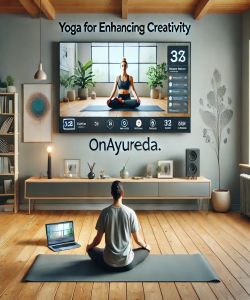
Overview of Yoga for Enhancing Creativity
Yoga for Enhancing Creativity constitutes a highly specialised and strategic application of yogic science, engineered specifically to dismantle cognitive blockages and stimulate profound innovative thinking. It is fundamentally distinct from generalised yoga practices, which often prioritise physical fitness or generic stress reduction. This discipline is a rigorous methodology that leverages the intricate connection between the body, the breath, and the mind to systematically re-pattern the neural pathways that govern creative thought. It operates on the core principle that creative stagnation is not merely a psychological issue but is deeply embedded within the body’s somatic and nervous systems. Through a targeted synthesis of physical postures (asana), controlled breathing techniques (pranayama), and deep meditative states (dhyana), the practice directly manipulates the practitioner's neuro-physiological landscape. It is designed to shift the autonomic nervous system from a state of stress-induced sympathetic activation—a state anathema to creativity—to a parasympathetic state of calm receptivity. This physiological shift is the necessary precondition for accessing the brain’s default mode network, a critical substrate for insight and divergent thinking. The discipline works to quieten the prefrontal cortex’s incessant analytical chatter, which often manifests as the ‘inner critic’, thereby creating the mental space for nascent, unconventional ideas to emerge without premature judgment. It is not a passive pursuit of relaxation but an active, disciplined engagement with the self to unlock latent potential. By systematically releasing stored physical tension, regulating pranic energy, and cultivating a state of focused, non-judgmental awareness, this potent practice provides a reliable and repeatable framework for transforming creativity from an unpredictable muse into a dependable, on-demand faculty, essential for professionals in any field where innovation is paramount.
What is Yoga for Enhancing Creativity?
Yoga for Enhancing Creativity is a precision-engineered discipline that applies specific yogic techniques with the explicit goal of improving cognitive flexibility, fostering innovative problem-solving, and systematically dissolving creative blocks. It is not a distinct style of yoga in itself, but rather a targeted methodology that draws from various traditions—including Viniyasa, Yin, and Kundalini—to create a specific neuro-physiological state conducive to ideation and insight. The fundamental premise is that our creative potential is often suppressed by chronic stress, physical tension, and ingrained patterns of analytical thought. This practice directly addresses these inhibitors at their source. It moves beyond the superficial aim of relaxation and instead seeks to actively re-wire the practitioner's approach to thinking and idea generation. It is a structured process of using the body and breath as levers to influence brain function, quieting the hyper-vigilant ego and the judgmental inner critic to allow for a freer, more associative flow of thought. The practice is deliberately sequenced to guide the practitioner through phases of energising, clearing, and deep incubation, mirroring the natural cycle of the creative process itself. It is, in essence, a form of applied neuroscience, using ancient techniques to achieve demonstrable changes in mental and emotional states that are directly correlated with heightened creative output.
Its core components can be defined as follows:
Somatic De-Armouring: The use of specific physical postures, particularly those that target areas of chronic tension like the hips and shoulders, to release stored emotional and physical blockages that impede the free flow of energy and ideas.
Neurological Regulation: The application of advanced breathing techniques (pranayama) to deliberately shift the autonomic nervous system out of a stress response and into a state of calm alertness, which optimises brain function for divergent and holistic thinking.
Consciousness Alteration: The utilisation of meditation, visualisation, and deep relaxation practices like Yoga Nidra to grant the practitioner access to subconscious and intuitive layers of the mind, where novel connections and original insights are formed.
Who Needs Yoga for Enhancing Creativity?
Creative Professionals experiencing career stagnation. This includes writers, designers, artists, musicians, and architects who are confronted with creative blocks, perfectionism, or a perceived depletion of their imaginative resources. The practice provides a systematic method for replenishing their inventive wellspring.
Corporate Leaders, Strategists, and Executives. Individuals in these roles are required to generate innovative solutions to complex problems. This discipline equips them with the tools to break free from conventional, linear thinking and to foster a more agile and adaptive cognitive approach to business challenges.
Entrepreneurs and Innovators. Those engaged in start-up ventures and product development must maintain a state of continuous ideation. This practice helps to cultivate the mental resilience and cognitive flexibility necessary to navigate uncertainty and consistently produce novel concepts.
Academics, Scientists, and Researchers. Professionals in these fields benefit from the practice's ability to dismantle intellectual rigidity. It facilitates the cross-pollination of ideas and encourages the paradigm-shifting insights that are essential for true scholarly and scientific breakthroughs.
Individuals in High-Pressure, Analytical Professions. Lawyers, engineers, and financial analysts whose roles are dominated by logic and reason can find their creative faculties atrophying. This discipline provides a necessary counterbalance, re-integrating intuitive and holistic thinking.
Marketing and Advertising Professionals. Constant demand for fresh campaigns and original messaging can lead to burnout. This practice offers a reliable method for accessing novel perspectives and maintaining a high level of inventive output under pressure.
Educators and Trainers. Those responsible for fostering creativity in others must first cultivate it within themselves. This discipline provides both a personal resource for inspiration and a deeper understanding of the creative process to be shared with students and trainees.
Anyone seeking personal transformation and enhanced problem-solving skills. Individuals feeling stuck in repetitive life patterns or seeking more imaginative solutions to personal challenges can use this practice to unlock new ways of seeing and being.
Origins and Evolution of Yoga for Enhancing Creativity
The conceptual origins of Yoga for Enhancing Creativity are deeply rooted in the classical yoga tradition of ancient India, though its modern formulation is a contemporary synthesis. The foundational principles can be traced to Patanjali's Yoga Sutras, a seminal text that outlines the path of yoga as a systematic stilling of the mind's fluctuations (chitta vritti nirodha). This core objective—the calming of mental noise—is the essential prerequisite for any form of deep insight, creative or spiritual. Ancient practices such as Pratyahara (the withdrawal of the senses) and Dharana (concentration) were designed to turn the practitioner's awareness inward, away from external distractions and toward the subtle landscapes of the inner world. It was understood that by silencing the constant chatter of the conscious mind, one could access deeper, more intuitive layers of consciousness. These practices were not explicitly labelled for 'creativity' in the modern sense, but they created the precise internal environment from which all forms of original thought and profound realisation could emerge. The focus was on purification of the mind to perceive reality more clearly.
The evolution toward a more targeted application began in the 20th century, as yoga migrated to the West and began to intersect with the burgeoning fields of humanistic and transpersonal psychology. Thinkers and practitioners started to re-frame the ancient discipline not just as a path to spiritual enlightenment, but as a powerful tool for psychological integration and self-actualisation. The focus began to shift from purely transcendental goals to include the enhancement of human potential in this life, including our innate creative capacities. This period saw the de-mystification of many yogic concepts and their translation into a secular, psychological language that emphasised benefits such as stress reduction, improved focus, and emotional balance—all of which are now understood to be direct contributors to a fertile creative mind.
The modern discipline of Yoga for Enhancing Creativity represents the culmination of this evolution. It is a highly sophisticated synthesis that deliberately combines specific asanas from Hatha yoga, dynamic flows from Viniyasa, potent energetic techniques from Kundalini yoga, and deep relaxation from Yoga Nidra with contemporary neuroscientific understandings of creativity, flow states, and brain function. Instructors now curate practices with the explicit intention of stimulating the default mode network, balancing the brain's hemispheres, and down-regulating the amygdala's fear response. This is no longer an accidental by-product of a spiritual practice; it is the precise and intended outcome of a scientifically informed, targeted methodology designed for the modern individual who seeks to master their own creative process.
Types of Yoga for Enhancing Creativity
Viniyasa for Cognitive Flow. This is a dynamic, fluid practice where movement is meticulously synchronised with the breath. Its primary function in the context of creativity is to induce a ‘flow state’—a psychological condition of complete absorption where the analytical mind and its associated inner critic are bypassed. The continuous, challenging nature of the sequence demands total presence, short-circuiting ruminative thought patterns and allowing for spontaneous, intuitive connections to form between disparate ideas. The emphasis is on seamless transitions and embodied awareness, transforming the body into an instrument of mental liberation.
Yin Yoga for Subconscious Incubation. In stark contrast to Viniyasa, Yin Yoga is a slow, passive, and profound practice. It involves holding floor-based postures for extended periods, typically several minutes at a time. This method targets the deep connective tissues (fascia) where physical and emotional tension is stored. The prolonged stillness creates a meditative environment that allows the practitioner to descend beneath the surface of conscious thought. It is the ideal modality for the ‘incubation’ phase of the creative process, providing the mental space and quietude for subconscious ideas to mature and surface into conscious awareness without being forced.
Kundalini Yoga for Energetic Activation. This is a potent and prescriptive form of yoga that combines dynamic movement, powerful and specific breathing techniques (pranayama), mantra chanting, and meditation. Its objective is to awaken and direct the latent creative energy, known as kundalini, which is said to reside at the base of the spine. Kundalini Yoga is exceptionally effective for breaking through significant creative blocks and overcoming inertia or apathy. It is a direct and powerful method for generating the raw energy and mental fortitude required to initiate and sustain demanding creative projects.
Yoga Nidra for Imaginative Visualisation. Often translated as ‘yogic sleep’, Yoga Nidra is a systematic, guided meditation practice conducted while lying down in a state of complete stillness. It induces a profound state of relaxation on the threshold between waking and sleeping. This hypnagogic state is characterised by extreme receptivity and heightened access to the imaginative faculties of the subconscious mind. It is used specifically for planting creative intentions (Sankalpa), engaging in vivid visualisation to solve complex problems, and exploring the symbolic landscapes of the inner world for inspiration and novel solutions.
Benefits of Yoga for Enhancing Creativity
Enhanced Cognitive Flexibility. The practice systematically dismantles rigid neural pathways and mental habits. By challenging the body with novel movements and the mind with focused awareness, it directly cultivates the brain's capacity to shift perspectives, make novel connections between disparate concepts, and adapt its approach to problem-solving.
Significant Reduction in Creative Anxiety. It directly addresses the physiological roots of performance anxiety and the fear of failure by down-regulating the sympathetic nervous system. Through controlled breathing and meditative techniques, it trains the practitioner to manage the stress response, thereby silencing the inner critic and fostering a mindset of experimentation and play.
Augmented Access to Flow States. Dynamic, breath-synchronised practices are specifically designed to induce a state of ‘flow’—a condition of complete immersion and effortless focus. Regular practice makes this highly productive and deeply satisfying state more accessible, not just on the mat, but in all creative endeavours.
Improved Divergent and Convergent Thinking. The discipline cultivates both key aspects of the creative process. It enhances divergent thinking—the ability to generate a multitude of ideas—by promoting mental openness. It also improves convergent thinking—the ability to refine and select the best idea—by honing focus and mental clarity.
Heightened Intuition and Sensory Awareness. By quieting the noise of the analytical mind, the practice sharpens the practitioner’s connection to their intuition and subtle sensory perceptions. This leads to more authentic, original work that is sourced from a deeper, more embodied level of knowing rather than from purely intellectual constructs.
Increased Mental and Physical Stamina. Creative work is demanding. The practice builds physical resilience and, more importantly, the mental endurance required to stay with a challenging project through its entire lifecycle, from initial conception through to final execution, without succumbing to burnout or frustration.
Systematic Dissolution of Creative Blocks. The methodology provides a practical and repeatable toolkit for diagnosing and working through creative blocks. It treats these blocks not as character flaws but as somatic or energetic knots that can be systematically untied through targeted physical postures, breathwork, and introspection.
Core Principles and Practices of Yoga for Enhancing Creativity
Mind-Body Unification as Non-Negotiable. The foundational principle is the absolute inseparability of mental and physical states. Creative blocks are not viewed as purely psychological phenomena but as manifestations of somatic tension, nervous system dysregulation, and energetic stagnation. The core practice is therefore to use the body as the primary gateway to influence and liberate the mind.
Pranic Regulation for Optimal Brain State. The deliberate and skilled manipulation of life force energy (prana) through specific breathing techniques (pranayama) is central. Practices such as Nadi Shodhana (Alternate Nostril Breathing) are employed to balance the left (logical) and right (intuitive) hemispheres of the brain, creating the neurological coherence necessary for holistic, innovative thought.
Cultivation of Witness Consciousness (Sakshi Bhava). The practitioner is rigorously trained to develop the capacity to observe their own thoughts and emotional states from a detached, non-judgmental perspective. This ‘witnessing’ short-circuits the powerful influence of the inner critic and the ego, creating a safe internal space where unconventional and vulnerable ideas can emerge without fear of immediate censure.
Intentional Sequencing for Energetic Effect. Asana sequences are not random assortments of postures. They are intelligently and purposefully designed (vinyasa krama) to produce a specific energetic and psychological effect. For instance, a sequence might focus on hip-opening postures to release stored emotional tension and stimulate the sacral chakra (Svadhisthana), the energetic centre associated with creativity and flow.
Strategic Use of Stillness and Rest. The discipline mandates the integration of deep, restorative practices like Yin Yoga and Yoga Nidra. This is based on the principle that the creative cycle requires phases of active generation as well as periods of passive incubation. Profound stillness is not treated as inactivity but as a crucial practice for allowing subconscious processing and the emergence of breakthrough insights.
The Power of Focused Intention (Sankalpa). Every practice begins with the formulation of a Sankalpa—a clear, positive, and resolved intention. This acts as a guiding command to the subconscious mind, focusing all the energy generated during the practice toward a specific creative objective or the dissolution of a particular block. It transforms the practice from a general exercise into a precision tool.
Online Yoga for Enhancing Creativity
Absolute Environmental Sovereignty. The online modality provides the practitioner with complete and uncompromising control over their practice environment. This is a critical advantage for creative work, which requires deep introspection. The individual can curate a personalised sanctuary—optimising lighting, sound, and temperature—entirely free from the external distractions, social dynamics, and potential for self-consciousness inherent in a public studio setting.
Unparalleled Scheduling Autonomy. Digital access removes all geographical and temporal constraints, granting the practitioner the power to engage with the practice precisely when it is most needed. Instead of conforming to a rigid studio timetable, one can integrate a session directly into their workflow—for example, using a dynamic practice to break through a midday slump or a meditative practice to incubate ideas overnight. This on-demand availability is a strategic asset.
Focused, Unmediated Instruction. The online format directs the practitioner's attention solely onto the instructor's guidance, eliminating the visual and auditory ‘noise’ of other participants. This creates a direct, potent channel of communication, fostering a deeper level of concentration and absorption in the techniques being taught. The focus remains internal, rather than being diverted by the movements or presence of others.
Enhanced Learning Through Repetition. Access to a library of recorded sessions is a key benefit of the online model. It allows the practitioner to revisit and repeat specific classes, sequences, or techniques that they find particularly effective or challenging. This iterative, self-paced approach facilitates a more profound mastery of the material and a deeper integration of its principles than is possible in a single, ephemeral live class.
Cultivation of Self-Reliance. The online environment necessitates a high degree of self-discipline and internal motivation. While challenging, this fosters a powerful sense of ownership and self-reliance in the practitioner. They learn to become their own guide, developing heightened bodily awareness and the ability to self-regulate without dependence on external validation or correction, a skill that translates directly to the solitary nature of most creative work.
Yoga for Enhancing Creativity Techniques
Phase One: Centring and Intention Setting (Sankalpa). Assume a stable, upright seated posture. Close the eyes and bring all awareness to the natural rhythm of the breath, allowing it to deepen and slow. Actively disengage from external concerns. Once a state of relative mental quietude is achieved, formulate a Sankalpa: a clear, concise, and positively-phrased resolution related to your creative purpose. This could be, "My mind is open to innovative solutions," or, "I move through creative challenges with ease." Silently repeat this intention three times, planting it firmly in the subconscious. This primes the entire system for the work to follow.
Phase Two: Energetic Clearing (Kapalabhati Pranayama). Remain seated and perform the 'Breath of Fire' or 'Skull-Shining Breath'. This technique involves a series of sharp, forceful exhalations through the nostrils, driven by a powerful contraction of the abdominal muscles, with the inhalation being passive and reflexive. Begin with a round of 30-40 expulsions, followed by a deep inhalation and brief breath retention. This pranayama is a potent tool for clearing mental fog, energising the nervous system, and expelling stagnant, repetitive thought patterns, thereby creating a clean slate.
Phase Three: Flow State Induction (Dynamic Asana). Transition into a dynamic, breath-synchronised sequence of postures. A typical sequence would link Sun Salutations (Surya Namaskar) with standing poses, balancing challenges, and deep hip-openers like Lizard Pose (Utthan Pristhasana). The objective is not perfect form but continuous, mindful movement synchronised with the breath (viniyasa). This sustained focus on the nexus of breath and motion is designed to bypass the analytical mind and induce a state of creative flow.
Phase Four: Hemispheric Synchronisation (Nadi Shodhana). Following the dynamic phase, return to a seated position to perform Alternate Nostril Breathing. This calming pranayama involves using the right thumb to close the right nostril while inhaling through the left, then closing the left nostril with the ring finger to exhale through the right, and continuing in this pattern. This practice is scientifically observed to balance the activity between the left (logical) and right (intuitive) hemispheres of the brain, fostering the whole-brain thinking that is the hallmark of creative insight.
Phase Five: Subconscious Integration (Savasana with Visualisation). Conclude by lying in the Corpse Pose (Savasana). Allow the body to become completely still and relaxed. Once settled, engage in a focused visualisation. This might involve mentally rehearsing the successful completion of a creative project, or visualising a symbol that represents unbound creativity. This final phase allows the benefits of the practice to integrate on a deep, subconscious level.
Yoga for Enhancing Creativity for Adults
For the adult practitioner, whose mind is often conditioned by years of routine, professional responsibilities, and the calcification of established thought patterns, Yoga for Enhancing Creativity serves as a critical and strategic intervention. This is not a recreational diversion but a sophisticated methodology for systematically deconstructing the cognitive and somatic rigidity that accrues with age and experience. The adult brain, while possessing a wealth of knowledge, can become trapped in efficient but uncreative neural pathways. This discipline directly confronts this state of affairs by introducing novel physical movements and breathing patterns that stimulate neuroplasticity, encouraging the formation of new connections and breaking down intellectual inertia. It is uniquely tailored to the adult condition as it addresses the physiological consequences of chronic stress—a primary inhibitor of innovation in the professional world—by providing tangible techniques to regulate the autonomic nervous system. Furthermore, it equips adults with a robust, self-sufficient toolkit for managing performance pressure and silencing the highly developed ‘inner critic’, which often becomes more powerful and pervasive in high-stakes professional environments. It is a mature practice for re-engaging with one's innate imaginative capacities, enabling seasoned individuals to bypass acquired mental roadblocks, access a more fluid and resilient state of mind, and apply a fresh, innovative lens to the complex challenges of their personal and professional lives. It is, in essence, a rigorous programme for cognitive rejuvenation.
Total Duration of Online Yoga for Enhancing Creativity
The mandated and optimal duration for a complete and effective online session of Yoga for Enhancing Creativity is precisely 1 hr. This specific timeframe is not an arbitrary allocation but a strategically engineered construct designed to facilitate a full physiological and psychological cycle, guiding the practitioner from a state of ordinary awareness to one of heightened creative potential without inducing fatigue or cognitive burnout. Within this 1 hr structure, every minute is purposefully allocated. The session commences with a distinct phase for grounding, breath regulation, and the setting of a clear intention (Sankalpa). This is followed by a substantial period dedicated to dynamic asana and potent pranayama, engineered to build energy, release somatic tension, and break through mental inertia. Subsequently, the practice transitions into a crucial phase of deeper, more introspective work, which may include prolonged holds or calming techniques to balance the nervous system. The final segment is reserved for deep relaxation, meditation, and visualisation, allowing for the full integration of the session’s benefits at a subconscious level. Any duration less than 1 hr is insufficient to move the practitioner through these necessary stages and is likely to remain at a superficial level of physical exercise or simple stress relief. Conversely, extending significantly beyond this time in an unsupervised online format risks diminishing returns, mental drift, and a loss of focused intent. Therefore, the 1 hr session stands as the professional standard, a complete and potent container for the transformative work of creative enhancement.
Things to Consider with Yoga for Enhancing Creativity
Engaging with Yoga for Enhancing Creativity demands a sober understanding of its nature as an active, and at times confronting, discipline, not a passive means of escape. Prospective practitioners must consider that its primary function is to dismantle existing structures—both physical and mental. This process of deconstruction can be profoundly uncomfortable. One must be prepared to encounter the very emotional and psychological resistance that underpins their creative blocks. It is not a simple panacea but a rigorous process of self-inquiry that uses the body as its laboratory. A critical consideration is the practitioner's underlying intention. If the objective is merely physical conditioning or superficial relaxation, a more conventional yoga class is a more suitable choice. This specialised practice is for those with a serious and unwavering commitment to fundamentally altering their creative process and output. Furthermore, the imperative of consistency cannot be overstated. Sporadic or casual engagement will yield fleeting, if any, results. The re-patterning of deep-seated neural and somatic habits requires dedicated, regular, and disciplined practice. Participants must be willing to approach this work with the same seriousness and rigour they would apply to the mastery of any other high-level skill, understanding that the rewards are directly proportional to the effort and focus invested. It requires patience, resilience, and a willingness to embrace vulnerability as a gateway to profound insight.
Effectiveness of Yoga for Enhancing Creativity
The effectiveness of Yoga for Enhancing Creativity is not a matter of subjective belief but is grounded in its direct and verifiable impact on the human neuro-physiological system. Its efficacy is derived from a systematic, multi-pronged approach that targets the primary inhibitors of innovative thought. Firstly, through specific pranayama techniques, the practice gives the practitioner direct leverage over their autonomic nervous system. By consciously shifting from a stress-induced sympathetic state ('fight-or-flight') to a parasympathetic state of calm alertness, it creates the precise internal environment required for creative ideation to flourish. This state is correlated with increased alpha brainwave activity and engagement of the default mode network, both neurological markers of creativity. Secondly, the physical asanas are meticulously selected to de-armour the body, releasing chronic tension stored in the fascia and muscles. Since the mind and body are a unified system, this somatic release directly translates into a liberation of cognitive resources and a dissolution of mental rigidity. Finally, the meditative components systematically train the prefrontal cortex to dis-identify from the incessant, judgmental chatter of the inner critic. This cultivated mental silence is the fertile ground from which novel, unconventional ideas can safely emerge. Therefore, the discipline's effectiveness is a direct result of its integrated assault on the tripartite structure of creative blockage: a dysregulated nervous system, a tense body, and a hyper-critical mind. When practiced correctly, the outcome is a measurable, reliable, and sustainable enhancement of an individual’s creative capacity.
Preferred Cautions During Yoga for Enhancing Creativity
Adherence to a strict set of cautions during this practice is non-negotiable for ensuring both physical safety and the integrity of the psychological process. Foremost is the absolute prohibition against ego-driven physical exertion. This is a practice of internal inquiry, not a performance of athleticism. Forcing the body into postures beyond its present capacity will invariably lead to injury and, more critically, will reinforce the very patterns of striving and mental tension that the practice is designed to dismantle. Respect for the body’s limitations is paramount. Secondly, advanced pranayama techniques, particularly those involving forceful breathing or extended breath retention (kumbhaka), must be approached with extreme caution and discipline. These are powerful tools that directly alter brain chemistry and consciousness; improper application can provoke anxiety, dizziness, or other adverse physiological reactions. They must be learned and practiced with methodical precision. Furthermore, the practitioner must be prepared for the potential emergence of intense emotional or psychological material. As the practice systematically releases somatic tension, it can also bring suppressed memories and emotions to the surface. It is imperative to maintain the stance of a neutral observer—a witness—to this process, allowing feelings to arise and pass without being overwhelmed. Attempting to suppress this material is counterproductive and negates the purpose of the work. These are not mere recommendations but essential operational protocols for anyone undertaking this serious and transformative discipline.
Yoga for Enhancing Creativity Course Outline
Module 1: Foundations – The Body as an Instrument.
Core Concept: Establishing the unbreakable link between physical tension and mental rigidity.
Practice: Foundational grounding postures (Asanas), introduction to diaphragmatic breathing, and the formal practice of setting a powerful intention (Sankalpa) to direct the course of work.
Module 2: Unlocking the Flow – Activating Creative Energy.
Core Concept: Utilising dynamic movement to break through inertia and stimulate the energetic centres associated with creativity (Svadhisthana Chakra).
Practice: Introduction to Viniyasa flow sequences, focusing on fluid transitions and the synchronisation of breath with movement. Emphasis on hip-opening postures.
Module 3: Taming the Inner Critic – Cultivating Witness Consciousness.
Core Concept: Developing the skill of detached self-observation to create space between the practitioner and their judgmental thought patterns.
Practice: Seated meditation techniques, introduction to Nadi Shodhana (Alternate Nostril Breathing) for brain hemisphere synchronisation, and journaling practices to identify and disarm negative self-talk.
Module 4: Entering the Zone – The Practice of Deep Focus.
Core Concept: Mastering the ability to sustain attention and achieve the 'flow state' essential for deep, immersive creative work.
Practice: Advanced and challenging balancing postures, techniques for maintaining a steady gaze (Drishti), and longer, more complex Viniyasa sequences.
Module 5: The Deep Dive – Incubation and Subconscious Insight.
Core Concept: Understanding and utilising states of profound rest to allow for the incubation of ideas and the emergence of subconscious solutions.
Practice: Guided Yoga Nidra ('yogic sleep') for deep relaxation and visualisation, and an introduction to the long-held, passive postures of Yin Yoga.
Module 6: Integration – From the Mat to the World.
Core Concept: Translating the skills and states cultivated during the practice into one’s daily life and creative workflow.
Practice: Developing a sustainable personal practice schedule, creating 'mini-rituals' to overcome creative blocks in real-time, and strategies for maintaining a heightened state of creative readiness.
Detailed Objectives with Timeline of Yoga for Enhancing Creativity
Weeks 1-2: Objective – Foundational Embodiment and Mental Clearing.
By the end of this period, the practitioner will have established a consistent practice routine. They will demonstrate mastery of basic diaphragmatic breathing and the ability to link it to simple movements. The primary outcome is a tangible reduction in baseline mental 'noise' and an increased awareness of where physical tension is held in the body.
Weeks 3-4: Objective – Dismantling Inertia and Activating Flow.
The objective is to move beyond static postures into dynamic, fluid sequences. The practitioner will be able to complete a basic Viniyasa flow with sustained focus and breath synchronisation. A key metric of success will be a self-reported increase in daily energy levels and a noticeable decrease in the resistance or procrastination felt when initiating creative tasks.
Weeks 5-6: Objective – Mastering Focus and Quieting the Inner Critic.
During this phase, the practitioner will develop the capacity to hold challenging balancing postures and maintain a steady gaze (drishti), indicating enhanced concentration. They will also be proficient in Nadi Shodhana (Alternate Nostril Breathing) and will report a greater ability to observe their thoughts without judgment, effectively reducing the power of their inner critic.
Weeks 7-8: Objective – Accessing Subconscious and Intuitive Channels.
The focus shifts to deeper, more receptive practices. The practitioner will be able to enter a state of profound relaxation during guided Yoga Nidra and hold Yin postures with mindful stillness. The intended outcome is the emergence of novel ideas, unexpected solutions to problems, and an increased trust in intuitive insights that arise during these states.
Weeks 9-12: Objective – Autonomous Application and Integration.
The final objective is to empower the practitioner with a fully integrated and personalised toolkit. They will be able to intuitively select and apply specific techniques—a clearing pranayama, a flow sequence, a meditative practice—to address creative challenges as they arise in real-time. The goal is complete self-sufficiency in managing their own creative state.
Requirements for Taking Online Yoga for Enhancing Creativity
Uncompromising Digital Infrastructure. A stable, high-bandwidth internet connection is an absolute prerequisite. Interrupted or lagging video streams compromise instructional integrity and destroy the focused state necessary for the practice.
A Sanctified and Private Practice Space. A dedicated, uncluttered area of sufficient size to permit a full range of movement without restriction is mandatory. This space must be private and guaranteed to be free from any and all interruptions from family, colleagues, or pets for the entire duration of the session.
Professional Grade Equipment. A high-quality, non-slip yoga mat is essential for safety and stability. The practitioner must also procure any props specified by the programme, such as yoga blocks, bolsters, or straps. These are not optional accessories; they are tools required for correct execution.
Adequate Viewing Hardware. A laptop or tablet with a screen of sufficient size to clearly view the instructor's demonstrations is required. Attempting to follow complex postural alignments on a small smartphone screen is strongly discouraged and constitutes a safety risk.
Unyielding Self-Discipline. The online format places the full responsibility for attendance, focus, and consistent effort squarely on the practitioner. A high degree of intrinsic motivation and personal accountability is non-negotiable for success.
A Receptive and Committed Mindset. The practitioner must be willing to engage fully with both the physical demands and the introspective, psychological dimensions of the work. Cynicism, passive participation, or resistance to unfamiliar concepts will render the practice ineffective.
Commitment to a Distraction-Free Environment. All digital notifications on the practice device and in the surrounding environment must be disabled. The 1 hr session must be treated as a protected, inviolable appointment.
Things to Keep in Mind Before Starting Online Yoga for Enhancing Creativity
Before embarking on an online programme of Yoga for Enhancing Creativity, it is imperative to conduct a rigorous and honest self-appraisal. This is not a passive form of entertainment to be consumed digitally; it is an active and demanding discipline that requires unwavering personal commitment and self-regulation. The absence of a physical instructor to provide hands-on corrections demands that the practitioner cultivate a heightened state of proprioception and an intelligent respect for their own physical boundaries to mitigate the risk of injury. One must be prepared to function as one's own motivator, carving out and fiercely defending the necessary time and space from the ceaseless encroachments of domestic and professional life. It is critical to understand that the screen is merely a conduit for information; the transformative work occurs entirely within the practitioner's own internal landscape. Therefore, one must be prepared to establish a practice environment that is as focused and sacrosanct as any dedicated studio. Furthermore, it is essential to approach the practice with realistic expectations. Profound change is not instantaneous; it is the cumulative effect of consistent, disciplined, and focused effort over time. The prospective participant must therefore possess the maturity and patience to embrace a gradual process of unfolding, bringing resilience and perseverance to every single session.
Qualifications Required to Perform Yoga for Enhancing Creativity
The competent instruction of Yoga for Enhancing Creativity is a highly specialised role demanding a qualification profile that extends significantly beyond a standard yoga teaching certificate. A foundational certification from a reputable organisation (e.g., RYT-200 or higher) is merely the entry point and is, on its own, entirely inadequate for leading this nuanced and targeted work. The truly qualified instructor must possess and be able to demonstrate a deep, integrated knowledge base across several distinct domains. These non-negotiable qualifications include:
Expertise in Applied Yogic Physiology and Neuroscience. This involves an advanced, practical understanding of pranayama and its precise effects on the autonomic nervous system, brainwave patterns, and hormonal regulation. The instructor must be able to articulate why a specific technique is being used to achieve a desired cognitive state.
Profound Knowledge of Yoga Psychology and Philosophy. A comprehensive grasp of classical texts, such as the Yoga Sutras, is essential. The instructor must be able to translate abstract concepts like chitta vritti (mental fluctuations) and pratyahara (sense withdrawal) into practical tools for managing the creative mind.
Demonstrable Experience in Creativity or Psychology. The instructor must have either a professional background in a creative industry or formal education in the psychology of creativity, flow, and peak performance. This ensures they possess an authentic understanding of the specific challenges, anxieties, and processes of the creative individual.
Specialised Training in Relevant Modalities. Certification or significant advanced training in specific and potent yogic styles such as Kundalini Yoga, Yin Yoga, and Yoga Nidra is crucial, as these form the technical bedrock of many practices designed for deep subconscious exploration.
An instructor lacking this multi-faceted and deeply integrated expertise may be capable of leading a physical yoga class, but they are fundamentally unqualified to guide others in this precise, sophisticated, and transformative application of yogic science.
Online Vs Offline/Onsite Yoga for Enhancing Creativity
Online
The online modality offers the distinct advantage of absolute practitioner autonomy. It grants complete control over the practice environment, allowing for the creation of a personalised, distraction-free sanctuary, which is highly conducive to the deep introspection required for creative work. It removes all geographical and temporal barriers, permitting individuals to access specialised instruction from anywhere in the world and to integrate the practice seamlessly into their unique workflows, deploying it precisely when a creative stimulus is most needed. Furthermore, the availability of recorded sessions allows for repetition and a self-paced mastery of techniques, a feature entirely absent from live classes. However, the online format demands an exceptionally high level of self-discipline, motivation, and personal accountability. It also lacks the benefit of hands-on physical adjustments from an instructor, which requires the practitioner to have a well-developed sense of bodily awareness to ensure safety and correct alignment. The powerful, contained energy of a group setting is also absent.
Offline/Onsite
The primary strength of the offline, or onsite, format lies in the direct, unmediated presence of a qualified instructor. This allows for immediate, tactile feedback, postural corrections, and personalised guidance, which can significantly enhance both the safety and the depth of the practice. The shared physical space creates a powerful energetic container (satsang) and a sense of communal focus that can amplify individual commitment and elevate the collective experience. The act of travelling to a dedicated studio provides a clear psychological separation from daily life, making it easier to fully immerse oneself in the practice. The disadvantages, however, are significant. The onsite format is inherently rigid, bound by a fixed schedule and location that may not align with an individual’s creative cycles or professional demands. It introduces the potential for social comparison and distraction from other participants, which can be counterproductive to the vulnerable internal work of creativity. The experience is ephemeral; it cannot be revisited or studied further once the class has concluded.
FAQs About Online Yoga for Enhancing Creativity
Question 1. Is this practice suitable for complete beginners to yoga?
Answer: Yes, provided the programme is specifically designed to accommodate beginners. The focus is on internal states, not complex postures, but a foundational understanding of basic alignment is beneficial.
Question 2. Do I need to be an artist or in a ‘creative’ profession to benefit?
Answer: No. This practice is for anyone seeking to enhance their problem-solving skills, cognitive flexibility, and innovative thinking, regardless of their profession.
Question 3. What technology is required?
Answer: A stable, high-speed internet connection, a device with a clear screen and audio (preferably a laptop or tablet), and a designated private space are all mandatory.
Question 4. How is this different from a standard online Viniyasa or Hatha class?
Answer: The intention and sequencing are entirely different. Every posture, breath, and meditation is specifically chosen and arranged to influence the neurological and energetic states associated with creativity, not for general fitness.
Question 5. Will I receive personal feedback in an online class?
Answer: This depends on the format. Live-stream classes may offer some feedback if you keep your camera on, but pre-recorded programmes do not. The emphasis is on cultivating internal awareness.
Question 6. What if I am not physically flexible?
Answer: Physical flexibility is not a prerequisite. The aim is not to achieve perfect postures but to use the postures as tools to release tension and shift consciousness. Modifications are always encouraged.
Question 7. Can this practice genuinely overcome a long-term creative block?
Answer: With consistent and disciplined practice, it can provide the tools to systematically dismantle the underlying causes of the block—be they stress, fear, or mental rigidity.
Question 8. How quickly can I expect to see results?
Answer: While some benefits like reduced stress may be immediate, significant shifts in creative output require consistent practice over several weeks or months. This is not an instantaneous solution.
Question 9. Is there any scientific evidence to support these claims?
Answer: Yes, extensive research in neuroscience and psychology supports the links between mindfulness, meditation, specific breathing techniques, and the brain states associated with enhanced creativity and flow.
Question 10. What props are essential?
Answer: A non-slip yoga mat is non-negotiable. Depending on the class, props like blocks, a bolster, and a blanket may be required for support and to facilitate deeper release.
Question 11. Can I practice if I have an injury?
Answer: You must consult with a medical professional first. It is your responsibility to practice safely, taking modifications and avoiding any movements that cause pain.
Question 12. Is the online format less effective than an in-person class?
Answer: Not necessarily. For some, the privacy and control of the online format are more conducive to creative introspection than a public class. Effectiveness depends on the individual's discipline.
Question 13. How often should I practice?
Answer: For tangible results, a minimum of two to three dedicated 1 hr sessions per week is recommended, supplemented with shorter daily practices if possible.
Question 14. Will this practice make me more emotional?
Answer: It can. By releasing stored tension, the practice can bring suppressed emotions to the surface. This is a normal and necessary part of the clearing process.
Question 15. What is the single most important element for success in this online practice?
Answer: Unwavering consistency. The cumulative effect of regular, dedicated practice is what re-patterns the brain and nervous system for sustained creativity.
Question 16. Can I eat before a session?
Answer: It is strongly advised to practice on an empty stomach, or at least two hours after a heavy meal, to ensure your body's energy is available for the practice, not for digestion.
Conclusion About Yoga for Enhancing Creativity
In conclusion, Yoga for Enhancing Creativity must be recognised not as a passive wellness activity or a fleeting trend, but as a rigorous and highly structured discipline engineered for a specific and invaluable outcome: the mastery of one’s own innovative potential. It operates on the fundamental and irrefutable principle that the mind and body are an indivisible, integrated system, and that cognitive and creative limitations are inextricably linked to underlying somatic tension and nervous system dysregulation. Through its targeted synthesis of asana, pranayama, and meditative techniques, this practice provides a tangible, repeatable, and self-sufficient methodology for systematically dismantling the primary physiological and psychological barriers—chronic stress, physical armoring, and rigid, conditioned thought patterns—that suffocate original thought. The ultimate purpose is to transition the practitioner from a state of dependency on sporadic, unpredictable moments of inspiration to a cultivated and sustained state of cognitive flexibility, heightened intuition, and profound mental clarity. As such, it represents an essential strategic tool for any professional, artist, entrepreneur, or individual for whom innovation is not merely a desirable attribute but a critical necessity for success and fulfilment. The practice demands discipline, focus, and commitment, but the reward it offers is nothing less than the transformation of creativity from an elusive external force into a dependable and accessible internal faculty.