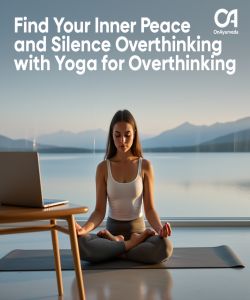
1. Overview of Yoga For Overthinking
Yoga for Overthinking is a highly specialised and rigorous discipline engineered to dismantle the debilitating cycle of incessant, non-productive cognitive activity. It is not a passive pursuit of relaxation but an assertive intervention designed to reclaim command over the mind's chaotic tendencies. This modality operates on the foundational principle that the mind and body are an inseparable, integrated system; therefore, mental turbulence cannot be effectively addressed through intellectual means alone. Instead, it must be confronted through the deliberate and structured engagement of the physical form, the breath, and focused awareness. The practice systematically redirects attention away from circular, abstract thought patterns and anchors it firmly within the tangible reality of somatic sensation and respiratory rhythm. Through a demanding synthesis of physical postures (asana), controlled breathing techniques (pranayama), and unwavering meditative focus (dhyana), the practitioner is compelled to inhabit the present moment fully. This is a strategic re-patterning of neurological pathways, moving the individual from a state of mental hyper-arousal to one of grounded, volitional consciousness. It forces a cessation of the mental chatter that fuels anxiety and analysis paralysis, replacing it with a state of profound physiological and psychological equilibrium. The objective is not to empty the mind, which is an impossibility, but to cultivate the unshakeable authority to direct its focus, thereby transforming a master of turmoil into a servant of will. This is a robust framework for forging mental fortitude and resilience, demanding absolute commitment and delivering unparalleled control over one's internal landscape.
2. What are Yoga For Overthinking?
Yoga for Overthinking constitutes a targeted application of yogic science, specifically curated to counteract the physiological and psychological symptoms of chronic rumination and mental hyperactivity. It is a structured methodology that eschews the broad, often generalised, approach of conventional yoga classes, focusing instead on techniques that directly interrupt obsessive thought loops. This discipline is fundamentally about action, not abstraction. It posits that the state of overthinking is a disembodied one, where consciousness is trapped in a non-physical realm of past regrets and future anxieties. The entire purpose of this practice, therefore, is to forcibly return the consciousness to the body, grounding it in the non-negotiable reality of the present.
This is achieved through several key mechanisms:
- Somatic Anchoring: The practice employs specific physical postures (asanas), particularly those requiring intense balance, strength, and focus. These demanding poses make it neurologically impossible to sustain a wandering mind; attention must be directed to the physical task at hand to maintain stability and form. The focus shifts from "what if" to "where is my foot, how is my core engaged, what is my breath doing right now."
- Pranayama as a Neurological Regulator: It heavily utilises specific breathing techniques (pranayama) designed to directly influence the autonomic nervous system. Practices like Nadi Shodhana (Alternate Nostril Breathing) or Ujjayi (Victorious Breath) are not merely relaxation exercises; they are powerful tools for down-regulating the sympathetic nervous system's fight-or-flight response, which is chronically activated in a state of overthinking.
- Mindfulness as a Non-Negotiable Mandate: Every movement, every breath, and every moment of stillness is executed with a mandated state of profound, non-judgemental awareness. The practitioner is trained to observe thoughts as they arise without engaging with them, treating them as transient mental events rather than urgent realities. This cultivates a state of meta-cognition, allowing the individual to witness their thought processes without being consumed by them. It is a rigorous training in mental dis-identification.
3. Who Needs Yoga For Overthinking?
- High-Pressure Professionals and Executives: Individuals in demanding careers who are conditioned to constantly analyse, strategise, and problem-solve often find it impossible to disengage this mental state. They require a robust mechanism to switch off the cognitive engine, prevent burnout, and interrupt the cycle of work-related rumination that encroaches upon personal time and well-being.
- Individuals Prone to Anxiety and Worry: Those with a predisposition towards anxiety disorders or generalised worry experience overthinking as a core symptom. This practice provides a tangible, somatic-based toolkit to manage acute moments of panic and to retrain the brain's default pathways away from catastrophic thinking. It offers a method of self-regulation that is more direct than cognitive reframing alone.
- Creative Professionals and Academics: Writers, artists, researchers, and other creatives often face periods of intense mental analysis or creative blocks, both of which are forms of overthinking. This discipline helps to clear mental clutter, break through intellectual stalemates, and foster a state of mind more conducive to insight and innovation by silencing the inner critic.
- Perfectionists and Individuals with High Self-Criticism: The relentless pursuit of flawlessness is fuelled by an overactive, critical mind. Yoga for Overthinking forces a shift in focus from abstract ideals of perfection to the concrete, imperfect reality of the body's present-moment capabilities, fostering self-acceptance and reducing the mental burden of self-judgement.
- Anyone Experiencing Analysis Paralysis: Individuals who find themselves unable to make decisions, large or small, due to an overwhelming flood of options and potential outcomes are trapped in analysis paralysis. This practice instils decisiveness by demanding immediate, focused action in the physical realm, translating this cultivated skill into cognitive processes.
- Individuals Recovering from Mental or Emotional Trauma: Overthinking past events is a common feature of post-traumatic stress. This targeted yoga practice offers a safe and structured way to reconnect with the body, process somatic memories, and establish a sense of safety and control in the present moment, thereby reducing the power of intrusive thoughts.
4. Origins and Evolution of Yoga For Overthinking
The origins of Yoga for Overthinking are not found in a single, modern invention but are deeply rooted in the foundational tenets of classical yogic philosophy, which have been refined and contextualised for the specific challenges of the contemporary mind. The primary source text, Patanjali's Yoga Sutras, compiled around 2,000 years ago, defines yoga in its second sutra: "Yogas-citta-vrtti-nirodhah." This translates to "Yoga is the cessation of the fluctuations of the mind." This ancient definition provides the explicit philosophical mandate for the entire discipline. The classical aim was never mere physical flexibility but the attainment of a state of profound mental stillness and clarity, making it the original, definitive practice for mastering the mind.
Historically, the path to achieving citta-vrtti-nirodhah was through the rigorous, eight-limbed path (Ashtanga Yoga), which included ethical principles, physical postures (asana), breath control (pranayama), and progressive stages of meditation. The asanas were not seen as exercise but as stable postures to prepare the body for long periods of seated meditation, whilst pranayama was the primary tool for influencing the mind's energy and state. The focus was unequivocally on internal control.
The evolution into the specialised field of "Yoga for Overthinking" represents a modern-day re-application of these ancient tools, informed by contemporary neuroscience and psychology. In the latter half of the twentieth century, as scientific research began to validate the profound effects of yoga and meditation on the nervous system, brain function, and stress hormones, a paradigm shift occurred. Practitioners and teachers began to deconstruct the holistic system of yoga to create targeted interventions for specific modern maladies.
This evolution recognised that the "fluctuations of the mind" described by Patanjali were analogous to what modern psychology terms rumination, anxiety, and obsessive thinking. The practice was therefore refined to emphasise the elements most directly efficacious for these conditions. This meant a greater focus on grounding, repetitive vinyasa flows that demand present-moment awareness, extended holds in challenging poses to build mental resilience, and the specific application of down-regulating pranayama techniques. It moved from a general spiritual pursuit to a precise, evidence-informed therapeutic modality, applying timeless principles to the uniquely modern problem of a chronically overstimulated and disembodied intellect.
5. Types of Yoga For Overthinking
- Grounding Hatha Yoga: This type emphasises slow, deliberate movements and extended holds in foundational postures (asanas). Each pose is held for a significant duration, compelling the practitioner to direct their full attention to the alignment of the body and the sensation in the muscles. The slow pace is intentional; it prevents the mind from racing ahead and forces it into a state of deep, somatic listening. The primary objective is to create a profound sense of stability and rootedness, anchoring the consciousness firmly in the physical form and providing an antidote to the "heady," disembodied state of overthinking.
- Mindful Vinyasa Flow: In this modality, movement is synchronised with the breath in a continuous, flowing sequence. Unlike a fast-paced "power" vinyasa, the focus here is on the seamless and mindful transition between poses. The constant need to coordinate breath and movement acts as a powerful attentional anchor, leaving no cognitive space for extraneous thoughts to intrude. The rhythm of the flow is designed to be hypnotic, inducing a state of moving meditation that calms the nervous system and stills the chattering mind.
- Restorative Yoga with Guided Meditation: This is a passive yet mentally demanding practice. It involves using props like bolsters, blankets, and blocks to support the body in comfortable, restful poses for extended periods. Whilst the body is at ease, the mind is actively engaged through guided meditation or body-scan techniques. The practitioner is directed to notice subtle sensations, the rhythm of the breath, and the feeling of release in the muscles. This trains the mind to be still and observant, even in the absence of physical exertion, directly tackling the tendency to ruminate when at rest.
- Yin Yoga: Yin is a slow, deep practice where passive floor-based poses are held for several minutes at a time. The goal is to apply moderate stress to the body's deeper connective tissues—the fascia, ligaments, and joints. The extended duration of the holds creates a profound and sometimes uncomfortable physical challenge that requires immense mental fortitude and surrender. It teaches the practitioner to sit with discomfort, to breathe through it, and to observe the mind's reactions without attachment, a critical skill for managing the mental discomfort of overthinking.
6. Benefits of Yoga For Overthinking
- Interrupts Ruminative Thought Cycles: The practice demands absolute presence and focus on physical sensations and breath, creating a neurological "pattern interrupt" that forcibly breaks the repetitive loop of obsessive thinking.
- Down-Regulates the Sympathetic Nervous System: Through controlled breathing (pranayama) and mindful movement, it actively shifts the body out of the chronic fight-or-flight state associated with anxiety and overthinking, and into the parasympathetic "rest-and-digest" state.
- Enhances Interoceptive Awareness: It cultivates a heightened sensitivity to the internal state of the body. This allows individuals to recognise the physical precursors of an overthinking spiral—such as a tightening chest or shallow breath—and intervene before it escalates.
- Develops Metacognitive Skill: The discipline trains the practitioner to observe their thoughts from a detached perspective, without judgement or engagement. This cultivates the understanding that thoughts are transient mental events, not absolute truths, thereby reducing their power.
- Builds Mental Resilience and Fortitude: Holding challenging postures for extended periods builds not only physical strength but also mental endurance. It teaches the mind to remain calm and focused under pressure, a skill directly transferable to managing stressful life situations.
- Anchors Consciousness in the Present Moment: Overthinking is, by definition, an obsession with the past or future. Yoga relentlessly pulls the awareness back to the here and now—the feeling of the feet on the mat, the expansion of the lungs, the engagement of the core.
- Improves Cognitive Function and Clarity: By clearing away the "mental clutter" of non-productive thought, the practice frees up cognitive resources. This leads to improved concentration, better decision-making capabilities, and enhanced problem-solving skills.
- Re-establishes the Mind-Body Connection: It forces a reconnection with the physical self, counteracting the disembodiment that characterises chronic overthinking. This somatic grounding provides a powerful and stable foundation for mental and emotional equilibrium.
7. Core Principles and Practices of Yoga For Overthinking
- Pratyahara (Withdrawal of the Senses): This is the foundational principle. The practice mandates a deliberate and conscious withdrawal of attention from external stimuli and internal mental chatter. Every technique is designed to facilitate this inward turning, redirecting focus to the internal landscape of breath and bodily sensation. It is an active disengagement from the sources of overstimulation.
- Somatic Anchoring: The body is utilised as the primary, non-negotiable anchor for the mind. Consciousness is systematically directed to tangible physical realities: the pressure of the feet on the floor, the engagement of the core muscles, the stretch along the spine. This principle asserts that a mind firmly anchored in the body cannot simultaneously be lost in abstract rumination.
- Breath as the Bridge: The breath (prana) is recognised as the direct link between the physical body and the mind. The practice involves precise and controlled breathing techniques (pranayama), such as Ujjayi or Nadi Shodhana. The objective is to regulate the rhythm and depth of the breath, which in turn directly regulates the autonomic nervous system and calms mental agitation. The breath becomes the primary tool for mind management.
- Effort and Surrender (Sthira Sukham Asanam): This principle, derived from Patanjali's Yoga Sutras, mandates that each posture must embody a dual quality of stability and ease. The practitioner must apply disciplined effort to maintain the integrity of the pose whilst simultaneously surrendering any unnecessary tension, both physical and mental. This paradox teaches the mind to be strong and focused without being rigid and anxious.
- Non-Judgemental Awareness (Sakshi Bhava): The practitioner is trained to adopt the role of a neutral witness to their own thoughts and feelings. When thoughts arise, as they invariably will, the instruction is to notice them without criticism, analysis, or engagement, and then deliberately guide the attention back to the breath or the body. This practice dismantles the habit of identifying with one's thoughts.
- Vairagya (Dispassion/Non-Attachment): This principle involves cultivating a state of non-attachment to the content of one's thoughts. The practice teaches that thoughts are transient phenomena, like clouds passing in the sky. By repeatedly choosing not to follow these thought-trains, the practitioner weakens their habitual power and emotional charge.
8. Online Yoga For Overthinking
- Uncompromising Accessibility and Consistency: The online format eradicates geographical and logistical barriers to practice. It provides the capacity for unwavering consistency, which is non-negotiable for re-patterning entrenched neurological habits. The individual can engage in this demanding discipline from any location, ensuring that the practice is maintained without fail, a critical component for its efficacy. This removes all excuses for non-compliance.
- Creation of a Controlled, Private Environment: Practising online allows the individual to construct a personal sanctuary, free from the perceived judgement or distractions of a public class. This privacy is paramount for those grappling with overthinking and social anxiety, as it permits a more profound and uninhibited exploration of their internal state without the added cognitive load of social comparison or self-consciousness.
- Direct and Undiluted Focus on Internal Experience: Without the physical presence of others, the practitioner’s attention is compelled to turn inward. The digital interface, paradoxically, can foster a more intense state of interoception and Pratyahara (sensory withdrawal). All energy is directed towards the self, the instructions, and the body's feedback, amplifying the core purpose of the practice: to anchor awareness internally.
- Access to Specialised, Expert Instruction: The online domain provides access to highly specialised instructors who focus exclusively on the therapeutic application of yoga for mental health. An individual is no longer limited to the generalist teachers in their immediate vicinity but can seek out authoritative experts who possess a deep understanding of the intersection between yogic science and cognitive psychology, ensuring the instruction is precise and potent.
- Repetition and Mastery On-Demand: Online platforms afford the practitioner the ability to repeat specific sessions or techniques as needed. If a particular breathing exercise or posture proves especially effective at halting a ruminative cycle, it can be revisited and practised to the point of mastery. This capacity for targeted repetition accelerates the process of building new, healthier mental habits.
9. Yoga For Overthinking Techniques
- Establish a Foundational Anchor (Samasthitihi): Begin by standing in Mountain Pose (Tadasana) or sitting with a tall, erect spine. Close your eyes. Systematically direct your full and undivided attention to the points of contact between your body and the floor. Feel the weight distributing through your feet or sit bones. This initial step is non-negotiable; it is the act of consciously and deliberately shifting your awareness from the abstract realm of thought into the tangible reality of your physical presence. Remain here for at least ten complete, conscious breaths.
- Implement Breath Regulation (Nadi Shodhana): From your grounded position, commence Alternate Nostril Breathing. Use the right thumb to close the right nostril and inhale slowly and deeply through the left. At the peak of the inhalation, close the left nostril with the ring finger, release the thumb, and exhale completely through the right. Inhale through the right, close it, and exhale through the left. This constitutes one full round. Execute a minimum of ten rounds. This is not a relaxation exercise; it is a direct command to the autonomic nervous system to shift from a state of hyper-arousal to one of equilibrium.
- Engage in Demanding Asana (Virabhadrasana III): Transition into a challenging balancing posture such as Warrior III. This pose requires immense concentration, core strength, and stability. It is neurologically impossible to maintain this posture whilst indulging in ruminative thought. Your brain is forced to allocate all its resources to the present-moment task of proprioception, balance, and muscular engagement. Hold the pose with unwavering focus, directing your gaze (drishti) to a single, unmoving point. The objective is to starve the overthinking mind of the attention it requires to function.
- Practise Active Surrender (Paschimottanasana): Move into a deep forward fold. The intention here is not to force flexibility but to practise the principle of surrender. With each exhalation, consciously release tension in the neck, shoulders, and back. Simultaneously, observe any thoughts that arise without engaging them. Acknowledge their presence and, with the next exhalation, release them along with the physical tension. This trains the mind to let go.
- Integrate with Conscious Stillness (Savasana): Conclude by lying in Corpse Pose. This is the most challenging part of the practice. The body is still, providing the mind with an opportunity to become hyperactive. Your task is to remain a vigilant, neutral observer. Maintain awareness of the breath and the weight of the body. When a thought hook appears, do not fight it. Acknowledge it, and then deliberately and firmly return your focus to the sensation of the breath entering and leaving the body. This is the final integration of the practice: demonstrating mastery over your attention in a state of complete physical stillness.
10. Yoga For Overthinking for Adults
Yoga for Overthinking is an exceptionally potent discipline for adults, as it directly confronts the cognitive and physiological patterns solidified over years of conditioned stress responses and intellectual habituation. Adulthood is often characterised by an accumulation of responsibilities, pressures, and past experiences, creating a fertile ground for rumination and anxiety. The adult mind, trained for analysis and problem-solving, can become trapped in these modes, applying them inappropriately to unchangeable past events or uncontrollable future possibilities. This practice provides a formidable, somatic-based corrective. It is not a gentle palliative but a rigorous re-education of the nervous system and attentional faculties. It forces the adult practitioner to disengage from the cerebral vortex they inhabit and to reconnect with the foundational reality of their own physical being. For the adult burdened by career pressures, financial anxieties, and relational complexities, this discipline offers a non-pharmaceutical, skill-based methodology for managing the resultant mental static. It teaches an invaluable, transferable skill: the ability to consciously shift from a state of chaotic mental arousal to one of grounded, intentional calm. This is not about achieving a temporary escape but about forging permanent tools of self-regulation, enabling the adult to navigate the inevitable complexities of life with greater fortitude, clarity, and command over their own internal state. The practice demands maturity and commitment, qualities the adult practitioner is uniquely positioned to provide, and in return, it delivers a profound and lasting restoration of mental sovereignty.
11. Total Duration of Online Yoga For Overthinking
The prescribed total duration for a single, complete session of online Yoga for Overthinking is mandated at precisely one hour. This 1 hr timeframe is not an arbitrary allocation but a strategically structured period designed for maximum therapeutic efficacy. It is meticulously partitioned to guide the practitioner through the necessary physiological and psychological phases required to dismantle a state of overthinking. A shorter duration would fail to provide sufficient time to move beyond superficial physical engagement and access the deeper states of nervous system regulation and mental stillness. Conversely, a significantly longer session risks inducing physical fatigue or mental resistance, which could prove counterproductive to the goal of cultivating calm focus. Within this 1 hr container, every minute is purposed. The session is structured to include a deliberate initial grounding and breath-work phase, a substantial central period for physically and mentally demanding asana practice, and a crucial concluding phase for restorative postures, integration in Savasana, and a final, seated meditation. This one-hour commitment acts as a non-negotiable boundary, creating a protected space in the day dedicated solely to the demanding work of mental recalibration. It is the minimum effective dose required to interrupt chronic thought patterns and instil a lasting state of embodied presence.
12. Things to Consider with Yoga For Overthinking
It is imperative to approach Yoga for Overthinking with a clear understanding of its demanding nature and specific intent. This is not a panacea, nor is it a conventional fitness regimen. One must recognise that the primary arena of work is internal; the physical postures are merely the tools to access and discipline the mind. Progress is not measured by physical flexibility or the aesthetic perfection of a pose, but by the developing capacity to remain present, to regulate the breath under pressure, and to disengage from ruminative thought cycles. The practitioner must be prepared for discomfort, both physical and mental. The practice will inevitably bring underlying anxieties and habitual thought patterns to the surface. The objective is not to avoid this but to meet it with the structured techniques of breath and awareness, thereby building resilience. Commitment and consistency are non-negotiable. Sporadic engagement will yield negligible results; the re-patterning of deep-seated neurological habits requires relentless, daily application. Furthermore, one must select an instructor with specific expertise in the therapeutic application of yoga for mental health, as a generic class will lack the targeted methodology required. The environment for practice, especially online, must be treated as a sacrosanct space, free from all potential distractions. Finally, the individual must divest themselves of the expectation of immediate, miraculous change. This is a gradual, cumulative process of building skill and fortitude, demanding patience, discipline, and an unwavering commitment to the rigorous work of reclaiming one's own mind.
13. Effectiveness of Yoga For Overthinking
The effectiveness of Yoga for Overthinking is rooted in its direct and uncompromising neurobiological and psychological mechanisms. Its efficacy is not a matter of belief or placebo but a consequence of its systematic impact on the human nervous system and attentional networks. The practice works by inducing a state of high-vagal-tone, shifting the autonomic nervous system from a chronically activated sympathetic (fight-or-flight) state, characteristic of anxiety and rumination, to a parasympathetic (rest-and-digest) state. This is achieved tangibly through controlled, diaphragmatic breathing (pranayama), which is scientifically demonstrated to stimulate the vagus nerve. Furthermore, the intense focus required by challenging physical postures (asanas) creates a powerful "attentional bottleneck." The prefrontal cortex, which is heavily involved in abstract thought and worry, is forced to reallocate its resources to the immediate, concrete tasks of balance, proprioception, and motor control. This process actively starves the neural circuits responsible for overthinking of the cognitive fuel they need to sustain themselves. Over time, consistent practice strengthens the neural pathways associated with present-moment awareness and executive control, whilst weakening those associated with the default mode network, which is linked to mind-wandering and self-referential thought. The result is a demonstrable, physiological re-patterning of the brain. The effectiveness, therefore, is directly proportional to the rigour and consistency of the application; it is a reliable and potent methodology for any individual committed to its disciplined execution.
14. Preferred Cautions During Yoga For Overthinking
It is paramount to proceed with stringent caution and an acute awareness of personal limitations. This discipline, while therapeutic, is rigorous and can exacerbate certain conditions if approached without due diligence. Individuals with a history of severe psychological trauma, psychosis, or dissociation must seek explicit clearance from a qualified mental health professional before commencing this practice. The intense introspection and somatic focus can, in some cases, trigger overwhelming memories or dissociative states. Physically, any pre-existing injuries, particularly to the spine, knees, or wrists, must be treated with absolute respect. The objective is to challenge the mind, not to inflict bodily harm. One must eschew all forms of ego-driven striving, refusing to force the body into postures beyond its current, safe capacity. The instruction to hold a challenging pose is a mandate for mental focus, not a command for physical recklessness. During the practice, should feelings of dizziness, sharp pain, or significant emotional overwhelm arise, the correct and only response is to immediately and calmly withdraw from the posture and return to a stable, seated position with gentle breathing. The practice must be terminated if these symptoms persist. This is not a failure but a necessary and intelligent act of self-regulation. The authority of the body’s signals must supersede the instruction of any guide. Disregarding these cautions is an act of irresponsibility that undermines the entire therapeutic purpose of the practice.
15. Yoga For Overthinking Course Outline
1: Foundational Principles and Somatic Grounding
Core Concept: Establishing the Mind-Body-Breath connection.
Practice: Introduction to stable postures (Tadasana, Sukhasana), diaphragmatic breathing, and the principle of somatic anchoring. Focus on feeling physical sensations as an antidote to abstract thought.
2: Introduction to Pranayama for Nervous System Regulation
Core Concept: Utilising breath as a direct tool for mental state management.
Practice: Detailed instruction and execution of Ujjayi Pranayama (Victorious Breath) and Nadi Shodhana (Alternate Nostril Breathing) to down-regulate the sympathetic nervous system.
3: Mindful Vinyasa for Attentional Anchoring
Core Concept: Synchronising movement and breath to create a moving meditation.
Practice: Learning and practising a slow, deliberate Sun Salutation sequence (Surya Namaskar), with an uncompromising focus on the breath guiding every transition. The objective is to occupy the mind fully with the task.
4: Building Fortitude with Challenging Asanas
Core Concept: Cultivating mental resilience and focus under physical stress.
Practice: Instruction and practice of demanding standing and balancing postures (e.g., Virabhadrasana series, Ardha Chandrasana). Emphasis on maintaining steady breath and a fixed gaze (Drishti) throughout the hold.
5: The Practice of Surrender and Non-Attachment
Core Concept: Learning to release physical and mental tension.
Practice: Engagement with deep forward folds and hip-opening postures. Introduction to the principle of Vairagya (non-attachment), observing thoughts as they arise during the poses and consciously letting them go.
6: Restorative Yoga and the Art of Conscious Stillness
Core Concept: Training the mind to remain still and observant without external distraction.
Practice: Utilising props for supported, long-hold restorative poses. Introduction to body-scan meditation techniques to maintain focused awareness during periods of physical inactivity.
7: Integration and Mastery in Savasana
Core Concept: Consolidating the practice and demonstrating attentional control in complete stillness.
- Practice: Extended, guided Savasana (Corse Pose). Advanced techniques for remaining a neutral witness (Sakshi Bhava) to mental activity, consistently returning focus to the breath as the primary anchor.
16. Detailed Objectives with Timeline of Yoga For Overthinking
Weeks 1-2: Establish Foundational Somatic Awareness.
Objective: To shift the primary locus of attention from the chaotic mind to the stable body. The practitioner will learn to identify and sustain focus on basic physical sensations (e.g., weight, pressure, alignment) and master diaphragmatic breathing. Success is measured by the ability to remain anchored in the body for sustained periods during simple, static poses.
Weeks 3-4: Develop Competency in Breath-Based Regulation.
Objective: To gain functional control over the autonomic nervous system using pranayama. The practitioner will achieve proficiency in executing Nadi Shodhana and Ujjayi Pranayama without cognitive strain. The goal is to be able to deploy these techniques proactively to mitigate rising feelings of anxiety or mental clutter.
Weeks 5-6: Cultivate Unwavering Focus Through Dynamic Movement.
Objective: To maintain a state of present-moment awareness during continuous, flowing movement. The practitioner will synchronise breath with a Vinyasa sequence flawlessly, creating a state of moving meditation. The key outcome is the demonstrable reduction of intrusive thoughts during the active phase of the practice.
Weeks 7-8: Forge Mental Fortitude Under Deliberate Stress.
Objective: To build resilience by maintaining mental calm and steady breath while holding physically challenging postures. The practitioner will hold balancing and strength-based asanas for increasing durations without mental or physical agitation. This directly trains the mind to remain composed under pressure.
Weeks 9-10: Master the Art of Active Surrender and Non-Attachment.
Objective: To develop the skill of observing and releasing thoughts without engagement or judgement. During long-held passive stretches, the practitioner will practise noticing mental content as it arises and deliberately letting it go, treating thoughts as transient phenomena.
Weeks 11-12: Integrate and Demonstrate Attentional Sovereignty.
- Objective: To achieve a state of conscious, controlled stillness, demonstrating mastery over the attention. The practitioner will be able to lie in Savasana for an extended period, remaining a neutral witness to any mental activity and consistently returning to the anchor of the breath. This represents the culmination of the training: the ability to command one's own internal state.
17. Requirements for Taking Online Yoga For Overthinking
- Unwavering Commitment and Self-Discipline: The participant must possess the internal resolve to adhere to the practice schedule without external enforcement. The online format demands a higher degree of personal accountability than an in-person class.
- A Dedicated and Sanctified Practice Space: A specific, decluttered area must be designated for the practice. This space must be consistently available and treated as a sanctuary, completely free from household, family, and professional interruptions for the full duration of the session.
- Stable, High-Speed Internet Connection and Appropriate Technology: A reliable internet connection is non-negotiable to ensure uninterrupted instruction. The participant must have a device (computer, tablet) with a screen large enough to clearly view the instructor’s demonstrations and a functioning audio system.
- Essential Yoga Equipment: A non-slip yoga mat is the minimum requirement. For a comprehensive practice, a set of props is mandated, including two yoga blocks, a sturdy bolster, and at least one thick blanket. These are not accessories; they are essential tools for alignment, support, and restorative work.
- Full Disclosure of Pre-existing Conditions: The participant is required to honestly and thoroughly disclose any relevant physical injuries or psychological conditions to the instructor prior to commencing. This is a matter of personal safety and professional responsibility.
- An Explicit Willingness to Be Uncomfortable: The practitioner must enter the course with the understanding that both physical and mental discomfort are integral parts of the process. A readiness to face and work through challenging sensations and thoughts is a prerequisite.
- The Ability to Follow Precise Verbal Instructions: The online format relies heavily on clear verbal cueing. The participant must be capable of listening intently and translating auditory instructions into precise physical actions without constant visual mirroring.
18. Things to Keep in Mind Before Starting Online Yoga For Overthinking
Before embarking upon an online Yoga for Overthinking programme, it is critical to adopt a mindset of rigorous self-responsibility and realistic expectation. The digital medium, while convenient, places the onus of creating a conducive environment squarely upon the practitioner. You must proactively engineer a space and time that is impervious to the distractions of your domestic and professional life; failure to establish this boundary renders the practice ineffective from the outset. Understand that the instructor, mediated by a screen, cannot provide the hands-on adjustments or read the subtle energetic cues available in a physical studio. Therefore, you are required to cultivate a heightened level of interoceptive intelligence—the ability to listen acutely to your own body's signals of strain or ease. This is not a passive experience where you are simply entertained or led; it is an active, co-created discipline. You must be prepared to take absolute ownership of your safety and alignment by adhering meticulously to verbal cues. Furthermore, confront the reality that this practice is not a quick fix. It is a slow, methodical recalibration of deeply ingrained neurological and cognitive habits. Progress will be non-linear and will demand unwavering consistency even on days when motivation is absent. You are not simply logging on to exercise; you are committing to a profound, and often challenging, process of internal re-architecture. This requires a level of maturity and commitment far exceeding that of a casual fitness class.
19. Qualifications Required to Perform Yoga For Overthinking
The delivery of Yoga for Overthinking is a specialised and responsible undertaking that demands qualifications far exceeding a standard yoga teacher certification. An instructor in this domain must possess a robust, multi-layered expertise that bridges ancient yogic science with modern psychological understanding. It is insufficient to merely guide physical postures; the facilitator must be equipped to hold a safe, therapeutic space for individuals grappling with significant mental and emotional distress. The foundational qualification is, of course, an advanced yoga teacher training certification, typically at the 500-hour level or higher, which demonstrates a deep understanding of asana, pranayama, and philosophy. However, this must be supplemented by specific, targeted training.
Essential qualifications include:
- Certification in Therapeutic or Trauma-Informed Yoga: This is non-negotiable. Such training equips the instructor with the knowledge of how stress and trauma are stored in the body, the nuances of the nervous system, and how to use yogic techniques to promote regulation without causing re-traumatisation. They learn to use invitational language and create a practice that empowers the student.
- Demonstrable Study in Psychology or Mindfulness: A formal background or extensive, documented continuing education in areas such as cognitive behavioural principles, mindfulness-based stress reduction (MBSR), or somatic psychology is critical. This provides the theoretical framework to understand the mechanisms of overthinking and to articulate the practice in a language that is both precise and empowering.
- Substantial and Verifiable Teaching Experience: A practitioner must have significant experience working with individuals with anxiety, stress, and related mental health challenges. Theoretical knowledge is useless without the practical wisdom gained from guiding real people through these profound processes.
An instructor without this trifecta of advanced yoga training, specialised therapeutic certification, and a solid psychological grounding is not qualified to lead this demanding work.
20. Online Vs Offline/Onsite Yoga For Overthinking
Online
The online modality for Yoga for Overthinking offers an unparalleled degree of control, privacy, and accessibility. Its primary strength lies in its capacity to remove logistical barriers, thereby fostering the unwavering consistency that is critical for neurological re-patterning. The practitioner can create a highly controlled, personal environment, free from the social pressures, comparisons, and potential distractions of a public studio. This cultivated solitude forces a deeper inward focus, amplifying the practice of Pratyahara (sensory withdrawal) and compelling a more profound connection with one's internal state. For individuals whose overthinking is intertwined with social anxiety, the online format provides a necessary sanctuary where the work can be undertaken without the additional cognitive load of being observed. Furthermore, it grants access to a global pool of highly specialised instructors, allowing the student to connect with a true expert in therapeutic yoga rather than being limited to local, generalist teachers. The capacity to revisit and repeat specific recorded sessions on-demand provides a powerful tool for mastering techniques that are personally most effective, accelerating the integration of new, healthier cognitive habits. The onus of discipline and creating the space, however, rests entirely with the individual.
Offline/Onsite
The offline, or onsite, practice of Yoga for Overthinking provides a different set of distinct advantages, primarily centred around community and direct instructor feedback. Being in a physical space with a group of individuals engaged in the same focused work can create a powerful, palpable energy of shared intention and support, which can be profoundly motivating. The immediate physical presence of a qualified instructor is a significant asset. The teacher can offer precise, hands-on adjustments to ensure safe and effective alignment, and can read subtle, non-verbal cues from the students, tailoring the practice in real-time to the needs of the room. This direct, unmediated human connection can be grounding in itself. The act of physically travelling to a dedicated studio also creates a powerful ritual, marking a clear psychological transition from the concerns of daily life to the sacred time of practice. However, this modality is subject to the constraints of geography, scheduling, and the potential for social self-consciousness. The quality of instruction is limited to available local expertise, and the environment cannot be personally controlled to the same degree as a private, home-based practice.
21. FAQs About Online Yoga For Overthinking
Question 1. Is this suitable for absolute beginners with no yoga experience? Answer: Yes. The practice is focused on internal state, not physical prowess. A qualified instructor will provide foundational guidance suitable for any level of physical ability.
Question 2. Do I need to be flexible? Answer: No. Flexibility is a potential outcome, not a prerequisite. The focus is on using the postures to anchor the mind, regardless of your range of motion.
Question 3. What if my mind wanders constantly during the practice? Answer: That is expected. The practice is not about stopping thoughts, but about training your ability to notice they have wandered and deliberately guide your attention back. This is the core work.
Question 4. Is this a religious practice? Answer: No. While its roots are in an ancient philosophy, this application is presented as a secular, evidence-informed methodology for mental well-being, focusing on psychology and physiology.
Question 5. How is this different from a standard online yoga class? Answer: It is highly specialised. Every instruction, posture, and breathing technique is specifically chosen to interrupt ruminative thought patterns and regulate the nervous system, unlike a general fitness-focused class.
Question 6. What equipment is absolutely essential? Answer: A non-slip yoga mat. Blocks and a bolster are strongly recommended to ensure proper support and efficacy.
Question 7. Can I practise if I have an injury? Answer: You must consult a medical professional and inform your instructor beforehand. A qualified teacher will provide necessary modifications, but safety is your responsibility.
Question 8. Will I get a physical workout? Answer: While some parts may be physically demanding, the primary goal is not cardiovascular fitness but mental and neurological regulation.
Question 9. How quickly will I see results? Answer: This is a discipline, not a pill. Some calming effects may be felt immediately, but lasting change in thought patterns requires consistent, long-term practice.
Question 10. What if I feel emotional during a session? Answer: This is a normal part of the process. The practice can release stored tension. The instruction is to continue breathing steadily and observe the feeling without judgement.
Question 11. Do I need to have my camera on? Answer: This depends on the instructor's policy, but for your own benefit, having the camera on allows the teacher to provide crucial feedback on your form and safety.
Question 12. Can I do this practice in a small space? Answer: Yes. You only need enough space to lie down flat and stretch your arms and legs out.
Question 13. What is the most important part of the practice? Answer: The breath. Conscious, controlled breathing is the primary tool that links the physical movements to mental calmness.
Question 14. Is it better to practise in the morning or evening? Answer: The best time is the time you can commit to consistently without interruption.
Question 15. What if I miss a day? Answer: Do not engage in self-criticism. Simply return to the practice the next day. Consistency over perfection is the mandate.
Question 16. Can this replace therapy? Answer: No. It is a powerful complementary tool, but it is not a substitute for professional mental healthcare from a qualified therapist or counsellor.
22. Conclusion About Yoga For Overthinking
In conclusion, Yoga for Overthinking stands as a formidable and sophisticated discipline, engineered with precision to dismantle the architecture of chronic rumination. It is not a passive retreat but an assertive, strategic engagement with the self. This methodology operates on the unshakeable premise that the mind’s chaos cannot be reasoned with on its own terms; it must be commanded and disciplined through the non-negotiable, tangible realities of the body and the breath. By systematically forcing awareness into the present moment through demanding physical postures, rigorous breath control, and unwavering focus, it creates a powerful neurological interrupt. This practice is a re-education, training the individual to move from a state of being victimised by their thoughts to a position of sovereign authority over their own internal landscape. The benefits—enhanced cognitive clarity, a regulated nervous system, and profound mental fortitude—are not gifted, they are earned through steadfast commitment and rigorous application. For the adult mind ensnared in the cycles of modern anxiety and analysis, this discipline offers not a temporary solace, but the forging of a permanent, internal locus of control. It is, ultimately, the definitive practice of reclaiming one's own attention, and in doing so, reclaiming one's life from the tyranny of an undisciplined mind.