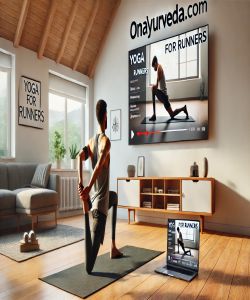
1. Overview of Yoga for Runners
Yoga for Runners is a non-negotiable, strategic discipline engineered to fortify the modern athlete against the substantial physical and mental stressors inherent in running. It is not a generic wellness practice but a highly specialised system of physical postures, breath control, and mental conditioning, meticulously adapted to address the specific biomechanical demands and physiological imbalances caused by repetitive, high-impact motion. This targeted intervention moves far beyond rudimentary stretching, systematically dismantling the root causes of common running ailments by focusing on enhancing flexibility in chronically tight muscle groups such as the hamstrings, hip flexors, and quadriceps, while simultaneously building formidable strength in the core, glutes, and stabilising muscles of the lower body. The practice directly confronts the deficits created by a runner's predominantly sagittal plane movement, introducing multi-planar motions that restore balanced muscular development and improve joint mobility. Furthermore, its emphasis on pranayama, or controlled breathing, translates directly into improved respiratory efficiency and endurance, providing a tangible competitive advantage. The mental component is equally critical, cultivating a state of focused awareness and resilience that enables the runner to push through performance plateaus and manage the psychological rigours of training and competition. In essence, Yoga for Runners is an indispensable component of any serious runner's regimen, serving as a powerful tool for injury prevention, performance optimisation, and accelerated recovery. Its integration is not an option but a strategic imperative for achieving athletic longevity and peak potential. To neglect this discipline is to wilfully expose oneself to preventable injury and to operate at a fraction of one’s true capacity. It is the architectural support system that ensures the runner’s body can withstand and adapt to the relentless demands placed upon it, transforming a practitioner from a mere participant into a durable, efficient, and mentally fortified athlete.
2. What is Yoga for Runners?
Yoga for Runners is a precise, functional, and highly targeted application of yogic principles, specifically repurposed to counteract the physical imbalances and repetitive strain patterns endemic to running. It fundamentally diverges from generalised yoga classes by excising esoteric elements and focusing with clinical precision on the anatomical and physiological needs of the runner. The practice is constructed around a core objective: to enhance performance, mitigate injury risk, and expedite recovery through a bespoke combination of asana (physical postures), pranayama (breath control), and dhyana (meditative focus). It is a corrective discipline designed to restore musculoskeletal equilibrium. Running, by its nature, shortens and tightens key muscle groups while leaving others underdeveloped; this practice systematically addresses these disparities.
The core components of this specialised discipline can be delineated as follows:
- Targeted Flexibility and Mobility: Unlike generic stretching, the postures are selected to specifically lengthen the muscles most constricted by running, including the hamstrings, hip flexors, quadriceps, calves, and iliotibial band. The focus is on creating functional range of motion, not hypermobility, ensuring joints are both flexible and stable.
- Functional Strength and Stabilisation: The practice places immense emphasis on building strength in the body's core musculature—the abdominals, obliques, and lower back—as well as the glutes and smaller stabilising muscles around the hips and ankles. A fortified core provides the foundation for an efficient running gait and robust posture, reducing energy leakage and preventing compensatory injuries.
- Neuromuscular Re-education: It cultivates heightened proprioception, the body’s awareness of its position in space. This enhanced mind-body connection allows a runner to identify and correct subtle inefficiencies in their form, leading to improved running economy and a more powerful stride.
- Respiratory Optimisation: Through dedicated breathwork, runners learn to maximise lung capacity and control their breathing patterns under physical stress. This translates directly to improved stamina, a lower heart rate, and greater control during high-intensity efforts.
3. Who Needs Yoga for Runners?
-
The Endurance Runner: Marathon and ultramarathon runners who subject their bodies to relentless, high-volume training. They require this discipline to counteract extreme muscular tightness, prevent overuse injuries such as IT band syndrome and plantar fasciitis, and accelerate recovery between long runs.
-
The Competitive Sprinter: Athletes focused on explosive power and speed who develop exceptionally tight and powerful hamstrings, quadriceps, and hip flexors. They need targeted yoga to maintain optimal muscle length and joint mobility, crucial for generating maximum force and preventing career-ending muscle tears.
-
The Recreational Jogger: Individuals who run for fitness and well-being but often lack formal coaching on form and injury prevention. This group needs the practice to correct postural imbalances, build foundational core strength, and learn sustainable habits that prevent the common aches and pains that derail consistency.
-
The Injury-Prone Athlete: Runners with a history of recurring injuries, such as runner's knee, shin splints, or Achilles tendinopathy. They require this practice as a rehabilitative and pre-habilitative tool to address the underlying biomechanical faults and muscular imbalances that are the root cause of their issues.
-
The Desk-Bound Runner: Individuals who spend a significant portion of their day seated, leading to chronically shortened hip flexors and a weakened posterior chain. For them, this practice is non-negotiable to reverse the postural damage of a sedentary job, which is severely exacerbated by the impact of running.
-
The Ageing Athlete: Runners over the age of forty who experience a natural decline in flexibility, muscle mass, and recovery capacity. This discipline is essential for maintaining joint health, preserving a functional range of motion, and ensuring they can continue running safely and effectively for many more years.
-
The Performance-Focused Runner: Any runner seeking a competitive edge. This practice offers quantifiable improvements in running economy, respiratory efficiency, and mental focus, providing the critical one-percent gains that differentiate good performance from elite performance.
4. Origins and Evolution of Yoga for Runners
The synthesis of yoga and running is a modern phenomenon, born from the convergence of ancient contemplative practice and contemporary sports science. The origins of yoga itself are deeply rooted in ancient Indian philosophy, where its primary purpose was spiritual enlightenment and the harmonisation of mind and body, with the physical postures (asanas) being just one component of a much broader system. For millennia, its application remained largely within this spiritual and therapeutic context, far removed from the world of athletic performance enhancement. The physical demands and goals of a competitive runner were antithetical to the introspective, non-competitive ethos of traditional yoga.
The evolution towards a specialised "Yoga for Runners" began in the latter half of the twentieth century, particularly in the West, as yoga gained mainstream acceptance as a form of physical fitness. During this period, pioneering athletes and coaches began to explore its potential benefits beyond general wellness. Runners, perpetually searching for methods to prevent injury and gain a competitive edge, started to informally incorporate basic yoga postures into their stretching routines. They discovered that certain poses effectively targeted the chronic tightness in their hamstrings and hips. However, this early adoption was often haphazard, borrowing poses from general classes without a systematic understanding of a runner's specific biomechanical needs. The practice was seen as a supplementary, almost remedial, activity rather than an integral part of a training architecture.
The true formalisation of the discipline occurred more recently, driven by a new generation of instructors who possessed a dual expertise in both yoga and sports science. These specialists deconstructed the practice, stripping away non-essential elements and re-engineering it with a singular focus on the runner's body. They analysed the running gait, identified common points of failure and imbalance, and curated specific sequences of asanas designed to counteract these issues with clinical precision. This modern iteration integrates principles of kinesiology, anatomy, and physiology, transforming the practice from a simple stretching routine into a sophisticated system for building functional strength, improving neuromuscular control, and optimising respiratory function. It is no longer just yoga for runners; it is a discipline that has been fundamentally rebuilt from the ground up to serve the runner’s unique and demanding objectives.
5. Types of Yoga for Runners
-
Vinyasa Yoga: This dynamic style synchronises movement with breath, creating a continuous, flowing sequence of postures. For runners, Vinyasa is exceptionally effective as a form of active recovery and cross-training. It builds cardiovascular endurance, enhances muscular strength in a functional range of motion, and improves focus by demanding constant presence. The flowing nature mimics the continuous effort of running, training the body and mind to remain steady under sustained exertion. It is best utilised on non-running days to build heat and full-body strength without the high impact.
-
Hatha Yoga: Hatha serves as the foundational style, emphasising precise alignment and holding static postures for several breaths. This slower pace is critical for runners, as it provides the necessary time to work deeply into specific muscle groups and cultivate acute body awareness. It allows for the meticulous correction of postural habits and muscular imbalances. Hatha is the ideal format for learning the fundamental poses that target the hamstrings, hips, and quadriceps, ensuring they are executed with absolute correctness and safety.
-
Yin Yoga: This is a passive, restorative practice where floor-based poses are held for extended periods, typically three to five minutes or longer. Yin targets the deep connective tissues—the ligaments, bones, and joints—which are subjected to immense stress during running. By holding poses for prolonged durations, it facilitates a profound release of chronic tension, particularly around the hip joints and sacrum. For runners, Yin is not a form of stretching muscles but of stressing fascia to improve long-term flexibility and joint health. It is an essential practice for deep recovery and injury prevention.
-
Restorative Yoga: The primary objective of Restorative Yoga is profound relaxation and nervous system regulation. This practice utilises extensive props such as bolsters, blocks, and blankets to completely support the body in gentle, comfortable poses. It is an indispensable tool for runners during periods of intense training or tapering before a race. By activating the parasympathetic nervous system, it dramatically accelerates physical and mental recovery, reduces cortisol levels, and improves sleep quality, ensuring the athlete is in an optimal state to adapt and perform.
6. Benefits of Yoga for Runners
- Dramatically Increased Muscular Flexibility: Systematically lengthens and releases tension in chronically tight muscle groups essential for an efficient running stride, including the hamstrings, hip flexors, quadriceps, and calves.
- Enhanced Joint Mobility and Health: Improves the functional range of motion in key joints, particularly the hips, knees, and ankles, reducing stiffness and mitigating the risk of degenerative conditions caused by high-impact repetition.
- Fortified Core Strength and Stability: Develops profound strength in the entire core musculature, providing the essential foundation for a stable pelvis and an upright, efficient running posture, thereby reducing energy waste.
- Improved Balance and Proprioception: Cultivates a heightened awareness of the body's position in space, leading to superior balance and neuromuscular control, which is critical for navigating uneven terrain and preventing falls or ankle rolls.
- Optimised Respiratory Efficiency: Trains the runner to utilise full lung capacity through controlled breathing techniques (pranayama), enhancing oxygen uptake and carbon dioxide expulsion, which directly translates to increased endurance and stamina.
- Accelerated Post-Run Recovery: Facilitates faster physiological recovery by increasing blood flow to fatigued muscles, aiding in the removal of metabolic waste products, and down-regulating the nervous system to promote deep rest and tissue repair.
- Significant Reduction in Injury Risk: Proactively addresses and corrects the common muscular imbalances and biomechanical inefficiencies that are the root cause of prevalent running injuries like IT band syndrome, runner’s knee, and plantar fasciitis.
- Heightened Mental Focus and Resilience: Develops mental fortitude, concentration, and the ability to remain calm under physical stress, enabling the runner to push through discomfort, manage race-day anxiety, and maintain strategic focus.
- Corrected Postural Misalignments: Actively counteracts poor posture developed from running and other lifestyle factors (e.g., sitting), realigning the spine and pelvis for a more economical and powerful running form.
- Greater Running Economy: By integrating all the above benefits—improved flexibility, strength, posture, and breath control—the body learns to move more efficiently, expending less energy at any given pace.
7. Core Principles and Practices of Yoga for Runners
-
Clinical Precision in Alignment (Asana): The execution of every posture must be precise and purposeful. This is not about achieving an aesthetic shape but about biomechanically targeting specific muscle groups and fascial lines relevant to the running gait. For instance, in a Low Lunge (Anjaneyasana), the emphasis is on achieving a deep, targeted stretch of the psoas and hip flexors, requiring meticulous alignment of the hips and pelvis, not simply sinking into the pose. Each posture is a surgical tool used to deconstruct and rebuild the runner's physique.
-
Breath as the Engine (Pranayama): The breath is the non-negotiable anchor for the entire practice. Every movement is synchronised with either an inhalation or an exhalation. This conscious control of breath serves two functions: firstly, it maximises oxygenation and calms the autonomic nervous system, facilitating deeper muscular release and faster recovery. Secondly, it trains the runner to maintain respiratory control under physical duress, a skill that translates directly to improved endurance and a lower perceived effort during runs.
-
Cultivation of Proprioceptive Acuity: The practice demands an unwavering, internal focus on the body's positioning and sensations. This heightened body awareness, or proprioception, is a critical skill for any runner. It enables the athlete to detect subtle imbalances, asymmetries, or weaknesses in their own body before they manifest as injuries. This principle transforms the practice from a mere physical exercise into a diagnostic tool for identifying and correcting inefficiencies in running form.
-
Balance of Effort and Surrender (Sthira and Sukha): This core yogic principle is paramount. The runner must apply disciplined effort (Sthira) to hold challenging postures and build strength, but this must be balanced with a capacity to surrender (Sukha) and release into deep stretches. A runner’s mindset is often geared towards pushing through pain; this practice re-educates the athlete to distinguish between the productive discomfort of a stretch and the injurious signal of sharp pain, fostering a more intelligent and sustainable approach to training.
-
Unwavering Consistency Over Intensity: The benefits of this practice are cumulative and are realised only through disciplined, regular application. A single, intense session is of negligible value compared to a consistent regimen of shorter, targeted practices integrated throughout the training week. The principle is to make yoga an indissoluble part of the runner’s routine, akin to hydration or nutrition, ensuring its effects are continuously reinforcing and protective.
8. Online Yoga for Runners
- Unrivalled Scheduling Autonomy: The online format eradicates the constraints of fixed studio timetables. A runner can integrate a session precisely where it is most effective in their training schedule—be it a dynamic pre-run warm-up at dawn, a comprehensive post-long-run recovery session, or a restorative practice late at night. This flexibility is not a convenience; it is a strategic advantage that ensures practice is never compromised by logistical conflicts.
- Geographically Unrestricted Access to Specialists: An online platform provides access to a global pool of elite instructors who specialise exclusively in yoga for runners. Athletes are no longer limited to the generalist teachers available in their immediate vicinity. They can select a practitioner whose expertise in running biomechanics and injury prevention is verifiably superior, ensuring the instruction received is of the highest possible calibre and relevance.
- Controlled, Repeatable, and Bespoke Practice: The digital medium allows the user to pause, rewind, and repeat instructions until a pose is mastered with perfect alignment. This capacity for meticulous self-correction is often absent in a fast-paced group class. Furthermore, vast libraries of content allow runners to select sessions that target their specific, immediate needs—whether it is releasing tight hips after a hill session or strengthening glutes on a rest day.
- Creation of a Distraction-Free, Focused Environment: Practising in a private space eliminates the social pressures and distractions inherent in a group studio setting. This fosters a deeper internal focus, allowing the runner to concentrate fully on proprioceptive feedback and the subtle sensations within their own body. This heightened introspection is critical for identifying and correcting personal imbalances without external comparison or ego.
- Substantial Cost-Effectiveness and Resource Efficiency: Online subscriptions or programmes typically represent a significantly lower financial investment than recurring studio memberships. Moreover, it eliminates travel time and associated costs, maximising the efficiency of a runner's most valuable and finite resource: time. This allows for greater investment in other critical areas of training and recovery.
9. Yoga for Runners Techniques
This sequence is engineered for post-run recovery, specifically targeting the posterior chain and hips. Execute each step with precision and control.
-
Downward-Facing Dog (Adho Mukha Svanasana): Begin on all fours. On an exhalation, lift the hips high, forming an inverted 'V' shape with the body. Keep the hands shoulder-width apart, fingers spread wide, and press firmly into the palms. The feet should be hip-width apart. Actively press the chest towards the thighs and the heels towards the floor, even if they do not touch. This creates a full-body stretch, particularly lengthening the hamstrings and calves. Hold for ten deep, controlled breaths, 'pedalling' the feet to deepen the calf stretch.
-
Low Lunge (Anjaneyasana): From Downward-Facing Dog, step the right foot forward between the hands. Lower the left knee to the mat, ensuring the right knee is stacked directly above the right ankle, forming a 90-degree angle. Place hands on the front thigh or raise them overhead. Actively press the hips forward and down to isolate a deep stretch in the left hip flexor (psoas muscle). Maintain a strong core to protect the lower back. Hold for five to eight breaths.
-
Half Splits (Ardha Hanumanasana): From the Low Lunge, shift the hips back over the left knee, straightening the right leg. Flex the right foot, pulling the toes back towards the shin. The right heel remains on the mat. Hinge forward from the hips, maintaining a long, straight spine, until a profound stretch is felt in the right hamstring. Do not round the back. Place hands on the mat or on blocks for support. Hold for five to eight deep breaths.
-
Repeat Steps 2 and 3 on the Opposite Side: Transition back through Downward-Facing Dog. Step the left foot forward and repeat the Low Lunge and Half Splits sequence, meticulously targeting the right hip flexor and left hamstring.
-
Pigeon Pose (Eka Pada Rajakapotasana): From Downward-Facing Dog, bring the right knee forward towards the right wrist. Angle the right shin across the top of the mat. Extend the left leg straight back. Ensure the hips are level and square to the front. Fold forward over the front leg to the degree that a deep stretch is felt in the outer right hip (gluteus medius and piriformis). Support the torso with forearms or a bolster. Hold for ten or more breaths, breathing into the sensation. Repeat on the left side.
10. Yoga for Runners for Adults
The application of Yoga for Runners is not merely beneficial for the adult athlete; it is an absolute necessity for ensuring longevity and sustained performance in the sport. As the body matures, it undergoes physiological changes that running can exacerbate if left unmanaged. A natural decline in tissue elasticity, reduced joint lubrication, and an accumulation of muscular imbalances from years of repetitive motion and lifestyle habits make the adult runner significantly more susceptible to injury. This discipline serves as a potent, targeted countermeasure to this process. It systematically restores flexibility to muscles that have become chronically shortened, enhances mobility in joints that are stiffening, and rebuilds the critical core and stabiliser strength required to maintain efficient, safe running form. For the adult runner, this is not a supplementary 'stretching' session but a strategic form of physical maintenance and re-calibration. It directly addresses issues such as lower back pain stemming from tight hip flexors—a common affliction for those who combine running with sedentary desk work—and strengthens the gluteal muscles, which are fundamental for powerful, injury-free propulsion. Furthermore, the practice’s emphasis on proprioception and mindfulness provides the mature athlete with a more intelligent and intuitive understanding of their body’s limits and capabilities. This allows for smarter training decisions, preventing the ego-driven errors that often lead to sidelining injuries. In essence, for the adult runner, this discipline is the critical factor that distinguishes a short, injury-plagued running hobby from a long, healthy, and continuously improving athletic pursuit. It is the architectural framework that supports the structure against the inevitable stresses of time and mileage. It is indispensable.
11. Total Duration of Online Yoga for Runners
The optimal and professionally prescribed total duration for a comprehensive online Yoga for Runners session is exactly 1 hr. This specific timeframe is not arbitrary but is methodically structured to ensure maximum physiological benefit without inducing excessive fatigue that could compromise a concurrent running schedule. A session of 1 hr allows for a complete and unhurried progression through all essential phases of a targeted practice. It commences with a dedicated 5-10 minute period for centring and gentle warm-up movements, designed to increase blood flow to the muscles and prepare the joints for more demanding work. The core of the session, lasting approximately 40 minutes, is dedicated to the main sequence of asanas. This segment is long enough to incorporate a balanced combination of dynamic flows that build functional strength and held static postures that work deeply into chronically tight areas like the hips, hamstrings, and thoracic spine. This duration provides sufficient time to address all key muscle groups without rushing, ensuring that each posture is held long enough to elicit a genuine neuromuscular release. The final 10-15 minutes are reserved for a crucial cool-down period, which includes deeper, more passive stretches, and concludes with Savasana (Corpse Pose) for nervous system regulation and integration. This concluding phase is non-negotiable for facilitating recovery and absorbing the full benefits of the practice. A duration shorter than 1 hr risks becoming superficial, while a significantly longer session can be counterproductive for an athlete already managing a high training load. Therefore, the 1 hr structure represents the gold standard for efficacy and sustainable integration.
12. Things to Consider with Yoga for Runners
When integrating Yoga for Runners into a training regimen, several critical factors must be rigorously considered to ensure efficacy and prevent unintended harm. First and foremost is the imperative of selecting a qualified instructor. It is insufficient for an instructor to simply be certified in yoga; they must possess and demonstrate a profound, specialised understanding of running biomechanics, common injury patterns, and the specific physiological demands of the sport. A generalist yoga teacher may inadvertently lead a runner into poses or alignment cues that exacerbate existing imbalances. Secondly, the athlete must approach the practice with an attitude of somatic intelligence, not competitive ego. The goal is not to achieve the deepest possible expression of a pose but to find the optimal position that provides a productive stretch or challenge without compromising joint integrity. A runner's mindset, conditioned to push through discomfort, must be recalibrated to differentiate between the therapeutic stress of a stretch and the sharp, warning signal of potential injury. Thirdly, the timing and intensity of the practice must be strategically synchronised with the running schedule. A dynamic, strengthening session is inappropriate immediately before a long run, just as an intense, deep-stretching session is ill-advised on already fatigued muscles post-race. The practice must complement training, not conflict with it. Finally, it must be understood that this discipline is a potent component of a holistic training plan, but it is not a panacea. It does not replace the need for appropriate strength training, proper nutrition, adequate rest, or professional medical consultation for persistent injuries.
13. Effectiveness of Yoga for Runners
The effectiveness of Yoga for Runners, when practised with discipline and precision, is unequivocal and empirically demonstrable through both qualitative and quantitative improvements in athletic performance. Its efficacy is not a matter of subjective belief but a direct consequence of its targeted physiological and neurological interventions. By systematically increasing the functional range of motion in the hips, hamstrings, and ankles, the practice directly enhances stride length and efficiency, contributing to a measurable improvement in running economy. This means the runner expends less energy to maintain a given pace, a critical factor in endurance events. Furthermore, its relentless focus on building core and gluteal strength provides a more stable platform for force generation, reducing torsional stress on the spine and preventing energy leaks that compromise power output. The practice’s most significant impact lies in its proven capacity for injury mitigation. By correcting the muscular imbalances and postural deviations that are the root cause of conditions such as patellofemoral pain syndrome, IT band friction syndrome, and Achilles tendinopathy, it functions as a powerful pre-habilitative tool. The improved proprioception and body awareness cultivated during practice translate into better running form and a quicker reaction to potentially injurious movements on the road or trail. The documented benefits extend to respiratory function, with pranayama techniques enhancing V̇O2 max and lactate threshold. Psychologically, the discipline forges a mentally resilient athlete, better equipped to handle the discomfort of high-intensity training and the pressures of competition. Its effectiveness is, therefore, a multi-faceted and undeniable reality for any runner committed to its principles.
14. Preferred Cautions During Yoga for Runners
Utmost caution must be exercised with an uncompromising and disciplined mindset throughout every session of Yoga for Runners to prevent the very injuries the practice seeks to mitigate. The runner’s inherent tendency to push through pain and strive for maximal effort is a significant liability in this context and must be aggressively suppressed. The primary directive is to never force a posture. Any sensation of sharp, shooting, or electric pain is an absolute and immediate signal to retreat from the position. This is particularly critical in vulnerable areas such as the knee joint, the sacroiliac joint, and the hamstring insertions. It is imperative to distinguish between the dull, productive ache of a muscle lengthening and the sharp, damaging signal of a joint or tendon under duress. Runners with pre-existing injuries must approach the practice with extreme vigilance, modifying poses extensively and avoiding any movement that replicates the mechanism of their injury. The use of props, such as blocks and straps, is not optional or remedial; it is a mandatory component of an intelligent practice, ensuring proper alignment and preventing overstretching by bringing the floor to the body. Furthermore, one must be hyper-aware of the temptation to compete, either with others in a class or with a preconceived notion of flexibility. Hypermobility is not the goal; functional, stable range of motion is. Overstretching ligaments and tendons can lead to joint instability, which is profoundly detrimental to a high-impact athlete. Therefore, a conservative, analytical, and internally-focused approach is not merely preferred; it is the only acceptable standard of execution.
15. Yoga for Runners Course Outline
-
Module 1: Foundational Principles and Runner-Specific Alignment
- Core Concepts: Understanding the 'Why' behind the practice.
- Key Postures: Deconstruction of foundational poses (Downward-Facing Dog, Lunge variations, Warrior series) with a clinical focus on alignment for a runner’s body.
- Breathwork (Pranayama): Introduction to Ujjayi and diaphragmatic breathing for endurance.
-
Module 2: The Posterior Chain – Unlocking the Hamstrings and Calves
- Anatomy Focus: In-depth look at the hamstring, calf, and Achilles tendon complex.
- Targeted Asanas: Sequences specifically designed to safely and effectively lengthen the entire posterior chain (e.g., Half Splits, Pyramid Pose, Reclining Hand-to-Big-Toe).
- Prop Usage: Mandatory use of straps and blocks to ensure safe and effective stretching.
-
Module 3: The Engine Room – Mobilising the Hips and Glutes
- Biomechanics Focus: Understanding the role of the hip flexors, gluteal muscles, and external rotators in the running gait.
- Hip-Opening Sequence: A comprehensive flow including Pigeon Pose, Lizard Pose, and Fire Log Pose to increase hip mobility.
- Glute Activation: Poses designed to strengthen and activate dormant gluteal muscles (e.g., Bridge Pose, Locust Pose).
-
Module 4: Core Stabilisation and Postural Integrity
- Core Anatomy: Defining the 'core' beyond the abdominals to include the obliques, back, and pelvic floor.
- Strengthening Poses: A series of asanas focused on building deep core strength for improved running form and injury prevention (e.g., Plank variations, Boat Pose).
- Postural Correction: Techniques to address upper body rounding and forward head posture.
-
Module 5: Dynamic Application and Pre-Run Activation
- Vinyasa for Runners: Linking breath to movement in dynamic, flowing sequences that build heat and functional strength.
- Pre-Run Routine: A specific, short sequence designed to activate key running muscles and prime the body for a run.
- Balance and Proprioception: Poses to challenge and improve stability (e.g., Tree Pose, Eagle Pose).
-
Module 6: Restorative Practices and Advanced Recovery
- Yin and Restorative Yoga: Introduction to long-held, passive poses for deep fascial release and nervous system regulation.
- Post-Long-Run Sequence: A gentle, prop-supported routine to accelerate recovery and reduce inflammation.
- Mindfulness and Integration: Techniques for mental recovery and integrating the practice into a holistic training plan.
16. Detailed Objectives with Timeline of Yoga for Runners
-
Weeks 1-2: Foundational Mastery and Habit Formation.
- Objective: To establish a consistent practice schedule of a minimum of three sessions per week. The athlete will master the correct alignment in five foundational postures (e.g., Downward-Facing Dog, Low Lunge, Warrior II, Bridge, Pigeon) and demonstrate proficient use of diaphragmatic breathing throughout each session. The primary outcome is the establishment of a disciplined routine and neuromuscular familiarity with core movements.
-
Weeks 3-4: Measurable Flexibility Gains and Proprioceptive Awareness.
- Objective: To demonstrate a quantifiable increase in hamstring and hip flexor flexibility, measured through improved depth in poses like Half Splits and Low Lunge. The runner will be able to articulate a heightened sense of body awareness, identifying personal areas of tightness and asymmetry during both practice and runs. The focus shifts from learning poses to using them as diagnostic tools.
-
Weeks 5-6: Core Strength Integration and Postural Correction.
- Objective: To hold a standard Plank Pose for a designated duration with impeccable form and to integrate core engagement cues into all standing and balancing postures. The runner will report a tangible improvement in their running posture, feeling 'taller' and more stable, particularly during the latter stages of a run when fatigue typically compromises form.
-
Weeks 7-8: Dynamic Application and Performance Enhancement.
- Objective: To fluently execute a 15-minute dynamic Vinyasa sequence designed for pre-run activation. The athlete will report subjective and/or objective improvements in running performance, such as a lower perceived effort at a consistent pace, reduced muscle soreness post-run, or faster recovery times between hard training sessions.
-
Post-Course (Ongoing): Autonomous and Intuitive Practice.
- Objective: The athlete will autonomously adapt and modify their yoga practice to suit their specific needs within a given training cycle. They will intuitively select appropriate sequences for pre-run activation, post-run recovery, or general maintenance, demonstrating a complete integration of the discipline as an indispensable component of their athletic life. The practice will have transitioned from a structured course to a self-sufficient skill set.
17. Requirements for Taking Online Yoga for Runners
-
Uninterrupted High-Speed Internet Connectivity: A stable and robust broadband connection is non-negotiable. Any buffering, lagging, or loss of signal compromises the integrity of the instruction and breaks the necessary state of focused concentration, rendering the session ineffective.
-
Adequate Digital Interface: A device with a screen large enough to clearly view the instructor’s demonstrations from a distance is required. A laptop, tablet, or television screen is acceptable; a small mobile phone is wholly inadequate as it prevents the user from observing critical alignment details while in a posture. The device must also possess clear audio output.
-
A Dedicated and Uncluttered Practice Space: The user must allocate a specific, private area free from all domestic and professional distractions. The space must be large enough to accommodate the full wingspan of the arms and length of the body on the mat without obstruction, allowing for complete freedom of movement.
-
A Professional-Grade Yoga Mat: A high-quality, non-slip yoga mat is a mandatory piece of equipment. It provides the essential grip for stability in standing and balancing postures and offers necessary cushioning for the joints in floor-based poses. Inferior or inappropriate surfaces are a safety hazard.
-
A Complete Set of Standard Yoga Props: The use of props is not optional. The following are required for safe and effective practice: two dense foam or cork yoga blocks, a yoga strap (or non-elastic belt), and at least one firm bolster or several dense blankets. These tools are essential for supporting the body, modifying postures, and ensuring correct biomechanical alignment.
-
Absolute Commitment and Self-Discipline: The online environment demands a higher level of personal accountability than an in-person class. The user must possess the unwavering discipline to attend scheduled sessions without fail, to remain fully engaged without external supervision, and to honestly assess their own physical limits without the direct intervention of an instructor.
18. Things to Keep in Mind Before Starting Online Yoga for Runners
Before commencing an online Yoga for Runners programme, it is imperative to adopt a mindset of rigorous self-discipline and personal responsibility, as the remote format fundamentally shifts the onus of a safe and effective practice onto the individual. You must first create a sanctuary for your practice—a designated physical space that is completely free from the interruptions and distractions of daily life. This environment is non-negotiable for achieving the mental focus required. Secondly, you are solely responsible for listening to your body's feedback. Without an instructor present to provide hands-on adjustments, you must cultivate an acute sense of self-awareness, learning to distinguish between productive muscular engagement and the warning signs of potential injury. The temptation to push beyond your limits to match an on-screen demonstration must be actively resisted. Acknowledge that your anatomical structure is unique. Thirdly, commit to the process with unwavering consistency. The benefits of this practice are cumulative and will not manifest from sporadic or half-hearted participation. You must schedule your online sessions with the same gravity as your most important runs and adhere to that schedule without compromise. Finally, ensure you have procured all the necessary equipment in advance. Entering a session unprepared without the requisite mat and props is not only unprofessional but also unsafe, and it demonstrates a lack of serious commitment to the discipline. Your success in this domain is directly proportional to the discipline and respect you bring to it.
19. Qualifications Required to Perform Yoga for Runners
The instruction of Yoga for Runners is a highly specialised field that demands a level of expertise far exceeding that of a standard yoga teacher. It is a technical discipline requiring a sophisticated integration of yogic pedagogy and sports science. To be considered qualified, an instructor must possess a specific and verifiable set of credentials that demonstrate a comprehensive understanding of both the practice of yoga and the unique biomechanical and physiological profile of a runner. The baseline expectation is a foundational certification, but this alone is profoundly insufficient. The instructor’s qualifications must be multi-layered and robust, indicating a deep commitment to this specific athletic niche.
A non-negotiable and hierarchical list of required qualifications includes:
- RYT-200 or Higher Yoga Alliance Certification: This is the absolute minimum credential, establishing a basic proficiency in yoga instruction, ethics, and anatomy. However, it serves only as a starting point and does not, in itself, qualify an individual to teach runners.
- Advanced, Specialised Certification in Yoga for Athletes or Sports Yoga: This is the critical differentiator. The instructor must have completed an advanced training programme focused specifically on applying yoga principles to athletic populations. This training should cover topics such as sports-specific anatomy, injury prevention and management, and the periodisation of practice within an athlete’s training cycle.
- Demonstrable, In-Depth Knowledge of Anatomy, Kinesiology, and Running Biomechanics: The instructor must be able to articulate with precision the function of the kinetic chain in the running gait, identify common muscular imbalances (e.g., weak glutes, tight hip flexors), and explain how specific asanas directly address these issues. This knowledge must be practical and applicable, not merely academic.
- Significant and Verifiable Experience Working Directly with Runners: A qualified instructor will have a proven track record of successfully training runners of various levels, from recreational joggers to elite competitors. This experience ensures they understand the culture, language, and common challenges of the running community.
20. Online Vs Offline/Onsite Yoga for Runners
Online
The online modality for Yoga for Runners is defined by autonomy, accessibility, and specialisation. Its primary advantage is the complete eradication of geographical and scheduling constraints. An athlete can access elite-level instructors who specialise exclusively in running biomechanics, regardless of their physical location. This provides an unparalleled choice of high-calibre instruction that is simply unavailable in most local markets. The format grants the runner absolute control over their schedule, allowing for the precise integration of yoga sessions into a complex training plan without compromise. Practice can be undertaken at any time, in any place with a stable internet connection. Furthermore, the digital medium facilitates a highly focused, internalised practice. In the privacy of one's own space, free from the social dynamics and potential for comparison inherent in a group setting, the runner can concentrate entirely on their own physical sensations and alignment. The ability to pause, rewind, and review instruction allows for a meticulous and self-paced approach to mastering technique. However, this autonomy demands a high degree of self-discipline, motivation, and an intelligent awareness of one's own physical limits, as there is no instructor present for direct, hands-on correction.
Offline/Onsite
The offline, or onsite, experience is characterised by direct instructor feedback, communal energy, and a structured environment. The most significant benefit of an in-person class is the ability of a skilled instructor to provide immediate, tactile adjustments and personalised verbal cues. This hands-on guidance can be invaluable for correcting subtle misalignments and ensuring postures are executed with maximum safety and efficacy, a benefit that online platforms cannot replicate. The presence of a dedicated physical space and a fixed class time enforces a routine and a level of accountability that some individuals find necessary for maintaining consistency. The shared energy of a group working together can also be highly motivating, fostering a sense of community and shared purpose. The limitations, however, are substantial. The runner is restricted to the instructors and schedules available within their immediate geographical area, which may not include a specialist in yoga for runners. Class times are rigid and may conflict with training schedules. The pace of the class is set by the instructor and may not be optimal for an individual's specific needs on a given day, and the public setting can be distracting for those who prefer a more introspective practice.
21. FAQs About Online Yoga for Runners
Question 1. Is online yoga for runners effective without hands-on adjustments?
Answer: Yes, provided the instruction is clear and the practitioner is disciplined. A skilled online instructor uses precise verbal cues to guide alignment, and the practitioner must cultivate deep body awareness to self-correct.
Question 2. I am a complete beginner at yoga. Is this suitable for me?
Answer: Yes. Many online programmes offer foundational or beginner-level courses specifically for runners, teaching the core postures and principles from the ground up.
Question 3. How often should I practice online yoga as a runner?
Answer: The optimal frequency is two to three times per week, integrated strategically around your running schedule to allow for both challenge and recovery.
Question 4. Can online yoga for runners replace my post-run stretching?
Answer: It does not replace it; it elevates it. The practice is a far more comprehensive system of mobility, stability, and recovery than simple static stretching.
Question 5. What equipment is absolutely necessary?
Answer: A non-slip yoga mat, two yoga blocks, and a yoga strap are non-negotiable for a safe and effective practice.
Question 6. I have an existing running injury. Can I still participate?
Answer: You must consult with a medical professional first. If cleared for gentle movement, you can participate but must be extremely cautious and modify poses extensively to avoid aggravating the injury.
Question 7. Will this practice make me a faster runner?
Answer: It directly contributes to factors that improve speed, such as enhanced running economy, increased power from a stronger core and glutes, and better respiratory efficiency.
Question 8. How long until I see results?
Answer: With consistent practice (2-3 times per week), most runners report feeling a noticeable improvement in flexibility and reduced muscle soreness within three to four weeks.
Question 9. Are live-streamed classes better than pre-recorded ones?
Answer: Both have merit. Live classes offer real-time energy and accountability, while pre-recorded sessions provide ultimate flexibility and the ability to pause and repeat.
Question 10. Can I do a session on the same day as a hard run?
Answer: Yes. A gentle, restorative session after a hard run can significantly aid recovery. Avoid intense, dynamic yoga on the same day as a demanding run.
Question 11. Does online yoga for runners help with mental toughness?
Answer: Absolutely. Holding challenging poses and focusing on the breath builds mental resilience and focus that is directly transferable to running.
Question 12. What if I am not flexible at all?
Answer: That is precisely why you need this practice. The aim is not to become hyper-flexible but to develop a functional range of motion for your body. Props are essential tools to assist you.
Question 13. Is there a risk of injury from practicing online without supervision?
Answer: Yes, if you practice with ego and ignore your body’s signals. The primary requirement is to listen to your body and never push into sharp pain.
Question 14. What style of yoga is best for runners?
Answer: A combination is ideal: Vinyasa for dynamic strength, Hatha for alignment, and Yin or Restorative for deep recovery.
Question 15. Can this practice help with breathing while I run?
Answer: Yes. The pranayama (breathwork) techniques train you to breathe more deeply and efficiently, a skill that directly improves running endurance.
Question 16. Do I need a quiet space to practice?
Answer: Yes. A quiet, distraction-free environment is essential for the focus required to connect with your body and breath.
22. Conclusion About Yoga for Runners
In conclusion, Yoga for Runners must be recognised not as an ancillary or alternative practice, but as an indispensable and fundamental pillar within any serious runner’s training architecture. To categorise it as mere stretching is a gross underestimation of its strategic, multi-faceted utility. This discipline systematically deconstructs the negative physiological patterns ingrained by high-impact, repetitive motion and methodically rebuilds the athlete with enhanced resilience, superior biomechanical efficiency, and fortified mental acuity. It is the essential counterbalance to the relentless forward motion of running, introducing multi-planar movements that restore muscular equilibrium and safeguard joint integrity. The practice directly addresses and corrects the root causes of the most common running-related injuries, transforming it from a reactive treatment into a proactive strategy for athletic longevity. Its proven benefits to core stability, respiratory control, and proprioceptive awareness translate into quantifiable gains in performance, delivering a competitive edge that cannot be achieved through running alone. The decision to integrate this discipline is not a matter of preference but of strategic intelligence. To neglect it is to wilfully accept a higher risk of injury, a slower rate of recovery, and a performance ceiling that is artificially low. For the runner committed to achieving their utmost potential while preserving their body for the long term, the consistent and disciplined practice of yoga is not an option; it is a command.