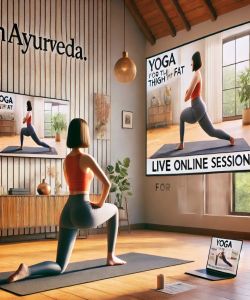
Overview of Yoga for Thigh Fat
Yoga for thigh fat constitutes a highly specialised and rigorous application of yogic science, specifically engineered to address the accumulation of adipose tissue in the upper legs. This is not a generalised, gentle practice; rather, it is a demanding physical discipline that systematically targets the musculature of the quadriceps, hamstrings, adductors, and abductors. Through a meticulously curated sequence of asanas (postures), this methodology forces the body to engage these large muscle groups, thereby increasing localised blood flow, stimulating metabolic activity, and promoting the development of lean muscle mass. The fundamental premise is that by building and toning the underlying muscles, the body’s composition in this region is fundamentally altered, leading to a firmer, more defined appearance. The practice is predicated on principles of sustained muscular tension, dynamic movement, and precise anatomical alignment to maximise physiological impact whilst mitigating the risk of injury. It necessitates an unwavering commitment from the practitioner, as results are not passively achieved but are earned through consistent, intense, and correctly executed effort. This discipline transcends mere physical exercise, integrating controlled breathing (pranayama) to oxygenate the muscles and focus the mind, ensuring that each movement is performed with deliberate intent and control. It is an unequivocal system for sculpting the lower body, demanding discipline and resilience, and is designed for individuals who are prepared to engage in a challenging programme to achieve tangible and lasting results. The approach is holistic yet uncompromising, leveraging ancient techniques for a modern, specific, and physiological objective.
What is Yoga for Thigh Fat?
Yoga for thigh fat is a targeted, systematic regimen of physical postures and dynamic sequences derived from classical Hatha and Vinyasa yoga, but adapted with the explicit objective of altering the composition of the thighs. It is fundamentally a body-sculpting discipline that leverages physiological principles to reduce subcutaneous adipose tissue and enhance muscular definition. The methodology operates on several concurrent principles. Firstly, it employs a series of powerful standing and balancing postures, such as the Warrior series (Virabhadrasana I, II, III), Chair Pose (Utkatasana), and Eagle Pose (Garudasana). These asanas demand sustained isometric contraction of the quadriceps, hamstrings, and gluteal muscles, which significantly increases metabolic demand in the target area. This sustained engagement stimulates hypertrophy, the process of muscle fibre growth, leading to a higher resting metabolic rate in the leg muscles. Secondly, the practice incorporates dynamic flows that link these powerful poses together, creating a cardiovascular element that elevates the heart rate and promotes overall energy expenditure, which is essential for fat metabolism. Thirdly, specific postures are included to stretch and lengthen the muscles of the thighs, such as Lizard Pose (Utthan Pristhasana) and Pigeon Pose (Eka Pada Rajakapotasana). This not only improves flexibility and prevents injury but also enhances circulation and lymphatic drainage, assisting in the removal of metabolic by-products. It is, therefore, not merely a collection of exercises, but a structured and intensive programme that combines strength training, endurance work, and active recovery to systematically re-engineer the physique of the lower body. It is an intense physical protocol requiring precision and dedication.
Who Needs Yoga for Thigh Fat?
Individuals who, despite engaging in general fitness programmes, find themselves unable to effect significant change in the composition of their upper legs and require a more targeted, intensive approach.
Practitioners seeking to enhance the strength, endurance, and definition of their quadriceps, hamstrings, adductors, and abductors for either aesthetic objectives or improved functional performance in athletic endeavours.
Those who require a low-impact yet high-intensity alternative to conventional leg-training exercises such as weighted squats or lunges, particularly if they are predisposed to joint strain in the knees or ankles.
Individuals committed to developing a disciplined and structured physical practice that yields measurable results in a specific bodily area, and who possess the mental fortitude to adhere to a demanding regimen.
Persons experiencing circulatory stagnation or lymphatic congestion in the lower body, who would benefit from a dynamic practice designed to stimulate fluid movement and improve tissue health.
Yoga practitioners who have mastered foundational asanas and now seek to advance their practice by applying yogic principles to a specific body-sculpting goal, moving beyond general wellness into a more specialised domain.
Adults who observe age-related changes in body composition, including a redistribution of fat to the thighs, and require a robust strategy to counteract this physiological tendency through the development of lean muscle mass.
Those who understand that spot reduction of fat is a physiological fallacy and are instead seeking a comprehensive system to build significant muscle in a target area, thereby altering its overall shape and tone.
Individuals who favour a holistic approach to fitness that integrates physical exertion with mental focus and breath control, but who are unwilling to compromise on the intensity and efficacy of their workout.
Anyone prepared to execute a rigorous and precise physical protocol, who understands that the results are directly commensurate with the level of discipline, consistency, and correct application of the techniques involved.
Origins and Evolution of Yoga for Thigh Fat
The concept of utilising yoga for a targeted aesthetic purpose such as reducing thigh fat is a distinctly modern phenomenon, born from the confluence of ancient practice and contemporary fitness culture. Classical yoga, as codified in texts like the Yoga Sutras of Patanjali, was primarily a spiritual and philosophical discipline aimed at liberating the mind. The physical postures, or asanas, were intended to prepare the body for long periods of meditation by cultivating stability, health, and stillness. The focus was internal, with any physical benefits considered secondary consequences of a deeper spiritual pursuit.
The evolution towards a more physically oriented practice began in the late 19th and early 20th centuries with the revival of Hatha yoga. Pioneers such as Tirumalai Krishnamacharya and his students, including B.K.S. Iyengar and K. Pattabhi Jois, placed a far greater emphasis on the physical rigour, precise alignment, and therapeutic potential of asanas. They developed dynamic and physically demanding styles like Ashtanga and Iyengar yoga, which laid the groundwork for the Western perception of yoga as a form of physical exercise. As yoga migrated to the West, it was inevitably shaped by the prevailing cultural values, particularly the focus on physical fitness, body image, and goal-oriented achievement.
It was within this Western context that the idea of "Yoga for Thigh Fat" emerged. This represents the hyper-specialisation of the practice, where the holistic system of yoga is deconstructed and its components are reassembled to serve a specific, often cosmetic, goal. Instructors and fitness experts began to analyse the biomechanics of various asanas, identifying those that placed the greatest load on the leg musculature. They then sequenced these postures into routines explicitly designed to maximise muscular engagement, caloric expenditure, and hypertrophy in the thighs. This evolution marks a significant departure from yoga's introspective origins, transforming it into a prescriptive tool for body sculpting. It reflects a cultural shift where an ancient discipline has been pragmatically adapted to meet the explicit demands of modern aesthetic and fitness objectives, demonstrating both its versatility and its susceptibility to reinterpretation.
Types of Yoga for Thigh Fat
Power Vinyasa Flow: This is a highly dynamic and athletic form of yoga where movement is synchronised with the breath in a continuous, flowing sequence. For targeting the thighs, these classes are structured around intensive standing and balancing series, incorporating numerous repetitions of poses like Chair Pose (Utkatasana), the Warrior series (Virabhadrasana), and Crescent Lunge (Anjaneyasana). The pace is rapid and unrelenting, designed to elevate the heart rate and build muscular endurance, forcing the thigh muscles into a state of sustained, high-intensity work.
Ashtanga-Inspired Sequences: Drawing from the rigid and powerful Ashtanga Primary Series, this type focuses on a set sequence of postures performed with immense precision and control. The emphasis on jump-backs and jump-throughs, combined with the strong standing postures held for a specific number of breaths, places a significant and consistent demand on the entire leg structure, building formidable strength and definition.
Isometric Hatha Holds: In contrast to flowing styles, this type employs long, static holds in challenging leg-focused postures. A pose like Warrior II (Virabhadrasana II) or Horse Stance (Vatayanasana) might be held for one to two minutes, creating an intense isometric contraction. This method is designed to fatigue the muscle fibres completely, stimulating hypertrophy and building deep, foundational strength in the quadriceps, adductors, and glutes.
Iyengar-Based Alignment Focus: This methodology uses props such as blocks, straps, and walls to ensure perfect anatomical alignment in leg-intensive postures. The focus is less on flow and more on precision. By using props to achieve the correct form in poses like Extended Side Angle Pose (Utthita Parsvakonasana), the practitioner can safely and effectively isolate and engage the target muscles in the thighs for extended periods, maximising their activation.
Barre and Yoga Fusion: This hybrid type incorporates principles from ballet barre conditioning, such as small, repetitive pulse movements, into traditional yoga postures. For instance, a practitioner might hold Chair Pose and perform a series of small "pulses" or lifts. This technique is ruthlessly effective at targeting smaller stabilising muscles alongside the major muscle groups of the thighs, leading to comprehensive toning and sculpting.
Benefits of Yoga for Thigh Fat
Enhanced Muscular Definition: Systematically builds and tones the quadriceps, hamstrings, adductors, and abductors, leading to a firmer, more sculpted, and visually defined appearance of the thighs.
Increased Metabolic Rate: The development of lean muscle mass in the legs, which are among the body's largest muscle groups, significantly increases the body's resting metabolic rate, promoting more efficient energy expenditure.
Improved Muscular Endurance: The practice, particularly through sustained holds and dynamic repetitions, drastically improves the capacity of the leg muscles to withstand prolonged physical exertion without fatiguing.
Greater Functional Strength: Develops practical, real-world strength in the lower body, enhancing performance in daily activities such as climbing stairs, lifting, and in other athletic pursuits.
Enhanced Flexibility and Range of Motion: Incorporates deep stretches that lengthen the major muscles and connective tissues of the hips and thighs, reducing tightness and improving overall mobility.
Improved Circulation and Lymphatic Drainage: The dynamic muscle contraction and stretching involved in the practice actively pump blood and lymphatic fluid through the lower body, aiding in detoxification and reducing fluid retention.
Low-Impact Intensity: Provides a high-intensity workout that challenges the muscles and cardiovascular system without subjecting the knee and ankle joints to the jarring impact associated with high-impact exercises like running or plyometrics.
Enhanced Proprioception and Balance: The frequent use of single-leg balancing postures fundamentally recalibrates the body's neuromuscular communication, leading to superior balance, stability, and body awareness.
Cultivation of Mental Discipline: The intensity and precision required to correctly perform and hold the challenging postures instill a high degree of mental focus, resilience, and determination.
Corrective Postural Alignment: By strengthening the foundational muscles of the legs and hips, the practice contributes to better overall posture, alleviating strain on the lower back and improving biomechanical efficiency.
Core Principles and Practices of Yoga for Thigh Fat
Precision in Alignment (Asana Sthiti): Every posture must be executed with exacting anatomical precision. This is non-negotiable. Misalignment not only exposes the joints, particularly the knees and hips, to undue strain but also fails to engage the target musculature effectively. The principle demands conscious placement of feet, angulation of knees, and engagement of the core to ensure the load is borne by the thigh muscles as intended.
Sustained Muscular Engagement (Bandha): The practice requires the practitioner to maintain active, conscious contraction of the thigh muscles throughout the postures. This is not a passive stretching exercise. It involves isometrically engaging the quadriceps, hamstrings, and adductors even in seemingly static holds, creating continuous tension that stimulates muscle adaptation and growth.
Controlled, Synchronised Breathing (Pranayama): The breath is the engine of the practice. Each movement must be synchronised with either an inhalation or an exhalation. Deep, controlled diaphragmatic breathing ensures a constant supply of oxygen to the working muscles, delaying the onset of fatigue and allowing for deeper, more sustained effort. It also serves to focus the mind, transforming the practice from mere exercise into a moving meditation.
Principle of Progressive Overload: To elicit physiological change, the body must be subjected to a stimulus greater than that to which it is accustomed. In this context, progression is achieved not by adding external weights, but by increasing the duration of holds, executing more repetitions of a dynamic sequence, or advancing to more challenging variations of the asanas. The practice must continually evolve in intensity.
Dynamic Sequencing (Vinyasa Krama): The intelligent and seamless linking of postures into a continuous flow is a core practice. This Vinyasa element introduces a cardiovascular challenge, elevating the heart rate and increasing overall energy expenditure. The transitions between poses are as important as the poses themselves, requiring strength, control, and constant engagement of the leg muscles.
Mind-Muscle Connection (Dharana): The practitioner must cultivate an intense and unwavering focus on the specific muscles being worked. This internal concentration, or Dharana, enhances neuromuscular activation, allowing for more forceful and effective contractions. The mind must be directed into the thighs, feeling the engagement, the stretch, and the exertion in every moment.
Online Yoga for Thigh Fat
Unconditional Accessibility: Online platforms eliminate all geographical and logistical barriers. A practitioner can access elite-level instruction from any location with an internet connection, removing the dependency on local studio availability. This grants access to a specialised discipline that may not be offered in one's immediate vicinity.
Absolute Practitioner Autonomy: The online format cedes complete control over the training schedule to the individual. One is not bound by a fixed studio timetable. Practice can be integrated seamlessly into any professional or personal schedule, facilitating the consistency that is imperative for achieving tangible results.
Enhanced Focus and Discretion: Practising in a private space removes the social pressures and potential distractions of a group class environment. This allows for an undiluted focus on the physical sensations, alignment, and internal experience of the practice, fostering a stronger mind-muscle connection without the concern of external judgment.
Cost-Effectiveness and Resource Efficiency: Digital programmes typically represent a more financially viable alternative to recurring studio memberships. Furthermore, they eliminate the time and expense associated with commuting. This efficient allocation of resources allows for a greater investment in the practice itself.
Unlimited Repetition and Mastery: Online content, such as pre-recorded classes, can be paused, rewound, and repeated indefinitely. This facility is invaluable for deconstructing and mastering complex postures or challenging sequences, allowing the practitioner to work on specific areas of weakness at their own pace until perfect form is achieved.
Curated Specialisation: The vast digital landscape enables individuals to select programmes that are hyper-specialised. One can find and commit to a curriculum designed exclusively for targeting the thighs, ensuring that every session is maximally efficient and perfectly aligned with their specific physiological objective.
Creation of a Controlled Environment: The practitioner has absolute authority over their practice environment. Factors such as temperature, lighting, and ambient sound can be optimised to create the ideal conditions for intense physical and mental focus, free from the compromises inherent in a shared public space.
Yoga for Thigh Fat Techniques
Chair Pose (Utkatasana) Execution:
Begin standing with feet parallel, either together or hip-width apart.
Inhale and raise the arms perpendicular to the floor, keeping them parallel with palms facing inwards.
Exhale and bend the knees, lowering the hips as if sitting back into an invisible chair.
Ensure the knees track directly over the centre of the feet and do not extend beyond the toes to protect the knee joint.
Actively draw the tailbone down and engage the core to support the lower back.
Shift the body weight into the heels and maintain an intense, sustained contraction in the quadriceps and glutes. Hold the posture for a designated number of deep, controlled breaths.
Warrior II (Virabhadrasana II) Engagement:
Step the feet wide apart, approximately one leg’s length.
Turn the right foot out 90 degrees and the left foot in slightly. Align the right heel with the arch of the left foot.
Inhale and raise the arms parallel to the floor, extending them actively out from the shoulders.
Exhale and bend the right knee until it is directly above the right ankle, with the thigh parallel to the floor.
Maintain a strong, straight back leg, pressing the outer edge of the left foot firmly into the mat.
Keep the torso centred and the shoulders relaxed. Gaze firmly over the right fingertips.
Isometrically engage the muscles of both thighs, creating opposing forces to stabilise and deepen the posture. Hold with unwavering stillness.
Goddess Pose (Utkata Konasana) Activation:
Stand with feet wide apart, turning the heels in and the toes out at a 45-degree angle.
Exhale and bend the knees deeply, lowering the hips until the thighs are as parallel to the floor as possible. Ensure knees track in the same direction as the toes.
Engage the core and maintain a long, upright spine.
Place hands on the thighs or bring them to a prayer position at the chest.
Focus on an intense contraction of the adductor (inner thigh) and quadriceps muscles. For increased intensity, perform small, controlled pulses in this position.
Yoga for Thigh Fat for Adults
The application of a targeted yoga regimen for adults necessitates a strategic and intelligent approach, acknowledging the physiological realities of the mature body. For this demographic, the practice is not merely about aesthetic enhancement but is also a critical tool for maintaining functional strength, mobility, and metabolic health. As the body ages, there is a natural tendency towards sarcopenia—the loss of muscle mass—and an increase in adipose tissue deposition. A rigorous, thigh-focused yoga practice directly counteracts these processes by stimulating muscle hypertrophy and increasing the body's resting metabolic rate. The emphasis must be on impeccable form and alignment to protect joints that may have less cartilage or pre-existing wear. The use of powerful standing and balancing postures is paramount, as these build not only muscular strength but also bone density, a crucial factor in mitigating the risk of osteoporosis. Furthermore, the discipline improves proprioception and balance, which are vital for fall prevention in later life. Adults must approach the practice with patience and a deep sense of bodily awareness, distinguishing between the productive discomfort of muscle engagement and the sharp, detrimental pain of joint strain. Modifications must be employed without ego, using props where necessary to support correct alignment. The mental component is equally critical; the focus and resilience cultivated on the mat translate into a more robust and proactive approach to managing the physical challenges of ageing. This is a formidable, non-negotiable strategy for long-term physical sovereignty.
Total Duration of Online Yoga for Thigh Fat
The total duration of an online session dedicated to this specific discipline is optimally standardised at a single, focused block of time. The established and recommended duration for a complete and effective practice is 1 hr. This timeframe is not arbitrary; it is a calculated duration designed to maximise physiological adaptation while preventing the counterproductive effects of overtraining and muscular exhaustion. A session of this length allows for a structured and comprehensive protocol, beginning with a sufficient warm-up period to increase blood flow and prepare the muscles and joints for intense work. The main body of the practice can then be dedicated to a rigorous sequence of demanding asanas, dynamic flows, and sustained holds, ensuring the target musculature is worked to the point of productive fatigue. This central phase is long enough to elevate the heart rate into an effective training zone and to trigger the metabolic processes required for both muscle building and energy expenditure. The final portion of the 1 hr session is reserved for a crucial cool-down period, incorporating deep, restorative stretching of the worked muscles to enhance flexibility, aid in the removal of metabolic by-products like lactic acid, and initiate the recovery process. A duration shorter than this compromises the ability to include all these essential components, whilst a significantly longer session risks diminishing returns, potential injury from fatigue-induced form breakdown, and elevated cortisol levels. Therefore, the 1 hr structure is a non-negotiable standard for a safe, balanced, and maximally effective online practice.
Things to Consider with Yoga for Thigh Fat
Embarking on a rigorous yoga programme specifically designed to target thigh fat necessitates a pragmatic and informed mindset. It is imperative to understand that this is a demanding physical discipline, not a passive remedy. Consistency is the absolute, non-negotiable cornerstone of success; sporadic or half-hearted efforts will yield no discernible results. A commitment to a regular, structured practice schedule must be established and adhered to without compromise. Furthermore, one must discard the notion of "spot reduction." While this practice will build significant muscle and tone in the thighs, comprehensive fat loss is a systemic process governed by overall energy balance. Therefore, the yoga regimen must be viewed as a powerful component of a larger strategy that includes sound nutritional principles and potentially other forms of cardiovascular exercise. Realistic expectations are crucial. Physiological change is a gradual process, and visible results require sustained effort over a considerable period. Impatience is the enemy of progress. Practitioners must also cultivate an acute sense of body awareness. It is essential to differentiate between the intense sensation of muscular fatigue, which is desirable, and the sharp, signalling pain of joint or ligament strain, which must be heeded immediately. Ignoring the body’s warning signals in pursuit of a rapid outcome is a direct path to injury, which will halt all progress. Finally, the selection of a qualified instructor or a well-structured programme is paramount to ensure the techniques are both safe and effective.
Effectiveness of Yoga for Thigh Fat
The effectiveness of this specialised yoga practice is unequivocal, but it is entirely conditional upon the rigour and precision of its application. Its success is not a matter of belief but a direct consequence of physiological principles. When executed with the requisite intensity, consistency, and an unwavering focus on correct anatomical alignment, the regimen forces significant adaptation in the musculature and metabolic processes of the lower body. The sustained holds and dynamic sequences place the quadriceps, hamstrings, and adductors under considerable load, stimulating micro-tears in the muscle fibres. In the subsequent recovery period, the body repairs and rebuilds these fibres stronger and denser—a process known as hypertrophy. This increase in lean muscle mass fundamentally alters the composition of the thighs, creating a firmer, more defined contour. Furthermore, muscle tissue is metabolically more active than adipose tissue; building it increases the body's resting caloric expenditure, contributing to a more favourable overall body composition. The practice also enhances circulation and lymphatic flow, which can reduce the appearance of cellulite and fluid retention. However, its effectiveness is directly proportional to the effort invested. A passive or inconsistent approach will yield negligible results. The system is potent and reliable, but it demands commitment. For the disciplined practitioner who executes the techniques correctly and adheres to a structured programme, the effectiveness of this methodology in transforming the strength and appearance of the thighs is not in question.
Preferred Cautions During Yoga for Thigh Fat
It is imperative that this intensive practice be approached with a heightened sense of caution and unwavering respect for the body's structural limitations. The primary risk lies in improper alignment, particularly concerning the knee joint. In all bent-knee postures, such as Warrior, Chair, or Goddess poses, the knee must track directly over the ankle and in the same direction as the toes. Allowing the knee to collapse inwards or extend beyond the toes places immense shearing force on the ligaments and meniscus, creating a significant risk of acute or chronic injury. This is a non-negotiable rule of engagement. Individuals with pre-existing conditions affecting the knees, hips, or lower back must exercise extreme vigilance, modifying postures as necessary and avoiding any movement that elicits sharp or unusual pain. Overexertion presents another clear danger; while the practice is designed to be challenging, pushing beyond the point of muscular fatigue to the point of structural compromise is counterproductive and hazardous. Listen to the body’s signals; muscular burn is productive, but sharp, shooting, or joint-related pain is a definitive command to cease the activity. Hydration must be maintained, as dehydration can lead to muscle cramping and a reduction in performance. Finally, one must avoid the temptation to sacrifice form for perceived depth in a posture. A shallower pose executed with perfect integrity is infinitely more beneficial and safer than a deeper pose with compromised alignment. Discipline, not ego, must govern every movement.
Yoga for Thigh Fat Course Outline
Module 1: Foundational Alignment and Muscle Activation
Introduction to the core principles of anatomical safety for the knees, hips, and ankles in standing postures.
Mastery of fundamental asanas: Mountain Pose (Tadasana), Chair Pose (Utkatasana), and basic Warrior series (Virabhadrasana I & II).
Techniques for consciously engaging the quadriceps, hamstrings, and glutes.
Introduction to synchronising breath with movement (Ujjayi Pranayama).
Module 2: Building Endurance and Static Strength
Focus on increasing the duration of holds in foundational postures.
Introduction of more challenging static poses: Crescent Lunge, Goddess Pose (Utkata Konasana), and Extended Side Angle Pose (Utthita Parsvakonasana).
Practices designed to build muscular endurance and mental fortitude.
Exploration of bandhas (body locks) to intensify core and leg engagement.
Module 3: Introduction to Dynamic Flow (Vinyasa)
Learning to link postures into seamless, flowing sequences.
Practising sun salutation variations (Surya Namaskar A & B) with a specific focus on leg strength.
Developing control and precision during transitions between asanas.
Introduction of cardiovascular challenge through continuous, breath-led movement.
Module 4: Deepening the Practice and Advanced Asanas
Exploration of advanced balancing postures that demand exceptional leg strength and stability, such as Warrior III (Virabhadrasana III) and Eagle Pose (Garudasana).
Introduction to deep hip-opening and thigh-stretching poses for flexibility and recovery.
Combining static holds and dynamic flow into complex, challenging sequences.
Techniques for maintaining focus and composure during peak physical intensity.
Module 5: Integration, Refinement, and Personalisation
Mastery of a comprehensive, full-length practice integrating all learned techniques.
Refining alignment and deepening awareness in every posture.
Guidance on how to modify the practice to continue progressive overload independently.
Developing a sustainable, long-term personal practice for ongoing maintenance and improvement.
Detailed Objectives with Timeline of Yoga for Thigh Fat
End of Week 1: Foundational Competency
The practitioner will demonstrate correct anatomical alignment in Chair Pose, Warrior I, and Warrior II without instructor correction.
They will exhibit the ability to consciously engage the quadriceps and gluteal muscles during these foundational postures.
The practitioner will have established a consistent Ujjayi breath and can synchronise it with basic movements.
End of Week 2: Endurance Threshold Increased
The practitioner will be capable of holding Chair Pose and Warrior II for a minimum of five complete, controlled breaths without compromising form.
They will demonstrate stability and correct form in newer postures such as Crescent Lunge and Goddess Pose.
An observable improvement in muscular stamina and a reduction in muscle tremor during sustained holds will be evident.
End of Week 4: Dynamic Control and Flow Mastery
The practitioner will execute a full Sun Salutation B sequence with fluid, controlled transitions that maintain muscular engagement throughout.
They will demonstrate the ability to link multiple standing postures into a short, cohesive Vinyasa flow without losing breath synchronisation.
A noticeable improvement in cardiovascular endurance during the dynamic portions of the practice will be achieved.
End of Week 6: Advanced Stability and Strength
The practitioner will achieve a stable and controlled hold in challenging single-leg balance postures, such as Warrior III, for a minimum of three breaths.
They will be able to transition into and out of complex poses like Eagle Pose with precision and minimal instability.
Measurable gains in lower body strength will be self-evident through the ability to hold poses deeper and for longer durations.
End of Week 8: Autonomous Practice and Refinement
The practitioner will possess a comprehensive understanding of the core principles and be able to self-correct minor alignment issues during practice.
They will have internalised the full sequence and can practise autonomously with confidence and precision.
The practitioner will demonstrate a visible improvement in muscular tone and definition in the thighs, alongside enhanced overall functional strength and flexibility.
Requirements for Taking Online Yoga for Thigh Fat
Uninterrupted, High-Speed Internet Connectivity: A stable and reliable internet connection is non-negotiable. Buffering or disconnection during a demanding physical sequence is not only disruptive but also potentially unsafe.
Adequate and Unobstructed Physical Space: The practitioner must secure a dedicated area for practice. This space must be large enough to extend the limbs fully in all directions without obstruction, equivalent to the full length and width of a standard yoga mat with ample clearance on all sides.
A Quality, Non-Slip Yoga Mat: This is an essential piece of equipment. The mat must provide sufficient cushioning for the joints and, most critically, a high-grip surface to prevent hands and feet from slipping during weight-bearing postures, which is fundamental for safety and correct alignment.
A Suitable Viewing Device: A laptop, tablet, or smart television with a screen large enough to clearly see the instructor's demonstrations is required. Attempting to follow complex postural alignment on a small smartphone screen is inefficient and increases the risk of error.
Commitment to Self-Discipline: The online environment lacks the external motivation of a group setting or the immediate presence of an instructor. The practitioner must possess the internal discipline to show up consistently and push themselves through challenging sequences.
A Foundational Level of Physical Health: The individual must be free from any serious medical conditions that would contraindicate intense physical exercise. It is the practitioner's responsibility to have cleared such activity with a medical professional.
Appropriate Attire: Clothing must be comfortable, stretchable, and non-restrictive, allowing for a full range of motion. It should not be so loose as to obscure the body's lines, which would hinder self-assessment of alignment.
Willingness to Be Self-Correcting: In the absence of hands-on adjustments, the practitioner must cultivate a heightened sense of proprioception and be willing to critically observe their own form, using mirrors or recording themselves if necessary, to ensure alignment integrity.
Things to Keep in Mind Before Starting Online Yoga for Thigh Fat
Before commencing an online yoga programme with this specific and intense focus, a frank self-assessment of one’s discipline and environment is imperative. The primary consideration is the absolute requirement for self-motivation. Unlike an in-person class where the instructor’s presence provides accountability, the online format places the full onus of commitment squarely on the practitioner. One must be prepared to create and adhere to a rigid practice schedule without external enforcement. Secondly, the absence of a physically present instructor for hands-on corrections demands an elevated level of body awareness and honesty. You must become your own most vigilant critic, prioritising correct, safe alignment over the superficial appearance of a pose. This may involve using a mirror or recording your sessions to analyse your form objectively. It is also crucial to establish a dedicated and sanctified practice space, free from domestic and professional distractions. Attempting to engage in a demanding physical and mental discipline in a cluttered or high-traffic area of the home will severely compromise its effectiveness. Finally, one must manage expectations regarding the learning curve. Progress will be determined by your consistency and focus, not by the mere act of watching a video. Acknowledge that you are undertaking a serious physical training regimen that demands respect, concentration, and an unwavering commitment to the integrity of the practice. This is not a passive pursuit; it is an active and demanding endeavour.
Qualifications Required to Perform Yoga for Thigh Fat
To instruct or perform Yoga for Thigh Fat at a level that is both effective and unequivocally safe, a practitioner or instructor must possess qualifications that extend far beyond a basic yoga teacher certification. The role demands a sophisticated and integrated understanding of anatomy, kinesiology, and physiology. A foundational qualification is, of course, a prerequisite, but it is insufficient. The minimum acceptable standard for an instructor would include:
Advanced Teacher Training Certification: A RYT-500 (Registered Yoga Teacher 500-hour) or an equivalent advanced certification from a reputable governing body is the baseline. This ensures a deeper understanding of asana, pranayama, and teaching methodology than a standard 200-hour course provides.
Specialised Knowledge in Anatomy and Biomechanics: The instructor must possess demonstrable, in-depth knowledge of the musculoskeletal system, particularly the biomechanics of the hip, knee, and ankle joints. This is not optional; it is a critical requirement for designing safe sequences and providing accurate alignment cues to prevent injury. A supplementary qualification in sports science, physical therapy, or kinesiology is highly desirable.
Proven Experience in Vinyasa or Power Yoga: Given the dynamic and physically demanding nature of this specialisation, the instructor must be highly experienced in teaching powerful, flow-based styles of yoga. They must be capable of structuring a class that is both challenging and physiologically sound.
Expertise in Programme Design: The ability to create a structured, progressive curriculum is essential. The instructor must understand the principles of progressive overload and be able to design a long-term programme that systematically builds strength and endurance, rather than simply leading a random assortment of difficult poses.
In essence, the required qualifications are those of a master technician of the body, who uses the tools of yoga with clinical precision to achieve a specific physiological outcome. Simply being a yoga enthusiast is not adequate; a deep, science-informed expertise is mandatory.
Online Vs Offline/Onsite Yoga for Thigh Fat
Online
The online modality for this specialised yoga practice offers unparalleled levels of convenience, autonomy, and accessibility. Practitioners are liberated from the constraints of geography and fixed studio schedules, enabling them to integrate this demanding regimen into their lives with maximum efficiency. This format fosters a high degree of self-reliance and discipline, as the onus of motivation and consistency rests entirely with the individual. It provides a private, non-judgmental environment, which can be conducive to deep focus and a heightened connection with one's own physical sensations, free from the social distractions or competitive pressures of a group setting. Furthermore, the ability to pause, rewind, and repeat instructional content allows for a meticulous and self-paced approach to mastering complex alignments and sequences. From a financial perspective, online programmes are frequently more cost-effective than studio memberships. However, the critical drawback is the absence of direct, real-time feedback and hands-on adjustments from a qualified instructor. This elevates the risk of improper alignment and potential injury, demanding that the practitioner cultivate an exceptional level of self-awareness and diligence in monitoring their own form.
Offline/Onsite
The offline, or on-site, experience provides the invaluable benefit of direct, expert supervision. An instructor present in the room can offer immediate verbal cues and physical adjustments to correct misalignment, ensuring both the safety and the efficacy of each posture. This hands-on guidance is instrumental in helping practitioners understand the subtle but critical nuances of form that are often missed when practising alone. The structured environment of a studio and the collective energy of a group class can provide a powerful source of motivation and accountability, compelling individuals to maintain their commitment and push through challenging moments. Access to a full range of props and a purpose-built space enhances the practice. The primary disadvantages are the inherent rigidity of a fixed class schedule, the time and cost associated with commuting, and potentially higher financial investment. The practitioner must adapt their schedule to that of the studio, and the public nature of the class may not be suitable for all individuals. The choice between the two is ultimately a trade-off between the autonomy and convenience of the online world and the expert guidance and community of the physical one.
FAQs About Online Yoga for Thigh Fat
Question 1. Is this practice suitable for absolute beginners?
Answer: No. This is an intensive, targeted discipline. A foundational understanding of basic yoga postures and principles is strongly recommended before attempting this specialised regimen.
Question 2. How frequently must I practise to see results?
Answer: For tangible results, a minimum of three to four dedicated sessions per week is required. Consistency is non-negotiable.
Question 3. Can this practice alone guarantee fat loss from the thighs?
Answer: No. "Spot reduction" is a physiological myth. This practice builds muscle and tones the area, which alters composition. Overall fat loss requires a comprehensive approach including sound nutrition and a consistent caloric deficit.
Question 4. What is the most critical element of the online practice?
Answer: Unwavering attention to precise anatomical alignment to maximise effectiveness and, more importantly, to prevent injury in the absence of a physical instructor.
Question 5. Will this make my thighs bigger?
Answer: Initially, as you build muscle, there may be a slight increase in circumference. However, the development of lean muscle combined with overall fat loss will ultimately lead to a firmer, more defined, and often leaner appearance.
Question 6. Do I need any special equipment?
Answer: A high-quality, non-slip yoga mat is the only essential piece of equipment. Yoga blocks may be useful for modifications.
Question 7. How is this different from just doing squats and lunges?
Answer: This is a holistic practice that integrates strength work with flexibility, balance, breath control, and mental focus, offering a more comprehensive approach to physical and mental conditioning.
Question 8. What if I have pre-existing knee problems?
Answer: You must consult a medical professional before starting. If cleared, you must be hyper-vigilant with alignment and use modifications to avoid any and all joint pain.
Question 9. How long is a typical online session?
Answer: An effective session, including warm-up and cool-down, is structured to last for one full hour.
Question 10. Can I do this practice every day?
Answer: It is not recommended. Muscles require time for recovery and repair to grow stronger. Alternating practice days with rest days or lighter activity is optimal.
Question 11. What role does breathing play?
Answer: Controlled breathing (pranayama) is fundamental. It oxygenates the working muscles, helps manage intensity, and focuses the mind, transforming the movements from simple exercise into a disciplined practice.
Question 12. Will I lose weight overall with this practice?
Answer: When combined with appropriate nutrition, the practice contributes to overall caloric expenditure and can be a powerful component of a weight-loss strategy.
Question 13. What is the best time of day to practise?
Answer: The most effective time is the time you can commit to consistently. Many find morning practice beneficial for setting a disciplined tone for the day.
Question 14. What if I can't perform a certain pose?
Answer: Use modifications. A good online programme will offer variations for different ability levels. Never force your body into a posture.
Question 15. How quickly can I expect to see visible changes?
Answer: With consistent and correct practice, you may begin to feel stronger within two to three weeks. Visible changes in muscle tone typically become apparent after six to eight weeks of dedicated effort.
Question 16. Is this practice suitable for men?
Answer: Absolutely. The principles of muscle building and toning are universal. This is a powerful leg-strengthening regimen for any gender.
Conclusion About Yoga for Thigh Fat
In conclusion, Yoga for Thigh Fat must be understood not as a gentle, restorative practice, but as a formidable and highly specialised physical discipline. It is a targeted application of yogic science, engineered with clinical precision to elicit a specific physiological response: the development of lean, strong musculature in the upper legs. Its effectiveness is not a matter of chance but is directly contingent upon the practitioner's unwavering commitment to the core principles of correct alignment, sustained muscular engagement, and, above all, relentless consistency. This methodology is an active, demanding process that fundamentally re-sculpts the lower body by building a foundation of powerful muscle, which in turn alters its composition and appearance. It is an unequivocal refutation of any passive approach to body transformation. The results are earned, not given, and are directly proportional to the integrity and intensity of the effort invested. For individuals who possess the requisite discipline and are prepared to engage in a rigorous, structured programme, this practice offers a potent and intelligent system for achieving significant, measurable, and lasting change in the strength, function, and aesthetic of the thighs. It is a testament to the adaptability of an ancient practice to meet a modern, specific objective with uncompromising efficacy.