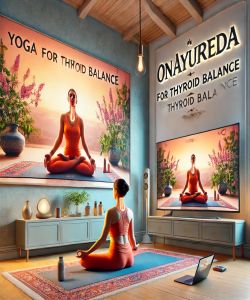
1. Overview of Yoga for Thyroid Balance
Yoga for Thyroid Balance constitutes a highly specialised and systematic application of yogic science, engineered explicitly to address and regulate the functioning of the endocrine system, with a precise focus on the thyroid gland. This is not a generalised wellness practice; it is a targeted, physiological intervention designed to restore homeostatic harmony. The methodology integrates a curated selection of asanas (postures), pranayama (breath control techniques), mudras (gestures), and dhyana (meditation), each chosen for its scientifically and traditionally understood impact on the glandular systems of the body. The core premise is that specific physical postures and breathing patterns can mechanically stimulate and massage the thyroid and parathyroid glands, enhancing blood circulation and pranic energy flow to the throat region. Concurrently, the practice works to modulate the autonomic nervous system, directly influencing the hypothalamic-pituitary-thyroid (HPT) axis, which is the master control pathway for thyroid hormone production. By systematically reducing the chronic stress response and down-regulating cortisol levels, Yoga for Thyroid Balance mitigates a primary aggravator of thyroid dysfunction. It is, therefore, a dual-pronged approach: one of direct, localised stimulation and one of systemic, neuro-endocrine regulation. This discipline demands precision, consistency, and an unwavering commitment from the practitioner. It operates on the principle that the body possesses an innate capacity for self-regulation, a capacity that can be unlocked and directed through the disciplined application of these ancient yet profoundly relevant techniques. It is a robust, proactive strategy for managing endocrine health, not a passive recreational activity. The objective is singular and clear: to leverage the potent tools of yoga to foster a state of optimal, sustained thyroid function.
2. What are Yoga for Thyroid Balance?
Yoga for Thyroid Balance is a prescriptive and therapeutic system that deploys specific yogic disciplines to normalise the function of the thyroid gland. It is a targeted protocol, distinct from general yoga practice, which systematically addresses the physiological and energetic imbalances underlying both hypothyroidism and hyperthyroidism. The practice is constructed from several integral components, each serving a deliberate function. The primary component is a selection of specific Asanas, or physical postures. These are not chosen at random but are included for their direct mechanical effect on the neck and throat region. Postures such as Sarvangasana (Shoulder Stand), Halasana (Plough Pose), and Matsyasana (Fish Pose) create compression and subsequent release in the thyroid area, a process believed to enhance vascular and lymphatic circulation, thereby improving glandular efficiency and hormonal delivery. Other postures focus on stimulating the pituitary gland, the master controller of the endocrine system. The second critical component is Pranayama, or controlled breathing techniques. Techniques like Ujjayi Pranayama (Victorious Breath), which involves a slight constriction of the throat, generate a gentle internal vibration and warmth in the laryngeal area, providing a subtle but consistent stimulus to the thyroid gland. Other practices such as Bhramari Pranayama (Bee Breath) have a profound calming effect on the entire nervous system, which is crucial for regulating the HPT axis and reducing the deleterious impact of stress on thyroid function. Thirdly, the system incorporates Dhyana (meditation) and Yoga Nidra (yogic sleep). These practices are not for mere relaxation; they are powerful tools for recalibrating the autonomic nervous system. By inducing a deep state of conscious rest, they work to lower cortisol and adrenaline levels, creating an internal environment conducive to endocrine healing and balance. Together, these elements form a cohesive, multi-faceted strategy aimed at restoring physiological equilibrium.
3. Who Needs Yoga for Thyroid Balance?
- Individuals diagnosed with hypothyroidism who are seeking a complementary, non-pharmacological modality to support their prescribed medical treatment. This practice is for those aiming to manage symptoms such as lethargy, weight gain, and metabolic sluggishness through a structured physical and physiological regimen.
- Individuals diagnosed with hyperthyroidism who require a supportive practice to manage symptoms of anxiety, restlessness, rapid heart rate, and nervous system over-stimulation. The calming and regulatory aspects of the practice are specifically indicated for this cohort.
- Persons experiencing subclinical thyroid dysfunction, where blood markers are borderline but symptoms of imbalance are present. This regimen provides a proactive and preventative strategy to restore endocrine harmony before the condition escalates to a clinically diagnosed state.
- Adults, particularly females, experiencing hormonal fluctuations related to perimenopause or menopause, as thyroid function is intrinsically linked to the broader endocrine system. The practice serves to stabilise this complex interplay of hormones.
- Individuals suffering from chronic stress, anxiety, or adrenal fatigue. Given the direct and detrimental impact of elevated cortisol on the hypothalamic-pituitary-thyroid (HPT) axis, this yoga protocol is essential for down-regulating the stress response and mitigating its effect on thyroid health.
- Those with a family history of thyroid disorders who wish to engage in a preventative wellness strategy. The practice is designed to maintain optimal glandular health and function, potentially reducing the likelihood of developing hereditary conditions.
- Individuals seeking to improve their overall metabolic rate, energy levels, and mental clarity. The direct stimulation of the thyroid gland and the systemic benefits of the practice contribute to enhanced vitality and cognitive function, addressing the common complaints associated with thyroid imbalance.
- Practitioners of general yoga who wish to deepen their understanding and application of yogic techniques for specific therapeutic outcomes. This specialised field is for those who demand more than generic practice and seek a precise, results-oriented discipline for endocrine self-regulation.
4. Origins and Evolution of Yoga for Thyroid Balance
The origins of Yoga for Thyroid Balance are not found in a single, ancient text dedicated to the thyroid gland but are instead rooted in the classical principles of Hatha Yoga and Tantra, which have been refined and synthesised over centuries. Classical yogic texts, such as the Hatha Yoga Pradipika and the Gheranda Samhita, describe a range of postures (asanas) and energy locks (bandhas) designed to influence the body’s vital energy centres (chakras) and glandular systems. Jalandhara Bandha (the throat lock), for instance, was explicitly described as a technique to direct pranic energy to the Vishuddhi Chakra, located in the throat region, which energetically corresponds to the thyroid and parathyroid glands. Similarly, inverted postures like Sarvangasana (Shoulder Stand) were lauded for their profound rejuvenating effects, which modern science now understands are partly due to the increased blood flow to the glands in the head and neck.
The evolution from these ancient, generalised principles to a specific, targeted protocol for thyroid health is a distinctly modern phenomenon. This development was driven by the pioneering work of twentieth-century yoga masters such as B.K.S. Iyengar, who meticulously documented the therapeutic applications of asanas for a wide range of ailments. Iyengar’s emphasis on precise anatomical alignment and the use of props made it possible to hold thyroid-stimulating postures safely and effectively for extended periods, thereby amplifying their physiological impact. He and his contemporaries began to codify specific sequences aimed at either stimulating a sluggish thyroid or calming an overactive one.
In recent decades, this evolution has accelerated through the integration of modern medical science. Yoga therapists and endocrinologists began to collaborate, examining the established yogic practices through the lens of contemporary physiology. This interdisciplinary approach has led to a more sophisticated understanding of how specific techniques influence the hypothalamic-pituitary-thyroid (HPT) axis, regulate cortisol levels, and modulate the autonomic nervous system. The result is the modern discipline of Yoga for Thyroid Balance: a potent, evidence-informed synthesis of ancient wisdom and modern scientific validation, designed not just for general well-being but as a precise instrument for endocrine regulation.
5. Types of Yoga for Thyroid Balance
- Stimulative Thyroid Protocol: This type is engineered specifically for individuals with an underactive thyroid (hypothyroidism). Its primary objective is to invigorate the thyroid gland and boost metabolic function. The protocol is characterised by dynamic sequences and the sustained holding of specific asanas that apply gentle, controlled pressure to the throat region. Key postures include Sarvangasana (Shoulder Stand), Halasana (Plough Pose), and Setu Bandhasana (Bridge Pose). These are combined with vigorous pranayama techniques such as Bhastrika (Bellows Breath) and Surya Bhedana (Right Nostril Breathing) to generate internal heat and stimulate the sympathetic nervous system in a controlled manner, thereby enhancing overall energy and metabolic rate.
- Calmative Thyroid Protocol: This protocol is meticulously designed for individuals with an overactive thyroid (hyperthyroidism). The focus is on down-regulating the nervous system and soothing the over-stimulated endocrine system. It prioritises long-held, supported restorative postures that do not place direct, intense pressure on the neck. Gentle forward bends and supported supine poses are central. Critically, it employs cooling and calming pranayama techniques such as Sheetali (Cooling Breath) and Chandra Bhedana (Left Nostril Breathing). The entire practice is conducted at a slow, deliberate pace to reduce anxiety, lower heart rate, and shift the body from a state of fight-or-flight to one of rest-and-digest.
- Restorative Endocrine Balancing: This form is less about direct stimulation or calming and more about profound systemic regulation through deep relaxation. It is suitable for all forms of thyroid imbalance as it focuses on mitigating the primary aggravating factor: stress. This practice exclusively uses props like bolsters, blankets, and blocks to support the body in positions of complete ease for extended durations. The objective is to trigger a deep relaxation response, drastically reducing cortisol levels. This, in turn, helps to recalibrate the entire hypothalamic-pituitary-thyroid (HPT) axis, fostering a state of natural endocrine equilibrium without direct mechanical manipulation of the gland itself.
- Integrated Hatha for Thyroid Maintenance: This is a balanced, maintenance-level practice for individuals whose thyroid function has stabilised or for those seeking preventative care. It integrates a careful selection of postures from both stimulative and calmative protocols, creating a harmonising effect. It combines gentle inversions and backbends with calming forward bends and twists. Pranayama is typically balanced, with practices like Nadi Shodhana (Alternate Nostril Breathing) being central to harmonising the nervous system. This type ensures the continued health and efficient functioning of the entire endocrine system.
6. Benefits of Yoga for Thyroid Balance
- Direct Glandular Stimulation: Specific postures, particularly inversions and neck-flexion asanas, increase blood circulation and lymphatic drainage to the thyroid and parathyroid glands, optimising their nutrient supply and waste removal, thereby enhancing their functional efficiency.
- HPT Axis Regulation: The systematic practice of targeted pranayama and meditation techniques directly modulates the hypothalamic-pituitary-thyroid (HPT) axis. By reducing stress signals from the hypothalamus, the entire endocrine feedback loop is guided towards a state of homeostatic balance.
- Stress Reduction and Cortisol Management: The discipline profoundly calms the sympathetic nervous system and activates the parasympathetic (rest-and-digest) response. This leads to a measurable decrease in the production of cortisol, a stress hormone known to interfere with thyroid hormone production and conversion.
- Metabolic Normalisation: For those with hypothyroidism, the stimulative aspects of the practice can help to elevate the basal metabolic rate, combating lethargy and aiding in weight management. For hyperthyroidism, calming practices help to regulate an overactive metabolism.
- Enhanced Energy and Vitality: By improving thyroid function and reducing the physiological toll of stress, the practice directly combats the fatigue and lethargy associated with hypothyroidism and the wired-but-tired feeling of hyperthyroidism, leading to sustained, balanced energy levels.
- Mood Stabilisation and Mental Clarity: Endocrine imbalances are intrinsically linked to mood disturbances. By regulating hormone production and calming the nervous system, the practice mitigates anxiety, depressive symptoms, and brain fog, fostering improved emotional resilience and cognitive function.
- Improved Respiratory Function: The emphasis on pranayama, particularly techniques like Ujjayi, strengthens the respiratory muscles, improves lung capacity, and enhances the oxygenation of all bodily tissues, which is a critical component of overall cellular health and metabolism.
- Increased Body Awareness and Self-Regulation: The practice demands and cultivates a deep introspective awareness (interoception). This empowers the individual to recognise subtle bodily signals and make conscious adjustments, transforming them from a passive recipient of symptoms into an active participant in their own health management.
7. Core Principles and Practices of Yoga for Thyroid Balance
- Principle of Localised Stimulation (Prana Sanchalana): This principle asserts that targeted physical manipulation can enhance physiological function. The core practice involves a curated set of asanas designed to mechanically compress, massage, and then release the thyroid gland.
- Practice: Execution of Sarvangasana (Shoulder Stand) and Halasana (Plough Pose) to create a firm chin lock (Jalandhara Bandha), which temporarily restricts and then flushes the throat region with freshly oxygenated blood upon release. Matsyasana (Fish Pose) provides a counter-stretch, opening the throat to improve circulation.
- Principle of Neuro-Endocrine Regulation: This principle focuses on modulating the central control systems of the body. The practice aims to harmonise the autonomic nervous system and the HPT (hypothalamic-pituitary-thyroid) axis.
- Practice: Utilisation of specific Pranayama techniques. Nadi Shodhana (Alternate Nostril Breathing) is employed to balance the sympathetic and parasympathetic nervous systems. Ujjayi Pranayama (Victorious Breath) creates a gentle, resonant vibration in the throat, providing a subtle, continuous stimulus to the thyroid gland while simultaneously calming the mind.
- Principle of Stress Hormone Down-Regulation: This principle acknowledges chronic stress as a primary antagonist to thyroid health. The objective is to systematically reduce the production of cortisol, which disrupts thyroid hormone conversion.
- Practice: Deep, conscious relaxation through Yoga Nidra (yogic sleep) and restorative postures. The practitioner is guided into a state of profound rest while maintaining full awareness, allowing the nervous system to reset and the adrenal glands to cease overproduction of stress hormones.
- Principle of Metabolic and Energetic Harmonisation: This addresses the systemic symptoms of thyroid imbalance, such as lethargy or hyperactivity. The goal is to restore a balanced state of energy and metabolic activity.
- Practice: For hypothyroidism, dynamic sequences like gentle Sun Salutations (Surya Namaskar) are used to build internal heat and stimulate metabolism. For hyperthyroidism, slow, grounding, and cooling sequences are practiced to pacify the system and conserve energy.
- Principle of Mind-Body Integration (Dharana & Dhyana): This final principle integrates mental focus with physical practice to amplify the therapeutic effects. The mind is directed to the throat centre (Vishuddhi Chakra) to enhance the energetic and physiological impact of the techniques.
- Practice: During all asanas and pranayama, the practitioner maintains focused awareness (Dharana) on the throat region. This is followed by periods of seated meditation (Dhyana) to solidify the calming and regulatory effects of the practice.
8. Online Yoga for Thyroid Balance
- Uncompromising Accessibility to Specialised Instruction: The online modality removes geographical barriers, granting individuals direct access to highly specialised instructors who possess the requisite expertise in therapeutic yoga for endocrine health. This is a critical advantage, as such qualified professionals are not ubiquitously available in local studios, ensuring the practitioner receives authentic and precise guidance irrespective of their location.
- Systematic and Consistent Curriculum Delivery: Online platforms facilitate the delivery of a meticulously structured, progressive curriculum. Sessions are logically sequenced, building upon one another to ensure a systematic development of skills and physiological adaptation. This controlled delivery method eliminates the variability of drop-in classes, enforcing a disciplined and consistent approach essential for therapeutic results.
- Creation of a Controlled, Personalised Practice Environment: Practising from home allows the individual to create a sanctuary free from the distractions and social pressures of a public class. This controlled environment is paramount for the introspective focus required for therapeutic yoga, enabling deeper engagement with subtle bodily sensations and the meditative aspects of the practice. Temperature, lighting, and sound can be managed to optimise the calming or stimulating objectives of a given session.
- Enhanced Learning Through Repetition and Resource Access: Online courses provide a library of recorded sessions and instructional materials. This allows the practitioner to revisit specific techniques, postures, and teachings as many times as necessary to achieve mastery and correct alignment. This capacity for repetition is a powerful tool for embodying the practice, far exceeding the learning potential of a single, transient offline class.
- Fostering Autonomy and Self-Reliance: While guided by an expert, the online format inherently cultivates a greater sense of personal responsibility and autonomy. The practitioner must learn to listen intently to their own body's feedback without relying on constant external physical adjustments. This develops a profound level of interoceptive awareness, a crucial skill for the long-term, independent management of one's own health.
9. Yoga for Thyroid Balance Techniques
- Sarvangasana (Shoulder Stand) – The Glandular Compression Technique
- Step 1: Lie supine on a firm surface, legs together, and arms alongside the body with palms down.
- Step 2: Inhale deeply, and on the exhalation, press down with your arms and engage your core muscles to lift your legs and hips from the floor, bringing the legs towards a vertical position.
- Step 3: Bend your elbows and place your hands on your lower back for support, fingers pointing upwards. Systematically walk your hands up your back towards the shoulder blades to straighten the torso.
- Step 4: Lift your hips and trunk fully until your body is perpendicular to the floor, from shoulders to feet. Your chest must press firmly against your chin, creating a definitive chin lock (Jalandhara Bandha).
- Step 5: Hold this position, breathing deeply and calmly with the abdomen. Maintain unwavering stillness. Your entire focus must be on the gentle pressure in the throat region.
- Step 6: To exit, slowly lower your legs with control, supporting your back with your hands until your spine is flat on the floor. Rest in a neutral position.
- Matsyasana (Fish Pose) – The Counter-Stretch and Release Technique
- Step 1: Lie supine, with legs straight or bent at the knees. Place your hands, palms down, underneath your hips or thighs.
- Step 2: Inhale and press firmly into your elbows and forearms to lift your head and upper torso off the floor, creating an arch in your upper and middle back.
- Step 3: Release your head backwards with control, allowing the crown of your head to rest gently on the floor. The majority of your weight must remain on your elbows, not your head.
- Step 4: Feel the pronounced stretch and opening across the throat and chest. Breathe deeply into the chest, expanding the ribcage with each inhalation.
- Step 5: Hold the posture for a designated duration. To release, press into the elbows, lift the head, and slowly lower the torso and head back to the floor.
- Ujjayi Pranayama (Victorious Breath) – The Vibrational Stimulation Technique
- Step 1: Sit in a stable, comfortable meditative posture with an erect spine.
- Step 2: Partially constrict the back of your throat (the glottis), similar to the muscular action used for whispering.
- Step 3: Inhale slowly and deeply through both nostrils, allowing the air passing through the constricted throat to create a soft, audible hissing or oceanic sound.
- Step 4: Exhale slowly through both nostrils, maintaining the same gentle constriction in the throat to produce a consistent sound.
- Step 5: Equalise the length of your inhalation and exhalation. Focus your mind entirely on the sound and the sensation of the breath vibrating in your throat region. Continue for a prescribed number of rounds.
10. Yoga for Thyroid Balance for Adults
Yoga for Thyroid Balance is an indispensable discipline for the adult population, a demographic uniquely susceptible to the onset and exacerbation of endocrine disorders. Throughout adulthood, the human body is subjected to a relentless barrage of stressors—professional demands, financial pressures, and personal responsibilities—which collectively contribute to a state of chronic sympathetic nervous system arousal. This sustained stress response is a primary antagonist to endocrine health, directly impairing the function of the hypothalamic-pituitary-thyroid (HPT) axis and leading to imbalances. This yoga protocol serves as a powerful and direct antidote, systematically training the body to shift from a state of 'fight or flight' to one of 'rest and digest', thereby mitigating the root cause of much stress-induced thyroid dysfunction. Furthermore, the natural process of ageing brings with it a gradual decline in metabolic efficiency and hormonal vitality. The targeted asanas and pranayama within this practice directly counteract this decline by stimulating glandular function, enhancing circulation to the endocrine glands, and supporting a more robust metabolic rate. For women in particular, the significant hormonal shifts of perimenopause and menopause create a turbulent internal environment where the thyroid is often collateral damage. Yoga for Thyroid Balance provides a crucial stabilising influence during these transitions, helping to harmonise the intricate interplay between ovarian and thyroid hormones. It is not merely a form of exercise for adults; it is a sophisticated system of physiological self-regulation, providing the tools necessary to manage energy, maintain cognitive clarity, and preserve endocrine resilience against the inevitable challenges of adult life. It is a proactive, intelligent strategy for sustaining long-term health and vitality.
11. Total Duration of Online Yoga for Thyroid Balance
The standard and optimal total duration for a single online session of Yoga for Thyroid Balance is precisely one hour. This 1 hr timeframe is not an arbitrary allocation but a deliberately structured period designed to achieve maximum therapeutic efficacy without inducing undue fatigue or physiological stress, which would be counterproductive to the goal of endocrine regulation. The session is meticulously partitioned to ensure a comprehensive and balanced practice. It commences with a preparatory phase of gentle warm-ups and centering, which prepares the mind and body for the more demanding work to follow. The core of the 1 hr session is dedicated to the main sequence, which includes the targeted asanas for either stimulating or calming the thyroid, and the specific pranayama techniques essential for nervous system and glandular regulation. This central portion requires sufficient time for the postures to be held with integrity and for the breathing practices to take full physiological effect. The final segment of the one-hour session is reserved for a crucial cool-down, deep relaxation in Savasana (Corpse Pose), or Yoga Nidra. This concluding phase is non-negotiable; it is during this period of profound rest that the body integrates the benefits of the practice, cortisol levels decrease significantly, and the nervous system recalibrates. Rushing this process or shortening the session would compromise the entire therapeutic outcome. Therefore, the 1 hr duration is the minimum and ideal commitment required to execute the protocol correctly and unlock its full potential for restoring thyroid balance.
12. Things to Consider with Yoga for Thyroid Balance
Before embarking on any regimen of Yoga for Thyroid Balance, several critical factors demand rigorous consideration. First and foremost, this practice must be understood as a complementary therapy, not as a replacement for conventional medical diagnosis and treatment. It is imperative that any individual with a suspected or diagnosed thyroid condition first consults with a qualified medical doctor or endocrinologist. A definitive diagnosis and, where necessary, a prescribed medical treatment plan form the essential foundation upon which this yogic practice can be safely and effectively built. Secondly, the selection of an instructor is of paramount importance. One must seek out a teacher with demonstrable, specialised training in yoga therapy and a profound understanding of endocrinology and human anatomy. A general yoga class is insufficient and potentially harmful. The instructor must be capable of modifying postures and providing precise guidance tailored to the individual’s specific condition, be it hypothyroidism or hyperthyroidism, and any other co-existing health issues such as neck or spinal injuries. Furthermore, the practitioner must cultivate an unwavering commitment to the principle of ‘ahimsa’ (non-harming) towards their own body. This requires listening intently to internal feedback and never pushing into postures that cause pain, dizziness, or undue strain. The line between therapeutic stimulation and harmful aggravation can be fine, and it is the individual's ultimate responsibility to respect their body’s limitations. Finally, one must approach the practice with patience and realistic expectations. Hormonal balance is not restored overnight; it is a gradual process requiring consistent, dedicated, and intelligent effort over a sustained period.
13. Effectiveness of Yoga for Thyroid Balance
The effectiveness of Yoga for Thyroid Balance is rooted in its direct, multi-systemic impact on the body’s physiological and neuro-endocrine control mechanisms. Its efficacy is not a matter of belief but a consequence of applied anatomical and physiological principles. The practice functions through several key pathways. Primarily, specific asanas, particularly inversions like Sarvangasana and counter-poses like Matsyasana, mechanically influence the thyroid gland. By creating a 'chin lock' or opening the throat region, these postures systematically increase and then flush the area with blood. This enhanced perfusion delivers a richer supply of oxygen and nutrients to the glandular tissue while simultaneously improving the efficiency of hormonal output into the bloodstream and the clearing of metabolic waste. Concurrently, and perhaps more profoundly, the discipline exerts a powerful regulatory effect on the autonomic nervous system. Targeted pranayama techniques and deep relaxation practices like Yoga Nidra are proven to shift the body from a state of sympathetic dominance (the stress response) to one of parasympathetic dominance (the relaxation response). This shift is critical because it leads to a marked reduction in circulating cortisol levels. As high cortisol is known to inhibit the conversion of the inactive thyroid hormone T4 to the active T3, managing stress through this practice directly optimises the body's ability to use the hormones it produces. This dual action—localised glandular stimulation combined with systemic stress reduction and HPT axis regulation—constitutes a robust and intelligent strategy for fostering endocrine homeostasis, making it a highly effective complementary discipline for managing thyroid health.
14. Preferred Cautions During Yoga for Thyroid Balance
Adherence to specific, non-negotiable cautions is imperative for the safe and effective practice of Yoga for Thyroid Balance. Any individual with a pre-existing cervical spine condition, including but not limited to spondylosis, disc herniation, or significant neck injury, must strictly avoid unsupported inversions such as Headstand and Shoulder Stand. For these individuals, modified, supported variations are the only acceptable alternative, and only under the direct supervision of a highly qualified therapeutic instructor. Furthermore, during any posture that involves neck flexion or extension, the practitioner must move with extreme slowness and conscious control, immediately ceasing any movement that elicits sharp pain, tingling, or numbness. The integrity of the cervical spine is paramount and must not be compromised. For those with hyperthyroidism, glaucoma, or high blood pressure, holding the breath, as well as postures that place significant pressure on the head and throat, must be approached with extreme caution or avoided entirely, as they can exacerbate these conditions. The overarching principle must be the complete avoidance of strain. The objective is gentle stimulation, not aggressive force. Any sensation of dizziness, shortness of breath, or a racing heart beyond what is normal for exertion is a clear signal to immediately and calmly exit the posture and rest. Pushing through such warning signs is not a display of strength but a failure of intelligence. The practice demands self-regulation and unwavering respect for the body’s signals; ignoring them is a direct contravention of the core tenets of yoga and invites injury.
15. Yoga for Thyroid Balance Course Outline
1: Foundational Principles & Breath Regulation
Objective: To establish the theoretical framework and master core breathing techniques.
Content: Introduction to the endocrine system and the HPT axis. Detailed instruction and practice of diaphragmatic breathing and Ujjayi Pranayama. Introduction to the concept of Jalandhara Bandha (throat lock) in a seated position. Emphasis on body awareness and safety protocols.
2: Asana Protocol for Hypothyroidism – Stimulation & Energising
Objective: To learn and practice a specific sequence of postures designed to stimulate a sluggish thyroid and boost metabolism.
Content: Step-by-step instruction for key stimulative asanas, including Setu Bandhasana (Bridge Pose), Bhujangasana (Cobra Pose), and preparations for inversions. Introduction to dynamic, warming sequences like a modified Surya Namaskar (Sun Salutation).
3: Asana Protocol for Hyperthyroidism – Calming & Grounding
Objective: To learn and practice a sequence designed to soothe an overactive nervous system and thyroid.
Content: Focus on cooling and grounding postures, including supported forward bends (Paschimottanasana), gentle twists (Jathara Parivartanasana), and restorative poses. Instruction in cooling pranayama like Sheetali and Chandra Bhedana (Left Nostril Breathing).
4: Mastering Inversions & Counter-Poses
Objective: To safely execute the most potent thyroid-regulating postures and their essential counter-poses.
Content: Detailed, alignment-focused workshop on Sarvangasana (Shoulder Stand) using props for safety and stability. Mastery of the crucial counter-pose, Matsyasana (Fish Pose), to release neck tension and open the thoracic region. Contraindications will be heavily emphasised.
5: The Role of Deep Relaxation & Meditation
Objective: To utilise deep relaxation as a primary tool for HPT axis regulation.
Content: Guided practice of Yoga Nidra (yogic sleep) specifically scripted to reduce stress and balance the endocrine system. Introduction to Dhyana (meditation) techniques with a focus on the Vishuddhi Chakra (throat centre) to amplify the practice's effects.
6: Integration and Personal Practice Development
Objective: To synthesise all learned elements into a cohesive personal practice.
Content: Guidance on how to intelligently sequence a daily or weekly practice based on individual needs and energy levels. Strategies for integrating short, effective practices into a busy lifestyle. A final review of all principles and techniques.
16. Detailed Objectives with Timeline of Yoga for Thyroid Balance
Phase One: Foundational Mastery (Initial Period)
Objective 1: Achieve consistent and correct execution of Ujjayi Pranayama for a minimum of five minutes without strain. The breath must be audible, smooth, and even on both the inhalation and exhalation.
Objective 2: Demonstrate a comprehensive understanding of all safety protocols and contraindications, particularly concerning the cervical spine and inversions.
Objective 3: Master the basic alignment principles of foundational postures such as Bhujangasana (Cobra) and Setu Bandhasana (Bridge Pose), holding each for a designated duration with stability and ease.
Phase Two: Application of Core Techniques (Mid-Point)
Objective 1: Execute a supported Sarvangasana (Shoulder Stand) with correct prop usage, achieving a stable chin lock and maintaining the posture with calm, diaphragmatic breathing.
Objective 2: Seamlessly transition from Sarvangasana to its counter-pose, Matsyasana (Fish Pose), demonstrating an understanding of the relationship between the two postures for thyroid health.
Objective 3: Demonstrate proficiency in either a stimulative (for hypo-) or a calmative (for hyper-) sequence of asanas, flowing through the movements with intention and breath synchronisation.
Objective 4: Exhibit the ability to enter a state of deep relaxation during a guided Yoga Nidra session, demonstrating a tangible reduction in physical tension and mental chatter.
Phase Three: Integration and Autonomy (Upon Completion)
Objective 1: Independently design and execute a short, balanced daily practice tailored to one's own specific thyroid condition and daily energy levels, incorporating pranayama, asana, and relaxation.
Objective 2: Articulate a clear understanding of how specific yogic practices influence the endocrine system and the HPT axis, moving from rote learning to embodied knowledge.
Objective 3: Report a demonstrable improvement in subjective well-being, including enhanced energy levels, reduced stress perception, and greater emotional stability, as a direct result of consistent and correct practice.
Objective 4: Cultivate a high degree of interoceptive awareness, being able to accurately sense and respond to the body's subtle signals for rest, activity, and balance.
17. Requirements for Taking Online Yoga for Thyroid Balance
- Medical Clearance: A non-negotiable prerequisite. The individual must have consulted with a qualified medical professional regarding their thyroid condition and received explicit clearance to engage in a physical yoga practice, particularly one involving inversions and neck flexion.
- Appropriate Technical Equipment: The participant must possess a reliable, high-speed internet connection to ensure uninterrupted streaming of live or recorded sessions. A device with a sufficiently large screen (laptop or tablet, not a mobile phone) is required for clear visibility of the instructor’s demonstrations. The device's camera must be positioned to allow the instructor a clear view of the practitioner's full body for alignment checks.
- A Dedicated and Safe Practice Space: A private, quiet area, free from domestic and professional distractions, is mandatory. The space must be large enough to accommodate a yoga mat with ample room on all sides for unrestricted movement. The flooring must be stable and non-slip.
- Essential Yoga Equipment: The practitioner must procure a standard non-slip yoga mat. Additionally, access to specific props is required for safety and effective execution of therapeutic postures. This includes firm blankets (at least two), a yoga bolster or firm cushions, and two yoga blocks.
- Commitment to the Protocol: The individual must possess the self-discipline to commit to the entire course schedule and engage in consistent practice as prescribed. This is a therapeutic discipline, not a casual fitness class; results are contingent upon unwavering dedication.
- Full Personal Accountability: The online practitioner must accept full responsibility for their own safety. This includes the maturity to listen to their body, to refrain from any movement that causes pain, and to adhere strictly to the instructor's guidance and safety cues.
- A Receptive and Coachable Mindset: The participant must be willing to receive and implement precise, detailed instructions. An attitude of openness and a readiness to learn the nuanced techniques of this specialised practice are essential for success.
18. Things to Keep in Mind Before Starting Online Yoga for Thyroid Balance
Before commencing an online Yoga for Thyroid Balance programme, it is imperative to establish a rigorous and realistic mindset. Understand unequivocally that this is a profound discipline, not a superficial, quick-fix solution. The principles and practices you are about to undertake require unwavering commitment, patience, and precision. The restoration of endocrine balance is a gradual, systemic process, and you must discard any expectation of overnight transformation. Your primary task before the first session is to prepare your environment and your mind. Designate a physical space in your home that is sacrosanct—a zone dedicated solely to your practice, free from the intrusion of work, family, and digital distractions. This space becomes your personal laboratory for self-regulation. Mentally, you must prepare to be a diligent student. The online format demands a heightened level of focus and self-responsibility. You must listen with an acuity that transcends mere hearing, observing the instructor’s alignment cues with meticulous attention and applying them to your own body. Learn to trust the instructor's expertise, but simultaneously cultivate a deep, non-judgemental awareness of your own body's feedback. This internal dialogue is your most crucial guide. Acknowledge that you will be learning a new language—the language of your own physiology. Be prepared for the challenge and embrace the empowerment that comes with mastering this sophisticated tool for self-healing. This is not passive entertainment; it is an active, engaged partnership in your own well-being.
19. Qualifications Required to Perform Yoga for Thyroid Balance
The instruction of Yoga for Thyroid Balance is a serious therapeutic undertaking that demands qualifications far exceeding those of a standard yoga teacher. It is a specialised discipline requiring a deep, integrated knowledge of both yogic science and human physiology. The baseline qualification is an advanced foundational yoga teacher certification, typically at the 500-hour level, from a reputable and long-standing institution. This ensures a comprehensive grasp of asana, pranayama, meditation, and yogic philosophy. However, this is merely the starting point. The essential, non-negotiable qualification is advanced, specialised training in Yoga Therapy. This is not a weekend workshop but an extensive programme, often spanning hundreds of additional hours, that specifically trains instructors to apply yogic techniques for managing health conditions. Within this therapeutic training, the instructor must be able to demonstrate a profound and specific understanding of the following:
- Endocrine System Anatomy and Physiology: A thorough knowledge of the thyroid, pituitary, and adrenal glands, and a clear understanding of the Hypothalamic-Pituitary-Thyroid (HPT) axis. The instructor must comprehend the mechanisms of both hypothyroidism and hyperthyroidism.
- Contraindications and Modifications: The ability to expertly identify contraindications for specific conditions (e.g., neck injuries, high blood pressure, glaucoma) and to provide safe, effective modifications for every posture taught.
- Pathophysiology of Stress: A robust understanding of how chronic stress and elevated cortisol levels impact thyroid function, and the precise yogic techniques used to down-regulate the sympathetic nervous system.
- Client Assessment: The skill to assess an individual's condition and needs, and to tailor a practice that is appropriate, safe, and effective, rather than applying a one-size-fits-all protocol. An instructor lacking this multi-faceted, in-depth training is not qualified to lead this practice and poses a potential risk to students. This is a field for seasoned yoga therapists, not for novice teachers.
20. Online Vs Offline/Onsite Yoga for Thyroid Balance
Online
The online modality for Yoga for Thyroid Balance offers a unique set of strategic advantages defined by precision, consistency, and autonomy. Its primary benefit is granting access to elite, highly specialised instructors, irrespective of the practitioner's geographical location. This eliminates the significant barrier of finding local expertise in such a niche therapeutic field. The online format facilitates a highly structured and systematic curriculum, where each session builds logically on the last, ensuring a disciplined progression that is often difficult to achieve in variable drop-in studio environments. Furthermore, the practitioner operates within a controlled, private space, free from external distractions and the perceived pressure of a group setting. This fosters the deep introspection necessary for therapeutic work. The ability to replay sessions allows for meticulous study and mastery of complex techniques and alignment nuances. This modality enforces a greater degree of self-responsibility, cultivating a profound interoceptive awareness—the ability to listen to and interpret the body’s own signals—which is the ultimate goal of any therapeutic yoga practice. It is the ideal format for the self-motivated individual who values precision, structure, and a focused, private learning environment.
Offline/Onsite
The offline, or onsite, modality provides an experience characterised by direct physical presence and communal energy. The most significant advantage is the potential for hands-on, physical adjustments from the instructor. A skilled teacher can provide tactile feedback that can correct subtle misalignments and deepen a practitioner's understanding of a posture in a way that visual cues alone cannot. The group environment itself can be a powerful motivator for some individuals, creating a shared sense of purpose and collective energy that can enhance focus and commitment. Direct, immediate verbal feedback and dialogue are also more fluid in an in-person setting, allowing for instantaneous clarification of instructions. The instructor has a three-dimensional, unmediated view of the practitioner, which can facilitate a more holistic assessment of their practice and physical state. This format is particularly beneficial for absolute beginners who may require more intensive physical guidance to establish a safe foundational practice, or for those who thrive on the social and energetic dynamics of a live, in-person group. It offers a tangible, human-centric experience that relies on direct interaction and shared physical space.
21. FAQs About Online Yoga for Thyroid Balance
Question 1. Is this a cure for my thyroid condition? Answer: No. This is a complementary, therapeutic discipline designed to support medical treatment and manage symptoms. It is not a replacement for conventional medical care or prescribed medication.
Question 2. Do I need prior yoga experience? Answer: No. A reputable online course will be structured to accommodate beginners, teaching foundational principles from the ground up.
Question 3. How will the instructor correct my alignment online? Answer: Through clear verbal cues and by observing you via your camera. You will be taught to self-correct based on precise anatomical instructions and internal sensations.
Question 4. What if I have a neck or back injury? Answer: You must receive medical clearance first. The instructor will then provide specific modifications and postures to avoid. You are responsible for adhering to these.
Question s. Is this suitable for both hypo- and hyperthyroidism? Answer: Yes. A proper course will offer specific protocols and modifications tailored to either condition, as the objectives (stimulation vs. calming) are different.
Question 6. What equipment is absolutely essential? Answer: A non-slip yoga mat, a stable internet connection, and a device with a camera. Firm blankets and blocks are also highly recommended for safety and support.
Question 7. How quickly will I see results? Answer: This is a gradual process. Consistent practice may lead to subjective improvements in energy and stress levels within weeks, but physiological change takes sustained effort over months.
Question 8. Can I practise during pregnancy? Answer: No. You must switch to a specialised prenatal yoga class. This protocol, especially with its inversions and abdominal work, is not suitable.
Question 9. Is this practice physically demanding? Answer: It is more precise than demanding. The focus is on alignment and breath, not intense cardiovascular effort.
Question 10. How is this different from a general YouTube yoga class? Answer: It is a structured, therapeutic protocol taught by a qualified expert, not a generic sequence. It is interactive (if live) and systematic.
Question 11. What if I feel pain during a posture? Answer: You must stop immediately and safely exit the pose. Pain is a signal to stop, not to push through.
Question 12. Can I eat before a session? Answer: It is best to practise on an empty stomach, waiting at least two to three hours after a main meal.
Question 13. Will I lose weight? Answer: While it may support metabolic regulation for those with hypothyroidism, weight loss is not the primary goal and is not guaranteed.
Question 14. Are the sessions live or pre-recorded? Answer: This varies by provider. Many offer a mix of live, interactive sessions and a library of pre-recorded content for flexible practice.
Question 15. Do I need to be flexible? Answer: No. Flexibility is a result of the practice, not a prerequisite. The use of props will assist you.
Question 16. What is Ujjayi breath? Answer: It is a core breathing technique involving a gentle constriction of the throat to create an audible, calming sound, which also stimulates the thyroid region.
Question 17. Why is Savasana (final relaxation) so important? Answer: It is during this phase of deep rest that the body integrates the practice's benefits and the nervous system recalibrates. Skipping it negates much of the work.
22. Conclusion About Yoga for Thyroid Balance
In conclusion, Yoga for Thyroid Balance stands as a formidable and intelligent discipline, a testament to the sophisticated application of ancient yogic science to address a modern-day epidemic of endocrine dysfunction. It must be unequivocally understood not as a passive wellness trend, but as an active, therapeutic intervention that demands rigour, precision, and unwavering commitment from its practitioners. The methodology is robust, leveraging a targeted combination of asana, pranayama, and meditative techniques to exert a direct, physiological influence on the body's glandular and nervous systems. By mechanically stimulating the thyroid gland, regulating the critical hypothalamic-pituitary-thyroid axis, and systematically dismantling the corrosive effects of chronic stress, this practice offers a powerful pathway towards restoring homeostatic equilibrium. It empowers the individual, transforming them from a passive subject of their condition into the primary agent of their own physiological management. While it is a potent adjunct and not a replacement for medical treatment, its capacity to enhance vitality, stabilise mood, and regulate metabolism is profound. Ultimately, Yoga for Thyroid Balance is a definitive statement of self-regulation, a disciplined and effective strategy for anyone resolved to take command of their endocrine health and cultivate a state of sustained, vibrant well-being. It is a serious practice for serious individuals seeking tangible, lasting results.