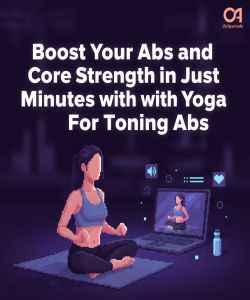
1. Overview of Yoga for Toning Abs
Yoga for Toning Abs constitutes a highly specialised and rigorous application of yogic principles, strategically repurposed to target the entire core musculature. This discipline is not a diluted or superficial form of traditional yoga; rather, it is an intensified practice that leverages specific asanas (postures), dynamic sequences, and breath control (pranayama) to systematically challenge, strengthen, and define the abdominal region. It demands unwavering focus and physical resilience, moving beyond the passive stretching often associated with generic yoga to foster a deep, functional strength that stabilises the spine and enhances overall physical performance. The methodology is built upon the foundational concepts of engagement and alignment, compelling the practitioner to maintain precise form whilst under significant muscular tension. This synthesis of mindful control and intense physical exertion ensures that the benefits are not merely aesthetic but are fundamentally integrated into the body's kinetic chain. This is a demanding physical protocol that requires commitment and discipline, designed for individuals who seek tangible results and understand that true core strength is forged through controlled, sustained effort. It is an exacting system where mental fortitude is as crucial as physical power, creating a powerful synergy that transforms the body’s central column into a source of stability and strength.
2. What are Yoga for Toning Abs?
Yoga for Toning Abs is a targeted physical conditioning system derived from the broader discipline of Hatha yoga. It isolates and intensifies postures and movements specifically designed to engage the rectus abdominis, transverse abdominis, and the internal and external obliques. The practice is fundamentally about creating sustained muscular contraction and controlled movement to stimulate hypertrophy and increase muscle definition within the core. It is critical to understand that this is not merely a collection of abdominal exercises performed on a yoga mat; it is a holistic approach that integrates several key components.
- Targeted Asana Selection: The practice prioritises postures that place a direct and sustained load on the abdominal muscles. These include, but are not limited to, Navasana (Boat Pose), Phalakasana (Plank Pose), and their numerous, more demanding variations. Each posture is held for a duration calculated to induce muscular fatigue and adaptation.
- Dynamic Vinyasa Flow: Unlike static holds, this practice often incorporates Vinyasa, or flow, where movement is synchronised with the breath. These sequences are engineered to move the body through planes of motion that continuously challenge core stability and strength, functioning as a form of high-intensity, controlled resistance training.
- Integrated Pranayama: Breath control is not an afterthought but a central mechanism. Techniques such as Uddiyana Bandha (abdominal lock) and powerful exhalations are utilised to deepen the engagement of the transverse abdominis, the body’s natural corset, providing internal support and intensifying the workout from within.
- Emphasis on Alignment and Stability: Every movement and posture is governed by strict principles of anatomical alignment. This ensures that the abdominal muscles are the primary movers and stabilisers, preventing reliance on momentum or other muscle groups and maximising the targeted training effect whilst minimising the risk of injury.
3. Who Needs Yoga for Toning Abs?
- Individuals seeking to enhance core strength and stability for functional fitness, whose daily activities or occupational demands necessitate a powerful and resilient midsection to prevent injury and improve physical efficacy.
- Athletes and sportspeople across various disciplines who require superior core power for optimal performance, including improved balance, rotational force generation, and efficient energy transfer through the kinetic chain.
- Persons undergoing post-rehabilitation programmes, under strict medical guidance, who need to rebuild foundational core strength in a controlled, low-impact environment to support spinal health and restore functional movement patterns.
- Individuals with aesthetic objectives focused on achieving a visibly toned and defined abdominal region, who understand that this requires a disciplined and targeted approach beyond generic fitness routines.
- Practitioners of other forms of yoga who wish to deepen their practice by developing the core strength necessary to execute advanced arm balances, inversions, and complex transitions with greater control and integrity.
- Those experiencing non-specific lower back discomfort related to poor posture and weak core musculature, who require a structured regimen to strengthen the supporting abdominal and oblique muscles, thereby alleviating spinal load.
- Adults of any age looking to counteract the natural decline in muscle mass and metabolic rate, who need an effective method to maintain a strong, functional core, which is central to overall health and mobility.
- Individuals who prefer a mind-body approach to physical conditioning, who value the synthesis of intense physical effort with mental focus, breath control, and precision of movement over purely mechanical exercise.
4. Origins and Evolution of Yoga for Toning Abs
The origins of what is now marketed as "Yoga for Toning Abs" are not found in the ancient yogic texts of Patanjali or the Hatha Yoga Pradipika. Classical yoga was a holistic spiritual science, with physical postures (asanas) serving as one of eight limbs designed to prepare the body and mind for meditation and enlightenment. The concept of using yoga for targeted aesthetic outcomes like toned abdominals is a distinctly modern, Western adaptation that has evolved significantly over the past century.
The initial evolution began in the early 20th century as yoga was introduced to the West. The focus gradually shifted from its spiritual and philosophical underpinnings towards its physical health benefits. Pioneers like Krishnamacharya and his students, including B.K.S. Iyengar and K. Pattabhi Jois, developed more physically demanding systems. Jois’s Ashtanga Vinyasa yoga, with its vigorous, flowing sequences and emphasis on core locks (bandhas), laid the foundational groundwork. Its physically rigorous nature inherently built immense core strength, although this was seen as a functional by-product of the practice, not its primary goal.
The true crystallisation of "Yoga for Toning Abs" occurred in the late 20th and early 21st centuries, coinciding with the global fitness boom. As gym culture and the pursuit of a specific physique became mainstream, yoga was reinterpreted through this lens. Instructors and fitness brands began to deconstruct traditional practices, extracting the most physically challenging core-centric postures and sequences. They created specialised classes and programmes that stripped away much of the philosophical context and explicitly promoted the physical result of a toned midsection. This represents the final stage of evolution: from a holistic spiritual discipline to a highly specific, results-driven physical training methodology, tailored to meet the demands of a modern fitness market.
5. Types of Yoga for Toning Abs
The discipline of Yoga for Toning Abs is not a single, monolithic style but rather an approach that can be implemented through several specific types of yoga, each with a unique emphasis on core engagement.
- Power Yoga: This is a dynamic and athletic adaptation of Ashtanga yoga. It is characterised by its fast-paced, vigorous flow between postures, minimising rest periods. The constant movement and requirement to stabilise the body through challenging transitions places a continuous and intense demand on the entire core, making it exceptionally effective for building strength and definition.
- Vinyasa Flow (Core-Focused): Whilst Vinyasa yoga is defined by linking breath to movement, a core-focused class specifically choreographs sequences that pivot around the abdominal muscles. These classes systematically integrate planks, boat poses, and twisting postures into a seamless flow, ensuring the core is engaged from multiple angles throughout the session.
- Ashtanga Yoga: This is a traditional, highly structured practice with a set sequence of postures. Its methodology, particularly the primary series, is inherently core-intensive. The consistent use of bandhas (energy locks), specifically Uddiyana Bandha (the abdominal lock), and the repetitive jump-backs and jump-throughs between seated postures, forges formidable abdominal strength as a fundamental component of the practice.
- Forrest Yoga: Developed by Ana Forrest, this style is renowned for its intensity and focus on holding postures for extended periods. It places a strong emphasis on deep breathing into the abdomen and active core engagement in almost every pose. Specific Forrest Yoga abdominal exercises are a signature of the practice and are designed to connect practitioners to their core on a profound physical and emotional level.
- Pilates-Yoga Fusion: This hybrid modality explicitly merges the core-stabilisation principles of Pilates with the postures and flows of yoga. It directly targets the deep transverse abdominis and pelvic floor alongside the more superficial abdominal muscles, offering a comprehensive and highly clinical approach to core toning and functional strength.
6. Benefits of Yoga for Toning Abs
- Enhanced Core Musculature Definition: The primary and most direct benefit is the systematic strengthening and sculpting of the entire abdominal wall, including the rectus abdominis, obliques, and the deep transverse abdominis, leading to a visibly more toned and defined midsection.
- Improved Functional Strength: This practice develops practical, usable strength that translates directly into everyday activities. A strong core facilitates lifting, twisting, and bending with greater ease and reduced risk of strain, enhancing overall physical capability.
- Superior Spinal Support and Posture: By strengthening the muscles that envelop the torso, the practice provides robust support for the spinal column. This alleviates undue pressure on the vertebrae and intervertebral discs, leading to improved posture and a significant reduction in lower back discomfort.
- Increased Athletic Performance: A powerful core is the epicentre of all athletic movement. This discipline enhances stability, balance, and the ability to generate and transfer force efficiently, leading to measurable improvements in sports performance, from running and swimming to weightlifting and martial arts.
- Greater Body Awareness and Control: The intense focus required to maintain proper alignment and engagement in challenging core postures cultivates a profound connection between mind and muscle. This heightened proprioception allows for more precise and controlled movement in all physical endeavours.
- Boosted Metabolic Rate: Building lean muscle mass, particularly in a large muscle group like the core, increases the body's resting metabolic rate. This means the body burns more calories throughout the day, even at rest, contributing to a more favourable body composition.
- Mental Discipline and Resilience: Consistently holding demanding core postures builds not only physical endurance but also mental fortitude. The practice trains the mind to remain calm and focused whilst under physical stress, a skill that is highly transferable to challenges outside the yoga practice.
7. Core Principles and Practices of Yoga for Toning Abs
- Consistent Muscular Engagement: The foundational principle is the conscious and continuous activation of the core musculature throughout every posture and transition. This is not passive stretching; it is an active state of contraction. One must learn to draw the navel towards the spine, engaging the transverse abdominis to create a stable, corset-like support system. This engagement must be maintained even during breathing.
- Precision in Alignment: Anatomical integrity is paramount. Each posture must be executed with meticulous attention to alignment to ensure the abdominal muscles are the primary target and to prevent injury. This involves aligning the hips, spine, and shoulders correctly to create the necessary leverage and tension for an effective and safe practice. Misalignment shifts the workload to other areas and negates the purpose.
- Integration of Breath (Pranayama): The breath is a tool for intensification. Forceful exhalations are synchronised with core-contracting movements to deepen the engagement. The practice of Uddiyana Bandha (abdominal lock), performed on an exhale, is a key technique for accessing and strengthening the deepest layer of abdominal muscle and is a non-negotiable component of advanced practice.
- Sustained Holds and Isometrics: Effectiveness is derived from time under tension. Postures like Plank (Phalakasana) and Boat (Navasana) are held for extended durations. This isometric contraction builds muscular endurance and strength. The challenge is to maintain perfect form and stable breathing as muscular fatigue sets in.
- Dynamic and Controlled Movement: The practice incorporates fluid yet highly controlled sequences (Vinyasa) that challenge core stability from multiple angles. Movements are deliberate and precise, avoiding the use of momentum. Transitions between postures are treated as exercises in themselves, demanding constant core stabilisation to move with grace and power.
- Progressive Overload: To foster continuous adaptation and strength gains, the practice must evolve. This is achieved by increasing the duration of holds, introducing more complex and unstable variations of core postures (e.g., lifting a limb in Plank), or increasing the pace and complexity of the Vinyasa sequences. The body must be consistently challenged to progress.
8. Online Benefits of Yoga for Toning Abs
- Unmatched Accessibility and Convenience: The online format eradicates geographical and logistical barriers. Practitioners can engage in a high-calibre, specialised practice from any location with an internet connection, eliminating travel time and integrating the discipline seamlessly into demanding personal and professional schedules. This autonomy fosters greater consistency, a critical factor for achieving tangible results.
- Absolute Privacy and Focus: The home environment provides a sanctuary free from the perceived judgement or distraction of a public class. This allows the individual to concentrate entirely on the technical execution of postures and the internal sensations of muscular engagement, without external pressures. This heightened inward focus accelerates the development of body awareness and control.
- Replayability for Technical Mastery: A significant advantage of online instruction is the ability to pause, rewind, and replay specific segments. For a discipline that demands precision in alignment and engagement, this function is invaluable. It allows the practitioner to deconstruct complex movements and master challenging postures at their own pace, ensuring correct form is internalised before progressing.
- Access to Elite, Specialised Instruction: The digital platform provides access to world-class instructors who specialise exclusively in core-centric yoga, individuals one might never have access to in a local studio. This allows practitioners to learn from experts who possess a deep understanding of the anatomy and kinesiology required for effective abdominal toning.
- Cultivation of Self-Discipline and Intrinsic Motivation: Without the external presence of an instructor to provide constant correction and motivation, the online practitioner is compelled to cultivate a higher degree of self-reliance and discipline. This fosters a more profound and personal ownership of the practice, building mental fortitude alongside physical strength. The results achieved are a direct product of one's own commitment.
9. Yoga for Toning Abs Techniques
- Assume the Plank Pose (Phalakasana): Begin in a tabletop position on all fours. Extend both legs straight back, pressing through the heels, to form a straight line from the crown of the head to the feet. Your hands must be directly under your shoulders, fingers spread wide. The body must not sag or arch; it must remain as rigid as a plank of wood.
- Engage the Core Actively: This is a non-negotiable action, not a passive state. Forcefully draw your navel in towards your spine. This action engages the deep transverse abdominis. Simultaneously, engage the gluteal muscles and quadriceps to create full-body tension and stability. Your gaze should be slightly forward of your hands to keep the neck in a neutral position.
- Introduce Dynamic Variation - Knee-to-Nose: From the stable Plank Pose, exhale sharply and draw your right knee powerfully towards your nose, rounding your upper back and intensely contracting your rectus abdominis. Your movement must be controlled and deliberate, driven by core strength, not momentum.
- Return to Plank with Control: Inhale and extend the right leg back to the starting Plank position with absolute control. Do not allow the hips to drop. Maintain the integrity of the straight line. The return movement is as critical as the initial contraction.
- Alternate and Repeat: Repeat the Knee-to-Nose movement on the left side, exhaling as you contract. Continue to alternate sides for a set number of repetitions or a specific duration. Throughout the entire sequence, the core must remain the primary engine of movement, and the breath must be synchronised and powerful. This technique transforms a static hold into a dynamic, highly effective abdominal-strengthening exercise.
10. Yoga for Toning Abs for Adults
Yoga for Toning Abs for adults is a formidable and highly effective methodology for building and maintaining core strength, postural integrity, and metabolic health throughout adult life. This discipline is particularly pertinent as adults face physiological changes such as sarcopenia (age-related muscle loss) and a natural decline in metabolic rate. The practice directly counteracts these processes by stimulating muscle hypertrophy in the body’s central column. It is not merely a pursuit of aesthetics; it is a strategic investment in long-term functional fitness and injury prevention. For the adult professional, often subject to a sedentary lifestyle and the resultant postural degradation, this practice serves as a potent corrective measure. It systematically strengthens the deep abdominal and oblique muscles that support the spine, alleviating the chronic lower back stress associated with prolonged sitting. Furthermore, the practice demands a synthesis of physical exertion and mental focus, offering a powerful tool for stress management. By compelling complete concentration on breath and alignment, it provides a structured respite from external pressures, building mental resilience in tandem with physical power. This is a mature, intelligent approach to fitness, offering scalable, low-impact, yet intensely challenging work that respects the adult body whilst demanding its absolute best performance.
11. Total Duration of Online Yoga for Toning Abs
The established and requisite duration for a comprehensive online session of Yoga for Toning Abs is precisely one hour. This timeframe is not arbitrary; it is structured to facilitate a complete and effective physiological cycle, ensuring maximum benefit whilst safeguarding against injury and burnout. A session of this length allows for a mandatory, systematic warm-up phase, where the body is gradually prepared for the intense workload to follow. This initial period is critical for increasing blood flow to the muscles and lubricating the joints. The central, most substantial portion of the 1 hr session is dedicated to the peak practice, wherein the most demanding core-centric asanas, dynamic sequences, and sustained holds are executed. This is where the true work of muscular adaptation occurs. Critically, the one-hour duration also allocates sufficient time for a structured cool-down and recovery phase. This includes counter-poses to release tension in the back and hips, as well as gentle stretching to restore muscular length and promote recovery. Attempting to condense this rigorous protocol into a shorter period would inevitably compromise one of these essential components, either by truncating the warm-up and increasing injury risk, or by cutting short the peak work and diminishing the results. Hence, the one-hour standard is the professional benchmark for a complete, safe, and effective practice.
12. Things to Consider with Yoga for Toning Abs
Before embarking on the rigorous discipline of Yoga for Toning Abs, it is imperative to conduct a frank and realistic assessment of several key factors. This is not a casual fitness trend but a demanding physical protocol that requires a specific mindset and level of physical readiness. Foremost, one must consider pre-existing physical conditions, particularly those related to the spine, such as herniated discs or chronic lower back issues. Whilst the practice can alleviate certain types of back pain, it can also exacerbate others if performed incorrectly or without medical clearance. It is non-negotiable to consult a medical professional prior to commencement if any such concerns exist. Furthermore, a practitioner must evaluate their current level of foundational strength. Attempting advanced core postures without a baseline of stability can lead to compensatory strain on the neck, shoulders, and lower back. Patience and a commitment to progressive, foundational work are essential. One must also consider the mental component; this practice demands intense focus and a tolerance for physical discomfort. It requires the discipline to maintain precise form even when fatigued. Finally, the expectation of results must be realistic. Visible abdominal toning is the product of consistent, challenging practice combined with appropriate nutritional habits; yoga alone, however intense, cannot overcome a poor diet.
13. Effectiveness of Yoga for Toning Abs
The effectiveness of Yoga for Toning Abs is undeniable, provided the practice is executed with the requisite discipline, consistency, and technical precision. Its potency lies in its multi-faceted approach to core conditioning, which surpasses many conventional abdominal workout routines. The discipline excels because it targets the entirety of the core musculature in a three-dimensional manner, not just the superficial "six-pack" muscles (rectus abdominis). Through a combination of static holds, dynamic flows, and twisting postures, it systematically engages the deep transverse abdominis—the body's natural corset—and the internal and external obliques, which are crucial for rotational power and spinal stability. This holistic engagement forges a functionally superior and aesthetically defined midsection. The emphasis on time under tension through sustained isometric holds, such as in Plank or Boat Pose, stimulates muscle fibres in a way that rapid, momentum-based crunches cannot. Furthermore, the integration of pranayama and bandhas (body locks) allows the practitioner to generate intense internal pressure and muscular contraction from the inside out, a technique unique to yogic disciplines. The result is not merely surface-level toning, but the cultivation of deep, integrated strength that improves posture, enhances athletic performance, and provides robust support for the spine. Its effectiveness is, therefore, a direct function of the practitioner's commitment to its rigorous principles.
14. Preferred Cautions During Yoga for Toning Abs
It is imperative that any practitioner approaches Yoga for Toning Abs with a heightened sense of caution and anatomical awareness, as the intensity of the practice carries inherent risks if performed improperly. The primary directive is to prioritise spinal integrity above all else. Never sacrifice the alignment of the spine for the sake of achieving a deeper or more visually impressive version of a posture. Any sensation of sharp, pinching, or electric pain in the lower back is an immediate and non-negotiable signal to cease the movement and reassess form. The neck is another vulnerable area; it must be kept in a neutral position, as an extension of the spine, avoiding any tendency to crane it forward or hyperextend it backward, particularly during demanding holds like Plank Pose. Furthermore, individuals with pre-existing wrist or shoulder injuries must exercise extreme vigilance, as many core-centric postures are weight-bearing on the upper limbs. Modification is not a sign of weakness but of intelligence; use props or alternative postures where necessary. Do not engage in this practice on a full stomach, and ensure adequate hydration. Finally, resist the ego-driven impulse to push into advanced variations before mastering the fundamentals. True strength is built on a solid, uncompromised foundation. Disregard for these cautions will inevitably lead to injury, not progress.
15. Yoga for Toning Abs Course Outline
- Module 1: Foundational Core Activation and Alignment
- Principle of Neutral Spine and Pelvic Tilt
- Mastering Diaphragmatic Breath for Core Engagement
- Introduction to Transverse Abdominis (TVA) Activation: Navel to Spine
- Static Foundational Poses: Tabletop Core Engagements, Cat-Cow with Core Contraction.
- Module 2: Introduction to Core-Centric Asanas
- Mastering Plank Pose (Phalakasana): Form, Alignment, and Common Errors
- Introduction to Boat Pose (Navasana): Variations and Regressions
- Bridge Pose (Setu Bandhasana) with Adduction for Inner Thigh and Core Link
- Basic Supine Core Work: Leg Lifts with Controlled Descent.
- Module 3: Dynamic Core Sequences (Vinyasa)
- Linking Breath to Movement: The Core-Breath Synergy
- Sun Salutation (Surya Namaskar) with Emphasis on Plank and Chaturanga
- Core-Focused Transitions: Knee-to-Nose, Plank to Downward Dog
- Introduction to Twisting Postures for Oblique Engagement: Revolved Chair Pose.
- Module 4: Intensification and Endurance Building
- Increasing Duration of Static Holds in Plank and Navasana
- Advanced Plank Variations: Limb Lifts, Side Plank (Vasisthasana)
- Dolphin Plank Pose for Shoulder Stability and Upper Abdominal Work
- Introduction to Core Locks: Uddiyana Bandha Kriya (Abdominal Lock Practice).
- Module 5: Advanced Core Integration and Flow
- Complex Vinyasa Flows incorporating Arm Balances (e.g., Crow Pose preparation)
- Advanced Navasana Variations and Transitions
- Integration of All Principles into a Sustained, Challenging Practice
- Cool-down, Counter-Posing, and Spinal Decompression Techniques.
16. Detailed Objectives with Timeline of Yoga for Toning Abs
- Weeks 1-2: Establish Foundational Neuromuscular Connection.
- Objective: To develop the ability to consciously isolate and engage the deep transverse abdominis (TVA) and pelvic floor independently of other muscle groups. By the end of this period, the practitioner must be able to maintain TVA engagement whilst breathing diaphragmatically and holding basic postures like Tabletop and Bridge Pose for a sustained duration.
- Weeks 3-4: Build Foundational Strength and Postural Integrity.
- Objective: To hold a technically perfect Plank Pose for a continuous period and execute five controlled repetitions of Navasana (Boat Pose) with correct spinal alignment. The practitioner will demonstrate mastery of core stability during basic Sun Salutation transitions, eliminating any sagging in the lower back.
- Weeks 5-8: Develop Muscular Endurance and Introduce Dynamic Challenge.
- Objective: To increase Plank hold duration and to execute a continuous, five-minute core-focused Vinyasa sequence without compromising form. The practitioner will demonstrate competence in basic twisting postures and Side Plank (Vasisthasana), indicating improved oblique strength and stability.
- Weeks 9-12: Introduce Intensity and Advanced Techniques.
- Objective: To successfully execute more demanding Plank variations (e.g., single-leg lifts) and hold advanced Boat Pose variations. The practitioner will be introduced to and demonstrate a basic understanding of Uddiyana Bandha (abdominal lock). A marked improvement in visible muscle tone and functional strength should be apparent.
- Ongoing (Post-Week 12): Mastery, Integration, and Performance.
- Objective: To integrate core strength seamlessly into all aspects of the yoga practice, facilitating entry into more advanced postures like arm balances and inversions. The practitioner will be able to sustain a full one-hour, high-intensity core-focused class, demonstrating mastery of alignment, breath, and control throughout.
17. Requirements for Taking Online Yoga for Toning Abs
- Uninterrupted, High-Speed Internet Connection: A stable and reliable connection is non-negotiable. Buffering or disconnection during a demanding sequence compromises safety, disrupts flow, and negates the effectiveness of the instruction.
- Adequate and Safe Physical Space: A clear, flat, and uncluttered area is mandatory. The space must be large enough to extend the limbs fully in all directions without obstruction. The surface must be non-slip and suitable for practice.
- High-Quality Yoga Mat: A standard, non-slip yoga mat is a fundamental requirement. It provides essential cushioning, grip, and a designated practice area, which is critical for preventing slips and ensuring stability during weight-bearing postures.
- Appropriate Technical Device: A laptop, tablet, or television screen with sufficient size and resolution is required. Attempting to follow intricate alignment cues on a small mobile phone screen is inadequate and potentially dangerous. The device must be positioned so the instructor is clearly visible from various angles.
- A Mindset of Absolute Self-Responsibility: In an online setting, the onus of safety and correct execution falls entirely on the practitioner. One must possess the maturity to listen to their body, to not push past safe limits, and to prioritise correct form over ego-driven ambition.
- Baseline Physical Condition: Whilst scalable, this is an intense discipline. A basic level of physical health and the absence of any contraindicating medical conditions (unless cleared by a physician) are prerequisite.
- Undivided Attention and Commitment: The practitioner must commit to the session without distraction. This means silencing notifications, ensuring the practice space is private, and dedicating full mental and physical presence for the entire duration of the class.
18. Things to Keep in Mind Before Starting Online Yoga for Toning Abs
Before commencing an online programme of Yoga for Toning Abs, it is crucial to internalise a number of realities to ensure a safe, effective, and sustainable practice. Firstly, recognise that the absence of a physical instructor places the entire responsibility for safety and alignment upon your shoulders. You must cultivate an unwavering commitment to self-assessment and honesty, resisting the temptation to push into postures your body is not prepared for. The online environment removes the safety net of immediate, hands-on correction. Secondly, understand that visual results are contingent not only upon the rigour of your practice but equally upon your nutritional discipline. This form of yoga builds the muscle, but a layer of subcutaneous fat will obscure any definition achieved; the two components are inextricably linked. Thirdly, prepare for a steep learning curve in body awareness. You will need to learn to interpret internal physical cues with far greater sensitivity than in a studio class. This requires patience and a willingness to prioritise sensation over the external appearance of a pose. Finally, acknowledge that consistency is the absolute key to success. Sporadic, intense sessions are far less effective than regular, disciplined practice. You must be prepared to schedule your sessions and adhere to that schedule with the same gravity as any other important appointment.
19. Qualifications Required to Perform Yoga for Toning Abs
The execution of Yoga for Toning Abs by an instructor demands a level of qualification that significantly exceeds a basic yoga teacher certification. The specialised nature of this discipline necessitates a profound and demonstrable expertise in several key areas to ensure client safety and efficacy. A credible instructor must possess, at minimum, the following qualifications:
- Advanced Yoga Teacher Training: A foundational 200-hour certification is merely the starting point. A qualified instructor should have completed advanced training (e.g., a 300-hour or 500-hour certification), with a specific, documented focus on Vinyasa, Power Yoga, or another physically demanding style.
- In-Depth Anatomical and Kinesiological Knowledge: This is non-negotiable. The instructor must possess a university-level understanding of human anatomy, biomechanics, and exercise physiology. They must be able to articulate precisely which muscles are being engaged, how to prevent common injuries through proper alignment, and how to offer intelligent, safe modifications for different body types and limitations.
- Specialised Certification or Training: Ideally, the instructor will have sought out and completed specific workshops or certifications in core anatomy, functional strength training, or yoga for athletes. This demonstrates a dedicated commitment to this niche beyond a general yoga education.
- Substantial Personal Practice and Teaching Experience: There is no substitute for experience. A qualified instructor must have a deep, long-standing personal practice in these intensive styles and a proven track record of teaching them safely and effectively. They must be able to demonstrate every posture with impeccable form and control.
An instructor without this comprehensive blend of formal training, scientific knowledge, and practical experience is not qualified to lead others in such a physically demanding and specific discipline.
20. Online Vs Offline/Onsite Yoga for Toning Abs
Online
The online modality for Yoga for Toning Abs is defined by autonomy and convenience. Practitioners have the freedom to engage with the discipline from any location, at any time, eliminating the logistical constraints of travel and fixed studio schedules. This format grants access to a global pool of elite, specialised instructors who might otherwise be inaccessible. The primary challenge and, paradoxically, a key benefit, is the cultivation of self-discipline. Without the direct supervision of an instructor, the onus is entirely on the individual to maintain focus, ensure correct alignment, and push to an appropriate level of intensity. The ability to replay instructional content allows for meticulous study of complex postures, fostering a deep, intellectual understanding of the practice's mechanics. However, this modality lacks the immediate, tactile feedback and personalised, in-the-moment adjustments that a physical instructor can provide. It demands a high degree of body awareness and self-responsibility from the outset.
Offline/Onsite
The offline, or onsite, experience in a studio provides a structured, communal environment that many find motivating. The most significant advantage is the direct, real-time feedback from a qualified instructor. This professional can provide hands-on adjustments to correct misalignment, offer verbal cues tailored to the individual's body, and ensure a greater degree of safety, particularly for beginners. The shared energy of a group class can also serve as a powerful motivator, encouraging practitioners to maintain intensity and focus. The disadvantages lie in the lack of flexibility; classes are at fixed times and locations, which may not suit all schedules. The choice of specialised instructors is limited to what is available locally. Furthermore, the public setting can be a source of distraction or self-consciousness for some, potentially hindering the inward focus that is so crucial to the practice.
21. FAQs About Online Yoga for Toning Abs
Question 1. Is this just about getting a "six-pack"? Answer: No. Whilst aesthetic toning is a result, the primary focus is on building deep, functional core strength that supports the spine, improves posture, and enhances overall athletic performance.
Question 2. Do I need to be flexible to start? Answer: No. Flexibility is a product of the practice, not a prerequisite. The focus is on strength and stability; flexibility will develop over time.
Question 3. Is this suitable for complete beginners to yoga? Answer: It can be, provided you select a foundational or beginner-level online course. It is intense, so starting with the basics is critical.
Question 4. What equipment is absolutely mandatory? Answer: A non-slip yoga mat is the only mandatory piece of equipment.
Question 5. How is this different from Pilates? Answer: While both focus on the core, this discipline integrates dynamic, flowing sequences (Vinyasa) and traditional yoga postures, often with a greater emphasis on full-body integration and isometric holds.
Question 6. Can this practice replace my cardio workout? Answer: A fast-paced Vinyasa or Power Yoga session for abs can be highly cardiovascular, but it is best viewed as a complement to, not a replacement for, dedicated cardiovascular training.
Question 7. Will I risk injuring my back? Answer: Injury risk exists in any physical activity. With correct form and by not pushing beyond your limits, the practice strengthens the back. Incorrect form increases risk.
Question 8. How often should I practise to see results? Answer: For tangible results, a consistent practice of three to four dedicated sessions per week is recommended.
Question 9. Can I do this if I have a wrist injury? Answer: Many core poses are weight-bearing on the wrists. You must seek modifications or consult a professional. There are mat-based core exercises that do not load the wrists.
Question 10. Is a one-hour session necessary? Answer: Yes, for a complete practice including warm-up, peak work, and cool-down. Shorter sessions are supplementary at best.
Question 11. Does diet matter? Answer: Absolutely. No amount of core work will reveal toned abdominals if they are covered by a layer of body fat. Nutritional discipline is essential.
Question 12. What does "engage the core" actually mean? Answer: It means to consciously contract your abdominal muscles by drawing your navel towards your spine, as if bracing for an impact.
Question 13. Why is breath so important? Answer: The breath is used to intensify contractions. A sharp exhale helps to deepen the engagement of the abdominal wall.
Question 14. Will this help with my posture? Answer: Yes. A strong core is fundamental to maintaining an upright, stable posture. This is one of the primary functional benefits.
Question 15. Can I practise this every day? Answer: It is not advisable. Muscles need time to recover and rebuild. Rest days are critical for muscle growth and injury prevention.
Question 16. What is a "bandha" or energy lock? Answer: It is an advanced technique involving the contraction of specific muscle groups, like the abdomen (Uddiyana Bandha), to control energy flow and intensify postures.
Question 17. Will this make my waist bulky? Answer: No. This type of training creates lean, dense muscle, leading to a toned and defined appearance, not bulk.
22. Conclusion About Yoga for Toning Abs
In conclusion, Yoga for Toning Abs stands as a potent and highly sophisticated discipline that rigorously applies yogic principles to achieve profound functional strength and aesthetic definition in the core musculature. It must be unequivocally understood as a demanding physical protocol, not a passive or gentle form of exercise. Its effectiveness is forged in the crucible of discipline, requiring unwavering consistency, technical precision, and a mature approach to physical exertion. The synthesis of intense asana, controlled dynamic movement, and integrated breathwork creates a uniquely holistic system that conditions the body from the inside out, building a powerful, stabilising corset that supports the spine, improves posture, and enhances overall athletic capability. This practice transcends superficial goals, demanding and cultivating mental fortitude, focus, and a deep, intelligent connection between mind and muscle. It is a testament to the adaptability of the ancient science of yoga, repurposed to meet the modern demand for tangible, performance-based results. For the individual willing to commit to its exacting standards, Yoga for Toning Abs offers a direct and formidable path to a stronger, more resilient, and powerfully controlled physical self.