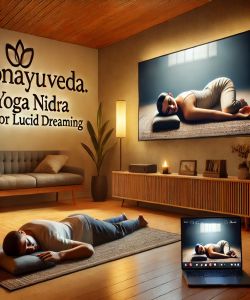
Overview of Yoga Nidra for Lucid Dreaming
Yoga Nidra, when specifically purposed for lucid dreaming, constitutes a formidable and systematic methodology for achieving conscious awareness within the dream state. It is not merely a relaxation technique but a profound discipline of psychic sleep, engineered to guide the practitioner to the precipice of consciousness that separates waking reality from the subconscious terrain of dreams. This synergistic practice leverages the state of pratyahara, or the withdrawal of the senses, to maintain a thread of focused awareness whilst the physical body enters a state of deep, restorative sleep. The practitioner is systematically guided through a structured sequence of mental exercises, including bodily scanning, breath awareness, and targeted visualisation, all designed to de-energise the external sensory apparatus and amplify internal perception. The ultimate objective is to navigate the hypnagogic state—the transitional period between wakefulness and sleep—with unwavering lucidity. By mastering this threshold, the individual learns to carry their waking consciousness directly into the dream environment, thereby initiating a Wake-Initiated Lucid Dream (WILD). This discipline transcends simple dream recall or passive dream observation; it is an active, volitional engagement with the subconscious mind, demanding rigour, consistency, and an unshakeable intention. It transforms the nightly sleep cycle from an unconscious process into a potent laboratory for self-exploration, psychological integration, and the deliberate cultivation of heightened awareness. The practice therefore stands as a structured protocol for those who seek not to escape reality, but to explore its deepest, most enigmatic dimensions with clarity and control. It is a direct and powerful path to mastering the art of conscious dreaming through the deliberate and disciplined mastery of the mind itself.
What is Yoga Nidra for Lucid Dreaming?
Yoga Nidra for Lucid Dreaming is a specialised application of the ancient yogic technique of ‘psychic sleep’, meticulously adapted to facilitate the state of conscious awareness within a dream. At its core, it is a guided meditation practice performed in a supine position, designed to induce profound physical, mental, and emotional relaxation while keeping the mind alert and focused. Unlike conventional meditation that often requires seated concentration, Yoga Nidra systematically dismantles the practitioner's identification with the external world and the physical body, leading the consciousness to a state that is neither fully awake nor fully asleep. This liminal state, known as the hypnagogic or hypnopompic threshold, is the fertile ground from which lucid dreams are initiated. The practice is not an act of trying to dream; rather, it is a process of training the mind to remain a steadfast, conscious observer as the body’s physiological sleep processes commence.
The methodology is highly structured, involving several distinct stages:
Internalisation and Sankalpa: The process begins with drawing the awareness inwards and setting a clear, concise intention or resolve (Sankalpa) to remain aware during the transition into the dream state. This sets a powerful command within the subconscious mind.
Rotation of Consciousness: The practitioner is guided on a detailed journey of awareness through different parts of the body. This systematic scanning occupies the logical mind, preventing it from wandering, while simultaneously inducing deep physical relaxation and disassociating consciousness from bodily sensations.
Breath and Energy Awareness: Attention is then shifted to the natural rhythm of the breath and subtle energy flows, further deepening the state of relaxation and internal focus, preparing the mind to release its grip on waking reality.
Visualisation and Dream Incubation: This final active stage involves the deliberate invocation of specific images, symbols, or dream scenarios. This acts as a bridge, guiding the focused, yet deeply relaxed, consciousness from the internalised waking state directly into a constructed or spontaneously arising dream environment, with awareness intact.
Who Needs Yoga Nidra for Lucid Dreaming?
Aspiring Oneironauts and Conscious Explorers: Individuals who possess a determined intellectual and spiritual curiosity about the nature of consciousness, reality, and the subconscious mind. They seek not merely to dream, but to navigate their inner worlds with purpose and volitional control.
Creative Professionals and Problem-Solvers: Artists, writers, innovators, and scientists who wish to access the uninhibited creativity and novel insights available within the lucid dream state. This practice provides a structured method for tapping into subconscious processing for inspiration and resolution.
Individuals Seeking Psychological Integration: Those engaged in self-analysis or therapeutic work who require a safe and controlled method for confronting and integrating subconscious material, such as shadow aspects, repressed memories, or archetypal patterns, within the symbolic landscape of their dreams.
Practitioners of Meditation and Mindfulness: Individuals already disciplined in controlling their attention who wish to extend their practice into the sleep state. For them, it represents the next frontier of mindfulness, maintaining awareness across all states of being.
Those with Specific Sleep-Related Anxieties: Individuals who experience anxiety around the act of falling asleep or suffer from nightmares. This practice provides a calming, structured protocol that can reframe the relationship with sleep, transforming fear into an opportunity for conscious exploration and mastery.
Individuals Working to Overcome Phobias and Trauma: Under appropriate professional guidance, this technique can be used as a powerful tool for systematic desensitisation, allowing the individual to safely confront and re-script fear-based dream narratives in a controlled, lucid state.
Athletes and High-Performance Professionals: Those who utilise visualisation for performance enhancement can extend this practice into the hyper-realistic environment of a lucid dream, allowing for motor skill rehearsal and strategy refinement in a perfectly simulated internal environment.
Spiritual Seekers on a Path of Self-Realisation: Individuals who view the exploration of consciousness as integral to their spiritual development. Lucid dreaming, facilitated by Yoga Nidra, serves as a direct experiential path to understanding the non-dual nature of the self and reality.
Origins and Evolution of Yoga Nidra for Lucid Dreaming
The origins of Yoga Nidra are deeply rooted in ancient Indian tantric practices, specifically a technique known as nyasa, which involved the placing of sacred mantras and focusing awareness on various parts of the body. This esoteric practice was intended to consecrate the physical form and purify the mind, leading to higher states of consciousness. The core principle of systematically moving awareness through the body to induce a state of deep, conscious relaxation was a foundational element, though its application was primarily for spiritual realisation rather than oneiric exploration. For centuries, these techniques remained the preserve of advanced yogic and tantric lineages, transmitted directly from guru to disciple.
The modern conceptualisation and systematisation of Yoga Nidra are largely attributed to Swami Satyananda Saraswati of the Bihar School of Yoga in the mid-20th century. After studying ancient tantric scriptures and observing the states of consciousness between waking and sleeping, he developed a structured, universally accessible methodology stripped of complex ritual. His formulation provided a clear, step-by-step process—including the sankalpa, rotation of consciousness, breath awareness, and visualisation—that could reliably induce the hypnagogic state. The primary objective in his system was profound relaxation, therapeutic healing, and the expansion of consciousness, yet the inherent potential for dream exploration was implicitly present.
The evolution of Yoga Nidra specifically for lucid dreaming is a more recent, Western-led development. As interest in lucid dreaming surged, practitioners and researchers began to recognise the immense synergy between the two disciplines. The state induced by Yoga Nidra was identified as the ideal launchpad for a Wake-Initiated Lucid Dream (WILD), which requires maintaining an unbroken stream of consciousness as the body falls asleep. Innovators in the field of lucid dreaming began to adapt the traditional Yoga Nidra scripts, placing a stronger emphasis on the sankalpa for dream lucidity, and refining the visualisation stages to function as direct dream-entry portals. This evolution represents a shift from a practice for general consciousness expansion to a highly specialised tool, precisely sharpening the ancient technique into a potent instrument for the deliberate and methodical navigation of the human dreamscape.
Types of Yoga Nidra for Lucid Dreaming
Foundational Hypnagogic Induction: This is the most fundamental and essential type, focused almost exclusively on mastering the transition from wakefulness to sleep without a loss of consciousness. The practice heavily emphasises an extended and meticulous rotation of consciousness through the body, followed by prolonged breath awareness. The objective is not to incubate a specific dream, but to train the mind to remain a stable, detached observer of the onset of sleep paralysis and the emergence of hypnagogic imagery. It is a pure awareness-training protocol, building the core skill required for any Wake-Initiated Lucid Dream (WILD) attempt. Success is measured not by dream entry, but by the duration of sustained awareness at the edge of sleep.
Sankalpa-Driven Lucidity Practice: This type places primary importance on the Sankalpa, or a potent, pre-determined resolve. The initial relaxation and body scan are standard, but the core of the practice involves the repeated, silent affirmation of a specific intention, such as “I will remain aware as my body sleeps” or “I will recognise that I am dreaming.” The entire practice is structured to embed this command deep within the subconscious. The visualisation phase may be minimal, as the focus is on the sheer power of intent to trigger lucidity spontaneously from within a subsequent dream. This approach is less about direct entry and more about programming the mind to self-awaken.
Targeted Dream Incubation: This advanced form is for practitioners who have already developed a degree of hypnagogic awareness. Following a rapid relaxation and body scan, the majority of the session is dedicated to a rich and multi-sensory visualisation of a specific, desired dream scene. The practitioner constructs a detailed "dream portal" or target environment, engaging sight, sound, and kinaesthetic sensations. The objective is to make the internal visualisation so vivid and compelling that the transition from imagined reality to dream reality is seamless. This is a direct-entry technique that requires significant concentration and imaginative faculty.
Subtle Body and Chakra-Focused Nidra: Drawing more from its tantric roots, this type guides the practitioner’s awareness not just through the physical body, but through the energetic pathways (nadis) and centres (chakras). The intention is to access the dream state through a more energetic or vibrational level of consciousness. The visualisations are often abstract, involving light, colour, and geometric forms associated with the chakras. This method is suited for those who find purely physical or narrative-based techniques less effective, aiming to shift consciousness to a plane where the distinction between waking and dreaming is inherently more fluid.
Benefits of Yoga Nidra for Lucid Dreaming
Systematic Induction of the Hypnagogic State: Provides a reliable, step-by-step protocol to enter and maintain awareness within the critical transitional state between wakefulness and sleep, which is the primary gateway for Wake-Initiated Lucid Dreams (WILDs).
Enhanced Dream Recall and Vividness: The practice of maintaining acute awareness as one falls asleep strengthens the neural pathways associated with memory and consciousness during sleep, leading to a dramatic improvement in the ability to remember dreams with clarity and detail.
Increased Frequency of Lucid Dreams: By consistently training the mind to recognise the subtle shifts in consciousness that precede sleep, the practitioner becomes highly sensitised to dream-state indicators, significantly increasing the likelihood of achieving lucidity both upon dream entry and during a dream.
Cultivation of Unwavering Mental Focus: The discipline required to follow the guided instructions without succumbing to distraction or unconsciousness builds profound powers of concentration that are directly transferable to stabilising the lucid dream state and preventing premature awakening.
Reduction of Sleep Onset Anxiety: The structured and calming nature of the practice serves as a powerful antidote to anxiety surrounding sleep, reframing the process from a passive loss of control into an active and engaging exploration of consciousness.
Profound Physical and Mental Relaxation: Induces a state of physiological rest deeper than conventional sleep, allowing for accelerated physical recovery and the release of deep-seated mental and emotional tensions, which in turn creates a more stable platform for conscious dream exploration.
Direct Access to Subconscious Processing: Facilitates a controlled dialogue with the subconscious mind, allowing for the intentional exploration of personal symbols, the resolution of internal conflicts, and the harnessing of creative insights within the malleable dream environment.
Development of Metacognitive Awareness: The core skill of observing one's own mental state without identification, honed during the practice, is the very definition of metacognition. This skill is paramount for recognising the dream state for what it is—a projection of the mind.
Core Principles and Practices of Yoga Nidra for Lucid Dreaming
Conscious Intention (Sankalpa): The practice is anchored by a Sankalpa, which is a short, positive, and precise statement of intent formulated in the present tense. For this specific application, the Sankalpa must be unequivocally focused on the goal, such as "I remain fully aware as I enter my dreams" or "I am conscious and in control within my dream." This resolve is planted in the subconscious mind at the beginning and end of the practice, when the mind is most receptive, acting as a powerful command that directs the entire experience.
Systematic Disengagement (Pratyahara): The foundational principle is the deliberate and sequential withdrawal of consciousness from the external sensory inputs—sight, sound, smell, taste, and touch. This is achieved not through force, but by systematically occupying the mind with internal processes, thereby rendering external stimuli irrelevant and facilitating a profound inward turn of awareness.
Rotation of Consciousness (Nyasa): A core practice involving a rapid, non-analytical journey of awareness through every part of the physical body in a specific, unchanging sequence. This technique serves a dual purpose: it induces deep physiological relaxation by releasing somatic tension, and it occupies the rational, waking mind, preventing it from generating distracting thoughts and allowing a deeper, more observant aspect of consciousness to remain dominant.
Objective Breath Awareness: The practitioner's attention is directed to the natural, spontaneous rhythm of the breath without any attempt to control or alter it. This acts as a tether for the wandering mind, anchoring awareness in the present moment and further calming the autonomic nervous system. Observing the breath becomes a bridge between the physical body and the more subtle layers of consciousness.
Cultivation of the Witness Consciousness: Throughout the entire process, the practitioner is instructed to remain a detached, impartial observer of all sensations, thoughts, and images that arise. There is to be no judgement, analysis, or emotional engagement. This "witnessing" is the critical skill that must be carried across the threshold into the dream state to achieve lucidity. The goal is to observe the mind's projections without becoming identified with them.
Controlled Visualisation and Dream Entry: The final stage involves the deliberate creation and exploration of internal imagery. For lucid dreaming, this is not random; it is a targeted visualisation of a pre-selected dream scene or "portal." The practitioner holds this internal scene with unwavering focus, intending to step into it directly as the body completes its transition to sleep, thereby seamlessly moving from a waking visualisation to a fully-formed lucid dream.
Online Yoga Nidra for Lucid Dreaming
Unparalleled Accessibility and Consistency: Online platforms provide immediate and unrestricted access to high-quality guided practices, removing geographical and logistical barriers. This allows an individual to engage in the discipline with the rigorous consistency that is non-negotiable for success. The ability to practise daily, or even multiple times per day such as during Wake-Back-to-Bed (WBTB) attempts, is a decisive advantage.
Creation of a Controlled, Optimised Environment: The practitioner has absolute authority over their environment. They can ensure total darkness, silence, and the absence of any external disturbances—factors that are critical for the deep internalisation required. This contrasts sharply with a group setting, which may introduce unpredictable distractions. The individual can meticulously curate their personal space to be a perfect sanctuary for consciousness exploration.
Access to Specialised, Niche Instruction: The digital realm offers a global repository of instructors who specialise explicitly in the application of Yoga Nidra for oneiric purposes. A practitioner is no longer limited to local teachers who may only offer generalised relaxation-focused sessions. They can source and select highly specific guidance tailored precisely to the advanced goal of lucid dreaming.
Perfect Timing and Physiological Priming: Online delivery allows the practice to be undertaken at the most biologically opportune moments for lucid dreaming, such as in the early hours of the morning when REM sleep is most prevalent. The ability to immediately access a guided session after waking from a dream, without leaving one’s bed, is a powerful tool for maximising the chances of a successful Dream-Exit-Initiated Lucid Dream (DEILD) or WILD.
Anonymity and Psychological Safety: Engaging with deep states of consciousness can be a profoundly personal and sometimes vulnerable experience. The privacy of an online session eliminates any potential self-consciousness or social anxiety that may arise in a group setting, allowing the practitioner to surrender to the process with greater psychological safety and depth. This is particularly important when confronting subconscious material that may surface during the practice.
Yoga Nidra for Lucid Dreaming Techniques
Step One: Preparation and Intention Setting. Assume a supine position (Shavasana) on a firm but comfortable surface in a completely dark and silent room. Ensure the body is symmetrically aligned and will not need to be moved for the duration of the practice. Close your eyes and allow the body to settle. Formulate your Sankalpa—a clear, concise, and positive resolve. It must be an unequivocal command to your subconscious, such as, "I will maintain awareness as my body falls asleep and I enter the dream state." Silently repeat this intention with absolute conviction three times.
Step Two: Systematic Body Scan. Begin the rotation of consciousness. Without moving any part of the body, bring your total, focused awareness to each body part as it is named or brought to mind. Follow a precise and unvarying sequence, typically starting with the right hand thumb and moving through every finger, the palm, wrist, forearm, elbow, upper arm, shoulder, and so on, covering the entire right side, then the entire left side, the back of the body, the front of the body, and finally the head. Move the awareness swiftly and methodically. Do not linger. This stage is designed to occupy the logical mind and induce profound physical relaxation.
Step Three: Breath Awareness. Shift your focus from the body to the natural flow of your breath. Do not alter or control it in any way. Simply become the detached observer of the inhalation and exhalation. You may observe the breath at the nostrils, the rise and fall of the abdomen, or the passage of air in the throat. Maintain this singular focus to further deepen your state of internalisation and anchor your awareness.
Step Four: Observation of the Mental Screen. Bring your awareness to the space behind your closed eyelids, an area known as the chidakasha. Observe this dark, internal screen without expectation. Remain a passive witness to any colours, patterns, or fleeting images that may spontaneously arise. This is the observation of the hypnagogic state. Your sole task is to watch without engagement, maintaining the witness consciousness.
Step Five: Deliberate Dream Incubation and Transition. Once hypnagogic imagery becomes stable, actively recall the dream scene you wish to enter. Visualise it with as much multi-sensory detail as possible. Feel the textures, hear the sounds, and sense your presence within that environment. Hold this scene with gentle but firm focus. The objective is to allow this vivid visualisation to seamlessly coalesce into the actual dream experience, carrying your thread of lucidity with you as the final transition occurs.
Yoga Nidra for Lucid Dreaming for Adults
Yoga Nidra for lucid dreaming is a discipline exceptionally suited to the mature adult mind, demanding a level of cognitive focus, emotional regulation, and self-awareness that is often underdeveloped in younger individuals. For adults, this practice transcends mere novel experience, becoming a potent tool for profound psychological and existential inquiry. The adult practitioner can leverage their developed faculties of introspection and metacognition—the ability to think about one's own thinking—to navigate the nuanced states of consciousness between waking and sleep with precision and purpose. Unlike more passive forms of relaxation, this is an active and rigorous mental training regime that requires discipline, patience, and the ability to follow complex internal instructions without deviation, skills honed through life experience. It provides a structured, non-dogmatic framework for engaging with the subconscious, allowing adults to process life experiences, resolve internal conflicts, and access latent creativity in a controlled and deliberate manner. The practice offers a sophisticated method for managing stress and anxiety, not by avoiding them, but by cultivating a state of deep rest while maintaining a core of resilient, observant awareness. This builds a psychological fortitude that extends far beyond the practice itself, fostering an internal locus of control. For adults seeking meaningful self-development, it is not an escape into fantasy, but a direct and systematic exploration of the deepest strata of their own minds, transforming the nightly necessity of sleep into a deliberate and powerful journey of self-discovery and mastery.
Total Duration of Online Yoga Nidra for Lucid Dreaming
The total, undiluted duration for an effective online session of Yoga Nidra specifically purposed for lucid dreaming is precisely 1 hr. This temporal framework is not arbitrary; it is a meticulously structured period designed to guide the practitioner through the essential physiological and psychological phases required for conscious dream entry without inducing excessive fatigue or premature, unconscious sleep. The initial portion of this 1 hr is allocated to the critical settling-in phase, allowing the practitioner to disengage from the day's cognitive load and achieve complete physical stillness. The core of the session, encompassing the systematic body scan and breath awareness, is substantial enough to induce the deep delta-wave brain activity associated with profound relaxation. Subsequently, a significant portion of the 1 hr is dedicated to the nuanced stages of visualisation and the observation of the hypnagogic state, which demand sustained, unwavering focus. This duration is long enough to exhaust the surface-level chatter of the conscious mind, yet concise enough to maintain the delicate thread of awareness necessary for the final transition into a lucid dream. A session shorter than 1 hr risks being superficial, failing to guide the practitioner to the requisite depth, while a significantly longer session increases the probability of the practitioner losing consciousness entirely, thereby defeating the primary objective. The 1 hr structure represents the optimal balance between depth, focus, and the practicalities of maintaining lucid intention through the sleep-onset process.
Things to Consider with Yoga Nidra for Lucid Dreaming
Engaging with Yoga Nidra for the purpose of lucid dreaming requires a robust and pragmatic understanding of what the practice entails and demands. It is imperative to recognise that this is not a passive relaxation exercise but an active and demanding mental discipline. Success is contingent upon unwavering consistency; sporadic practice will yield negligible results. One must be prepared for the possibility of encountering unsettling or challenging subconscious material. As the barriers between the conscious and subconscious minds are deliberately thinned, repressed thoughts, emotions, or archetypal imagery may surface with significant intensity. The practitioner must cultivate a state of non-judgemental, detached observation—the 'witness consciousness'—to navigate such experiences without fear or aversion. Furthermore, expectations must be rigorously managed. Lucid dreaming is not a guaranteed outcome of every session. The primary goal is the training of awareness itself. An obsessive focus on the result will create mental tension that is antithetical to the deep relaxation required. The physical environment must be treated as a sacrosanct laboratory: absolute darkness, silence, and a complete absence of potential interruptions are non-negotiable prerequisites. Finally, one must consider the potential for experiencing sleep paralysis. While a natural part of the sleep process, becoming conscious during this state can be disorienting or frightening for the unprepared. It is essential to approach the practice with a solid intellectual understanding of this phenomenon, viewing it not as a threat, but as a direct gateway into the dream state.
Effectiveness of Yoga Nidra for Lucid Dreaming
The effectiveness of Yoga Nidra as a protocol for inducing lucid dreams is rooted in its systematic and direct manipulation of the neurological and psychological states that precede sleep. Its efficacy is not a matter of belief but a consequence of its methodical approach. The practice functions as a rigorous training regimen for the brain's attention networks, specifically conditioning the practitioner to maintain executive function and metacognitive awareness while the body's autonomic nervous system initiates the sleep process. By systematically guiding the practitioner through a body scan and breath awareness, the technique effectively deactivates the default mode network associated with mind-wandering and self-referential thought, while simultaneously keeping the prefrontal cortex—the seat of awareness—gently engaged. This creates the precise neurological conditions required for a Wake-Initiated Lucid Dream (WILD), where consciousness is carried, unbroken, across the threshold of sleep. The practice systematically familiarises the practitioner with the sensory and cognitive landscape of the hypnagogic state, demystifying phenomena such as auditory hallucinations and sleep paralysis, and reframing them as signposts on the path to lucidity rather than obstacles. Its power lies in this direct, experiential education. Rather than relying on chance or external triggers, Yoga Nidra provides a volitional, internal mechanism for initiating and stabilising the lucid state, making it one of the most potent and reliable techniques available to the serious oneironaut. Its effectiveness is directly proportional to the discipline and precision with which it is practised.
Preferred Cautions During Yoga Nidra for Lucid Dreaming
It is imperative that this practice be approached with a stringent and non-negotiable set of cautions. This is not a panacea and must never be utilised as a substitute for professional medical or psychiatric intervention for conditions such as severe depression, psychosis, schizophrenia, or complex post-traumatic stress disorder. Individuals with such diagnoses must not undertake this practice without the explicit, informed consent and direct supervision of a qualified clinical professional. The deliberate dissolution of ego boundaries, while sought after for lucid dreaming, can be profoundly destabilising for those with fragile psychological structures. Furthermore, whilst the practice can aid in processing trauma, it can also trigger intense and overwhelming abreactions. Unprepared individuals may be unable to manage the surfacing of deeply repressed material. A robust psychological constitution and a stable life situation are prerequisites. Practitioners must also be cautioned against developing an obsession with the practice or using it as a form of escapism from waking life responsibilities. The goal is the integration of awareness across all states, not the prioritisation of the dream world over reality. Finally, there is a tangible risk of reinforcing sleep-related anxieties if the experience of sleep paralysis is met with panic. One must be intellectually and emotionally prepared to face this state with equanimity, understanding it as a natural, transitional phase. Failure to observe these cautions is an abdication of responsibility and invites psychological peril.
Yoga Nidra for Lucid Dreaming Course Outline
Module 1: Foundational Principles and Preparation
Theoretical Framework: The distinction between sleep, dreaming, and Yoga Nidra.
The Science of Lucidity: Understanding brainwave states (Alpha, Theta, Delta) and the role of the hypnagogic state.
The Power of Intention: Mastering the formulation and application of the Sankalpa for oneiric purposes.
Environment Optimisation: Protocols for creating the ideal physical space for practice.
Module 2: Mastering Physical and Mental Stillness
The Art of Shavasana: Achieving absolute, unwavering physical immobility.
Systematic Rotation of Consciousness: In-depth practice of the 61-point body scan for profound somatic relaxation.
Techniques for Managing Physical Distractions: Itches, discomfort, and the urge to move.
Introduction to Pratyahara: The systematic withdrawal of the senses.
Module 3: Anchoring Awareness and Navigating the Threshold
Advanced Breath Awareness Techniques: Anchoring consciousness without inducing sleep.
Cultivating the Witness Consciousness: The practice of detached observation of thoughts and sensations.
Identifying Hypnagogic Phenomena: Recognising the sights, sounds, and bodily sensations that signal the onset of sleep.
Protocols for Navigating Sleep Paralysis without Fear.
Module 4: Dream Incubation and Direct Entry Techniques
Constructing the Dream Portal: Advanced multi-sensory visualisation methods.
Holding Focus: Techniques for maintaining a stable visualisation amidst hypnagogic interference.
The Seamless Transition: Guiding awareness from the internal visualisation directly into the dream environment.
Wake-Initiated Lucid Dream (WILD) Induction Protocols.
Module 5: Stabilisation, Control, and Integration
Techniques for Stabilising the Lucid Dream: Preventing premature awakening.
Dream Control Fundamentals: Learning to manipulate the dream environment and narrative volitionally.
Integration Practices: Bringing insights and experiences from the lucid dream back into waking life.
Establishing a Sustainable, Long-Term Practice for Continued Exploration.
Detailed Objectives with Timeline of Yoga Nidra for Lucid Dreaming
Weeks 1-2: Foundational Mastery.
Objective: To achieve complete and unwavering physical stillness for a minimum of 45 continuous minutes. The primary goal is to master the body's impulses and establish a stable physical platform.
Timeline Benchmark: By the end of week 2, the practitioner must be able to complete a full guided body scan without any involuntary physical movement or losing conscious awareness to ordinary sleep.
Weeks 3-4: Deepening Internalisation and Witness Consciousness.
Objective: To successfully maintain a state of detached, non-judgemental awareness (the 'witness') of all internal phenomena, including thoughts, emotions, and bodily sensations, throughout the entire practice.
Timeline Benchmark: By the end of week 4, the practitioner shall be able to remain focused on the breath or internal space for extended periods, consistently noticing thoughts as they arise and pass without becoming entangled in their content.
Weeks 5-6: Consistent Hypnagogic State Navigation.
Objective: To reliably enter and sustain awareness within the hypnagogic state. This involves becoming comfortable with the accompanying sensory phenomena (flashing lights, sounds, falling sensations) without being startled out of the state.
Timeline Benchmark: By the end of week 6, the practitioner should have had multiple, sustained experiences of observing hypnagogic imagery and sensations while maintaining a clear, unbroken thread of conscious awareness.
Weeks 7-8: Initial Dream Entry and Lucidity.
Objective: To successfully transition from the consciously observed hypnagogic state into a dream environment with lucidity intact. This is the primary application of the Wake-Initiated Lucid Dream (WILD) technique.
Timeline Benchmark: By the end of week 8, the practitioner is expected to have achieved at least one, if not several, brief but clear lucid dreams initiated directly from the Yoga Nidra practice. The focus now shifts from entry to stabilisation.
Weeks 9-12: Consolidation and Exploration.
Objective: To increase the frequency and duration of lucid dreams initiated via the practice. The practitioner will work on techniques to stabilise the dream state and begin to engage in purposeful exploration.
Timeline Benchmark: By the end of week 12, the practice should become a reliable method for inducing lucidity, with the practitioner demonstrating basic control over their actions and the dream environment.
Requirements for Taking Online Yoga Nidra for Lucid Dreaming
A Non-Negotiable, Sanctified Space: You must secure a physical location where you can be absolutely guaranteed to remain undisturbed for the entire duration of the session. This space must be capable of achieving near-total darkness and silence. This is not a preference; it is a mandatory operational requirement.
High-Fidelity Audio Equipment: You are required to use high-quality stereo headphones or earphones. Relying on computer or phone speakers is unacceptable, as it fails to create the immersive audio environment necessary for guiding consciousness and blocking external noise.
A Stable, High-Speed Internet Connection: The guided instruction is the lifeline of the practice. Any buffering, disconnection, or audio artefact will shatter the delicate state of concentration required, rendering the session void. A reliable connection is paramount.
A Device That Will Not Interrupt: All notifications, alerts, calls, and alarms on the device used for the session must be completely disabled. The device should be dedicated solely to the practice; no background processes or potential interruptions can be tolerated.
Unwavering Personal Commitment: This is not a passive activity. You must possess the discipline to show up consistently and the mental fortitude to follow precise instructions without deviation. A casual or intermittent approach will yield nothing.
A Dream Journal and Pen: Maintaining a meticulous record of all dream and practice experiences is a compulsory component. This journal is your data log for tracking progress, identifying patterns, and reinforcing your intention to achieve lucidity.
Psychological Robustness: You must have the capacity for radical self-honesty and the stability to confront whatever may arise from your subconscious. This practice is an exploration, and you must be prepared for the territory you intend to map.
Things to Keep in Mind Before Starting Online Yoga Nidra for Lucid Dreaming
Before commencing this rigorous discipline online, it is crucial to internalise that you are embarking on a structured programme of mental conditioning, not a simple relaxation exercise. Your success will be directly proportional to the seriousness and discipline with which you approach the protocol. The online format, while offering convenience, places the entire burden of environmental control and personal accountability squarely upon your shoulders. There is no instructor present to correct your posture or shield you from the distractions of your domestic environment; you must be your own uncompromising adjudicator. It is essential to manage your expectations with stoic realism. Lucid dreaming is a complex skill, not an instant reward. You will encounter plateaus, sessions where you fall asleep immediately, and periods of frustration. These are not failures but integral parts of the training process. Your primary objective must be the mastery of the practice itself—the cultivation of unwavering awareness at the edge of sleep. The lucid dreams are a byproduct of this mastery, not the sole measure of success. Furthermore, you must commit to the process in its entirety. Select one guided method from a reputable source and adhere to it precisely. Constantly switching between different techniques or instructors will only dilute your focus and sabotage your progress. This is a path of consistency, precision, and profound patience.
Qualifications Required to Perform Yoga Nidra for Lucid Dreaming
The authority to guide individuals into the profound and vulnerable states of consciousness accessed through Yoga Nidra, especially when aimed at lucid dreaming, is not to be presumed lightly. It demands a specific and verifiable set of qualifications that go far beyond a standard yoga teacher certification. The practitioner must be an expert guide, not merely an instructor. The essential qualifications are:
Advanced Certification in a Recognised Yoga Nidra Lineage: The facilitator must hold a formal, advanced certification from a credible and established school of Yoga Nidra, such as the Satyananda Yoga (Bihar School), iRest (Integrative Restoration), or Amrit Yoga traditions. This ensures they have a deep, systematic understanding of the technique's structure, contraindications, and profound psychological effects, learned from a source with a proven pedagogical history. A weekend workshop certificate is categorically insufficient.
Specialised Knowledge in Consciousness Studies and Oneirology: The guide must demonstrate a strong theoretical and practical understanding of the states of consciousness, including the hypnagogic and hypnopompic states, sleep cycles, and the mechanisms of dreaming and lucid dreaming. This knowledge is critical for adapting the traditional Yoga Nidra script to specifically and effectively target the lucid dreaming threshold.
Extensive and Verifiable Personal Practice: A facilitator cannot lead others where they have not journeyed themselves. They must possess a deep, long-term personal practice in both Yoga Nidra and lucid dreaming. They should be able to speak with the authority of direct experience about the challenges, phenomena, and nuances of navigating the sleep-wake threshold.
Training in Psychological Safety and Trauma-Informed Practice: The guide must be trained to create a secure container for participants. This includes understanding how to manage potential abreactions, psychological distress, or the surfacing of traumatic memories. They must be able to recognise when a participant requires referral to a qualified mental health professional and must operate within a strict ethical framework that prioritises the client’s well-being above all else.
Online Vs Offline/Onsite Yoga Nidra for Lucid Dreaming
Online
The online modality offers a unique set of strategic advantages defined by control and precision. The foremost benefit is environmental sovereignty; the practitioner can engineer a perfect, hermetically sealed sanctuary free from the unpredictable variables of a public space. Light, temperature, and, most critically, sound can be controlled to an absolute degree, which is paramount for the deep internalisation the practice demands. Accessibility is another decisive factor. Online platforms remove all geographical constraints, granting access to a global pool of elite, highly specialised instructors who focus exclusively on the lucid dreaming application—a level of expertise unlikely to be available locally. Furthermore, timing can be optimised with tactical precision. The practice can be deployed at the exact physiological window that maximises its effectiveness, such as during a Wake-Back-to-Bed (WBTB) attempt in the early morning hours, something that is logistically impossible with an onsite class. The privacy of the online space also fosters a greater sense of psychological safety, allowing the practitioner to surrender to the experience without the self-consciousness that can inhibit progress in a group setting.
Offline/Onsite
The offline, or onsite, experience provides a different, though equally valid, set of benefits centred on presence and direct feedback. The physical presence of a skilled facilitator is a powerful anchor. They can provide immediate, subtle corrections to posture and observe signs of tension, ensuring the practitioner achieves optimal physical relaxation. The collective energy of a dedicated group, all focused on the same intention, can create a potent, resonant field that can deepen the individual's experience—a phenomenon of group coherence that is absent in solitary online practice. An onsite environment is, by its nature, free from the domestic and digital distractions that can plague a home setting. There is no risk of an internet connection failing or a family member interrupting. It is a dedicated, consecrated space for practice. Moreover, the opportunity for immediate Q&A and direct dialogue with the facilitator after the session allows for nuanced clarification and personalised guidance that asynchronous online communication cannot fully replicate. The choice between modalities is therefore a strategic one, weighing the absolute control of the online environment against the potent presence of the offline experience.
FAQs About Online Yoga Nidra for Lucid Dreaming
Question 1. What exactly is Yoga Nidra for Lucid Dreaming?
Answer: It is a systematic, guided meditation technique performed lying down, designed to keep your mind aware while your body falls asleep, creating a direct entry point into a lucid dream.
Question 2. Do I need any previous experience with meditation or yoga?
Answer: No. The practice is a guided process. The only prerequisite is the ability to lie still and follow clear verbal instructions.
Question 3. Is this the same as hypnosis?
Answer: No. In Yoga Nidra, you are always in complete control and your awareness is heightened. Hypnosis typically involves a state of heightened suggestibility guided by another; Yoga Nidra is about self-mastery of your own consciousness.
Question 4. What if I just fall asleep?
Answer: This is common, especially at the beginning. It is not a failure. The practice still provides deep rest, and with consistency, you will train your mind to remain aware for longer periods.
Question 5. Is it dangerous? Can I get stuck?
Answer: It is not dangerous. You cannot get stuck. It is a natural state of consciousness. At any point, you can move your body to return to full waking awareness.
Question 6. Will I definitely have a lucid dream on the first try?
Answer: This is highly unlikely. It is a skill that requires consistent practice and patience. Manage your expectations and focus on mastering the technique itself.
Question 7. What is the best time to practise?
Answer: The most effective time is during a 'Wake-Back-to-Bed' (WBTB) attempt, typically after 4-6 hours of sleep, when your brain is primed for REM sleep.
Question 8. How does this differ from regular Yoga Nidra for relaxation?
Answer: The techniques are adapted to be more stimulating to consciousness. The intention (Sankalpa) is focused on lucidity, and the visualisation stage is used as a direct dream-entry portal.
Question 9. What is sleep paralysis and will I experience it?
Answer: Sleep paralysis is a natural state where the body is asleep but the mind is awake. You may experience it as a gateway to the dream state. The practice prepares you to remain calm and observe it as a neutral process.
Question 10. Can this help with nightmares?
Answer: Yes. By becoming lucid, you can confront, question, and transform nightmare imagery, thereby resolving the underlying fears.
Question 11. What equipment is essential for an online session?
Answer: A quiet, dark room, a comfortable surface to lie on, and high-quality stereo headphones.
Question 12. How long does it take to see results?
Answer: This varies greatly. Some may experience results within a few weeks, while for others it may take several months of dedicated practice.
Question 13. Can I do this if I have insomnia?
Answer: Yes. The profound relaxation it induces can be highly beneficial for insomnia. However, the primary goal should be relaxation, with lucidity as a secondary objective, to avoid performance anxiety.
Question 14. Do I need to keep a dream journal?
Answer: It is not optional; it is mandatory. Journaling strengthens dream recall and reinforces your conscious connection to your dream life.
Question 15. Can I listen to any guided meditation?
Answer: No. You must use a script specifically designed for lucid dream induction, as generic relaxation scripts are designed to make you fall asleep unconsciously.
Question 16. What if I feel a strong urge to move or scratch an itch?
Answer: The discipline is to observe the sensation without reacting. By witnessing it, it will often dissipate. This trains the mind to overcome physical impulses.
Question 17. Can I use this technique to manifest things in my life?
Answer: The primary purpose is the exploration of consciousness. While insights gained can be applied to waking life, it should not be approached as a simple manifestation tool.
Conclusion About Yoga Nidra for Lucid Dreaming
In conclusion, Yoga Nidra for lucid dreaming stands as a supremely formidable and structured discipline, meticulously engineered for the serious explorer of consciousness. It is a robust methodology that strips away the ambiguity and chance often associated with oneiric practices, replacing them with a systematic, repeatable protocol. This is not a passive pursuit of pleasant dreams, but an active, demanding training of the mind to hold an unwavering beam of awareness across the formidable threshold between the waking world and the vast, subconscious landscape of the dream state. The practice demands and cultivates immense focus, psychological resilience, and a profound capacity for detached self-observation. Its mastery offers a prize far greater than mere dream control; it offers a direct, experiential understanding of the nature of the mind and the construction of reality itself. It transforms the eight hours of nightly sleep from a biological necessity into a potent laboratory for self-discovery, integration, and the ultimate expansion of human potential. For those with the requisite discipline and courage to undertake this journey, Yoga Nidra provides not just a map, but a powerful and reliable vehicle for navigating the deepest and most enigmatic territories of the self. It is, without question, a definitive tool for volitional consciousness.