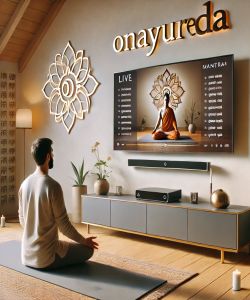
Overview of Yoga with Mantras
Yoga with Mantras constitutes a formidable and profoundly effective discipline, meticulously designed to synthesise the physical rigour of asana with the psycho-spiritual potency of sacred sound. This practice is not a mere augmentation of physical postures with ambient chanting; it is a sophisticated system of energetic and neurological re-calibration. At its core, it operates on the principle that vibration is the substrate of all existence and that specific phonic expressions—mantras—possess the inherent power to restructure both consciousness and physiology. The practitioner engages in a tripartite process involving physical form (asana), regulated breath (pranayama), and a focused, repetitive intonation of a specific mantra. This integration creates a resonant feedback loop, where the physical posture opens energetic channels (nadis) and centres the mind, while the mantra’s vibration purifies these channels and attunes the practitioner’s consciousness to higher states of awareness. It is a direct and uncompromising method for transcending the ceaseless chatter of the discursive mind, moving beyond superficial mental states to access deeper layers of the psyche. The discipline demands unwavering focus, precision in pronunciation, and a sincere intention (sankalpa) to be effective. It is fundamentally a science of vibration, engineered to deconstruct limiting psycho-emotional patterns and re-imprint the nervous system with elevated frequencies of order, clarity, and power. This is not a passive or gentle practice; it is an active, demanding, and transformative engagement with the fundamental forces of sound and consciousness. By harnessing the synergy between body, breath, and sacred utterance, Yoga with Mantras provides a direct pathway to self-mastery, cognitive stillness, and profound internal alignment, establishing itself as one of the most potent methodologies within the entire yogic canon for achieving tangible and lasting transformation. It is, in essence, the strategic application of sonic technology for the explicit purpose of spiritual and psychological evolution.
What is Yoga with Mantras?
Yoga with Mantras is a specific and highly structured yogic discipline predicated on the systematic integration of physical postures (asana), breath control (pranayama), and the repetitive chanting of sacred syllables or phrases (mantras). This is not a casual amalgamation but a precise technology designed to harness the synergistic power of these three elements to effect profound changes in the practitioner's consciousness, physiology, and energetic state. The practice is founded on the ancient Vedic principle of ‘Shabda Brahman’—the concept that the universe originated from and is sustained by sound vibration. Mantras, therefore, are not merely words but are considered to be potent sonic formulae, each with a unique vibrational signature capable of influencing the energetic and material realms. When a mantra is intoned with precision and focus during the practice of yoga, a powerful resonance is established.
The core components of this practice are as follows:
Asana (The Physical Posture): In this context, the physical postures are not an end in themselves. They serve to prepare the body, release physical and energetic blockages, and create a stable, receptive vessel for the mantra’s energy. Each posture is deliberately chosen to stimulate specific energy centres (chakras) or channels (nadis), making them more receptive to the vibrational input of the mantra.
Mantra (The Sacred Sound): The mantra is the central tool of the practice. It can be a single syllable (bija mantra), a series of syllables, or a longer verse. The repetition, known as japa, is performed either audibly (vachika), in a whisper (upamshu), or mentally (manasika). Its purpose is to focus the mind, override habitual thought patterns, and introduce a specific, ordering frequency into the practitioner’s entire being.
Pranayama (The Breath): The breath acts as the carrier wave for the mantra's energy. By synchronising the chanting with the inhalation and exhalation, the practitioner drives the mantra’s vibration deep into the nervous system and cellular matrix, amplifying its transformative effect and ensuring its pervasive influence throughout the body and mind.
Who Needs Yoga with Mantras?
Individuals Experiencing Profound Mental Agitation: Those whose minds are perpetually dominated by incessant, intrusive, and chaotic thought patterns. The repetitive and resonant nature of the mantra provides a singular point of focus, effectively overriding the discursive mind and imposing a state of ordered stillness. This practice is a direct antidote to mental turbulence.
Practitioners Seeking to Deepen a Stagnant Yoga Practice: Yogis who have reached a plateau in their physical asana practice and seek to access the more subtle, energetic, and spiritual dimensions of yoga. The integration of mantra provides the necessary key to unlock these deeper layers, transforming a purely physical exercise into a potent psycho-spiritual discipline.
Professionals in High-Stress, Intellectually Demanding Fields: Executives, academics, analysts, and others whose cognitive faculties are consistently over-extended. This practice serves to clear mental fog, enhance concentration, improve cognitive clarity, and build profound resilience against stress by re-calibrating the nervous system.
Individuals Working Through Deep-Seated Emotional Trauma: Those carrying the burden of past emotional wounds and restrictive psychological patterns. The vibrational power of specific mantras can penetrate the subconscious mind, helping to dissolve long-held energetic blockages and release suppressed emotional content in a structured and controlled manner.
Seekers of Authentic Spiritual Experience: Individuals who are dissatisfied with superficial belief systems and desire a direct, experiential connection to a higher state of consciousness. Yoga with Mantras is not based on faith but on a direct, repeatable methodology for altering consciousness and perceiving reality from a more expanded perspective.
Creative Professionals Experiencing Blocks: Artists, writers, and innovators who find their creative channels obstructed. The practice clears mental clutter and stimulates the subtle energy centres associated with intuition and creativity, facilitating a renewed flow of inspiration and insight.
Anyone Requiring Enhanced Focus and Self-Discipline: The practice is an uncompromising training ground for the will. The requirement to synchronise body, breath, and sound demands and cultivates a level of concentration and internal discipline that is directly transferable to all other areas of life.
Origins and Evolution of Yoga with Mantras
The origins of Yoga with Mantras are deeply embedded in the most ancient strata of Indian spiritual traditions, predating the formalisation of physical yoga postures by millennia. Its primordial roots lie in the Vedic period, where the seers, or Rishis, perceived sacred, vibrational formulae—mantras—as the fundamental building blocks of the cosmos. These were not human inventions but were considered to be eternal, revealed truths (shruti). The Rigveda, one of the oldest sacred texts in existence, is a vast collection of such hymns and mantras, intended for ritualistic chanting to harmonise human existence with cosmic law (Rita). In this early context, the ‘yoga’ was the discipline of precise ritual and correct pronunciation, a yoke (yuj) connecting the individual to the divine through sound. The focus was entirely on the power of the spoken word to influence reality.
With the emergence of the Upanishads, the philosophical focus shifted from external ritual to internal realisation. Mantras like ‘Aum’ were explored as tools for profound meditation and self-inquiry, a means to understand the nature of Brahman (the ultimate reality) and Atman (the individual self). It was during this period that the internalisation of mantra practice, or japa, began to be systematised as a direct path to spiritual insight. This laid the philosophical groundwork for the later integration of mantra into more embodied practices, recognising sound as a vehicle for transforming consciousness from within.
The subsequent development of Tantra represented a pivotal evolution. Tantric traditions fully embraced the body as a vessel for spiritual transformation, rather than a mere obstacle. This led to the sophisticated synthesis of mantra with other potent techniques, including pranayama (breathwork), mudra (gestures), yantra (sacred geometry), and asana (postures). The Tantric schools developed the science of mantras to an unprecedented degree, mapping specific sonic vibrations to the various energy centres (chakras) and channels (nadis) within the subtle body. It was here that the practice of infusing physical yoga postures with specific mantras became a core methodology for activating and purifying the human energetic system. This tantric synthesis is the direct precursor to the modern, integrated practice of Yoga with Mantras, which continues to evolve as it is interpreted by contemporary masters and adapted for a global audience, while striving to maintain the integrity of its powerful, ancient roots.
Types of Yoga with Mantras
Japa Yoga: This is the foundational practice centred exclusively on the meditative repetition of a mantra. The primary objective is to achieve a state of one-pointed concentration (dharana) and ultimately absorption (dhyana) by using the mantra as the sole object of focus. It is performed in three distinct modes: Vachika Japa (audible repetition), used to initially focus the mind; Upamshu Japa (whispered repetition), which internalises the practice; and Manasika Japa (mental repetition), considered the most advanced and potent form, where the mantra resonates entirely within the practitioner’s consciousness. Japa is often practiced with a mala (a string of beads) to maintain count and rhythm.
Mantra Asana: This type involves the direct and deliberate synchronisation of mantra with physical yoga postures. Each movement into, holding of, or release from an asana is synchronised with a specific mantra or a part of a mantra, and often with the breath. This creates a powerful synergy, where the physical posture opens the body to receive the mantra’s vibration, and the mantra deepens the energetic and spiritual effect of the posture. The mantra is not incidental; it is the driving force that animates the physical form, transforming the practice from a physical exercise into a dynamic, vibrational meditation.
Kirtan: A devotional and communal form of mantra practice, Kirtan involves call-and-response chanting, typically accompanied by musical instruments. While more expressive and emotive than solitary Japa, it is a formidable practice for opening the heart centre (Anahata chakra) and generating a powerful collective energy. The focus is on surrendering the ego through devotional chanting, allowing the group's unified voice to create an overwhelming field of positive vibration that purifies the environment and the participants.
Nada Yoga: Known as the “Yoga of Sound,” this is a more subtle and advanced practice. It involves focusing on both external and internal sounds. The initial stages may involve concentrating on ambient sounds or music, but the ultimate goal is to perceive the subtle, inner, unstruck sound (Anahata Nada). Practitioners use mantras to refine their auditory perception and quiet the mind to a degree where this internal vibration, believed to be the primordial sound of the universe, becomes audible. It is a deeply meditative path of listening and absorption.
Benefits of Yoga with Mantras
Commands Mental Discipline: Imposes a singular, resonant focus that systematically dismantles the habit of mental wandering, cultivating profound levels of concentration and unwavering mental clarity. It is a direct training for a commanding and disciplined mind.
Neurological Re-patterning: The rhythmic repetition of specific sonic vibrations directly influences brainwave patterns, inducing states of calm alertness (alpha waves) and deep meditation (theta waves). This process actively re-wires neural pathways, diminishing stress-response patterns and reinforcing states of equilibrium.
Purification of the Energetic System: The targeted vibrations of mantras work to dissolve subtle energetic blockages within the nadis (energy channels) and chakras (energy centres). This facilitates a more potent and harmonious flow of prana (life force energy) throughout the practitioner’s entire being, enhancing vitality and psycho-spiritual health.
Emotional Regulation and Catharsis: Provides a structured and powerful outlet for the release of suppressed emotions. The vibrational force of the mantra can penetrate deep into the subconscious, bringing latent emotional content to the surface to be processed and released, leading to greater emotional stability and resilience.
Enhanced Respiratory Function: The synchronisation of chanting with controlled breathing (pranayama) significantly improves lung capacity, diaphragmatic strength, and the efficiency of gaseous exchange. This leads to better oxygenation of the blood and a calming effect on the autonomic nervous system.
Access to Elevated States of Consciousness: By systematically overriding the ego-driven, discursive mind, the practice creates a gateway to transpersonal states of awareness. It enables the practitioner to experience a sense of unity, expanded perception, and a direct connection to the deeper, silent ground of their own being.
Strengthened Power of Intention: The practice trains the practitioner to hold a clear and focused intention (sankalpa) while generating a powerful energetic field through sound. This dramatically enhances one’s ability to manifest intentions and direct one’s will effectively in all aspects of life.
Cellular Rejuvenation: The principle of cymatics suggests that sound vibration can influence matter. The consistent application of harmonious, sacred sound is held to have a purifying and ordering effect at the cellular level, promoting physical well-being and mitigating the physiological impact of stress.
Core Principles and Practices of Yoga with Mantras
Sankalpa (Resolute Intention): Before any mantra is uttered, a clear, concise, and unwavering intention must be established. Sankalpa is the focused will that directs the energy generated by the practice. It is not a mere wish but a powerful resolution that provides the trajectory for the mantra's transformative power. Without a strong Sankalpa, the practice lacks direction and its potency is severely diminished.
Uchcharana (Precise Articulation): The pronunciation of the mantra is non-negotiable. Each syllable must be articulated with absolute precision, adhering to the correct rhythm, metre, and points of resonance within the vocal anatomy. Sanskrit mantras are sonic formulae; their effectiveness is contingent upon the accurate replication of their unique vibrational structure. Careless or incorrect pronunciation renders the mantra inert or, in some traditions, potentially detrimental.
Shraddha (Unwavering Trust): The practitioner must engage with a sense of profound trust and conviction in the process and the power of the mantra. This is not blind faith but a state of confident receptivity that opens the subtle body to the mantra's influence. Doubt and cynicism create energetic resistance that obstructs the vibrational energy, neutralising the practice's efficacy.
Japa (Systematic Repetition): The core practice is the consistent and focused repetition of the mantra. This is not a mindless activity but a highly attentive process. The repetition serves to wear down habitual mental grooves and deeply imprint the mantra's energy into the subconscious mind and cellular structure. The repetition must be rhythmic and continuous, creating a sustained vibrational field.
Synchronization with Prana (Breath Integration): The mantra must be yoked to the breath. Typically, the mantra is chanted or mentally repeated on the exhalation, with the inhalation serving as a silent preparation. This synchronisation acts as a powerful delivery mechanism, using the prana as a vehicle to carry the mantra's vibration throughout the entire energetic and physical system, ensuring its pervasive and deep-reaching impact.
Ekagrata (One-Pointed Concentration): The mind must remain resolutely fixed on the sound of the mantra, to the exclusion of all other sensory input or mental chatter. Any distraction that arises must be immediately and dispassionately dismissed, with the focus continually returned to the mantra. This unwavering concentration is the furnace in which the transformative power of the practice is forged.
Bhavana (Cultivated Feeling-State): The practitioner must actively cultivate the feeling-state or quality associated with the mantra. For a mantra of peace, a state of peace is embodied. For a mantra of power, a sense of inner strength is invoked. This emotional and energetic resonance amplifies the mantra’s effect exponentially, aligning the practitioner’s entire being with the frequency of the sacred sound.
Online Yoga with Mantras
Uncompromised Environmental Control: The online modality grants the practitioner absolute authority over their practice space. One can meticulously construct an environment free from external disturbances, control lighting and temperature, and utilise high-quality audio equipment to ensure the mantra’s vibration is received with pristine clarity. This personal sanctuary eliminates the unpredictability and potential distractions of a public studio, fostering a deeper state of immersion.
Enhanced Auditory Focus: Practising with headphones, a key advantage of the online format, creates a uniquely immersive auditory experience. This direct input channels the instructor's voice and the mantra's sound directly into the practitioner's awareness, blocking out ambient noise and making the vibrational aspect of the practice profoundly more immediate and powerful. The subtleties of pronunciation and resonance are transmitted with uncompromising fidelity.
Cultivation of Self-Reliance and Internal Authority: Without the physical presence of an instructor for constant adjustments, the online practitioner is compelled to develop a heightened sense of internal awareness (interoception) and self-correction. This fosters a robust sense of autonomy and deepens the practitioner’s personal relationship with the practice, moving them from a state of dependence to one of self-mastery.
Absolute Consistency and Accessibility: The digital platform removes all geographical and logistical barriers to consistent practice. A world-class instructor is accessible from any location, and sessions can be undertaken with a regularity that is often impossible with the constraints of physical travel. This consistency is the critical factor in achieving tangible, cumulative results from mantra-based disciplines.
Privacy for Uninhibited Vocal Expression: Many practitioners, particularly beginners, feel inhibited when chanting audibly in a group setting. The privacy of an online session removes this psychological barrier entirely, permitting free and powerful vocalisation. This uninhibited expression is crucial for experiencing the full physical and energetic impact of the mantra’s vibration without the impediment of self-consciousness.
Access to a Curated Digital Archive: Online platforms often provide a repository of recorded sessions. This allows the practitioner to repeat specific lessons, focus on mastering a particular mantra or technique, and practice at any time. This archival resource is an invaluable tool for reinforcing learning and deepening one's understanding at a self-determined pace, an option unavailable in a live, one-off class.
Yoga with Mantras Techniques
Preparation and Intention (Sankalpa): Assume a stable and erect seated posture, such as Sukhasana (Easy Pose) or Padmasana (Lotus Pose), ensuring the spine is aligned and the body is still. Close the eyes and bring the awareness inward. Take several deep, regulating breaths to centre the mind. Formulate a clear and potent intention for the practice. State this Sankalpa mentally with absolute conviction, directing the energy that will be generated.
Mantra Selection and Initial Articulation: Select the mantra for the session. If provided by an instructor, receive it with reverence. If self-selected, ensure it is from an authentic source. Begin by chanting the mantra aloud (Vachika Japa) slowly and with exaggerated precision. Focus on the exact formation of each sound in the mouth—the touch of the tongue to the palate, the shape of the lips. Repeat this 11 times to physically and mentally attune to the mantra’s structure.
Rhythmic Chanting with Breath (Pranayama Japa): Begin to establish a steady rhythm. Inhale deeply and silently. On the exhalation, chant the full mantra. Allow the breath to dictate the pace. Do not rush. The sound should be continuous, resonant, and projected from the navel centre, not the throat. Maintain this audible, breath-synchronised chanting for a set number of repetitions, typically a full cycle of a 108-bead mala, keeping the mind firmly anchored to the sound.
Transition to Whispered Repetition (Upamshu Japa): After completing the audible round, seamlessly transition to whispering the mantra. The physical articulation remains precise, but the volume is reduced to a level only you can hear. This stage internalises the practice, shifting the focus from external sound to the subtle vibration felt in the throat and head. Maintain the same rhythm and breath synchronisation. Continue for a designated period or number of repetitions.
Integration of Mental Repetition (Manasika Japa): This is the most potent stage. Cease all vocalisation and movement of the lips. Begin to repeat the mantra mentally, silently, within the space of the mind. Experience the mantra as a pure vibration or thought-form, synchronised with the silent rhythm of the breath. The focus must be absolute. If the mind wanders, immediately and firmly bring it back to the silent repetition of the mantra.
Absorption and Stillness: Upon completing the final repetition, release the mantra entirely. Do not begin thinking or analysing. Simply sit in the resultant stillness and silence. Observe the energetic and mental state without judgement. Absorb the resonance and the quietude created by the practice. Remain in this state of meditative absorption for at least five to ten minutes before slowly and deliberately bringing your awareness back to the body and the external environment.
Yoga with Mantras for Adults
Yoga with Mantras offers adults a formidable, non-pharmaceutical intervention for managing the relentless pressures of modern existence. In the adult life stage, characterised by compounded responsibilities, cognitive overload, and often deeply ingrained psychological patterns, this practice serves as a direct and powerful tool for systemic re-calibration. It is not a gentle palliative but a rigorous mental and energetic discipline. The relentless internal dialogue, the anxiety born of ceaseless planning and future-projection, and the exhaustion from sustained hyper-vigilance are met head-on by the mantra’s resonant power. The repetitive, focused intonation acts as a circuit breaker for ruminative thought loops, compelling the overactive prefrontal cortex into a state of ordered calm. For the adult nervous system, chronically conditioned into a fight-or-flight response by professional and personal demands, the practice induces a profound parasympathetic state, mitigating the corrosive physiological effects of chronic stress, such as elevated cortisol levels and systemic inflammation. Furthermore, it addresses the existential ennui that can pervade adult life. By moving consciousness beyond the narrow confines of the egoic personality and its narratives of success and failure, it provides access to a deeper sense of purpose and connectedness. It is a mature practice for those who have moved beyond the need for purely physical exertion and seek a sophisticated methodology for mastering their own internal state. It enhances cognitive functions essential for professional efficacy—focus, clarity, and emotional regulation—while simultaneously providing a robust framework for profound personal and spiritual inquiry, offering a direct path to reclaiming sovereignty over one's own mind.
Total Duration of Online Yoga with Mantras
The total duration of a standard online Yoga with Mantras session is precisely structured to be 1 hr. This specific timeframe is not arbitrary; it is a deliberately calibrated duration designed for maximum efficacy and integration within a demanding adult schedule. A session of 1 hr is substantial enough to facilitate a genuine shift in consciousness and physiology, yet concise enough to be consistently maintainable without becoming a prohibitive burden. The allocation of time within this 1 hr framework is critical. The initial phase is dedicated to establishing a stable posture, centring the mind, and setting a clear intention (Sankalpa), a non-negotiable prerequisite for a potent practice. The core of the session is devoted to the systematic practice of Japa (mantra repetition), moving through audible, whispered, and mental stages, which requires a significant and uninterrupted period to build momentum and achieve deep states of concentration. This central practice is often integrated with preparatory asana and pranayama to prepare the physical and energetic bodies. The final segment of the 1 hr duration is reserved for a period of absolute stillness and silent absorption, allowing the vibrational imprint of the mantra to fully integrate into the practitioner’s system. To curtail the session would be to truncate this vital integration process, diminishing the lasting benefits. To extend it unnecessarily in an online format could lead to a loss of focus and digital fatigue. Therefore, the 1 hr duration represents an optimal and complete therapeutic and spiritual arc, providing a powerful, self-contained transformative experience that is both profound and pragmatically achievable.
Things to Consider with Yoga with Mantras
Engaging with Yoga with Mantras requires a degree of discernment and commitment far beyond that required for a conventional physical yoga class. A primary consideration must be the source and authenticity of the mantra and the instruction. Mantras are not interchangeable affirmations; they are potent sonic formulae derived from specific spiritual lineages. One must undertake due diligence to ensure the instructor is not merely a certified yoga teacher but possesses genuine, verifiable training in mantra science, preferably from a recognised tradition. The meaning and energetic import of the mantra should be understood, at least foundationally, to avoid mindless repetition. This is not a practice of blind faith but of informed engagement. Furthermore, one must be prepared for the potential psychological and emotional repercussions. Mantra practice, particularly when potent, can act as a powerful catalyst, bringing suppressed emotions, unresolved psychological material, and latent memories to the surface of consciousness. The practitioner must possess or be willing to cultivate the emotional resilience and stability to navigate this process of psychic purification without becoming overwhelmed. A commitment to consistency is non-negotiable for tangible results; sporadic or half-hearted practice will yield little more than temporary relaxation. The practitioner must also cultivate a sense of reverence. This does not necessitate religious belief, but an attitude of profound respect for the power and antiquity of the practice is essential. Treating a sacred mantra with casualness or disrespect is considered to not only neutralise its efficacy but to be energetically counterproductive. Finally, the importance of correct pronunciation cannot be overstated, as the mantra’s power lies in its precise vibrational structure.
Effectiveness of Yoga with Mantras
The effectiveness of Yoga with Mantras is both profound and scientifically plausible, operating through a synergistic convergence of neurological, psychological, and physiological mechanisms. Its potency is not a matter of esoteric belief but a direct consequence of its systematic impact on the human system. At the neurological level, the rhythmic, repetitive nature of chanting acts as a powerful entrainment tool, directly influencing brainwave patterns. It guides the brain from the agitated, high-frequency beta waves associated with normal waking consciousness and stress, towards the calmer, more coherent alpha and theta waves characteristic of deep relaxation and meditation. This shift is not merely a subjective feeling of peace; it represents a tangible re-ordering of neural activity, enhancing cognitive function and mitigating the neurological damage caused by chronic stress. Psychologically, the mantra serves as an instrument of cognitive disruption. It forcefully interrupts the habitual, often negative, internal monologue that dominates the untrained mind. By providing a singular, resonant point of focus, it starves ruminative and anxious thought patterns of the attentional energy they require to sustain themselves, leading to a state of profound mental silence. On a physiological level, the controlled breathing synchronised with chanting directly stimulates the vagus nerve, activating the parasympathetic nervous system—the body’s innate ‘rest and digest’ mechanism. This counters the pervasive fight-or-flight response, lowering heart rate, blood pressure, and cortisol levels. The very vibration of the sound, transmitted through the bones of the skull and the fluid of the body, creates a form of internal sonic massage, releasing physical tension and promoting cellular harmony. Its effectiveness is therefore not magical, but methodological; it is a sophisticated, multi-layered technology for systematically re-tuning the entire human organism towards a state of coherence, resilience, and optimal function.
Preferred Cautions During Yoga with Mantras
Engagement with Yoga with Mantras demands a robust and uncompromising adherence to specific cautions, as the misuse of this powerful technology can lead to undesirable consequences. Foremost is the absolute imperative for qualified instruction. The commercialisation of yoga has produced a proliferation of instructors who lack the requisite depth of knowledge in mantra science; undertaking this practice with such a guide is a severe misstep. A mantra received from an unqualified source or mispronounced due to improper guidance can, at best, be ineffective and, at worst, create energetic dissonance. The practitioner must be cautioned against a casual or frivolous attitude. These are not merely pleasant sounds; they are sacred formulae designed to deconstruct and reorganise consciousness. Approaching them without sincere intention and a measure of reverence is to fundamentally misunderstand and disrespect their power. One must also be prepared for psychological catharsis. This practice is a potent purifier and will invariably bring suppressed emotional content and subconscious patterns to the surface. An individual who is psychologically fragile or unprepared to confront their own inner turmoil should proceed with extreme caution, preferably with concurrent therapeutic support. Furthermore, there is a risk of what is known as ‘mantra-siddhi obsession,’ where the practitioner becomes attached to the potential psychic powers or experiences the practice may unlock, distracting from the true goal of liberation and self-realisation. Finally, avoid a purely intellectual approach. While understanding the meaning is beneficial, the primary engagement must be experiential and vibrational. Over-analysing the mantra while chanting short-circuits its fundamental mechanism of action, which is to bypass the analytical mind altogether.
Yoga with Mantras Course Outline
Module One: Foundational Principles and Ethics
The Yogic Concept of Sound: Shabda Brahman and Nada.
The Science of Vibration and Resonance: Cymatics and its Relevance.
Sankalpa: The Power of Directed Intention.
The Ethical Engagement with Sacred Sound: Authenticity, Reverence, and Lineage.
Module Two: The Anatomy of Mantra
Classification of Mantras: Bija, Saguna, Nirguna.
Sanskrit Pronunciation: The 5 Points of Articulation (Kanthya, Talavya, Murdhanya, Dantya, Oshthya).
Uchcharana: Mastering Rhythm, Metre, and Intonation.
The Structure of a Japa Practice: Vachika, Upamshu, and Manasika Japa.
Module Three: Core Mantra Techniques and Practice
Mastering a Universal Mantra (e.g., Aum or So Hum).
Introduction to Bija (Seed) Mantras for Chakra Activation.
Practice with a Selected Saguna (Form-based) Mantra.
The Use of a Mala: Technique and Significance.
Module Four: Integration with Asana and Pranayama
Principles of Mantra-Asana Synchronisation.
Developing a Mantra-Infused Vinyasa Sequence.
Pranayama Japa: Yoking Mantra to the Breath for Deep Energetic Penetration.
Mantra and Mudra: Sealing Energetic Circuits.
Module Five: The Psychology and Energetics of Mantra
Mantra as a Tool for Overriding Samskaras (Subconscious Imprints).
Navigating Emotional and Psychological Catharsis During Practice.
The Subtle Body: How Mantra Purifies Nadis and Chakras.
Cultivating Bhavana: The Role of Feeling and Devotion.
Module Six: Advanced Practices and Lifestyle Integration
Introduction to Likhita Japa (Written Mantra).
Ajapa Japa: The Unspoken, Spontaneous Mantra.
Developing a Sustained and Disciplined Personal Practice (Sadhana).
Living the Mantra: Integrating Vibrational Awareness into Daily Life.
Detailed Objectives with Timeline of Yoga with Mantras
Within the Initial Phase (Weeks 1-4): Foundational Competence
Objective: To achieve technically correct pronunciation of the primary course mantras. This involves mastering the precise placement of the tongue and the shape of the mouth for each Sanskrit syllable, verified through instructor feedback.
Objective: To establish a consistent daily practice schedule of a minimum, specified duration. The aim is not depth but the cultivation of unwavering discipline and routine.
Objective: To demonstrate proficiency in the use of a mala for Japa, maintaining a steady rhythm and focus without breaking concentration for the duration of one full round (108 repetitions).
By the Mid-Point (Weeks 5-8): Internalisation and Energetic Awareness
Objective: To successfully transition from purely audible chanting (Vachika) to whispered (Upamshu) and mental (Manasika) Japa, while maintaining clarity and focus.
Objective: To begin to perceive the subtle energetic effects of the mantra within the physical and subtle bodies. This includes identifying specific vibrations in different chakras or a palpable shift in mental state post-practice.
Objective: To synchronise mantra seamlessly with breath and basic asana sequences, demonstrating the ability to maintain the integrity of both the physical form and the sonic repetition simultaneously.
Towards Completion (Weeks 9-12): Deepening and Integration
Objective: To sustain prolonged periods of one-pointed concentration (Ekagrata) during mental Japa, with significantly reduced instances of mental wandering.
Objective: To begin navigating and processing any emotional or psychological content that arises during the practice with stability and non-attachment, as discussed in course theory.
Objective: To articulate a clear understanding of how the principles of the practice can be applied to manage stress and maintain equilibrium in daily life, moving the practice from the mat into lived experience.
Upon Completion and Beyond: Autonomy
Objective: To possess the confidence and competence to guide oneself through a full Yoga with Mantras practice without external instruction.
Objective: To have established the practice as a core, non-negotiable tool for self-regulation and spiritual inquiry, demonstrating full ownership and integration of the techniques learned.
Requirements for Taking Online Yoga with Mantras
Technical Infrastructure: A reliable, high-speed internet connection is non-negotiable. The connection must be stable enough to stream high-quality video and audio without interruption, as buffering or disconnection disrupts the meditative state. A modern computing device (laptop or desktop) with a functional, clear-resolution webcam and a high-quality microphone is mandatory.
Audio Equipment: The use of high-fidelity headphones or noise-cancelling earphones is a strict requirement, not an option. This ensures an immersive experience, allowing the practitioner to discern the subtle nuances of the instructor’s pronunciation and to fully absorb the mantra’s vibration without ambient distraction.
Dedicated Physical Space: The practitioner must designate a specific, private, and inviolable space for the duration of the session. This area must be impeccently clean, free from all clutter, and guaranteed to be devoid of interruptions from other people, pets, or notifications. The sanctity of the practice space is paramount.
Appropriate Attire and Equipment: Unrestrictive clothing that allows for both seated meditation and, if required, a full range of physical movement is necessary. A high-quality yoga mat is required to provide a stable and clean foundation for the practice. A firm cushion or yoga block for seated postures is also essential to ensure correct spinal alignment.
Unwavering Personal Commitment: The practitioner must commit to attending all sessions punctually and to completing the entire duration without leaving. A mindset of discipline, focus, and sincere intent is the most critical prerequisite. This is not a passive webinar but an active and demanding spiritual discipline.
A Discerning and Receptive Mind: The participant must be willing to suspend cynicism and engage with the material with an open yet critical mind. They must be prepared to follow precise instructions without deviation and trust the methodology. An inability to receive and implement feedback will render the practice ineffective.
Pre-Session Preparation: The practitioner is required to log into the online platform several minutes prior to the start time to resolve any technical issues. They must ensure their physical and mental state is prepared for practice, having avoided heavy meals or stimulants beforehand.
Things to Keep in Mind Before Starting Online Yoga with Mantras
Before embarking upon the disciplined path of online Yoga with Mantras, it is imperative to conduct a rigorous self-assessment and prepare one's environment with strategic foresight. This is not a casual fitness regimen to be undertaken lightly; it is a profound engagement with the technology of consciousness that demands absolute commitment. You must first ensure that your motivations are clear and robust. Are you seeking a quick fix for stress, or are you prepared to engage in a systematic, long-term practice of self-discipline and inner re-calibration? Realistic expectations are crucial; transformative results are the product of consistent, focused effort, not sporadic participation. The online format, while convenient, requires a greater degree of personal autonomy and integrity than in-person instruction. You must be prepared to create and defend a sacred space for your practice, free from the digital and domestic incursions that define modern life. This involves communicating clear boundaries to cohabitants and establishing a firm ritual of disconnecting from all other forms of media before a session. Critically evaluate the instructor and the lineage they represent. In the unregulated digital marketplace, discernment is your primary shield. Investigate their credentials, their training in mantra science specifically, and their philosophical alignment. Finally, prepare yourself to be your own overseer. Without the physical presence of a teacher to correct your posture or steady your focus, the onus is entirely upon you to practice with precision, honesty, and an unwavering commitment to the instructions provided. Your progress will be a direct reflection of the rigour and sincerity you bring to each session.
Qualifications Required to Perform Yoga with Mantras
The authority to guide others in the profound practice of Yoga with Mantras is not conferred by a standard, weekend-long yoga teacher training certificate. It is a serious responsibility that demands a depth of knowledge and personal experience far exceeding the industry norm. An authentic instructor must possess a multi-faceted and verifiable set of qualifications, grounded in both rigorous study and embodied practice. The foundational requirement is a direct connection to an established and authentic spiritual lineage (parampara) where the science of mantra has been preserved and transmitted. This ensures the instructor is not improvising or diluting sacred knowledge. Within this framework, several specific qualifications are non-negotiable:
Extensive Personal Sadhana: The instructor must have a long-standing, disciplined, and dedicated personal practice of mantra. They must have spent years, not months, working deeply with the techniques they purport to teach. Their instruction must emanate from a place of direct, lived experience, not just theoretical knowledge.
Scholarly Knowledge of Sanskrit: A functional, if not scholarly, understanding of the Sanskrit language is imperative. This includes precise knowledge of pronunciation (Uchcharana), the alphabet (Devanagari), and the philosophical and etymological roots of the mantras being taught. To teach mantra without this is irresponsible.
Advanced Yogic Training: A minimum of a 500-hour advanced yoga teaching certification (e.g., RYT-500) is a baseline prerequisite, providing the necessary understanding of asana, pranayama, anatomy, and yogic philosophy. Crucially, this must be supplemented by specialised, in-depth training specifically in Nada Yoga, Mantra Yoga, or a related vibrational science.
Demonstrable Integrity: The instructor must exhibit personal and professional integrity. They should be transparent about their lineage, training, and the limits of their knowledge. They must not make exaggerated claims about the practice or present it as a panacea, but rather as a rigorous and demanding discipline.
Online Vs Offline/Onsite Yoga with Mantras
Online
The online modality for Yoga with Mantras offers a distinct set of advantages rooted in control, privacy, and accessibility. The practitioner has absolute sovereignty over their environment, enabling the creation of a personal sanctuary optimised for deep immersion. This eliminates the variables of a public space, such as ambient noise, temperature fluctuations, and the subtle energetic disturbances of other participants. The use of headphones, a unique feature of the online format, delivers the instructor's guidance and the mantra's vibration with unparalleled clarity and immediacy, creating a potent, focused auditory field. This format demands and fosters a high degree of self-reliance and internal discipline, as the practitioner must become their own monitor for alignment and focus. It removes all geographical and logistical barriers, providing access to world-class, specialist instructors who would otherwise be unreachable. Furthermore, the inherent privacy of practising alone encourages uninhibited vocal expression, which is critical for experiencing the full power of audible chanting without the psychological impediment of self-consciousness often felt in a group setting. The online sphere is the domain of the autonomous, disciplined practitioner seeking a focused and controlled experience.
Offline/Onsite
The offline, or onsite, practice of Yoga with Mantras provides a different, yet equally powerful, set of benefits centred on direct transmission, communal energy, and physical immediacy. The primary advantage is the physical presence of the instructor, which allows for immediate, hands-on adjustments in posture and direct, nuanced feedback on mantra pronunciation. More subtly, the concept of ‘darshan’—being in the presence of an experienced teacher—allows for a form of energetic transmission that cannot be replicated through a screen. The collective power of a group (sangha) chanting in unison creates a formidable, resonant field of energy that can significantly amplify the individual experience, carrying practitioners into deeper states than they might achieve alone. This communal aspect fosters a sense of connection and shared purpose. The shared, dedicated space of a studio or ashram is energetically charged and sanctified by repeated practice, providing a supportive container that is difficult to replicate in a domestic environment. The onsite experience is ideal for beginners needing foundational guidance and for any practitioner seeking the synergistic power and direct energetic exchange of a communal practice.
FAQs About Online Yoga with Mantras
Question 1. Is online practice as effective as in-person?
Answer: Its effectiveness is different. Online excels in providing a controlled, private environment for deep focus, while in-person offers communal energy and direct physical correction. For the disciplined individual, online practice is exceptionally potent.
Question 2. What technology is absolutely essential?
Answer: A stable, high-speed internet connection, a quality webcam, and high-fidelity headphones. The headphones are non-negotiable for an immersive auditory experience.
Question 3. Do I need to be a yoga expert to start?
Answer: No. A willingness to learn and the discipline to practice as instructed are more important than prior physical flexibility or experience.
Question 4. Can a mantra be harmful if pronounced incorrectly?
Answer: While unlikely to be harmful in a beginners’ context, incorrect pronunciation renders the mantra vibrationally ineffective. Precision is the key to its power.
Question 5. Will I be chanting in a language I do not understand?
Answer: Yes, typically Sanskrit. A qualified instructor will explain the meaning and energetic significance of the mantra, so you are not chanting blindly.
Question 6. Is this a religious practice?
Answer: It originates from a spiritual tradition but is practiced as a psycho-spiritual technology. It does not require adherence to any religious doctrine.
Question 7. How do I choose the right mantra for me?
Answer: In a structured course, the instructor will provide the mantra. For personal practice, it is best to receive one from a qualified teacher rather than choosing randomly.
Question 8. Can I practice silently if I am not comfortable chanting aloud?
Answer: The practice moves from audible to mental repetition. However, the initial audible stage is a critical component for feeling the physical vibration. The privacy of online practice helps overcome initial inhibitions.
Question 9. What if my mind keeps wandering?
Answer: This is expected. The discipline is to continually and firmly bring the mind back to the mantra, without self-criticism. This act of returning is the core of the mental training.
Question 10. How soon can I expect to see results?
Answer: A sense of calm may be immediate. Deeper, lasting changes in mental patterns and resilience are the result of consistent, long-term practice.
Question 11. Is it necessary to sit on the floor?
Answer: An erect spine is the primary requirement. If sitting on the floor is not possible, sitting upright on a straight-backed chair is an acceptable modification.
Question 12. What if I miss a live session?
Answer: Many online courses offer recordings, which is a significant advantage for catching up and reviewing the material.
Question 13. Can I practice mantras while doing other activities?
Answer: The formal practice requires one-pointed focus. While advanced practitioners may maintain an underlying mantra awareness, beginners must practice with dedicated, singular attention.
Question 14. Is there a specific time of day that is best for practice?
Answer: Early morning, before the day's activities begin, is traditionally considered optimal due to the quietness of the environment and the mind. However, consistency is more important than the specific time.
Question 15. Will I need to buy a mala (bead necklace)?
Answer: It is a highly recommended and effective tool for keeping count and rhythm during japa, but not strictly mandatory to begin.
Question 16. Can this practice bring up difficult emotions?
Answer: Yes. It is a purifying practice that can release suppressed emotional energy. A professional setting will provide the context to navigate this safely.
Conclusion About Yoga with Mantras
In conclusion, Yoga with Mantras stands as a formidable and sophisticated discipline, a rigorous science of self-mastery engineered for the explicit purpose of re-calibrating the human mind and energetic system. It is definitively not a passive relaxation technique or a mere aesthetic addition to physical exercise. It is an active, demanding, and uncompromising methodology that leverages the fundamental power of sonic vibration to deconstruct dysfunctional psycho-emotional patterns and establish new, coherent neural pathways. The synthesis of asana, pranayama, and mantra creates a powerful, self-reinforcing loop, where the body is prepared to receive the vibration, the breath acts as the delivery mechanism, and the mantra itself provides the precise informational input for transformation. This practice demands precision, discipline, and an unwavering intention from its adherents. Its efficacy is not rooted in belief but in the direct, repeatable application of vibrational principles that influence consciousness at its very substrate. For the serious practitioner willing to engage with its rigour, Yoga with Mantras offers a direct, powerful, and time-tested path to mental stillness, emotional sovereignty, and the realisation of one's own highest potential. It is a robust and enduring technology for those who seek not merely to cope with the demands of life, but to command their own inner state with authority and clarity. The practice is a testament to the ancient understanding that consciousness and vibration are inextricably linked, and that by mastering sound, one can ultimately master oneself.