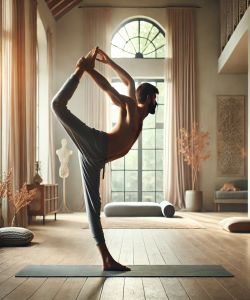
Overview of Ardha Chandrasana Yoga
Ardha Chandrasana, or the Half Moon Pose, represents a formidable and non-negotiable challenge within the lexicon of modern postural yoga. It is an exacting standing balance that rigorously tests the practitioner's capacity for stability, strength, flexibility, and unwavering concentration. The asana demands the practitioner to balance on one leg and one hand, extending the remaining limbs to create a single, expansive plane of energy, parallel to the ground. This is not a posture for the tentative; its successful execution requires a profound integration of the physical and mental faculties. It systematically exposes and addresses weaknesses in the stabilising muscles of the standing leg, particularly the gluteus medius, while demanding formidable core engagement to prevent torsional collapse. Simultaneously, it necessitates significant flexibility in the hamstrings and adductors and an open rotation in the thoracic spine to allow the chest to revolve towards the ceiling. More than a mere physical shape, Ardha Chandrasana is a masterclass in proprioception—the body's intrinsic awareness of its position in space. It compels a state of heightened somatic intelligence, where every minute adjustment is a dialogue between muscle activation and sensory feedback. The gaze, or drishti, becomes an anchor for the mind, preventing the mental fluctuations that inevitably lead to physical instability. Therefore, the pose serves as a crucial diagnostic tool for assessing a practitioner’s progress, revealing imbalances and asymmetries with uncompromising clarity. It is a crucible in which physical integrity and mental fortitude are forged, making it an indispensable component of any serious and disciplined yoga practice. Its mastery is not an end in itself but a testament to a practitioner’s commitment to achieving a state of integrated, functional, and conscious embodiment.
What is Ardha Chandrasana Yoga?
Ardha Chandrasana is a formidable standing balance posture in modern yoga, the name of which is derived from the Sanskrit terms ‘Ardha’ (half), ‘Chandra’ (moon), and ‘Asana’ (pose). It is fundamentally an exercise in integrating opposing forces and planes of movement within the human body. The pose requires the practitioner to stand on one leg, tipping the torso forward until it is parallel to the floor, with the corresponding hand placed on the ground or a block for support. The other leg is extended backwards, also parallel to the floor, while the opposite arm extends vertically towards the ceiling, creating a shape reminiscent of a half-moon. This is not simply a balance; it is a complex, multi-faceted asana that demands a synthesis of numerous physical capacities.
Its defining characteristics can be systematically delineated:
A Test of Unilateral Stability: The entire weight of the body is supported by one foot and one hand, demanding exceptional strength and endurance in the ankle, knee, and hip joints of the standing leg. It specifically targets the gluteal muscles, which are critical for pelvic stabilisation.
A Frontal Plane Hip Opener: The pose requires the practitioner to stack the top hip directly over the bottom hip, creating a powerful opening across the frontal plane of the body. This action stretches the adductors and groin of the standing leg while strengthening the abductors of the lifted leg.
A Thoracic Spine Rotation: To achieve the full expression of the pose, the torso must revolve upwards, opening the chest towards the ceiling. This is an active spinal twist that enhances mobility in the upper back and stretches the pectoral muscles.
A Discipline of Proprioception and Concentration: Maintaining equilibrium in such a precarious position necessitates an acute sense of bodily awareness and an unwavering focal point (drishti). The mind must remain resolutely fixed and calm; any mental disturbance translates directly into physical instability.
In essence, Ardha Chandrasana is an advanced posture that functions as a comprehensive diagnostic and developmental tool, exposing imbalances and demanding a high level of physical and mental integration.
Who Needs Ardha Chandrasana Yoga?
The rigorous practice of Ardha Chandrasana is not a universal prescription but a targeted intervention for individuals committed to achieving specific, high-level physical and mental competencies. Its application is mandated for the following cohorts:
Practitioners Seeking to Master Proprioception and Balance: Individuals who have progressed beyond basic standing postures and require a more sophisticated challenge to their neuromuscular system. This asana forces the development of acute spatial awareness and refines the body's subtle, reflexive adjustments, which is critical for advanced physical disciplines and the prevention of falls.
Athletes Requiring Enhanced Unilateral Strength and Stability: Competitors in sports such as running, martial arts, and dance, where single-leg strength, hip stability, and core control are paramount. The pose directly strengthens the gluteus medius and minimus, crucial muscles for preventing pelvic drop and subsequent injuries to the kinetic chain.
Individuals Aiming to Correct Muscular Imbalances and Asymmetries: Those who exhibit discrepancies in strength or flexibility between the left and right sides of the body. The unilateral nature of Ardha Chandrasana provides uncompromising feedback on these imbalances, offering a direct mechanism for their assessment and correction through consistent, mindful practice.
Yoga Practitioners Intending to Advance to More Complex Asanas: Mastery of Ardha Chandrasana is a non-negotiable prerequisite for a range of more demanding arm balances and inverted postures. It builds the foundational core strength, hip mobility, and body intelligence required for such advanced work.
Individuals Seeking to Cultivate Intense Mental Focus and Resilience: Anyone whose goals include the development of unwavering concentration (Dharana). The posture’s inherent instability demands absolute presence of mind. It is an active meditation that trains the practitioner to maintain composure and focus under conditions of significant physical stress, a skill directly transferable to professional and personal challenges.
Those Working to Improve Hip Mobility and Thoracic Extension: Individuals, particularly those in sedentary professions, who suffer from tightness in the hips and a collapsed or rounded posture. The pose actively opens the hip flexors and adductors while promoting rotation and extension through the thoracic spine, directly counteracting the negative physical effects of prolonged sitting.
Origins and Evolution of Ardha Chandrasana Yoga
The origins of Ardha Chandrasana, as it is practised today, are not rooted in ancient or medieval hatha yoga texts. Unlike seminal postures such as Padmasana or Sirsasana, Half Moon Pose is conspicuously absent from classical scriptures like the Hatha Yoga Pradipika or the Gheranda Samhita. Its emergence is a distinctly modern phenomenon, intrinsically linked to the physical dynamism and anatomical focus of the early 20th-century yoga renaissance in India, spearheaded by luminaries such as Tirumalai Krishnamacharya. It is within this crucible of modern postural yoga that the asana first appears as a codified part of a dynamic physical practice.
The popularisation and refinement of Ardha Chandrasana are largely credited to Krishnamacharya's most influential students, who disseminated their own interpretations globally. B.K.S. Iyengar, in particular, played a pivotal role in the evolution of the pose. Through his rigorous, alignment-based methodology, Iyengar deconstructed the asana, emphasising meticulous anatomical precision. He introduced the systematic use of props—such as blocks under the hand and the use of a wall for support—to make the pose accessible and to teach its core actions with greater integrity. His approach transformed Ardha Chandrasana from a mere balancing feat into a sophisticated therapeutic tool for developing bodily intelligence and correcting postural imbalances. His seminal work, Light on Yoga, published in the 1960s, presented the definitive technical guide to the pose for a global audience, solidifying its place in the modern yoga canon.
Simultaneously, in the flowing, breath-synchronised sequences taught by K. Pattabhi Jois in his Ashtanga Vinyasa system, Ardha Chandrasana found a different expression. Here, it is often practised as part of a dynamic transition, for instance, moving from Utthita Trikonasana into Virabhadrasana I, demanding not just static stability but fluid control and strength. This integration into vinyasa-based styles further cemented its importance. Over time, contemporary yoga schools have continued to explore and adapt the posture, introducing new variations and pedagogical approaches, yet its core identity as a supreme test of balance, strength, and spatial awareness remains unchanged, a testament to its powerful and effective modern design.
Types of Ardha Chandrasana Yoga
The term ‘types’ when applied to a singular asana like Ardha Chandrasana refers to its established variations and methodological approaches, each designed to serve a distinct purpose, from foundational learning to advanced expression. These are not arbitrary modifications but precise techniques for exploring different facets of the posture.
Classical Ardha Chandrasana: This is the full, unsupported expression of the pose. The practitioner balances on one leg and the fingertips of the corresponding hand, which rests on the floor. All limbs are fully extended, the hips and shoulders are stacked vertically, and the drishti (gaze) is directed towards the lifted hand. This form demands the highest degree of balance, strength, and proprioceptive awareness and represents the target expression of the asana. It is the benchmark against which all other variations are measured.
Supported Ardha Chandrasana: This variation employs props to facilitate correct alignment and build stability. The most common support is a yoga block placed under the bottom hand, which elevates the foundation, making the pose more accessible for those with tighter hamstrings or less developed balance. A wall can also be used as a critical tool, either by placing the back against it to cultivate the feeling of a single plane or by pressing the heel of the lifted foot into it to activate the rear leg. This type is a non-negotiable pedagogical tool for teaching the core principles of the pose safely and effectively.
Ardha Chandra Chapasana (Sugarcane Pose): This is an advanced and more complex variation that incorporates a backbend and a quadriceps stretch. From the standard Ardha Chandrasana position, the practitioner bends the knee of the lifted leg and catches the foot with the top hand. The action of kicking the foot into the hand creates a deep opening across the chest and shoulder and an intense stretch for the quadriceps and hip flexor of the raised leg. It requires a greater degree of flexibility, balance, and coordination than the classical form.
Dynamic Ardha Chandrasana: This refers to the use of the pose as a transitional element within a Vinyasa or flow sequence. Rather than a static hold, the practitioner moves fluidly into or out of Ardha Chandrasana from other postures, such as Trikonasana, Virabhadrasana II, or Parsvakonasana. This application demands immense control, core strength, and precision, as the entry and exit become as important as the pose itself. It transforms the asana from a destination into a component of a larger, seamless movement pattern.
Benefits of Ardha Chandrasana Yoga
Enhances Neuromuscular Coordination and Proprioception: The pose demands constant, minute adjustments to maintain equilibrium, thereby rigorously training the nervous system's ability to sense the body's position in space. This heightened proprioceptive awareness is critical for all complex movements.
Develops Unilateral Leg and Hip Strength: It systematically strengthens the entire musculature of the standing leg, including the quadriceps, hamstrings, and ankle stabilisers. Crucially, it targets the gluteus medius and minimus, the primary muscles responsible for pelvic stability, which are often underdeveloped.
Fortifies Core Musculature: Maintaining a level torso parallel to the floor necessitates a powerful and continuous engagement of the abdominal and oblique muscles. This builds functional core strength that supports the spine and improves overall postural integrity.
Improves Flexibility and Mobility: The posture provides an intense stretch for the hamstrings, adductors (inner thighs), and groin of the standing leg. Simultaneously, it stretches the chest and shoulders as the torso rotates, enhancing thoracic mobility.
Cultivates Unwavering Mental Concentration: The inherent instability of Ardha Chandrasana commands absolute focus. The practitioner must maintain a steady gaze (drishti) and a calm, concentrated mind to prevent falling. This trains the faculty of single-pointed awareness (Dharana), a key objective of yoga practice.
Corrects Postural and Muscular Imbalances: By working each side of the body independently, the pose provides clear, undeniable feedback on any asymmetries in strength or flexibility. Consistent practice allows for the targeted correction of these imbalances, leading to a more aligned and functionally efficient physique.
Stimulates Abdominal Organs: The combination of core engagement and slight twisting action is understood within yoga traditions to have a beneficial, toning effect on the abdominal organs, aiding in digestive processes.
Builds Confidence and Mental Resilience: Successfully holding a challenging balance posture like Ardha Chandrasana fosters a profound sense of accomplishment and physical competence. It teaches the practitioner to remain calm and steady in the face of difficulty, building mental fortitude.
Core Principles and Practices of Ardha Chandrasana Yoga
Establish an Unshakeable Foundation: The practice begins and ends with the standing foot. All four corners of the foot must be anchored firmly to the ground, with the arch lifted to prevent inward collapse of the ankle. The hand on the floor (or block) acts as a secondary point of stability, bearing weight without compromising the lightness and lift of the upper body. This foundation is non-negotiable.
Activate the Standing Leg: The musculature of the supporting leg must be rigorously engaged. The quadriceps lift the kneecap to protect the joint, while the gluteal muscles fire to stabilise the hip. This is not a passive locking of the knee but an active, energetic state of muscular support that provides the power for the entire posture.
Achieve Vertical Pelvic Alignment: The central biomechanical challenge is to stack the top hip directly above the bottom hip. This action, known as opening the hips to the side, requires external rotation in the standing hip and powerful engagement of the gluteus medius. Failure to achieve this alignment results in a collapse of the pose's structural integrity.
Integrate Core for Torsional Stability: The core is the nexus of the pose. The transverse abdominis and oblique muscles must be powerfully engaged to support the lumbar spine and facilitate the rotation of the torso. The core prevents the body from sagging towards the floor and connects the stability of the lower body to the expansiveness of the upper body.
Cultivate Axial Extension and Thoracic Rotation: The spine must remain long and extended, from the tailbone to the crown of the head. From this axis of length, the torso revolves, turning the chest and navel towards the ceiling. This is an active rotation, driven by the muscles of the upper back and core, not a passive collapse into the lower hand.
Maintain Energetic Expansion Through the Limbs: The pose is an expression of expansive energy. The raised leg extends powerfully from the hip, with the foot flexed or pointed to maintain muscular activation. The top arm reaches directly upwards from the shoulder socket, creating a single, unbroken line of energy from the supporting fingertips to the lifted ones.
Utilise Drishti for Mental Stabilisation: An unwavering gaze (drishti) is imperative. The focal point—whether the top hand, the wall ahead, or the floor—serves as an anchor for the mind. A wandering eye will invariably lead to a wandering mind and a loss of balance. The drishti is the primary tool for cultivating the mental stillness required to sustain the asana.
Online Ardha Chandrasana Yoga
Fosters Unparalleled Self-Reliance and Somatic Intelligence: In an online environment, the practitioner is deprived of an instructor's physical adjustments. This seeming disadvantage is, in fact, a powerful catalyst for developing a deeper internal awareness. The individual must learn to interpret verbal cues and translate them into precise physical actions, cultivating a sophisticated dialogue with their own body and becoming the ultimate authority on their own alignment.
Enables Meticulous and Repetitive Practice: The digital format allows for the pausing, rewinding, and replaying of instructions. For a complex posture such as Ardha Chandrasana, this capacity for repetition is invaluable. The practitioner can deconstruct the entry, hold, and exit of the pose at their own pace, refining specific actions without the pressure of keeping up with a group class.
Facilitates a Controlled and Personalised Environment: The practitioner has absolute control over their practice space. This allows for the strategic placement of props, such as blocks or a chair, and the mandatory use of a wall, which is the single most effective tool for learning this asana. This controlled setting minimises external distractions and maximises safety and the potential for precise, methodical learning.
Promotes the Disciplined Use of Props: Without the option of a teacher’s direct support, the practitioner is compelled to embrace props not as a crutch but as essential pedagogical tools. The online format encourages an intelligent and ego-free approach, where using a block or a wall is understood as a fundamental part of the learning process to ensure structural integrity and prevent injury.
Cultivates Intrinsic Motivation and Discipline: Engaging in a challenging practice like Ardha Chandrasana online requires a high degree of personal accountability. The motivation must come from within, fostering a robust sense of discipline and commitment to the practice that transcends the external validation or group energy of a physical studio.
Offers Global Access to Expert Instruction: The online modality removes geographical barriers, granting practitioners access to highly specialised instruction from experienced teachers anywhere in the world. This allows an individual to seek out instruction specifically focused on the biomechanics and refinement of this particular challenging posture, which may not be available locally.
Ardha Chandrasana Yoga Techniques
The execution of Ardha Chandrasana demands a methodical, step-by-step approach. Adherence to this protocol is not optional; it is the only way to ensure structural integrity and safety.
Establish the Foundation from Utthita Trikonasana (Triangle Pose): Begin in Triangle Pose with the right foot forward. This starting position correctly pre-aligns the hips and torso in the frontal plane. Ensure the foundation of both feet is solid and the legs are powerfully engaged.
Initiate the Transition: Bend the right knee, bringing the left hand to the left hip. Place the right fingertips on the floor or a block approximately one foot in front of and slightly to the right of the right foot. The gaze should be directed towards this forward point on the floor.
Execute the Weight Shift and Lift-Off: In a single, controlled movement, press firmly into the right foot and right fingertips. Simultaneously, push off the back (left) foot and lift the left leg, bringing it parallel to the floor. This transition must be powered by the strength of the standing leg, not by momentum.
Secure the Standing Leg Alignment: Once lifted, immediately focus on the standing (right) leg. Straighten the leg without hyperextending the knee by actively lifting the quadriceps. Ground down through all four corners of the right foot. This leg is your pillar; it must be absolutely stable and strong.
Align the Hips and Raised Leg: Actively work to stack the left hip directly on top of the right hip. This requires powerful engagement of the right outer hip (gluteus medius). Extend the raised left leg with force from the hip socket through the heel, as if pressing it into a wall behind you. The inner thigh of the lifted leg should spiral slightly towards the ceiling.
Extend the Spine and Rotate the Torso: Lengthen the entire spine, creating space between the vertebrae. From this axis of length, begin to revolve the torso upwards, turning the navel and chest towards the ceiling. The power for this rotation comes from the core and upper back, not from pushing off the bottom hand.
Complete the Upper Body Expression: Extend the left arm directly towards the ceiling, creating a single vertical line with the right arm. The shoulders should be stacked one over the other. Finally, if the neck is comfortable and balance is stable, turn the head to gaze at the lifted left thumb (drishti).
Execute a Controlled Exit: To exit, look down at the floor, bend the standing knee, and slowly lower the lifted leg back to the floor, returning with control to a lunge or Triangle Pose. Avoid collapsing out of the posture. Repeat on the second side.
Ardha Chandrasana Yoga for Adults
For the adult practitioner, Ardha Chandrasana is not a discretionary posture but a critical tool for physical maintenance and mental conditioning. Its demands directly counteract the deleterious effects of a modern, often sedentary, adult lifestyle. The pervasive issue of tight hips and weakened gluteal muscles, stemming from prolonged periods of sitting, is aggressively addressed by the pose’s requirement for external hip rotation and powerful gluteus medius activation. This action restores functional mobility and stability to the pelvis, which is the keystone of healthy posture and movement. Furthermore, the asana serves as a potent antidote to the age-related decline in proprioception and balance. By rigorously challenging the body's equilibrium, it forces the neuromuscular system to remain sharp and responsive, a capacity that is fundamental to preventing falls and maintaining physical autonomy throughout life. The significant load borne by the standing leg builds bone density, a crucial consideration in adult health. Beyond the purely physical, the posture's demand for unwavering focus provides an essential sanctuary from the cognitive overload and chronic stress that characterise adult life. For the duration of the hold, the mind must be tethered to the present moment, focused solely on the subtle interplay of breath, balance, and alignment. This forced state of single-pointed concentration (Dharana) acts as a mental reset, cultivating a resilience and calm that extends far beyond the yoga mat. Ardha Chandrasana is, therefore, an exceptionally efficient and powerful practice for the adult body and mind, delivering profound benefits for functional strength, postural integrity, and cognitive clarity.
Total Duration of Online Ardha Chandrasana Yoga
The requisite total duration for an online yoga session focused on the competent execution of Ardha Chandrasana is unequivocally 1 hr. This is not an arbitrary timeframe but a structured necessity dictated by the physiological and pedagogical demands of the posture. A shorter duration would be insufficient and irresponsible, failing to prepare the body adequately or to allow for the necessary deconstruction and integration of this complex asana. The 1 hr session must be meticulously structured. The initial phase is dedicated to a comprehensive warm-up, systematically targeting the key anatomical regions involved: the hamstrings, adductors, hip rotators, and core musculature. This preparation is non-negotiable for injury prevention and for achieving the required range of motion. Following the warm-up, the central portion of the session must be devoted to the technical instruction of Ardha Chandrasana itself. This includes breaking down the entry and exit, exploring alignment with props such as blocks and a wall, and undertaking repeated, mindful attempts on both sides of thebody. This section requires ample time for both instruction and personal exploration. The peak of the class involves attempting to hold the pose with integrity, refining the subtle actions under the instructor’s verbal guidance. The final segment of the 1 hr duration is reserved for a crucial cool-down period. This includes specific counter-poses, such as gentle forward bends and neutralising twists, designed to release tension from the lower back and hips. Concluding with a period of rest allows the nervous system to process and integrate the intense work undertaken. Therefore, the 1 hr duration is the mandatory standard for a safe, effective, and complete online learning experience for Ardha Chandrasana.
Things to Consider with Ardha Chandrasana Yoga
A practitioner must approach Ardha Chandrasana with rigorous intelligence and self-awareness, not with blind ambition. The primary consideration is the absolute necessity of a thorough and specific warm-up; attempting this pose with cold or unprepared muscles is a direct invitation to injury, particularly to the hamstrings, adductors, or lower back. Foundational competence in preparatory poses such as Trikonasana (Triangle Pose) and Virabhadrasana II (Warrior II) is not merely recommended but is a mandatory prerequisite. These postures teach the essential actions of hip-opening and leg-strengthening that are fundamental to Ardha Chandrasana. Furthermore, one must be willing to relinquish ego and embrace the use of props. A block under the hand is not a sign of weakness but an instrument of intelligence, allowing the practitioner to maintain spinal length and correct alignment while the body develops the necessary flexibility and balance. Similarly, the use of a wall is a critical learning tool that provides stability and feedback, enabling a deeper understanding of the pose’s biomechanics. It is imperative to respect individual anatomical limitations. Not all bodies will achieve the "perfect" textbook form of the pose, and forcing the body into a shape for which it is not ready will invariably lead to harm. The focus must remain on the integrity of the energetic and alignment principles, not on the superficial aesthetic. Finally, the psychological component cannot be overlooked. This is a posture of great instability, and it is crucial to approach it with patience, persistence, and a calm mind. Frustration and aggression are the enemies of balance; a steady, focused intention is the key to eventual mastery.
Effectiveness of Ardha Chandrasana Yoga
The effectiveness of Ardha Chandrasana as a transformative yoga asana is not a matter for debate; it is a biomechanical and neurological fact. Its efficacy is rooted in its uncompromising, multi-faceted demands on the human system. When practised with precision and consistency, its results are profound and tangible. Physiologically, it is an unparalleled tool for building unilateral strength and stability. By isolating one leg as the foundation, it forces the recruitment and fortification of key stabilising muscles, particularly the gluteus medius, which is critical for healthy pelvic function in gait and other dynamic movements. This targeted strengthening directly translates to improved performance in athletic endeavours and enhanced stability in everyday life. The posture's demand for balance acts as a high-intensity training stimulus for the proprioceptive system, refining the body's internal feedback loops and sharpening its sense of spatial awareness with a potency few other single exercises can match. From a structural perspective, its effectiveness in lengthening the hamstrings and adductors while promoting thoracic rotation and chest opening provides a powerful corrective to the common postural deficiencies of modern life. Mentally, its effectiveness is equally potent. The absolute concentration required to maintain equilibrium serves as a rigorous form of mindfulness training, forcing the practitioner to anchor their awareness firmly in the present moment. The successful negotiation of its inherent instability builds not just physical confidence but also a deep-seated mental resilience. Therefore, the effectiveness of Ardha Chandrasana is comprehensive; it simultaneously builds a stronger, more intelligent body and a more focused, resilient mind.
Preferred Cautions During Ardha Chandrasana Yoga
The practice of Ardha Chandrasana must be undertaken with an uncompromising commitment to safety and an acute awareness of its contraindications. This is not a posture to be approached casually or with disregard for the body's clear signals. Any individual with an acute or chronic injury to the ankle, knee, hip, or sacroiliac joint must abstain from this pose entirely until cleared by a qualified professional. The significant load and complex rotational forces involved can severely exacerbate such conditions. Furthermore, persons experiencing severe headaches, migraines, low blood pressure (hypotension), or any condition affecting inner-ear balance must exercise extreme caution. For these individuals, attempting the full, unsupported pose is ill-advised; practice should only be conducted with the full support of a wall, and the gaze must remain directed towards the floor to minimise dizziness or disorientation. Neck injuries or strain are also a critical consideration. The classical instruction to gaze at the top hand must be abandoned immediately if it causes any discomfort. The head should instead be kept in a neutral position, with the gaze directed forward, or turned to look at the floor. This modification is not a compromise but a necessary and intelligent adaptation. It is imperative to avoid hyperextension of the standing knee by maintaining a micro-bend and actively engaging the quadriceps to lift the kneecap. Finally, the practitioner must understand that pain is a definitive signal to cease the activity, not a barrier to be pushed through. Ignoring these cautions is an act of negligence that will lead to injury.
Ardha Chandrasana Yoga Course Outline
Module One: Deconstruction of Foundational Anatomy and Biomechanics.
Analysis of the key joint actions: hip abduction and external rotation, spinal rotation, and ankle stabilisation.
Identification and targeted activation of primary muscle groups: gluteus medius/minimus, quadriceps, hamstrings, adductors, and core stabilisers (transverse abdominis and obliques).
Understanding the principles of proprioception and the role of the nervous system in maintaining balance.
Module Two: Preparatory Asanas and Conditioning Drills.
Mastery of prerequisite postures: Utthita Trikonasana, Virabhadrasana II, and Utthita Parsvakonasana to establish foundational strength and alignment patterns.
Specific drills to strengthen the outer hips, such as side-lying leg lifts and clamshells.
Core conditioning exercises focused on anti-rotation and stability to prepare the torso for the demands of the pose.
Module Three: The Intelligent Use of Props.
Systematic instruction on using blocks under the hand to accommodate for hamstring tightness and maintain spinal integrity.
Comprehensive exploration of wall support: utilising the wall for the back, the lifted foot, and the supporting hand to deconstruct the pose and build somatic memory.
Introduction to using a chair for a highly supported variation to understand the actions of the upper body.
Module Four: Protocols for Entry, Sustenance, and Exit.
Detailed, step-by-step instruction for transitioning into the pose with control and precision, primarily from Trikonasana.
Techniques for sustaining the pose: correct breathing (pranayama), unwavering gaze (drishti), and subtle energetic actions (bandhas).
Executing a controlled, mindful exit from the pose to prevent collapse and integrate the posture’s effects.
Module Five: Refinement and Advanced Expression.
Advanced alignment cues focusing on the spiral actions of the legs and the rotation of the ribcage.
Exploring the transition to the unsupported expression of the pose away from the wall.
Introduction to Ardha Chandra Chapasana (Sugarcane Pose) for practitioners who have demonstrated mastery of the classical form.
Module Six: Sequencing, Integration, and Counter-posing.
Principles of sequencing: how to intelligently place Ardha Chandrasana within a broader yoga practice.
Practice of dynamic transitions involving Ardha Chandrasana in a Vinyasa flow context.
Application of specific counter-poses, such as Uttanasana and gentle twists, to neutralise the spine and hips post-practice.
Detailed Objectives with Timeline of Ardha Chandrasana Yoga
Phase One: Foundational Stabilisation (Initial 2-Week Period).
Objective: To establish unwavering stability and correct alignment in the standing leg and pelvis with maximum support. By the end of this phase, the practitioner will demonstrate the ability to hold a wall-supported and block-supported Ardha Chandrasana for five controlled breaths on each side, maintaining a level pelvis and an actively engaged standing leg without hyperextension. The primary focus is on somatic learning of the foundational shape.
Phase Two: Development of Core Integration and Strength (Weeks 3-4).
Objective: To transition from passive reliance on support to active engagement against it. The practitioner will work on pressing the lifted foot actively into the wall and using the block for tactile feedback rather than weight-bearing. The goal is to hold the supported variation for an increased duration (eight to ten breaths), demonstrating consistent core engagement to prevent sagging and to initiate the rotation of the torso.
Phase Three: Cultivation of Balance and Independent Form (Weeks 5-6).
Objective: To achieve the full, unsupported posture for brief, controlled durations. The practitioner will practise "touch-and-go" lifts away from the wall, developing the confidence and neuromuscular coordination to balance independently. The objective is to successfully hold the unsupported asana for three to five breaths with integrity, even if the form is not yet perfect. Focus shifts to integrating the upper body and establishing a stable drishti.
Phase Four: Refinement and Mastery (Weeks 7-8).
Objective: To demonstrate consistent and controlled entry, hold, and exit of the unsupported Ardha Chandrasana. The practitioner will be able to sustain the full pose for ten or more breaths on both sides, exhibiting clear vertical stacking of the hips and shoulders, full extension through all limbs, and a steady, appropriate gaze. The final objective is to integrate Ardha Chandrasana seamlessly into a dynamic Vinyasa sequence, transitioning into and out of the pose with precision and grace.
Requirements for Taking Online Ardha Chandrasana Yoga
Participation in an online Ardha Chandrasana course is contingent upon the fulfillment of a strict set of technical, spatial, and personal requirements. These are non-negotiable prerequisites for a safe and effective learning environment.
Technical Provision: The practitioner must possess a stable, high-speed internet connection capable of uninterrupted, high-quality video streaming. A high-definition camera is mandatory, positioned to provide the instructor with a clear, full-body side view of the practitioner executing the pose. Inadequate technical setup compromises the instructor's ability to provide effective guidance and ensure safety.
Spatial and Equipment Mandates: A private, uncluttered, and safe physical space is required. The area must be large enough to allow for full extension of the arms and legs without risk of collision with furniture or other objects. The following equipment is not optional but essential:
A high-quality, non-slip yoga mat.
A minimum of two standard yoga blocks.
Unobstructed access to a clear, flat wall space for supported variations.
Prerequisite Physical Competency: The practitioner must possess and be able to demonstrate proficiency in foundational standing postures. Specifically, a solid and well-aligned Utthita Trikonasana (Triangle Pose) and Virabhadrasana II (Warrior II) are absolute prerequisites. An inability to perform these poses with stability and understanding indicates a lack of readiness for the far greater challenge of Ardha Chandrasana.
Psychological and Cognitive Readiness: The individual must possess a high degree of self-discipline and personal responsibility. The online format demands an ability to listen intently to verbal cues and to engage in honest self-assessment without the direct intervention of an instructor. The practitioner must be prepared to work methodically and to prioritise safety and correct alignment over achieving a superficial shape.
Commitment to the Process: The practitioner must understand that mastery of this asana is a developmental process. A willingness to work patiently through preparatory stages and to utilise props intelligently is required. An ego-driven desire for immediate results is counterproductive and will be a barrier to progress.
Things to Keep in Mind Before Starting Online Ardha Chandrasana Yoga
Before embarking on the online study of Ardha Chandrasana, it is imperative to internalise a number of critical realities. The remote learning environment fundamentally shifts the locus of responsibility for safety and integrity squarely onto the practitioner. Unlike in a studio, there is no instructor to provide an immediate physical correction or to prevent a reckless attempt. Therefore, you must function as your own primary safety monitor. This demands a heightened level of somatic awareness and an uncompromising honesty about your current physical limitations. The temptation to bypass foundational work or to discard props prematurely in a private setting can be strong; it must be resisted absolutely. A block and a wall are not crutches for the unskilled but are indispensable tools for the intelligent student, enabling the precise learning of complex biomechanical actions. You must be prepared to deconstruct your practice, to move slower, and to repeat instructions with forensic attention to detail. Your progress will be determined not by your ambition but by your discipline and patience. Be aware that the two-dimensional view of a screen can obscure subtle misalignments, so developing a keen internal sense of your body's position in space is paramount. Finally, acknowledge that this is a formidable posture. There will be instability, there will be falls, and there will be frustration. A resilient and methodical mindset is not an asset but a requirement for success in this challenging and deeply rewarding endeavour.
Qualifications Required to Perform Ardha Chandrasana Yoga
The "qualifications" to perform Ardha Chandrasana are not formal certifications but rather a specific and non-negotiable set of developed physical and mental attributes. An individual is qualified to attempt this posture only when they have systematically cultivated the prerequisite capacities that underpin its complex structure. To attempt it without this foundation is not practice; it is simply an exercise in poor judgment. The essential qualifications are as follows:
Sufficient Hamstring and Adductor Length: The practitioner must possess enough flexibility in the muscles of the inner and back thigh to allow the torso to hinge forward and the pelvis to open without rounding the spine or collapsing inward. A competent and stable Utthita Trikonasana (Triangle Pose) is the primary benchmark for this qualification. If the spine is compromised in Trikonasana, it will be critically unstable in Ardha Chandrasana.
Developed Proprioceptive Acuity: The individual must have a well-trained sense of balance and spatial awareness. This is not an innate gift but a skill honed through consistent practice of simpler standing balances like Vrksasana (Tree Pose) and Virabhadrasana III (Warrior III). The nervous system must be conditioned to manage the instability inherent in a unilateral posture.
Adequate Unilateral Strength and Stability: The capacity to perform the pose is directly dependent on the strength of the supporting leg and hip. This includes powerful quadriceps to support the knee, robust ankle stabilisers to prevent wobble, and, most critically, a strong gluteus medius to stabilise the pelvis and prevent the hip from dropping. Without this muscular support, the pose has no structural foundation.
Integrated Core Strength: The practitioner must have the ability to engage the deep core musculature—specifically the transverse abdominis and obliques—to support the lumbar spine and drive the rotation of the torso. A weak core will result in a sagging, unstable posture and potential strain on the lower back.
Mental Fortitude and Concentration: The qualification is as much mental as it is physical. The practitioner must possess the ability to maintain a single-pointed focus (Dharana) amidst physical challenge. The mind must be steady, the breath must be calm, and the gaze (drishti) must be unwavering. Panic or mental distraction will invariably lead to a loss of balance.
Online Vs Offline/Onsite Ardha Chandrasana Yoga
Online
The online modality for learning Ardha Chandrasana presents a distinct set of advantages and challenges, demanding a high degree of practitioner autonomy. Its primary benefit is the cultivation of profound self-awareness and somatic intelligence. Without the direct physical intervention of an instructor, the student is compelled to develop a more nuanced internal understanding of alignment cues, fostering a deep sense of ownership over their practice. The format allows for unparalleled convenience, self-pacing, and the ability to repeat complex instructions meticulously. Furthermore, the practitioner has complete control over their environment, ensuring the availability of essential props like walls and blocks, which are fundamental to learning the pose safely. The significant drawback, however, is the absence of hands-on adjustments. An experienced teacher can convey a subtle muscular action or correct a dangerous misalignment with a simple touch that cannot be replicated through a screen. This places the entire burden of safety and accurate self-assessment on the practitioner, making it a less suitable environment for absolute beginners or those with poor body awareness. It is a powerful tool for the disciplined, self-motivated student but a potential liability for the incautious.
Offline/Onsite
The offline, or onsite, learning experience in a physical studio offers the critical advantage of direct, expert supervision. The instructor can provide immediate verbal feedback and, crucially, skilled hands-on adjustments that can accelerate a student's understanding of the pose’s complex biomechanics in a way that is often impossible online. This direct interaction provides a vital safety net, allowing the teacher to correct potentially injurious alignment in real-time. The shared energy of a group setting can also provide motivation and a sense of community. The disadvantages, however, can include a pace that may not suit every individual's learning needs, potential distractions from other students, and a potential for self-consciousness or comparison. Prop availability may be limited or standardised, unlike a personalised home setup. The onsite environment is superior for initial learning and for refining subtle aspects of the pose under expert guidance, but it may foster a greater dependence on external correction compared to the self-reliant discipline demanded by online practice.
FAQs About Online Ardha Chandrasana Yoga
Question 1. Is learning Ardha Chandrasana online safe for a beginner?
Answer: It is not recommended for an absolute beginner to yoga. An online format is safer for those who already possess foundational body awareness and proficiency in basic standing poses.
Question 2. What is the most critical prop for online practice?
Answer: Access to a clear wall space is the most critical tool. It provides stability and invaluable feedback on alignment that is essential when an instructor is not physically present.
Question 3. How can I verify my alignment without a teacher's touch?
Answer: Use a camera to record yourself, or use a mirror if it does not compromise your balance. Compare your form to reliable reference images and focus on internal sensations of length, stability, and rotation.
Question 4. My standing ankle feels intensely weak. What is the correct protocol?
Answer: This indicates underdeveloped stabiliser muscles. Do not force the pose. Focus on preparatory exercises and practise Ardha Chandrasana with your back against a wall to reduce the balance demand while you build strength.
Question 5. I cannot lift my leg parallel to the floor. Is the practice pointless?
Answer: No. The objective is to maintain a long line of energy and a level pelvis. Practise with the leg lower, focusing on the integrity of the alignment over the height of the leg.
Question 6. Is it mandatory to practise near a wall?
Answer: In the initial stages of online learning, yes. It is a non-negotiable safety and learning tool.
Question 7. What is the correct position for the gaze (Drishti)?
Answer: Initially, keep the gaze on the floor for stability. As balance improves, shift it to the wall in front of you. Only when the pose is completely stable should you attempt to turn the head and gaze at the top hand.
Question 8. How do I properly engage my core in this pose?
Answer: Draw the lower abdomen in and up, as if cinching a corset around your waist. This action should support the lower back and power the rotation of your torso towards the ceiling.
Question 9. My lower back aches in the pose. What is the error?
Answer: This typically indicates a lack of core engagement and a collapse into the lumbar spine. Exit the pose, re-engage your core powerfully, and re-enter, maintaining that support.
Question 10. Is it better to have a bent or a straight standing leg?
Answer: The leg should be straight but not hyperextended. Actively engage the quadriceps to lift the kneecap. A slight micro-bend is acceptable to maintain this engagement and protect the joint.
Question 11. For how long should I aim to hold the pose?
Answer: Initially, aim for 3-5 controlled breaths with perfect form. Duration is secondary to the quality and integrity of the posture.
Question 12. What are the best preparatory poses to practise first?
Answer: Utthita Trikonasana (Triangle), Virabhadrasana II (Warrior II), and Utthita Parsvakonasana (Extended Side Angle).
Question 13. What is the most common mistake to avoid in an online setting?
Answer: Rushing to achieve the full, unsupported pose without mastering the foundational, prop-supported variations. This leads to poor habits and risk of injury.
Question 14. Is it advisable to practise this pose daily?
Answer: No. As it is a demanding pose, practise it 3-4 times per week, allowing for adequate rest and recovery.
Question 15. How does my breath affect my balance?
Answer: A calm, even, diaphragmatic breath is essential for a steady mind and body. A short, panicked, or held breath will guarantee instability.
Question 16. My top hip consistently drops forward. How do I correct this?
Answer: This is a weakness in the outer hip of the standing leg. Press the heel of the lifted leg into a wall to learn the feeling of stacking the hips, and focus on strengthening the gluteus medius.
Conclusion About Ardha Chandrasana Yoga
In conclusion, Ardha Chandrasana stands as an unequivocal benchmark of integrated practice within the discipline of modern yoga. It is far more than an exhibition of physical balance; it is a rigorous and uncompromising diagnostic tool that exposes a practitioner's weaknesses in strength, flexibility, and mental fortitude with absolute clarity. The asana's architecture demands a complete synthesis of bodily systems: the neuromuscular intelligence for proprioception, the raw power of the unilateral leg and core stabilisers, the open mobility of the hips and thoracic spine, and the unwavering focus of a disciplined mind. To engage with Ardha Chandrasana is to engage in a direct and often humbling dialogue with one's own physical and psychological limits. Its mastery, therefore, signifies not a mere gymnastic achievement, but a profound milestone in a practitioner's journey. It is objective proof of a developed somatic intelligence, an integrated core, and the cultivated ability to maintain equanimity under duress. The lessons learned in the crucible of this single-leg balance—patience, precision, resilience, and the synergy of effort and ease—are directly transferable to the challenges encountered beyond the mat. Ardha Chandrasana is, therefore, not simply a pose to be accomplished, but a continuous practice of integration, making it an essential, non-negotiable element for any individual serious about the deeper transformative potential of yoga.