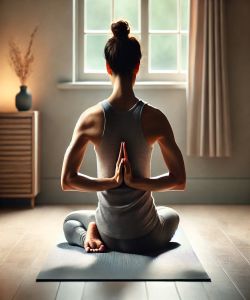
Overview of Ashtanga Namaskara
Ashtanga Namaskara, known formally as the Eight-Limbed Salutation, represents a foundational and profoundly symbolic posture within the rigorous discipline of Hatha yoga. It is not merely a transitional movement but a complete asana that demands a synthesis of muscular engagement, structural integrity, and conscious surrender. The posture is defined by the eight specific points of the body that make simultaneous contact with the ground: the two feet (toes), the two knees, the two hands (palms), the chest, and the chin. This configuration creates a distinct prostration that is both physically challenging and philosophically significant, embodying the principle of yielding the ego without relinquishing physical control. Its practice is integral to traditional Surya Namaskar (Sun Salutation) sequences, where it serves as a critical juncture between plank-like postures and upward-facing poses. The execution of Ashtanga Namaskara requires an uncompromising level of precision to distribute body weight correctly, thereby safeguarding the joints and maximising its strengthening benefits for the arms, shoulders, back, and core. Beyond its biomechanical utility, the posture cultivates a deep internal state of humility and grounding, forcing the practitioner to connect with the earth in a manner that is both stable and deliberate. It stands as an essential component of a disciplined practice, preparing the body for more advanced asanas by building foundational strength and fostering the mental fortitude required for sustained yogic development. Its mastery is therefore not an optional refinement but a mandatory milestone for any serious practitioner committed to the authentic expression of classical yoga, demanding respect for its anatomical precision and its powerful spiritual undertones. It is a posture of disciplined submission, where strength and surrender are not opposing forces but are instead forged into a single, cohesive expression of physical and mental control.
What is Ashtanga Namaskara?
Ashtanga Namaskara is a specific and demanding prostration posture in yoga, the name of which translates from Sanskrit to the "Eight-Limbed Salutation." The term 'Ashta' means eight, 'Anga' means limb or part, and 'Namaskara' signifies a respectful greeting or salutation. This posture is therefore defined by the eight distinct points of the body that are required to make deliberate and stable contact with the floor. It is a posture that embodies a unique paradox: it is a position of surrender and humility, yet it necessitates significant physical strength and control to execute correctly and safely. The practice is a fundamental component of certain variations of Surya Namaskar (Sun Salutation) and serves as a vital preparatory and strengthening exercise for the entire upper body and core musculature. It is a disciplined, methodical pose that leaves no room for approximation; its integrity is dependent on the precise placement and engagement of each of the eight designated points.
The eight points of contact are as follows:
The Feet: Specifically, the tips of the toes of both feet are firmly grounded. The feet remain parallel and active.
The Knees: Both knees rest on the floor, positioned to support the lower body while maintaining the correct spinal alignment.
The Hands: The palms of both hands are placed flat on the floor, typically positioned directly beneath the shoulders, with fingers spread to create a stable base.
The Chest: The sternum or the area between the pectoral muscles makes firm contact with the ground, facilitating an opening across the front of the body.
The Chin: The chin is placed on the floor with the neck in a controlled and neutral extension, directing the practitioner's gaze forward.
In this posture, the hips and abdomen are lifted away from the floor, creating a distinct, wave-like curve in the spine. This elevation is not passive; it requires active engagement of the core and back muscles to maintain the posture’s structural integrity. Ashtanga Namaskara is therefore a testament to the principle that true surrender in yogic practice is not a collapse, but a highly controlled and conscious act of yielding.
Who Needs Ashtanga Namaskara?
Practitioners Seeking Foundational Upper-Body Strength: Individuals aiming to develop the requisite power in the arms, shoulders, and chest for more demanding asanas will find this posture indispensable. It systematically conditions the triceps, deltoids, and pectoral muscles in a controlled, weight-bearing context, building the strength necessary for arm balances and inversions.
Individuals Developing Core and Back Stability: The posture mandates active engagement of the abdominal and spinal erector muscles to keep the hips lifted and the lumbar spine supported. It is therefore essential for those who must cultivate a stronger, more resilient core to protect the back and improve overall postural alignment.
Yogis Preparing for Advanced Vinyasa Sequences: Ashtanga Namaskara is a critical preparatory pose for Chaturanga Dandasana and a key transitional element in classical Surya Namaskar. Practitioners who wish to master fluid vinyasa transitions without compromising form or risking injury must first master this foundational posture.
Those Cultivating Humility and Surrender in Practice: The physical act of prostration with eight points on the ground is a powerful tool for individuals seeking to move beyond the ego-driven aspects of asana practice. It instils a sense of grounding and reverence, making it necessary for those focused on the deeper, more introspective dimensions of yoga.
Beginners Requiring a Structured Introduction to Weight-Bearing Asanas: For novices who lack the strength for a full Chaturanga, Ashtanga Namaskara provides a safer, more accessible alternative. It allows them to build strength progressively and understand the mechanics of upper-body engagement without placing excessive strain on the wrists and shoulders.
Practitioners Aiming to Improve Thoracic Spine Mobility: The specific action of lowering the chest to the floor while the hips remain elevated encourages a gentle yet effective extension in the upper and mid-back. This is crucial for individuals working to counteract the effects of a sedentary lifestyle and improve mobility in the thoracic region.
Individuals Focused on Disciplined Alignment and Proprioception: The posture demands acute body awareness to coordinate the placement of all eight points simultaneously. It is therefore a mandatory exercise for anyone needing to refine their proprioceptive skills and develop an uncompromising attention to precise anatomical alignment in their practice.
Origins and Evolution of Ashtanga Namaskara
The conceptual origins of Ashtanga Namaskara are deeply embedded in the ancient Indian traditions of prostration as a form of worship and surrender (pranama). While the exact codification of the posture as a distinct asana is a feature of later Hatha yoga developments, the principle of bowing to honour a higher principle or deity is a timeless element of Indic spiritual practices. Early scriptural and cultural contexts describe various forms of prostration, with the most profound being the Sashtanga Namaskara (Six-Limbed Salutation), which involved a full-body prostration. Ashtanga Namaskara, the Eight-Limbed variation, evolved as a more structured and physically integrated form of this devotional gesture, designed to be incorporated into a dynamic physical practice.
Its formal integration into yogic sequences is most prominently seen in the development of Surya Namaskar (Sun Salutation). While ancient texts do not describe the Sun Salutation sequence as it is practised today, traditions of sun worship involved ritualistic movements and prostrations. In the early 20th century, figures like the Raja of Aundh popularised a specific sequence of postures to be practised as a form of physical culture, which included a posture akin to Ashtanga Namaskara. This marked a significant shift, framing the prostration not just as a devotional act but as a key component of a holistic health and fitness regimen. It was within this modern revival of Hatha yoga that the asana was systematically analysed for its physical benefits and its precise mechanics were rigorously defined.
The evolution continued with the rise of modern vinyasa-based yoga systems. In some traditions, particularly those that emphasise accessibility and gradual progression, Ashtanga Namaskara is taught as a preparatory stage for the more demanding Chaturanga Dandasana (Four-Limbed Staff Pose). It provides a functional and safe method for practitioners to build the necessary upper-body and core strength before attempting the full floating transition. This pragmatic application demonstrates its evolution from a purely devotional gesture into a sophisticated pedagogical tool within the modern yoga canon. Today, it stands as a hybrid posture: one that retains its ancient symbolic resonance of surrender while serving as a non-negotiable technical foundation for building physical strength and mastering dynamic yogic sequencing. Its journey reflects the broader evolution of yoga itself, from a spiritual discipline to an integrated system of physical and mental cultivation.
Types of Ashtanga Namaskara
The term Ashtanga Namaskara refers to a single, precisely defined posture. Therefore, 'types' in this context do not denote fundamentally different asanas but rather refer to its specific variations, modifications, and applications within a broader practical framework. Each application serves a distinct pedagogical or physiological purpose.
The Classical Form (Ashtanga Namaskara): This is the definitive and uncompromising version of the posture. It requires the eight points—toes of both feet, both knees, palms of both hands, the chest, and the chin—to be in firm and simultaneous contact with the ground. The abdomen and hips are actively lifted, creating a pronounced arch in the spine. This form is executed with full muscular engagement and is the standard against which all modifications are measured. Its purpose is to build maximum strength, cultivate precise body awareness, and embody the full symbolic meaning of the posture.
The Supported Preparatory Variation: This modification is designed for practitioners who lack the requisite strength or flexibility to achieve the classical form without compromising alignment. It involves using props, typically blocks, to support the body. A block may be placed under the chest or sternum, reducing the range of motion required and lessening the load on the arms and shoulders. This variation allows the practitioner to familiarise themselves with the posture's mechanics and build strength progressively and safely, making it a critical tool for beginners or those recovering from injury.
The Dynamic Vinyasa Integration: This refers to the application of Ashtanga Namaskara as a transitional movement within a flowing sequence, most notably in Surya Namaskar. In this context, the posture is not held for an extended duration but is moved into and out of with conscious control, synchronised with the breath. Entry is typically from a plank or half-plank position on an exhalation, and the exit is on an inhalation into Bhujangasana (Cobra Pose). This type emphasises fluidity, breath control, and the seamless linking of postures.
The Knees-Down Chaturanga Hybrid: This variation is often taught as a direct precursor to Chaturanga Dandasana. From a plank position, the practitioner lowers their knees to the floor first, then proceeds to lower the chest and chin, maintaining a straight line from the knees to the crown of the head. It is biomechanically distinct from the classical form as the hips are kept lower, more in line with the shoulders. This type focuses specifically on building triceps and pectoral strength required for a full, unsupported Chaturanga Dandasana.
Benefits of Ashtanga Namaskara
Systematic Development of Upper-Body Strength: Mandates the engagement of the triceps, deltoids, and pectoral muscles in a controlled, weight-bearing capacity, building the foundational strength required for more advanced arm balances and inversions without the high risk of injury associated with improper form in more complex poses.
Enhancement of Core and Back Musculature: The imperative to keep the hips and abdomen lifted off the floor necessitates a powerful and sustained contraction of the erector spinae muscles along the back and the transverse abdominis in the core, fostering exceptional spinal stability and control.
Increased Thoracic Spine Mobility: The posture encourages a controlled extension of the upper and middle back as the chest is drawn towards the floor. This action serves as a potent antidote to the thoracic kyphosis (rounding of the upper back) common in sedentary individuals, promoting improved posture.
Cultivation of Proprioceptive Accuracy: The simultaneous coordination of placing eight distinct body parts on the ground demands and develops a high degree of body awareness and spatial intelligence. This refinement of proprioception is critical for safe and effective execution of all complex asanas.
Provision of a Safe Alternative to Chaturanga Dandasana: It offers a more accessible and structurally supported method for lowering the body than the full Four-Limbed Staff Pose. This makes it an indispensable pedagogical tool, reducing the risk of wrist and shoulder injuries for practitioners who have not yet developed sufficient strength.
Stimulation of Abdominal Organs: The gentle pressure created in the abdominal region due to the spinal arch and core engagement is believed to stimulate the digestive system and other internal organs, promoting better physiological function.
Fostering of Mental Surrender and Humility: The physical act of prostration is a powerful psychological tool. It instils a state of grounding, humility, and surrender of the ego, which are central tenets of a mature and introspective yoga practice.
Effective Preparation for Backbends: By opening the chest and strengthening the back muscles in a controlled manner, Ashtanga Namaskara serves as an excellent preparatory posture for deeper backbends like Bhujangasana (Cobra Pose) and Urdhva Mukha Svanasana (Upward-Facing Dog Pose), ensuring the spine is adequately prepared.
Core Principles and Practices of Ashtanga Namaskara
The Principle of Eight-Point Contact (Ashta-Anga): The unshakeable foundation of the posture is the precise, simultaneous, and deliberate grounding of all eight designated points: two feet (toes), two knees, two hands (palms), chest, and chin. This is not a sequential placement but a coordinated final position. The practice demands uncompromising adherence to this principle, as any deviation compromises the posture’s structural and energetic integrity.
The Principle of Abdominal and Pelvic Elevation: A non-negotiable element is the active lifting of the abdomen and hips away from the floor. This is not a passive consequence of the limb placement but a dynamic action requiring sustained engagement of the core musculature and the spinal erectors. This creates the characteristic arch and ensures the lumbar spine is protected. Practice involves consciously drawing the navel towards the spine even as the chest descends.
The Principle of Scapular Stability and Engagement: The shoulder blades (scapulae) must be actively managed to support the upper body and protect the shoulder joints. The practice requires drawing the scapulae down the back and slightly towards the spine, preventing the shoulders from collapsing towards the ears. The arms, particularly the triceps, must be actively engaged, with elbows kept close to the ribcage to maintain structural power.
The Principle of Spinal Articulation and Integrity: The spine is not held rigidly but assumes a controlled, wave-like curve. The cervical spine is in a mild, controlled extension to place the chin, while the thoracic spine moves towards extension as the chest lowers. The lumbar spine maintains its natural curve supported by the core. The practice is to move into this shape with awareness, avoiding any sharp or compressive angles in the vertebral column.
The Principle of Breath Synchronisation (Vinyasa): Execution of Ashtanga Namaskara is inextricably linked to the breath. The entry into the posture is universally performed on an exhalation, symbolising a release and surrender. The hold, however brief, is managed with controlled breath, and the transition out of the posture into the subsequent asana (typically Bhujangasana) is initiated on an inhalation. The practice mandates this strict synchronisation to cultivate internal rhythm and focus.
The Principle of Drishti (Focused Gaze): To maintain concentration and proper neck alignment, a specific focal point is utilised. In the final expression of the posture, the gaze (drishti) is directed forward, along the floor. This practice prevents the mind from wandering and ensures the neck is held in a position of stable extension, rather than being allowed to hang passively.
Online Ashtanga Namaskara
Unparalleled Accessibility and Autonomy: The online format eradicates geographical and logistical barriers, making rigorous instruction in Ashtanga Namaskara accessible to any individual with a digital connection. This modality grants the practitioner complete autonomy over their learning environment, allowing them to engage with the discipline from a private, controlled space, free from the potential distractions or perceived pressures of a group studio setting.
Requirement for Enhanced Self-Discipline and Introspection: Without the physical presence of an instructor to provide external motivation and corrections, the online practitioner is compelled to cultivate a superior level of self-discipline, internal motivation, and honesty in their practice. This forces a deeper level of introspection and self-assessment, accelerating the development of proprioception and personal accountability for precise alignment.
Facilitation of Repetitive and Focused Learning: Digital platforms provide the ability to review instructional content repeatedly. An online course allows the practitioner to pause, rewind, and re-watch detailed demonstrations of the posture’s entry, hold, and exit. This capacity for meticulous, repetitive study of the technical nuances is a distinct advantage over a live class, where instruction is ephemeral.
Emphasis on Verbal and Visual Cueing Mastery: In the absence of hands-on adjustments, online instruction must rely on exceptionally clear, precise, and unambiguous verbal and visual cueing. This forces both the instructor and the student to develop a more sophisticated understanding of the posture’s biomechanics, translating physical actions into precise language and observation. The practitioner learns to inhabit the posture from the inside out, based on expert guidance rather than physical manipulation.
Structured and Progressive Skill Acquisition: Online courses are typically designed with a systematic, modular structure. This allows for the methodical breakdown of Ashtanga Namaskara into its constituent parts—arm positioning, core engagement, spinal articulation—enabling the practitioner to master each component individually before synthesising them into the complete asana. This structured, progressive approach ensures a safer and more effective learning trajectory, minimising the risk of injury from attempting the full posture prematurely.
Cost and Time Efficiency: Online participation eliminates the time and financial expenditure associated with commuting to a physical location. This efficiency allows for more frequent and consistent practice, as sessions can be integrated seamlessly into a demanding schedule, ensuring that the discipline is maintained without compromise.
Ashtanga Namaskara Techniques
Step One: Assume the Preparatory Position. Begin in a stable Tabletop Pose (Bharmanasana) on all fours, with hands positioned directly under the shoulders and knees directly under the hips. Alternatively, for a dynamic entry, start from a strong Plank Pose (Phalakasana). Ensure the core is engaged and the spine is in a neutral, elongated line.
Step Two: Initiate the Controlled Descent. If starting from Plank, first lower the knees to the floor with precision, keeping the toes tucked under. From either starting position, begin to shift your weight slightly forward over the hands. On a controlled exhalation, bend the elbows, keeping them drawn in tightly against the sides of your ribcage. This adduction of the upper arms is non-negotiable for shoulder stability.
Step Three: Lower the Chest and Chin Simultaneously. Lead the movement with the chest, aiming for the space between your hands. The objective is to lower the chest and the chin to the floor at the same moment. It is imperative that the descent is a controlled lowering of the upper body, not a forward collapse. The hips and abdomen must remain actively lifted throughout this entire movement.
Step Four: Establish the Eight Points of Contact. Verify the precise grounding of all eight points. The palms of the hands are flat, fingers spread. The tips of the toes are tucked and pressing into the floor. Both knees are grounded. The centre of the chest and the point of the chin are resting firmly on the mat. The hips should be the highest point of the body, creating a distinct arch.
Step Five: Engage and Hold the Posture. Once all eight points are established, actively engage the entire body. Press firmly through the hands and toes to maintain lift in the hips. Engage the back muscles to support the spinal curve. Keep the shoulders drawn away from the ears and the elbows hugging the torso. Hold the posture for the prescribed duration, maintaining steady and calm breathing. The gaze (drishti) is directed forward.
Step Six: Execute the Controlled Exit. To transition out, typically on an inhalation, press firmly into the hands and begin to slide the chest forward and up. Straighten the arms and lift the head and chest, moving seamlessly into Bhujangasana (Cobra Pose). The legs and tops of the feet will now rest on the floor. Ensure this transition is fluid and powered by the strength of the back and arms, not momentum.
Ashtanga Namaskara for Adults
The practice of Ashtanga Namaskara offers a particularly potent and relevant discipline for the adult practitioner, addressing both the physical and mental challenges that accompany maturity. For adults engaged in sedentary professional lives, the posture serves as a powerful corrective intervention. It systematically combats the pervasive issues of postural degradation, particularly thoracic kyphosis or 'rounding' of the upper back, by demanding active chest opening and thoracic spine extension. Furthermore, it builds essential functional strength in the upper body and core, which is critical for maintaining physical independence and preventing age-related sarcopenia. The load-bearing nature of the pose on the hands and arms also contributes to maintaining bone density, a significant concern for the adult population. From a neurological standpoint, the complexity of coordinating eight distinct points of contact on the ground provides a significant proprioceptive challenge, enhancing body awareness and neuromuscular control, which can decline without targeted practice. The posture's emphasis on precise alignment and controlled movement over brute force makes it an intelligent approach to fitness, minimising the risk of injury while maximising physiological benefit. Psychologically, the symbolic act of prostration offers a valuable tool for adults navigating high-stress environments. It cultivates humility, grounds the nervous system, and provides a structured method for releasing mental tension. The discipline required to master Ashtanga Namaskara instils a sense of resilience and focus that is directly transferable to professional and personal challenges. It is not merely an exercise but a sophisticated practice of self-regulation and physical conditioning, perfectly suited to the comprehensive well-being requirements of the discerning adult. It demands respect and rewards the practitioner with strength, stability, and a profound sense of grounded control.
Total Duration of Online Ashtanga Namaskara
The total duration of a dedicated online Ashtanga Namaskara session is rigorously structured to be 1 hr. This specific timeframe is not arbitrary but is methodically designed to ensure a comprehensive, safe, and pedagogically sound learning experience. The 1 hr duration allows for a systematic progression through all necessary phases of practice without rushing or compromising on essential components. The session commences with a preparatory warm-up, focusing on mobilising the key joints involved—specifically the wrists, shoulders, and spine—and activating the core and upper-body musculature. This is followed by a detailed technical breakdown of the asana itself, where the instructor provides explicit, granular instruction on the alignment of each of the eight points, the muscular engagements required, and the correct breathing pattern. A significant portion of the 1 hr is then allocated to guided practice, allowing participants to perform repetitions of entering, holding, and exiting the posture under the watchful guidance of the instructor. This practice phase is crucial for motor-pattern reinforcement and strength development. The session structure also incorporates the teaching of relevant modifications and the use of props to ensure accessibility for all participants, regardless of their current strength or flexibility. The concluding segment of the 1 hr is dedicated to a counter-posing and cool-down sequence, designed to neutralise the spine and release any tension built up in the engaged muscles. Finally, a brief period is reserved for a controlled question-and-answer segment, enabling participants to seek clarification on technical points. This comprehensive, self-contained 1 hr format ensures that the practitioner receives not just a superficial overview but a deep, functional understanding of Ashtanga Namaskara in a focused and highly efficient manner.
Things to Consider with Ashtanga Namaskara
Engaging in the practice of Ashtanga Namaskara demands a high degree of diligence and critical self-assessment. It is imperative to approach this posture not as a simple physical shape but as a complex biomechanical event requiring significant preparation and awareness. Foremost among considerations is the condition of the major joints involved. Individuals with pre-existing injuries or chronic weakness in the wrists, elbows, shoulders, or neck must exercise extreme caution or seek professional guidance before attempting the pose. The load placed upon these structures is considerable, and improper execution can exacerbate existing conditions or create new ones. Furthermore, the state of the spine, particularly the lumbar and cervical regions, must be taken into account. While the posture is designed to strengthen the back, performing it with a disengaged core can lead to compression in the lower back. Similarly, the chin-on-floor position requires a controlled neck extension that may be contraindicated for those with cervical spine issues. Practitioners must cultivate an uncompromising honesty about their current physical capacity, utilising modifications and props where necessary, rather than forcing the body into the full expression of the pose prematurely. The mental and energetic aspects also warrant consideration. The posture is one of surrender, yet it is intensely active. One must consider their ability to balance this paradox—to remain powerful and engaged while simultaneously cultivating a state of humility. Finally, understanding its place within a broader practice is essential. It is not an isolated trick but a transitional and preparatory asana, and its true value is realised when integrated intelligently into a well-sequenced practice that includes adequate warm-ups and counter-poses.
Effectiveness of Ashtanga Namaskara
The effectiveness of Ashtanga Namaskara as a tool for physical and mental cultivation is unequivocal, provided it is practised with precision and consistency. Its efficacy lies in its multi-faceted impact on the practitioner's entire system. Physiologically, it is an exceptionally effective method for developing integrated upper-body and core strength. Unlike isolated weight-training exercises, the posture demands a synergistic engagement of the pectoral muscles, triceps, deltoids, and the entire core and back musculature to maintain its structural integrity. This holistic strengthening is directly transferable to more advanced asanas and functional daily movements. Its effectiveness in enhancing spinal mobility, particularly in the thoracic region, is profound, serving as a powerful corrective for postural imbalances. From a pedagogical standpoint, its utility is unmatched as a preparatory pose for Chaturanga Dandasana. It effectively deconstructs the mechanics of lowering the body with control, mitigating the high risk of shoulder and wrist injuries commonly associated with incorrect Chaturanga form. The posture's demand for precise coordination of eight body parts makes it a highly effective tool for refining proprioception and heightening somatic awareness. Beyond the purely physical, its psychological effectiveness is significant. The act of prostration has a demonstrably grounding effect on the nervous system, and the discipline required to master the pose builds mental resilience and focus. Therefore, the effectiveness of Ashtanga Namaskara is not limited to a single dimension; it operates as a comprehensive conditioning tool that forges a stronger body, a more mobile spine, and a more focused, disciplined mind. Its results are not speculative but are a direct and predictable outcome of rigorous and intelligent application.
Preferred Cautions During Ashtanga Namaskara
It is imperative that the practice of Ashtanga Namaskara be undertaken with an uncompromising commitment to safety, mandating strict adherence to several critical cautions. Foremost, individuals with any pre-existing or acute injuries to the wrists, elbows, or shoulder girdle must avoid this posture or approach it only under the direct supervision of a qualified professional. The weight-bearing nature of the asana places significant stress on these joints, and any compromise in their integrity presents an unacceptable risk of further damage. Similarly, those with cervical spine conditions, including disc herniation or severe arthritis, must exercise extreme caution due to the neck extension required to place the chin on the floor. An alternative, such as placing the forehead down, may be necessary, but this fundamentally alters the asana. Pregnant practitioners must avoid Ashtanga Namaskara entirely, as it places direct pressure on the abdominal region. Furthermore, practitioners must be vigilant against collapsing in the lower back. A failure to maintain robust engagement of the core musculature to support the lifted hips can lead to excessive lumbar lordosis and potential compression of the vertebrae. It is not a passive backbend but an active, supported arch. Another crucial caution relates to the shoulders: there must be no collapsing or shrugging of the shoulders towards the ears. The scapulae must be kept stable and drawn down the back to protect the delicate rotator cuff muscles. The elbows must remain tightly pinned to the ribcage; allowing them to splay outwards destabilises the shoulder joint and negates the strengthening action on the triceps. Finally, one must never resort to momentum or uncontrolled dropping to enter the pose. The descent must be slow, deliberate, and muscularly controlled to derive benefit and prevent injury.
Ashtanga Namaskara Course Outline
Module 1: Foundational Principles and Theoretical Underpinnings
Section 1.1: Deconstruction of the Term 'Ashtanga Namaskara'
Section 1.2: The Philosophical Significance of Prostration in Yogic Practice
Section 1.3: Anatomical Blueprint: Key Muscle Groups and Joints Involved
Section 1.4: Safety Protocols and Contraindications: A Non-Negotiable Overview
Module 2: Preparatory Conditioning and Joint Mobilisation
Section 2.1: Wrist and Forearm Strengthening Drills
Section 2.2: Shoulder Girdle Mobility and Scapular Control Exercises
Section 2.3: Core Activation Sequences for Lumbar Support
Section 2.4: Thoracic Spine Mobilisation and Chest Opening Techniques
Module 3: The Art of Entry: Controlled Descent
Section 3.1: Mastering the Transition from Plank and Tabletop Positions
Section 3.2: The Role of Breath (Exhalation) in a Controlled Lowering
Section 3.3: Elbow and Shoulder Alignment: Preventing Common Errors
Section 3.4: Drills for Lowering the Chest and Chin Simultaneously
Module 4: Establishing and Holding the Final Form
Section 4.1: The Eight Points of Contact: A Detailed Placement Guide
Section 4.2: Activating the Posterior Chain: Lifting the Hips
Section 4.3: Muscular Engagement for Sustaining the Posture
Section 4.4: Drishti (Gaze) and Breath Control within the Asana
Module 5: The Art of Exit and Integration into Vinyasa
Section 5.1: The Seamless Transition to Bhujangasana (Cobra Pose)
Section 5.2: The Seamless Transition to Urdhva Mukha Svanasana (Upward-Facing Dog)
Section 5.3: Integrating Ashtanga Namaskara into Surya Namaskar A and B
Section 5.4: Counter-poses and Post-Practice Neutralisation Techniques
Module 6: Advanced Refinements and Modifications
Section 6.1: Utilising Props (Blocks, Blankets) for a Supported Practice
Section 6.2: Addressing Common Misalignments and Self-Correction
Section 6.3: Building Endurance for Longer Holds
Section 6.4: The Relationship to Chaturanga Dandasana: A Comparative Analysis
Detailed Objectives with Timeline of Ashtanga Namaskara
Week 1 Objective: Establish Foundational Knowledge and Safety.
By the end of the first week, the practitioner will be able to articulate the eight points of contact and the primary muscles engaged. They will demonstrate proficient execution of all preparatory wrist, shoulder, and core conditioning drills. They will understand all safety contraindications and be able to identify personal physical limitations.
Week 2 Objective: Master the Controlled Descent with Support.
By the end of the second week, the practitioner will execute a controlled descent from a modified (knees-down) plank into a supported Ashtanga Namaskara, using a block under the chest. The movement will be synchronised with the exhalation, and correct elbow alignment (tucked in) will be consistently maintained for at least five repetitions.
Week 3 Objective: Achieve the Full Posture without Support.
By the end of the third week, the practitioner will successfully achieve the full, unsupported Ashtanga Namaskara posture, establishing all eight points of contact. They will be able to hold the static pose with correct muscular engagement and stable breathing for a minimum of three full breaths.
Week 4 Objective: Refine Alignment and Build Static Endurance.
By the end of the fourth week, the practitioner will demonstrate the ability to self-correct common misalignments, such as splayed elbows or a sagging core. They will increase the duration of the static hold to five complete breaths, maintaining structural integrity and composure throughout.
Week 5 Objective: Master the Fluid Transition Out of the Posture.
By the end of the fifth week, the practitioner will execute a seamless and controlled transition from Ashtanga Namaskara into Bhujangasana (Cobra Pose) on an inhalation. The movement will be fluid, initiated from the back and arm strength, not momentum. This will be practised in a repetitive, drill-like format.
Week 6 Objective: Integrate into a Basic Vinyasa Sequence.
By the end of the sixth week, the practitioner will confidently integrate Ashtanga Namaskara into a half-Surya Namaskar sequence. They will be able to flow from Plank, through Ashtanga Namaskara, into Cobra, and back to Downward-Facing Dog, maintaining correct breath synchronisation and alignment throughout the entire transition.
Requirements for Taking Online Ashtanga Namaskara
An Unobstructed and Safe Practice Space: A dedicated area is mandatory, providing sufficient room to extend the body fully without risk of collision with furniture or other obstacles. The flooring must be stable, non-slip, and suitable for practice, ideally with a high-quality yoga mat.
A Stable, High-Speed Internet Connection: Consistent and reliable internet access is non-negotiable. Any interruption or lag in the video stream will compromise the ability to receive clear instruction and visual demonstration, thus jeopardising both the effectiveness and safety of the practice.
A Functional Computing Device with Camera and Microphone: The practitioner must possess a laptop, tablet, or desktop computer with a high-resolution camera and a clear microphone. The camera must be positioned to provide the instructor with a full, unobstructed view of the practitioner's body from the side profile.
Appropriate Attire: Clothing must be form-fitting yet allow for a full and unrestricted range of motion. Loose or baggy garments are unacceptable as they obscure the body's lines, making it impossible for the instructor to assess alignment and for the practitioner to monitor their own form.
Essential Yoga Props: The practitioner is required to have immediate access to standard yoga equipment. This includes, at a minimum, one high-density yoga mat, two yoga blocks, and a firm blanket. These are not optional accessories but essential tools for modification and support.
A Commitment to Punctuality and Undistracted Participation: The practitioner must be ready to begin the session at the designated time, having already set up their space and technology. All potential distractions, including mobile phones and other notifications, must be silenced and removed from the practice area for the entire duration of the session.
A Baseline Level of Physical Health: The practitioner must be free from any serious contraindicating injuries or medical conditions. A declaration of physical readiness and an acceptance of personal responsibility for one's own safety during practice is a mandatory prerequisite.
Things to Keep in Mind Before Starting Online Ashtanga Namaskara
Before commencing an online study of Ashtanga Namaskara, it is imperative to adopt a mindset of rigorous self-responsibility and technical diligence. The digital medium, while convenient, introduces a critical distance between instructor and student that must be bridged by the practitioner's heightened sense of awareness and accountability. You must understand that the instructor's ability to correct your form is limited to visual observation; they cannot provide the tactile, hands-on adjustments possible in a physical studio. Therefore, the onus is squarely on you to listen with extreme precision to every verbal cue and to cultivate an unsparingly honest self-assessment of your alignment. It is essential to relinquish ego and be prepared to work with modifications and props without feeling that it is a lesser version of the practice. Attempting to force the body into a shape for which it is not prepared, simply to mirror the instructor's form on screen, is a direct path to injury. You must also proactively create a sanctuary for your practice—an environment that is free from all domestic and digital distractions. Your commitment must extend beyond the 1 hr session to include proper preparation of your space and technology beforehand. Finally, recognise that progress may be incremental and will be built on consistent, intelligent effort rather than sporadic, intense sessions. The online format demands a mature, disciplined approach where you are not merely a passive recipient of information, but an active, engaged, and responsible participant in your own development.
Qualifications Required to Perform Ashtanga Namaskara
The authority to perform and, more importantly, to instruct Ashtanga Namaskara is not conferred by mere physical ability but is founded upon a deep and verifiable foundation of training, knowledge, and practical experience. A qualified individual is one who has moved far beyond the superficial execution of the pose and possesses a comprehensive understanding of its intricate biomechanical, anatomical, and philosophical dimensions. While the physical prerequisite is the ability to demonstrate the posture with impeccable alignment and control, this is the least of the requirements. The true qualifications are pedagogical and ethical. An instructor must hold a recognised and substantial certification from a reputable yoga school or lineage. This certification must meet or exceed internationally recognised standards, signifying hundreds of hours of dedicated study.
Within this training, the following specific competencies are mandatory:
Advanced Anatomical and Kinesiological Knowledge: A thorough, university-level understanding of human anatomy, physiology, and biomechanics is non-negotiable. The instructor must be able to analyse the posture's effect on the musculoskeletal system and identify potential risks for different body types and conditions.
Proficiency in Safe Sequencing and Pedagogy: The individual must be skilled in designing intelligent and safe class sequences that adequately prepare the body for the demands of Ashtanga Namaskara. This includes expertise in teaching preparatory exercises, modifications, and counter-poses.
Expertise in Verbal Cueing and Demonstration: A qualified performer, particularly in an instructional capacity, must possess the ability to communicate the complex actions of the posture through precise, clear, and unambiguous language.
Extensive Practical Experience: A significant personal history of dedicated and consistent practice is required. This lived experience provides the nuanced understanding that cannot be gleaned from textbooks alone and builds the intuitive capacity to guide others safely.
Therefore, the qualification is a composite of certified education, profound anatomical literacy, proven teaching skill, and a long-term, embodied commitment to the discipline.
Online Vs Offline/Onsite Ashtanga Namaskara
Online
The online modality for learning Ashtanga Namaskara is defined by its autonomy and accessibility. It offers an unparalleled level of convenience, allowing practitioners to engage in rigorous study from any geographical location, thereby eliminating the logistical constraints of travel and scheduling. This format necessitates a high degree of self-discipline and internal motivation, as the practitioner is solely responsible for their focus and environment. The learning process is heavily reliant on the practitioner’s ability to interpret and apply precise verbal and visual cues, fostering a deep internalisation of the posture’s mechanics. The ability to record and review sessions provides a powerful tool for repetitive learning and detailed self-analysis, a benefit not available in a live setting. However, the critical limitation of the online format is the absence of hands-on, tactile feedback. The instructor's ability to make subtle, physical adjustments to a practitioner's alignment is completely removed, placing the entire burden of proprioceptive accuracy on the student. This makes the online environment potentially less suitable for absolute beginners or individuals with significant physical limitations who may require direct physical guidance to practise safely. It is a modality that rewards the focused, self-directed learner.
Offline/Onsite
Offline, or onsite, instruction represents the traditional and arguably more comprehensive method of learning. Its primary advantage is the direct, physical presence of the instructor, which allows for immediate, hands-on adjustments. This tactile feedback can communicate nuances of alignment and engagement that verbal cues alone cannot convey, significantly accelerating the learning process and enhancing safety. The shared energy of a group environment can provide motivation and a sense of community, fostering a collective focus that is difficult to replicate in isolation. The instructor has a 360-degree view of the practitioner, enabling a more thorough assessment of their form from all angles. An onsite facility also provides access to a full range of professional-grade props and a purpose-built environment conducive to practice. The principal disadvantages are logistical. Onsite classes are bound by a fixed schedule and location, demanding a greater commitment of time and travel. Class sizes can sometimes limit the amount of individual attention each student receives, and the cost is typically higher than online alternatives. This modality is superior for those who benefit from direct physical correction and a structured, communal learning environment.
FAQs About Online Ashtanga Namaskara
Question 1. Is online instruction safe for a beginner?
Answer: It can be, provided the practitioner is free from major injuries and commits to following instructions with absolute precision. Reputable online courses for beginners will focus heavily on modifications and preparatory work.
Question 2. What technology is essential for an online class?
Answer: A stable internet connection, a device with a clear camera and microphone, and the ability to position the camera for a full-body side view are non-negotiable.
Question 3. How can an instructor correct me without being there?
Answer: Correction is performed through highly specific verbal cues and visual demonstration. The instructor will observe your form via your camera and provide real-time, targeted instructions to adjust your alignment.
Question 4. Is Ashtanga Namaskara a complete workout in itself?
Answer: No. It is a single, potent asana. A full session will incorporate it into a balanced sequence including warm-ups, other postures, and a cool-down.
Question 5. What is the difference between Ashtanga Namaskara and Chaturanga Dandasana?
Answer: In Ashtanga Namaskara, eight points (including knees, chest, chin) are on the floor. In Chaturanga, only four points (hands and feet) are on the floor, with the body held in a straight line parallel to the ground.
Question 6. Do I need to be strong to start?
Answer: No. You need to be willing to build strength. The practice itself is the method for developing the required upper-body and core power.
Question 7. What if I have weak wrists?
Answer: You must inform your instructor. They will provide specific wrist-strengthening exercises and may suggest modifications, such as performing the pose on your fists, to reduce the angle of wrist extension.
Question 8. Is this posture related to Ashtanga Yoga?
Answer: While the posture appears in some yoga systems, it is distinct from the Ashtanga Vinyasa Yoga system popularised by K. Pattabhi Jois. The names are similar but refer to different things.
Question 9. How long does it take to master this pose?
Answer: This depends entirely on individual consistency, strength, and body awareness. Mastery is a continuous process of refinement, not a fixed destination.
Question 10. Can I practise this every day?
Answer: Once foundational strength is built, it can be part of a daily practice. However, rest and recovery are crucial, especially in the initial stages of conditioning.
Question 11. What are the most common mistakes to avoid?
Answer: The most common errors are letting the elbows splay out, collapsing the lower back, and shrugging the shoulders towards the ears.
Question 12. What kind of props might I need?
Answer: Two yoga blocks and a blanket are essential. A block under the chest is a common and highly effective modification for beginners.
Question 13. Is there a lot of pressure on the chin and neck?
Answer: There should not be. The weight is primarily distributed between the hands, chest, and feet. The chin makes light contact; it is not a primary weight-bearing point.
Question 14. Will I be able to ask questions during an online class?
Answer: Most professional online sessions allocate a specific time for Q&A, usually at the end, to maintain the flow of the class.
Question 15. What is the symbolic meaning of the posture?
Answer: It symbolises surrender, humility, and reverence, offering the active parts of the body (hands, feet) and centres of perception (chin/senses, chest/heart) to the earth.
Question 16. Does this pose help with back pain?
Answer: When performed correctly with an engaged core, it strengthens the back muscles and can help alleviate pain caused by weakness. Performed incorrectly, it can worsen it.
Question 17. Why do my hips need to stay lifted?
Answer: Lifting the hips ensures the correct muscles are engaged, protects the lumbar spine from compression, and defines the unique shape and purpose of the asana.
Conclusion About Ashtanga Namaskara
In conclusion, Ashtanga Namaskara stands as a formidable and indispensable posture within the canon of classical yoga. It is far more than a mere transitional movement; it is a profound discipline of strength, alignment, and surrender encapsulated in a single, exacting form. Its mastery is a testament to a practitioner's dedication, demanding a synthesis of physical power in the upper body and core, with the mental fortitude to maintain precision under load. The posture's dual nature is its defining characteristic: it is simultaneously an act of prostration and humility, connecting the practitioner to the earth, and an expression of immense internal control and muscular engagement. Its non-negotiable alignment principles serve as a rigorous training ground for developing the proprioceptive awareness that is the bedrock of a safe and advanced asana practice. Whether utilised as a foundational strengthening tool, a pedagogical stepping-stone to more complex asanas like Chaturanga Dandasana, or as a practice in disciplined surrender, its value is absolute. The deliberate coordination of its eight points of contact forces a state of total presence and concentration, making it a potent exercise in mindfulness. Ultimately, Ashtanga Namaskara is not a pose to be casually achieved but a standard to be met, embodying the core yogic principle that true strength is forged through the intelligent and conscious application of both effort and release. It is a cornerstone of a serious practice, offering enduring benefits for the body, the spine, and the disciplined mind.