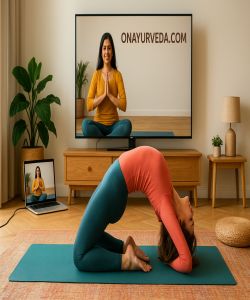
1. Overview of Back Bending Flow Yoga
Back Bending Flow Yoga represents a formidable and highly specialised discipline within the broader spectrum of modern Vinyasa yoga, engineered to systematically and safely cultivate profound spinal extension and flexibility. This practice is not a gentle or passive pursuit; it is a rigorous methodology that integrates the dynamic, breath-synchronised movement of flow yoga with the specific anatomical and energetic objectives of back bending. Its core purpose is to decompress the vertebral column, counteract the compressive effects of a sedentary lifestyle, and unlock the thoracic spine—a region notoriously prone to stiffness. The discipline demands an uncompromising focus on foundational strength, particularly in the core, legs, and shoulders, which serve as the essential support structures for any deep spinal articulation. Practitioners are guided through intelligently sequenced postures that progressively prepare the body for more advanced asanas, ensuring that muscular engagement precedes deep flexibility. This approach mitigates risk and fosters a sustainable practice. Furthermore, Back Bending Flow Yoga is intrinsically linked to the concept of 'heart-opening', a term that transcends the physical act of expanding the chest to encompass the release of stored emotional tension and the cultivation of an attitude of resilience and courage. It is, therefore, a dual-fronted discipline, simultaneously forging a physically powerful and resilient spine whilst addressing the subtle, energetic blockages that inhibit personal growth and emotional freedom. The seamless transitions, or 'flow', are not merely aesthetic; they are a critical component that maintains muscular warmth and mental focus, transforming a series of static poses into a singular, integrated experience of somatic and psychological liberation. It is an advanced practice that requires discipline, awareness, and an unwavering respect for the body’s intrinsic limits, offering transformative potential to those who commit to its principles with diligence and precision.
2. What are Back Bending Flow Yoga?
Back Bending Flow Yoga is a dynamic and physically demanding yoga style that methodically sequences a series of postures (asanas) to culminate in deep spinal extension. It is fundamentally a specialised form of Vinyasa yoga, where movement is synchronised with the breath (pranayama) to create a continuous and fluid experience. The defining characteristic of this practice is its specific focus on mobilising the spine, particularly the thoracic and lumbar regions, through a progressive and intelligent series of poses. Unlike static Hatha practices where backbends might be held for extended periods as isolated postures, this discipline integrates them into a seamless flow. The practice is constructed around a pinnacle or ‘peak pose’ structure, where the entire sequence is designed to warm up and prepare the body for a specific, challenging backbend, such as Urdhva Dhanurasana (Wheel Pose) or Kapotasana (Pigeon Pose).
The key components of this practice are:
- Preparatory Poses: The initial phase involves extensive work on opening the shoulders, hip flexors, and quadriceps, as tightness in these areas directly inhibits safe and effective back bending. Postures like Anjaneyasana (Low Lunge) and Dhanurasana (Bow Pose) are common.
- Core Stabilisation: A non-negotiable element is the consistent engagement of the core musculature. This provides essential support for the lumbar spine, preventing compression and injury during deep extension. The practice actively cultivates this stability, rather than assuming its presence.
- Breath-Synchronised Movement: Every transition from one pose to the next is dictated by either an inhalation or an exhalation. This not only creates a meditative rhythm but also ensures the body remains warm and pliable, facilitating deeper, safer movement into the postures.
- Counter-Posing: Following the peak back bending sequence, the practice incorporates specific counter-postures. These are typically gentle forward folds and spinal twists designed to neutralise the spine, release tension in the back muscles, and restore a sense of equilibrium to the nervous system.
In essence, Back Bending Flow Yoga is a structured, goal-oriented practice that uses the principles of Vinyasa to unlock the body’s capacity for spinal extension in a safe, strong, and intelligent manner.
3. Who Needs Back Bending Flow Yoga?
- Sedentary Professionals and Office Workers. Individuals confined to a desk-bound existence for prolonged periods invariably develop a forward-leaning posture, characterised by rounded shoulders and a compressed thoracic spine. This practice directly counteracts these postural deficits by systematically opening the chest, strengthening the posterior chain, and reintroducing the natural curvature of the spine. It is a mandatory corrective discipline for those whose occupations enforce kyphotic patterns.
- Athletes Seeking Enhanced Performance. Competitors in sports requiring explosive power and a full range of motion—such as gymnastics, swimming, martial arts, and throwing sports—will find this practice essential. Enhanced spinal mobility and shoulder flexibility translate directly into greater power generation, improved agility, and a significant reduction in the risk of injuries related to muscular imbalances and restricted movement.
- Individuals with Emotional or Energetic Blockages. From an energetic perspective, the front of the body, particularly the heart centre (Anahata chakra), is associated with emotional expression and connection. A physically closed-off posture can correlate with emotional withdrawal, anxiety, and fear. This practice is a potent tool for physically opening this area, which can facilitate the release of stored emotional tension and cultivate psychological resilience and openness.
- Experienced Yoga Practitioners Seeking to Advance. For yogis who have established a solid foundation in Vinyasa or Hatha yoga, this discipline offers a structured pathway to safely explore deeper backbends. It provides the requisite technical instruction on alignment, muscular engagement, and sequencing necessary to progress beyond intermediate postures without compromising spinal health. It is the logical next step for those committed to deepening their physical practice.
- Persons with Posturally Induced Discomfort. Those experiencing non-acute, chronic discomfort in the upper back, neck, and shoulders due to poor posture stand to gain immense relief. By strengthening the very muscles that support correct alignment (such as the rhomboids and erector spinae) and lengthening those that contribute to slouching (the pectorals and anterior deltoids), the practice addresses the root cause of the discomfort, rather than merely its symptoms.
4. Origins and Evolution of Back Bending Flow Yoga
The genesis of Back Bending Flow Yoga is not found in a single, ancient text but is rather a modern synthesis, born from the confluence of classical Hatha yoga principles and the dynamism of twentieth-century Vinyasa systems. Its foundational postures, such as Bhujangasana (Cobra Pose), Ustrasana (Camel Pose), and Dhanurasana (Bow Pose), are ancient, with roots stretching back to medieval Hatha yoga traditions where they were practised for their profound physiological and energetic benefits, believed to stimulate the central nervous system and awaken spiritual energy. However, in these classical contexts, poses were typically held statically and often practised in isolation, with less emphasis on the fluid transitions that define the contemporary ‘flow’ style.
The evolution into a ‘flow’ practice is intrinsically linked to the pioneering work that emerged in the early-to-mid twentieth century, which popularised the concept of Vinyasa—the synchronisation of breath and movement. This marked a paradigm shift, transforming yoga from a series of disconnected postures into a continuous, moving meditation. As Vinyasa yoga gained prominence in the West, practitioners and teachers began to experiment with sequencing, creating classes themed around specific anatomical objectives or philosophical concepts. It was within this innovative environment that specialised flows began to emerge, targeting areas like arm balances, hip opening, and, most significantly, back bending.
The modern incarnation of Back Bending Flow Yoga has been further refined by an increasingly sophisticated, evidence-based understanding of biomechanics and kinesiology. Contemporary instructors now place an uncompromising emphasis on anatomical precision and safety. This includes a rigorous focus on preparatory work: systematically opening the shoulders, hip flexors, and quadriceps, and, most critically, building formidable core strength as a non-negotiable prerequisite for deep spinal extension. The evolution has therefore been from isolated, static postures to a holistic, intelligently sequenced discipline that prepares the entire body for the peak demands of a backbend. This modern form represents a highly evolved methodology, designed not only to achieve impressive postures but to do so with an unwavering commitment to structural integrity and long-term spinal health.
5. Types of Back Bending Flow Yoga
- Preparatory and Foundational Flow. This is the mandatory entry point for any practitioner new to dedicated back bending. The focus is uncompromisingly on building the requisite strength and flexibility in the supporting muscle groups. Sequences are designed to open the quadriceps, hip flexors, and shoulders, while intensely conditioning the core and posterior chain. The backbends themselves are gentle and accessible, such as Salabhasana (Locust Pose) and low-impact variations of Ustrasana (Camel Pose), with the primary objective being the establishment of correct muscular engagement patterns, not depth.
- Thoracic Opening Vinyasa. This specialised type of flow targets the upper and middle back, the thoracic spine, which is notoriously stiff in most individuals. The sequence prioritises poses that encourage extension in this specific area while minimising compression in the more flexible lumbar spine. Techniques include the use of props like yoga blocks to support the mid-back in poses like a supported Matsyasana (Fish Pose) and dynamic movements that link breath with scapular retraction and protraction, directly addressing postural rounding.
- Peak Pose (Apex) Sequencing. This is an advanced and goal-oriented format where the entire one-hour class is architecturally structured to prepare the body for a single, complex backbend, such as Urdhva Dhanurasana (Wheel Pose), Kapotasana (Pigeon Pose), or Vrischikasana (Scorpion Pose). Every preceding posture and transition is strategically chosen to address the specific anatomical requirements of the peak pose, systematically building heat, strength, and flexibility until the practitioner is optimally prepared for the attempt.
- Restorative Back Bending Flow. Contradictory as it may seem, this is a gentle, passive, and therapeutic approach. It utilises extensive propping with bolsters, blankets, and blocks to support the body in passive backbends for extended durations. The ‘flow’ component is subtle, involving slow, mindful transitions between deeply supported postures. The objective is not muscular effort but the gentle, gravitational release of chronic tension in the spine and frontal body, calming the nervous system and promoting deep relaxation. This form is rehabilitative and accessible to a much wider range of practitioners.
6. Benefits of Back Bending Flow Yoga
- Postural Correction and Spinal Decompression. The practice directly counteracts the kyphotic (forward-rounding) posture endemic to modern sedentary life. By strengthening the posterior chain muscles—including the erector spinae, rhomboids, and glutes—and simultaneously lengthening the muscles of the chest and abdomen, it restores the natural, healthy curvature of the spine, alleviating upper back and neck strain.
- Enhanced Respiratory Function. The physical act of arching the back and expanding the chest cavity creates more space for the lungs to operate. This increases lung capacity and improves the efficiency of the diaphragm. The discipline’s emphasis on synchronising deep, conscious breathing with movement trains the body to utilise its full respiratory potential, leading to improved oxygenation of the blood and increased vitality.
- Cultivation of Physical Strength and Stability. Deep backbends are not achieved through passive flexibility alone; they demand significant strength. This practice systematically builds power in the legs, glutes, shoulders, and, most critically, the core. This muscular scaffolding is essential for supporting the spine, preventing compression of the vertebrae, and ensuring the practice is both safe and sustainable.
- Stimulation of the Nervous System and Endocrine Glands. Bending the spine stimulates the central nervous system, which runs through the vertebral column. This can have an energising and invigorating effect on the entire body. Furthermore, specific postures apply pressure to and stimulate the adrenal and thyroid glands, which can help in regulating metabolism and managing the body’s stress response.
- Increased Mobility and Range of Motion. The practice systematically and safely improves the flexibility of the entire spinal column, from the cervical to the lumbar regions. It also targets and releases tension in the hip flexors, shoulders, and quadriceps, which are often tight and restrictive. This holistic increase in mobility enhances overall athletic performance and functional movement in daily life.
- Development of Mental and Emotional Resilience. Backbends are physically and psychologically challenging postures that require focus, courage, and vulnerability. Consistently working at this edge builds mental fortitude and the ability to remain calm under pressure. The associated concept of 'heart-opening' is linked to the release of fear and anxiety, fostering a sense of emotional liberation and openness.
7. Core Principles and Practices of Back Bending Flow Yoga
- Primacy of Breath (Ujjayi Pranayama). The audible, victorious breath is non-negotiable. It serves as the primary regulator for the pace of the flow, the anchor for mental focus, and the internal heat generator. Each movement is inextricably linked to either an inhalation or an exhalation. Inhalation typically accompanies lifting and opening movements, creating space, while exhalation is used for grounding, deepening, or transitioning. This breath control transforms the practice from mere physical exercise into a moving meditation.
- Unwavering Core Engagement (Uddiyana Bandha). Before any spinal extension is attempted, the deep abdominal muscles must be engaged. This involves drawing the navel inwards and upwards towards the spine, creating a muscular corset that stabilises the lumbar region. This principle is paramount; it protects the lower back from compression and serves as the foundational platform from which all safe backbends are initiated. Neglecting this is a direct route to injury.
- Intelligent Sequencing (Vinyasa Krama). The practice must follow a logical and progressive arc. A sequence is not a random collection of poses but an architectural construct. It begins with comprehensive warming of the entire body, moves to targeted opening of the key restrictive areas (shoulders, hip flexors), builds to a peak backbend or series of backbends, and concludes with mandatory counter-poses (gentle twists and forward folds) to neutralise the spine and calm the nervous system.
- Foundation Before Flexion. Stability must always precede mobility. This means the legs and glutes must be powerfully engaged to create a solid base of support. The principle dictates that one must push down firmly through the feet or shins to create the energetic lift required to extend the spine upwards and backwards. The arch is not a collapse; it is an active, powerful lift generated from a stable and unshakeable foundation.
- Even Distribution of the Curve. The practitioner must actively work to distribute the bend throughout the entire length of the spine, with a particular focus on opening the thoracic (upper) region. The common and dangerous tendency is to hinge solely from the more flexible (and vulnerable) lumbar spine. Techniques such as pressing the heart forward and drawing the shoulder blades down the back are actively employed to encourage the upper back to participate, ensuring a graceful and sustainable arc.
8. Online Back Bending Flow Yoga
- Unparalleled Accessibility and Convenience. An online platform removes all geographical and logistical barriers to entry. Practitioners can access expert instruction from anywhere in the world, eliminating the need for travel and adherence to a rigid studio schedule. This allows for the integration of a consistent and demanding practice into complex professional and personal lives, a feat often unachievable with fixed-location classes. The discipline becomes available on demand.
- Environment of Focused Self-Study. The home environment provides a sanctuary free from the external distractions and perceived social pressures of a public class. This solitude facilitates a deeper internal focus, allowing the practitioner to concentrate exclusively on the subtleties of alignment, breath, and sensation without comparison or self-consciousness. It fosters a more intimate and honest relationship with one’s own body and its limitations, which is critical for a safe back bending practice.
- Personalised Pacing and Repetition. Online formats, particularly pre-recorded sessions, grant the practitioner complete control over the pace of learning. Challenging instructions or complex transitions can be paused, rewound, and reviewed multiple times until fully understood and integrated. This capacity for repetition is invaluable in mastering the nuanced techniques of safe back bending, an advantage not afforded in a live, continuously flowing class.
- Empowerment and Self-Reliance. Without the immediate presence of an instructor for physical adjustments, the online practitioner is compelled to cultivate a heightened sense of proprioception and bodily awareness. They must learn to interpret verbal cues with greater precision and become the ultimate authority on their own physical limits. This process builds somatic intelligence and self-reliance, which are essential attributes for any advanced and sustainable yoga practice.
- Freedom to Utilise Personalised Propping. A significant advantage of practising at home is the unrestricted access to a full range of props. Practitioners can extensively use blocks, straps, bolsters, blankets, and even household furniture like chairs and walls to support, modify, and deepen their practice in ways that might be impractical or unavailable in a crowded studio. This customisation allows for a more tailored and therapeutic approach to opening the body for backbends.
9. Back Bending Flow Yoga Techniques
- Establish the Foundation. Begin in a stable, grounded position such as Tadasana (Mountain Pose) or on all fours in Tabletop. Before initiating any spinal movement, actively engage the legs by pressing the feet or shins firmly into the floor. Engage the gluteal muscles and draw the quadriceps up. This creates the unshakeable base from which the spine can safely lengthen and extend. This is a non-negotiable first step.
- Engage the Core Stabilisers. Activate Uddiyana Bandha by drawing the lower abdomen in and up, towards the spine. This creates a muscular corset around the lumbar region, providing critical support and preventing vertebral compression. This core engagement must be maintained consistently throughout the entire practice, especially during the deepest point of any backbend. It is the primary safety mechanism.
- Initiate Length Before Depth. On an inhalation, focus first on creating axial extension. Visualise lengthening the spine, creating space between each vertebra, from the tailbone all the way to the crown of the head. Only after achieving maximum length should you begin to introduce the arch. The mantra is: grow tall, then go back. This prevents crunching in the lower back.
- Lead with the Heart, Not the Head. The extension should be initiated from the thoracic spine. Actively press the sternum (breastbone) forwards and upwards, as if a string is pulling it towards the ceiling. Allow the head and neck to follow the trajectory of the spine as the final part of the movement, rather than throwing the head back first, which can compress the cervical spine and disrupt the arc.
- Activate the Posterior Chain. In any backbend, actively engage the muscles of the back body. Draw the shoulder blades down the back and towards each other to help open the chest. Maintain the engagement in the legs and glutes to support the pelvis and lower back. The pose is not a passive collapse into flexibility but an active, powerful expression of integrated, full-body strength.
- Execute a Controlled Exit and Neutralisation. To exit the pose, re-engage the core with even greater intensity. Use your strength, not momentum, to slowly and deliberately return to a neutral spine. Immediately follow up with a designated counter-pose, such as a gentle forward fold like Balasana (Child's Pose) or a supine twist, to release any residual tension and restore spinal equilibrium.
10. Back Bending Flow Yoga for Adults
Back Bending Flow Yoga for adults is a potent and demanding discipline designed to directly challenge and reverse the postural degradation and physical stagnation that frequently accompany adult life. For the modern adult, whose daily routine is often characterised by prolonged periods of sitting—in an office, a vehicle, or at home—the body habituates to a state of flexion, resulting in a compressed chest, rounded shoulders, and a weakened posterior chain. This practice serves as a powerful, systematic antidote. It is not a gentle, restorative activity but a rigorous re-education of the body’s neuromuscular patterns. The flow compels a powerful engagement of the legs and glutes, the foundational muscles that support all upright activity, while simultaneously demanding the reawakening of the dormant muscles of the upper back. The core principle is that flexibility without commensurate strength is dangerous. Therefore, the adult practitioner is drilled in core stabilisation techniques, creating a protective girdle for the lumbar spine before any significant extension is attempted. The benefits extend beyond the purely physical; the practice demands a high degree of mental focus and a willingness to confront physical and emotional vulnerability. By physically opening the front of the body, particularly the area around the heart, adults may experience a release of accumulated stress and emotional armouring. It is a mature practice, requiring patience and a respect for one’s own anatomical limits, offering a pathway not just to a more mobile and pain-free body, but to a state of greater resilience, confidence, and vitality.
11. Total Duration of Online Back Bending Flow Yoga
The total duration of a standard online Back Bending Flow Yoga session is rigorously structured to be 1 hr. This one-hour timeframe is not an arbitrary measure but a deliberately allocated period, meticulously designed to facilitate a safe, comprehensive, and effective practice. It is a container within which a precise physiological and psychological arc can unfold. The session is invariably partitioned into distinct, non-negotiable phases. It commences with an initial period of centering and breathwork (Pranayama), establishing the mental focus and respiratory rhythm essential for the demanding work ahead. This is followed by a substantial warm-up sequence, which systematically mobilises all major joints and begins to generate internal heat. The subsequent phase consists of preparatory postures, specifically targeting the opening of the shoulders, chest, hip flexors, and quadriceps—the key areas that restrict back bending. Only after this thorough preparation, which may consume over half the class time, does the practitioner move into the peak flow sequence, where the deepest backbends are explored. The culmination of the 1 hr session is a critical cool-down period. This includes carefully selected counter-postures, such as gentle forward folds and twists, which are imperative for neutralising the spine and releasing muscular tension. The final minutes are dedicated to Savasana (Corpse Pose), allowing the nervous system to integrate the practice’s profound effects and return to a state of equilibrium. Attempting to truncate this 1 hr structure would compromise its integrity, risking injury by omitting essential preparation or negating its benefits by skipping the crucial neutralising and integration phases. The one-hour duration is the standard for a reason: it is the minimum time required to execute the discipline responsibly.
12. Things to Consider with Back Bending Flow Yoga
Embarking upon the discipline of Back Bending Flow Yoga demands a serious and informed approach, as it is a potent practice with significant contraindications and prerequisites. It is imperative to recognise that this is not a suitable entry point for the absolute beginner to yoga. A foundational understanding of basic asanas, breath control, and core engagement is a non-negotiable prerequisite. Individuals with pre-existing spinal conditions, such as herniated discs, spondylolisthesis, or spinal stenosis, must avoid this practice unless they have received explicit clearance and guidance from a qualified medical professional and a highly experienced yoga therapist. The same caution applies to those with untreated high blood pressure, glaucoma, or vertigo, as the inversional and compressive nature of some backbends can exacerbate these conditions. One must also consider the psychological aspect; these postures can trigger significant emotional release, which may be unsettling for some. A state of mental readiness and a stable emotional baseline are therefore important considerations. The practitioner must cultivate an attitude of profound self-awareness and abandon all ego-driven ambition to achieve a particular shape. The focus must remain steadfastly on the internal sensations of creating space and length, rather than the external aesthetic of the pose. Progress must be measured in millimetres and breaths, not in dramatic, instantaneous gains. Finally, the importance of intelligent sequencing and counter-posing cannot be overstated. A practice that culminates in a deep backbend without adequate preparation and subsequent neutralisation is not just ineffective; it is irresponsible and dangerous.
13. Effectiveness of Back Bending Flow Yoga
The effectiveness of Back Bending Flow Yoga is unequivocal, provided it is approached with the requisite discipline, consistency, and respect for its core principles. Its efficacy lies in its systematic and multi-faceted methodology, which addresses the primary impediments to spinal health and mobility in a holistic manner. On a purely physical level, its effectiveness in postural correction is profound. By strengthening the entire posterior chain—the muscles that hold the body upright—while simultaneously lengthening the chronically tight anterior chain, it directly combats the kyphotic posture induced by sedentary lifestyles. This rebalancing of muscular forces demonstrably reduces chronic pain in the upper back, neck, and shoulders. Furthermore, the practice is highly effective in enhancing respiratory function. The physical expansion of the thoracic cavity increases vital lung capacity, and the conscious linkage of breath to movement improves diaphragmatic efficiency, leading to superior oxygenation and increased energy levels. From a performance perspective, the discipline’s ability to safely increase the spine’s range of motion translates into greater power and agility for athletes. Psychologically, its effectiveness stems from the challenge it presents. The practice builds resilience, focus, and a capacity to remain calm under physical stress. The consistent work of ‘heart-opening’ is not merely metaphorical; it is effective in facilitating the release of stored emotional tension, leading to greater emotional equilibrium and a palpable sense of confidence. The effectiveness is not, however, automatic. It is contingent upon the practitioner’s commitment to foundational work, particularly core strength, and their willingness to progress intelligently rather than aggressively. When these conditions are met, the practice is a powerfully effective tool for transformation.
14. Preferred Cautions During Back Bending Flow Yoga
Engaging in Back Bending Flow Yoga demands an unwavering adherence to a strict code of caution; failure to do so invites significant risk of injury. It is imperative that practitioners immediately cease any posture that elicits sharp, shooting, or pinching pain, particularly in the lumbar or cervical spine. This type of sensation is a definitive signal of compression or impingement and must not be pushed through. Muscular fatigue is expected, but joint pain is an absolute contraindication. The head and neck must be treated with extreme care; the head should always be the last thing to move back, following the natural trajectory of the thoracic spine, and should never be dropped or thrown back without support. This prevents dangerous compression of the cervical vertebrae. A foundational caution is to avoid this practice entirely during acute back injury, pregnancy, or if suffering from conditions like untreated high blood pressure or glaucoma. Furthermore, one must resist the ego’s temptation to sacrifice alignment for depth. A shallower, well-aligned backbend is infinitely more beneficial and safer than a deep but compromised one. The principle of ‘length before depth’ must be a constant mental command—always creating space in the spine before introducing the arch. Finally, the practitioner must exercise extreme caution regarding counter-poses. Following a deep backbend, one must never immediately move into an equally deep forward fold, as this can place excessive strain on the spinal ligaments. The neutralisation process must be gradual and gentle, beginning with subtle movements before progressing to more complete counter-postures. These cautions are not suggestions; they are mandates for a safe and sustainable practice.
15. Back Bending Flow Yoga Course Outline
- Module 1: Foundational Principles and Safety Protocols.
- Introduction to the biomechanics of spinal extension.
- Mastery of Ujjayi Pranayama (Victorious Breath) as the engine of the practice.
- Non-negotiable principles of core engagement: activating Uddiyana Bandha.
- Understanding contraindications and recognising signals of pain versus productive sensation.
- The critical role of counter-posing and spinal neutralisation.
- Module 2: Building the Support Structure: Legs and Glutes.
- Sequences focused on strengthening the quadriceps, hamstrings, and gluteal muscles.
- Asanas covered: High Lunge variations, Virabhadrasana I & II (Warrior Poses), Utkatasana (Chair Pose).
- Drills for active leg engagement in foundational poses.
- Principle: Creating a stable base to support the pelvis and lumbar spine.
- Module 3: Unlocking the Gatekeepers: Hips and Shoulders.
- Flows designed to increase flexibility in the hip flexors (psoas) and quadriceps.
- Asanas covered: Anjaneyasana (Low Lunge), Ardha Bhekasana (Half Frog Pose).
- Techniques for opening the chest and increasing external rotation in the shoulders.
- Asanas covered: Gomukhasana arms (Cow Face Pose arms), Purvottanasana (Upward Plank Pose).
- Module 4: Initiating the Arc: Gentle and Preparatory Backbends.
- Introduction to foundational backbends with a focus on thoracic opening.
- Asanas covered: Salabhasana (Locust Pose), Bhujangasana (Cobra Pose), Setu Bandhasana (Bridge Pose).
- Emphasis on distributing the curve evenly throughout the spine.
- Use of props (blocks and straps) to facilitate safe opening.
- Module 5: Deepening the Practice: Intermediate to Advanced Flow.
- Intelligent Vinyasa Krama (sequencing) for peak poses.
- Working towards Ustrasana (Camel Pose) and Dhanurasana (Bow Pose).
- Introduction to the principles of dropping back for Urdhva Dhanurasana (Wheel Pose).
- Integration of all foundational principles into a seamless, dynamic flow.
- Module 6: Integration and Sustainability.
- Advanced counter-posing and nervous system regulation.
- Developing a personal practice: creating safe and effective self-led sequences.
- The psychological and energetic aspects of heart-opening.
- Review of all safety protocols for a lifelong, sustainable practice.
16. Detailed Objectives with Timeline of Back Bending Flow Yoga
- Initial Phase (First Quarter): Establishment of Foundational Integrity.
- Objective: To master the non-negotiable safety principles of the practice. The practitioner will demonstrate consistent and automatic engagement of the core (Uddiyana Bandha) and foundational leg strength in all standing and preparatory postures. They will exhibit proficient control of Ujjayi breath as the driver of movement.
- Timeline: Weeks 1-4. The focus is exclusively on form and stability, not depth.
- Developmental Phase (Second Quarter): Targeted Mobilisation.
- Objective: To achieve a measurable increase in flexibility in the primary restricting muscle groups. The practitioner will be able to access greater range of motion in the shoulders, hip flexors, and quadriceps, demonstrated through deeper, yet correctly aligned, expressions of poses like Anjaneyasana (Low Lunge) and Gomukhasana arms.
- Timeline: Weeks 5-8. The objective is to unlock the body’s prerequisites for safe back bending.
- Expansion Phase (Third Quarter): Introduction to Deeper Extension.
- Objective: To safely execute foundational backbends with correct alignment and an even spinal curve. The practitioner will be able to perform Setu Bandhasana (Bridge Pose) and Ustrasana (Camel Pose) without lumbar compression, demonstrating the ability to lead the extension from the thoracic spine.
- Timeline: Weeks 9-12. The practitioner begins to integrate strength and flexibility into true back bending postures.
- Peak Integration Phase (Fourth Quarter): Flow State and Advanced Asana Preparation.
- Objective: To integrate all learned principles into a continuous, flowing sequence, culminating in preparation for a peak pose like Urdhva Dhanurasana (Wheel Pose). The practitioner will demonstrate the strength and awareness to safely press up into Wheel Pose or a modification thereof, maintaining core support and active legs throughout.
- Timeline: Weeks 13-16. The objective is to synthesise all components into a coherent, advanced practice.
- Consolidation Phase (Ongoing): Autonomy and Refinement.
- Objective: To develop the intelligence to self-assess and modify the practice according to daily needs, and to safely explore more complex backbends. The practitioner will understand the principles of sequencing sufficiently to build their own short, safe flows and will have internalised the cues for spinal safety.
- Timeline: Beyond the initial period. This is the objective for a sustained, lifelong practice.
17. Requirements for Taking Online Back Bending Flow Yoga
- Prior Foundational Yoga Experience. This is not a discipline for novices. A minimum prerequisite is a consistent practice in a foundational style such as Hatha or Vinyasa. The participant must already possess a working knowledge of basic asanas, understand the concept of breath-synchronised movement, and have some level of bodily awareness.
- An Unobstructed and Safe Practice Space. The practitioner requires a clear, flat area large enough to accommodate the full range of motion without risk of collision with furniture or other objects. The length of a yoga mat plus additional space at the front and back is the absolute minimum. The floor surface must be stable and non-slip.
- Reliable High-Speed Internet and Appropriate Technology. A stable internet connection is non-negotiable to ensure uninterrupted streaming of the class, which is critical for maintaining flow and receiving clear instruction. A device with a screen large enough to clearly see the instructor’s demonstrations is required, such as a laptop or tablet, rather than a small phone.
- Essential Yoga Equipment. The following items are not optional but are mandatory for a safe and effective online practice:
- A high-quality, non-slip yoga mat.
- Two dense foam or cork yoga blocks. These are essential for modification and for supporting the body in preparatory openings.
- A yoga strap or belt. This is critical for working on shoulder mobility and hamstring flexibility.
- A Mature and Disciplined Mindset. The practitioner must be self-motivated and possess the discipline to practise with integrity without external supervision. This includes the maturity to work within one's own limitations, to resist the urge to push into pain, and to take full responsibility for one's own safety.
- Absence of Specific Medical Contraindications. The individual must be free from acute spinal injuries, untreated high blood pressure, glaucoma, recent surgery, or pregnancy. If any chronic conditions exist, explicit clearance from a medical professional is a mandatory prerequisite before commencing the practice.
18. Things to Keep in Mind Before Starting Online Back Bending Flow Yoga
Before commencing an online Back Bending Flow Yoga practice, it is imperative to conduct a rigorous self-assessment and prepare the environment with uncompromising diligence. You are assuming the dual roles of student and safety supervisor, a responsibility that demands heightened awareness. First, you must honestly evaluate your foundational yoga knowledge; if you cannot confidently hold a plank pose with correct core engagement or do not instinctively link your breath to movement, you are not yet prepared for this specialisation. Your practice space must be considered a sanctum, cleared of all potential hazards, as a fall from a backbend could have severe consequences. The technology you use must be reliable, for a frozen screen at a critical moment of instruction is not merely an inconvenience but a safety risk. Critically, you must internalise the fact that an online instructor cannot see your subtle misalignments or hear a strained breath. Therefore, you must cultivate an unshakeable sense of proprioception and an honest relationship with your body’s signals. The temptation to emulate the instructor’s deepest expression of a pose must be replaced by a commitment to your own body’s unique anatomical structure and current capacity. Ego has no place in this practice. You must procure the requisite props—blocks and a strap are not optional accessories but essential tools for safety and effective progress. Finally, acknowledge the psychological intensity. This practice can unearth stored emotions. Be prepared to approach this with maturity, ensuring you have the space and time not just for the physical practice, but for the integration that must follow.
19. Qualifications Required to Perform Back Bending Flow Yoga
The qualifications required to perform, or more accurately, to teach Back Bending Flow Yoga with authority and integrity extend far beyond a basic yoga teacher certification. While a foundational 200-hour Yoga Teacher Training (YTT) certificate is the absolute minimum prerequisite, it is grossly insufficient on its own for instructing this high-risk specialisation. A credible instructor must possess advanced training and demonstrable expertise in several key areas.
These qualifications include:
- Advanced Certification (300/500-hour YTT or higher): The instructor must have undertaken advanced training that specifically includes modules on Vinyasa sequencing, functional anatomy, and the pedagogy of teaching advanced asanas. This demonstrates a deeper commitment to and understanding of the complexities of yoga beyond the introductory level.
- Specialised Training in Anatomy and Biomechanics: A profound, practical understanding of spinal mechanics, the function of the core musculature, and the interplay between the posterior and anterior chains is non-negotiable. This knowledge is not merely academic; it must inform every cue and sequence to ensure student safety and efficacy. The instructor should be able to articulate precisely which muscles must engage and which must release in any given backbend.
- Extensive Personal Practice: An instructor cannot competently guide others where they have not rigorously travelled themselves. They must have a deep, long-standing, and dedicated personal practice in back bending. This personal experience provides the nuanced understanding of the physical and energetic sensations of the postures that cannot be learned from a textbook.
- Specific Training in Sequencing for Peak Poses (Vinyasa Krama): The ability to construct an intelligent, safe, and effective sequence that prepares the body for a complex backbend is a highly developed skill. The qualified instructor must be an architect of an experience, where every pose logically and safely builds upon the last.
In essence, the qualification is a composite of formal advanced education, a sophisticated command of functional anatomy, deep-seated personal experience, and a proven ability to sequence with intelligence and a primary focus on safety.
20. Online Vs Offline/Onsite Back Bending Flow Yoga
Online
The online modality for Back Bending Flow Yoga offers a distinct set of advantages rooted in autonomy and accessibility. Its primary strength lies in its capacity to remove geographical and scheduling constraints, permitting practitioners to engage with high-calibre instruction regardless of their location or daily commitments. This format fosters a profound sense of self-reliance and heightened proprioception, as the practitioner is compelled to interpret verbal cues with precision and become the ultimate arbiter of their own physical boundaries without the safety net of an instructor’s physical adjustment. This can accelerate the development of somatic intelligence. The privacy of the home environment eliminates the potential for comparison and social pressure, creating a focused space for introspection and honest self-assessment. Furthermore, the ability to pause, rewind, and repeat complex instructions in pre-recorded classes is an invaluable tool for mastering the intricate alignment required for safe back bending. The practitioner has complete control over their environment, including the unlimited use of personalised props to support and deepen their practice in a way that may be impractical in a studio setting. It is a modality that demands and cultivates discipline, focus, and self-responsibility.
Offline/Onsite
The offline, or onsite, experience provides a different, yet equally valid, set of benefits centred on direct feedback and communal energy. The most significant advantage is the presence of a qualified instructor who can provide immediate, hands-on adjustments and personalised verbal cues based on direct observation. This direct feedback can correct subtle but critical misalignments that a practitioner may not perceive on their own, drastically enhancing both the safety and effectiveness of the practice. The shared energy of a group practising together can be powerfully motivating, fostering a sense of community and shared purpose that can encourage individuals to work through challenges with greater tenacity. The studio environment is specifically designed for yoga, offering a dedicated space free from the distractions of home life. Access to a wider variety of specialised studio props, such as bolsters and ropes walls, may also be a factor. An onsite class provides a clear, structured appointment, which can enforce discipline for those who struggle with self-motivation. It is a modality built on direct human interaction, expert oversight, and the palpable energy of a collective endeavour.
21. FAQs About Online Back Bending Flow Yoga
Question 1. Is this practice suitable for beginners? Answer: No. This is an intermediate to advanced practice. A solid foundation in basic Vinyasa or Hatha yoga is a mandatory prerequisite.
Question 2. What is the single most important safety instruction? Answer: Engage your core. Activating the deep abdominal muscles to support the lumbar spine is the non-negotiable foundation for all safe back bending.
Question 3. What equipment is absolutely essential? Answer: A non-slip yoga mat, two yoga blocks, and a yoga strap. These are not optional; they are required for safety and proper execution.
Question 4. How often should I practise? Answer: For tangible progress, consistency is key. Two to three dedicated sessions per week is a realistic and effective frequency.
Question 5. What if I feel a pinching pain in my lower back? Answer: Stop immediately. Pinching pain is a signal of compression. You must back out of the pose and re-evaluate your alignment, focusing on creating length and core support.
Question 6. Can I do this practice if I have a stiff back? Answer: Yes, this practice is designed to address stiffness. However, you must proceed with extreme patience and prioritise preparatory poses that open the shoulders and hips first.
Question 7. Are live online classes better than pre-recorded ones? Answer: Both have merits. Live classes offer real-time energy and potential for feedback. Pre-recorded classes offer the invaluable ability to pause, rewind, and learn at your own pace.
Question 8. What is a 'counter-pose' and why is it important? Answer: It is a posture that gently moves the spine in the opposite direction of a backbend, such as a gentle forward fold or twist. It is critical for neutralising the spine and preventing injury.
Question 9. Will this practice help with my rounded shoulders? Answer: Yes. It is exceptionally effective at counteracting postural kyphosis by strengthening the upper back and opening the chest muscles.
Question 10. I am flexible but not strong. Is this practice for me? Answer: You must approach it with caution. The practice prioritises building strength as the support system for flexibility. Focus intensely on the strengthening components.
Question 11. My neck hurts when I do backbends. What am I doing wrong? Answer: You are likely dropping your head back too early or without support. The head should follow the arc of the spine, not lead it. Keep the neck long.
Question 12. What is 'heart-opening'? Answer: It refers to both the physical expansion of the chest and the potential psychological and emotional release of fear, anxiety, and vulnerability.
Question 13. Do I need a large space? Answer: You need enough space to extend your limbs fully in all directions from your mat without obstruction. Safety requires clear surroundings.
Question 14. Can I eat before class? Answer: It is strongly advised to practise on an empty stomach. Avoid heavy meals for at least two to three hours prior.
Question 15. What if I cannot do the 'peak pose'? Answer: The goal is the journey, not the destination. The benefits are derived from the preparatory work and the attempt, not the final achievement of a specific shape.
Question 16. How do I know if an online instructor is qualified? Answer: Look for advanced certifications (e.g., 500-hour), specific training in anatomy and Vinyasa, and a clear emphasis on safety and foundational work in their teaching philosophy.
22. Conclusion About Back Bending Flow Yoga
In conclusion, Back Bending Flow Yoga stands as a formidable and highly sophisticated discipline, engineered for the practitioner who is prepared to move beyond the superficialities of general yoga practice. It is not a casual pursuit but a rigorous system of physical and mental conditioning with a precise objective: the safe, intelligent, and profound opening of the spinal column and the anterior body. Its methodology—a synthesis of dynamic, breath-led movement and a deep understanding of functional anatomy—is its defining strength. The practice mandates a non-negotiable foundation of core strength and leg stability, transforming the act of back bending from a passive stretch into an expression of integrated, full-body power. The benefits are as significant as the demands, offering a potent antidote to the postural decay of modern life, a means to enhance respiratory capacity, and a direct path to building profound physical and psychological resilience. It is a practice that strips away ego, demanding honesty, patience, and an unwavering respect for the body’s intrinsic intelligence. To engage with this discipline is to embark on a transformative journey that forges a strong, supple spine and cultivates an open, courageous heart. It is, ultimately, a testament to the principle that true freedom of movement, both physically and emotionally, is born not from mere flexibility, but from a foundation of uncompromising strength and unwavering awareness.