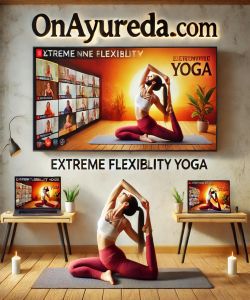
Overview of Extreme Flexibility Yoga
Extreme Flexibility Yoga is a highly specialised and rigorous physical discipline engineered to systematically deconstruct and transcend the conventional limitations of human mobility. It is not a practice for the uninitiated, nor is it a recreational pursuit; it is a serious methodology for dedicated athletes, dancers, martial artists, and contortionists seeking to unlock their ultimate anatomical potential. This discipline operates at the far periphery of traditional yoga, borrowing its foundational principles of breath control and mindfulness but applying them with an unyielding intensity to achieve extraordinary ranges of motion. The practice mandates an absolute synthesis of physical power, mental fortitude, and profound proprioceptive awareness. It involves the meticulous conditioning of muscles, ligaments, and tendons, pushing them safely but assertively beyond their established comfort zones to cultivate a state of hypermobility that is both controlled and functional. This is achieved through a structured regimen of advanced static and dynamic stretches, proprioceptive neuromuscular facilitation (PNF) techniques, and sustained holds that challenge the very fabric of the practitioner's physical and psychological resilience. The objective is not merely to become flexible, but to master a new dimension of physical expression, where the body moves with a liquid-like grace and power, uninhibited by the restrictive patterns that govern the average individual. It is an exacting science of movement, demanding unwavering commitment and an intelligent, informed approach to anatomical exploration.
What are Extreme Flexibility Yoga?
Extreme Flexibility Yoga represents a systematic and advanced form of physical conditioning focused exclusively on achieving ranges of motion that significantly exceed normative anatomical standards. It is a targeted discipline that integrates principles from classical yoga, contortion, gymnastics, and sports science to create a potent methodology for profound flexibility development. Unlike general yoga practices that balance flexibility with strength and meditation, this discipline subordinates all other elements to the primary goal of radical mobility enhancement. It is a structured programme designed to lengthen muscle fibres, increase the elasticity of connective tissues, and re-pattern neuromuscular responses to deep stretching. Practitioners engage in sequences that specifically target areas of physical restriction, employing techniques that go far beyond simple passive holds. The practice is characterised by its intensity and precision, demanding a high degree of physical and mental control.
Key characteristics include:
Targeted Methodology: Every posture and sequence is designed with the explicit purpose of increasing flexibility in a specific joint or muscle group, such as the hips, shoulders, or spinal column.
Advanced Techniques: It utilises sophisticated methods including PNF, active isolated stretching, and long-duration passive holds, often requiring specialised props to facilitate deeper releases.
Emphasis on Control: The discipline is not about achieving laxity but about developing controlled, functional hypermobility. Strength is cultivated at the end-ranges of motion to prevent instability and injury.
Physiological Adaptation: The consistent and intense stimulus is intended to induce long-term physiological changes in the fascia, tendons, and ligaments, leading to a permanent increase in the body’s plastic deformation capacity.
Mind-Body Integration: Extreme focus is required to manage the intense sensations associated with deep stretching, demanding a resilient mindset and a deep connection to the body’s signals to navigate the fine line between productive challenge and potential harm.
Who Needs Extreme Flexibility Yoga?
Professional Dancers: Individuals in disciplines such as ballet, contemporary dance, and acrobatics who require an exceptional range of motion for aesthetic line, technical execution, and the performance of complex choreographic movements.
Elite Gymnasts and Acrobats: Athletes whose performance is directly contingent upon their ability to execute manoeuvres such as splits, backbends, and other contortive elements with precision, control, and apparent effortlessness.
Contortionists and Circus Performers: Specialised artists for whom extreme flexibility is the core component of their craft, demanding mastery over bodily positions that lie far outside the realm of standard human anatomy.
Advanced Martial Artists: Practitioners of disciplines that incorporate high kicks, intricate grappling, and dynamic flexibility-based techniques, who seek a competitive advantage through superior mobility and injury resilience.
Dedicated Yoga Practitioners: Advanced yogis who have mastered conventional asana and wish to explore the outer limits of their physical potential, specifically focusing on postures that require profound flexibility, such as advanced backbends and leg-behind-head variations.
High-Performance Athletes: Competitors in sports such as figure skating, synchronised swimming, and diving, where points are often awarded for flexibility, line, and the aesthetic quality of movement.
Bodyworkers and Movement Therapists: Professionals seeking a deeper, experiential understanding of fascial lines and neuromuscular patterns to better inform their therapeutic practice and guide clients with advanced mobility goals.
Individuals in Physical Rehabilitation: Under strict professional supervision, certain principles may be adapted for those recovering from specific injuries or conditions that have resulted in severe scar tissue and mobility restrictions, to reclaim a functional range of motion.
Origins and Evolution of Extreme Flexibility Yoga
The genesis of Extreme Flexibility Yoga is not found in a single, ancient lineage but is rather a modern synthesis, born from the convergence of diverse physical cultures and scientific understanding. Its foundational roots can be traced to the physically demanding practices of Indian Hatha Yoga, particularly the ascetic traditions where yogis sought to master the body through extreme postures (asanas) as a means of spiritual discipline. These ancient practices demonstrated that the human body possessed a far greater capacity for flexibility than was commonly perceived, laying the philosophical groundwork for transcending physical limitations.
In the 20th century, this esoteric pursuit began to intersect with the secular and performance-oriented disciplines of the West. The codified techniques of Russian gymnastics and the Vaganova method in ballet brought a new level of systematic, scientific rigour to flexibility training. These methodologies broke down mobility into precise components, developing drills and conditioning exercises to engineer specific physical outcomes, moving the practice from a spiritual art to a performance science. Simultaneously, the global rise of circus arts, particularly the Mongolian and Chinese contortion traditions, showcased the absolute zenith of human flexibility, inspiring a generation of artists and athletes. These traditions contributed invaluable knowledge about progressive training, joint preparation, and the long-term conditioning required to safely achieve and maintain such extraordinary abilities.
The final evolutionary step came with the integration of modern sports science and physiotherapy. Concepts such as proprioceptive neuromuscular facilitation (PNF), fascial mechanics, and a sophisticated understanding of the stretch reflex transformed the field. It was no longer sufficient to simply hold a stretch; practitioners began to incorporate active engagement, resistance, and neurological principles to achieve faster, safer, and more permanent gains in flexibility. This modern iteration of the practice, now termed Extreme Flexibility Yoga, is therefore a potent hybrid: it retains the mindful awareness and breath control of its yogic ancestry whilst employing the precise, goal-oriented strategies of elite athletics and the profound anatomical knowledge of contemporary science.
Types of Extreme Flexibility Yoga
Static-Passive Flexibility: This modality focuses on achieving and holding deep stretches for extended durations, typically utilising gravity, body weight, or props such as blocks and straps. The objective is to allow the muscles and connective tissues to relax and lengthen over time, overriding the stretch reflex through sustained, passive pressure. It is fundamental for creating lasting changes in tissue length and is often practised towards the end of a session when the body is thoroughly warmed.
Static-Active Flexibility: This type demands the practitioner to actively hold a limb or part of the body in a stretched position using only the strength of the opposing (antagonist) muscles. For example, holding a leg aloft in a high kick position without any external support. This approach builds strength and control at the end-ranges of motion, which is critical for functional flexibility and injury prevention.
Dynamic Flexibility (Ballistic): This involves controlled, momentum-based movements that take a limb through its full range of motion. Examples include controlled leg swings, arm circles, and torso twists. The aim is to improve dynamic mobility and warm up the joints and muscles for more intensive work. It must be performed with absolute precision to avoid the uncontrolled bouncing that can trigger the stretch reflex and cause injury.
Proprioceptive Neuromuscular Facilitation (PNF): A highly effective and advanced category of flexibility training that involves both stretching and contracting the target muscle group. A common method is the 'contract-relax' technique, where a muscle is brought to its end-range, isometrically contracted against resistance, and then relaxed into a deeper stretch. This 'tricks' the nervous system into allowing a greater range of motion.
Contortion-Specific Conditioning: This is the most specialised type, focusing on achieving extreme backbends, front bends, and splits that define the art of contortion. It involves highly specific techniques for spinal articulation, hip rotation, and shoulder girdle mobility, often incorporating specialised equipment and partner-assisted stretching under expert guidance. This form requires the highest level of foundational flexibility, strength, and anatomical knowledge.
Benefits of Extreme Flexibility Yoga
Superior Range of Motion: The primary and most evident benefit is a dramatic and measurable increase in the functional range of motion across all major joints, including the hips, spine, and shoulders.
Enhanced Athletic and Artistic Performance: For dancers, gymnasts, and martial artists, this heightened mobility translates directly into superior technical execution, higher scores, and a more profound aesthetic quality of movement.
Profound Injury Resilience: By strengthening muscles at their end-ranges and improving the elasticity of connective tissues, the practice significantly reduces the risk of strains, sprains, and tears during dynamic or extreme movements.
Optimised Neuromuscular Efficiency: The discipline refines the communication between the nervous system and the muscular system, leading to greater control, coordination, and proprioceptive awareness.
Improved Posture and Spinal Health: Targeted work on spinal flexibility and the surrounding musculature can correct postural imbalances, decompress vertebrae, and enhance the overall health and mobility of the spinal column.
Accelerated Muscle Recovery: The deep, systematic stretching helps to alleviate muscle soreness, reduce stiffness, and increase blood flow to tissues, thereby accelerating the body's natural recovery and repair processes after intense physical exertion.
Increased Bodily Control and Awareness: Practitioners develop an exceptionally deep and nuanced understanding of their own anatomy, learning to isolate and control specific muscle groups with a high degree of precision.
Development of Mental Fortitude: The discipline required to work through the intense physical and psychological barriers associated with extreme stretching cultivates immense mental resilience, patience, and focus.
Release of Chronic Tension: The practice effectively targets and releases deep-seated tension held in the fascia and muscles, which can alleviate chronic pain and restrictions that are unresponsive to conventional stretching.
Functional Strength in Extreme Positions: Unlike passive stretching, this discipline emphasises building strength and stability at the outer limits of flexibility, ensuring that the acquired range of motion is both usable and safe.
Core Principles and Practices of Extreme Flexibility Yoga
Principle of Gradual Progression: The cardinal rule is that progress must be incremental and systematic. The body's tissues must be coaxed, not forced, into new ranges of motion. Any attempt to rush the process will inevitably lead to injury and regression. Each session builds methodically upon the last.
Primacy of the Breath (Pranayama): Breath is the master regulator. Deep, diaphragmatic, and controlled breathing is utilised to calm the nervous system, oxygenate the tissues, and manage the intense sensations of deep stretching. Exhalation is synchronised with the deepening of a stretch to facilitate release.
Active Engagement for Stability: Flexibility without corresponding strength is a liability. This practice mandates the active engagement of antagonist muscles to support and stabilise joints at their end-range of motion. This principle of co-activation protects the joint capsule and ligaments from overstretching.
The Indispensable Warm-Up: A cold body must never be subjected to extreme stretching. A thorough warm-up, consisting of dynamic movements and cardiovascular activity, is non-negotiable. This increases blood flow, raises muscle temperature, and prepares the connective tissues for the demands to follow.
Patience and Sustained Holds: True physiological adaptation of connective tissue requires time under tension. Practices involve holding postures for extended periods, moving beyond the initial elastic stretch to influence the plastic, or permanent, properties of the fascia and ligaments.
Intelligent Use of Props: Props such as yoga blocks, straps, and bolsters are not seen as crutches but as essential tools for precision. They are used to support the body, modify leverage, and allow the practitioner to safely access and sustain deeper stretches for longer durations.
Unwavering Bodily Awareness (Proprioception): The practitioner must cultivate an acute internal listening skill, distinguishing between the productive sensation of a deep stretch (discomfort) and the sharp signal of potential injury (pain). This internal feedback loop dictates the intensity and duration of every action.
Consistency Over Intensity: Regular, consistent practice yields far superior and safer results than sporadic, overly aggressive sessions. The body adapts to consistent stimuli. Daily or near-daily practice is the standard for serious practitioners aiming for significant transformation.
Online Extreme Flexibility Yoga
Unparalleled Accessibility: The online format eradicates geographical barriers, providing access to elite, specialised instructors who may be located anywhere in the world. This democratises access to a niche discipline that is seldom available in local studios, allowing dedicated practitioners to learn from leading experts in the field.
Autonomous Scheduling and Pacing: Practitioners are afforded complete control over their training schedule, enabling them to integrate this demanding practice into their lives without compromise. Furthermore, they can pause, rewind, and review complex instructions at their own pace, ensuring a thorough understanding and correct execution of techniques that is often not possible in a live, group setting.
Cultivation of Self-Reliance: The absence of constant hands-on adjustments from an instructor forces the practitioner to develop a heightened sense of internal awareness and proprioception. They must learn to interpret their body’s signals with greater acuity, fostering a deeper level of self-mastery and responsibility for their own progress and safety.
Focused, Distraction-Free Environment: Training within a personal, controlled space eliminates the social distractions and competitive pressures inherent in a studio environment. This allows for a more introspective and focused practice, where all mental and physical energy can be directed towards the precise execution of the techniques and the internal sensations of the body.
Repeatable and Consistent Instruction: Access to a library of pre-recorded sessions ensures absolute consistency in instruction. The practitioner can revisit the same foundational class multiple times to master a specific technique or progression, reinforcing correct motor patterns without the variability that can occur in different live classes.
Cost-Effectiveness: Online programmes typically offer a more financially viable alternative to private tuition or specialised workshops, which are often the only offline avenues for this level of instruction. This makes a long-term, consistent commitment to the practice more sustainable.
Personalised Environmental Control: The practitioner can optimise their training environment to their exact preferences, controlling temperature, lighting, and sound. This ability to create an ideal personal setting can significantly enhance comfort, focus, and the overall effectiveness of each session.
Extreme Flexibility Yoga Techniques
Step 1: Foundational Warm-Up. Initiate the session with a minimum of fifteen minutes of dynamic movement. This is not optional. Execute full-body movements such as joint rotations (ankles, hips, shoulders, wrists), cat-cow spinal flexions, and controlled leg swings in all planes of motion. The objective is to increase core body temperature and lubricate the joints, preparing the entire system for the intense demands to follow.
Step 2: Active Isolated Engagement. Before attempting a deep passive stretch, activate the target area. For example, before working on hamstring flexibility, perform several sets of standing leg lifts to the front, holding each lift for two seconds at the peak using only quadriceps strength. This warms the specific muscles and establishes a neurological connection, preparing them for lengthening.
Step 3: Enter the Initial Stretch. Move slowly and deliberately into the target posture, for instance, a seated forward fold. Advance only to the point of the first significant resistance—the initial 'edge' of the stretch. Halt here. Breathe deeply and calmly for a minimum of thirty seconds, allowing the nervous system to acclimate and the initial muscle guarding to subside.
Step 4: Implement PNF Contract-Relax. From this position, engage the muscle being stretched. In the forward fold, isometrically press the heels down into the floor, activating the hamstrings, for five to ten seconds. This contraction must be strong and deliberate.
Step 5: Deepen into the Release. Immediately following the contraction, exhale fully and consciously relax the engaged muscles. As they release, use the antagonist muscles (the quadriceps, in this case) to actively pull the body deeper into the stretch. You will find a new, deeper 'edge'. This is the core of the PNF technique.
Step 6: The Sustained Passive Hold. Once you have reached this new maximal depth, you must hold it. Remain in the posture, supported by props if necessary to maintain alignment, for a duration of one to three minutes. Breathe continuously and direct your focus to the sensations in the tissue, remaining still and allowing for plastic deformation to occur.
Step 7: Controlled and Slow Exit. Exiting a deep stretch is as critical as entering it. Release from the posture with extreme slowness and control. Use muscular strength to come out of the position, never 'bouncing' or jerking out of it, which could cause a rebound contraction or injury.
Extreme Flexibility Yoga for Adults
Extreme Flexibility Yoga for adults is a rigorous and highly structured pursuit, fundamentally different from general flexibility work. It is predicated on the understanding that the adult body, with its fully formed skeletal structure and established neuromuscular patterns, requires a more intelligent and patient approach than that of a younger, more malleable individual. The practice for adults must therefore be exceptionally precise, prioritising safety and physiological principles over speed. It demands an unwavering commitment to a thorough warm-up protocol designed to increase tissue temperature and elasticity, mitigating the risk of injury to muscles and connective tissues that may have lost pliability over time. Progress is measured not in weeks, but over months and years of consistent, dedicated effort. The adult practitioner must cultivate immense psychological resilience, accepting that pre-existing tension patterns and fascial adhesions require persistent and methodical work to release. The focus shifts from achieving dramatic postures quickly to the meticulous, gradual process of re-educating the body. This involves a heavy emphasis on PNF techniques and active-controlled stretching to ensure that newfound flexibility is accompanied by the requisite strength to support and stabilise the joints. For adults, this discipline is less a performance art and more a profound journey of self-discovery, demanding a mature and disciplined mindset to safely navigate the body’s established boundaries and intelligently expand them. It is an investment in long-term physical freedom, mobility, and resilience.
Total Duration of Online Extreme Flexibility Yoga
The standard and prescribed duration for a single, focused session of online Extreme Flexibility Yoga is precisely 1 hr. This timeframe is not arbitrary; it is a structured allocation designed for maximum efficacy and safety. A session of less than 1 hr is insufficient to accommodate the non-negotiable phases of the practice: the essential warm-up, the targeted technical work, and the crucial cool-down. The initial segment of the session must be dedicated to thoroughly preparing the body, elevating core temperature and ensuring the muscles and connective tissues are receptive to deep work. The central, substantive portion is then devoted to the intense, specific flexibility protocols, whether focusing on hips, shoulders, or spinal articulation. This requires sustained holds and repeated application of advanced techniques, which cannot be rushed. The final phase is equally critical, involving counter-stretches and gentle movements to down-regulate the nervous system and restore the body to a state of equilibrium. Attempting to compress these vital components into a shorter period would compromise the integrity of the practice, leading to suboptimal results and a significantly elevated risk of injury. Therefore, the 1 hr duration is the mandated minimum for any serious practitioner engaging with this discipline in an online format, ensuring a comprehensive, safe, and methodologically sound training experience. Anything less is considered incomplete and professionally irresponsible.
Things to Consider with Extreme Flexibility Yoga
Engaging in Extreme Flexibility Yoga demands a sober and comprehensive assessment of one’s physical condition, mental preparedness, and environmental resources. This is not a discipline to be entered into lightly. Foremost, a prospective practitioner must possess a solid foundation of physical fitness and an absence of any pre-existing joint instability, hypermobility disorders, or acute injuries. It is imperative to distinguish between healthy, tight muscles and structurally compromised joints; this practice is for the former, not the latter. One must consider the significant time commitment required; meaningful progress is the product of relentless consistency, not occasional, intense effort. The practitioner must be prepared to dedicate numerous hours per week over a period of years. Furthermore, the psychological dimension cannot be overstated. An individual must possess a high degree of patience, self-awareness, and the ability to manage significant discomfort without crossing the threshold into pain. A mindset prone to impatience, ego, or competition is a direct contraindication for this work. Access to a suitable training space is also a critical consideration—one that is warm, spacious, and equipped with essential props like blocks, straps, and bolsters. Finally, one must secure guidance from a highly qualified and experienced instructor, as attempting this level of practice without expert oversight is an invitation to severe, potentially permanent, injury. The path is demanding, and these considerations are not mere suggestions but absolute prerequisites for safe and effective engagement.
Effectiveness of Extreme Flexibility Yoga
The effectiveness of Extreme Flexibility Yoga is unequivocal, provided it is undertaken with the requisite discipline, consistency, and adherence to its core principles. For the specific goal of cultivating a radical increase in range of motion, its efficacy is unparalleled. The methodology is not based on abstract concepts but on the direct application of physiological and neurological science. By systematically employing techniques such as Proprioceptive Neuromuscular Facilitation (PNF), the practice directly manipulates the neuromuscular system, resetting the stretch reflex and allowing for immediate, demonstrable gains in mobility. Furthermore, the use of long-duration static holds creates plastic, or permanent, changes in the length of muscles and the surrounding fascial matrix. This results in a lasting state of enhanced flexibility, rather than the transient elasticity achieved through more cursory stretching routines. Its effectiveness is most pronounced in dedicated individuals who approach the discipline as a long-term project, understanding that significant, functional hypermobility is a cumulative adaptation. When the principles of progressive overload, active control, and adequate recovery are respected, the practice reliably deconstructs long-standing patterns of physical restriction. The results are not only visible in the execution of advanced postures but are also functionally integrated, leading to superior performance in athletic and artistic endeavours. The system works because it is a direct, intense, and intelligent assault on the body's physical limitations.
Preferred Cautions During Extreme Flexibility Yoga
It is imperative that the practitioner approaches Extreme Flexibility Yoga with a mindset of rigorous caution and unyielding self-awareness. This is a high-stakes discipline where the line between productive stress and injurious strain is exceptionally fine. The cardinal rule is to never, under any circumstances, work through sharp, shooting, or electric pain; these are definitive signals from the nervous system to cease all activity immediately. Muscular discomfort and intense stretching sensations are expected, but pain is a strict boundary that must not be crossed. One must exercise extreme vigilance with joints, particularly the knees, lower back, and shoulder capsules. These areas must always be supported and aligned correctly, and any posture causing joint compression or torque must be modified or abandoned. The practitioner must resist all temptation to use momentum or 'bounce' in an attempt to deepen a stretch, as such ballistic movements can easily cause microscopic tears in muscle fibres. Furthermore, hydration and body temperature are critical safety parameters; a cold or dehydrated body is brittle and highly susceptible to injury. It is also crucial to avoid comparing one’s progress to others. Individual anatomy, genetics, and history dictate the pace of development, and any attempt to force the body to match an external ideal is a direct path to harm. Finally, one must be acutely aware of overtraining. The tissues need time to recover and adapt; relentless, aggressive stretching without adequate rest will lead to inflammation, instability, and eventual failure.
Extreme Flexibility Yoga Course Outline
Module 1: Foundational Principles and Safety Protocols
Anatomy of Flexibility: Understanding Muscles, Fascia, and Ligaments.
The Science of the Stretch Reflex and PNF.
Distinguishing Pain from Discomfort: The Non-Negotiable Boundaries.
Essential Warm-Up and Cool-Down Methodologies.
Correct Utilisation of Props: Blocks, Straps, and Bolsters.
Module 2: Mastering the Forward Fold and Hamstring Flexibility
Active Hamstring Engagement and Lengthening Drills.
Seated Forward Folds (Paschimottanasana): Variations and Deepening Techniques.
Standing Forward Folds (Uttanasana): Gravity-Assisted Releases.
PNF Protocols for the Hamstring and Calf Complex.
Introduction to Splits Preparation.
Module 3: Unlocking the Hips - Splits and Rotations
Anatomy of the Hip Joint: Flexors, Extensors, and Rotators.
Front Splits (Hanumanasana): Systematic Progressions.
Middle Splits (Samakonasana): Techniques for Adductor Release.
Deep Hip Rotators: Pigeon Pose (Eka Pada Rajakapotasana) and its Advanced Variations.
Active Flexibility Drills for Hip Control.
Module 4: Developing Spinal Articulation - Backbending
Anatomy of the Spine and Core Stabilisation.
Shoulder and Thoracic Spine Opening Techniques.
Bridge (Setu Bandhasana) and Wheel (Urdhva Dhanurasana) Progressions.
Camel Pose (Ustrasana): Safe Entry and Exit.
Introduction to Contortion-Based Backbends and Drop-Backs.
Module 5: Advanced Shoulder and Upper Body Mobility
The Shoulder Girdle: Anatomy and Movement Planes.
Cow Face Pose (Gomukhasana) Arms and Eagle Pose (Garudasana) Arms for Scapular Mobility.
Binding Techniques in Postures.
Overhead Mobility Drills for Handstands and Backbends.
PNF for Pectorals and Latissimus Dorsi.
Module 6: Integration and Advanced Sequences
Combining Hip, Spine, and Shoulder Flexibility in Flow.
Leg-Behind-Head Postures: Foundational Techniques.
Inversions with Advanced Flexibility Demands.
Creating a Personalised, Sustainable Practice Plan.
Injury Prevention and Long-Term Maintenance Strategies.
Detailed Objectives with Timeline of Extreme Flexibility Yoga
Initial Phase (First Month): Foundational Conditioning and Neurological Adaptation.
Objective: To master the core safety protocols and establish a consistent practice routine. The primary goal is to re-pattern the nervous system's response to stretching, learning to consciously relax the stretch reflex.
Timeline: By the end of week four, the practitioner will demonstrate proficient execution of all foundational warm-up and cool-down sequences and will be able to hold basic hamstring and hip flexor stretches for two minutes without muscular guarding.
Developmental Phase (Months Two to Six): Measurable Gains in Primary Muscle Groups.
Objective: To achieve significant, tangible increases in the flexibility of major muscle groups, particularly the hamstrings, hip flexors, and quadriceps.
Timeline: By the end of month six, the practitioner is expected to achieve a flat front split on at least one side, or be demonstrably close, and hold a stable, aligned bridge pose with straight arms for a minimum of thirty seconds.
Intensification Phase (Months Seven to Twelve): Targeting Connective Tissues and Spinal Mobility.
Objective: To begin influencing the plastic properties of connective tissues and to develop significant thoracic spine extension. The focus shifts from muscular flexibility to deeper, fascial releases.
Timeline: By the end of the first year, the practitioner will be working on oversplits with the front leg elevated on blocks and will be able to initiate a controlled drop-back from standing into a full wheel pose, with or without assistance.
Specialisation Phase (Second Year): Mastery of Advanced and Contortion-Based Postures.
Objective: To refine control at extreme end-ranges of motion and master postures requiring a combination of profound flexibility across multiple joints.
Timeline: During the second year, the practitioner will aim to master a square middle split, execute a deep, scorpion-style backbend (Vrischikasana), and begin foundational work for leg-behind-head (Eka Pada Sirsasana) and chest-stand (Ganda Bherundasana) postures.
Mastery Phase (Third Year and Beyond): Embodiment and Functional Integration.
Objective: To fully integrate extreme flexibility into a state of functional, controlled mobility. The practice becomes less about achieving new postures and more about refining the quality, control, and grace within them.
Timeline: From the third year onwards, the objective is to maintain and refine all previously achieved skills, focusing on seamless transitions between complex postures and the development of a deeply intuitive and self-regulated personal practice.
Requirements for Taking Online Extreme Flexibility Yoga
Pre-existing Physical Competence: A foundational level of physical fitness, including demonstrable core strength and at least an intermediate level of general flexibility, is an absolute prerequisite. This is not a programme for beginners.
Injury-Free Status: The candidate must be free from any current joint instability, chronic pain conditions, acute injuries, or diagnosed hypermobility syndromes (e.g., Ehlers-Danlos). A history of major joint surgery requires explicit medical clearance.
High-Speed, Stable Internet Connection: A reliable, uninterrupted internet connection is non-negotiable for streaming high-definition video content without buffering or disconnection, which could disrupt focus and create an unsafe training environment.
Adequate and Safe Training Space: A dedicated area with a minimum of two by three metres of clear, unobstructed floor space is required. The surface must be flat and non-slip, and the area must be free from hazards.
Essential Equipment: The practitioner must possess, at a minimum, a high-quality yoga mat, two firm yoga blocks, and a non-elastic yoga strap. Access to a wall for support is also mandatory.
Appropriate Technology: A device with a large enough screen (a laptop or tablet is preferred over a mobile phone) to clearly see the instructor’s demonstrations of subtle anatomical details and alignments.
Commitment to Self-Discipline: The candidate must possess a high degree of intrinsic motivation and the discipline to adhere to a rigorous training schedule without external supervision. The ability to work independently is paramount.
Profound Self-Awareness: A mature capacity to listen to one's own body, to honestly assess its limits, and to distinguish between productive discomfort and harmful pain is the single most important requirement. The ego must be subordinate to bodily intelligence.
Things to Keep in Mind Before Starting Online Extreme Flexibility Yoga
Before embarking on an online Extreme Flexibility Yoga programme, it is imperative to conduct a rigorous self-assessment and prepare accordingly. This is a specialised and high-risk endeavour that demands more than mere enthusiasm. First, one must understand that the online format places the burden of safety squarely upon the practitioner. Without an instructor physically present to provide hands-on corrections, you are solely responsible for interpreting your body's signals and maintaining correct alignment. This requires a level of honesty and proprioceptive acuity that not all individuals possess. You must accept that progress will be slow and non-linear; there will be plateaus and even temporary regressions. An impatient or goal-obsessed mindset is a direct contraindication for this work and will invariably lead to injury. It is critical to research the instructor's credentials with extreme prejudice; verify their experience, anatomical knowledge, and specialisation in flexibility training. Do not commit to a programme based on impressive imagery alone. Furthermore, you must be prepared to invest in the necessary equipment and to create a dedicated, distraction-free space for your practice. Attempting this work in a cramped or cluttered environment is both ineffective and dangerous. Finally, recognise that this is a long-term commitment. Lasting physiological change does not occur overnight. You must be prepared to integrate this demanding practice into your lifestyle consistently for years, not weeks, to achieve the profound results it promises.
Qualifications Required to Perform Extreme Flexibility Yoga
The qualifications required to safely and effectively teach or perform Extreme Flexibility Yoga at a professional level are extensive and multi-faceted, extending far beyond a standard yoga teacher certification. The individual must possess a deep and demonstrable expertise in human anatomy, kinesiology, and biomechanics. This is not a superficial understanding but a profound knowledge of joint mechanics, fascial lines, and neuromuscular physiology. A formal qualification in a related field such as physiotherapy, sports science, or osteopathy is highly advantageous. Beyond academic knowledge, the individual must have years of dedicated personal practice in a relevant discipline, such as contortion, elite gymnastics, or professional dance. This lived experience provides an intuitive understanding of the techniques and risks that cannot be learned from a textbook.
Specifically, a qualified individual should possess:
Advanced Teaching Certification: A certification from a reputable institution that specialises in flexibility science or contortion training, not just a generic yoga qualification.
Verifiable Lineage or Mentorship: Evidence of having trained extensively under a recognised and respected master in the field of flexibility or contortion.
Extensive Practical Experience: A minimum of several years of experience coaching other high-level athletes or artists, with a proven track record of achieving results safely.
First Aid and CPR Certification: A current certification is a non-negotiable minimum safety requirement for anyone guiding others through high-risk physical activity.
Ultimately, the most critical qualification is a history of personal mastery combined with a demonstrated, unwavering commitment to the safety and long-term well-being of their students. The ability to perform extreme postures is secondary to the ability to deconstruct them, understand their anatomical implications, and guide others towards them with intelligence and care.
Online Vs Offline/Onsite Extreme Flexibility Yoga
Online
The online modality for Extreme Flexibility Yoga is defined by autonomy and accessibility. Its primary advantage lies in its capacity to connect practitioners with elite-level instructors irrespective of geographical location. This format demands an exceptionally high degree of self-discipline, proprioceptive awareness, and personal accountability from the practitioner, as there is no immediate, physical intervention from an instructor. Progress is self-paced, allowing for deep, introspective work and the ability to endlessly review instructional material to perfect technique. The training environment is entirely within the practitioner's control, offering a private, focused setting free from the distractions or competitive pressures of a group class. However, the critical drawback is the absence of hands-on adjustments. Subtle misalignments may go unnoticed, potentially ingraining poor habits or leading to injury. Feedback, when available, is often asynchronous or limited to what can be observed through a two-dimensional screen, which may not capture the full nuance of a posture. This format is therefore best suited for experienced, self-motivated individuals who already possess a strong foundation of body awareness.
Offline/Onsite
The offline or onsite format offers the invaluable benefit of direct, expert supervision. An instructor can provide immediate, tactile feedback and hands-on adjustments, correcting misalignments in real-time and ensuring a level of safety and precision that is difficult to replicate online. This is particularly crucial in a high-risk discipline like Extreme Flexibility Yoga, where a minor error in alignment can have significant consequences. The group environment can also foster a sense of community and shared motivation. Furthermore, onsite studios are typically equipped with a wider range of specialised props and equipment that may not be available to the home practitioner. The primary limitations are geographical dependency, fixed class schedules, and potentially higher costs. The practitioner is confined to the expertise available in their local area and must adhere to a predetermined timetable. The presence of other students can also be a source of distraction or foster an unhealthy sense of comparison for some individuals. This format is ideal for those who require direct supervision, value hands-on corrections, and thrive in a structured, communal setting.
FAQs About Online Extreme Flexibility Yoga
Question 1. Is online Extreme Flexibility Yoga safe for a complete beginner?
Answer: No. It is absolutely not. This discipline is designed for individuals with a pre-existing, solid foundation in physical fitness and flexibility.
Question 2. What is the most critical piece of equipment I need?
Answer: Beyond a mat, two firm yoga blocks are non-negotiable for safety, support, and achieving correct alignment in deep stretches.
Question 3. How do I know if I am pushing too far?
Answer: You must learn to distinguish between the intense but tolerable sensation of a muscle stretching and any sharp, shooting, or joint-specific pain. Pain is a definitive stop signal.
Question 4. Can I achieve a full split using only online classes?
Answer: Yes, if you are consistent, disciplined, and follow the methodology precisely.
Question 5. How often should I practice?
Answer: For significant progress, a minimum of four to five dedicated sessions per week is recommended.
Question 6. Do I need a partner for online training?
Answer: No. The online curriculum is designed for solo practice. Partner-assisted stretching should only be done under direct, in-person expert supervision.
Question 7. What if I have a pre-existing injury?
Answer: You must not begin the programme without explicit clearance from a qualified medical professional, such as a physiotherapist.
Question 8. How is feedback provided in an online format?
Answer: This varies by programme. Some offer video submission reviews or live interactive sessions, while others are purely self-guided.
Question 9. Is this the same as contortion training?
Answer: It is a gateway to contortion. It builds the foundational flexibility required for contortion but may not cover the specific performance skills.
Question 10. Will this practice make my joints unstable?
Answer: Not if done correctly. A core principle is to build strength at end-ranges of motion to ensure stability, not laxity.
Question 11. What is the most common mistake people make?
Answer: Impatience. Trying to force progress instead of allowing the body to adapt over time is the fastest route to injury.
Question 12. Can I lose my flexibility if I stop practising?
Answer: Yes. Flexibility, especially at this level, requires consistent maintenance.
Question 13. Does this practice include meditation?
Answer: It requires immense mental focus and mindfulness, which is a form of meditation in itself, but it does not typically include separate, seated meditation sessions.
Question 14. What is PNF?
Answer: Proprioceptive Neuromuscular Facilitation. It is an advanced stretching technique involving muscle contractions to trick the nervous system into allowing a deeper stretch.
Question 15. Can men be as flexible as women in this discipline?
Answer: Yes. While there are general anatomical differences, with dedicated and correct training, men can achieve extraordinary levels of flexibility.
Question 16. Is there a risk of nerve damage?
Answer: The risk exists if you ignore warning signs like tingling, numbness, or electric-shock sensations. This is why listening to your body is paramount.
Question 17. How long does a typical online session last?
Answer: The standard is one hour to accommodate a full warm-up, main practice, and cool-down.
Conclusion About Extreme Flexibility Yoga
In conclusion, Extreme Flexibility Yoga stands as a formidable and highly specialised physical discipline, engineered for a select cohort of dedicated individuals who seek to methodically transcend the body's conventional boundaries. It is not a casual pursuit but an exacting science of movement that demands a rare synthesis of physical resilience, mental fortitude, and profound anatomical intelligence. The practice's effectiveness is rooted in its rigorous application of physiological principles, systematically conditioning the body to accept and control ranges of motion that are far beyond the norm. Its core tenets of gradual progression, active engagement, and unwavering self-awareness are not mere guidelines but absolute laws, the transgression of which leads inevitably to injury. Whether pursued online or in person, the path requires an uncompromising commitment to consistency and a mature, ego-less approach to training. It is a journey measured in years, not months, where the ultimate reward is not merely the attainment of extraordinary physical postures, but the cultivation of an unshakeable discipline and a masterful command over one's own physical and mental domains. For those who possess the requisite dedication and respect for its process, it offers a definitive pathway to unlocking the human body’s ultimate potential for mobility and expression.