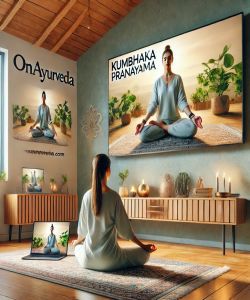
Overview of Kumbhaka Pranayama
Kumbhaka Pranayama represents a pinnacle of yogic respiratory discipline, a sophisticated and potent practice centred on the deliberate retention of breath. It is not merely an exercise in holding one's breath but a highly controlled and systematic method for modulating the autonomic nervous system, influencing metabolic processes, and fundamentally altering states of consciousness. As a cornerstone of advanced Hatha Yoga, Kumbhaka is the intentional pause between inhalation and exhalation, or following exhalation, serving as a powerful tool to harness and direct Prana, the vital life force energy that animates the human system. The practice demands unwavering focus, physical stillness, and a profound internal awareness, transforming the simple act of breathing into a gateway for physiological and psychological mastery. Its successful execution leads to a state of profound stillness, both in the body and the mind, creating an internal environment conducive to deep meditation and heightened states of perception. By systematically extending the period of breath retention under controlled conditions, practitioners learn to regulate the flow of energy through the nadis, or subtle energy channels, purifying them of blockages and preparing the entire psychophysical structure for the awakening of higher spiritual potential. It is an assertive practice that commands respect and requires disciplined, incremental progression under expert guidance, standing as a testament to the human capacity to consciously influence bodily functions typically considered involuntary. Its ultimate aim transcends mere physical health, targeting the very root of mental fluctuations and agitation to establish a state of unshakable equilibrium and inner authority.
What is Kumbhaka Pranayama?
Kumbhaka Pranayama is the ancient yogic science of breath retention, a core component of the broader discipline of Pranayama, which concerns the regulation of life force energy. The Sanskrit word ‘Kumbhaka’ translates to ‘pot’ or ‘vessel’, a metaphor for the human torso, which, during this practice, contains the retained breath like a pot holding water. This is not a casual or forced holding of breath; it is a highly controlled, intentional, and precisely timed suspension of the respiratory cycle. It serves as the fulcrum between inhalation (Puraka) and exhalation (Rechaka), creating a powerful pause that allows for a profound internalisation of awareness and a direct influence over the body’s energetic and physiological systems. The practice is predicated on the yogic understanding that the cessation of breath leads to the cessation of mental chatter (chitta vritti), thereby paving the way for deeper meditative states.
The practice can be broken down into its fundamental phases:
Puraka (Inhalation): A controlled, smooth, and complete intake of air, conducted with full awareness.
Antara Kumbhaka (Internal Retention): The conscious retention of breath after a full inhalation, with the lungs filled with air. This is the most common form of Kumbhaka.
Rechaka (Exhalation): A controlled, smooth, and complete expulsion of air from the lungs, executed with deliberate slowness.
Bahya Kumbhaka (External Retention): The conscious retention of breath after a full exhalation, with the lungs empty. This is considered a more advanced and challenging practice.
Through the disciplined application of these phases, Kumbhaka Pranayama systematically trains the respiratory centre in the brain, enhances gaseous exchange in the lungs, and creates a state of deep homeostatic balance. It is a formidable technique for mastering the mind by first mastering the breath, asserting conscious control over the vital functions of the body.
Who Needs Kumbhaka Pranayama?
Advanced Yoga Practitioners: Individuals with a well-established foundation in basic Pranayama and Asana who are seeking to deepen their practice. Kumbhaka is the logical progression for those who have mastered diaphragmatic breathing and alternate nostril breathing (Nadi Shodhana) and are prepared for more intensive energetic work. It is an essential tool for advancing towards the higher limbs of yoga, such as Pratyahara (sense withdrawal) and Dharana (concentration).
Individuals Seeking Enhanced Mental Fortitude: Those who require unwavering mental focus and emotional resilience in their professional or personal lives. The intense concentration demanded by Kumbhaka directly trains the mind to remain steady and one-pointed, building a powerful bulwark against distraction, stress, and emotional volatility. It is a rigorous mental conditioning for executives, academics, and anyone in high-pressure roles.
Athletes and Physical Performers: Competitors and performers aiming to optimise respiratory function and C02 tolerance will find Kumbhaka indispensable. The practice directly improves lung capacity, enhances the efficiency of oxygen uptake and delivery to tissues, and trains the body to perform more effectively under conditions of oxygen debt. This translates to superior stamina, endurance, and control over physiological stress responses during peak performance.
Meditators Aiming for Deeper States: Practitioners of meditation who find their progress impeded by a restless mind or physiological distractions. By stilling the breath, Kumbhaka directly pacifies the fluctuations of the mind (vrittis), creating a profound internal silence and stability that is exceptionally conducive to deep, absorptive meditative states (Dhyana). It is a direct method for achieving the stillness required for profound insight.
Those on a Path of Spiritual Inquiry: Individuals dedicated to exploring the subtle energetic anatomy of the human system. Kumbhaka is a primary technique for purifying the nadis (energy channels) and stimulating the chakras (energy centres). It is considered a crucial practice for awakening Kundalini energy and exploring higher states of consciousness, making it essential for the serious spiritual aspirant.
Origins and Evolution of Kumbhaka Pranayama
The origins of Kumbhaka Pranayama are deeply embedded within the ancient spiritual traditions of India, with its philosophical underpinnings traceable to the Vedas and Upanishads. These foundational texts first articulated the concept of Prana as the universal life force and the breath as its most tangible physical manifestation. The early yogis and rishis recognised that by controlling the breath, one could influence the flow of Prana within the body, thereby gaining mastery over both the physical form and the subtle faculties of the mind. This nascent understanding laid the groundwork for the systematic development of Pranayama as a distinct yogic discipline.
It was in the classical yogic texts that Kumbhaka was formally codified and elevated to a position of central importance. The Yoga Sutras of Patanjali, one of the most authoritative texts on yoga, explicitly mentions Pranayama as the fourth limb of Ashtanga Yoga and describes it as the cessation of the movement of inhalation and exhalation. This marks the formal recognition of breath retention as a legitimate and powerful technique for achieving mental stillness. However, it was the later Hatha Yoga texts, most notably the Hatha Yoga Pradipika and the Gheranda Samhita, that provided exhaustive technical details on the practice of Kumbhaka. These mediaeval treatises classified different types of Kumbhaka, detailed their specific techniques, prescribed ratios for inhalation, retention, and exhalation, and outlined their profound energetic and spiritual effects, including the purification of the nadis and the awakening of Kundalini.
In the modern era, the evolution of Kumbhaka has followed a dual trajectory. On one hand, it remains a revered and potent practice within traditional yogic and spiritual lineages, preserved and transmitted through Guru-shishya parampara (teacher-disciple lineage). On the other hand, it has been subjected to scientific scrutiny, with contemporary research beginning to validate its significant physiological and psychological benefits. Modern interpretations often emphasise its therapeutic applications for improving respiratory health, managing stress, and enhancing autonomic nervous system regulation. This evolution has seen Kumbhaka move from the secluded ashram into the modern yoga studio and clinical setting, though its core principles of disciplined practice and conscious control remain immutable.
Types of Kumbhaka Pranayama
Antara Kumbhaka (Internal Retention): This is the practice of retaining the breath after a full and complete inhalation (Puraka). The lungs are held in a state of fullness, containing a maximum volume of air rich in oxygen and Prana. This form of Kumbhaka is primarily associated with energising and heating the body. It increases internal pressure, stimulates the solar plexus, and is believed to charge the entire pranic system. The practitioner focuses on containing the upward-moving energy (Prana Vayu) within the torso, creating a powerful state of energetic potential before the controlled release of exhalation (Rechaka). It is the most commonly taught and practised form of breath retention.
Bahya Kumbhaka (External Retention): This is the practice of retaining the breath after a full and complete exhalation (Rechaka). The lungs are held in a state of emptiness, creating a vacuum-like effect in the thoracic cavity. This form is considered more advanced and challenging than Antara Kumbhaka. It is associated with calming and cooling effects and is believed to draw the downward-moving energy (Apana Vayu) upwards, uniting it with Prana Vayu at the navel centre. This retention on an empty lung state demands significant control and can induce a profound sense of stillness and surrender.
Sahaja Kumbhaka (Spontaneous Retention): This is an effortless and automatic suspension of the breath that occurs spontaneously during deep states of meditation or concentration. It is not a technique to be actively practised but rather a state that arises when the mind becomes completely absorbed and still. Sahaja Kumbhaka signifies a high degree of mastery over the pranic and mental energies, where the need for active breathing temporarily ceases. It is a natural consequence of a deeply pacified mind and a balanced nervous system.
Kevala Kumbhaka (Absolute Retention): Regarded as the ultimate goal of Pranayama, Kevala Kumbhaka is the ability to retain the breath at will, for extended periods, without any preceding inhalation or exhalation. It represents the complete mastery over the breath and Prana, a state where the practitioner transcends the normal respiratory cycle. The Hatha Yoga Pradipika extols Kevala Kumbhaka as the true Pranayama, leading to liberation (Moksha) and the attainment of higher states of consciousness (Samadhi). It is an exceptionally advanced state achieved only after prolonged and dedicated practice of the other forms of Kumbhaka.
Benefits of Kumbhaka Pranayama
Enhanced Respiratory Efficiency: Systematically strengthens the diaphragm and intercostal muscles, leading to a significant increase in vital lung capacity and tidal volume. The practice optimises gaseous exchange at the alveolar level, improving the body's ability to absorb oxygen and expel carbon dioxide, resulting in superior overall respiratory function.
Profound Autonomic Nervous System Regulation: Directly stimulates the vagus nerve, inducing a powerful parasympathetic response. This effectively counteracts the chronic stress of the sympathetic 'fight-or-flight' mode, leading to reduced heart rate, lower blood pressure, and a deep state of physiological calm and homeostatic balance.
Increased Carbon Dioxide Tolerance: By methodically extending the duration of breath holds, the body's chemoreceptors are retrained to tolerate higher levels of carbon dioxide. This desensitisation is critical for improving physical endurance, reducing the onset of breathlessness during exertion, and promoting more efficient oxygen delivery to tissues via the Bohr effect.
Fortified Mental Concentration and Focus: The intense and unwavering attention required to manage breath retention acts as a rigorous training for the mind. This practice cultivates exceptional one-pointedness (Ekagrata) and mental discipline, directly enhancing the practitioner's ability to concentrate for extended periods and resist distractions in any endeavour.
Purification of Energetic Channels (Nadis): According to yogic physiology, Kumbhaka generates intense pranic heat (Tapas) that purifies the intricate network of 72,000 nadis. This process removes subtle energetic blockages, ensuring the smooth and balanced flow of Prana throughout the system, which is a prerequisite for robust health and spiritual advancement.
Preparation for Advanced Meditative States: By stilling the breath, Kumbhaka directly stills the incessant fluctuations of the mind (chitta vritti). This induced mental silence creates the ideal internal environment for progressing into deeper states of meditation, such as Dhyana (contemplative absorption) and Samadhi (transcendental consciousness), making it an indispensable tool for the serious spiritual practitioner.
Enhanced Cellular Health and Longevity: The practice promotes cellular oxygenation and detoxification. The deliberate modulation of oxygen and carbon dioxide levels is believed to stimulate cellular regeneration, improve metabolic efficiency, and slow down the ageing process, contributing to greater vitality and longevity as described in classical yogic texts.
Core Principles and Practices of Kumbhaka Pranayama
Prerequisite of Bodily Stillness (Asana Sthira): The practitioner must first establish a stable, comfortable, and erect seated posture. The spine must be held perfectly straight to allow for the unrestricted movement of the diaphragm and the unimpeded flow of Prana along the central channel (Sushumna Nadi). Any physical fidgeting or instability will disrupt the delicate internal process and is therefore impermissible.
Mastery of Foundational Breathing (Puraka and Rechaka): Before attempting retention, one must achieve complete mastery over the phases of inhalation (Puraka) and exhalation (Rechaka). Breathing must be deep, diaphragmatic, smooth, and entirely silent. The rhythm must be consistent and controlled, without any jerks or gasps. Attempting Kumbhaka without this foundational control is both ineffective and potentially hazardous.
The Principle of Gradual Progression (Krama): The duration of breath retention must be increased incrementally over a prolonged period of dedicated practice. Attempting to hold the breath for an excessive duration prematurely will strain the nervous and respiratory systems. A structured and patient approach, often using prescribed ratios (e.g., 1:1:2 for inhalation:retention:exhalation, gradually progressing to 1:4:2), is mandatory to ensure safety and efficacy.
Application of Energetic Locks (Bandhas): The safe and effective practice of Kumbhaka, particularly in its advanced stages, necessitates the application of Bandhas. Jalandhara Bandha (throat lock) is essential during internal retention to regulate pressure in the head and heart. Mula Bandha (root lock) and Uddiyana Bandha (abdominal lock) are used to contain and direct Prana upwards, preventing its dissipation.
Cultivation of Internal Awareness (Dharana): Kumbhaka is not a mechanical act but a profound exercise in internal focus. The practitioner’s awareness must be fully absorbed in the process: feeling the sensation of the breath, monitoring the body for any signs of tension, and observing the subtle flow of Prana. This unwavering concentration transforms the practice from a physical exercise into a powerful meditative discipline.
Guidance from a Competent Teacher (Guru): Due to its potent effects and potential risks, Kumbhaka Pranayama must be learned and practised under the direct supervision of a qualified and experienced instructor. A knowledgeable teacher provides essential guidance on technique, progression, contraindications, and the management of the powerful energetic experiences that can arise, ensuring the practice is both safe and transformative.
Online Kumbhaka Pranayama
Unparalleled Accessibility and Convenience: Online platforms dismantle geographical barriers, granting individuals access to expert instruction regardless of their physical location. This allows practitioners to learn from highly qualified, authentic lineage-holders who may be situated continents away. Sessions can be integrated into demanding schedules without the need for travel, making the consistent practice of this advanced discipline a feasible reality for professionals and those with significant commitments.
Structured and Self-Paced Learning Environment: A well-designed online programme provides a systematic, modular curriculum. This allows practitioners to progress at a pace commensurate with their individual capacity and experience. Foundational techniques can be revisited and practised repeatedly until mastered, a luxury not always afforded in a group class setting. This methodical approach is critical for a practice as potent and nuanced as Kumbhaka, ensuring no crucial steps are overlooked.
Direct, Focused, and Personalised Instruction: In a one-to-one or small-group online setting, the instructor’s attention is not diluted. The practitioner receives direct visual and verbal feedback on posture, breathing technique, and application of bandhas. The instructor can observe the student closely via webcam, correcting subtle errors in real-time and providing personalised guidance tailored to the individual’s specific physiological and energetic constitution. This focused attention accelerates learning and enhances safety.
Creation of a Controlled and Private Practice Space: Practising from one's own home allows for the creation of an ideal environment free from the external distractions and social pressures of a public studio. This sanctuary-like setting promotes the deep internalisation of awareness required for Kumbhaka. The practitioner can control lighting, temperature, and ambient noise, fostering a state of profound focus and introspection that is essential for safely exploring the subtler dimensions of the practice.
Access to a Curated Library of Resources: Online platforms often supplement live sessions with a comprehensive library of supporting materials. This can include high-quality video demonstrations of techniques, audio-guided practices for daily repetition, theoretical lectures on yogic philosophy and physiology, and detailed written instructions. This repository of knowledge empowers the practitioner to deepen their understanding and refine their practice independently, reinforcing the learning from live instruction.
Kumbhaka Pranayama Techniques
Establish a Stable Foundation (Asana): Assume a firm, erect, and comfortable meditative posture such as Padmasana (Lotus Pose), Siddhasana (Accomplished Pose), or a simple cross-legged position on a cushion (Sukhasana). Ensure the spine, neck, and head are perfectly aligned. Place the hands on the knees in Jnana or Chin Mudra. Close the eyes and allow the body to become completely still and the breath to settle into its natural rhythm.
Prepare with Full Yogic Breathing: Before initiating Kumbhaka, perform several rounds of full yogic breathing to prepare the lungs and calm the nervous system. Inhale slowly and deeply, first expanding the abdomen, then the rib cage, and finally the upper chest. Exhale completely in the reverse order, emptying the upper chest, contracting the rib cage, and drawing the abdomen in. This ensures maximum lung utilisation.
Execute Inhalation (Puraka): Inhale smoothly, deeply, and without any sound through both nostrils for a specific count (e.g., a count of four). The inhalation must be controlled and continuous, filling the lungs to their full capacity without creating any tension in the face, neck, or shoulders. Maintain complete awareness of the incoming breath.
Initiate Internal Retention (Antara Kumbhaka) with Bandhas: At the peak of the inhalation, retain the breath. Simultaneously apply Jalandhara Bandha (Throat Lock) by dropping the chin to the chest, and Mula Bandha (Root Lock) by contracting the perineal muscles. This locks the Prana within the torso. Hold the breath for a predetermined count (e.g., starting with a count of four). Focus your awareness at the eyebrow centre (Ajna Chakra) or the heart centre (Anahata Chakra). Remain perfectly still, without any strain.
Execute Controlled Exhalation (Rechaka): Before exhaling, release Mula Bandha first, then raise the head to release Jalandhara Bandha. Exhale slowly, smoothly, and with absolute control through both nostrils for a longer count (e.g., a count of eight). The exhalation should be longer than the inhalation to ensure the complete expulsion of stale air and to calm the nervous system.
Conclude and Repeat the Cycle: This completes one round. After the exhalation, you may either proceed directly to the next inhalation or, for a more advanced practice, engage Bahya Kumbhaka (external retention) before the next cycle. Begin with a limited number of rounds (e.g., three to five) and gradually increase as your capacity develops over time, always prioritising quality and control over duration or quantity.
Kumbhaka Pranayama for Adults
The application of Kumbhaka Pranayama for the adult practitioner is a matter of profound significance, demanding maturity, discipline, and a resolute commitment to self-mastery. For the adult mind, often burdened by professional responsibilities, societal pressures, and ingrained patterns of stress, Kumbhaka offers a direct and uncompromising method for reclaiming internal authority. It is not a gentle relaxation technique but a robust form of neurological and physiological reconditioning. The practice forces a confrontation with the body’s primal survival instincts—the urge to breathe—and through systematic, controlled exposure, teaches the nervous system that it can remain calm and regulated even under perceived duress. This builds an unshakeable foundation of resilience that permeates all aspects of life. Adults engaging in this practice will discover a potent tool for sharpening cognitive function, enhancing mental clarity, and fortifying their capacity for sustained focus in a world saturated with distractions. Furthermore, the discipline instils a deep sense of self-reliance; the ability to regulate one's own state of mind and body without external aids is the hallmark of a mature individual. The physiological benefits, including optimised respiratory function and improved cardiovascular health, are secondary yet crucial outcomes that support a vibrant and active life. However, it is the cultivation of a steady, unwavering mind—a mind that is not swayed by fleeting emotions or external chaos—that constitutes the ultimate value of Kumbhaka for the discerning adult. It is a definitive step from being a passive recipient of life’s circumstances to becoming an active architect of one's inner world.
Total Duration of Online Kumbhaka Pranayama
A comprehensive and professionally conducted online session dedicated to the instruction and practice of Kumbhaka Pranayama must be structured within a total duration of 1 hr. This specific timeframe is not arbitrary; it is a meticulously calculated period required to ensure the practitioner’s safety, comprehension, and proper integration of this potent technique. The session cannot be abbreviated without compromising its integrity and effectiveness. A significant portion of the initial time is allocated to essential preparatory practices, including joint mobilisation and specific Asanas designed to open the thoracic cavity and ensure a stable, upright posture, which is non-negotiable for correct practice. This is followed by preliminary breathing exercises, such as Kapalabhati or Bhastrika, to cleanse the respiratory passages, and Nadi Shodhana to balance the flow of Prana. Only after this rigorous preparation can the core instruction on Kumbhaka begin. The instructor must dedicate ample time to a detailed, step-by-step breakdown of the technique, including the precise application of Bandhas (energetic locks) and the principles of gradual progression. The guided practice itself, while central, occupies only a part of the hour, allowing for careful observation and real-time feedback from the instructor. The concluding phase is equally critical, involving a period of deep relaxation in Savasana (Corpse Pose) to allow the nervous system to absorb and integrate the profound energetic and physiological shifts induced by the practice. To attempt to condense this entire pedagogical process into a shorter period would be irresponsible and would rob the practice of its depth, transforming a powerful discipline into a superficial and potentially hazardous exercise.
Things to Consider with Kumbhaka Pranayama
Before embarking upon the practice of Kumbhaka Pranayama, a number of critical factors must be rigorously considered. This is not a discipline to be approached casually or without thorough preparation. Foremost is the practitioner's physical health; individuals with cardiovascular conditions, including high blood pressure, heart disease, or a history of stroke, must exercise extreme caution and seek explicit medical clearance. Similarly, conditions involving high internal pressure, such as glaucoma, hernias, or recent abdominal surgery, present significant contraindications. The practice must be undertaken on an empty stomach, ideally at least four hours after a main meal, to avoid undue pressure on the diaphragm and digestive organs. The practitioner’s mental and emotional state is also a paramount consideration. Those experiencing acute anxiety, panic disorders, or severe emotional turmoil should first stabilise their condition through gentler practices before attempting the intensity of breath retention. The necessity of qualified guidance cannot be overstated. Self-instruction from books or unqualified sources is a hazardous path that courts risk. An experienced teacher is essential to provide correct technique, oversee gradual progression, and offer support in navigating the powerful physical and energetic sensations that can arise. Finally, one must approach the practice with an attitude of profound patience and non-competitiveness. The goal is not to achieve record-breaking breath holds, but to cultivate deep internal awareness and control. Pushing the body beyond its current capacity out of ego or impatience is the surest way to invite injury and negate the profound benefits of this formidable yogic science.
Effectiveness of Kumbhaka Pranayama
The effectiveness of Kumbhaka Pranayama is both profound and multi-faceted, extending far beyond the simple mechanics of respiration. Its potency lies in its direct and verifiable influence over the autonomic nervous system, the command centre for the body's involuntary functions. Through the conscious and sustained retention of breath, the practice acts as a powerful modulator of the vagus nerve, systematically shifting the body from a state of sympathetic dominance (stress response) to one of parasympathetic calm (rest and digest). This neurological reset is not a subjective feeling but a measurable physiological reality, resulting in a lower resting heart rate, reduced blood pressure, and a deep sense of systemic equilibrium. On a metabolic level, its effectiveness is demonstrated through the enhancement of cellular respiration and the cultivation of greater tolerance to carbon dioxide. This reconditioning of the body’s chemoreceptors leads to improved stamina, greater physical endurance, and more efficient oxygen utilisation, benefits of immense value in both athletic and daily life. The most significant testament to its efficacy, however, lies in its impact on the mind. The unwavering focus required to manage the breath hold is a formidable training in mental discipline. It systematically dismantles patterns of distraction and mental agitation, forging a mind that is sharp, clear, and resilient. The practice effectively starves the 'monkey mind' of its fuel—the chaotic, shallow breath—and in the resulting stillness, a higher state of awareness and cognitive control emerges. Therefore, the effectiveness of Kumbhaka is not a matter of belief but a direct consequence of its rigorous application, delivering tangible, transformative results on physiological, neurological, and psychological levels.
Preferred Cautions During Kumbhaka Pranayama
The practice of Kumbhaka Pranayama demands an unwavering and non-negotiable adherence to a strict set of cautions. This is a formidable discipline with potent effects, and any deviation from a cautious, intelligent approach is an invitation to physiological and neurological distress. It is absolutely imperative that the practitioner never forces the breath hold. The retention must always feel controlled and manageable; any sign of gasping, dizziness, excessive pressure in the head, or chest discomfort is an unequivocal signal to cease the retention immediately and return to normal breathing. The ego must be completely subjugated; the duration of the hold is irrelevant compared to the quality and stability of the practice. Gradualism is not a suggestion but a command. Any attempt to leapfrog to advanced ratios or extended durations without building a solid foundation is reckless and counterproductive. Particular vigilance is required for individuals with any underlying health conditions, especially those related to the cardiovascular or respiratory systems. Even with medical clearance, such practitioners must proceed with an abundance of caution, under the direct supervision of an exceptionally experienced instructor. The practice must be immediately suspended during any illness, fever, or period of extreme physical or emotional exhaustion. Furthermore, Kumbhaka should never be combined with strenuous physical activity. It is a subtle, internal practice that requires a quiet, stable environment and a calm, focused state of mind. Disregarding these cautions transforms a powerful tool for self-mastery into a potential instrument of harm. Prudence, patience, and respect for the body’s limits are the essential safeguards.
Kumbhaka Pranayama Course Outline
Module 1: Foundational Principles and Preparatory Practices
Theoretical Framework: The Science and Philosophy of Prana and Pranayama.
Postural Integrity: Establishing and Maintaining a Correct Meditative Asana.
Diaphragmatic Breathing: Mastering the Mechanics of Full Yogic Breath.
Introduction to Nadi Shodhana (Alternate Nostril Breathing) without Retention.
Safety Protocols and Contraindications: A Comprehensive Review.
Module 2: Introduction to Antara Kumbhaka (Internal Retention)
Technique of Smooth Inhalation (Puraka) and Exhalation (Rechaka).
Introduction to a Simple Retention Ratio (e.g., 1:1:2).
The Anatomy and Application of Jalandhara Bandha (Throat Lock).
Guided Practice Sessions focusing on stability and comfort.
Managing Common Physical and Mental Sensations.
Module 3: Deepening the Practice and Introducing Bandhas
Gradual Extension of Antara Kumbhaka Duration and Ratios (e.g., 1:2:2).
The Anatomy and Application of Mula Bandha (Root Lock).
Integration of Jalandhara and Mula Bandha during retention.
Techniques for Maintaining Mental Focus and Stillness.
The Role of Kumbhaka in Calming the Nervous System.
Module 4: Advanced Techniques and Bahya Kumbhaka (External Retention)
Refining Antara Kumbhaka towards a 1:4:2 ratio.
Introduction to the Theory and Technique of Bahya Kumbhaka.
Guided Practice of Retention After Exhalation.
The Anatomy and Application of Uddiyana Bandha (Abdominal Lock).
Combining all three Bandhas (Maha Bandha) with Kumbhaka.
Module 5: Integration, and Application in Meditation
Developing a Sustainable Personal Practice Routine.
Using Kumbhaka as a direct preparation for Dhyana (Meditation).
Exploring the Energetic Effects: Prana, Nadis, and Chakras.
Understanding Sahaja and Kevala Kumbhaka as goals of the practice.
Final Review, Q&A, and Guidance for Continued Self-Practice.
Detailed Objectives with Timeline of Kumbhaka Pranayama
Weeks 1-2: Establish Foundational Control. The primary objective is to achieve complete mastery over deep, diaphragmatic breathing and Nadi Shodhana without retention. The practitioner will demonstrate the ability to maintain a stable, erect posture for the duration of the practice and execute smooth, silent, and controlled inhalations and exhalations. The timeline dictates daily practice focusing solely on these preparatory stages to build the necessary respiratory and mental discipline.
Weeks 3-4: Introduce and Stabilise Antara Kumbhaka. The objective is to safely introduce internal breath retention. The practitioner will learn and correctly apply Jalandhara Bandha (throat lock) and consistently perform a simple retention ratio (e.g., 4:4:8 seconds) for a minimum of 5-7 rounds without any physical or mental strain. The focus is on comfort and stability, not duration.
Weeks 5-8: Systematically Extend Antara Kumbhaka. The central objective is the gradual and patient extension of the internal retention period. The practitioner will methodically progress the ratio towards 1:2:2 and then 1:3:2, increasing the hold time incrementally each week. By the end of this period, they will also have learned and integrated Mula Bandha (root lock) into their retention phase.
Weeks 9-10: Introduce Bahya Kumbhaka. Having established proficiency in internal retention, the objective is to introduce external retention. The practitioner will learn the technique of holding the breath after exhalation, starting with very short durations. The goal is to become comfortable with the sensation of emptiness and to perform 3-5 rounds of Bahya Kumbhaka with control.
Weeks 11-12: Integration and Preparation for Meditative States. The final objective is to integrate all learned techniques into a cohesive personal practice. The practitioner will be able to fluidly combine Antara and Bahya Kumbhaka, apply all relevant Bandhas correctly, and use the resulting mental stillness as a direct gateway to a focused meditative practice. The timeline culminates in the ability to sit for a sustained period of Pranayama followed immediately by effective meditation.
Requirements for Taking Online Kumbhaka Pranayama
A High-Speed, Stable Internet Connection: A reliable, uninterrupted connection is non-negotiable. Any lag, freezing, or disconnection compromises the instructor's ability to provide real-time feedback and ensure the practitioner's safety during critical phases like breath retention.
A High-Quality Webcam and Microphone: The instructor must have a clear, well-lit, and unobstructed view of the practitioner from the waist up to accurately assess spinal alignment, facial tension, and the subtle movements of the torso. A clear microphone is essential for effective two-way communication of instructions and feedback.
A Dedicated and Private Practice Space: The practitioner must have access to a quiet, private, and uncluttered space where they will not be disturbed for the entire duration of the session. The environment must be free from distractions, including pets, family members, and electronic notifications, to facilitate the deep concentration required.
Appropriate Technical Proficiency: The individual must possess the basic technical skills to operate the chosen video conferencing platform (e.g., Zoom, Skype), including managing camera and microphone settings, and troubleshooting minor connectivity issues independently.
Essential Yoga Equipment: The practitioner must have a yoga mat and a firm cushion or block (meditation cushion, zafu) to ensure a stable and properly aligned seated posture. Without correct postural support, the practice is rendered ineffective and potentially unsafe.
Prior Experience in Basic Pranayama: This is not a course for absolute beginners to yoga. A prerequisite is demonstrable experience and proficiency in foundational breathing techniques, specifically Dirga (three-part) breathing and Nadi Shodhana (alternate nostril breathing). The practitioner must already possess a degree of breath awareness and control.
Commitment to Discipline and Regular Attendance: The online format demands a high level of personal accountability. The practitioner must commit to attending all scheduled live sessions punctually and to undertaking any assigned daily practice with discipline and consistency.
Things to Keep in Mind Before Starting Online Kumbhaka Pranayama
Before commencing the rigorous discipline of Kumbhaka Pranayama through an online medium, a prospective practitioner must engage in a sober self-assessment and prepare their environment with meticulous care. The digital interface, while convenient, introduces a layer of separation that demands heightened personal responsibility. It is imperative to understand that the instructor's ability to intervene physically is non-existent; therefore, your commitment to following instructions with absolute precision is paramount. You must honestly evaluate your capacity for self-discipline and your ability to create and defend a sanctified practice space, free from the pervasive interruptions of the domestic or work environment. Any temptation to multitask or maintain a divided focus must be ruthlessly eliminated. Furthermore, you must be prepared to communicate proactively and transparently with your instructor, articulating any physical sensations, discomfort, or psychological effects with clarity and immediacy, as they cannot infer these through the screen. Scrutinise the credentials and experience of the online instructor with extreme diligence; the anonymity of the internet can shelter unqualified individuals. Finally, recognise that while the instruction is virtual, the physiological and energetic effects are profoundly real. You are not engaging in a mere video tutorial but undertaking a potent practice that will challenge you physically and mentally. This requires a mindset of profound respect, unwavering focus, and an absolute commitment to your own safety and the integrity of the practice.
Qualifications Required to Perform Kumbhaka Pranayama
The authority to teach a practice as potent as Kumbhaka Pranayama is not conferred by a standard, entry-level yoga teacher training certificate. The qualifications required are substantially more rigorous, demanding a deep, long-term, and dedicated immersion in the advanced sciences of yoga. The instructor must possess a comprehensive theoretical and experiential understanding of pranic physiology, including the concepts of Prana, nadis, chakras, and the intricate functions of the five Vayus. This knowledge cannot be merely academic; it must be born from years of their own dedicated, personal practice. An essential qualification is direct tutelage under a recognised and authentic lineage (parampara). The transmission of advanced pranayamic techniques is a subtle art, traditionally passed down from a seasoned master, and this lineage provides an indispensable framework for safety, nuance, and energetic integrity.
Furthermore, a qualified instructor must demonstrate the following specific credentials:
Advanced Pranayama Certification: They should hold a specific certification in Pranayama that goes far beyond the introductory hours included in standard teacher trainings. This indicates specialised study in the techniques, contraindications, and therapeutic applications of advanced breathwork.
Extensive Teaching Experience: A minimum of several years of active teaching experience is required, with specific, demonstrable experience in guiding students through foundational pranayamas before even introducing Kumbhaka.
In-depth Knowledge of Anatomy and Physiology: A profound understanding of the human respiratory, cardiovascular, and nervous systems is non-negotiable. They must be able to explain the physiological effects of breath retention and recognise the physical signs of strain or distress in a student.
Ultimately, the most critical qualification is a palpable sense of maturity, humility, and unwavering commitment to the student's safety. The instructor’s role is that of a responsible guide, not a performer. They must have the wisdom to progress students slowly, the authority to insist on caution, and the integrity to prioritise safety above all else.
Online Vs Offline/Onsite Kumbhaka Pranayama
Online
The online modality for learning Kumbhaka Pranayama offers a unique combination of accessibility and focused intensity. Its primary advantage is the dissolution of geographical constraints, allowing a dedicated practitioner to connect with a master teacher from anywhere in the world. This is particularly crucial for an advanced practice where qualified instructors are scarce. The online environment, especially in a one-to-one format, can foster a surprisingly intimate and focused learning experience, free from the social dynamics and distractions of a group class. The practitioner is in their own controlled space, which can enhance the deep, internalised awareness that Kumbhaka demands. Furthermore, online platforms often provide a library of recorded sessions and supplementary materials, enabling the student to review complex instructions and practise consistently. However, the format places a greater onus of responsibility on the student for their own safety and discipline. The instructor’s inability to offer physical adjustments or sense subtle energetic shifts in the room is a significant limitation. The practice is entirely dependent on the quality of the technology and the clarity of verbal cues, which requires a highly skilled instructor and a diligent student.
Offline/Onsite
The traditional, offline setting for learning Kumbhaka provides an irreplaceable, high-fidelity experience. The foremost benefit is the physical presence of the instructor, who can provide immediate, hands-on adjustments to posture and observe the subtlest physical signs of strain, such as facial tension or shallow breathing, that might be invisible on a webcam. The instructor can more accurately gauge the student’s energetic state and readiness to progress. The shared energy of a dedicated group (sangha) practising together in a consecrated space can also be profoundly supportive and uplifting, creating a powerful container for the practice. There are no technological barriers or potential for internet disruptions to break the flow of the session. The offline environment inherently demands a greater level of commitment, requiring the practitioner to travel to a specific location, which in itself can be part of the discipline. The primary drawback is one of accessibility; finding a genuinely qualified teacher of advanced Pranayama within a reasonable distance can be exceptionally difficult, and class schedules may be rigid and inconvenient for those with demanding professional lives.
FAQs About Online Kumbhaka Pranayama
Question 1. Is learning Kumbhaka online safe?
Answer: It can be safe, provided it is taught by a highly qualified and experienced instructor in a live, interactive format, and the student is diligent, honest about their limitations, and has no contraindicating medical conditions.
Question 2. What are the main technical requirements?
Answer: A stable, high-speed internet connection, a high-quality webcam that provides a clear view of your upper body, and a functional microphone are non-negotiable.
Question 3. Is this suitable for a complete yoga beginner?
Answer: No. Online Kumbhaka Pranayama is an advanced practice. It requires a solid, pre-existing foundation in basic asana and foundational pranayama techniques like Nadi Shodhana.
Question 4. How can an instructor correct me online?
Answer: Through precise verbal cues and direct visual observation via your webcam. They will correct your posture, guide your breathing rhythm, and watch for any signs of strain.
Question 5. What if I feel dizzy or unwell during the practice?
Answer: You must immediately cease the practice, return to normal, gentle breathing, and inform your instructor without delay. Safety is the absolute priority.
Question 6. Do I need any special equipment?
Answer: You will require a yoga mat and a firm cushion or block to ensure you can maintain a stable, erect seated posture for the duration of the session.
Question 7. How long is a typical online session?
Answer: A comprehensive and safe session, including preparation and relaxation, is structured to be one hour long.
Question 8. What is the difference between Antara and Bahya Kumbhaka?
Answer: Antara Kumbhaka is the retention of breath after inhalation (full lungs). Bahya Kumbhaka is the retention of breath after exhalation (empty lungs).
Question 9. What are Bandhas?
Answer: Bandhas are energetic locks or seals applied with muscular contractions in specific parts of the body to control and direct the flow of Prana during Pranayama.
Question 10. Will I learn Bandhas in an online course?
Answer: Yes, any legitimate online Kumbhaka course must include detailed, step-by-step instruction on the application of Jalandhara (throat), Mula (root), and Uddiyana (abdominal) Bandhas.
Question 11. Can I practise Kumbhaka every day?
Answer: Once you have learned the technique correctly and established a comfortable capacity, a consistent, daily practice is recommended for maximum benefit, following the guidance of your instructor.
Question 12. Should I practise on a full or empty stomach?
Answer: Always on an empty stomach. Wait at least three to four hours after a significant meal before practising.
Question 13. Can this practice help with anxiety?
Answer: While it has profound calming effects on the nervous system, those with acute anxiety disorders must consult a medical professional and their instructor before commencing, as the intensity can be triggering for some.
Question 14. What if my internet connection fails mid-session?
Answer: You should stop the practice immediately, breathe normally, and attempt to reconnect. A professional instructor will have a protocol for such events.
Question 15. Are online sessions recorded?
Answer: This depends on the provider. Many offer recordings for students to review the techniques, which is a significant advantage of the online format.
Question 16. How do I find a qualified online instructor?
Answer: Scrutinise their credentials. Look for advanced certifications specifically in Pranayama, extensive teaching experience, and an affiliation with a recognised yogic lineage.
Question 17. Is one-to-one or a group class better online?
Answer: For learning a complex technique like Kumbhaka, one-to-one instruction is vastly superior as it allows for personalised, focused attention.
Conclusion About Kumbhaka Pranayama
In conclusion, Kumbhaka Pranayama stands as a formidable and uncompromising discipline within the canon of classical yoga, engineered for the explicit purpose of self-mastery. It is a direct, systematic intervention into the subtle mechanics of the human psychophysiological system, utilising the deliberate retention of breath as a lever to command the autonomic nervous system, regulate vital energy, and impose stillness upon a turbulent mind. Its practice demands absolute precision, unwavering discipline, and a profound respect for its inherent power. The benefits, which span the physiological, neurological, and spiritual dimensions of human experience, are not granted lightly; they are earned through consistent, intelligent, and patient effort under the strict guidance of a competent authority. Kumbhaka is not a passive relaxation technique but an active assertion of will over the body's most fundamental impulse, forging resilience, mental fortitude, and an unshakeable inner equilibrium. It serves as a powerful reminder that the most profound tools for transformation lie not in the external world but within the internal landscape of one's own breath and awareness. To engage with Kumbhaka is to embark on a rigorous journey towards the very core of one's being, confronting limitations and ultimately transcending them to realise a state of sovereign control and profound inner silence.