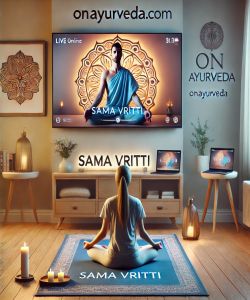
Overview of Sama Vritti
Sama Vritti pranayama represents a cornerstone of yogic breath regulation, a systematic and potent discipline for achieving physiological and psychological equilibrium. Known colloquially in Western contexts as 'box breathing' or 'equal breathing', its classical name, derived from Sanskrit, translates directly to 'equal fluctuation', which precisely defines its core methodology. The practice is architecturally simple yet profound in its effects, consisting of a four-part respiratory cycle: inhalation (puraka), a pause with the breath held in (antara kumbhaka), exhalation (rechaka), and a pause with the breath held out (bahya kumbhaka). The fundamental and non-negotiable principle of Sama Vritti is that each of these four distinct phases is executed for an identical duration or count. This enforced symmetry of the breath directly influences the autonomic nervous system, acting as a powerful regulatory tool to shift the body from a state of sympathetic dominance, associated with the stress-induced 'fight-or-flight' response, to one of parasympathetic dominance, which governs the 'rest-and-digest' state of calm and restoration. Beyond its immediate physiological impact of lowering heart rate and blood pressure, the practice serves as a formidable tool for mental discipline. The unwavering focus required to maintain the count and the smooth, controlled flow of breath acts as a powerful anchor for the mind, curtailing the incessant stream of discursive thought (citta vrittis) that characterises a distracted mental state. It is therefore not merely a breathing exercise but a foundational meditative practice, cultivating the unwavering concentration (dharana) that is prerequisite for deeper states of contemplation and self-awareness. Its application is broad, ranging from a preparatory practice for advanced yoga and meditation to a highly effective, standalone technique for managing acute stress, enhancing cognitive focus, and fostering profound emotional resilience in high-pressure environments.
What is Sama Vritti?
Sama Vritti is a formal and structured pranayama (breath control) technique originating from the classical traditions of yoga. The name is derived from the Sanskrit terms 'Sama', meaning 'equal' or 'same', and 'Vritti', which translates to 'fluctuation', 'modification', or 'turning'. The practice is thus defined as the regulation of the breath to create equal, measured fluctuations. It is a precise methodology for calming the nervous system and steadying the mind by imposing a symmetrical rhythm onto the respiratory cycle. While various forms of breathwork exist, Sama Vritti is distinguished by its unique and uncompromising structure, which is best understood through its core components.
The Four-Part Cycle (Chaturanga Pranayama): The complete practice of Sama Vritti is composed of four distinct stages, which form a continuous, seamless cycle. These are:
Puraka: A smooth, controlled inhalation through the nostrils.
Antara Kumbhaka: A deliberate pause or retention of the breath at the peak of the inhalation.
Rechaka: A smooth, controlled exhalation through the nostrils.
Bahya Kumbhaka: A deliberate pause or suspension of the breath at the end of the exhalation.
The Principle of Equanimity: The defining characteristic of this practice is that all four parts of the cycle are executed for an identical duration. For example, in a foundational practice, a practitioner might inhale for a count of four, hold the breath in for a count of four, exhale for a count of four, and hold the breath out for a count of four. This 4-4-4-4 structure is the essence of Sama Vritti.
The Physiological Mechanism: The technique's efficacy stems from its direct influence on the autonomic nervous system. The slow, rhythmic nature of the breathing, particularly the controlled exhalation and retention phases, stimulates the vagus nerve. This activation promotes a parasympathetic response, effectively down-regulating the body's stress response, leading to a reduction in heart rate, blood pressure, and cortisol levels.
The Psychological Objective: In the context of yogic philosophy, the primary objective of pranayama is to still the 'citta vrittis'—the fluctuations of the mind. By providing the mind with a simple, rhythmic, and constant object of focus (the count and the breath), Sama Vritti powerfully curtails mental distraction, cultivating a state of focused calm and preparing the practitioner for deeper meditation.
Who Needs Sama Vritti?
Professionals in High-Stress Occupations: Individuals operating in environments defined by high stakes and immense pressure, such as military special forces, emergency first responders, surgeons, and financial traders, require this technique to maintain cognitive clarity and emotional composure under extreme duress. The practice provides a reliable, self-administered tool for immediate nervous system down-regulation.
Corporate Executives and Leaders: Leaders responsible for critical decision-making benefit immensely from a practice that enhances executive function. Sama Vritti cultivates the mental stillness necessary for strategic thinking, mitigates the physiological toll of chronic work-related stress, and promotes the emotional intelligence required for effective leadership.
Athletes and Competitive Performers: Elite athletes, musicians, and public speakers can utilise Sama Vritti to manage performance anxiety, improve respiratory efficiency and control, and sharpen focus immediately prior to and during competition or performance. It serves as a powerful method for entering a state of optimal arousal or 'flow'.
Individuals Managing Anxiety and Panic Disorders: Under appropriate clinical supervision, those experiencing generalised anxiety, social anxiety, or panic attacks can employ this technique as a potent coping mechanism. The rhythmic, predictable nature of the breath provides a tangible anchor during moments of acute distress, disrupting the physiological feedback loop of panic.
Practitioners of Yoga and Meditation: For those engaged in contemplative disciplines, Sama Vritti is not an optional extra but a foundational practice. It stabilises the pranic (energetic) system and cultivates the single-pointed concentration (dharana) that is an essential prerequisite for advancing into deeper states of meditation (dhyana).
Academics, Students, and Researchers: Individuals engaged in prolonged periods of intense intellectual work require sustained concentration and mental stamina. Sama Vritti offers a systematic method to clear mental fog, enhance focus, and improve cognitive endurance during study, writing, or complex problem-solving.
Individuals Seeking Improved Sleep Quality: Those suffering from insomnia or fragmented sleep patterns can use a modified, gentler form of this practice before sleep to calm the mind and relax the body, facilitating a smoother transition into a restful state by activating the parasympathetic nervous system.
Anyone Seeking Proactive Self-Regulation: In an age of constant overstimulation, any adult seeking a non-pharmacological, highly effective method for managing daily stressors, cultivating emotional balance, and enhancing their overall sense of well-being will find this practice to be an indispensable tool for personal mastery.
Origins and Evolution of Sama Vritti
The origins of Sama Vritti are deeply embedded in the ancient traditions of yoga, with its conceptual framework traceable to some of the most seminal texts of the discipline. The foundational principle of regulating the breath (pranayama) as a means to control the mind is explicitly outlined in the Yoga Sutras of Patanjali, compiled around 400 CE. Sutra 2.49 states that pranayama is the regulation of the movement of inhalation and exhalation, establishing it as the fourth of the eight limbs of yoga. While the text does not detail specific techniques with the precision of later manuals, it lays the philosophical groundwork: to still the breath is to still the mind (citta). The practice of Sama Vritti, with its emphasis on equalisation and rhythm, is a direct and logical application of this core tenet.
Further development and explicit codification of pranayama techniques, including those based on specific ratios and retentions, are found in later Hatha Yoga texts, most notably the Hatha Yoga Pradipika from the 15th century. This text elaborates on the concept of 'kumbhaka' (breath retention) and the subtle energetic effects of pranayama on the 'nadis' (energy channels) and 'prana' (life force). The objective was not merely physiological relaxation but the purification of these channels to facilitate the awakening of higher states of consciousness. Sama Vritti, with its balanced structure, was seen as a key practice for harmonising the solar (Pingala) and lunar (Ida) energy channels, creating the equilibrium necessary for spiritual progress. It was a practice reserved for a disciplined practitioner, undertaken with reverence and under the guidance of a guru.
The modern evolution of Sama Vritti has seen it travel far beyond the confines of the yoga shala, undergoing a process of secularisation and clinical validation. In the 20th and 21st centuries, Western science began to investigate the verifiable physiological and neurological effects of controlled breathing. Stripped of its esoteric terminology, the four-part equal breath was rebranded as 'box breathing' or 'four-square breathing'. This repackaged version was adopted by high-performance institutions, including the United States Navy SEALs, as a 'tactical breathing' technique to maintain calm and focus during combat situations. Simultaneously, it entered the realms of clinical psychology and psychotherapy as a tool for anxiety reduction, stress management, and trauma therapy. This evolution marks a significant shift from a practice aimed at spiritual liberation to a scientifically-backed, widely accessible technique for optimising human performance and well-being in a secular context.
Types of Sama Vritti
The core principle of Sama Vritti is equality, but its application can be modified to suit the practitioner's capacity and objectives. The primary variations are distinguished by their structure and the inclusion of other yogic techniques.
Classical Sama Vritti (Chaturanga Pranayama): This is the archetypal and complete form of the practice. It is defined by a four-part respiratory cycle where inhalation (Puraka), internal breath retention (Antara Kumbhaka), exhalation (Rechaka), and external breath retention (Bahya Kumbhaka) are all maintained for an identical, unwavering count. This 1:1:1:1 ratio is the hallmark of the technique and is intended to produce a state of profound balance in the nervous and energetic systems. It demands a significant degree of respiratory control and is typically mastered progressively.
Simplified Sama Vritti (Two-Part Breath): This is a preparatory or modified version designed for beginners or for times when breath retention is not advisable. It is defined by the equalisation of only the inhalation and exhalation, omitting both retention phases (Kumbhaka). The practitioner maintains a 1:1 ratio between the in-breath and the out-breath. This variation calms the nervous system and establishes a rhythmic foundation without the intensity of breath holding, making it a safe and accessible entry point to the practice.
Three-Part Sama Vritti: This is an intermediate step between the simplified and classical forms. It is most commonly defined by equalising the inhalation, internal retention, and exhalation (a 1:1:1 ratio), while omitting the more challenging external retention. This allows the practitioner to become accustomed to the sensation of Antara Kumbhaka before progressing to the full four-part cycle. It provides many of the focusing benefits of the full practice with a reduced level of difficulty.
Sama Vritti with Ujjayi Pranayama: This variation integrates the audible and heating Ujjayi breath with the equal-part structure. It is defined by performing the entire Sama Vritti cycle while maintaining a gentle constriction at the back of the throat, producing a soft, oceanic sound. This addition helps to focus the mind, build internal heat, and further regulate the flow of breath, adding another layer of control and meditative depth to the practice.
Sama Vritti with Bandhas: This is an advanced application of the practice. It is defined by the integration of 'bandhas' (energetic body locks) during the retention phases of the Sama Vritti cycle. Typically, Mula Bandha (root lock) and Jalandhara Bandha (throat lock) are engaged during Antara Kumbhaka. This is not a technique for novices and is intended to amplify the energetic effects of pranayama, directing and containing 'prana' within the central channel of the body.
Benefits of Sama Vritti
Direct Regulation of the Autonomic Nervous System: The practice systematically shifts the nervous system from a sympathetic (fight-or-flight) state of arousal to a parasympathetic (rest-and-digest) state of calm. This is achieved through the direct stimulation of the vagus nerve, which has a profound, cascading effect on reducing the physiological markers of stress.
Quantifiable Reduction in Stress Hormones: Consistent practice has been shown to lower circulating levels of cortisol, the body's primary stress hormone. This mitigates the long-term, deleterious effects of chronic stress on the cardiovascular, immune, and endocrine systems.
Enhanced Cognitive Function and Mental Clarity: By calming the 'noise' of incessant mental chatter, Sama Vritti sharpens focus, improves concentration, and enhances executive functions such as decision-making and problem-solving. It creates the optimal neurological conditions for high-level cognitive performance.
Cultivation of Emotional Resilience: The practice creates a neurological 'pause' between an external stimulus and an emotional reaction. This allows the practitioner to respond to challenging situations with greater equanimity and composure, rather than reacting impulsively from a state of emotional dysregulation.
Improved Cardiovascular and Respiratory Health: The discipline of slow, deep, and controlled breathing strengthens the diaphragm and intercostal muscles, increases vital lung capacity, and improves the efficiency of gaseous exchange. It can also lead to a lower resting heart rate and improved heart rate variability (HRV), key indicators of cardiovascular fitness.
Effective Management of Anxiety and Panic Symptoms: For individuals prone to anxiety, the predictable and rhythmic nature of Sama Vritti provides a powerful, in-the-moment tool to interrupt the feedback loop of panic. It anchors the mind and body, preventing the escalation of anxious thoughts and their physiological manifestations.
Establishment of a Foundation for Deeper Meditative States: The mental stability and single-pointed focus (dharana) cultivated through Sama Vritti are indispensable prerequisites for entering more advanced states of meditation (dhyana). It prepares the mind and body for prolonged periods of stillness and introspection.
Increased Mind-Body Interoception: The practice heightens awareness of internal bodily sensations and the intricate connection between breath, thought, and emotion. This enhanced interoceptive awareness empowers individuals with a greater capacity for conscious self-regulation and mastery over their internal state.
Core Principles and Practices of Sama Vritti
The Unwavering Principle of Equality (Sama): The defining and non-negotiable core of the practice is the maintenance of an identical duration for each of the four phases of the breath: inhalation, internal retention, exhalation, and external retention. This symmetry is the primary mechanism through which physiological and psychological balance is achieved. Any deviation from this 1:1:1:1 ratio transforms the practice into a different form of pranayama (Visama Vritti).
Stable and Erect Posture (Asana): The practice must be performed in a seated posture that ensures the spine is fully erect and the diaphragm is unrestricted. Positions such as Sukhasana (Easy Pose), Siddhasana (Accomplished Pose), or sitting upright in a chair are acceptable. A slumped posture compromises lung capacity and obstructs the free flow of prana, rendering the practice ineffective. The posture must be held without strain.
The Absolute Prohibition of Strain: At no point during the practice should the practitioner experience physical or mental strain. This includes gasping for air, dizziness, light-headedness, or tension in the face, throat, or abdomen. The duration of the count must be chosen conservatively and only extended gradually as respiratory capacity develops over time. Force is antithetical to the principles of yoga and is dangerous in pranayama.
Continuous and Focused Awareness (Dharana): Sama Vritti is a meditative discipline, not a mere mechanical exercise. The practitioner's mind must remain intently focused on the two objects of concentration: the sensation of the breath as it flows in and out, and the mental recitation of the count. This single-pointed focus is essential for stilling the fluctuations of the mind.
Smooth and Subtle Breath Control: The flow of air during inhalation and exhalation must be smooth, quiet, and continuous. There should be no jerking, gasping, or audible signs of effort. The transitions between the four phases of the cycle should be seamless, not abrupt. The goal is to refine the breath until it becomes subtle and controlled.
Systematic and Gradual Progression: A novice must not attempt the full four-part practice with a long count immediately. Mastery is built systematically. One must first become proficient in equalising the inhalation and exhalation. Only then should internal retention be introduced, followed later by external retention. The count should be increased by only one second at a time, and only when the current count feels completely effortless.
Online Sama Vritti
Unprecedented Accessibility: The primary advantage of the online format is its ability to transcend geographical limitations. It provides individuals in any location with access to specialised instruction from highly qualified teachers, democratising a practice that might otherwise be unavailable due to a lack of local expertise.
Structured and Replicable Learning Environment: Online courses deliver a highly structured curriculum through pre-recorded modules or live sessions. This ensures a systematic progression from foundational to advanced techniques. The ability to replay guided practices allows for repetition and reinforcement, which are critical for mastering the nuances of breath control.
Facilitation of Privacy and Comfort: Practising in one's own designated space removes the potential for social anxiety or self-consciousness that can arise in a group setting. This is particularly beneficial for beginners or individuals using the technique to manage anxiety, as it fosters a sense of security and reduces external performance pressure.
Requirement for Enhanced Self-Discipline: The online modality places a significantly higher demand on the practitioner's personal accountability. In the absence of an instructor's physical presence to provide immediate correction and motivation, the individual is solely responsible for maintaining consistency, ensuring technical precision, and practising with integrity.
Limitations in Nuanced Feedback: A significant drawback is the instructor's inability to provide direct, physical feedback. Subtle errors in posture, tension in the body, or shallow breathing patterns may go unnoticed through a webcam. The practitioner must cultivate a heightened sense of interoception to self-correct effectively.
Dependence on Technical Infrastructure: The efficacy of an online session is entirely contingent on the quality of the technology employed. An unstable internet connection, poor audio quality, or software failures can completely derail a practice, disrupting the focus and calm that are the very objectives of the session.
The Challenge of Creating a Sacred Space: Unlike a dedicated yoga studio, a home environment is often filled with potential distractions. The online practitioner must have the discipline to create and defend a quiet, private, and interruption-free zone for the duration of their practice, a task that can be challenging in a busy household.
Sama Vritti Techniques
Step One: Preparation and Establishment of Posture: Assume a formal, seated posture on a cushion or chair. The spine must be erect, from the coccyx to the crown of the head, to allow for the unrestricted movement of the diaphragm. The shoulders should be relaxed downwards and away from the ears. Close the eyes and allow the facial muscles to soften. Take several natural breaths to settle the body and mind, bringing awareness to the present moment.
Step Two: Establishing the Two-Part Breath: Begin by creating an equal rhythm between your inhalation and exhalation. Inhale smoothly and silently through the nostrils for a mental count of four. Without pausing, exhale smoothly and silently through the nostrils for an identical mental count of four. Repeat this 2-part cycle (inhale-exhale) for at least five to ten rounds until the rhythm feels completely natural and effortless. This establishes the foundational count (matra).
Step Three: Introduction of Internal Retention (Antara Kumbhaka): Once the two-part breath is stable, integrate the pause after inhalation. Inhale for your established count of four. At the top of the inhalation, gently close the glottis and hold the breath in, without creating any tension in the throat or chest, for the same count of four. Then, release the hold and exhale smoothly for the count of four. Practise this 3-part cycle (inhale-hold-exhale) until it feels fluid and comfortable.
Step Four: Integration of External Retention (Bahya Kumbhaka): After mastering the three-part breath, introduce the final phase to complete the cycle. Inhale for a count of four. Hold the breath in for a count of four. Exhale for a count of four. At the end of the exhalation, gently pause and suspend the breath, without creating a harsh vacuum in the abdomen, for the same count of four. This completes one full round of classical Sama Vritti.
Step Five: Sustained Practice and Conclusion: Continue the full four-part cycle for a predetermined duration, such as five to ten minutes, maintaining unwavering focus on the count and the quality of the breath. Ensure there is absolutely no strain. To conclude the practice, release the controlled breathing and return to your natural breath for several moments, observing the effects on your body and mind before slowly opening your eyes.
Sama Vritti for Adults
For the adult navigating the multifaceted pressures of professional careers, financial responsibilities, and personal relationships, Sama Vritti functions as an essential, high-performance tool for existential management rather than a mere relaxation exercise. Its utility is most pronounced in its direct and systematic capacity to counteract the physiological and psychological ravages of chronic stress, a pervasive affliction in adult life. The practice provides a direct physiological lever to consciously shift the autonomic nervous system from a state of hyper-vigilant sympathetic arousal to one of restorative parasympathetic calm. This deliberate act of self-regulation is not passive; it is an executive skill that has profound implications for cognitive performance. By quieting the mental 'noise' and improving cerebral oxygenation, Sama Vritti sharpens the executive functions housed in the prefrontal cortex—enhancing focus, clarifying decision-making, and improving emotional regulation, all of which are critical competencies in any demanding professional role. Furthermore, it serves as a powerful prophylactic against burnout by providing a structured method to discharge accumulated stress and restore mental and emotional reserves. For an adult, the practice is a discipline in cultivating internal stability in a world of unceasing external demands. It fosters a robust psychological resilience, allowing for more measured, intelligent, and composed responses to life’s inevitable challenges. It is a mature practice for a mature individual, offering a tangible methodology to achieve mastery over one’s internal state, thereby enhancing effectiveness and well-being across all domains of adult life. The consistent application of Sama Vritti is an investment in personal sovereignty, building the inner fortitude required to lead a productive and balanced existence.
Total Duration of Online Sama Vritti
The optimal and professionally recommended total duration for a dedicated online Sama Vritti session is rigorously structured around a 1 hr timeframe. This specific duration is not an arbitrary measure but a deliberately calculated period designed to facilitate a comprehensive and profound practice without inducing fatigue or being prohibitively long for a consistent regimen. A session shorter than this, for instance, risks being superficial, failing to provide adequate time for the practitioner to move beyond initial mental distractions and allow the physiological effects to fully manifest. The 1 hr structure is methodically allocated. It commences with an initial phase of approximately ten to fifteen minutes dedicated to settling into a stable posture, centring the mind, and performing gentle preparatory breaths to awaken the respiratory system. The central, and most substantial, portion of the session, lasting around thirty to forty minutes, is devoted to the core practice of Sama Vritti itself. This extended period allows for a significant number of rounds, enabling the practitioner to establish a deep, unwavering rhythm and experience the cumulative neurological and physiological benefits. The final ten to fifteen minutes are reserved for a crucial phase of integration. During this time, the practitioner ceases active control of the breath and rests in stillness, observing the subtle energetic and mental shifts that have occurred. This concluding period of quiet absorption is essential for the effects of the pranayama to be fully assimilated. Thus, the 1 hr duration provides a complete and balanced arc, encompassing preparation, deep practice, and integration, making it the standard for a truly effective and transformative online session.
Things to Consider with Sama Vritti
Before and during the practice of Sama Vritti, a number of critical factors must be rigorously considered to ensure both safety and efficacy. Foremost among these is the absolute injunction against strain. This technique is an exercise in control and subtlety, not force. The practitioner must select a count that is comfortably within their existing capacity and resist any ego-driven impulse to push beyond their limits. The presence of dizziness, shortness of breath, headache, or anxiety is an unequivocal signal to cease the practice or revert to a much shorter and simpler breathing pattern. Individuals with pre-existing medical conditions, particularly those of a cardiovascular or respiratory nature such as hypertension, asthma, or COPD, must exercise extreme caution. The inclusion of breath retention (Kumbhaka) can significantly alter blood pressure and intra-thoracic pressure, and therefore must only be undertaken after explicit consultation with a qualified medical professional. The psychological state of the practitioner is also a vital consideration. While Sama Vritti is a powerful tool for anxiety, for some individuals, particularly those with a history of trauma or claustrophobia, the act of holding the breath can paradoxically trigger a panic response. In such cases, the practice must be modified to omit retention. The environment must be conducive—quiet, temperate, well-ventilated, and free from any potential interruptions that could shatter the fragile state of concentration required. Finally, one must consider the timing of the practice in relation to meals, with an empty stomach being the strict prerequisite to avoid physical discomfort and ensure the diaphragm can move without impediment.
Effectiveness of Sama Vritti
The effectiveness of Sama Vritti is not a subjective claim rooted in esoteric belief but a demonstrable outcome based on its direct and potent modulation of human neurophysiology. Its efficacy is anchored in its ability to serve as a manual control for the autonomic nervous system. By imposing a slow, deliberate, and symmetrical rhythm on the breath, the practice directly engages the vagus nerve, the primary pathway of the parasympathetic nervous system. This vagal stimulation acts as a powerful brake on the sympathetic 'fight-or-flight' response, leading to a cascade of measurable physiological changes: a reduction in heart rate, a lowering of blood pressure, and an increase in heart rate variability (HRV), a key biomarker of psychological resilience and cardiovascular health. Neurologically, the sustained focus required to maintain the count and the quality of the breath strengthens neural pathways in the prefrontal cortex, enhancing executive functions like attention control and emotional regulation. This is not simply relaxation; it is a form of active mental training. The rhythmic breathing pattern also promotes brainwave coherence, shifting the mind from the scattered, high-frequency beta waves associated with stress and anxiety towards the calmer, more focused alpha and theta wave states. This combination of physiological down-regulation and neurological harmonisation makes Sama Vritti exceptionally effective. When practised with consistency and precision, its ability to mitigate stress, sharpen cognitive function, and cultivate emotional equanimity is not only profound but also scientifically explicable and empirically verifiable. It is a highly efficient tool for engineering a state of calm, focused self-possession.
Preferred Cautions During Sama Vritti
The practice of Sama Vritti, particularly its breath retention components, demands adherence to a strict and non-negotiable set of cautions. It is imperative that any individual with a history of cardiovascular conditions, including but not limited to hypertension, hypotension, heart disease, or stroke, avoids the practice of Kumbhaka (retention) unless they have received explicit clearance from their cardiologist and are under the direct supervision of a highly experienced and medically knowledgeable instructor. Pregnancy is an absolute contraindication for any pranayama involving forceful breathing or breath holding. The practice must be immediately and unhesitatingly terminated upon the onset of any adverse symptoms, such as dizziness, light-headedness, nausea, chest pain, or a significant increase in anxiety or panic. To persist through such signals is not a display of discipline but of dangerous ignorance. The practice environment must be physically safe; it should never be performed while driving, operating heavy machinery, or in or near water. Furthermore, individuals with serious psychological conditions, such as severe post-traumatic stress disorder, psychosis, or major depressive disorder, should approach this practice with extreme caution and only within a therapeutic context, as the alteration of consciousness and physical sensations can be destabilising for vulnerable individuals. The introduction of breath retention, in particular, must always be gradual and incremental. A practitioner must master a comfortable and strain-free rhythm with equal inhalation and exhalation before even considering the introduction of a hold. These are not suggestions; they are commands for safe and responsible practice.
Sama Vritti Course Outline
Module One: Theoretical Foundations and Physical Preparation
Unit 1.1: The Role of Pranayama in Classical Yoga Philosophy.
Unit 1.2: The Neurophysiology of Respiration: Understanding the Autonomic Nervous System.
Unit 1.3: Asana for Pranayama: Establishing a Stable and Sustainable Seated Posture.
Unit 1.4: Technique of Diaphragmatic Breathing: The Basis of All Pranayama.
Module Two: Mastering the Two-Part Breath (Sama Shvasa-Prashvasa)
Unit 2.1: The Principle of 'Sama': Establishing an Equal Count for Inhalation and Exhalation.
Unit 2.2: Guided Practice: Two-Part Breath with a Four-Second Matra (Count).
Unit 2.3: Identifying and Eliminating Strain: The Importance of Effortless Rhythm.
Unit 2.4: Developing Consistency: Building a Short Daily Practice.
Module Three: The Introduction of Internal Retention (Antara Kumbhaka)
Unit 3.1: The Theory and Purpose of Internal Breath Retention.
Unit 3.2: Safety Protocols and Contraindications for Kumbhaka.
Unit 3.3: Guided Practice: Integrating Antara Kumbhaka into a Three-Part Cycle (e.g., 4-4-4).
Unit 3.4: Building Capacity: Techniques for Comfortable Retention.
Module Four: The Complete Four-Part Cycle (Chaturanga Pranayama)
Unit 4.1: Understanding External Retention (Bahya Kumbhaka): Purpose and Challenges.
Unit 4.2: Guided Practice: Integrating Bahya Kumbhaka for the Full Sama Vritti Cycle (e.g., 4-4-4-4).
Unit 4.3: Refining the Technique: Smooth Transitions and Subtle Control.
Unit 4.4: Progressive Overload: Safely and Incrementally Extending the Matra.
Module Five: Application and Integration
Unit 5.1: Sama Vritti for Stress and Anxiety Management: On-the-Spot Application.
Unit 5.2: Sama Vritti as a Preparation for Meditation: Cultivating Dharana.
Unit 5.3: Designing a Personalised Practice Plan for Long-Term Benefit.
Unit 5.4: Advanced Considerations (Introduction Only): The Role of Bandhas and Ujjayi.
Detailed Objectives with Timeline of Sama Vritti
Weeks 1-2: Foundational Mastery.
Objective: To achieve complete proficiency in the two-part equal breath (Sama Shvasa-Prashvasa) for a sustained period of ten minutes, utilising a consistent count of at least four seconds. The practitioner will demonstrate an erect, stable posture and a breath that is silent, smooth, and entirely free of physical strain.
Timeline: By the end of week two, this foundational practice will be established as a consistent, daily discipline.
Weeks 3-4: Safe Integration of Internal Retention.
Objective: To correctly and safely integrate Antara Kumbhaka (internal retention) into the breathing cycle, establishing a stable three-part breath (e.g., 4-4-4) for a continuous ten-minute practice. The primary goal is comfort with the retention phase, with no tension in the throat, jaw, or chest.
Timeline: By the end of week four, the three-part cycle will feel as fluid and natural as the initial two-part breath.
Weeks 5-6: Competency in the Full Four-Part Cycle.
Objective: To integrate Bahya Kumbhaka (external retention) to perform the complete Sama Vritti cycle with an equal count across all four parts (e.g., 4-4-4-4). The practitioner will sustain this full cycle for a minimum of ten minutes daily, demonstrating smooth, seamless transitions between all phases.
Timeline: By the end of week six, the practitioner will have mastered the mechanics of the full technique and be ready to focus on refinement.
Weeks 7-8: Consolidation and Capacity Expansion.
Objective: To solidify the practice by increasing the daily duration to fifteen minutes and to begin a gradual, cautious extension of the count (e.g., progressing from a 4-second to a 5-second count per part). The objective is to deepen the practice without introducing any strain.
Timeline: By the end of the second month, the practitioner will be able to confidently sustain a longer practice with an extended, yet comfortable, count.
Weeks 9-12: Application and Autonomy.
Objective: To transition from learning the technique to applying it strategically. The practitioner will be able to independently use Sama Vritti as a tool for acute stress reduction, as a preparatory practice for meditation, and to modulate their own nervous system state as needed throughout the day.
Timeline: By the end of the third month, the practitioner will have fully internalised Sama Vritti as an autonomous self-regulation skill.
Requirements for Taking Online Sama Vritti
A Non-Negotiable, High-Speed Internet Connection: The practitioner must secure a broadband connection that is both fast and stable. Intermittent connectivity, latency, or buffering are unacceptable as they shatter the concentration required for pranayama and obstruct clear communication during live sessions.
A Device with Adequate Specifications: A laptop or desktop computer with a large, clear screen and high-quality audio output is required. Utilising a smartphone is strongly discouraged as it promotes poor posture (tech neck) and its small screen is inadequate for observing instructional details.
A Sanctified and Inviolable Practice Space: The practitioner must designate a physical space that is private, quiet, and guaranteed to be free from any form of interruption—including family members, pets, and ambient noise—for the entire duration of the session. This is an absolute prerequisite.
Correct Ergonomic Support: A proper meditation cushion (zafu), a yoga block, or a firm, straight-backed chair is mandatory. The ability to maintain an erect spine without muscular strain is essential for correct and safe practice. Slouching on a sofa or bed is prohibited.
A High Degree of Personal Accountability: The online format demands an unwavering commitment to self-discipline. The practitioner must possess the intrinsic motivation to adhere to a regular schedule, follow instructions with precision, and practise with integrity without the direct, physical oversight of an instructor.
Functional Audio-Visual Peripherals: For any interactive or live-guided course, a functional, high-definition webcam and a clear microphone are essential. This allows the instructor to provide at least visual feedback on posture and enables the practitioner to ask for clarification when necessary.
Willingness for Honest Self-Assessment: Without an instructor physically present to detect signs of strain, the practitioner must be capable of and committed to performing a continuous, honest self-assessment of their physical and mental state, and must have the discipline to reduce intensity or stop if adverse symptoms arise.
Things to Keep in Mind Before Starting Online Sama Vritti
Before embarking on an online Sama Vritti course, it is imperative to recognise that the digital format, while convenient, demands a heightened level of preparation and self-governance. The prospective practitioner must first conduct a rigorous audit of their environment, ensuring they can command a physical space that is not merely quiet, but truly sacrosanct and impervious to the typical incursions of domestic and digital life for the scheduled duration of the practice. This is a non-negotiable prerequisite. Secondly, one must perform due diligence on the instructor or platform. The internet is saturated with self-proclaimed experts; it is the practitioner's responsibility to verify credentials, seeking out those with advanced, formal certifications in pranayama and a demonstrable lineage of authentic teaching. A critical mind must be applied to one's own physical and psychological readiness. One must be honest about any pre-existing medical conditions, particularly cardiovascular or respiratory, and understand that an online instructor cannot provide emergency medical support. Mentally, one must divest from the expectation of rapid results. Pranayama is a subtle and incremental discipline. The practitioner must cultivate patience and commit to the process, understanding that true progress is measured in internal stability, not in the length of one's breath hold. Finally, all technological elements must be tested and confirmed to be fully operational well in advance of any session. Beginning a practice dedicated to achieving mental calm by grappling with technical failures is an exercise in futility and a contravention of the very purpose of the endeavour.
Qualifications Required to Perform Sama Vritti
The authority to instruct others in the potent practice of Sama Vritti is not conferred casually; it must be earned through a rigorous, multi-faceted qualification process that goes far beyond mere personal proficiency. A truly qualified instructor is one who has integrated deep theoretical knowledge with extensive embodied practice and proven pedagogical skill. Their expertise must be built upon a solid foundation of advanced study in classical yogic philosophy, with a specific focus on the esoteric and physiological principles of pranayama as detailed in core texts like the Hatha Yoga Pradipika and the Yoga Sutras. This academic rigour is insufficient on its own and must be complemented by years of dedicated personal practice, ideally under the direct mentorship of a senior teacher within an established, credible lineage. The formal credentials required to teach this discipline responsibly are exacting and must include:
Advanced Certification: A minimum certification at the 500-hour level (e.g., RYT-500) from a globally recognised yoga alliance or an equivalent, reputable institution. A basic 200-hour certification is inadequate for teaching specialised pranayama.
Specialised Pranayama Training: Verifiable completion of advanced training modules dedicated specifically to the theory, practice, and pedagogy of pranayama. This should be a distinct and substantial component of their education.
Proficiency in Functional Anatomy: A comprehensive and applied understanding of the anatomy and physiology of the human respiratory, nervous, and cardiovascular systems is mandatory to ensure student safety and to articulate the mechanisms of the practice with scientific accuracy.
Substantial Teaching Experience: A proven track record of teaching pranayama to a diverse range of students, demonstrating the ability to modify the practice for different levels of ability and to identify and correct common errors.
An individual lacking this robust combination of textual knowledge, immersive practice, formal certification, and practical experience is unqualified to guide others and risks misinforming or even harming their students.
Online Vs Offline/Onsite Sama Vritti
Online
The online modality for Sama Vritti instruction is defined by its primary virtues of accessibility and convenience. It effectively removes all geographical barriers, granting practitioners access to elite instructors regardless of their physical location. This format offers unparalleled flexibility in scheduling and allows individuals to practise within the familiar and controlled environment of their own home. The ability to record and revisit sessions provides a valuable tool for reinforcing learning and refining technique through repetition. However, this convenience comes at the cost of direct, nuanced feedback. An instructor operating via a screen is fundamentally limited in their ability to perceive subtle signs of strain, make precise postural corrections, or gauge the practitioner’s energetic state. Consequently, the online format places an immense burden of responsibility on the individual. The practitioner must cultivate a high degree of self-awareness, discipline, and integrity to ensure the practice is performed correctly and safely. The risk of environmental distraction is also significantly higher, requiring a proactive and rigorous commitment to creating a dedicated, interruption-free space for the practice to be effective.
Offline/Onsite
Offline, or in-person, instruction offers an immersive and controlled learning environment that is qualitatively different. Its greatest strength lies in the immediacy and precision of the feedback loop between instructor and student. A teacher present in the room can offer hands-on adjustments, provide verbal cues based on direct observation of the student’s breath and body, and ensure safety protocols are strictly followed. This direct supervision is particularly critical for beginners and for those navigating the more advanced and potentially risky aspects of pranayama, such as extended breath retentions. The collective energy of a group practising together in a dedicated studio (shala) can also create a powerful, focused atmosphere that deepens the individual's experience. This setting is inherently free from the domestic and digital distractions that plague at-home practice. The principal limitations of the offline model are its inherent inflexibility and geographical dependence. It demands physical presence at a specific time and location, which can present significant logistical and financial challenges, thereby limiting its accessibility for many potential practitioners.
FAQs About Online Sama Vritti
Question 1. Is online Sama Vritti instruction genuinely effective?
Answer: Yes, but its effectiveness is contingent upon the practitioner's self-discipline and the instructor's quality. A structured online course can be highly effective for a diligent student.
Question 2. What is the most critical technical requirement?
Answer: An uninterrupted, high-speed internet connection. Any instability will shatter the focus required for the practice.
Question 3. Is it safe for an absolute beginner to learn online?
Answer: It can be, provided the course is explicitly designed for beginners and progresses with extreme caution, prioritising safety above all else.
Question 4. How can I ensure my technique is correct without in-person correction?
Answer: Adhere strictly to the principle of no strain. Dizziness, gasping, or anxiety are definitive signs of incorrect application. The breath must always feel smooth and controlled.
Question 5. What are the contraindications for online practice?
Answer: Individuals with serious cardiovascular or respiratory conditions, or those who are pregnant, must seek medical clearance before beginning any online pranayama program.
Question 6. How do I vet an online instructor's qualifications?
Answer: Demand evidence of advanced certification (500-hour minimum), specialised training in pranayama, and substantial teaching experience. Be wary of unsubstantiated claims.
Question 7. What if breath retention induces a feeling of panic?
Answer: Cease retention immediately and revert to a simple two-part breath of equal inhalation and exhalation. Never force any part of the practice.
Question 8. How long should a single online session last?
Answer: An ideal, comprehensive session is structured around 60 minutes to allow for proper preparation, deep practice, and essential integration.
Question 9. What is the optimal frequency for practice?
Answer: Consistency is paramount. A daily practice of 15 minutes is far more beneficial than a single, long session once a week.
Question 10. Must I practise on an empty stomach?
Answer: Yes, this is a non-negotiable rule. Wait a minimum of 2-3 hours after a significant meal to ensure the diaphragm can move freely.
Question 11. How do I create a suitable practice environment at home?
Answer: Designate a specific, private space. Enforce a strict no-interruption rule with family. Disable all notifications on all electronic devices.
Question 12. Can this practice aid in managing work-related stress?
Answer: It is exceptionally effective for managing occupational stress by providing a direct tool to regulate the body's physiological stress response.
Question 13. Is 'box breathing' the same as Sama Vritti?
Answer: Yes. 'Box breathing' is the modern, secularised term for the four-part Sama Vritti technique, popularised in military and therapeutic contexts.
Question 14. Does the practice require any specific equipment?
Answer: A proper meditation cushion or a straight-backed chair is essential to support an erect spine. Appropriate, non-restrictive clothing is also required.
Question 15. Can I increase the count quickly if I feel comfortable?
Answer: No. Progression must be incremental and patient. Increase the count by only one second at a time, and only after the current count feels entirely effortless for at least a week.
Question 16. What is the primary objective of the external breath hold (Bahya Kumbhaka)?
Answer: It has a powerful grounding and stilling effect on the mind and nervous system, though it is the most challenging part of the cycle and must be approached with caution.
Question 17. Can I practise lying down?
Answer: No. Pranayama must be practised in a stable, seated, and erect posture to ensure safety and proper diaphragmatic function.
Conclusion About Sama Vritti
In conclusion, Sama Vritti must be understood not as a simple relaxation technique, but as a rigorous and fundamental discipline of psychophysiological self-regulation. Its power resides in an elegantly simple architecture that yields profound and complex results. By imposing a deliberate and unwavering rhythm of equality upon the breath, the practitioner seizes conscious command over the autonomic nervous system, a realm of physiology typically beyond voluntary control. This is the core of its efficacy: it provides a direct, reliable method for mitigating the corrosive impact of chronic sympathetic arousal and actively cultivating a state of calm, focused equilibrium. The practice is an active engagement of will, a methodical training of the mind to remain anchored and stable amidst both internal turbulence and external chaos. The successful migration of this ancient yogic science from the esoteric ashram to the evidence-based protocols of elite military units and clinical therapy is the ultimate testament to its potent, universal, and undeniable effectiveness. The consistent and disciplined practice of Sama Vritti is, therefore, a strategic investment in enhanced cognitive function, robust emotional resilience, and homeostatic balance. It is the quintessential practice for engineering composure, providing the individual with the ultimate tool: mastery over their own internal state.