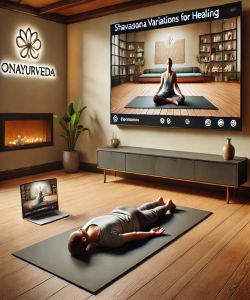
Overview of Shavasana Variations for Healing
Shavasana variations for healing constitute a sophisticated and disciplined therapeutic modality, engineered to systematically dismantle chronic stress patterns and facilitate profound physiological and psychological restoration. This practice transcends the rudimentary conception of mere relaxation, positioning itself as a targeted intervention for regulating the autonomic nervous system. It is a non-negotiable component of any serious somatic healing programme, leveraging nuanced adjustments in physical posture, proprioceptive feedback through the strategic use of supports, and guided internal awareness to address a spectrum of conditions ranging from musculoskeletal tension and chronic pain to anxiety, insomnia, and trauma-related hypervigilance. The methodology is predicated on the scientific understanding that deep, conscious rest is not a passive state but an active biological process of repair and integration. By modifying the classic supine Shavasana posture, practitioners can create specific biomechanical and neurological conditions that encourage the release of deep-seated holding patterns in the fascia, musculature, and nervous system. These variations are not arbitrary; each is a precise tool designed to elicit a particular therapeutic response, guiding the individual from a state of sympathetic dominance—the ‘fight-or-flight’ response—to one of parasympathetic ascendancy, where the body’s innate healing mechanisms are optimised. The practice demands unwavering focus and a commitment to stillness, serving as a powerful counter-narrative to the relentless activity of modern life. It is not a suggestion for wellness but a direct command for the body and mind to enter a state of structured recovery, making it an indispensable discipline for achieving and maintaining robust health. Its application is deliberate, its execution precise, and its potential for deep, systemic healing is unequivocal, marking it as a critical tool in the arsenal of mind-body therapeutics.
What is Shavasana Variations for Healing?
Shavasana Variations for Healing is a specialised practice within the therapeutic yoga framework that utilises modified versions of the traditional Shavasana (Corpse Pose) to induce specific, targeted healing responses within the body and mind. It is a highly structured methodology, distinct from casual relaxation, that employs props such as bolsters, blankets, and blocks to support the body in positions of complete ease. This external support is critical, as it eliminates muscular effort and allows the nervous system to receive clear signals of safety and security, thereby facilitating a shift from a state of hyperarousal to one of deep restorative rest. The core premise is that the standard, unsupported supine position may not be optimal or even accessible for individuals contending with physical pain, structural imbalances, emotional distress, or trauma. Variations are therefore prescribed to address these specific needs, making the profound benefits of deep rest available to a wider population.
The practice encompasses several key components:
Somatic Re-education: By supporting the body in anatomically sound positions, these variations help to retrain the neuromuscular system, releasing habitual tension and encouraging more efficient patterns of posture and movement.
Nervous System Regulation: The primary objective is to activate the parasympathetic nervous system. This is achieved through physical stillness, warmth, darkness (often using an eye pillow), and focused awareness on the breath and bodily sensations, which collectively downregulate the stress response.
Interoceptive Awareness: The practice cultivates a heightened sensitivity to internal bodily signals (interoception). This enhanced awareness is fundamental to self-regulation, enabling the practitioner to recognise and respond to the subtle cues of stress and relaxation.
Psychological Integration: The state of deep rest provides a unique mental space where suppressed emotions or cognitive patterns can surface and be processed in a non-reactive manner, fostering emotional resolution and mental clarity.
Essentially, it is a prescriptive application of rest, transforming a passive posture into an active, potent agent of healing.
Who Needs Shavasana Variations for Healing?
Individuals with Chronic Musculoskeletal Pain: Those suffering from conditions such as lower back pain, sciatica, fibromyalgia, or arthritis require supported variations. Standard Shavasana can exacerbate discomfort by placing strain on the lumbar spine or hip joints. Variations using bolsters under the knees or in a constructive rest position alleviate this pressure, allowing the deep muscles of the back and pelvis to release without triggering a pain response. This is not optional; it is a mandatory adaptation for effective pain management.
Sufferers of Anxiety, Panic Disorders, and Chronic Stress: For a chronically activated nervous system, the absolute stillness of traditional Shavasana can feel agitating or unsafe, inducing restlessness rather than rest. Supported and weighted variations, such as placing a heavy blanket over the torso, provide grounding proprioceptive feedback. This technique, known as deep pressure stimulation, has a demonstrably calming effect on the nervous system, mitigating feelings of anxiety and creating the necessary conditions for genuine psychological decompression.
Persons Recovering from Trauma and PTSD: Trauma is stored somatically, and an unsupported supine position can create a sense of vulnerability. Side-lying Shavasana (in a foetal position) or other contained postures offer a feeling of physical and emotional security. These variations are critical for creating a therapeutic container in which the individual can begin to process traumatic stress without becoming overwhelmed or re-traumatised, making the practice an essential tool in trauma-informed care.
Individuals with Insomnia and Sleep Disorders: The inability to rest is the hallmark of sleep dysfunction. These variations serve as a formal training programme for the body and mind in the art of surrender. By systematically practising the release of physical and mental tension in a structured, supportive environment, individuals can re-establish the neurological pathways required for initiating and maintaining sleep, addressing the root cause of their disorder rather than merely its symptoms.
Pregnant or Post-Natal Women: During pregnancy, lying supine can compress the vena cava, restricting blood flow. Side-lying Shavasana is the mandated variation to ensure maternal and foetal safety. Post-natally, the body requires significant recovery. Supported postures help to realign the pelvis, release tension from childbirth and infant care, and provide essential, non-negotiable moments of profound rest to combat exhaustion.
Origins and Evolution of Shavasana Variations for Healing
The origins of Shavasana are rooted in classical yogic traditions, where it has long been established as the final, and arguably most critical, posture of a Hatha yoga practice. Texts such as the Hatha Yoga Pradipika describe it as a means to calm the mind and relieve fatigue, a gateway to the state of pratyahara (withdrawal of the senses) and deeper meditative states. In its classical context, the posture was simple and unadorned: a supine position on the ground, symbolising the death of the ego and the surrender of effort. The primary focus was on achieving absolute stillness to allow the energetic and psychological benefits of the preceding asana practice to integrate fully. This form was sufficient for the yogis of antiquity, whose bodies were typically conditioned by a life of physical discipline.
The evolution of Shavasana into a multifaceted therapeutic tool is a distinctly modern phenomenon, driven by the application of yoga within Western therapeutic and medical contexts. As yoga was introduced to populations with sedentary lifestyles, chronic pain, and high levels of psychological stress, it became evident that the classical, unsupported posture was often inaccessible and, in some cases, counterproductive. Visionary teachers in the twentieth century, such as B.K.S. Iyengar, were instrumental in this evolution. Iyengar’s rigorous investigation into anatomy and his innovative use of props—including bolsters, blankets, and blocks—revolutionised the practice. He demonstrated that by precisely supporting the body, one could bypass physical limitations and guide the nervous system into a state of profound rest that was previously unattainable for many. This marked the birth of Restorative Yoga, in which supported Shavasana variations are a central pillar.
In recent decades, the evolution has been further accelerated by scientific advancements in neuroscience and psychology. The understanding of the autonomic nervous system, the vagus nerve, and the physiology of the stress response has provided a robust scientific rationale for these practices. This has led to the development of highly specific variations tailored to address conditions like trauma, anxiety, and chronic fatigue. The practice has moved beyond the yoga studio and is now integrated into clinical settings, including physiotherapy, psychotherapy, and pain management programmes. Its evolution reflects a shift from a purely spiritual or physical discipline to a sophisticated, evidence-informed modality of somatic healing, transforming an ancient posture of surrender into a precise instrument for modern therapeutic intervention.
Types of Shavasana Variations for Healing
Classic Supported Shavasana: This is the foundational variation. A cylindrical bolster is placed beneath the knees, and a folded blanket supports the head and neck. The bolster under the knees softens the psoas muscles and releases the lumbar spine, alleviating lower back tension. The head support ensures the cervical spine remains in a neutral alignment. This variation is the standard protocol for inducing general relaxation and making the posture accessible to the majority of individuals.
Constructive Rest Pose (Bent-Knee Shavasana): In this position, the practitioner lies supine with the knees bent and feet flat on the floor, hip-width apart. The knees may be allowed to fall in against each other for support. This posture is mandated for individuals with acute lower back pain, sacroiliac joint dysfunction, or severe psoas tightness, as it places the pelvis and lumbar spine in their most neutral and unloaded position.
Side-Lying Shavasana (Parsva Shavasana): The individual lies on their side, typically the right side to avoid pressure on the heart, in a foetal position. A bolster or firm cushion is placed between the knees and ankles to keep the hips and pelvis aligned, and a blanket is positioned under the head for neck support. This variation is non-negotiable during the second and third trimesters of pregnancy and is highly effective for individuals who feel vulnerable or anxious in a supine position.
Elevated Legs Variation (Viparita Karani Variation): Here, the practitioner lies on their back with their lower legs resting on the seat of a chair, a bolster, or an ottoman, such that the hips and knees are bent at a ninety-degree angle. This position uses gravity to promote venous return and lymphatic drainage from the legs and feet. It is prescribed for individuals with oedema, varicose veins, or tired legs, and has a profoundly quieting effect on the nervous system.
Weighted Shavasana: This variation involves placing a significant but comfortable weight, such as one or more heavy, folded blankets or a sandbag, across the pelvis and upper thighs. The deep pressure input provides powerful proprioceptive feedback to the nervous system, which is profoundly grounding and calming. It is an essential technique for managing high anxiety, restlessness, or the somatic symptoms associated with trauma, as it fosters a deep sense of security and physical containment.
Benefits of Shavasana Variations for Healing
Systematic Downregulation of the Autonomic Nervous System: The primary benefit is the deliberate activation of the parasympathetic nervous system, the body’s ‘rest-and-digest’ mode. This counteracts the chronic sympathetic ‘fight-or-flight’ state induced by modern life, leading to a measurable reduction in heart rate, blood pressure, and the production of stress hormones such as cortisol. This is not mere relaxation; it is a fundamental recalibration of the body’s core regulatory systems.
Alleviation of Chronic Muscular and Fascial Tension: By using props to support the body in a state of complete ease, these variations eliminate the need for muscular effort. This allows deep-seated holding patterns within the muscles and connective tissues (fascia) to release. This process directly mitigates chronic pain, improves flexibility, and restores natural postural alignment without active stretching or exertion.
Enhanced Interoceptive and Proprioceptive Awareness: The practice mandates a state of focused internal attention. This cultivates interoception—the ability to sense the internal state of the body. Simultaneously, the contact with props enhances proprioception—the sense of the body’s position in space. Sharpening these senses is critical for improved motor control, emotional regulation, and a more integrated mind-body connection.
Improved Cognitive Function and Mental Clarity: The profound mental stillness achieved in these practices provides a necessary respite for the brain. This period of quiet allows for cognitive consolidation and reduces mental fatigue. Practitioners consistently report enhanced focus, improved memory, and greater problem-solving capabilities as a direct result of disciplined, regular practice.
Facilitation of Emotional Processing and Resilience: The safe and contained environment created by supported postures allows suppressed or difficult emotions to surface without overwhelming the individual. By observing these feelings from a place of restful awareness, practitioners can process and integrate them, leading to increased emotional stability, reduced reactivity, and a greater overall sense of psychological resilience.
Optimisation of Immune Function and Cellular Repair: The parasympathetic state is inextricably linked to the body’s maintenance and repair functions. By inducing this state, Shavasana variations create the optimal physiological conditions for the immune system to operate effectively and for cellular regeneration to occur. This makes the practice a vital component of recovery from illness, injury, or intense physical exertion.
Core Principles and Practices of Shavasana Variations for Healing
Principle of Unwavering Support: The foundational principle is that the body must be completely and unequivocally supported by external props. Every part of the body—the head, limbs, and torso—must rest heavily, eliminating all muscular effort. This support is not for comfort alone; it is a direct signal to the nervous system that it is safe to release its defensive holding patterns and enter a state of deep rest. The practice mandates the meticulous arrangement of bolsters, blankets, and blocks to achieve this state of absolute surrender.
Principle of Non-Striving (Aparigraha): The practitioner must adopt an attitude of complete non-striving. The objective is not to achieve relaxation but to create the conditions for it to arise spontaneously. Any effort to force a specific outcome, whether physical or mental, will activate the sympathetic nervous system and sabotage the process. The discipline lies in remaining a passive, non-judgemental observer of one’s own experience.
Principle of Somatic Awareness: The practice demands a shift in focus from the external world to the internal landscape of the body (interoception). The practitioner is guided to systematically scan the body, noticing subtle sensations of warmth, tingling, weight, and release without analysis or judgement. This sustained, gentle focus anchors the mind in the present moment and is the primary mechanism for quieting mental chatter.
Practice of Conscious Surrender: This involves the deliberate, moment-by-moment letting go of physical, mental, and emotional tension. It begins with the physical body, consciously releasing the weight of the limbs and torso into the support of the props. This physical act of surrender then extends to the mind, allowing thoughts to arise and pass without engagement, and to the emotions, permitting feelings to be present without resistance.
Practice of Breath-Centred Anchoring: The breath serves as the central anchor for awareness throughout the practice. The practitioner observes the natural, unforced rhythm of inhalation and exhalation. This focus on the breath has a direct regulatory effect on the nervous system, particularly on the vagus nerve, and provides a constant, stable point of reference to which the mind can return when it wanders.
Principle of Gradual Emergence: Exiting the practice is as critical as entering it. The transition back to an active state must be slow, deliberate, and gentle. Abrupt movement can be jarring to a deeply rested nervous system. The practice mandates a phased re-awakening, involving small movements of the fingers and toes, followed by gentle stretches, before slowly returning to a seated position.
Online Shavasana Variations for Healing
Unparalleled Accessibility and Consistency: The online format removes geographical and logistical barriers entirely. It provides access to highly specialised instruction that would otherwise be unavailable due to location or scheduling constraints. This accessibility mandates a higher level of personal discipline but enables the practitioner to establish a consistent, non-negotiable routine in their own environment, which is fundamental for achieving cumulative therapeutic benefits. The repetition and regularity afforded by online access are critical drivers of nervous system re-patterning.
Absolute Environmental Control: Practising within one’s own domain allows for the complete customisation of the healing environment. The practitioner has absolute authority over lighting, temperature, sound, and scent, creating a sanctuary tailored to their specific sensory needs. This level of control is impossible to replicate in a group studio setting. It eliminates external distractions and potential social anxieties, fostering a deeper state of security and surrender, which is essential for trauma-informed practice and for individuals with high sensory sensitivity.
Enhanced Privacy and Reduced Self-Consciousness: The solitude of an online session eliminates the element of social comparison and performance anxiety that can subtly undermine the practice in a public class. This privacy creates a powerful container for authentic emotional and physical release. Without the perceived judgement of others, practitioners are free to experience the practice without inhibition, allowing for a more profound and honest engagement with their internal state. This is particularly crucial when working with deeply personal or challenging emotional material.
Autonomy and Self-Empowerment: The online modality requires the practitioner to take full responsibility for setting up their space and props. While this demands initial effort, it fosters a deep sense of ownership and self-efficacy. The practitioner learns to become their own facilitator of healing, developing an intimate understanding of their unique needs and how to meet them. This empowerment is a vital therapeutic outcome, transferring the locus of control from an external instructor to the individual themselves, thereby building long-term resilience.
Integration of Practice into Daily Life: By practising within the home, the boundary between the formal practice space and daily life becomes more porous. The state of calm and regulated awareness cultivated during the session is more likely to be carried into the practitioner’s living environment and daily activities. The home itself becomes associated with rest and restoration, reinforcing the therapeutic benefits beyond the confines of the one-hour session and embedding the principles of somatic healing into the fabric of everyday existence.
Shavasana Variations for Healing Techniques
Step One: Environmental Sanctification: You shall first prepare your physical space with absolute intention. This is not a casual step; it is the creation of a therapeutic container. Dim the lighting to a low, calming level. Ensure the ambient temperature is warm enough to prevent any chilling during stillness. Eliminate all potential auditory and digital distractions; all electronic devices must be silenced and removed from the immediate vicinity. The space must be consecrated for the sole purpose of uninterrupted restorative practice.
Step Two: Meticulous Prop Configuration: Arrange your props according to the prescribed variation with architectural precision. For a Classic Supported Shavasana, place a yoga mat on the floor. Position a cylindrical bolster where your knees will rest. Place a single folded blanket at the head of the mat for cervical support. Have an additional blanket ready to cover your body for warmth and an eye pillow to hand. This setup is non-negotiable and must be completed before you begin.
Step Three: Deliberate Physical Entry: Lower your body onto the mat slowly and mindfully. Lie on your back and position the bolster directly into the crease behind your knees. Adjust the blanket under your head so that it supports the natural curve of your neck, with your chin slightly lower than your forehead. Your feet shall be allowed to fall open naturally. Position your arms a comfortable distance from your body, with palms facing upwards in a gesture of receptivity.
Step Four: Systematic Somatic Surrender: Once positioned, you must consciously and sequentially release the weight of your body. Begin with the feet, allowing them to become heavy. Proceed to the calves, thighs, and pelvis, systematically surrendering their weight to the floor and bolster. Release the abdomen, the chest, the shoulders, the arms, and finally the head. This is an active process of letting go, not a passive collapse. Cover yourself with the blanket and place the eye pillow over your eyes.
Step Five: Breath-Anchored Stillness: Your sole focus now becomes the natural, unforced rhythm of your breath. Do not alter it; observe it. Notice the subtle rise and fall of the abdomen. When the mind inevitably wanders, you will firmly but neutrally guide its focus back to the anchor of the breath. Maintain this state of vigilant, passive observation for the designated duration. Your task is to remain utterly still, a witness to the process of unwinding.
Step Six: Phased Re-Awakening Protocol: The exit is a critical, structured phase. First, slowly remove the eye pillow. Then, deepen your breath. Introduce small, deliberate movements into the fingers and toes. Gradually expand this movement to the wrists and ankles. When you are ready, bend your knees and gently roll onto your right side, pausing for several breaths in a foetal position. Using the strength of your arms, press yourself up to a comfortable seated position with minimal effort.
Shavasana Variations for Healing for Adults
Shavasana variations for healing are an essential and non-negotiable discipline for the modern adult. The adult nervous system is uniquely burdened by the cumulative weight of prolonged professional responsibilities, financial pressures, relational complexities, and the physiological toll of ageing. These persistent stressors embed themselves within the body as chronic muscular tension, hormonal dysregulation, and a state of perpetual, low-grade sympathetic nervous system activation. This modality directly confronts this condition, offering a structured protocol to systematically dismantle these ingrained patterns of hypervigilance. It is not a mere indulgence but a strategic intervention designed to restore physiological and psychological homeostasis. For adults contending with chronic pain, such as lower back issues exacerbated by sedentary work, supported variations provide immediate, targeted relief that is often more effective than active interventions. For those navigating the mental fog of burnout or the sharp edges of anxiety, the practice offers a sanctuary for cognitive and emotional decompression, facilitating the mental clarity required for effective decision-making and emotional regulation. Furthermore, the discipline cultivates a profound sense of self-awareness and interoception, empowering adults to recognise the early warning signs of stress and burnout and to respond proactively rather than reactively. It is a form of profound self-stewardship, a mandatory practice for sustaining long-term health, resilience, and vitality in the face of the relentless demands of adult life. It is the necessary antidote to the pervasive culture of perpetual activity, commanding a halt to restore what has been depleted.
Total Duration of Online Shavasana Variations for Healing
The mandated total duration for an effective online session of Shavasana Variations for Healing is precisely 1 hr. This specific timeframe is not arbitrary; it is a clinical and practical necessity, structured to allow for the full physiological and psychological cycles of deep relaxation and integration to occur. A shorter duration is unequivocally insufficient to guide the nervous system beyond a superficial state of calm and into the profound parasympathetic dominance required for genuine healing. The 1 hr session is deliberately partitioned. The initial phase is dedicated to environmental setup, meticulous prop arrangement, and the gradual, mindful transition into the chosen posture, a process which itself requires focused attention. The central, and longest, phase is the period of absolute stillness, where the body and mind are given the requisite time to fully surrender. It is during this extended period that the production of stress hormones subsides, muscular and fascial tissues begin to release their chronic holding patterns, and the brain can shift into slower, more restorative wave patterns. The final segment of the 1 hr is allocated to the critical process of gradual, phased emergence from the state of deep rest. Rushing this re-awakening would be physiologically jarring and would negate many of the benefits accrued. It allows for the gentle re-integration of sensory awareness and mindful movement, ensuring the practitioner returns to a state of alert calmness, rather than grogginess. Therefore, the 1 hr duration is a non-negotiable standard, providing the minimum effective dose for this powerful therapeutic modality.
Things to Consider with Shavasana Variations for Healing
Engaging with Shavasana variations for healing demands a rigorous and informed approach, as its efficacy is contingent upon several critical considerations. Foremost is the imperative of correct postural selection and precise prop implementation. The choice of variation is not a matter of preference but a clinical decision based on the individual's specific physical limitations, pain patterns, and psychological state. An inappropriate setup can fail to provide relief or, in a worse-case scenario, exacerbate existing conditions. Therefore, initial guidance from a highly qualified instructor is not merely recommended; it is essential for establishing a safe and effective personal practice. Furthermore, the practitioner must cultivate an internal environment of radical patience and non-judgement. This practice frequently brings suppressed physical sensations and unresolved emotional content to the surface. The ability to remain a neutral observer to this internal unfolding, without reacting or analysing, is a core skill that must be developed. Expectations of an instant, blissful state must be abandoned in favour of a disciplined commitment to the process, irrespective of the day-to-day experience. The external environment is equally critical; the space must be a sanctuary, free from the possibility of interruption, which would abruptly activate the sympathetic nervous system and undermine the entire session. Finally, one must recognise this as a cumulative practice. The most profound benefits are not derived from a single session but from its consistent, disciplined repetition over time, which gradually re-patterns the nervous system for greater resilience and calm.
Effectiveness of Shavasana Variations for Healing
The effectiveness of Shavasana variations for healing is not a matter of conjecture but is grounded in robust physiological and neurological principles. This modality operates as a direct and potent intervention for regulating the autonomic nervous system, a claim substantiated by its observable impact on key biomarkers of stress and relaxation. Its primary mechanism of action is the profound stimulation of the vagus nerve, which is the principal conduit of the parasympathetic nervous system. Through sustained stillness, diaphragmatic breathing, and proprioceptive feedback from supportive props, the practice increases vagal tone, leading to a measurable decrease in heart rate, a reduction in blood pressure, and the inhibition of inflammatory responses. This systemic shift from sympathetic (‘fight-or-flight’) to parasympathetic (‘rest-and-digest’) dominance creates the optimal internal environment for the body’s innate repair and regeneration processes. On a neurological level, the practice quiets the amygdala, the brain's threat-detection centre, while enhancing activity in the prefrontal cortex, which is associated with emotional regulation and executive function. This rebalancing mitigates the cognitive and emotional symptoms of anxiety and chronic stress. Furthermore, the somatic release of deep-seated muscular tension addresses the physical manifestations of stress, effectively breaking the feedback loop where physical pain perpetuates mental distress and vice versa. Its efficacy is therefore not based on a subjective feeling of relaxation alone, but on its capacity to induce a cascade of beneficial, measurable, and systemic changes that restore physiological and psychological equilibrium. It is a powerful and reliable therapeutic tool.
Preferred Cautions During Shavasana Variations for Healing
Absolute vigilance is mandated when engaging in Shavasana variations, as improper application or disregard for individual contraindications can yield adverse effects. It is imperative that individuals with specific medical conditions seek qualified guidance before commencing practice. For instance, those with glaucoma or uncontrolled high blood pressure must avoid any variation that places the head below the heart, such as an unsupported elevated legs posture. Individuals recovering from recent surgery, particularly abdominal or spinal procedures, require specific, professionally prescribed modifications to prevent strain on healing tissues. A critical caution pertains to psychological safety, especially for those with a history of trauma. The deep stillness and internal focus of the practice can, for some, trigger abreactions or dissociative states. It is non-negotiable for such individuals to work with a trauma-informed instructor who can provide grounding techniques and create a therapeutic container that feels unequivocally safe. Furthermore, the practitioner must remain acutely aware of any physical sensations of sharp pain, numbness, or tingling; these are signals to immediately and slowly exit the posture, as they may indicate nerve compression or joint strain. The ambition to hold a pose despite discomfort must be aggressively discarded. The practice is one of surrender, not endurance. Finally, one must guard against the insidious tendency to turn relaxation into a performance metric. Frustration over a "busy mind" or an inability to "let go" will only create more tension, defeating the entire purpose of the practice. Strict adherence to these cautions is not a suggestion but a requirement for safe and effective practice.
Shavasana Variations for Healing Course Outline
Module 1: Foundational Principles and Somatic Grounding
Unit 1.1: The Neurophysiology of the Stress-Relaxation Response
Unit 1.2: Core Principles: Support, Stillness, and Non-Striving
Unit 1.3: Introduction to Prop Usage: Blankets, Bolsters, and Blocks
Unit 1.4: Practice: Constructive Rest and Classic Supported Shavasana
Module 2: Anatomy of Rest and Postural Analysis
Unit 2.1: The Role of the Psoas and the Central Nervous System
Unit 2.2: Assessing Individual Needs: Identifying and Addressing Tension Patterns
Unit 2.3: Lower Body Variations for Lumbar and Sacral Release
Unit 2.4: Practice: Elevated Legs Variation and Side-Lying Shavasana
Module 3: The Breath as a Regulatory Tool
Unit 3.1: Understanding Diaphragmatic Breathing and Vagal Tone
Unit 3.2: Techniques for Observing and Softening the Breath
Unit 3.3: Upper Body Variations for Releasing the Thoracic Spine, Shoulders, and Neck
Unit 3.4: Practice: Integrating Conscious Breath with Supported Postures
Module 4: Advanced Techniques for Deep Psychological Release
Unit 4.1: Introduction to Guided Meditation and Body Scan Protocols
Unit 4.2: The Use of Weight and Deep Pressure for Anxiety and Trauma
Unit 4.3: Navigating Emotional and Energetic Releases Safely
Unit 4.4: Practice: Weighted Shavasana and Guided Yoga Nidra
Module 5: Integration and Autonomous Practice
Unit 5.1: Developing a Personalised Daily Rest Practice
Unit 5.2: Sequencing Variations for Specific Therapeutic Outcomes
Unit 5.3: Troubleshooting Common Obstacles: Restlessness and Mental Chatter
Unit 5.4: Final Integrated Practice: A Self-Directed Healing Session
Detailed Objectives with Timeline of Shavasana Variations for Healing
Weeks 1-2: Establishment of Foundational Somatic Literacy.
Objective: The practitioner will demonstrate competence in setting up a Classic Supported Shavasana and Constructive Rest Pose without assistance. They will be able to identify and articulate the physical sensations of muscular release in the lower back and legs. The primary goal is to establish a consistent daily practice, even if brief, and to develop the capacity to remain still for a minimum of ten continuous minutes.
Weeks 3-4: Mastery of Breath Awareness and Proprioceptive Feedback.
Objective: The practitioner will integrate conscious, diaphragmatic breathing into their practice, using the breath as a primary anchor for attention. They will master the setup for Side-Lying and Elevated Legs variations, understanding their specific applications. The objective is to extend the duration of uninterrupted stillness to twenty minutes and to utilise the props to achieve a more profound sense of physical surrender and safety.
Weeks 5-6: Competence in Self-Regulation and Emotional Observation.
Objective: The practitioner will demonstrate the ability to self-regulate during the practice, using the breath and somatic awareness to navigate periods of mental restlessness or emotional surfacing. They will be introduced to and competently apply weighted variations for deeper grounding. The goal is to sustain a practice of thirty minutes, maintaining a state of non-judgemental observation towards their internal experience.
Weeks 7-8: Integration and Development of Practice Autonomy.
Objective: The practitioner will be capable of autonomously assessing their daily needs and selecting and sequencing the appropriate Shavasana variations to address them. They will be able to guide themselves through a full 45-60 minute restorative session, integrating periods of silent stillness with self-directed body scans. The ultimate objective is the internalisation of the practice, transforming it from a learned technique into an intuitive and indispensable tool for self-healing and lifelong wellness management.
Requirements for Taking Online Shavasana Variations for Healing
Dedicated and Uninterruptible Physical Space: You must secure a specific area that can be exclusively dedicated to your practice for the entire duration of the session. This space must be private and you must have an unequivocal guarantee that you will not be disturbed by other people, pets, or deliveries. This is a non-negotiable requirement for creating a safe and effective therapeutic container.
Robust and Stable Technological Infrastructure: A reliable, high-speed internet connection is mandatory to ensure uninterrupted audio and video streaming. You must possess a device—such as a laptop, tablet, or computer with a webcam—that has a screen large enough to view the instructor clearly and a camera that can be positioned to allow the instructor to observe your posture and prop setup.
A Complete and Specific Set of Props: You are required to procure the necessary equipment before the first session. The minimum essential items include: a yoga mat, one to two firm cylindrical bolsters, at least three to four dense blankets (such as wool or heavy cotton), two yoga blocks, and an eye pillow. Makeshift substitutes are strongly discouraged as they fail to provide the required stability and support.
Commitment to Punctuality and Full Session Attendance: You must commit to being present and fully prepared in your space, with all props arranged, at least five minutes prior to the scheduled start time. You are required to attend the entire session, from the initial grounding to the final re-awakening. Leaving early is disruptive and negates the integrative phase of the practice.
A Disposition of Discipline and Receptivity: You must approach the practice with a mindset of serious commitment. This requires the discipline to follow instructions precisely and the receptivity to engage with the internal experience without judgement or resistance. This is not a passive activity; it demands your full, focused, and willing participation.
Things to Keep in Mind Before Starting Online Shavasana Variations for Healing
Before commencing an online programme of Shavasana variations, it is imperative to recalibrate your mindset from one of active achievement to one of disciplined receptivity. This practice is a fundamental negation of the goal-oriented, effort-based paradigm that governs most aspects of modern life. You must understand that healing in this context is not a linear progression towards a defined endpoint, but a cyclical process of unwinding and integration. Therefore, you shall discard any expectations of immediate or consistent blissful experiences. Some sessions will feel profoundly restorative, while others may be marked by restlessness, physical discomfort, or the surfacing of challenging emotional content. Both are valid and necessary parts of the process. Your sole responsibility is to show up, create the optimal conditions for rest by meticulously following the setup instructions, and then remain a neutral, unwavering witness to whatever arises. It is crucial to recognise that you are learning a skill—the skill of conscious surrender. This requires patience and persistence. The online format places a greater onus of responsibility on you to create a sacred, non-negotiable space and time for your practice, free from the digital and domestic incursions that define your daily environment. This is not merely a suggestion; it is the foundational requirement for success. Prepare to be an active participant in your own restoration, not a passive consumer of a relaxation technique.
Qualifications Required to Perform Shavasana Variations for Healing
The facilitation of Shavasana variations for healing is a serious therapeutic undertaking that demands qualifications far exceeding those of a standard yoga instructor. The practitioner leading these sessions must possess a sophisticated, multi-disciplinary knowledge base to ensure both the efficacy and safety of the practice. It is non-negotiable that they hold advanced certification, which provides a deep and comprehensive understanding of asana, pranayama, and yogic philosophy. However, this is merely the baseline. The following specific qualifications are mandatory:
Specialised Certification in Restorative or Therapeutic Yoga: The instructor must have completed extensive, dedicated training in restorative yoga. This ensures they have mastered the precise art of propping the body for optimal release, understand the specific contraindications for various conditions, and can intelligently sequence postures to achieve targeted therapeutic outcomes.
In-Depth Knowledge of Anatomy, Physiology, and Neurobiology: A verifiable, robust understanding of the human body is critical. The facilitator must be able to articulate how specific variations impact the musculoskeletal system, the endocrine system, and, most importantly, the autonomic nervous system. They must comprehend the mechanisms of the stress response and the role of the vagus nerve.
Trauma-Informed Teaching Certification: Given that this practice can surface deeply held trauma, it is imperative that the instructor is trained in trauma-informed principles. This includes using invitational language, understanding the signs of dissociation or abreaction, and knowing how to create an environment of absolute safety and empowerment for all participants.
An individual without this comprehensive and specialised training is not qualified to lead others in this potent healing modality. Their guidance would lack the necessary precision, depth, and, most critically, the safeguards required for such profound work.
Online Vs Offline/Onsite Shavasana Variations for Healing
Online
The online delivery of Shavasana variations offers a distinct set of advantages rooted in autonomy and environmental control. Its primary strength is its absolute accessibility, removing all geographical and logistical barriers to entry and allowing for unparalleled consistency of practice. The practitioner operates within their own private domain, granting them complete authority over the therapeutic environment—from ambient temperature and lighting to the elimination of all external sound. This fosters a profound sense of safety and privacy, which is particularly critical for individuals working with anxiety or trauma, as it removes the social pressure and potential for self-consciousness inherent in a group setting. The online modality also cultivates self-reliance. The practitioner must learn to meticulously arrange their own props and manage their space, which builds a deep, intuitive understanding of their own needs and fosters a sense of empowerment. However, this format demands a high degree of self-discipline. The primary limitation is the absence of direct, hands-on assistance. The instructor cannot provide the subtle physical adjustments or tactile reassurance that can be so powerful in deepening a state of release, relying instead solely on verbal cueing and visual observation.
Offline/Onsite
The offline, or onsite, experience provides a different but equally valid therapeutic container. Its most significant asset is the physical presence of a qualified instructor. This allows for precise, hands-on adjustments, ensuring optimal alignment and support in a way that verbal cues alone cannot replicate. The instructor can provide immediate, personalised feedback and a reassuring physical presence that can significantly enhance the practitioner's sense of safety and capacity to surrender. Furthermore, the collective energy of a group practising together can create a powerful, palpable field of quiet and intention, which many find deeply supportive. The act of travelling to a dedicated space also serves as a powerful ritual, mentally and physically demarcating the practice from the demands of daily life. The disadvantages, however, are logistical. Onsite sessions are bound by a fixed schedule and location, demanding travel and potentially creating scheduling conflicts. The shared environment offers less privacy and no control over external factors like the scents, sounds, or subtle energies of other participants, which can be distracting for sensitive individuals.
FAQs About Online Shavasana Variations for Healing
Question 1. Is this practice just a form of napping?
Answer: No. Whilst falling asleep can occur, the objective is to remain consciously aware in a state of deep physical rest. It is a disciplined practice of mindfulness in a resting state, which is fundamentally different from unconscious sleep.
Question 2. What if I do fall asleep during the session?
Answer: It indicates profound exhaustion, and the sleep was clearly needed. However, the goal is to cultivate conscious rest. If it happens consistently, it is something to observe without judgement, and with practice, you will learn to remain on the cusp of sleep.
Question 3. Are expensive, specialised props absolutely necessary?
Answer: Yes. The stability, density, and specific shapes of regulation props like bolsters and blocks are engineered to provide the correct support. Household pillows and cushions are too soft and will not facilitate the same level of deep somatic release.
Question 4. How is this different from standard meditation?
Answer: While both involve mindfulness, Shavasana variations are primarily a somatic practice. The focus is on releasing the physical body to quiet the nervous system, whereas many meditation techniques are primarily focused on training the mind directly, often in a seated posture.
Question 5. Can this practice genuinely alleviate physical back pain?
Answer: Yes. By using props to support the body in a neutral alignment, it allows the deep, chronically contracted muscles of the back and pelvis to release without any active effort or stretching, which can provide significant relief.
Question 6. Is this suitable for absolute beginners with no yoga experience?
Answer: Yes. It is one of the most accessible forms of yoga. It requires no flexibility, strength, or prior experience, only a willingness to be still and follow instructions.
Question 7. What if my mind is too busy and I cannot stop thinking?
Answer: This is expected. The technique is not to stop thoughts, which is impossible, but to notice them without engagement and continually guide your awareness back to the anchor of the breath or bodily sensations.
Question 8. How often must I practise to see results?
Answer: Consistency is more critical than duration. A disciplined practice of 20-30 minutes several times per week will yield more profound results than one long session sporadically.
Question 9. Is a live online class superior to a pre-recorded one?
Answer: A live class provides accountability and the opportunity for personalised feedback from the instructor. A recording offers flexibility. For beginners, live instruction is strongly recommended to ensure correct setup and safety.
Question 10. Can this practice bring up difficult emotions?
Answer: Yes. As the body releases physical tension, it can also release stored emotional energy. A qualified instructor will guide you in how to hold space for these feelings without being overwhelmed.
Question 11. Will this help me to sleep better at night?
Answer: Yes. By training the nervous system to shift into a parasympathetic state, the practice directly addresses the root causes of many forms of insomnia and improves overall sleep quality.
Question 12. Must the room be completely dark?
Answer: A dimly lit room is essential. The use of an eye pillow to block out all light sends a powerful signal to the brain to quiet down, enhancing the relaxation response.
Question 13. Is it normal to feel tingling or other strange sensations?
Answer: Yes. As circulation improves and nerves decompress, it is common to experience tingling, warmth, or subtle energy shifts. These are signs that the body is unwinding.
Question 14. What is the single most important element of the practice?
Answer: Absolute physical stillness. Even small, unconscious movements can keep the nervous system in a state of low-level alertness. The commitment to stillness is paramount.
Question 15. Can I practise this on my bed?
Answer: It is strongly discouraged. A bed is too soft and does not provide the firm, stable support required. The floor with a mat is the mandated surface.
Question 16. What should I wear during the practice?
Answer: Loose, warm, comfortable clothing that does not restrict movement or breathing in any way. Layers are advisable as body temperature can drop during deep relaxation.
Conclusion About Shavasana Variations for Healing
In conclusion, Shavasana variations for healing represent a rigorous, non-negotiable discipline for somatic and psychological restoration in the modern era. This modality must be understood not as a passive form of relaxation but as an active, targeted, and evidence-informed intervention designed to systematically recalibrate the autonomic nervous system. By leveraging precise anatomical support through the meticulous use of props, the practice commands the body to release deep-seated patterns of tension, thereby dismantling the physiological architecture of chronic stress, pain, and anxiety. It is a direct and powerful antidote to the state of perpetual hyperarousal that has become a baseline condition for many. The practice demands discipline, patience, and an unwavering commitment to stillness, requiring the practitioner to move beyond the pervasive cultural imperative for action and achievement. Its efficacy is not based on anecdotal comfort but on its profound ability to facilitate the shift to a parasympathetic state, where the body's innate capacities for repair, integration, and healing are fully mobilised. Whether practised online or onsite, its principles remain constant: unwavering support, conscious surrender, and focused awareness. As a cornerstone of therapeutic yoga and mind-body medicine, its role is not merely supplementary; it is fundamental to the cultivation of lasting health, resilience, and profound well-being.