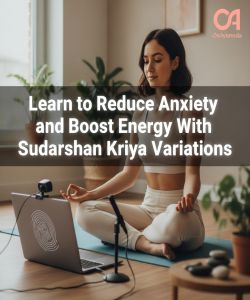
Overview of Sudarshan Kriya Variations
Sudarshan Kriya Variations represent a formidable and systematic approach to psychophysiological regulation, employing controlled, rhythmic breathing patterns to recalibrate the autonomic nervous system and induce profound states of mental clarity and somatic equilibrium. These are not arbitrary breathing exercises; they constitute a rigorously structured technology of consciousness, engineered to dismantle deep-seated stress imprints, emotional turbulence, and mental fatigue at their neurological source. The core practice, from which all variations derive, is a powerful sequence of specific cyclical breaths that systematically engage and then pacify the body's stress-response mechanisms. The variations themselves are nuanced adaptations of this central technique, tailored to address specific needs, practitioner capacities, and desired outcomes, ranging from gentle, restorative sequences designed for beginners or those with compromised health, to highly dynamic and intense variations intended for advanced practitioners seeking to penetrate deeper layers of consciousness and unlock heightened states of energy and awareness. This methodology operates on the unequivocal principle that the breath is the most potent and accessible link between the mind and body. By manipulating the rhythm, depth, and pace of respiration according to a prescribed formula, an individual can directly influence their physiological and psychological state, transcending the chaotic fluctuations of the undisciplined mind. The practice is therefore not merely a relaxation technique but a strategic intervention designed to purge the system of accumulated toxins, both physical and mental, thereby restoring an individual's innate state of vitality, focus, and inner harmony. It is an assertive and disciplined protocol for mastering the inner environment, demanding commitment but delivering transformative and sustainable results. The disciplined application of these variations facilitates a decisive shift from a state of reactive fragmentation to one of integrated, centred, and commanding self-possession.
What are Sudarshan Kriya Variations?
Sudarshan Kriya Variations are a sophisticated suite of controlled breathing techniques derived from a foundational yogic science, specifically engineered to purify and harmonise the mind-body complex. At their core, these practices involve distinct, rhythmic patterns of inhalation and exhalation that directly influence the autonomic nervous system, shifting it from a state of sympathetic (fight-or-flight) dominance to one of parasympathetic (rest-and-digest) activation. The term 'Sudarshan Kriya' itself translates to a 'purifying action by proper vision', signifying its capacity to clear perceptual distortions caused by stress and emotional toxicity. The 'Variations' are not random modifications but deliberate, structured adaptations of the primary Kriya, each designed with a specific purpose and intensity. These variations are meticulously calibrated to serve different constitutional types, levels of experience, and therapeutic objectives.
These adaptations can be delineated as follows:
Intensity and Pacing: Variations may differ in the speed and forcefulness of the breathing cycles. Some sequences are slow, gentle, and restorative, intended for calming the nervous system and managing conditions such as anxiety or hypertension. Others are rapid, dynamic, and invigorating, designed to break through energetic blockages, eliminate lethargy, and enhance vitality.
Structural Complexity: Foundational variations introduce the practitioner to the basic rhythms in a simplified, accessible manner. Advanced variations incorporate more complex patterns, longer breath retentions, and subtle energetic locks (bandhas) to amplify the practice's effects and facilitate deeper states of meditation and self-awareness.
Targeted Application: Certain variations are specifically formulated to address particular issues. For instance, a variation might be designed to enhance cognitive function and focus for professionals, while another might be structured to facilitate emotional release and catharsis for individuals dealing with trauma or grief.
Essentially, Sudarshan Kriya Variations constitute a customisable toolkit for systemic recalibration. They are not merely breathing exercises but a precise technology that leverages the breath as a powerful instrument to dismantle physiological stress, regulate emotional responses, and cultivate a state of unshakable inner stillness and clarity.
Who Needs Sudarshan Kriya Variations?
High-Performance Professionals and Executives: Individuals operating in high-pressure environments who are subject to chronic stress, decision fatigue, and the constant threat of burnout. They require a robust, efficient mechanism to discharge accumulated tension, sharpen cognitive function, enhance mental clarity, and maintain emotional equilibrium in the face of relentless demand. The practice provides a strategic advantage by fostering resilience and peak performance.
Individuals Suffering from Mental and Emotional Dysregulation: Those grappling with conditions such as chronic anxiety, persistent low mood, panic attacks, and severe mood fluctuations. These individuals need a non-pharmaceutical, self-empowering tool to regulate their nervous system, process suppressed emotional content, and interrupt the cyclical patterns of negative thought and feeling that undermine their quality of life.
Practitioners of Advanced Spiritual and Meditative Disciplines: Individuals already engaged in serious self-development, yoga, or meditation who seek to break through plateaus in their practice. Sudarshan Kriya Variations serve as a powerful preparatory and purificatory technique, clearing subtle energetic channels (nadis) and calming the mind to a degree that facilitates deeper, more profound states of contemplation and self-inquiry.
Persons Experiencing Somatic and Psychosomatic Ailments: Individuals whose mental and emotional stress manifests physically through tension headaches, digestive issues, insomnia, compromised immunity, or other stress-related disorders. They require a method that directly addresses the root physiological imbalances, purging the body of stress hormones and restoring homeostatic balance.
Athletes and Physical Performers: Those who require optimal respiratory capacity, enhanced focus, and rapid post-exertion recovery. The techniques improve lung function, increase oxygenation of the blood, and train the mind to remain calm and centred under physical duress, thereby improving overall performance and reducing recovery time.
Individuals Seeking a Proactive Health and Wellness Protocol: Proactive individuals who understand that prevention is superior to cure. They require a daily practice that systematically fortifies the mind-body system against the inevitable stressors of modern life, promoting longevity, vitality, and a sustained sense of well-being as a baseline state of existence.
Origins and Evolution of Sudarshan Kriya Variations
The genesis of Sudarshan Kriya is rooted in the ancient Vedic and yogic traditions of India, which have long recognised the profound connection between breath (prana) and consciousness. For millennia, yogis and rishis explored various pranayama techniques as a means to control the mind and access higher states of awareness. These traditional practices, however, were often complex, esoteric, and transmitted through strict guru-disciple lineages, making them inaccessible to the wider populace. Sudarshan Kriya emerged in the modern era as a powerful distillation and systematisation of this ancient wisdom, specifically formulated for the contemporary individual grappling with unprecedented levels of stress and mental agitation.
The core technique was cognised in the latter part of the twentieth century. It is said to have arisen not through intellectual construction but through a state of profound meditative insight, revealing a specific, powerful rhythmic breathing pattern that could rapidly accelerate personal transformation and healing. This foundational practice was recognised for its unique ability to harmonise the rhythms of the mind, body, and emotions with the fundamental rhythms of nature itself. Its initial formulation was a complete and potent system designed to be taught in a structured, workshop-based format, ensuring its safe and effective dissemination.
The evolution into "Variations" was a logical and necessary development, driven by the need to adapt this powerful technology to a diverse global audience with varying needs, capacities, and constitutional make-ups. As the practice was introduced to millions of people from different cultural backgrounds, age groups, and health conditions, it became evident that a one-size-fits-all approach was insufficient. Instructors and practitioners observed that slight modifications in the pace, intensity, and duration of the breathing cycles could produce markedly different and more targeted effects. This led to the formal development of specific variations: some gentler, for those with health concerns or for beginners; others more vigorous, for seasoned practitioners or those needing to break through significant inertia. This evolutionary process transformed the Kriya from a singular, monolithic technique into a sophisticated and adaptable toolkit, capable of addressing a wide spectrum of human challenges, from clinical anxiety to the quest for peak performance and spiritual depth.
Types of Sudarshan Kriya Variations
The Foundational Sequence (Standard Kriya): This is the primary and most widely taught form, constituting the core of the practice. It involves a precise sequence of Ujjayi (Victorious Breath), Bhastrika (Bellows Breath), and the central cyclical, rhythmic breathing in slow, medium, and fast tempos. This variation is engineered as a comprehensive tool for systemic purification, designed to eliminate deep-seated stress, balance the autonomic nervous system, and induce a state of profound meditative calm. It serves as the prerequisite for all other advanced forms.
The Restorative Variation (Shanthi Kriya): A significantly gentler and slower-paced adaptation of the standard sequence. This variation minimises or omits the more vigorous components like forceful Bhastrika and fast-paced cycles. Its primary objective is deep nervous system pacification and somatic relaxation. It is specifically indicated for individuals with severe anxiety, hypertension, chronic fatigue, or those in a state of physical or emotional fragility. The emphasis is unequivocally on calming and healing rather than intense purification.
The Dynamic-Energising Variation (Tejas Kriya): This is an advanced and highly invigorating form of the practice. It intensifies the dynamic elements, featuring extended rounds of powerful Bhastrika and faster, more prolonged rhythmic cycles. This variation is designed to shatter physical and mental inertia, boost metabolism, and generate a powerful flow of vital energy (prana). It is strictly for experienced practitioners with a robust constitution who are seeking to enhance vitality, break through creative blocks, and cultivate a state of high-energy alertness.
The Cognitive Enhancement Variation (Medha Kriya): A specialised sequence that places greater emphasis on the calming and centring phases of the practice, often integrating longer periods of breath retention (kumbhaka) and specific mental focal points. The goal of this variation is to sharpen intellect, improve memory, and enhance concentration. The breathing patterns are specifically modulated to increase cerebral blood flow and promote brainwave coherence, making it ideal for students, academics, and professionals in mentally demanding fields.
The Cathartic Release Variation (Shodhana Kriya): This variation is structured to facilitate the release of deeply held emotional trauma and psychological blockages. It employs specific rhythms that can induce a powerful emotional catharsis in a controlled and safe environment. The practice is typically guided with a stronger emphasis on emotional processing and integration in the post-Kriya silence and sharing phases. It is a therapeutic tool for confronting and resolving past emotional imprints under expert guidance.
Benefits of Sudarshan Kriya Variations
Systematic Reduction of Physiological Stress Markers: Unequivocally lowers levels of circulating stress hormones, such as cortisol, while simultaneously decreasing resting heart rate, blood pressure, and lactate levels. This facilitates a decisive shift from sympathetic nervous system dominance to a state of parasympathetic recovery and equilibrium.
Profound Enhancement of Mental Health and Emotional Regulation: Demonstrates significant efficacy in mitigating symptoms of anxiety, depression, and post-traumatic stress. The practice interrupts ruminative thought patterns, stabilises mood, and cultivates a resilient emotional baseline, empowering the individual with superior emotional self-mastery.
Marked Improvement in Cognitive Function: Sharpens focus, enhances concentration, and improves mental clarity. Practitioners report heightened alertness, faster decision-making capabilities, and an increased ability to handle complex cognitive tasks without succumbing to mental fatigue.
Strengthening of the Immune System: Bolsters immunological response through the reduction of stress-induced immunosuppression. Regular practice is correlated with an increase in natural killer cells and other key immune markers, leading to greater resilience against pathogens and illness.
Increased Respiratory Capacity and Cardiovascular Efficiency: Systematically improves lung function, vital capacity, and the efficiency of oxygen uptake and utilisation. This directly translates to increased physical stamina, enhanced athletic performance, and overall cardiovascular health.
Cultivation of Heightened Self-Awareness and Presence: The practice acts as a powerful gateway to deeper states of meditation and introspection. It quiets the incessant mental chatter, allowing for a direct experience of the present moment and fostering a more profound connection to one's inner state of being.
Augmentation of Endogenous Antioxidant Defence Mechanisms: Stimulates the body's natural production of antioxidant enzymes, such as superoxide dismutase and glutathione, providing robust cellular protection against oxidative stress and the damaging effects of free radicals.
Promotion of Restorative Sleep Patterns: By calming the nervous system and regulating the body's natural circadian rhythms, the practice effectively combats insomnia and improves the overall quality and depth of sleep, ensuring complete physical and mental recuperation.
Core Principles and Practices of Sudarshan Kriya Variations
The Primacy of Breath as a Regulatory Tool: The foundational principle is that the breath (prana) is the most direct and potent instrument for influencing the autonomic nervous system and, by extension, the entire psychophysiological apparatus. The practice asserts that voluntary control over breathing patterns allows for direct, conscious regulation of otherwise involuntary bodily and mental processes.
Rhythmic Harmony: The core practice is built upon the principle of universal rhythms. It posits that the human system, when stressed, falls out of sync with its natural biological and cosmic rhythms. Sudarshan Kriya Variations systematically reintroduce specific, powerful rhythms through the breath, thereby re-establishing harmony and coherence within the individual and between the individual and the environment.
Systematic Purification (Shodhana): The Kriya is fundamentally a process of purification. It is designed to methodically purge the body and mind of accumulated toxins, both physical (metabolic by-products) and subtle (deep-seated stress, negative emotional imprints, and subconscious blockages). Each phase of the breathing is engineered to target and release these impurities.
Engagement and Release Protocol: The techniques operate on a strategic cycle of stimulation followed by profound rest. Vigorous breathing phases like Bhastrika actively stimulate the nervous system, bringing latent stresses and tensions to the surface. These are immediately followed by calming, rhythmic breathing and deep silence, which allow for the complete release and integration of what has been surfaced.
The Practice of Dispassionate Observation (Sakshi Bhava): A central tenet is the cultivation of a non-judgmental witness consciousness. Practitioners are instructed to observe all arising sensations, thoughts, and emotions during the practice without attachment or aversion. This develops mental resilience and decouples the individual's identity from transient internal states.
Guided, Structured Process: The practice is not an improvisational exercise. It must be learned and performed within a precise, structured framework taught by a qualified instructor. This ensures safety, efficacy, and the correct transmission of the technique's subtle yet powerful mechanics. The sequence and timing of each component are critical to achieving the desired outcome.
Integration through Stillness: The practice culminates in a period of profound silence and meditative rest. This is not an optional addendum but an integral part of the process. It is during this phase of deep stillness that the nervous system fully integrates the benefits of the preceding active phases, and the body and mind are recalibrated to a new, higher baseline of functioning.
Online Sudarshan Kriya Variations
Uncompromised Accessibility and Geographic Liberation: The online modality eradicates all geographical and logistical barriers to entry. It grants individuals in remote locations, or those with mobility constraints and demanding schedules, direct access to this potent self-development technology. This democratises access, making the practice available to a global audience without the necessity for travel or physical co-location.
Creation of a Controlled and Personalised Practice Environment: Practising from one's own residence allows for the creation of a highly controlled, private, and comfortable environment. This eliminates the potential distractions and social anxieties of a group setting, enabling the practitioner to engage more deeply and vulnerably with the process. The individual has complete authority over their physical space, optimising it for minimal disturbance and maximal focus.
Structured, High-Fidelity Instruction via Digital Platforms: Modern digital platforms provide a robust framework for delivering high-fidelity, real-time instruction. High-definition video and clear audio ensure that every nuance of the technique, from posture to breathing sounds, is transmitted with absolute precision. This live, interactive format allows for immediate correction and guidance from a certified instructor, maintaining the integrity and safety of the practice.
Facilitation of Sustained, Long-Term Engagement: The convenience of the online format significantly increases the likelihood of long-term adherence to the practice. By removing the friction of commuting to a physical centre, it becomes far more feasible to integrate the practice into a regular, sustainable daily or weekly routine, which is imperative for realising its cumulative and transformative benefits.
Access to a Global Community and Expert Instructors: The online framework connects practitioners not only with a local group but with a diverse international community. It also provides access to senior, highly experienced instructors who might otherwise be geographically inaccessible. This broadens the practitioner's support network and enriches their learning experience through exposure to a wider range of perspectives and expertise.
Reinforced Self-Responsibility and Discipline: The remote nature of the practice mandates a higher degree of personal accountability and discipline. The practitioner must take full ownership of their commitment, schedule, and practice space. This cultivates a powerful sense of self-reliance and internalises the locus of control, reinforcing the principle that personal transformation is an act of individual will and consistent effort.
Sudarshan Kriya Variations Techniques
Phase One: Preparatory Yogic Postures and Foundational Breathing (Asana and Ujjayi Pranayama): The session commences with a series of simple yet specific physical postures designed to prepare the body, release superficial tension, and stabilise the mind. This is immediately followed by the practice of Ujjayi Pranayama, or the 'Victorious Breath'. This involves a gentle constriction at the back of the throat, producing an audible, ocean-like sound on both inhalation and exhalation. This technique calms the mind, focuses attention, and begins to warm the respiratory system for the more dynamic phases to follow.
Phase Two: Dynamic Purification (Bhastrika Pranayama): The second stage involves the forceful and rapid 'Bellows Breath'. This technique consists of a series of vigorous inhalations and exhalations performed through the nose, using the diaphragm as a powerful pump. The pace is brisk and rhythmic. This practice is executed in three rounds, with periods of restful observation in between. Its purpose is to rapidly energise the system, increase blood oxygenation, and forcefully expel stagnant air and subtle toxins from the body.
Phase Three: Chanting and Centring (Omkar): Following the stimulation of Bhastrika, the practitioner engages in the chanting of the primordial sound 'Om' three times. This phase serves as a crucial transition, channelling the energy generated in the previous stage and turning the awareness inwards. The vibration of the chant has a profound settling effect on the nervous system, preparing the consciousness for the central part of the practice.
Phase Four: The Core Rhythmic Breathing (Sudarshan Kriya): This is the heart of the technique. Guided by a specific audio recording or instructor's count, the practitioner engages in a sequence of cyclical breaths in slow, medium, and fast rhythms. The breaths are performed in a seated posture with the spine erect. This specific rhythmic sequence is the primary mechanism for harmonising the mind-body complex, dissolving deep-seated stress, and inducing a state of profound physiological and psychological balance. The exact rhythms are proprietary and taught only by certified instructors.
Phase Five: Integration and Rest (Yoga Nidra and Silence): Upon completion of the rhythmic breathing, the practitioner is guided to lie down in the 'corpse pose' (Shavasana) for a period of guided relaxation and deep, silent rest. This is an absolutely critical phase where the profound energetic and physiological shifts initiated by the Kriya are fully integrated by the system. The body and mind absorb the benefits, and the nervous system is completely recalibrated to a state of deep, meditative calm and equilibrium.
Sudarshan Kriya Variations for Adults
Sudarshan Kriya Variations for adults constitute a robust and highly structured methodology for navigating the complexities and pressures of modern life. The adult practitioner, often burdened by professional responsibilities, financial pressures, and intricate interpersonal dynamics, requires a tool that is not only effective but also efficient and scalable to their specific circumstances. These techniques provide a non-pharmaceutical, self-administered intervention for the systematic management of chronic stress, which is the primary antagonist to adult well-being and performance. The practice directly confronts the physiological consequences of a perpetually activated sympathetic nervous system, dismantling the accumulated tension that leads to burnout, emotional instability, and a spectrum of psychosomatic ailments. For the adult mind, often caught in cycles of rumination about the past and anxiety about the future, the Kriya serves as a powerful circuit-breaker. It forcibly anchors awareness in the present moment through the visceral, undeniable reality of the breath. The variations are calibrated to adult needs: dynamic sequences for the sedentary professional to combat lethargy, restorative sequences for the individual recovering from emotional trauma or illness, and cognitive-enhancing sequences for those in intellectually demanding roles. It is not a passive relaxation exercise but an active, disciplined engagement with one's own physiology and consciousness. It demands commitment but in return offers a pathway to reclaim mental sovereignty, emotional balance, and physical vitality. For adults, this practice is a strategic investment in their most critical assets: their health, their mental clarity, and their capacity to function at their highest potential, regardless of external circumstances. It is a mature approach to wellness, grounded in personal responsibility and the direct application of a powerful internal technology.
Total Duration of Online Sudarshan Kriya Variations
The total duration of a standard online session dedicated to the practice of Sudarshan Kriya Variations is meticulously structured to be comprehensive yet efficient, mandating a commitment of approximately 1 hr. This timeframe is not arbitrary; it is the minimum period required to move through the entire sequence with the requisite attention and without haste, ensuring that each phase is fully executed to achieve its intended physiological and psychological impact. The session is systematically partitioned: an initial segment is allocated for preparatory practices, including gentle yogic postures and foundational pranayama techniques such as Ujjayi, which serve to calm the mind and prepare the body. Following this, the more dynamic and core components of the Kriya are undertaken, which constitute the main body of the session. The culmination of the practice requires a non-negotiable period of deep, guided rest and silent meditation. This final integrative phase is absolutely critical for the nervous system to absorb and stabilise the profound changes initiated by the rhythmic breathing. To curtail this process would be to fundamentally compromise the efficacy of the entire practice. Therefore, the 1 hr duration is a functional necessity, providing a complete, self-contained therapeutic and meditative experience. It is a consolidated and potent investment of time, designed to deliver a maximal return in terms of stress reduction, mental clarity, and overall well-being within a framework that can be realistically integrated into a demanding daily schedule. Any attempt to significantly shorten this period would dilute the process and undermine its transformative potential.
Things to Consider with Sudarshan Kriya Variations
Before embarking upon the practice of Sudarshan Kriya Variations, it is imperative to approach the discipline with the requisite gravity and informed perspective. This is not a casual breathing exercise to be sourced from an unverified online video or a book; it is a potent psychophysiological technique that must be learned under the direct guidance of a certified and competent instructor. The instructor's role is non-negotiable, as they provide the essential framework for safety, correct technique, and the proper management of any intense physical or emotional experiences that may arise. Furthermore, prospective practitioners must be prepared for a potential cathartic process. The Kriya is designed to purge deep-seated stress and suppressed emotions, and this release can sometimes manifest as strong feelings, memories, or physical sensations. This is a sign of the technique's efficacy, not a cause for alarm, but one must be prepared to witness and move through these experiences with equanimity. A candidate's physical and mental health history must also be fully disclosed to the instructor prior to commencement. Certain conditions, such as severe psychiatric disorders, specific cardiovascular issues, or pregnancy, may require modifications to the practice or may render it contraindicated. Finally, one must understand that the benefits of the practice are cumulative and directly proportional to the regularity of its application. It is not a single, miraculous cure but a disciplined daily or weekly practice. Consistency is the key that unlocks its profound and sustainable transformative power.
Effectiveness of Sudarshan Kriya Variations
The effectiveness of Sudarshan Kriya Variations as a tool for psychophysiological transformation is both robust and unequivocal. This is not a matter of anecdotal evidence or subjective belief, but a conclusion supported by a substantial body of empirical research published in peer-reviewed scientific journals. The practice demonstrates remarkable efficacy in systematically dismantling the body's stress response at a neurological and endocrinological level. Studies consistently show significant reductions in cortisol, the primary stress hormone, alongside measurable improvements in markers of cellular health and immune function. In the domain of mental health, its impact is particularly potent. The techniques have proven to be a formidable intervention for conditions such as clinical depression and anxiety, with research indicating effectiveness comparable to, or in some cases exceeding, conventional therapeutic modalities. The rhythmic nature of the practice induces a state of deep psychophysiological coherence, leading to favourable changes in brainwave patterns, promoting states of relaxed alertness (alpha waves) and deep meditation. Practitioners consistently report profound and lasting improvements in emotional regulation, mental clarity, and overall sense of well-being. The effectiveness lies in its direct, mechanistic action upon the autonomic nervous system, using the breath as a lever to shift the body from a state of chronic stress to one of deep, restorative calm. Its power is not magical but physiological; it is a meticulously engineered technology that leverages the body's own systems to restore its natural state of health, balance, and vitality.
Preferred Cautions During Sudarshan Kriya Variations
It is imperative that the practice of Sudarshan Kriya Variations is undertaken with rigorous adherence to specific cautions to ensure both safety and efficacy. This is a potent technology, and its application demands discipline and respect. Under no circumstances should this technique be attempted without direct, live guidance from a certified instructor. Self-learning from unauthorised sources is strictly prohibited and presents a significant risk of improper practice, which can lead to adverse effects such as nervous system agitation or emotional destabilisation. Full disclosure of one's complete medical and psychological history to the instructor is not optional; it is a mandatory prerequisite. Conditions including but not limited to bipolar disorder, schizophrenia, epilepsy, recent major surgery, severe cardiovascular conditions, glaucoma, or pregnancy necessitate specific modifications or may act as absolute contraindications. During the practice itself, any instruction to push beyond one's comfortable capacity must be ignored; the principle of non-violence (ahimsa) applies to oneself first and foremost. Should dizziness, significant discomfort, or overwhelming emotional states arise, the practitioner must immediately cease the dynamic phases and return to gentle, normal breathing, signalling the instructor for guidance. The practice should never be performed on a full stomach, as this can impede diaphragmatic movement and cause significant discomfort. Finally, one must resist the ego-driven temptation to compare one's experience with that of others. The process is deeply individual, and each session will be unique. A disciplined, cautious, and inwardly-focused approach is the only acceptable standard.
Sudarshan Kriya Variations Course Outline
Module 1: Foundational Principles and Preparatory Techniques
Introduction to the mechanics of the mind-breath-body connection.
Elucidation of the role of stress on the nervous system.
Instruction in basic, stabilising yogic postures (asanas) to prepare the body for seated practice.
Mastery of Ujjayi Pranayama (Victorious Breath) as a tool for focusing the mind and calming the nervous system.
Module 2: Dynamic Breathing and Energy Activation
Detailed, guided instruction in the technique of Bhastrika Pranayama (Bellows Breath).
Practice of multiple rounds to understand its energising and purifying effects.
Emphasis on correct posture and diaphragmatic engagement to maximise benefits and ensure safety.
Guided transition from dynamic breathing to a state of centred awareness using sound (Omkar).
Module 3: The Core Sudarshan Kriya Practice
Formal introduction to the central rhythmic breathing technique.
Participation in a full, guided Sudarshan Kriya session under the direct supervision of the instructor.
Explanation of the importance of surrendering to the rhythm and process without intellectual analysis.
Development of the 'witness' faculty to observe arising sensations and emotions without judgment.
Module 4: Integration and Deep Rest
Instruction on the critical importance of post-Kriya integration.
Guided practice of Yoga Nidra (yogic sleep) to facilitate deep somatic and psychic relaxation.
Exploration of the state of profound silence and meditative awareness that follows the Kriya.
Techniques for carrying the state of calm and clarity from the practice into daily activities.
Module 5: Establishing a Home Practice and Advanced Insights
Provision of a guided audio recording for a sustainable home practice routine.
Practical guidance on integrating the practice into a daily schedule for cumulative benefits.
Introduction to complementary concepts from yogic philosophy regarding lifestyle, diet, and mental discipline.
Interactive session for questions, clarification, and the sharing of experiences within a structured, confidential framework.
Detailed Objectives with Timeline of Sudarshan Kriya Variations
Immediate Objective (Completion of Initial Workshop/Course): Within the structured timeline of the introductory programme, the primary objective is for the participant to achieve technical proficiency and safety in the foundational Sudarshan Kriya sequence. This includes mastering the preparatory techniques of Ujjayi and Bhastrika, correctly following the guided rhythmic breathing, and understanding the non-negotiable importance of the final integration phase. The participant will have at least one direct, palpable experience of the deep state of calm and mental clarity that the practice induces.
Short-Term Objective (First 40 Days of Consistent Home Practice): In the immediate post-course period, the objective is to establish a disciplined and unbroken daily practice. During this critical phase, the participant is expected to observe a significant and measurable reduction in baseline stress and reactivity. Key outcomes include improved sleep quality, enhanced emotional stability, and a noticeable increase in daily energy levels and mental focus. This period is dedicated to solidifying the practice as a habitual part of one's wellness regimen.
Medium-Term Objective (3-6 Months of Regular Practice): The objective at this stage is the deep integration of the practice's benefits into the practitioner's life and personality. The nervous system becomes fundamentally recalibrated, leading to a more resilient and proactive, rather than reactive, disposition. The practitioner should experience a sustained elevation in mood, a significant decrease in the frequency and intensity of negative emotional states, and a heightened sense of intuitive awareness and presence in daily interactions.
Long-Term Objective (1 Year and Beyond of Sustained Practice): After a year of consistent application, the objective shifts from therapeutic benefit to personal transformation. The practice ceases to be merely a stress-management tool and becomes a powerful platform for profound self-inquiry and spiritual growth. The practitioner is expected to have cultivated a stable inner state of peace and contentment that is largely independent of external circumstances. There is a marked improvement in overall health, vitality, and a deepening of one's connection to a more authentic sense of self.
Advanced Objective (Engagement with Advanced Variations): For dedicated long-term practitioners, the objective becomes the exploration of more advanced and specialised Kriya variations under expert guidance. This involves participation in advanced courses to learn techniques that can further enhance energy, deepen meditation, and unlock higher states of consciousness, moving the individual from a state of well-being to one of genuine self-mastery.
Requirements for Taking Online Sudarshan Kriya Variations
Unwavering Commitment and Personal Discipline: The foremost requirement is a non-negotiable commitment to attend every session of the online course in its entirety and to engage with the material with full attention and sincerity. A passive or intermittent approach is unacceptable and will yield no results.
A Private, Stable, and Undisturbed Environment: The practitioner must secure a physical space where they will be completely free from interruptions for the full duration of each session. This space must be clean, comfortable, and quiet. The presence of other people, pets, or background noise is not permissible.
Robust and Reliable Technology: A stable, high-speed internet connection is mandatory. The practitioner must use a device (laptop or desktop computer is preferred over a mobile phone) with a functional webcam and microphone. The webcam must remain on throughout the session for the instructor to ensure safety and correct practice.
Physical and Logistical Prerequisites: The participant must have a yoga mat or a comfortable yet firm cushion for seated practice and a blanket for the final relaxation phase. They must wear loose, comfortable clothing that does not restrict breathing or movement. The practice must be done on an empty or light stomach.
Full and Honest Disclosure: The participant is required to complete a comprehensive application form, providing a truthful and detailed account of their physical and mental health history. This information is confidential but absolutely essential for the instructor to assess suitability and provide any necessary modifications.
Adherence to a Code of Conduct: The participant must agree to maintain the confidentiality of the group and the techniques taught. They must conduct themselves with respect and maturity during all interactions and honour the structured format of the course without deviation. The proprietary nature of the core technique must be respected.
Willingness to Follow Instructions Precisely: The practitioner must be prepared to follow the instructor's guidance exactly as it is given, without intellectual questioning or modification during the practice itself. The analytical mind must be set aside to allow the experiential process to unfold.
Things to Keep in Mind Before Starting Online Sudarshan Kriya Variations
Before committing to an online Sudarshan Kriya Variations programme, it is critical to adopt a mindset of rigorous self-responsibility and realistic expectation. The online format, while convenient, demands a higher degree of personal discipline than an in-person setting. You are solely responsible for creating a sacrosanct space for your practice, free from any potential technological failure or domestic intrusion; the integrity of your experience depends entirely on this preparation. Understand that this is not a passive webinar but an active, participatory, and often intense experiential process. You must be prepared to engage fully, both physically and emotionally, and to follow instructions with precision and without resistance. It is also essential to manage expectations. While the practice is profoundly effective, it is not a panacea or a quick fix for deep-seated issues. It is a powerful tool that initiates a process of purification and rebalancing, the full benefits of which unfold with consistent, long-term application. Be prepared for the possibility of emotional release; the techniques are designed to bring suppressed content to the surface to be cleared. This is a sign of progress, not a problem, but requires a mature and stable disposition to navigate. Finally, verify the credentials of the programme and the instructor. Ensure you are enrolling in an official, certified course from a reputable organisation. The digital landscape is rife with unauthorised and potentially dangerous imitations. Your safety and the authenticity of your learning are paramount.
Qualifications Required to Perform Sudarshan Kriya Variations
The performance and instruction of Sudarshan Kriya Variations are governed by a stringent and non-negotiable set of qualifications to ensure safety, efficacy, and the integrity of the technique. It is absolutely imperative to understand that this practice cannot be self-taught or led by an individual without formal, certified training. The qualifications are multi-tiered and rigorous.
Certified Instructor Status: The primary and most fundamental qualification is certification as an instructor from the official, recognised parent organisation that propagates the technique. This is not a weekend certification; it involves a long and demanding training process that includes:
Extensive Personal Practice: Candidates must have a deep and sustained personal practice of the Kriya for a significant period, demonstrating a profound experiential understanding of its nuances.
Rigorous Teacher Training Programme: This is an intensive, often residential, programme that covers the precise mechanics of the Kriya, the underlying yogic philosophy, group dynamics, safety protocols, and the skills required to handle the diverse physical and emotional responses of participants.
Apprenticeship and Evaluation: Aspiring instructors must typically apprentice with senior teachers, co-teaching multiple courses under direct supervision before they are permitted to lead courses independently. Their performance is continuously evaluated.
Ongoing Training and Skill Upgradation: Certification is not a terminal qualification. Certified instructors are required to participate in regular continuing education, advanced courses, and instructor refresher programmes to maintain and deepen their skills, stay updated on any refinements to the teaching methodology, and ensure a consistent standard of quality across the globe.
An individual who has merely attended a course as a participant is in no way qualified to teach or guide others, regardless of how profound their personal experience might be. Leading others through this powerful process without the requisite training is irresponsible and potentially harmful. Therefore, the sole qualification is active, valid certification from the authentic lineage holder and its designated institutions.
Online Vs Offline/Onsite Sudarshan Kriya Variations
Online
The online modality for learning and practising Sudarshan Kriya Variations is defined by its unparalleled accessibility and convenience. It removes all geographical and logistical barriers, permitting individuals from any location to participate, provided they have a stable internet connection. This format fosters a high degree of personal responsibility, as the practitioner is solely in charge of creating a conducive and private environment. This can be a significant advantage, allowing for a deeply personal and introspective experience free from the social dynamics or potential distractions of a physical group. Instruction is delivered in real-time via high-quality video conferencing, ensuring that guidance is direct, interactive, and precise. However, the online format lacks the element of direct physical presence. The instructor cannot offer hands-on postural adjustments, and the subtle group energy or 'satsang' that can amplify the experience in an onsite setting is transmitted differently through a digital medium. The onus for technical troubleshooting and maintaining a sacred space rests entirely with the participant.
Offline/Onsite
The offline, or onsite, format provides an immersive and contained environment that is specifically designed to facilitate the practice. The physical presence of a skilled instructor allows for immediate, nuanced feedback, including subtle non-verbal cues and direct physical assistance if required. The collective energy of a group practising together in a shared space can create a powerful, resonant field that can deepen and intensify the individual's experience, providing a strong sense of community and shared purpose. This format eliminates all technological variables and domestic distractions, allowing the participant to surrender completely to the process under the instructor's care. Conversely, the onsite model is constrained by geography, time, and physical capacity. It requires travel, adherence to a fixed schedule, and may be less comfortable for individuals who feel self-conscious or anxious in group settings. The cost and time commitment can also be significantly greater than the online alternative, making it less accessible for some.
FAQs About Online Sudarshan Kriya Variations
Question 1. Is the online course as effective as the in-person one?
Answer: Yes, the core technique and its profound benefits remain identical. The online format delivers the same authentic instruction and has been structured to ensure full efficacy, provided you engage with complete commitment.
Question 2. What technology do I absolutely need?
Answer: A stable, high-speed internet connection, a computer or tablet with a functional webcam and microphone, and access to a video conferencing platform like Zoom are mandatory.
Question 3. Must I keep my camera on during the entire session?
Answer: Yes, this is a non-negotiable requirement for safety. The instructor must be able to visually monitor you to ensure you are practising correctly and safely.
Question 4. Can I participate from a public space like a park or café?
Answer: No. You must be in a private, quiet, indoor space where you will not be disturbed or observed for the full duration of the session.
Question 5. What if I experience a strong emotional release?
Answer: This is a normal part of the process. The instructors are trained to guide you through such experiences. You can communicate with them privately via the chat function if needed.
Question 6. Do I receive a recording of the sessions?
Answer: No. Due to the proprietary and experiential nature of the course, sessions are not recorded and distribution is strictly prohibited.
Question 7. What if I have a pre-existing medical condition?
Answer: You must declare all medical and psychological conditions on your application form. The instructor will review this and advise if the course is suitable for you, or if any modifications are needed.
Question 8. Can my family members be in the same room?
Answer: No. The practice is deeply personal. For your benefit and to maintain the integrity of the course, you must be alone in the room.
Question 9. Is there an age restriction for the online course?
Answer: Yes, participants are typically required to be 18 years of age or older. Specific programmes may exist for younger age groups.
Question 10. What is the course language?
Answer: Courses are offered in numerous languages. You must ensure you are enrolling in a course conducted in a language you are completely fluent in.
Question 11. Will I be able to ask questions?
Answer: Yes, the online format is interactive. There are designated times for questions and clarification with the instructor.
Question 12. What if my internet connection fails during the session?
Answer: You should attempt to rejoin immediately. It is your responsibility to ensure a stable connection. Instructors cannot pause the session for individual technical issues.
Question 13. Do I need prior experience in yoga or meditation?
Answer: No, the course is designed for beginners and experienced practitioners alike. No prior experience is necessary.
Question 14. Can I eat before the session?
Answer: It is mandated that you practice on a light or empty stomach. A gap of at least 2.5 hours after a full meal is required.
Question 15. What happens after I complete the course?
Answer: You will be given instructions for a home practice routine and invited to join online group follow-up sessions to support your continued practice.
Question 16. Is the technique difficult to learn?
Answer: The techniques are simple to learn under guided instruction but are profound in their effect. The challenge lies in consistent practice, not in complexity.
Question 17. How is confidentiality maintained in an online group?
Answer: All participants agree to a strict code of conduct, which includes maintaining the confidentiality of any personal sharing within the group.
Conclusion About Sudarshan Kriya Variations
In conclusion, Sudarshan Kriya Variations stand as a commanding and exceptionally precise technology for human well-being and peak performance. They are not to be mistaken for gentle relaxation exercises or nebulous spiritual concepts. This is a rigorous, science-backed methodology that leverages the mechanistic link between breath, physiology, and consciousness to engineer profound and sustainable change. The practice offers a definitive, self-empowering answer to the pervasive stress and mental agitation of the modern world. By engaging in these structured breathing patterns, an individual can systematically purge the nervous system of accumulated stress, recalibrate emotional responses, and sharpen cognitive faculties to a remarkable degree. The existence of variations ensures that this powerful tool is not a rigid dogma but an adaptable system, capable of meeting the specific needs of diverse individuals—from the high-performing executive to the person grappling with chronic anxiety. Its efficacy is not a matter of belief but of direct, repeatable experience, corroborated by a growing body of scientific validation. The commitment it demands is significant, requiring discipline and consistency, but the return on this investment is nothing short of transformative: a resilient nervous system, a clear and focused mind, and an unshakable foundation of inner equilibrium. It is a formidable tool for anyone serious about mastering their internal state and reclaiming their innate vitality and potential.