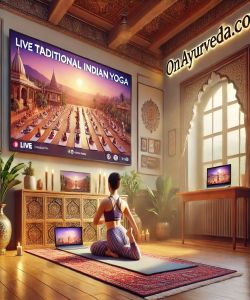
Overview of Traditional Indian Yoga
Traditional Indian Yoga is an ancient and profound discipline, unequivocally concerned with the integration of mind, body, and spirit to achieve a state of ultimate liberation, or moksha. It is not, in its authentic form, a mere system of physical exercise or stress reduction, but a comprehensive philosophical and spiritual framework designed to systematically dismantle the illusions of the ego and reveal the true nature of the self. This rigorous path demands unwavering commitment, discipline, and a deep intellectual engagement with its foundational texts, such as the Yoga Sutras of Patanjali. The practice extends far beyond physical postures (asanas), encompassing ethical principles (yamas and niyamas), breath control (pranayama), sensory withdrawal (pratyahara), concentration (dharana), meditation (dhyana), and ultimately, complete absorption in the object of meditation (samadhi). Its core objective is the cessation of the mind's fluctuations—citta vrtti nirodhah—a state of profound stillness and clarity that allows the practitioner to perceive reality without distortion. This is a formidable undertaking, requiring the practitioner to confront and transcend their own psychological and physical limitations. It is a science of consciousness, a methodical art of self-realisation that challenges the very foundations of one's conditioned existence. The pursuit is not for the faint-hearted; it is a demanding, transformative journey towards spiritual sovereignty, demanding total dedication to its principles and practices, often under the guidance of a qualified master who embodies the teachings. The superficial adoption of its physical elements without embracing its philosophical depth constitutes a fundamental misinterpretation of its sacred purpose.
What are Traditional Indian Yoga?
Traditional Indian Yoga represents a collection of sophisticated spiritual disciplines originating from the Indian subcontinent, aimed at achieving self-realisation and liberation from the cycle of suffering. Fundamentally, it is a darśana, or a distinct school of philosophy, which posits that the root of all human suffering is ignorance (avidyā) of one's true nature. The various paths of traditional yoga are therefore prescriptive methodologies designed to eradicate this ignorance.
It is imperative to understand that "yoga" in this context is not a monolithic entity. It encompasses several distinct yet interconnected streams, each tailored to different human temperaments and capacities.
Raja Yoga: The "royal path," codified by Patanjali, which provides a systematic, eight-limbed approach (Ashtanga) to controlling the fluctuations of the mind, culminating in meditative absorption (samadhi).
Jnana Yoga: The path of knowledge and wisdom, which employs rigorous self-enquiry and intellectual discrimination (viveka) to distinguish the real from the unreal, leading to the direct realisation of the ultimate truth.
Karma Yoga: The path of selfless action, where all work is performed as a sacred offering, without attachment to the results. This purifies the heart and ego, preparing the practitioner for deeper states of awareness.
Bhakti Yoga: The path of devotion and love, which channels emotional energy towards a divine ideal through prayer, chanting, and ritual, leading to a state of union through divine love.
Hatha Yoga: Often misunderstood in the modern era as mere physical exercise, traditional Hatha Yoga is a preparatory system of physical purification and energetic control, designed to make the body a fit and stable vehicle for the higher practices of Raja Yoga.
These paths are not mutually exclusive; they are facets of a single, overarching system for human evolution. The ultimate goal remains constant: the transcendence of the limited, egoic self and the realisation of an unbound, unified consciousness.
Who Needs Traditional Indian Yoga?
Individuals exhibiting a demonstrable lack of mental discipline and focus, for whom the rigorous structure provides an essential corrective framework for achieving mental quietude and clarity.
Those who are intellectually and spiritually prepared to move beyond superficial wellness trends and engage with a profound philosophical system that demands serious introspection and self-enquiry.
Practitioners seeking to understand the authentic roots of yoga, distinct from the diluted, fitness-oriented derivatives prevalent in contemporary culture.
Individuals experiencing profound existential disquietude, who require a systematic and time-tested methodology for exploring the fundamental questions of existence, consciousness, and suffering.
Those who recognise that lasting transformation is contingent upon the integration of ethical conduct, physical discipline, and mental training, not merely one isolated component.
Individuals prepared to subordinate their ego to a disciplined practice and, where appropriate, to the guidance of an authentic lineage or teacher, understanding that self-mastery requires humility.
Persons who comprehend that control over the body and breath is not an end in itself, but a prerequisite for achieving the stability required for advanced meditative states.
Those who are committed to a long-term, arduous path of self-purification, acknowledging that there are no shortcuts or facile solutions to the attainment of spiritual liberation.
Individuals seeking to cultivate a state of profound inner resilience, capable of maintaining equanimity and composure in the face of external chaos and internal turmoil.
Anyone who has exhausted the remedies of a purely materialistic worldview and is ready to embark on a serious, methodical exploration of consciousness itself.
Scholars and practitioners of philosophy who wish to engage directly with one of the world's most sophisticated and practical systems of applied metaphysics.
Those who understand that true freedom is not the indulgence of whims, but the mastery of the self.
Origins and Evolution of Traditional Indian Yoga
The origins of Traditional Indian Yoga are ancient and deeply embedded within the philosophical and spiritual tapestry of the Indian subcontinent. Its earliest roots can be traced to the Vedic period, with hymns in the Rigveda alluding to practices of asceticism and mental discipline. However, it is in the Upanishads, the later philosophical texts of the Vedas, that the core concepts of yoga—such as the nature of the self (Atman), ultimate reality (Brahman), and the means of their union—begin to be articulated with greater clarity. These texts lay the metaphysical groundwork upon which the entire yogic edifice is built, establishing the goal of liberation from the phenomenal world through direct, experiential knowledge.
A pivotal moment in the evolution of yoga was its systematic codification by the sage Patanjali in the Yoga Sutras. This seminal text, composed of 196 aphorisms, provided a definitive structure for the practice, outlining the eight-limbed path (Ashtanga Yoga) as the pre-eminent method for attaining control over the mind's fluctuations. Patanjali's work synthesised existing yogic traditions into a coherent and powerful philosophical system, establishing Raja Yoga as a distinct and highly respected school of Indian thought. His contribution was not one of invention, but of masterful compilation and clarification, giving the disparate practices a universal grammar and a clear, progressive structure that remains the standard for classical yoga to this day.
During the medieval period, a significant evolution occurred with the emergence of Hatha Yoga, most notably articulated in texts like the Hatha Yoga Pradipika. This school placed a much stronger emphasis on the physical body as the primary instrument for spiritual practice. It developed a sophisticated array of physical postures (asanas), breathing techniques (pranayama), and purification methods (shatkarmas) designed to purify the body and control the subtle life-force energy (prana). The aim of Hatha Yoga was not physical fitness, but to create a robust and stable physical vessel capable of withstanding the rigours of advanced meditation and the awakening of spiritual energy (kundalini), thereby serving as a preparatory stage for the higher limbs of Raja Yoga. This evolution marked a shift towards more tangible, body-centric practices as a gateway to the more subtle, mind-centric disciplines.
Types of Traditional Indian Yoga
Raja Yoga: The "Royal Path" of mind control, systematically outlined in Patanjali's Yoga Sutras. It is a comprehensive, eight-limbed methodology (Ashtanga) designed to achieve samadhi, or meditative absorption. Its focus is unequivocally on the direct discipline and eventual cessation of mental activity as the means to liberation. It is considered the ultimate synthesis of yogic practice.
Jnana Yoga: The path of supreme knowledge and wisdom. This is a highly intellectual and introspective discipline that employs rigorous self-enquiry (atma vichara) and the power of discrimination (viveka) to differentiate between the eternal self (Atman) and the transient non-self (anatman). Its primary tool is the mind itself, used to cut through layers of illusion and ignorance to arrive at direct, non-dual realisation.
Karma Yoga: The yoga of selfless action. This path mandates that the practitioner performs all duties and actions with skill and dedication, but without any attachment to the fruits or outcomes of those actions. The work itself becomes a form of worship and meditation, serving to purify the ego and dissolve the bonds of karmic consequence. It is the practical application of spiritual principles in daily life.
Bhakti Yoga: The path of devotion. This approach utilises the powerful force of human emotion, particularly love, and channels it towards a chosen divine form or ideal. Through practices such as chanting (kirtan), prayer, and ritual, the practitioner cultivates an intense, all-consuming love for the divine, leading to the dissolution of the ego in a state of devotional union.
Hatha Yoga: In its traditional context, Hatha Yoga is a system of physical and energetic practices designed to prepare the body for the higher states of consciousness pursued in Raja Yoga. It involves asanas (postures), pranayama (breath control), mudras (gestures), and bandhas (energy locks) to purify the physical and subtle bodies, balance the life-force energy (prana), and create unwavering stability for meditation.
Benefits of Traditional Indian Yoga
Cultivates profound mental discipline and an unwavering capacity for concentration, systematically dismantling the habit of mental distraction.
Instils a state of deep-seated equanimity, enabling the practitioner to remain poised and unaffected by external vicissitudes and internal emotional turbulence.
Provides a systematic framework for the progressive purification of the ego, leading to a demonstrable reduction in selfish, reactive, and destructive behavioural patterns.
Develops exceptional control over the autonomic nervous system through rigorous and methodical breath control (pranayama), leading to enhanced physiological stability and resilience.
Facilitates a direct, experiential understanding of the nature of consciousness, moving beyond mere theoretical or philosophical speculation.
Enhances physical vitality and structural integrity not as an end in itself, but as a necessary foundation for enduring the rigours of advanced spiritual practice.
Establishes a robust ethical foundation for life through the uncompromising application of the yamas (restraints) and niyamas (observances).
Systematically reduces the psychological burden of stress, anxiety, and mental fatigue by addressing their root cause: the incessant and uncontrolled fluctuations of the mind.
Leads to the liberation from conditioned patterns of thought and behaviour, granting the practitioner a superior degree of self-determination and inner freedom.
Offers a time-tested, methodical pathway to self-realisation and the ultimate cessation of suffering (duhkha), which is the stated final objective of the entire yogic system.
Improves the function and regulation of the body's pranic or subtle energy systems, which is considered essential for both physical health and spiritual advancement.
Fosters a deep sense of connection to a lineage and a philosophical tradition that provides context, meaning, and a structured approach to human evolution.
Core Principles and Practices of Traditional Indian Yoga
Yamas (Ethical Restraints): The non-negotiable ethical foundation governing one's interactions with the external world. This includes Ahimsa (non-violence in thought, word, and deed), Satya (uncompromising truthfulness), Asteya (non-stealing), Brahmacharya (continence or right use of energy), and Aparigraha (non-possessiveness or non-hoarding). These are not mere suggestions but absolute prerequisites for progress.
Niyamas (Personal Observances): The mandatory principles of self-discipline and internal conduct. This comprises Saucha (purity of body and mind), Santosha (contentment), Tapas (austerity or disciplined effort), Svadhyaya (self-study and study of sacred texts), and Ishvara Pranidhana (surrender to a higher principle or the divine).
Asana (Postures): The practice of steady and comfortable postures. In the traditional context, the primary purpose of asana is not physical conditioning but to cultivate a stable and motionless body, thereby minimising physical distractions and preparing the practitioner for prolonged periods of meditation. The goal is mastery over the physical form.
Pranayama (Breath Control): The methodical regulation of the breath, which is seen as the direct vehicle of prana, the vital life force. Through various techniques of inhalation, exhalation, and retention, the practitioner calms the nervous system, purifies energy channels (nadis), and stills the mind, as the two are inextricably linked.
Pratyahara (Sensory Withdrawal): The conscious and deliberate withdrawal of the senses from external objects. This is an internalisation of awareness, where the mind ceases to be pulled outward by sensory stimuli. It is the critical bridge between the external practices (bahiranga) and the internal practices (antaranga) of yoga.
Dharana (Concentration): The binding of the mind to a single point or object of focus. This is the initial stage of true meditation, requiring immense effort to hold the attention steady and prevent it from wandering. It is the training ground for developing a one-pointed mind.
Dhyana (Meditation): An uninterrupted flow of concentration. Whereas dharana involves effort, dhyana is the state where the focus becomes effortless and continuous. The distinction between the observer and the object of observation begins to dissolve, leading to a state of profound absorption.
Samadhi (Union/Absorption): The culmination of the yogic path, where the mind completely merges with the object of meditation. In this state, the sense of a separate, individual self is transcended, leading to a direct experience of unity and the ultimate nature of reality.
Online Traditional Indian Yoga
Unparalleled Accessibility: The online format eradicates geographical barriers, providing practitioners with access to authentic lineages and qualified instructors who would otherwise be unreachable. This democratises access to specialised knowledge that was historically confined to specific ashrams or regions, allowing dedicated students anywhere to engage with the tradition.
Facilitation of Consistency: Online platforms enable a level of consistency in practice that is difficult to maintain otherwise. The ability to engage in daily sessions from a personal, controlled environment removes the logistical hurdles of travel and scheduling, fostering the unwavering regularity that is fundamental to yogic discipline.
Intensified Requirement for Self-Discipline: The remote nature of online learning places the onus of discipline squarely on the practitioner. Without the external pressure of a physical group setting, the individual is compelled to cultivate a superior degree of internal motivation, self-regulation, and commitment, which are core yogic virtues in themselves. This format rigorously tests and strengthens one's resolve.
Focused and Undistracted Learning Environment: A properly configured personal space can be more conducive to deep concentration than a public studio. The practitioner can eliminate social distractions, performance anxiety, and environmental variables, creating a sanctuary dedicated solely to the practice. This fosters the inward focus (pratyahara) essential to traditional yoga.
Access to a Wider Body of Knowledge: Digital archives, supplementary materials, and recorded lectures provide a depth of theoretical and philosophical resources that may not be available in a standard offline class. This allows the serious practitioner to engage more deeply with the scriptural and philosophical underpinnings of the practice at their own pace.
Anonymity and Reduced Ego-Consciousness: The online environment can reduce the element of comparison and competition that often arises in group physical settings. This allows the practitioner to focus entirely on their internal experience and personal progress, rather than being distracted by the performance of others, thereby supporting a more authentic and less ego-driven practice.
Traditional Indian Yoga Techniques
Āsana (Postural Discipline): Assume a designated posture, such as Padmasana (Lotus Pose) or Siddhasana (Accomplished Pose), with the primary objective of establishing absolute physical stillness. The spine must be erect, the body stable, and the posture maintained without strain. The purpose is to transcend bodily awareness and create a firm foundation for the subsequent internal practices. This is not a dynamic exercise but a static discipline.
Prāṇāyāma (Vital Energy Control): Commence with methodical regulation of the breath. A fundamental technique is Nadi Shodhana (Alternate Nostril Breathing). Close the right nostril and inhale slowly and deeply through the left. Retain the breath according to capacity. Then, close the left nostril, exhale completely through the right. Inhale through the right, retain, and then exhale through the left. This constitutes one cycle. Perform this systematically to purify the energy channels and calm the mind.
Pratyāhāra (Sensory Withdrawal): Actively disengage the mind from the input of the five senses. Focus your awareness internally, progressively withdrawing attention from sounds, sights, smells, tastes, and tactile sensations. The objective is to sever the mind's automatic connection to the external world, turning the flow of consciousness inwards. This is a deliberate act of mental command, not passive relaxation.
Dhāraṇā (Concentration): Select a single, unchanging point of focus (drishti). This can be an internal object, such as the space between the eyebrows, or a specific mantra. Bind the entirety of your mental energy to this single point. When the mind wanders, as it inevitably will, forcefully and repeatedly return it to the object of concentration. This stage is a relentless battle for one-pointedness.
Dhyāna (Meditation): Once concentration is established and can be maintained with less effort, allow the practice to deepen into an unbroken flow of awareness towards the object of focus. The sense of effort recedes, and the practitioner maintains a continuous, absorbed state of observation. The distinction between the act of concentrating and the object of concentration begins to blur.
Integration (Savasana): Conclude the practice by assuming a position of complete stillness, typically lying supine. Consciously release all control over the body and mind, allowing the effects of the preceding techniques to be fully absorbed and integrated into the practitioner's being. This is a state of active, conscious surrender, not sleep.
Traditional Indian Yoga for Adults
Traditional Indian Yoga, when approached with the requisite maturity and seriousness, offers adults a formidable methodology for navigating the complexities of modern existence and pursuing profound self-mastery. For the adult practitioner, who has likely accumulated a lifetime of conditioned responses, mental habits, and psychological burdens, the yogic path is not a gentle pastime but a rigorous process of un-learning and re-patterning. It demands an intellectual and emotional maturity capable of grappling with its deep philosophical concepts, such as the nature of suffering, the illusion of the ego, and the pursuit of liberation. The physical disciplines of asana and pranayama are not undertaken for aesthetic or competitive reasons, but as essential tools to stabilise a body and nervous system often compromised by years of stress and neglect. This stability becomes the non-negotiable platform from which the more challenging work of mind control can be launched. The ethical framework of the yamas and niyamas provides a clear and uncompromising moral compass, compelling the adult to scrutinise and rectify their conduct in professional, personal, and social spheres. Ultimately, it is a path for those who have moved beyond the fleeting gratifications of youth and are seeking a durable, internal source of meaning, resilience, and peace. It requires a commitment to long-term, incremental progress over instant results, a perspective that is uniquely suited to the adult temperament. It is a demanding, transformative discipline for individuals who are ready to take full responsibility for their inner state.
Total Duration of Online Traditional Indian Yoga
The standard and prescribed duration for a single, focused session of online Traditional Indian Yoga must be a complete 1 hr. This temporal framework is not arbitrary; it is a meticulously structured period designed to facilitate a comprehensive and balanced practice, ensuring that no essential component is neglected or rushed. Within this 1 hr allocation, a disciplined practitioner can methodically progress through the requisite stages of the practice without compromise. The initial phase is dedicated to centering the mind and setting a clear intention, followed by a systematic application of pranayama techniques to calm the nervous system and regulate the body’s vital energies. The central portion of the session is then devoted to the practice of asana, holding postures with stability and awareness to prepare the physical body for a state of prolonged stillness. This physical preparation is crucial and cannot be abbreviated. The subsequent, and most critical, phase within the 1 hr structure is the transition into the internal practices of pratyahara (sensory withdrawal), dharana (concentration), and dhyana (meditation). A significant and protected portion of the time must be reserved for this deep, introspective work. The session concludes with a period of integration in a state of conscious rest, allowing the physiological and psychological systems to absorb the profound effects of the practice. Adherence to the full 1 hr duration is therefore a matter of discipline and respect for the integrity of the yogic process, ensuring a complete, holistic, and effective engagement with its transformative potential.
Things to Consider with Traditional Indian Yoga
Engaging with Traditional Indian Yoga necessitates a profound shift in perspective, demanding considerations that extend far beyond the physical. It is imperative to recognise that this is a spiritual discipline first and foremost; to treat it as a mere fitness regimen is to fundamentally misunderstand its purpose and to court disillusionment. One must be prepared to confront uncomfortable truths about oneself—the nature of the ego, ingrained mental patterns, and deep-seated attachments. The path is arduous and progress is often non-linear, requiring immense patience and unwavering perseverance. The practitioner must consider their readiness to adopt a disciplined lifestyle that supports the practice, which includes attention to diet, conduct, and a commitment to regular, consistent effort. Furthermore, the importance of authentic lineage and qualified guidance cannot be overstated. The modern marketplace is saturated with unqualified instructors offering superficial interpretations. It is crucial to scrutinise a teacher's credentials, their own depth of practice, and their connection to a legitimate tradition. One must also be prepared to engage with its philosophical underpinnings through the study of foundational texts. A practice devoid of its intellectual and spiritual context is an empty shell. Finally, the practitioner must understand that the goal is not the attainment of extraordinary physical abilities or psychic powers, which can be significant distractions, but the systematic and humble pursuit of self-realisation and the quietening of the mind. This requires a long-term commitment that transcends fleeting enthusiasm.
Effectiveness of Traditional Indian Yoga
The effectiveness of Traditional Indian Yoga is unequivocal and profound, but it must be measured against its own stated objectives, not the superficial metrics of contemporary wellness culture. Its primary aim is the systematic purification and eventual transcendence of the ego-consciousness, leading to a state of lasting inner peace and liberation from suffering. When practised with unwavering discipline, correct intention, and adherence to its core principles, its efficacy in this domain is unparalleled. The methodical application of its techniques—from ethical restraints to deep meditation—engineers a fundamental restructuring of the practitioner's psychological and neurological landscape. It systematically dismantles conditioned, reactive patterns of thought and behaviour, replacing them with a state of conscious, deliberate response. Its effectiveness is evident in the practitioner's cultivated ability to maintain equanimity amidst external chaos, to demonstrate profound mental clarity and focus, and to exhibit a stable, resilient nervous system. The physical benefits, while secondary, are a natural and potent outcome of a practice designed to harmonise the body's energetic and physiological systems. However, the ultimate proof of its effectiveness lies in the direct, subjective experience of a quieter mind, a more compassionate heart, and a gradual dawning of insight into the true nature of the self. This is not a system of quick fixes; its effectiveness is cumulative, deepening over years of dedicated practice, and its results are not merely palliative but genuinely transformative.
Preferred Cautions During Traditional Indian Yoga
It is imperative that the practitioner approaches Traditional Indian Yoga with a profound sense of caution and self-awareness, as this powerful system can be detrimental if misapplied. The foremost caution relates to the ego. The pursuit of advanced postures or prolonged breath retention for the purpose of self-aggrandisement is a dangerous perversion of the practice and will inevitably lead to physical injury and spiritual stagnation. Progress must be honest, incremental, and devoid of ambition. Secondly, one must exercise extreme prudence with advanced pranayama techniques. These are potent practices that directly manipulate the nervous system and vital energies; undertaking them without proper, qualified guidance can result in severe physiological and psychological imbalance. A gradual and patient approach is not optional, it is mandatory. Physical injury is a constant risk if the body's limitations are ignored or forcefully challenged. The principle of ahimsa (non-violence) must first be applied to oneself; pain is a clear signal to desist, not to push harder. Furthermore, practitioners must be wary of psychological or emotional upheaval. As deep-seated mental patterns (samskaras) are brought to the surface, periods of confusion, anxiety, or emotional volatility can occur. It is crucial to navigate this process with stability and the support of a knowledgeable guide, rather than becoming overwhelmed. Finally, one must be cautious of "spiritual bypassing"—using yogic concepts to avoid dealing with unresolved psychological issues. The practice is meant to integrate all aspects of the self, not to create a dissociated, pseudo-enlightened persona.
Traditional Indian Yoga Course Outline
Module 1: Foundational Principles and Ethics
Introduction to the philosophical framework (darśana) of Yoga.
In-depth study of the Yamas (Ethical Restraints) and Niyamas (Personal Observances) as the non-negotiable basis for all practice.
Exploration of the concepts of Duhkha (suffering), Avidyā (ignorance), and Moksha (liberation).
Module 2: The Science of Asana (Postural Discipline)
Focus on fundamental postures for stability and meditation (Sthira Sukham Asanam).
Principles of alignment, stability, and transcending bodily awareness.
Practice of preparatory sequences to increase flexibility and strength as a means to an end.
Module 3: Pranayama (The Discipline of Breath and Energy)
Introduction to the concept of Prana (vital life force) and Nadis (energy channels).
Systematic instruction in foundational breathing techniques: Dirga Svasam (Three-Part Breath), Ujjayi (Victorious Breath), and Nadi Shodhana (Alternate Nostril Breathing).
Emphasis on safety, contraindications, and the link between breath and mental states.
Module 4: The Path Inward - Pratyahara and Dharana
Techniques for the conscious withdrawal of the senses (Pratyahara).
Intensive training in concentration (Dharana) on various internal and external points of focus.
Developing a one-pointed mind as a prerequisite for meditation.
Module 5: The Practice of Dhyana (Meditation)
Transitioning from effortful concentration to effortless meditation.
Exploration of various meditative techniques based on traditional texts.
Cultivating the state of an impartial witness to mental phenomena.
Module 6: Integration and Application
The role of mantra and chanting in focusing the mind.
Principles of Karma Yoga: Applying yogic discipline to daily life and action.
Developing a sustainable, life-long personal practice (sadhana).
Detailed Objectives with Timeline of Traditional Indian Yoga
Weeks 1-4: Establishment of Foundational Discipline
Objective: To assimilate and begin the rigorous application of the Yamas and Niyamas in daily conduct.
Objective: To establish a consistent daily practice schedule without fail.
Objective: To achieve stability and comfort in a primary meditative posture (e.g., Sukhasana, Siddhasana) for a sustained period.
Objective: To master the mechanics of basic diaphragmatic breathing.
Weeks 5-8: Development of Physical and Energetic Control
Objective: To execute a foundational series of asanas with correct alignment and steady breath, focusing on stability over flexibility.
Objective: To demonstrate proficiency in introductory pranayama techniques, specifically Nadi Shodhana, for a prescribed number of rounds.
Objective: To cultivate a tangible awareness of prana (vital energy) within the physical body during practice.
Weeks 9-12: Cultivation of Internalisation and Concentration
Objective: To successfully practise pratyahara (sensory withdrawal) during meditation, significantly reducing distraction from external stimuli.
Objective: To sustain an unbroken period of dharana (concentration) on a single point of focus for a designated duration.
Objective: To develop the capacity to consistently and immediately return the mind to its object of focus upon noticing distraction.
Months 4-6: Deepening Meditative States and Integration
Objective: To experience moments of dhyana (effortless meditation), where the flow of concentration is spontaneous and sustained.
Objective: To gain a preliminary, experiential understanding of the mind's structure by observing its patterns without identification.
Objective: To begin the formal study of a core yogic text (e.g., The Yoga Sutras) and integrate its philosophical principles with direct practice.
Objective: To formulate and commit to a long-term, self-sufficient personal practice (sadhana) plan.
Requirements for Taking Online Traditional Indian Yoga
An unwavering and demonstrable commitment to the discipline. This is not a casual engagement; it requires absolute dedication.
A high-speed, stable, and reliable internet connection. Technical failures are the practitioner’s responsibility to mitigate and are not an acceptable excuse for inconsistent attendance or participation.
A dedicated, private, and silent space for practice. This area must be free from all potential distractions, including family members, pets, and electronic notifications. It must be treated as a sacred space for the duration of the session.
A high-quality webcam and microphone. The instructor must be able to clearly see the practitioner's form and hear any necessary communication. The visual and audio feed must remain active for the entire session.
Possession of and familiarity with the required video conferencing software (e.g., Zoom, Skype). The practitioner is responsible for ensuring their technical competence with the platform prior to the first session.
A yoga mat and any other specified props (e.g., blocks, bolsters, blankets). These must be procured in advance and be readily available for every session.
Appropriate attire that allows for a full range of movement and enables the instructor to clearly observe the practitioner's physical alignment.
The intellectual and emotional maturity to receive direct, assertive feedback and instruction without defensiveness.
A pre-existing state of physical health that permits engagement in the practice, or a formal medical clearance if there are pre-existing conditions. Full disclosure of any physical limitations is mandatory.
The capacity for self-regulation and intense self-discipline, as the online format places the primary responsibility for focus and effort squarely on the practitioner.
Things to Keep in Mind Before Starting Online Traditional Indian Yoga
Before embarking upon the study of Traditional Indian Yoga in an online format, it is imperative to conduct a rigorous self-assessment and prepare accordingly. The digital medium, while convenient, introduces a unique set of challenges that demand heightened discipline. You must understand that you are solely responsible for creating a sanctified and distraction-free environment; the onus is on you to command your space and eliminate any potential for interruption. This is a non-negotiable prerequisite. Furthermore, recognise that the absence of a physical teacher means you must cultivate a superior level of bodily awareness and honesty to prevent injury. You must learn to interpret your body's signals with absolute clarity and integrity, as there will be no one present to provide immediate physical correction. Scrutinise the credentials of any online instructor with extreme prejudice. The digital world is rife with unqualified individuals; ensure your chosen guide has a deep, verifiable connection to an authentic lineage and is not merely a product of superficial, modern certification programmes. Be prepared for a learning curve with the technology and resolve any potential issues beforehand to ensure your practice time is not compromised. Finally, and most importantly, you must commit with an intensity that transcends the digital divide. Your dedication, focus, and seriousness of purpose must be powerful enough to bridge the physical distance, transforming your screen from a mere monitor into a portal for profound, disciplined self-enquiry. Without this uncompromising internal commitment, the practice will remain a shallow, two-dimensional experience.
Qualifications Required to Perform Traditional Indian Yoga
The performance and, more importantly, the transmission of Traditional Indian Yoga demand qualifications that vastly exceed the superficial certifications common today. The primary, non-negotiable qualification is a deep and sustained personal practice (sadhana) undertaken over many years, ideally decades. An instructor cannot guide a student to a state they have not thoroughly and experientially explored themselves. This personal mastery is the bedrock of all authentic teaching.
Beyond personal practice, the following are essential:
Lineage and Direct Transmission: The instructor must be part of a recognised, authentic lineage (parampara). This ensures that the knowledge has been transmitted directly from teacher to student over generations, preserving its integrity and potency. Qualification is not something that can be acquired from a book or a short course; it must be received.
Profound Textual Knowledge: A comprehensive and scholarly understanding of the foundational texts is mandatory. This includes, at a minimum, Patanjali's Yoga Sutras, the Bhagavad Gita, the Upanishads, and key Hatha Yoga texts like the Hatha Yoga Pradipika. The instructor must be capable of interpreting and teaching this philosophy with depth and accuracy.
Anatomical and Physiological Expertise: While the focus is not purely physical, a sophisticated understanding of human anatomy, physiology, and kinesiology is crucial to guide students safely and effectively in asana and pranayama, and to adapt the practice for individual limitations.
Pedagogical Skill: The ability to communicate complex, subtle concepts with clarity, precision, and authority is essential. The instructor must be able to assess the needs and capacities of individual students and guide their development with wisdom and discernment.
Ultimately, the true qualification is an embodiment of the yogic principles. The instructor's own life, conduct, and state of being must be a direct reflection of the teachings they purport to share. Without this living integrity, any technical knowledge is hollow and ineffectual.
Online Vs Offline/Onsite Traditional Indian Yoga
Online
The online modality for learning Traditional Indian Yoga is an exercise in supreme self-discipline and accessibility. Its primary advantage is the dissolution of geographical constraints, offering access to authentic teachers and lineages that would otherwise be physically unreachable. This format demands an exceptionally high degree of internal motivation from the practitioner, who is solely responsible for creating a sacred, focused environment and maintaining unwavering commitment without the external pressure of a group. While it facilitates consistency by removing logistical barriers, it presents a significant limitation in the form of diminished direct transmission. The subtle energetic exchange (shaktipat) and the nuanced, hands-on adjustments from a master are impossible to replicate through a screen. The practitioner must cultivate a heightened sense of self-awareness to practise safely and effectively, as the instructor's ability to perceive and correct subtle misalignments is inherently restricted. The online path is therefore best suited for highly disciplined, self-motivated individuals who already possess a degree of bodily intelligence or are using it to supplement an existing, well-established practice. It is a powerful tool, but one that places the full weight of responsibility on the student.
Offline/Onsite
Offline, or onsite, instruction represents the traditional and arguably superior method for the transmission of yogic knowledge. Its defining characteristic is the direct, unmediated presence of the teacher (guru). This physical proximity allows for a depth of communication that transcends mere verbal instruction. The teacher can provide precise physical adjustments, observe the student's energetic state, and offer guidance tailored to the subtlest of cues. The learning environment of a dedicated space (shala or ashram) is specifically consecrated for practice, creating a powerful, collective energy that supports and deepens individual effort. The practitioner benefits from the immersive experience, absorbing the teachings not just intellectually but through a process of osmosis. This format fosters a direct student-teacher relationship, a cornerstone of the yogic tradition, allowing for mentorship and guidance on all aspects of the path. The primary disadvantage is its inherent limitation by geography and schedule, requiring the student to physically travel to the teacher. Onsite learning is the gold standard, offering a holistic, multi-sensory, and deeply relational approach to the discipline that is fundamentally irreplaceable.
FAQs About Online Traditional Indian Yoga
Question 1. Is online yoga as effective as in-person practice?
Answer: Its effectiveness is contingent upon the practitioner's discipline. While it lacks the direct physical guidance of onsite learning, it can be highly effective for a motivated individual by eliminating geographical barriers to authentic instruction.
Question 2. What technology is essential?
Answer: A stable, high-speed internet connection, a quality webcam, a clear microphone, and a device capable of running the required video conferencing software without issue.
Question 3. How do I ensure I am learning from a qualified teacher?
Answer: Scrutinise their lineage, their years of personal practice, their depth of textual knowledge, and seek testimonials from long-term students. Avoid instructors focused solely on fitness certifications.
Question 4. Can a beginner start with online yoga?
Answer: Yes, but it demands extreme caution and self-awareness. It is imperative to choose a course specifically designed for beginners with a strong emphasis on safety and foundational principles.
Question 5. How are physical adjustments made online?
Answer: They are not. Adjustments are provided through precise verbal cues and visual demonstration. The practitioner must develop the ability to translate these cues into physical action accurately.
Question 6. What if I have a pre-existing injury?
Answer: You must obtain medical clearance and inform your instructor in detail before commencing the course. You are solely responsible for practising within your own safe limits.
Question 7. Is the spiritual component lost online?
Answer: No. The spiritual component is a function of your intention and the teacher's integrity, not the medium. A dedicated practice will yield spiritual benefits regardless of format.
Question 8. What is the biggest challenge of online yoga?
Answer: Maintaining unwavering self-discipline and focus in a personal environment that may be filled with distractions.
Question 9. Do I need a lot of space?
Answer: You need enough space to extend your arms and legs fully in all directions from a central point on your yoga mat without obstruction.
Question 10. Can I ask questions during an online class?
Answer: This depends on the instructor's protocol. Typically, there are designated times for questions, or a chat function may be used to avoid disrupting the flow of the class.
Question 11. What if my internet connection fails during a session?
Answer: You are responsible for your own technology. Most programmes do not offer refunds or make-up sessions for individual technical failures. It is your duty to ensure reliability.
Question 12. Is it possible to build a community with fellow students online?
Answer: Yes, many online programmes incorporate forums or dedicated communication channels to foster a sense of community (satsang) among practitioners.
Question 13. How should I prepare my space before class?
Answer: Ensure it is clean, quiet, and free of all clutter and potential interruptions. Treat the space as a temporary temple for your practice.
Question 14. Will I be required to have my camera on?
Answer: Yes. For any reputable course, having the camera on is mandatory for the instructor to provide guidance and ensure safe practice.
Question 15. What is the difference between a live online class and a pre-recorded one?
Answer: A live class offers real-time interaction and feedback. A pre-recorded class offers flexibility but lacks any form of personalised guidance or correction.
Question 16. How do I stay motivated to practise online?
Answer: Motivation is born from discipline. Commit to a fixed schedule as you would for an in-person appointment. The consistency itself will build momentum.
Question 17. Is online yoga suitable for learning advanced techniques?
Answer: Extreme caution is advised. Advanced techniques, particularly complex pranayama or asanas, should ideally be learned under direct, in-person supervision.
Conclusion About Traditional Indian Yoga
In conclusion, Traditional Indian Yoga stands as a complete and uncompromising science of human consciousness, designed for the explicit purpose of self-realisation and the eradication of suffering. Its integrity lies in its holistic and integrated approach, which refuses to sever the physical from the mental, the ethical from the spiritual. To engage with this discipline is to commit to a rigorous and methodical transformation of one's entire being. It is not a system of convenience, nor does it offer facile solutions to life's profound challenges. Instead, it provides a time-tested, arduous, yet ultimately liberating path for those with the fortitude to walk it. The modern world's fragmentation of yoga into a mere physical exercise represents a profound dilution of its original power and purpose. The authentic practice demands unwavering discipline, intellectual engagement with its philosophy, and a deep-seated commitment to its ethical foundations. Whether practised online or in a traditional setting, the core requirements remain the same: sincerity of intent, consistency of effort, and a profound respect for the tradition's depth. It is, and always has been, a formidable undertaking for the serious seeker who is prepared to subordinate the ego to the ultimate goal of spiritual freedom. Its principles are timeless, its methods are potent, and its final promise is nothing less than the direct, experiential discovery of one's true nature.