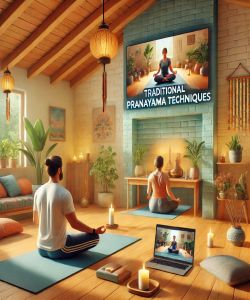
1. Overview of Traditional Pranayama Techniques
Traditional Pranayama represents a sophisticated and foundational pillar of classical yoga, a discipline concerned with the deliberate and systematic regulation of the breath to influence the flow of prana, or vital life force, throughout the organism. It is a grave misapprehension to equate this profound science with mere deep breathing exercises or techniques for simple relaxation. The practice is, in its authentic form, an exacting methodology for gaining mastery over the autonomic systems of the body and, by extension, the ceaseless agitations of the mind. The term itself, derived from the Sanskrit words ‘prana’ (vital energy) and ‘ayama’ (to extend, regulate, or control), signifies its core purpose: the extension and command of life force. This is not a passive pursuit but an active and rigorous engagement with the subtle energies that animate human consciousness. Its ultimate objective transcends physiological enhancement; it aims to stabilise the mind, rendering it fit for the higher states of concentration (Dharana) and meditation (Dhyana) that constitute the more advanced limbs of yoga. The techniques, codified in seminal texts such as the Hatha Yoga Pradipika and Patanjali's Yoga Sutras, are precise, potent, and demand unwavering discipline. They function to purify the subtle energy channels, known as nadis, and to awaken dormant spiritual potential. The practice is therefore not a therapeutic intervention in the modern sense but a transformative process designed to dismantle conditioned patterns of thought and perception, leading the practitioner towards a state of unwavering inner stillness and sovereign self-command. It is, in essence, the deliberate science of directing consciousness through the medium of the breath, a formidable tool for those committed to the arduous path of self-mastery and profound inner exploration. This discipline is the critical bridge between the external, physical practices of asana and the internal, meditative states of awareness.
2. What are Traditional Pranayama Techniques?
Traditional Pranayama techniques constitute a formal system for the conscious regulation of respiration, with the explicit goal of controlling the body’s vital energy, or prana. This is not simply a matter of altering breathing patterns for temporary effect; it is a disciplined science that systematically engages the mechanisms of inhalation, exhalation, and, most critically, breath retention. The practice is built upon a sophisticated understanding of how the breath serves as a direct interface between the gross physical body and the subtle energetic and mental faculties. To comprehend these techniques, one must first understand their constituent parts.
The core components of any traditional pranayama practice are as follows:
- Puraka (Inhalation): This refers to a controlled, conscious, and deliberate intake of breath. In pranayama, inhalation is never a passive or unconscious act but a measured process designed to draw in and absorb prana in a systematic manner. The quality, duration, and energetic focus of the inhalation are precisely defined for each specific technique.
- Rechaka (Exhalation): This is the controlled, conscious, and complete release of breath. The objective is to expel not only physiological waste gases but also to cleanse the energetic system of impurities and distractions. As with inhalation, the method and length of exhalation are meticulously regulated to achieve a specific outcome on the nervous system and the mind.
- Kumbhaka (Retention): This is the central and most potent element of traditional pranayama, representing the voluntary suspension of breath. It is the point at which the practitioner directly manipulates prana, accumulating and directing it within the subtle body. There are two primary forms: Antara Kumbhaka, the retention of breath after a full inhalation, and Bahya Kumbhaka, the retention of breath after a complete exhalation. The practice of Kumbhaka is considered highly advanced and requires significant preparation and expert guidance, as its improper application can cause serious harm.
Through the structured combination of these three elements, pranayama techniques work to pacify the mind, purify the energetic pathways (nadis), and prepare the consciousness for advanced meditative absorption.
3. Who Needs Traditional Pranayama Techniques?
- Individuals Committed to the Authentic Path of Yoga: Those who seek to progress beyond the purely physical dimension of asana require these techniques. Pranayama is the fourth limb of Patanjali's Ashtanga Yoga, serving as the essential bridge to the internal, meditative limbs. For the serious yogi, its practice is not optional; it is a mandatory stage of development for mastering the mind and preparing for higher states of consciousness.
- Practitioners of Advanced Contemplative and Meditative Disciplines: Individuals engaged in rigorous forms of meditation, from any tradition, will find the stability of mind cultivated through pranayama to be an indispensable asset. The practice systematically reduces mental chatter and emotional turbulence, creating the unwavering internal stillness necessary for deep, sustained concentration and insight.
- Leaders, Strategists, and Professionals in High-Consequence Environments: Those whose roles demand supreme mental clarity, emotional equanimity, and decisive action under intense pressure need this discipline. Pranayama trains the nervous system to remain balanced in the face of external stressors, fostering a state of calm authority and sharp focus that is critical for effective leadership and performance.
- Individuals Seeking Mastery Over Their Internal States: Anyone who is unwilling to remain a victim of their own fluctuating moods, reactive emotions, and scattered thoughts requires this training. It is a formidable methodology for moving from a state of being governed by internal chaos to one of sovereign command over one's own psychological and physiological landscape.
- Athletes and Performers in Disciplines Requiring Exceptional Mind-Body Integration: Those involved in activities where peak performance hinges on the seamless union of focus, breath, and physical action will gain a significant advantage. Pranayama enhances respiratory efficiency, bolsters endurance, and forges a powerful connection between mental intent and physical execution.
- Spiritual Aspirants Seeking to Purify the Energetic System: According to yogic physiology, the mind's agitations are intrinsically linked to blockages in the subtle energy channels (nadis). Traditional pranayama is the prescribed science for systematically cleansing these channels, thereby facilitating the smooth flow of prana and the eventual awakening of higher spiritual potential.
4. Origins and Evolution of Traditional Pranayama Techniques
The origins of traditional pranayama are deeply embedded in the ancient philosophical and spiritual traditions of India, predating its later codification as a formal limb of yoga. The earliest conceptual underpinnings can be traced to the Vedas and, more explicitly, the Upanishads, where the concept of ‘prana’ as the universal life force and fundamental principle of existence is thoroughly explored. In these archaic texts, prana was understood not merely as physical breath but as the very essence of life that animates all beings. The breath was recognised as the most tangible manifestation of this force, and thus, its observation and rudimentary control became a subject of profound mystical inquiry for the ancient rishis, or seers.
It was with Patanjali's Yoga Sutras, a foundational text of classical yoga, that pranayama was formally synthesised and presented as the fourth of the eight limbs of yoga (Ashtanga Yoga). Patanjali defines it succinctly as ‘tasmin sati svasa prasvasayor gati vicchedah’, meaning the cessation of the movements of inhalation and exhalation, following the establishment of a steady posture (asana). Here, pranayama is positioned as a deliberate practice to break the unconscious, agitated patterns of breathing, thereby preparing the mind for concentration (Dharana). Patanjali’s treatment is concise, establishing its purpose and place within the yogic schema but without detailing the multitude of specific techniques.
The full flowering of pranayama as a detailed, technical science occurred later, within the mediaeval Hatha Yoga tradition. Seminal texts such as the Hatha Yoga Pradipika, the Gheranda Samhita, and the Shiva Samhita moved beyond Patanjali’s philosophical framework to provide explicit, systematic instructions for a wide array of techniques. These texts meticulously describe methods like Nadi Shodhana, Ujjayi, Bhastrika, and others, detailing their specific procedures, ratios, the use of bandhas (energy locks), and their intended effects on the nadis (energy channels) and kundalini (dormant spiritual energy). This evolution marked a shift from a primarily philosophical concept to a highly practical and potent technology for psychophysiological transformation, designed to purify the body and mind in preparation for the highest states of yogic attainment. This sophisticated system has been preserved and transmitted through unbroken guru-shishya (master-disciple) lineages, ensuring its integrity and distinguishing it from modern, simplified interpretations.
5. Types of Traditional Pranayama Techniques
The classical Hatha Yoga texts codify a range of specific pranayama techniques, each with a distinct methodology and a precise purpose. These are not interchangeable exercises but are prescribed according to the practitioner's constitution, stage of development, and the desired outcome. The principal types are as follows:
- Nadi Shodhana (Alternate Nostril Breathing): This is arguably the most fundamental and important of the purificatory pranayamas. It involves the systematic inhalation and exhalation through alternating nostrils, a practice designed to balance the flow of prana in the Ida and Pingala nadis—the primary left and right energy channels corresponding to the parasympathetic and sympathetic nervous systems. Its purpose is to cleanse the entire network of nadis, calm the nervous system, and induce a state of profound mental equilibrium, making it an essential preparatory practice for meditation.
- Ujjayi (The Victorious Breath): This technique is characterised by a gentle constriction at the back of the throat (the glottis), which creates a soft, audible hissing or oceanic sound during both inhalation and exhalation. This controlled resistance slows the breath, generates a subtle internal heat, and focuses the mind. Ujjayi is often practised throughout asana sessions to maintain a meditative rhythm and can be used as a standalone pranayama to promote calm concentration and soothe the nervous system.
- Kapalabhati (Skull-Shining Breath): Technically considered a shatkarma (one of the six cleansing actions), Kapalabhati is almost universally practised and taught as a pranayama. It consists of a series of short, sharp, forceful exhalations, with inhalation being a passive, reflexive recoil. The practice is highly stimulating and cleansing, intended to purify the frontal region of the brain, energise the entire system, and expel stagnant air and toxins.
- Bhastrika (The Bellows Breath): A powerful and dynamic pranayama, Bhastrika involves forceful, rapid, and deep inhalations and exhalations that mimic the action of a blacksmith’s bellows. This technique dramatically increases the level of prana in the system, generates intense internal heat, and stimulates the nervous system. It is a highly advanced practice intended to break through energetic blockages and awaken dormant energy.
- Sheetali & Seetkari (The Cooling Breaths): These are two related techniques designed to cool the body and calm the mind. Sheetali involves inhaling through a curled tongue extended from the lips, while Seetkari involves inhaling through clenched teeth. Both practices are particularly beneficial for reducing mental and emotional agitation and pacifying excessive heat in the system.
- Bhramari (The Humming Bee Breath): In this practice, the practitioner produces a deep, resonant humming sound, like that of a bee, during a slow, controlled exhalation. The ears are typically sealed with the fingers to internalise the sound vibration. Bhramari is exceptionally effective at soothing the nervous system, alleviating mental tension, and drawing the awareness inward, making it an excellent precursor to meditation.
6. Benefits of Traditional Pranayama Techniques
- Cultivation of Profound Mental Stability and Focus: The systematic regulation of the breath directly pacifies the autonomic nervous system, which in turn reduces the chaotic stream of thoughts and emotional reactivity. This produces a state of unwavering mental clarity, enabling sustained concentration and a formidable capacity for focus.
- Attainment of Mastery Over Autonomic Physiological Functions: Through disciplined practice, particularly involving breath retention (Kumbhaka), the practitioner gains conscious influence over bodily processes that are normally involuntary, such as heart rate and metabolic activity. This demonstrates a high degree of mind-body integration and control.
- Systematic Purification of the Subtle Energetic Anatomy: According to yogic science, pranayama cleanses the nadis, the intricate network of channels through which vital energy flows. The removal of these energetic obstructions ensures a balanced and potent circulation of prana, which is considered a prerequisite for both robust health and spiritual advancement.
- Significant Enhancement of Vitality and Systemic Resilience: The practice increases respiratory efficiency, optimises oxygen uptake, and invigorates the entire organism at a cellular level. This results in a tangible increase in physical and mental stamina, bolstering the body’s ability to withstand stress, fatigue, and external pressures.
- Stabilisation of the Emotional and Psychological Constitution: By directly influencing the physiological underpinnings of emotion, pranayama fosters a state of profound equanimity. It provides the practitioner with the tools to remain centred and composed, preventing them from being controlled by reactive emotional states such as anger, anxiety, or fear.
- Preparation of the Mind for Advanced Meditative States: Pranayama is the classical precursor to the deeper, internal limbs of yoga. By stilling the breath and the mind, it creates the perfect internal environment for Pratyahara (sense withdrawal), Dharana (concentration), and Dhyana (meditation), making profound states of absorption accessible.
- Fostering a State of Inner Authority and Self-Command: The discipline required for and cultivated by pranayama translates into a powerful sense of personal sovereignty. The practitioner ceases to be a passive recipient of internal and external stimuli and instead becomes the active commander of their own inner world.
7. Core Principles and Practices of Traditional Pranayama Techniques
- The Non-Negotiable Primacy of Asana (Posture): Pranayama must be performed in a stable, steady, and comfortable seated posture (Asana). The spine must be held erect, yet without tension, to allow for the unimpeded movement of the diaphragm and the free flow of energy along the spinal column. Postures such as Padmasana (Lotus Pose), Siddhasana (Accomplished Pose), or a simpler cross-legged position are mandated to provide the physical foundation upon which the entire practice is built. An unstable body will invariably lead to an agitated mind, defeating the purpose of the practice.
- The Supremacy of Conscious Regulation Over Brute Force: The guiding principle must always be one of skilful and sensitive regulation, not aggressive force. The breath should be guided, lengthened, and suspended with mindful control, never with strain or violence. Any sign of gasping, dizziness, or undue pressure indicates an incorrect and potentially harmful application. The mastery of pranayama is a testament to subtlety, not muscular effort.
- Systematic and Gradual Progression: A practitioner must never attempt advanced techniques prematurely. The process is one of systematic, patient progression. One must first master the fundamentals of diaphragmatic breathing and simple ratio-less techniques before advancing to practices involving complex ratios and, eventually, breath retention. Attempting to leapfrog stages is a dangerous act of ego that invites physiological and psychological disturbance.
- The Integral Role of Bandhas (Energy Locks): Advanced pranayama, particularly that involving Kumbhaka (retention), is inseparable from the practice of Bandhas. The three primary locks—Mula Bandha (root lock), Uddiyana Bandha (abdominal lock), and Jalandhara Bandha (throat lock)—are employed to contain, concentrate, and direct the accumulated prana within the central energy channel (Sushumna Nadi). Practising advanced pranayama without the correct application of Bandhas is both ineffective and hazardous.
- The Absolute Necessity of a Qualified Guru (Teacher): Traditional pranayama is a potent science with the power to profoundly alter one’s state of being. It is not a discipline to be learned from books or videos alone. The guidance of a competent and experienced teacher is essential to ensure correct technique, to prescribe practices appropriate for the individual's constitution, to navigate potential difficulties, and to provide the necessary transmission of knowledge that lies beyond written words. Self-instruction in this domain is an act of extreme folly.
- Adherence to a Conducive Lifestyle (Mitahara and Brahmacharya): The classical texts insist that the effectiveness of pranayama is contingent upon the practitioner’s lifestyle. This includes Mitahara (a moderate, pure, and balanced diet) and Brahmacharya (conservation and mastery of vital energy). A body and mind burdened by excessive or impure food and a scattered, dissipative lifestyle cannot properly assimilate the subtle power of pranayama.
8. Online Traditional Pranayama Techniques
- Structured Digital Access to Authentic Lineage: The online modality provides an unprecedented opportunity for dedicated students to access instruction from highly qualified teachers and established lineages, irrespective of geographical constraints. This dismantles the physical barriers that once limited such training to those able to travel to specific ashrams or centres, democratising access to authentic knowledge.
- Requirement for Absolute Self-Discipline and Environmental Control: In an online setting, the onus of creating and maintaining a sacrosanct practice environment falls entirely upon the practitioner. This demands a level of self-discipline far greater than that required for onsite study. The student is solely responsible for ensuring the space is silent, private, and free from all technological and domestic distractions for the full duration of the session. Failure in this regard renders the instruction ineffective.
- Utilisation of Visual and Auditory Technology for Precise Instruction: The digital platform relies on high-quality video and audio to transmit the subtleties of the practice. A competent instructor will use this medium to demonstrate correct posture, hand mudras, and the physical mechanics of breathing. The student’s camera must be positioned to allow the instructor a clear and unobstructed view of their torso and posture, enabling real-time observation and verbal correction.
- The Criticality of Live, Synchronous Interaction: Effective online pranayama instruction is not passive consumption of pre-recorded content. It must occur in live, interactive sessions where the teacher can observe the student directly, provide immediate feedback, gauge their capacity, and adjust the practice accordingly. This real-time link is crucial for ensuring safety and correct technical application, especially when introducing more advanced techniques.
- A Shift in the Nature of Energetic Transmission: While the verbal and visual instruction can be replicated online, the practitioner must understand that the subtle energetic transmission (shaktipat) and the palpable presence of a master are experienced differently through a digital interface. The online student must cultivate a heightened sensitivity and receptivity to compensate for the lack of physical co-presence, relying more on the power of the teaching itself and their own focused intent.
- Fostering Personal Accountability and Independent Practice: The online format necessitates a robust commitment to personal practice between guided sessions. Without the regular, ambient influence of a physical yoga shala or community, the student's progress is directly proportional to their own diligence and commitment to integrating the teachings into a consistent, independent discipline.
9. Traditional Pranayama Techniques Techniques
The following points delineate the precise, step-by-step methodology for performing a foundational cycle of Nadi Shodhana Pranayama (Alternate Nostril Breathing), intended for a practitioner who has already established a stable posture and basic breath awareness. This technique must be executed with mindful precision, not mechanical repetition.
- Assumption of the Correct Meditative Posture (Asana): Settle into a stable, cross-legged meditative posture, such as Siddhasana or Padmasana, ensuring the spine is erect and the head, neck, and trunk are aligned. The body must remain perfectly still throughout the practice. Rest the left hand on the left knee in Jnana Mudra (thumb and index finger touching).
- Preparation of the Hand Position (Vishnu Mudra): Raise the right hand. Fold the index and middle fingers into the palm, leaving the thumb, ring finger, and little finger extended. This is the Vishnu Mudra. The thumb will be used to operate the right nostril, and the ring finger will be used to operate the left nostril.
- Initial Centring and Complete Exhalation: Close the eyes and bring the full attention to the natural flow of the breath for several moments to centre the mind. After a natural inhalation, perform a slow, complete exhalation through both nostrils to empty the lungs.
- Commencement of the First Half-Cycle: Gently close the right nostril with the right thumb. Inhale slowly, deeply, and without sound or strain through the left nostril. The inhalation should be a continuous, smooth flow of air, filling the lungs from the diaphragm upwards.
- Transition and Exhalation: After completing the inhalation, close the left nostril with the right ring finger, simultaneously releasing the pressure of the thumb from the right nostril. Exhale slowly, completely, and with full control through the right nostril. Ensure the exhalation is longer than the inhalation if a ratio is being applied.
- Commencement of the Second Half-Cycle: Keeping the left nostril closed, inhale slowly and deeply through the right nostril. Maintain the same smooth, controlled quality of breath as before, filling the lungs completely.
- Completion of One Full Cycle: After the inhalation through the right is complete, close the right nostril with the thumb and simultaneously release the ring finger from the left nostril. Exhale slowly and completely through the left nostril. This single, complete exhalation through the left nostril concludes one full cycle of Nadi Shodhana.
- Continuation of the Practice: Without pausing, begin the next cycle by inhaling again through the left nostril. Continue for a prescribed number of rounds, maintaining unwavering focus on the flow of breath and the subtle sensations within the nostrils and the mind.
- Concluding the Practice: After completing the final prescribed round, which must always end with an exhalation through the left nostril, release the Vishnu Mudra. Place the right hand on the right knee and remain seated with eyes closed, observing the state of profound stillness and equilibrium in the mind and body.
10. Traditional Pranayama Techniques for Adults
For the modern adult, navigating a world defined by relentless cognitive demands, sensory overload, and chronic stress, traditional pranayama techniques offer not a gentle palliative but a formidable system of self-regulation and inner fortification. The adult mind is frequently conditioned into patterns of distraction, anxiety, and mental fatigue, a state which this discipline is precisely designed to dismantle. The practice provides a direct and powerful method for moving beyond the superficial management of symptoms to address the root causes of internal chaos. It does so by systematically pacifying the autonomic nervous system, which is chronically over-stimulated in most adult lives, and by training the faculty of attention to be both sharp and unwavering. This is not a practice of escapism; it is one of profound engagement with the self. For the professional, it cultivates the mental clarity and emotional equanimity essential for high-stakes decision-making and leadership. For the individual grappling with personal challenges, it builds a core of inner resilience and stability, an unshakeable centre around which life's storms can rage without causing internal collapse. The discipline demands maturity and commitment, qualities which the adult practitioner is uniquely positioned to supply. Unlike a youthful practitioner who may lack life experience, the adult can immediately grasp the profound relevance of gaining mastery over their own breath, energy, and mind. It is a direct antidote to the feeling of being overwhelmed and out of control, replacing it with a tangible sense of sovereignty and inner authority. It is the practical science of reclaiming one's own internal landscape from the relentless incursions of a demanding external world.
11. Total Duration of Online Traditional Pranayama Techniques
A formal online instructional session for traditional pranayama is rigorously structured to have a total duration of 1 hr. This specific timeframe is not arbitrary; it is a deliberately allocated period designed to facilitate a comprehensive and profound engagement with the practice, ensuring that every essential component is addressed with the necessary depth and focus. This 1 hr is a unit of intense, concentrated work, not a casual or flexible appointment. It is typically apportioned with methodical precision. The initial phase is dedicated to establishing a stable posture and centring the mind, a non-negotiable prerequisite for any authentic practice. This is followed by the core instructional segment, where the teacher will guide the practitioner through specific techniques, meticulously explaining the methodology and overseeing its correct execution in real-time. A significant portion of the hour is reserved for the practice itself, allowing the student to complete a sufficient number of rounds to experience the technique's effects under the watchful eye of the instructor. This period is critical for direct observation and verbal correction. The latter part of the 1 hr session is then allocated to a phase of integration, which may involve a period of silent observation, gentle concluding breaths, or a brief, guided transition into a meditative state. This allows the potent effects of the pranayama to be fully assimilated by the practitioner's system. To attempt to truncate this process would be to compromise its integrity; to extend it without proper capacity could lead to fatigue. Therefore, the 1 hr duration is established as the optimal container for safe, effective, and transformative instruction in this demanding discipline.
12. Things to Consider with Traditional Pranayama Techniques
Before embarking upon the practice of traditional pranayama, an individual must conduct a severe and honest self-appraisal, as this discipline is neither trivial nor universally suitable without due preparation. It is a potent science that commands respect and demands a specific internal and external environment for its safe and effective application. Foremost is the consideration of one's physical and psychological stability. Pranayama is not a remedy for acute illness or severe emotional crisis; it requires a baseline of health and mental equilibrium to serve as a stable container for the powerful energetic shifts it induces. Practising in a state of deep fatigue, illness, or significant mental distress is contraindicated and can exacerbate the condition. Furthermore, one must consider the profound influence of lifestyle. The classical texts are unequivocal: the practice cannot be divorced from a life of moderation. This includes a commitment to a clean, sattvic diet (Mitahara) and the conservation of vital energy. To engage in these powerful breathing techniques whilst simultaneously depleting the system through poor nutrition, lack of sleep, or excessive sensory indulgence is to work at cross-purposes, rendering the practice ineffective at best and harmful at worst. The most critical consideration, however, is the absolute necessity of a qualified guide. The temptation to self-teach from books or videos, particularly with advanced techniques involving breath retention (Kumbhaka), is a perilous act of ego. The potential for damaging the delicate nervous and respiratory systems is very real. Therefore, seeking out and submitting to the discipline of an authentic lineage-based teacher is not a recommendation; it is an absolute prerequisite for any serious student.
13. Effectiveness of Traditional Pranayama Techniques
The effectiveness of traditional pranayama is not a matter for subjective debate or speculative belief; it is a demonstrable and reproducible outcome contingent upon the precise and disciplined application of its codified principles. Its efficacy is rooted in the direct, causal relationship between the regulation of the breath and the functioning of the human nervous system and mental faculties. When performed correctly, under authentic guidance, the practice yields tangible results with unwavering certainty. Its primary effect is the systematic pacification of the sympathetic nervous system—the body's stress-response mechanism—and the corresponding enhancement of the parasympathetic system, which governs rest and equilibrium. This physiological shift is the bedrock upon which all other benefits are built. The result is a profound reduction in mental agitation, emotional reactivity, and background anxiety, leading to a state of sustained mental clarity and unwavering focus. The effectiveness is directly proportional to the practitioner’s commitment to discipline, consistency, and correctness of technique. Sporadic, incorrect, or ego-driven practice will yield negligible or even detrimental results. However, for the individual who engages with the science as it is intended—as a rigorous, daily discipline—the effects are transformative. The outcome is not mere relaxation but the cultivation of a resilient, stable, and highly focused state of being. The effectiveness is therefore not inherent in the techniques themselves in a passive sense, but is unlocked and actualised through the unwavering dedication and precision of the practitioner. It is a science of cause and effect, where right action produces a predictable and powerful result: mastery over the inner world.
14. Preferred Cautions During Traditional Pranayama Techniques
The practice of traditional pranayama is a potent undertaking and must be approached with stringent caution and unwavering respect for its power. It is imperative that practitioners adhere to a strict code of conduct to prevent harm to the respiratory, nervous, and subtle-energetic systems. Under no circumstances should these techniques be performed on a full stomach; a minimum of three to four hours must elapse after a meal. To ignore this is to invite digestive disruption and impede the free movement of the diaphragm, rendering the practice both ineffective and uncomfortable. One must never practise in a state of significant physical illness, exhaustion, or acute emotional turmoil. Pranayama requires a stable vessel; attempting to force energy through a compromised system will only exacerbate the imbalance. The most severe caution relates to the practice of Kumbhaka, or breath retention. This is the apex of the discipline and must not be approached prematurely or without the direct, in-person supervision of an experienced Guru. Forcing the breath, straining to extend retention, or practising advanced ratios before the body and nadis are adequately prepared can lead to serious and lasting damage, including cardiac arrhythmia, nervous system disorders, and profound psychological disturbance. Furthermore, one must avoid the folly of ‘technique hopping’. A practitioner must adhere strictly to the regimen prescribed by their teacher, allowing the system to adapt and progress organically. Finally, any experience of dizziness, shortness of breath, headache, or excessive pressure in the head or chest is an unequivocal signal to cease the practice immediately and consult one's instructor. These are not signs of progress but warnings of incorrect and dangerous application.
15. Traditional Pranayama Techniques Course Outline
- Module One: Foundational Precepts and Physical Preparation
- Objective: To establish the intellectual and physical groundwork for safe practice.
- Content: The core philosophy of Prana and Pranayama. The absolute necessity of a stable, erect seated posture (Asana). Detailed instruction in Siddhasana/Sukhasana. Introduction to the ethics of practice (Yamas and Niyamas) as they relate to pranayama. Mastering full diaphragmatic (yogic) breathing.
- Module Two: Preparatory and Sectional Breathing Techniques
- Objective: To develop conscious control over different sections of the lungs and to smooth the breath.
- Content: Instruction in Vibhaga Pranayama (sectional breathing), training awareness in the abdominal, thoracic, and clavicular regions independently and then sequentially. Practice of Viloma Pranayama (interrupted breathing) to refine control over inhalation and exhalation.
- Module Three: The Science of Nadi Shodhana (Without Retention)
- Objective: To master the primary purificatory technique for balancing the nervous system.
- Content: Detailed instruction in Vishnu Mudra (hand position). The mechanics of alternate nostril breathing. Practice of Nadi Shodhana with a simple 1:1 ratio of inhalation to exhalation. Focus on developing a silent, smooth, and effortless flow.
- Module Four: Introduction to Calming and Focusing Techniques
- Objective: To learn techniques for soothing the nervous system and drawing the mind inward.
- Content: The theory and practice of Ujjayi Pranayama (the victorious breath), focusing on the correct glottal contraction. Instruction in Bhramari Pranayama (the humming bee breath), emphasising the internalisation of sound vibration.
- Module Five: Introduction to Energising Techniques
- Objective: To safely learn the introductory stages of heating and stimulating practices.
- Content: The distinction between Pranayama and Kriya. Supervised instruction in the correct mechanics of Kapalabhati (forceful exhalation, passive inhalation). Foundational instruction in Bhastrika (bellows breath), focusing on control and rhythm over speed.
- Module Six: The Theory and Application of Bandhas and Kumbhaka
- Objective: To understand and cautiously begin the integration of energy locks and breath retention.
- Content: Theoretical lecture on the purpose and power of Mula, Uddiyana, and Jalandhara Bandhas. Introduction to Jalandhara Bandha (throat lock) in conjunction with simple breath suspension after inhalation (Antara Kumbhaka) during Nadi Shodhana, under strict guidance.
- Module Seven: Integration and Progression
- Objective: To synthesise learned techniques and establish a self-sufficient personal practice.
- Content: Guidance on constructing a balanced daily pranayama routine. Introduction to simple ratio progression (e.g., 1:2 inhalation:exhalation). Using pranayama as a direct gateway to Pratyahara (sense withdrawal) and Dharana (concentration).
16. Detailed Objectives with Timeline of Traditional Pranayama Techniques
- Foundational Phase (First Month):
- Objective: To establish an unwavering physical posture and master the fundamentals of conscious, diaphragmatic breathing. The primary goal is to transition from unconscious, shallow breathing to a controlled, full yogic breath. By the end of this phase, the practitioner will be able to maintain a stable, erect posture for an extended period without strain and will have achieved proficiency in the mechanics of Nadi Shodhana without any breath retention, focusing on a smooth 1:1 ratio of inhalation to exhalation. The timeline is dedicated to building the essential container for all future practice.
- Purificatory and Calming Phase (Months Two to Four):
- Objective: To deepen the practice of Nadi Shodhana and integrate calming techniques to stabilise the mind and nervous system. The practitioner will work towards extending the duration of the Nadi Shodhana exhalation to a 1:2 ratio. They will also be expected to achieve proficiency in Ujjayi and Bhramari pranayama, understanding their distinct applications for focus and mental pacification. The timeline focuses on purification of the nadis and developing the ability to consciously alter one's mental state through breath.
- Energising and Introductory Retention Phase (Months Five to Nine):
- Objective: To safely learn and integrate energising techniques and to be introduced to the principles of breath retention under strict supervision. The practitioner will master the correct form of Kapalabhati and introductory Bhastrika. Concurrently, they will be guided through the application of Jalandhara Bandha (throat lock) and begin the cautious practice of Antara Kumbhaka (internal retention) within their Nadi Shodhana practice, starting with very short, comfortable holds. The objective is to build capacity slowly and safely.
- Advanced Integration and Mastery Phase (Month Ten and Onwards):
- Objective: To integrate the full suite of primary bandhas and to develop proficiency in more complex pranayama ratios involving all three components: inhalation, retention, and exhalation. The practitioner will learn to apply Mula Bandha and Uddiyana Bandha in conjunction with Kumbhaka. The practice becomes a direct tool for advanced concentration and preparing the mind for deep meditation. The timeline is now self-directed under the guidance of the Guru, with the objective shifting from learning techniques to using them as a powerful instrument for profound internal transformation.
17. Requirements for Taking Online Traditional Pranayama Techniques
- Uninterrupted, High-Fidelity Technical Connection: A robust, high-speed, and stable internet connection is non-negotiable. The practitioner must possess a functional computing device equipped with a high-quality webcam and microphone. Any technical failure or instability on the practitioner’s end is their sole responsibility and compromises the integrity of the instruction.
- A Dedicated and Sanctified Practice Space: The practitioner must secure a physical space that is entirely private, silent, and free from any potential for interruption for the full duration of each session. This space must be treated as a sacred container for the practice; it cannot be a multi-purpose area with household traffic or background noise.
- Optimal Camera Positioning for Instructional Clarity: The camera must be positioned to provide the instructor with a clear, stable, and well-lit view of the practitioner from the waist up. The instructor must be able to distinctly observe the practitioner’s posture, spinal alignment, and the subtle movements of the abdomen and chest during respiration. Inadequate visual information prevents correct and safe guidance.
- Absolute Punctuality and Unwavering Commitment to Attendance: The practitioner is required to be present and prepared in their designated space before the scheduled start time of the session. Tardiness is unacceptable. The commitment is to a full course of instruction; sporadic attendance undermines the systematic nature of the training and disrespects the discipline.
- A High Degree of Personal Discipline and Autonomy: The online format demands a profound level of self-regulation. The practitioner must possess the internal discipline to follow instructions precisely, to resist distractions, and, most critically, to undertake the required independent practice between guided sessions. Progress is contingent on this personal diligence.
- Appropriate, Non-Obstructive Attire: Clothing must be modest, comfortable, and allow for complete freedom of movement. It should not be so loose as to obscure the instructor's view of the torso's respiratory movements. The attire should reflect a serious and respectful attitude towards the practice.
- A Foundational Baseline of Physical and Mental Health: The practitioner must be in a state of reasonable health, free from acute illness, and possess the physical ability to maintain a stable, seated posture for the duration of the class. They must also possess the mental capacity to receive and implement direct, focused instruction.
18. Things to Keep in Mind Before Starting Online Traditional Pranayama Techniques
Before commencing the study of traditional pranayama through an online medium, it is imperative to fundamentally recalibrate one's expectations and approach. The practitioner must understand that this format, while offering unprecedented access, demands a far greater degree of personal responsibility and internal fortitude than its onsite counterpart. The digital screen is merely a conduit; it is not a substitute for self-discipline. The primary consideration is the absolute sanctity of the practice environment, the creation and protection of which becomes the student’s sole and solemn duty. All potential distractions—be they technological notifications, domestic intrusions, or ambient noise—must be ruthlessly identified and eliminated beforehand. This is not a passive webinar to be observed while multitasking; it is a live, rigorous apprenticeship demanding your complete and undivided presence. One must be mentally prepared to receive instruction that is direct, corrective, and devoid of the social pleasantries that often soften face-to-face interaction. The instructor's focus is on your safety and correct technique, not on social rapport. Furthermore, the commitment extends far beyond the scheduled session. The online student must cultivate an unshakeable inner resolve to practise independently and consistently, as the motivating energy of a physical group (sangha) is absent. You are accountable chiefly to yourself and to the discipline. To embark on this path is to accept that the convenience of technology must be balanced with a heightened sense of personal integrity, focus, and unwavering commitment to the gravity of the practice.
19. Qualifications Required to Perform Traditional Pranayama Techniques
The authority to teach traditional pranayama is not conferred by a weekend certificate or a superficial module within a generic yoga teacher training. It is a profound responsibility that demands a depth of experience and knowledge far exceeding the popular understanding of the role. An individual qualified to impart this potent science must possess a specific and non-negotiable set of credentials, forged over years of dedicated effort. The foremost qualification is a direct connection to an authentic and established lineage. The instructor must have received the knowledge not merely from books, but through direct transmission (parampara) from a recognised and competent master who themselves stand in such a line. This ensures the integrity and safety of the teachings. Beyond this, the following qualifications are indispensable:
- Extensive and Sustained Personal Practice: A true teacher of pranayama must have a deep, long-term, and consistent personal practice. They cannot guide others on a path they have not rigorously walked themselves. This personal immersion provides the experiential wisdom that is essential for understanding the subtle effects and potential pitfalls of the techniques.
- Profound Scriptural and Philosophical Knowledge: The instructor must be thoroughly versed in the foundational texts of Hatha and Raja Yoga, particularly the Hatha Yoga Pradipika, the Gheranda Samhita, and the Yoga Sutras of Patanjali. They must understand not just the 'how' of the techniques but the 'why'—the philosophical and energetic context in which they exist.
- Expertise in Yogic and Clinical Physiology: A comprehensive understanding of both the traditional yogic anatomy (nadis, chakras, prana vayus) and modern respiratory and neurological science is crucial. This dual knowledge allows the teacher to instruct safely and to explain the mechanisms of the practice with clarity and authority.
- The Developed Faculty of Discernment: A qualified teacher possesses the subtle skill to accurately assess a student's physical, mental, and energetic readiness. They must have the wisdom to know which techniques to prescribe, when to encourage a student to progress, and, most importantly, when to hold them back to prevent harm. This faculty is born only from extensive experience and deep personal practice.
20. Online Vs Offline/Onsite Traditional Pranayama Techniques
Online The online modality for learning traditional pranayama is characterised by its capacity to transcend geographical limitations, granting practitioners access to authentic, high-calibre instructors who would otherwise be unreachable. This democratisation of access is its single greatest advantage. The format necessitates and therefore cultivates a profound degree of self-discipline and personal responsibility in the student, who is solely accountable for creating a pristine and dedicated practice environment. Instruction is delivered through a highly focused audio-visual channel, which can allow for clear demonstration of techniques and direct verbal correction. However, the online medium is inherently two-dimensional. The instructor is unable to perceive the subtle energetic shifts, the quality of a student's presence, or the minute physical cues that are readily apparent in person. The potential for misinterpretation of technique, while mitigated by a skilled teacher, remains higher than in an onsite setting. Furthermore, the practitioner is isolated from the potent, motivating, and supportive energy of a sangha (community of practitioners) and the palpable presence of the Guru, factors which traditionally play a significant role in the yogic path. The onus is on the student to generate their own momentum and to cultivate a heightened sensitivity to instruction delivered through a digital screen.
Offline/Onsite The offline, or onsite, method of instruction represents the traditional and time-honoured paradigm for the transmission of yogic knowledge. Its principal advantage lies in the power of direct physical presence. An instructor in the same room can offer immediate, hands-on adjustments to posture and can perceive the subtlest indicators of strain, ease, or energetic imbalance in a student—information that is entirely lost over a video link. The energetic presence of a master (Guru) is a potent, transformative force that cannot be digitised; it accelerates learning and deepens the student’s experience in ways that verbal instruction alone cannot. The collective energy of a group practising together creates a powerful, focused container that supports and motivates each individual within it. The very act of travelling to a dedicated space (a shala or ashram) enforces a level of commitment and mental preparation that is harder to replicate at home. The primary disadvantage of this model is its inherent limitation by geography and logistics. Access is restricted to those who live nearby or have the resources to travel and reside at a centre of learning, making it an impossibility for many dedicated students.
21. FAQs About Online Traditional Pranayama Techniques
Question 1. Is online instruction as effective as in-person? Answer: It can be highly effective if the instructor is skilled and the student is exceptionally disciplined. However, it cannot replicate the subtle energetic transmission and physical correction of onsite learning.
Question 2. What technical equipment is absolutely necessary? Answer: A stable, high-speed internet connection, a computer or tablet with a quality webcam, and a functional microphone are non-negotiable.
Question 3. Can a complete beginner start learning pranayama online? Answer: Yes, provided the course is specifically designed for beginners and the instructor is experienced in guiding foundational practices remotely and safely.
Question 4. How can an instructor correct my technique online? Answer: Through precise verbal cues and by observing your posture and respiratory movements via your webcam. This requires you to have your camera positioned correctly.
Question 5. What if I have a pre-existing medical condition? Answer: You must declare it fully to the instructor before commencing. The instructor must have the expertise to determine if the practice is suitable or requires modification for you.
Question 6. Is it safe to learn breath retention (Kumbhaka) online? Answer: This is highly contentious. If taught at all, it must be done with extreme caution, by a highly experienced teacher, and only after a long preparatory period. Many authentic teachers will refuse to teach it online.
Question 7. What is the difference between this and a generic breathing app? Answer: The difference is absolute. This is live, interactive instruction from a qualified teacher within a traditional system. An app is a pre-programmed, non-responsive timer.
Question 8. Do I need to be flexible to start? Answer: No. You only need the ability to sit comfortably in a stable, upright posture, which can be supported by cushions or a chair if necessary.
Question 9. What should I wear for an online session? Answer: Comfortable, non-restrictive clothing that allows the instructor to see the outline of your torso to observe your breathing.
Question 10. How much physical space do I need? Answer: Only enough space for you to sit comfortably upright without being constrained, in a private, silent room.
Question 11. Are online pranayama sessions recorded? Answer: This depends on the school's policy, but for privacy and to encourage live attendance, they often are not. You must clarify this beforehand.
Question 12. What happens if I miss a live session? Answer: You miss the instruction. Unlike pre-recorded content, a live class cannot be passively caught up. This emphasises the need for commitment.
Question 13. Is it dangerous to practise alone between classes? Answer: It is not dangerous to practise the specific techniques you have been safely taught. It is dangerous to experiment with new or advanced techniques on your own.
Question 14. Why is a live instructor essential for online learning? Answer: To ensure your safety, to provide real-time correction, to answer your specific questions, and to guide the practice according to your individual capacity.
Question 15. Can these techniques cause anxiety? Answer: If performed incorrectly or if advanced techniques are attempted prematurely, yes. This is why a live, qualified guide is essential.
Question 16. How long until I see results? Answer: With consistent, correct practice, a greater sense of calm and focus can be noticed very quickly. Deeper, transformative results require long-term, dedicated practice.
Question 17. Must I practise daily? Answer: For the practice to be effective, yes. Consistency is the key to rewiring the nervous system and mastering the techniques.
22. Conclusion About Traditional Pranayama Techniques
In conclusion, Traditional Pranayama must be recognised not as a peripheral wellness activity or a collection of simple breathing exercises, but as a formidable and exacting science for the deliberate mastery of the human mind and its underlying energetic systems. It stands as a core pillar of the authentic yogic path, a critical discipline that bridges the gap between the physical body and the highest states of consciousness. Its practice demands a level of seriousness, discipline, and respect commensurate with its profound potential. The path of pranayama is not one of ease; it requires unwavering commitment, adherence to a conducive lifestyle, and, most importantly, the guidance of a qualified preceptor who is a product of an authentic lineage. To engage with this science is to declare an intention to move from a state of being passively controlled by autonomic impulses and mental agitations to one of sovereign command. It is the methodical cultivation of an unshakeable inner stability and a focused, lucid mind. Whether the practitioner’s ultimate aim is worldly success or spiritual liberation, the inner authority forged through the disciplined application of pranayama is an indispensable asset. It is a timeless, potent, and rigorous methodology for those who refuse to remain subject to their own inner chaos and seek instead to command the very life force that animates their being. It is, in essence, the art and science of assuming full control of the inner world.