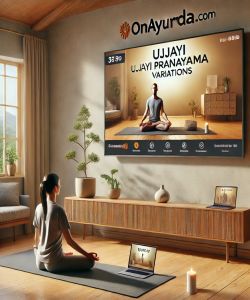
Overview of Ujjayi Pranayama Variations
Ujjayi Pranayama Variations represent a sophisticated and disciplined stratum of yogic respiratory control, extending far beyond the foundational practice of the simple Victorious Breath. These advanced modulations are not mere stylistic alternatives; they constitute a systematic methodology for the deliberate manipulation of prana, the vital life force, to achieve specific physiological, psychological, and energetic outcomes. The practice moves from the gross, audible regulation of breath to the subtle, internal orchestration of life force through the intricate channels, or nadis, of the subtle body. This is achieved by integrating the core Ujjayi technique—a gentle constriction of the glottis creating an oceanic sound—with other potent yogic tools. These include kumbhaka (breath retention), precise temporal ratios (matras) between inhalation, retention, and exhalation, and the application of bandhas (energetic locks) and mudras (seals or gestures). The purpose of these variations is to intensify the effects of the basic practice, enabling the practitioner to cultivate profound states of concentration (dharana), cleanse the pranic field, and awaken dormant psycho-spiritual energies. Mastery of these forms demands unwavering discipline, expert guidance, and a deep understanding of yogic physiology. It is an exacting discipline designed for the serious practitioner who seeks to transition from basic breath awareness to the conscious and authoritative command of their internal energetic architecture, thereby preparing the mind and body for higher states of yogic attainment and meditative absorption. This is not a casual pursuit but a rigorous exploration of the breath’s capacity to serve as a master key to the autonomic nervous system and the deeper layers of consciousness, demanding respect, precision, and unwavering commitment.
What is Ujjayi Pranayama Variations?
Ujjayi Pranayama Variations are advanced forms of controlled yogic breathing that build upon the foundational technique of Ujjayi Pranayama. The base practice involves a partial, gentle closure of the glottis at the back of the throat, which creates a soft, audible, oceanic sound during both inhalation (puraka) and exhalation (rechaka). This sound serves as an auditory feedback mechanism, anchoring the practitioner’s awareness and promoting a state of calm, focused alertness. The variations, however, elevate this practice from a simple respiratory exercise to a potent tool for pranic and mental regulation.
These modulations introduce complex elements designed to amplify and direct the flow of prana. They are not arbitrary but are systematically structured to produce distinct effects on the practitioner’s energetic and nervous systems. Key components integrated into these variations include:
Kumbhaka (Breath Retention): The deliberate suspension of breath is introduced, either after inhalation (Antar Kumbhaka) or after exhalation (Bahir Kumbhaka). This retention phase is critical for building internal pressure, intensifying pranic absorption, and stilling the fluctuations of the mind.
Matra (Ratio and Count): The duration of inhalation, retention, and exhalation are controlled according to specific, prescribed ratios. For instance, a simple ratio might be 1:1:1, while a more advanced practice could demand a ratio of 1:4:2. This rhythmic control disciplines the breath and has profound effects on the autonomic nervous system.
Bandhas (Energetic Locks): The variations often require the concurrent application of Mula Bandha (root lock), Uddiyana Bandha (abdominal lock), and Jalandhara Bandha (throat lock). These locks are engaged to contain, concentrate, and direct the flow of prana upwards along the central energy channel (Sushumna Nadi).
Integration with Asana and Mudra: Certain variations are synchronised with physical postures (asanas) or specific hand gestures (mudras) to channel the generated energy and deepen the practitioner’s internal experience.
In essence, Ujjayi Pranayama Variations are a structured, progressive system for mastering the breath and, by extension, the mind. They represent a significant step beyond basic pranayama, requiring greater skill, concentration, and physiological resilience.
Who Needs Ujjayi Pranayama Variations?
Advanced Yoga Practitioners: Individuals who have firmly established a consistent and proficient practice of foundational Ujjayi Pranayama and are seeking to deepen their understanding and control of prana. They require these variations to progress beyond basic breath awareness into the realm of energetic manipulation.
Serious Meditation Practitioners: Those engaged in rigorous meditation disciplines who require techniques to stabilise the mind and nervous system for extended periods. The variations cultivate profound stillness and one-pointed concentration (dharana), which are prerequisites for deep meditation (dhyana).
Individuals Seeking Advanced Stress Regulation: Professionals and individuals operating in high-pressure environments who have already mastered basic relaxation techniques. These variations offer a more potent and commanding method for regulating the autonomic nervous system, enabling superior resilience against chronic stress.
Yoga Teachers and Therapists: Instructors and therapeutic professionals who must possess a comprehensive and experiential understanding of advanced pranayama to guide their students and clients safely and effectively. They need this knowledge for their own development and to maintain the integrity of their teaching.
Practitioners Preparing for Kriya Yoga: Those on a spiritual path that includes advanced techniques such as Kriya Yoga must first master these pranayama variations. They serve as an essential preparatory stage for purifying the nadis (energy channels) and managing the powerful energies awakened through Kriya practices.
Athletes and Performers in High-Stakes Disciplines: Elite athletes, musicians, or public speakers who need to cultivate exceptional focus, endurance, and physiological control. The disciplined regulation of breath provided by these variations directly translates into enhanced performance and mental fortitude.
Individuals with Stabilised Health Conditions: Persons with specific, non-acute respiratory or cardiovascular conditions who, under strict expert medical and yogic supervision, may use these techniques to improve respiratory efficiency and autonomic balance. This is not for those with active, severe, or uncontrolled health issues.
Students of Yogic Philosophy and Subtle Anatomy: Those who study the theoretical frameworks of prana, nadis, and chakras and wish to gain direct, experiential validation of these concepts. The practice provides a tangible method for perceiving and influencing the body’s subtle energetic systems.
Origins and Evolution of Ujjayi Pranayama Variations
The genesis of Ujjayi Pranayama is deeply embedded in the classical texts of Hatha Yoga, most notably the Hatha Yoga Pradipika and the Gheranda Samhita. In these foundational treatises, Ujjayi is presented not as a multifaceted system of variations but as a singular, powerful technique. It is described as the “Victorious Breath,” a method for calming the mind, heating the body, and cleansing the nadis (energy channels). The original practice was straightforward: a gentle constriction of the throat to produce a subtle, resonant sound, performed to pacify the nervous system and draw the mind inward, making it a crucial preparatory step for deeper states of meditation.
The evolution from this core practice into a complex system of variations reflects the development and systematisation of Hatha and Raja Yoga over centuries. As yogic masters and lineages explored the profound effects of breath control, they began to integrate Ujjayi with other potent techniques to amplify its effects. The introduction of Kumbhaka (breath retention) was a pivotal development, transforming pranayama from a purely regulatory exercise into a powerful tool for pranic accumulation and manipulation. The classical texts themselves allude to the importance of retention, which later masters codified into specific practices combined with the Ujjayi sound.
Further refinement occurred with the formalisation of ratios (matras) and the integration of bandhas (energetic locks). The precise timing of inhalation, retention, and exhalation, coupled with the application of Jalandhara, Uddiyana, and Mula Bandha, marked a significant leap in sophistication. This evolution was driven by a deeper understanding of the subtle body’s anatomy—the nadis and chakras—and the desire to direct prana with surgical precision, particularly along the central channel, Sushumna Nadi. This transformed the practice into a key component of Kundalini and Kriya Yoga traditions.
In the modern era, influential teachers like Sri T. Krishnamacharya and his disciples, including K. Pattabhi Jois and B.K.S. Iyengar, were instrumental in popularising and adapting these techniques. In the Ashtanga Vinyasa system, for example, a continuous, gentle Ujjayi breath is synchronised with asana, representing a dynamic variation. The continued exploration by contemporary masters ensures that the ancient discipline of Ujjayi Pranayama continues to evolve, offering a rich tapestry of variations designed for the dedicated practitioner seeking to master the subtler dimensions of their being.
Types of Ujjayi Pranayama Variations
Sama Vritti Ujjayi: This is the 'equal fluctuation' variation. It involves maintaining a precise and equal duration for both the inhalation (puraka) and the exhalation (rechaka) while employing the Ujjayi sound. For example, a practitioner might inhale for a count of four and exhale for a count of four. This practice establishes rhythm and balance within the autonomic nervous system, promoting a state of calm equilibrium.
Visama Vritti Ujjayi: This is the 'unequal fluctuation' variation, where the durations of inhalation and exhalation are deliberately made unequal. A common form is to double the length of the exhalation compared to the inhalation (e.g., inhale for four counts, exhale for eight). This variation has a pronounced parasympathetic effect, strongly activating the body's relaxation response and calming the mind.
Ujjayi with Antar Kumbhaka (Internal Retention): In this advanced practice, a period of breath retention (kumbhaka) is added after a full inhalation, before the exhalation begins. The Ujjayi sound is maintained during the inhale and exhale, but the breath is held in complete stillness during the retention phase. This variation significantly increases pranic absorption and builds internal energy and focus.
Ujjayi with Bahir Kumbhaka (External Retention): This variation involves adding a period of breath retention after a complete exhalation, before the next inhalation commences. Holding the breath with empty lungs is considered more challenging and is a powerful technique for purifying the nervous system and inducing a state of deep mental quietude and surrender.
Ujjayi with Bandhas: This represents a highly advanced form where the Ujjayi breath cycle (including inhalations, exhalations, and retentions) is combined with the application of one or more energetic locks (bandhas). Typically, Jalandhara Bandha (throat lock) is applied during retention. The full practice, known as Mahabheda Mudra, incorporates all three major locks: Jalandhara, Uddiyana (abdominal), and Mula (root) bandhas, to contain and direct prana with maximum intensity.
Viloma Ujjayi: This is the 'interrupted' Ujjayi variation. The inhalation or exhalation is broken down into several distinct pauses. For instance, one might inhale for two seconds, pause, inhale for another two seconds, pause, and so on, until the lungs are full. This method trains granular control over the respiratory muscles and cultivates immense concentration and breath awareness.
Benefits of Ujjayi Pranayama Variations
Enhanced Autonomic Nervous System Regulation: Systematically modulates the balance between the sympathetic (fight-or-flight) and parasympathetic (rest-and-digest) nervous systems, fostering profound physiological and psychological equilibrium and superior stress resilience.
Increased Respiratory Efficiency and Capacity: The controlled resistance and extended breath cycles strengthen the diaphragm and intercostal muscles, leading to a significant improvement in vital lung capacity and more efficient gaseous exchange at the cellular level.
Profound Mental Concentration (Dharana): The constant auditory feedback from the Ujjayi sound, combined with the complex counting of ratios and retentions, commands the full attention of the mind, eliminating distractions and cultivating unwavering one-pointed focus.
Intensified Pranic Control and Awareness: Moves beyond simple breathing to the conscious manipulation of prana (vital energy). The use of kumbhaka (retention) and bandhas (locks) enables the practitioner to accumulate, contain, and direct this energy through the subtle channels (nadis).
Purification of Energetic Channels (Nadi Shodhana): The sustained and powerful movement of breath and prana, particularly when combined with breath retention, works to cleanse blockages within the nadis, ensuring a smooth and unimpeded flow of vital energy throughout the system.
Thermoregulatory Effects: The gentle friction of air in the glottis generates a subtle internal heat. This warming effect prepares the body for physical practice (asana), detoxifies tissues, and can improve circulatory function.
Preparation for Advanced Meditative States: By steadying the breath and stilling the mind’s fluctuations (vrittis), these variations create the ideal internal environment for transitioning into deeper states of meditation (dhyana) and absorption (samadhi).
Improved Cardiovascular Function: The controlled, rhythmic breathing patterns can lead to improved heart rate variability (HRV), a key indicator of cardiovascular health and adaptability. It helps in stabilising blood pressure and promoting overall cardiac coherence.
Enhanced Mind-Body Connection and Somatic Awareness: The intricate nature of the practice demands a heightened level of internal listening and sensitivity, forging a powerful and conscious connection between mental intention and physiological response.
Cultivation of Inner Stillness and Silence: The practice of Bahir Kumbhaka (external retention), in particular, creates a profound state of emptiness and silence, allowing the practitioner to experience a state of being that transcends the ceaseless activity of the thinking mind.
Core Principles and Practices of Ujjayi Pranayama Variations
Mastery of the Foundational Technique: The absolute, non-negotiable prerequisite is complete proficiency in basic Ujjayi Pranayama. The practitioner must be able to sustain a smooth, consistent, and gentle oceanic sound on both inhalation and exhalation without any strain in the throat, face, or neck. The sound must be an effortless result of glottal control, not forced vocalisation.
Steadiness and Comfort in Posture (Sthira Sukham Asanam): All variations must be performed in a stable, upright, and comfortable seated posture, typically Padmasana, Siddhasana, or a similar meditative seat. The spine must remain erect to allow for the unimpeded movement of the diaphragm and the free flow of prana along the Sushumna Nadi.
Progressive and Systematic Application: Practitioners must progress logically and patiently. One must first master simple ratios (Sama Vritti) before attempting complex ones (Visama Vritti). Similarly, retention (Kumbhaka) must only be introduced after the breath pattern is perfectly stable, starting with short durations and gradually extending them without any gasping or strain.
Integration of Bandhas (Energetic Locks): The application of bandhas is integral to advanced variations. Jalandhara Bandha (throat lock) is essential during internal retention to protect the brain and regulate pressure. Uddiyana Bandha (abdominal lock) and Mula Bandha (root lock) are engaged to prevent the dissipation of prana and redirect it upwards. Their application must be precise and well-timed.
Primacy of Breath over Count: While ratios and counts (matras) are a critical tool for discipline, the quality of the breath must never be sacrificed for the sake of achieving a numerical target. The breath must remain smooth, subtle, and controlled. If strain, dizziness, or agitation occurs, the practitioner must immediately revert to a simpler, more manageable ratio or cease the practice.
Awareness Directed Inward (Pratyahara): The ultimate purpose is to internalise consciousness. The sound of the breath, the sensation of airflow, and the feeling of pranic movement serve as anchors to draw the senses away from external stimuli. The entire practice is a dynamic exercise in sensory withdrawal.
Guidance from a Competent Guru: These are not techniques to be learned from books or videos alone. The subtleties of pranic flow, the safe application of kumbhaka and bandhas, and the management of potential energetic phenomena require the direct supervision and guidance of an experienced and qualified teacher who can assess the practitioner's readiness and provide necessary corrections.
Online Ujjayi Pranayama Variations
Unparalleled Accessibility to Expert Instruction: An online platform dismantles geographical barriers, providing practitioners with direct access to highly specialised and authoritative teachers from established lineages anywhere in the world. This democratises the transmission of advanced knowledge that was previously confined to specific ashrams or studios.
Structured and Disciplined Learning Environment: A well-designed online course imposes a rigorous, systematic curriculum. It forces the practitioner to master each stage—from foundational Ujjayi to Sama Vritti, Visama Vritti, and the introduction of Kumbhaka—in a logical, sequential manner, preventing the dangerous practice of attempting advanced techniques prematurely.
Repeatable and Reviewable Content: The digital format allows for the indefinite review of instructional material. Complex concepts such as the precise engagement of bandhas or the nuances of specific breath ratios can be studied repeatedly until they are fully understood and integrated, a luxury not afforded by a single in-person session.
Cultivation of Self-Reliance and Internal Awareness: Practising in a solitary online environment necessitates a heightened degree of self-discipline and internal focus. The practitioner is compelled to become their own primary observer, developing a more acute sensitivity to the subtle internal feedback of their body and energetic system, rather than relying on the external validation of a physically present instructor.
Personalised Pacing and Integration: Online modules enable the practitioner to progress at a pace dictated by their own capacity and readiness. They can spend weeks or months consolidating one particular variation before moving to the next, ensuring a thorough and safe integration of the practice without the pressure of keeping up with a group class.
Creation of a Dedicated Personal Practice Space: Engaging with the practice online requires the conscious creation of a controlled and sanctified space within one’s own home. This act fosters a powerful and consistent personal discipline, turning a part of the domestic environment into a dedicated sanctuary for profound inner work.
Direct and Focused Feedback Mechanisms: Professional online platforms offer structured methods for feedback, such as one-on-one video calls or detailed analysis of recorded practice sessions. This can provide even more focused and individualised guidance than might be possible in a crowded group setting, addressing the specific challenges and progress of the individual practitioner.
Ujjayi Pranayama Variations Techniques
Foundation: Establish Basic Ujjayi Breath:
Assume a stable, upright meditative posture with an erect spine.
Relax the facial muscles, jaw, and tongue.
Begin to breathe naturally through the nostrils.
Gently and partially constrict the glottis at the back of the throat, as if about to whisper.
Inhale and exhale slowly through the nostrils, creating a soft, continuous, and audible "ocean" or "hissing" sound. Ensure the sound is smooth and consistent throughout the entire breath cycle, without strain. Practise until this becomes effortless.
Technique A: Sama Vritti Ujjayi (Equal Ratio):
Maintain the foundational Ujjayi breath.
Introduce a mental count. Inhale for a count of four.
Without pausing, exhale for an identical count of four.
Continue this 4:4 cycle for several rounds, ensuring the breath remains fluid and the sound constant. Gradually, if comfortable, the count can be extended to five, six, or beyond, but the ratio must remain 1:1.
Technique B: Visama Vritti Ujjayi (Unequal Ratio):
Establish a steady Sama Vritti Ujjayi (e.g., 4:4 count).
Begin to extend the exhalation. Inhale for a count of four.
Exhale for a count of six.
After several rounds, progress to exhaling for a count of eight, establishing a 1:2 ratio (4:8).
The exhalation must remain completely smooth and controlled, without any sudden release of air at the end.
Technique C: Ujjayi with Antar Kumbhaka (Internal Retention):
This technique must only be attempted after mastering the above ratios.
Begin with Sama Vritti Ujjayi (e.g., 4:4).
Inhale for a count of four.
At the peak of the inhalation, retain the breath for a count of four. It is advised to apply Jalandhara Bandha (throat lock) during this retention.
Release the lock, then exhale for a count of four.
This establishes a 1:1:1 ratio (4:4:4). This can be progressively developed into more advanced ratios like 1:2:2 (e.g., 4:8:8) or 1:4:2 (e.g., 4:16:8) under expert guidance.
Ujjayi Pranayama Variations for Adults
The application of Ujjayi Pranayama Variations for the adult practitioner is a matter of profound discipline and mature self-regulation, far removed from elementary breathing exercises. For the adult, these practices serve as a formidable tool for mastering the autonomic nervous system, a system often dysregulated by the cumulative pressures of professional and personal life. The systematic layering of complexity—from simple rhythmic breathing (Sama Vritti) to the deliberate extension of the exhalation (Visama Vritti)—provides a direct and tangible method for down-regulating the stress response and cultivating a state of unwavering internal composure. The introduction of breath retention (Kumbhaka) demands a higher level of physiological and psychological fortitude, compelling the adult mind to confront and transcend its habitual patterns of anxiety and agitation. This is not a passive relaxation technique; it is an active, commanding practice of self-mastery. It requires the adult to engage with their own physiology with precision and intelligence, using the breath as an instrument to sculpt their internal state. The integration of bandhas (energetic locks) further deepens this control, transforming the practice into a sophisticated method of energetic hygiene and optimisation. For the discerning adult, these variations are not a mere hobby but a strategic methodology for enhancing mental clarity, emotional stability, and overall resilience, enabling them to navigate the complexities of their lives with greater authority and presence. It is a commitment to the rigorous, internal work necessary for achieving a state of unshakable psycho-physiological equilibrium. This requires patience, consistency, and an unwavering respect for the potency of the techniques being employed.
Total Duration of Online Ujjayi Pranayama Variations
The total duration allocated for a single, focused online session dedicated to the practice and instruction of Ujjayi Pranayama Variations must be precisely structured. A session of 1 hr provides the necessary and sufficient timeframe to engage with these advanced techniques in a manner that is both rigorous and safe. This duration is not arbitrary; it is a calculated allocation of time that allows for a systematic progression through the essential phases of the practice. It ensures there is adequate time for initial centering and establishment of the foundational Ujjayi breath, followed by a substantial period dedicated to the specific variation being studied—be it ratio work, retention, or the integration of bandhas. Furthermore, the 1 hr duration accommodates the critical inclusion of a concluding relaxation or integration phase, such as Savasana or silent observation, which is imperative for allowing the nervous system to absorb and normalise the profound effects of the pranayama. Attempting to compress this level of practice into a shorter period would be irresponsible, risking strain and compromising the integrity of the techniques. Conversely, extending the session without due cause or expert assessment could lead to fatigue or energetic over-stimulation. Therefore, the 1 hr standard represents a disciplined and effective container for this potent work, balancing intense practice with necessary preparation and integration, ensuring the practitioner derives maximal benefit without incurring undue risk. It is a benchmark of professional structure and respect for the discipline's demands.
Things to Consider with Ujjayi Pranayama Variations
Before embarking upon the practice of Ujjayi Pranayama Variations, a number of critical factors must be rigorously considered. This is not a discipline to be approached casually or without due preparation. First and foremost is the practitioner's foundational stability; proficiency in the basic, unadorned Ujjayi breath is an absolute prerequisite. Any attempt to introduce retentions or complex ratios without this mastery is both premature and hazardous. One must also conduct an honest self-assessment of their physical and psychological constitution. Individuals with uncontrolled hypertension, serious cardiac conditions, glaucoma, or any acute respiratory illness must abstain from these practices, particularly those involving breath retention (Kumbhaka), until they have received explicit clearance from a qualified medical professional and are under the direct supervision of an expert yoga teacher. The environment for practice is another crucial consideration. It must be a quiet, clean, and well-ventilated space, free from distractions, to facilitate the deep inward focus that these techniques demand. Furthermore, the practitioner must commit to a principle of radical honesty and non-aggression (ahimsa) towards themselves. The ego’s desire to achieve longer retentions or more complex ratios must be subordinated to the body’s authentic feedback. Any sign of dizziness, headache, anxiety, or physical strain is an unequivocal signal to cease the practice and revert to a simpler form. Finally, the necessity of qualified guidance cannot be overstated. These potent techniques can unleash significant energetic and psychological phenomena, and navigating them safely requires the wisdom and experience of a teacher who has trodden the path themselves.
Effectiveness of Ujjayi Pranayama Variations
The effectiveness of Ujjayi Pranayama Variations is unequivocal and profound, provided they are executed with precision, discipline, and under appropriate guidance. Their efficacy is not a matter of subjective belief but is rooted in their direct and commanding influence over the autonomic nervous system and the flow of prana. By manipulating the core parameters of respiration—rate, depth, rhythm, and the introduction of apneic pauses—these variations serve as a master control panel for one’s psycho-physiological state. The extension of the exhalation, as seen in Visama Vritti, has a potent, scientifically observable vagal-stimulatory effect, inducing a deep state of parasympathetic dominance, which is the physiological bedrock of calm and recovery. The introduction of Kumbhaka (retention) is where the practice demonstrates its most powerful effects. By temporarily suspending respiration, the practitioner dramatically increases CO2 tolerance, enhances cellular oxygenation upon resumption of breathing, and creates a state of profound mental stillness that is otherwise unattainable through mere concentration. This disciplined interruption of the breath pattern directly challenges and re-conditions the brain's survival instincts, forging immense mental fortitude and emotional resilience. Furthermore, when integrated with bandhas, the practice becomes a highly effective system for the purification and redirection of subtle energy, leading to heightened vitality and preparing the entire system for advanced states of meditation. The effectiveness is therefore not in question; it is a direct consequence of the rigorous application of sophisticated yogic science to the human body and mind. The results are tangible, measurable, and transformative.
Preferred Cautions During Ujjayi Pranayama Variations
A stringent and uncompromising approach to safety is imperative when engaging in Ujjayi Pranayama Variations, as their potency demands absolute respect. It is crucial to cease practice immediately and revert to normal breathing at the first sign of any adverse reaction, including dizziness, light-headedness, headache, nausea, or a sudden onset of anxiety or agitation. These are not signs of progress to be pushed through; they are unequivocal signals from the body that a boundary has been crossed. The practitioner must never force the breath or strain to meet a predetermined count or retention duration. The principle of 'sthira sukham' (steadiness and ease) must be the governing authority, where the quality and smoothness of the breath take absolute precedence over quantitative goals. Particular caution must be exercised with Kumbhaka (breath retention). Individuals with any history of cardiovascular issues, including hypertension or hypotension, glaucoma, hernias, or recent surgery, must avoid retention practices entirely unless explicitly sanctioned and supervised by both a medical doctor and a highly experienced yoga therapist. Pregnant women must not, under any circumstances, practise any variation involving breath retention or forceful abdominal contraction. Furthermore, these practices should never be performed on a full stomach; a minimum of three to four hours should elapse after a substantial meal. The practitioner must remain vigilant against the ego’s ambition, which can drive one to progress too quickly. Patience is not a virtue here; it is a fundamental safety requirement. Disregarding these cautions is an act of profound irresponsibility.
Ujjayi Pranayama Variations Course Outline
Module 1: Foundational Mastery and Principles
Unit 1.1: Deconstruction and perfection of the core Ujjayi breath. Achieving a smooth, consistent, and strain-free sound.
Unit 1.2: Establishing a stable and correct meditative posture (Asana). Spinal alignment and pelvic stability.
Unit 1.3: Theoretical framework: Introduction to Prana, Nadis, and the purpose of Pranayama. Safety protocols and contraindications.
Module 2: Rhythmic Regulation (Vritti Pranayama)
Unit 2.1: Introduction to Sama Vritti Ujjayi (Equal Ratio Breathing). Establishing a 1:1 inhalation-to-exhalation ratio.
Unit 2.2: Gradual extension of the Sama Vritti count without compromising breath quality.
Unit 2.3: Introduction to Visama Vritti Ujjayi (Unequal Ratio Breathing). Mastering the 1:2 inhalation-to-exhalation ratio for parasympathetic activation.
Module 3: Introduction to Breath Retention (Kumbhaka)
Unit 3.1: Theory and safe practice of Antar Kumbhaka (Internal Retention). Introduction to Jalandhara Bandha (Throat Lock).
Unit 3.2: Practice of Ujjayi with Antar Kumbhaka in a simple 1:1:1 ratio.
Unit 3.3: Gradual and cautious extension of the internal retention period, moving towards a 1:2:2 ratio.
Module 4: Advanced Retention and Energetic Locks
Unit 4.1: Theory and safe practice of Bahir Kumbhaka (External Retention). Understanding its profound mental effects.
Unit 4.2: Practice of Ujjayi with Bahir Kumbhaka, starting with short, comfortable pauses after exhalation.
Unit 4.3: Introduction to Mula Bandha (Root Lock) and Uddiyana Bandha (Abdominal Lock).
Unit 4.4: Integrated practice: Combining Ujjayi, Kumbhaka, and the Tri-Bandha (three locks) under strict guidance.
Module 5: Dynamic and Subtle Variations
Unit 5.1: Introduction to Viloma Ujjayi (Interrupted Breath) to cultivate granular respiratory control.
Unit 5.2: Exploring the application of Ujjayi in a dynamic context (Vinyasa).
Unit 5.3: Developing subtle Ujjayi (Anuloma Ujjayi) for use in deep meditation.
Unit 5.4: Final assessment, integration, and development of a personalised daily practice schedule.
Detailed Objectives with Timeline of Ujjayi Pranayama Variations
Weeks 1-2: Objective - Foundational Proficiency.
By the end of week two, the practitioner will demonstrate complete mastery of the basic Ujjayi breath, able to sustain a smooth, audible, and strain-free breath for a minimum of 15 continuous minutes in a stable seated posture. They will understand the core principles of diaphragmatic breathing and glottal control.
Weeks 3-4: Objective - Rhythmic Mastery.
By the end of week four, the practitioner will be proficient in both Sama Vritti Ujjayi (equal ratio) and Visama Vritti Ujjayi (unequal ratio). They will be able to comfortably maintain a 1:2 inhalation-to-exhalation ratio (e.g., 4-second inhale, 8-second exhale) for at least 10 minutes, demonstrating control over the pace and rhythm of their breath.
Weeks 5-6: Objective - Safe Introduction to Internal Retention.
By the end of week six, the practitioner will have safely integrated Antar Kumbhaka (internal retention) into their practice. They will be able to correctly apply Jalandhara Bandha (throat lock) during retention and comfortably practice a 1:1:1 ratio (e.g., 4:4:4) for several rounds without experiencing any strain, dizziness, or anxiety.
Weeks 7-8: Objective - Consolidation and Extension of Retention.
By the end of week eight, the practitioner will have extended their internal retention capacity, moving towards a 1:2:2 ratio (e.g., 4:8:8). The objective is not maximum duration, but the ability to maintain the ratio with complete physiological and psychological calm.
Weeks 9-10: Objective - Introduction to Advanced Locks and External Retention.
By the end of week ten, the practitioner will understand the theory and basic application of Mula Bandha and Uddiyana Bandha. They will also have been introduced to the more challenging practice of Bahir Kumbhaka (external retention), holding the breath out for short, comfortable durations.
Weeks 11-12: Objective - Integration and Self-Sufficient Practice.
By the end of week twelve, the practitioner will be able to structure a personal practice session incorporating a variety of Ujjayi variations appropriate to their capacity. They will be able to self-assess their state and choose the correct technique—be it for calming, energising, or meditative preparation—and demonstrate an understanding of all safety protocols for independent practice.
Requirements for Taking Online Ujjayi Pranayama Variations
Unwavering Self-Discipline: The practitioner must possess a high degree of personal commitment and the ability to adhere to a structured, progressive practice schedule without direct, physical supervision.
Stable, High-Speed Internet Connection: A reliable and uninterrupted internet service is non-negotiable. This is essential for clear, real-time audio and visual communication during live instructional sessions and for the seamless streaming of pre-recorded materials.
High-Quality Audio and Video Equipment: A functional webcam and a clear microphone are mandatory. The instructor must be able to visually assess the practitioner's posture and physical cues and clearly hear the quality and sound of the Ujjayi breath for accurate guidance and correction.
A Dedicated and Conducive Practice Space: The practitioner must designate a specific, private, and quiet area for their practice. This space must be free from household distractions, interruptions, and background noise to allow for the deep concentration that these techniques demand.
Proficiency in Foundational Yoga Practice: A prerequisite of at least one year of consistent Hatha or Vinyasa yoga practice is required. The participant must already be familiar with basic yogic principles, posture (asana), and, most critically, must have an established, comfortable practice of the simple Ujjayi breath.
Technical Competence: The individual must be proficient in using the required online platform (e.g., Zoom, dedicated course portals). This includes managing their own audio/video settings, accessing course materials, and communicating effectively through the digital interface.
Mature and Honest Self-Assessment: The practitioner must possess the maturity to practise with radical honesty, respecting their body’s limits without ego or ambition. They must be capable of recognising signs of strain or overexertion and have the discipline to cease or modify the practice accordingly.
Commitment to the Full Curriculum: The participant must agree to follow the course structure sequentially and not attempt to skip modules or practise advanced techniques before mastering the foundational stages. This commitment to the prescribed learning path is essential for safety and efficacy.
Things to Keep in Mind Before Starting Online Ujjayi Pranayama Variations
Before commencing an online course in Ujjayi Pranayama Variations, it is imperative to adopt a mindset of rigorous self-responsibility and discernment. The digital medium, while convenient, places a greater onus on the practitioner to be their own primary guardian of safety and integrity. You must understand that the instructor's ability to perceive subtle signs of distress—such as changes in skin tone, minor facial tension, or slight postural shifts—is inherently limited through a screen. Therefore, you are required to cultivate a heightened state of internal vigilance and somatic awareness. It is your non-delegable duty to communicate any and all sensations of discomfort, strain, or psychological disturbance to your instructor with absolute clarity and immediacy. Furthermore, you must resist the temptation to treat this profound discipline as mere information acquisition. These are not intellectual exercises; they are potent experiential practices that will have a direct and powerful impact on your nervous system and energetic body. You must commit to creating a sanctified and inviolable space for your practice, ensuring it is free from the pervasive distractions of the digital and domestic worlds. The screen is a portal to the teaching, not an invitation for multitasking. Finally, vet your chosen instructor with extreme prejudice. Investigate their lineage, their depth of personal practice, and their experience in teaching these specific techniques online. Your progress and, more importantly, your safety, are contingent upon the quality and integrity of the guidance you choose to accept. This is a serious undertaking, not a casual online class.
Qualifications Required to Perform Ujjayi Pranayama Variations
To perform, and more critically, to teach Ujjayi Pranayama Variations with authority and integrity, an individual must possess qualifications that extend far beyond a standard yoga teacher certification. The requisite expertise is built upon a deep and multi-layered foundation of theoretical knowledge, extensive personal practice, and proven pedagogical skill. A formal, advanced certification in Pranayama is the absolute minimum requirement, typically entailing several hundred hours of dedicated study specifically on the science and application of respiratory control. This education must have been received from a reputable school or a direct teacher within an established, authentic lineage.
However, paper qualifications alone are insufficient. The primary qualification is a profound and sustained personal practice. The instructor must have spent years, not months, diligently practising these specific variations themselves. This long-term, embodied experience is non-negotiable, as it is the only way to gain an intimate understanding of the subtle energetic effects, potential pitfalls, and profound psychological shifts that these techniques can induce. They must have personally navigated the challenges of Kumbhaka and the integration of Bandhas under the guidance of their own senior teacher.
Furthermore, a qualified individual must demonstrate:
A comprehensive understanding of yogic and modern anatomy and physiology: This includes a detailed knowledge of the respiratory system, the autonomic nervous system, and the traditional yogic concepts of Prana, Nadis, and Chakras.
The ability to assess a student’s readiness: They must possess the discernment to recognise when a student is physically and psychologically prepared to move from foundational practices to more advanced variations, and the authority to hold them back when they are not.
Exceptional communication skills: They must be able to convey complex, subtle instructions with absolute clarity and precision, ensuring the student’s safety and correct execution of the technique.
In essence, the true qualification is a synthesis of rigorous training, deep personal immersion, and the wisdom born of long experience.
Online Vs Offline/Onsite Ujjayi Pranayama Variations
Online
The online modality for learning Ujjayi Pranayama Variations offers a unique blend of accessibility and disciplined self-reliance. Its primary advantage is the dissolution of geographical constraints, granting practitioners access to elite, specialist instructors who would otherwise be unreachable. The learning environment is highly structured; a well-designed digital curriculum enforces a systematic, sequential progression, preventing students from prematurely attempting dangerous techniques. Content can be reviewed repeatedly, allowing for the meticulous study of complex instructions regarding bandhas or breath ratios. This format demands and cultivates a heightened degree of internal awareness and self-discipline, as the practitioner must become the primary observer of their own internal state without the constant presence of a teacher. However, the online format is limited by the digital interface. An instructor's ability to perceive subtle, crucial physiological cues—such as minor strain in the neck, slight changes in complexion, or the subtle energetic state of the student—is significantly diminished. This places a greater burden of responsibility for safety squarely on the shoulders of the practitioner.
Offline/Onsite
The offline, or onsite, learning environment provides an irreplaceable level of direct, nuanced guidance. A physically present, expert instructor can offer immediate, hands-on adjustments and verbal cues based on direct observation of the student’s entire being. They can hear the precise quality of the Ujjayi sound, see the subtlest signs of physical strain, and sense the student's energetic state, providing a layer of safety and refinement that is difficult to replicate online. The shared energy of a dedicated practice space (shala) can also be profoundly supportive and focusing, creating a powerful container for deep inner work. The primary disadvantages are logistical. Access is limited by geography and scheduling, and the cost of attending specialised workshops or one-on-one sessions can be significant. Furthermore, in a group setting, individual attention may be diluted, and the pace of the class may not perfectly match every individual's capacity, potentially creating pressure to progress too quickly. The reliance on the teacher's presence may also slow the development of the student's own self-observational skills.
FAQs About Online Ujjayi Pranayama Variations
Question 1. Is it safe to learn advanced pranayama online?
Answer: It is safe only if undertaken with an exceptionally qualified teacher, through a highly structured curriculum, and on the condition that the practitioner possesses unwavering self-discipline and honesty regarding their physical and mental state.
Question 2. What are the minimum technical requirements?
Answer: A stable, high-speed internet connection, a high-quality webcam, and a clear microphone are non-negotiable. The instructor must be able to see and hear you with absolute clarity.
Question 3. Do I need prior experience?
Answer: Yes. A solid foundation in basic asana and complete mastery of the simple Ujjayi breath for a sustained period is an absolute prerequisite. This is not for beginners.
Question 4. How can a teacher correct me online?
Answer: Through precise verbal cues based on visual observation of your posture and listening intently to the sound of your breath. For this reason, excellent audio-visual equipment is mandatory.
Question 5. What if I feel dizzy or unwell during the practice?
Answer: You must cease the technique immediately, return to normal, gentle breathing, and inform your instructor without delay. Do not attempt to push through any adverse sensations.
Question 6. Can I practise retention (Kumbhaka) learned online?
Answer: Only after progressing through a systematic curriculum that prepares you for it, and only under the live, real-time supervision of your instructor. Unsupervised retention practice is hazardous.
Question 7. What is the main advantage of learning online?
Answer: Unparalleled access to world-class, specialist instructors regardless of your geographical location.
Question 8. What is the main disadvantage?
Answer: The instructor's inability to provide physical adjustments or perceive subtle energetic and physiological cues, placing a greater responsibility for safety on you.
Question 9. How do I choose a credible online teacher?
Answer: Investigate their lineage, their years of personal practice, their specific qualifications in teaching pranayama, and seek testimonials from previous students. Be extremely discerning.
Question 10. Do I need any special equipment besides a computer?
Answer: A proper meditation cushion or bench to ensure a stable, upright posture, and a quiet, dedicated space free from all distractions.
Question 11. How long does it take to master these variations online?
Answer: Mastery is a lifelong pursuit. A structured online course will provide the foundational competence over several months, but true proficiency requires years of dedicated personal practice.
Question 12. Is a group class or one-on-one session better online?
Answer: For these advanced techniques, one-on-one sessions are vastly superior as they allow for completely individualised instruction and safety monitoring.
Question 13. What if my internet connection fails during a session?
Answer: You must have a pre-agreed safety protocol with your instructor. This typically involves immediately ceasing the practice and reverting to gentle, normal breathing until you can reconnect.
Question 14. Are pre-recorded courses effective for this?
Answer: Pre-recorded materials are excellent for theoretical study and reviewing techniques, but the actual practice of advanced variations, especially with Kumbhaka, must be supervised in a live setting.
Question 15. Can I practice if I have high blood pressure?
Answer: You must obtain explicit clearance from your medical doctor first. Even with clearance, you must inform your instructor, and practices involving strong retention are likely contraindicated.
Question 16. What is the ideal time of day to practice?
Answer: Early morning, before breakfast, is traditionally considered the most effective time, as the mind is clearer and the body is empty.
Conclusion About Ujjayi Pranayama Variations
In conclusion, Ujjayi Pranayama Variations constitute a formidable and highly sophisticated yogic discipline, designed for the serious practitioner committed to the mastery of their internal state. They are not to be mistaken for simple breathing exercises or relaxation techniques. Instead, they represent a precise, systematic methodology for the regulation of the autonomic nervous system and the conscious manipulation of prana. The successful application of these techniques—incorporating specific ratios, breath retentions, and energetic locks—demands an uncompromising foundation in the basic Ujjayi breath, a stable body, and a disciplined mind. The practice is a rigorous journey from the gross control of muscular respiration to the subtle command of the body’s vital energies. Its efficacy in cultivating profound concentration, emotional equilibrium, and physiological resilience is undeniable, but this potency is directly proportional to the risks involved if approached with ignorance, impatience, or ego. Therefore, the imperative of seeking guidance from a genuinely qualified and experienced teacher cannot be overstated. Ultimately, these variations are a powerful tool for self-transformation, offering a direct pathway to still the fluctuations of the mind and prepare the consciousness for the deeper, more subtle realms of yogic inquiry and meditative absorption. It is a discipline that commands, and deserves, the utmost respect, diligence, and unwavering commitment.