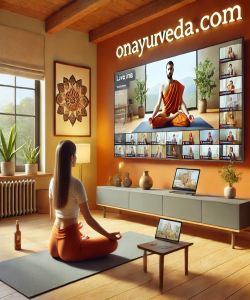
Overview of Vishama Vritti
Vishama Vritti represents a fundamental state of physiological and psychological incoherence, manifesting as irregular, uneven, and disturbed patterns of respiration. This condition is not to be misconstrued as a mere superficial habit; it is the definitive somatic expression of a turbulent mind, or ‘citta vritti’, as articulated in classical yogic philosophy. The erratic nature of the breath—characterised by inconsistent depth, fluctuating rhythm, and involuntary pauses or gasps—is a direct corollary to mental states of anxiety, fear, agitation, and distraction. It signals a dysregulation within the autonomic nervous system, typically a dominance of the sympathetic ‘fight or flight’ response, which perpetuates a vicious cycle of stress and reactivity. To engage with Vishama Vritti is to confront the primary obstacle to mental stillness and physiological equilibrium. The ancient science of pranayama is predicated on the principle that the breath is the most direct and accessible mechanism for influencing the mind. Therefore, the systematic observation and subsequent regulation of these chaotic breathing patterns is the non-negotiable prerequisite for any meaningful progress in advanced contemplative or meditative disciplines. It is the foundational work required to pacify the nervous system, sharpen concentration, and cultivate emotional resilience. The transition from the chaotic state of Vishama Vritti to the deliberate, smooth, and balanced cadence of ‘Sama Vritti’ (equal breathing) is not simply a breathing exercise; it is the essential act of imposing conscious order upon autonomic chaos, thereby establishing the stable internal platform from which higher states of awareness and self-mastery can be launched. It is the vital first step in transforming the body from a reactor to a regulated instrument of will.
What is Vishama Vritti?
Vishama Vritti is a Sanskrit term that translates directly to ‘uneven fluctuation’ or ‘irregular movement’, and within the context of yogic science, it refers specifically to a state of erratic and disharmonious respiration. This is not a formal medical diagnosis but a precise descriptive term for a breathing pattern that is symptomatic of underlying mental and emotional disturbance. It is the physiological signature of a mind that is not at ease. The irregularity of Vishama Vritti is multi-faceted, encompassing several distinct but interrelated characteristics that must be understood to be corrected.
The core components of this dysfunctional respiratory state are as follows:
Rhythmic Inconsistency: The breath lacks a steady, predictable cadence. The duration of inhalations and exhalations fluctuates randomly, and the natural pauses between breaths are either spasmodic or excessively prolonged. This erratic timing mirrors a scattered and unfocused mental state.
Depth Variability: The volume of air exchanged is inconsistent. The practitioner may unconsciously shift between deep, full breaths and shallow, thoracic (chest-based) breathing. This is often a direct physical manifestation of emotional volatility, with shallow breathing being a hallmark of anxiety and fear.
Lack of Smoothness: The flow of air is not continuous or seamless. It is frequently characterised by jerkiness, hitches, or a sense of strained effort. Audible breathing, such as sighing, gasping, or sniffing, is a common indicator of this lack of smoothness, signalling significant underlying tension.
Asymmetrical Airflow: Often, the flow of air is imbalanced between the left and right nostrils. In yogic physiology, this corresponds to a dysregulation between the Ida and Pingala nadis, the subtle energy channels linked to the parasympathetic and sympathetic nervous systems respectively.
Ultimately, Vishama Vritti is the somatic evidence of a dysregulated autonomic nervous system. It is both a cause and a consequence of stress, perpetuating a feedback loop of mental agitation and physiological arousal. The practices of pranayama are designed specifically to dismantle this pattern and replace it with conscious, regulated, and harmonious breathing, thereby pacifying the mind.
Who Needs Vishama Vritti?
The imperative to address and systematically correct the condition of Vishama Vritti is not limited to a narrow subset of individuals but extends to any person seeking to establish command over their internal state. The need is most acute for the following groups:
Individuals experiencing chronic stress, generalised anxiety disorders, or panic attacks. For these persons, erratic breathing is a core physiological driver of their condition, and learning to regulate it provides a direct, non-pharmacological tool for symptom management and nervous system pacification.
Practitioners of meditation, mindfulness, and other contemplative disciplines. Progress in such fields is fundamentally impossible without a stable and calm breath. Vishama Vritti is the primary obstacle to achieving sustained concentration (Dharana) and deeper meditative states (Dhyana).
Professionals operating in high-pressure, high-stakes environments, such as executives, first responders, or military personnel. The ability to maintain cognitive clarity and emotional composure under duress is directly linked to the ability to regulate one's physiological stress response, for which breath control is the most immediate mechanism.
Athletes and performers seeking to optimise their physiological performance and recovery. Efficient, rhythmic breathing is essential for maximising oxygen uptake, managing exertion, and accelerating the body’s return to a parasympathetic state post-activity.
Individuals struggling with emotional dysregulation and reactive mood swings. As the breath and emotions are inextricably linked, developing conscious control over respiration provides a powerful method for modulating emotional intensity and preventing volatile reactions.
Students of yoga aiming to progress beyond physical postures (asana) into the more subtle and advanced limbs of the practice. Pranayama, the science of breath control, is the necessary bridge, and correcting Vishama Vritti is its foundational, non-negotiable starting point.
Any adult seeking to mitigate the long-term health consequences of a chronically activated sympathetic nervous system, including hypertension and compromised immune function.
Persons engaged in public speaking, teaching, or leadership roles, for whom a calm and controlled breath engenders an aura of authority, confidence, and presence.
Origins and Evolution of Vishama Vritti
The conceptual origins of Vishama Vritti are deeply embedded in the foundational texts of classical yoga, most notably Patanjali's Yoga Sutras. While the specific term ‘Vishama Vritti’ is not explicitly isolated in the Sutras, its underlying principle is central to the entire yogic project. Patanjali's second sutra, "Yogas-chitta-vritti-nirodhah," defines yoga as the cessation of the fluctuations of the mind. The ancient yogis recognised the inextricable link between the breath (prana) and the mind (citta), understanding that an agitated mind invariably produces an agitated breath, and vice versa. The breath was identified as the most tangible and accessible lever for influencing the otherwise intractable movements of consciousness. Therefore, the entire science of pranayama, as a limb of yoga, was developed precisely to address and master these irregular fluctuations.
Later texts, particularly those of the Hatha Yoga tradition such as the Hatha Yoga Pradipika and the Gheranda Samhita, provided explicit and systematic techniques to transition from this erratic state to one of mastery. These manuals codified practices like Nadi Shodhana (alternate nostril breathing) and Sama Vritti (equal breathing), which are direct antidotes to the physiological and energetic imbalances represented by Vishama Vritti. In this historical context, correcting irregular breathing was not merely a health practice but a critical component of spiritual technology, designed to purify the subtle energy channels (nadis) and prepare the practitioner for higher states of consciousness and meditation.
The evolution of the concept into the modern era has seen it translated through a more secular and scientific lens. Pioneers of modern yoga, such as T. Krishnamacharya and his influential students, began to articulate these ancient practices in terms of their physiological and therapeutic benefits. In contemporary understanding, Vishama Vritti is now mapped directly onto the functioning of the autonomic nervous system. Scientific research has validated the yogic premise, demonstrating how conscious, regulated breathing directly influences heart rate variability (HRV), vagal tone, and the balance between the sympathetic and parasympathetic systems. Today, the work of correcting Vishama Vritti is a cornerstone of yoga therapy, mindfulness-based stress reduction, and performance psychology, representing the evolution of an ancient contemplative principle into a powerful, evidence-based tool for modern self-regulation.
Types of Vishama Vritti
Vishama Vritti is not a monolithic condition; it manifests in several distinct patterns of respiratory dysfunction. A precise identification of the specific type of irregularity is essential for the targeted application of corrective techniques. The primary types are as follows:
Erratic Rhythm (Laya Vishama): This is the most common form, characterised by a complete absence of a consistent cadence. The duration of the inhalation, the exhalation, and the pauses between them are unpredictable and fluctuate without logic. This type is a direct reflection of a scattered, chaotic, and distracted mind (citta vikshepa), where thoughts arise in a disorderly and uncontrolled fashion.
Depth Inconsistency (Gambhira-Alpa Vishama): This type pertains to the volume of air being exchanged. It is marked by an unconscious and erratic shifting between deep, diaphragmatic breaths and very shallow, thoracic (chest) breaths. Shallow breathing is a classic physiological marker of the 'fight or flight' response, indicating a state of anxiety, fear, or high alert. The inconsistency reflects an unstable emotional and energetic state.
Forced or Laboured Breathing (Prayatna Vishama): This is identified by the presence of excessive effort and muscular tension in the act of breathing. It is often audible, manifesting as gasping, sighing, wheezing, or audible nasal friction. This indicates a significant level of physical and psychological bracing, where the practitioner is unconsciously resisting the natural flow of breath, reflecting deep-seated tension or resistance.
Interrupted or Jerky Breathing (Khanda Vishama): In this pattern, the flow of breath is not smooth and continuous. Instead, it is fragmented, with noticeable hitches, catches, or stutters during either the inhalation or exhalation. This jerky quality is often a somatic expression of nervousness, fear, or unresolved trauma, where the natural respiratory cycle is being unconsciously disrupted by neurological signals of alarm.
Asymmetrical Flow (Nadi Vishama): This refers to a significant and persistent imbalance in the flow of air between the left and right nostrils. From a yogic perspective, this indicates an imbalance between the Ida (parasympathetic-associated) and Pingala (sympathetic-associated) energy channels. Physiologically, it reflects a dysregulation in the autonomic nervous system and hemispheric brain activity.
Benefits of Vishama Vritti
The systematic correction of Vishama Vritti yields profound and multi-layered benefits, impacting every aspect of an individual’s physiological and psychological well-being. These are not speculative advantages but direct consequences of restoring autonomic nervous system balance. The principal benefits are:
Direct Autonomic Nervous System Regulation: Provides a powerful, non-pharmacological method for down-regulating the sympathetic (stress) response and up-regulating the parasympathetic (rest and digest) response, leading to a measurable reduction in stress hormones.
Enhanced Mental Clarity and Concentration: A stable, rhythmic breath is the prerequisite for a stable, focused mind. Eliminating respiratory chaos directly reduces mental chatter and enhances the capacity for sustained, single-pointed concentration (Dharana).
Improved Emotional Resilience and Stability: By gaining conscious control over the breath, the practitioner acquires a direct tool to modulate the intensity of emotional reactions, preventing emotional hijacking and fostering a state of calm equanimity.
Increased Respiratory Efficiency and Stamina: Promotes the correct use of the diaphragm, ensuring optimal lung capacity utilisation. This enhances blood oxygenation, improves cardiovascular function, and increases physical endurance and vitality.
-Foundation for Advanced Contemplative Practices: Correcting Vishama Vritti is the non-negotiable gateway to deeper practices of pranayama, pratyahara (sense withdrawal), and dhyana (meditation). Without a regulated breath, progress in these areas is impossible.
Significant Reduction in Anxiety Symptoms: Directly counteracts the physiological hallmarks of anxiety, such as hyperventilation, shallow breathing, and increased heart rate, providing an immediate and effective tool for managing acute anxiety and panic.
Positive Cardiovascular Impact: The cultivation of slow, deep, and regular breathing patterns is proven to lower resting heart rate, reduce blood pressure, and improve heart rate variability (HRV), a key indicator of cardiovascular health and stress resilience.
Heightened Mind-Body Integration: Fosters an acute awareness of the intricate link between mental states and physiological processes, empowering the individual with the capacity for conscious self-regulation and breaking deleterious unconscious patterns.
Core Principles and Practices of Vishama Vritti
The discipline of correcting Vishama Vritti is governed by a set of uncompromising principles and executed through a sequence of systematic practices. Adherence to this framework is essential for safe and effective transformation.
Principle of Non-Judgemental Awareness (Sakshi Bhava): The foundational step is pure observation. Before any attempt at control, the practitioner must dedicate time to becoming an impartial witness to their natural breathing patterns. This involves noting the rhythm, depth, and quality of the breath without criticism or a desire to change it, thereby creating a clear diagnosis of the specific nature of the irregularity.
Principle of Non-Violence (Ahimsa) Towards the Breath: All practices must be conducted without force, strain, or aggression. The breath is not an adversary to be conquered but a natural process to be gently guided. Any sensation of dizziness, constriction, or anxiety is an absolute signal to cease the technique and return to natural respiration.
Practice of Diaphragmatic Re-Education: The initial active intervention is to re-establish the diaphragm as the primary engine of respiration. This involves conscious practice, often in a supine position, of expanding the abdomen on inhalation and allowing it to soften on exhalation, systematically breaking the habit of shallow, inefficient chest breathing.
Principle of Gradual Progression (Krama): Mastery is a gradual process. The practitioner must progress systematically from simple awareness to diaphragmatic breathing, and only then to more complex rhythmic techniques. Attempting advanced practices prematurely will only create more tension and is strictly contraindicated.
Practice of Rhythmic Equalisation (Sama Vritti): Once diaphragmatic breathing is established, the core practice for instilling rhythm is introduced. This involves consciously making the duration of the inhalation equal to the duration of the exhalation, using a gentle, comfortable mental count. This practice directly calms the nervous system and trains the mind to be steady.
Practice of Flow Harmonisation (Nadi Shodhana): To address asymmetrical airflow and balance the two hemispheres of the brain, the technique of alternate nostril breathing is employed. This is a powerful method for balancing the sympathetic and parasympathetic systems and is a cornerstone of pranayama.
Principle of Integration: The ultimate objective is to integrate this conscious, regulated breathing into daily life. The awareness and control cultivated during formal practice sessions must be applied during moments of stress and activity, transforming the breath into a constant anchor of stability and composure.
Online Vishama Vritti
The delivery of instruction for correcting Vishama Vritti via an online medium offers a distinct set of strategic advantages, contingent upon the practitioner's discipline and the quality of the instruction.
Unparalleled Accessibility: Online platforms dismantle all geographical barriers, granting individuals access to highly specialised, expert instruction that would otherwise be unavailable due to location. This democratises the availability of a critical self-regulation skill set.
Structured and Sequential Learning: A professionally designed online course provides content in a logical, progressive, and modular format. This ensures that the practitioner masters foundational principles like breath awareness and diaphragmatic control before advancing to more complex rhythmic techniques, preventing improper practice and overwhelm.
Enhanced Repetition and Review: The digital format provides the capacity for unlimited review of instructional videos, theoretical explanations, and guided practice sessions. This ability to repeat and reinforce learning is crucial for re-patterning the deeply ingrained neuromuscular habits of dysfunctional breathing.
Privacy and Reduced Self-Consciousness: The secluded environment of one's own home eliminates the potential for social anxiety or self-consciousness that can arise in a group setting. This is particularly beneficial for individuals with audibly laboured or erratic breathing, as the privacy fosters the relaxation necessary for effective practice.
Direct Application in the Native Environment: Learning these skills in the same environment where daily stressors are typically encountered facilitates a more immediate and effective transfer of the practice from a formal session to real-life application. The skill is learned where it is most needed.
Increased Personal Accountability: The online format inherently demands a higher level of self-discipline and personal responsibility. The practitioner must take full ownership of their practice schedule, their learning environment, and their commitment to the process, fostering a powerful sense of autonomy.
Potential for Cost-Effectiveness: Online programmes often represent a more financially sustainable model for long-term learning compared to the cumulative cost of repeated in-person, one-to-one sessions, making consistent, high-quality instruction more attainable.
Vishama Vritti Techniques
The correction of Vishama Vritti is achieved through a systematic, multi-stage process. Each stage builds upon the last, and none should be bypassed. The following techniques represent a foundational, safe, and effective progression.
Stage One: Diagnostic Observation (Shvasa-Prashvasa Preksha)
Step 1: Assume a stable, upright seated posture. The spine must be erect but not rigid. Close the eyes and relax the shoulders, jaw, and facial muscles.
Step 2: Bring your complete and unwavering attention to the natural, spontaneous flow of your breath at the entrance of the nostrils.
Step 3: Without any intervention, meticulously observe the breath's characteristics. Note its depth (shallow/deep), pace (fast/slow), rhythm (even/uneven), and texture (smooth/jerky). Identify any unconscious pauses or hitches.
Step 4: Maintain this state of detached, non-judgemental witnessing for a minimum of five minutes. The sole objective is to create a clear, unbiased map of your existing breathing pattern.
Stage Two: Diaphragmatic Activation (Adham Pranayama)
Step 1: Lie in a supine position with knees bent and feet flat on the floor. Place one hand on your upper abdomen.
Step 2: As you inhale through the nose, consciously direct the air downwards, feeling your abdomen rise and press gently against your hand. The chest should remain as still as possible.
Step 3: As you exhale slowly through the nose, allow the abdomen to soften and fall back towards the floor.
Step 4: Repeat this for 20-30 cycles, focusing on establishing a smooth, effortless rhythm driven entirely by the diaphragm.
Stage Three: Rhythmic Regulation (Sama Vritti Pranayama)
Step 1: Return to an upright seated posture. Establish diaphragmatic breathing.
Step 2: Begin a gentle, silent mental count. Inhale diaphragmatically for a count of four.
Step 3: Without pausing, exhale diaphragmatically for an identical count of four.
Step 4: Continue this 4:4 cycle, ensuring the breath remains absolutely smooth, silent, and free of strain. The count must serve the breath; the breath must not be forced to serve the count. The objective is perfect equilibrium between inhalation and exhalation.
Vishama Vritti for Adults
For the adult population, the imperative to identify and correct Vishama Vritti is a matter of profound consequence for long-term health, professional efficacy, and psychological well-being. Over years and decades, the cumulative impact of career pressures, financial responsibilities, and personal stressors becomes deeply encoded within the autonomic nervous system, habituating a physiological baseline of high alert. This manifests as chronic Vishama Vritti—typically shallow, rapid, chest-dominant breathing—which becomes an ingrained and unconscious pattern. This dysfunctional respiratory habit is not a benign symptom; it is an active driver of many adult afflictions, including hypertension, compromised immune response, chronic fatigue, and anxiety disorders. Therefore, the engagement with corrective breathing practices for an adult is not a preventative measure but a necessary intervention. It is a systematic process of unlearning decades of maladaptive somatic patterning and consciously re-educating the body's most fundamental rhythm. This demands a mature level of discipline, introspection, and commitment that is unique to the adult practitioner. By undertaking this work, adults gain a potent, non-pharmacological tool for active stress management, enhancing their capacity for emotional regulation, cognitive focus, and executive function. It provides a direct mechanism for mitigating the physiological wear and tear of a high-demand life, fostering the resilience and internal composure required to navigate the complexities of modern adult existence with authority and command. It is a foundational skill for sustainable performance and longevity.
Total Duration of Online Vishama Vritti
The standard and optimal total duration for a single online instructional session focused on the principles and practices of correcting Vishama Vritti is exactly 1 hr. This specific timeframe is not arbitrary; it is a strategically determined duration designed to maximise pedagogical effectiveness while preventing the onset of mental fatigue or physical strain in the practitioner. Within this 1 hr structure, the content is meticulously allocated to ensure a comprehensive and balanced experience. A typical session begins with a concise theoretical overview, establishing the objectives and reinforcing the core principles of the practice. This is followed by the most substantial segment: a period of intensive, guided practical application. Here, the instructor leads the practitioner systematically through the requisite techniques, from foundational awareness exercises to more refined methods of rhythmic control. The 1 hr duration provides ample time for this deep, focused work, allowing for both instruction and personal exploration. The final portion of the session is dedicated to integration and debriefing, where the practitioner can observe the immediate physiological and mental effects of the practice, and the instructor can provide summary feedback and reinforcement. Exceeding this 1 hr window risks diminishing returns, as sustained concentration on the subtle mechanics of breath can become taxing, potentially leading to a counterproductive state of tension. Thus, the 1 hr session stands as the professional standard for delivering impactful, digestible, and safely executed online instruction in this demanding discipline.
Things to Consider with Vishama Vritti
When engaging in the discipline of correcting Vishama Vritti, a number of critical considerations must be rigorously observed to ensure the practice is both safe and maximally effective. The paramount consideration is the absolute renunciation of force. Any attempt to violently impose a rhythm, extend the breath beyond its comfortable capacity, or strain in any manner is fundamentally counterproductive. Such aggression will trigger the body's stress response, thereby intensifying the very autonomic dysregulation that the practice aims to resolve. The process must be one of gentle, patient guidance, not brute control. A second crucial consideration is the intimate connection between breath and the subconscious mind. As one begins to regulate long-held, dysfunctional breathing patterns, it is not uncommon for suppressed emotions, memories, or latent psychological tensions to surface. The practitioner must be prepared for this possibility and cultivate an attitude of stable, non-attached observation, ideally with the support of a competent instructor who can provide necessary context. Furthermore, individuals with significant pre-existing health conditions—particularly cardiovascular diseases, severe respiratory ailments, or major psychiatric disorders—must not undertake these practices without explicit prior clearance from a qualified medical professional. The environment chosen for practice is also of significant importance; it must be a sanctuary of quiet and stability, entirely free from the potential for interruption, to allow for the deep inward focus that is required. Finally, one must consider that consistency is the sole determinant of success. Sporadic efforts will yield negligible results against the inertia of lifelong habit. A disciplined, daily commitment is non-negotiable for achieving a lasting transformation.
Effectiveness of Vishama Vritti
The effectiveness of systematically addressing and correcting Vishama Vritti is not a matter of subjective belief but a demonstrable psychophysiological reality. The practice constitutes a direct and potent intervention into the regulatory mechanisms of the autonomic nervous system (ANS). By consciously transitioning from the erratic, shallow, and rapid breathing characteristic of a sympathetic stress response to a slow, deep, and rhythmic pattern, the practitioner directly engages and tones the vagus nerve, the primary conduit of the parasympathetic ‘rest and digest’ system. This deliberate shift produces immediate and measurable physiological effects: a reduction in resting heart rate, a lowering of blood pressure, and a significant increase in Heart Rate Variability (HRV). HRV is a critical biomarker of an individual’s resilience, adaptability, and cardiovascular health; a higher HRV indicates a well-regulated and healthy ANS. Neurologically, the effectiveness of these practices is evidenced by changes in brain activity, including decreased activation in the amygdala (the brain’s threat-detection centre) and enhanced function in the prefrontal cortex, which governs emotional regulation, impulse control, and executive decision-making. Consequently, the tangible outcomes for the practitioner include a marked decrease in the symptoms of chronic stress and anxiety, an enhanced ability to focus and concentrate, and greater emotional stability. For those pursuing contemplative practices, the elimination of Vishama Vritti is the critical enabling factor, as a quieted mind is impossible to achieve without a quieted breath. The efficacy of this discipline is therefore unequivocal, grounded in the fundamental principles of applied neurobiology.
Preferred Cautions During Vishama Vritti
When undertaking any practice designed to regulate Vishama Vritti, a strict and uncompromising adherence to specific cautions is mandatory to prevent adverse effects. The primary and absolute directive is the complete avoidance of strain. The breath must never be forced, held to the point of gasping, or manipulated with aggressive muscular effort. Any onset of dizziness, light-headedness, chest tightness, or a surge of anxiety is an unequivocal command to cease the technique immediately and return to natural, unforced respiration. These symptoms indicate that the practitioner has exceeded their current capacity and is inducing a stress response. It is critical to abandon all ambition and ego-driven goals related to achieving longer breath counts or extended retentions; this is not a competitive endeavour. Individuals with any history of hypertension, cardiac arrhythmia, or other cardiovascular conditions must proceed with extreme caution and are strongly advised against any form of breath retention (Kumbhaka) without expert, one-to-one medical and instructional supervision. Similarly, those with severe asthma, COPD, or a history of panic disorders or psychosis must seek professional medical clearance before commencing any pranayama practice. The techniques are potent and can powerfully influence physiological and psychological states, making them unsuitable for unguided application by vulnerable individuals. The overarching caution is to treat the breath with respect and intelligence, approaching the practice as a process of subtle persuasion rather than forceful domination. To disregard these cautions is to risk exacerbating the very instability one seeks to remedy.
Vishama Vritti Course Outline
A structured course for the systematic correction of Vishama Vritti must follow a logical and progressive framework, ensuring foundational skills are mastered before advanced techniques are introduced.
Module 1: Foundational Principles and Diagnostic Assessment
Lecture: The Psychophysiology of the Breath-Mind Connection and the Autonomic Nervous System.
Practice: The Technique of Sakshi Bhava (Witness Consciousness); Guided Non-Judgemental Observation to Identify and Map Personal Patterns of Vishama Vritti.
Clinic: Postural Alignment for Optimal Respiration; Establishing a Stable and Effortless Seated Position.
Objective: To establish a clear, objective baseline of one’s own dysfunctional breathing patterns.
Module 2: Mastering Diaphragmatic Breathing
Lecture: Anatomy and Kinesiology of Primary and Secondary Respiratory Muscles.
Practice: Supine and Seated Diaphragmatic Activation Exercises (Adham Pranayama).
Technique: Methods for Releasing Chronic Tension in the Intercostals, Shoulders, and Neck.
Objective: To re-establish the diaphragm as the primary engine of respiration, breaking the habit of shallow chest breathing.
Module 3: The Cultivation of Rhythmic Stability
Lecture: The Neurological Impact of Rhythmic vs. Arrhythmic Breathing.
Practice: Introduction to Sama Vritti (Equal Breathing); Establishing a 1:1 Inhalation-to-Exhalation Ratio without Strain.
Clinic: Safe and Gradual Progression of the Breath Count, Prioritising Smoothness over Duration.
Objective: To instil a consistent, even, and calming rhythm in the breath cycle.
Module 4: Balancing the Nervous System
Lecture: The Yogic Concept of the Nadis (Ida and Pingala) and Their Correlation to the Sympathetic/Parasympathetic Systems.
Practice: The Technique of Nadi Shodhana (Alternate Nostril Breathing) without Retention.
Clinic: Correct Hand Position (Vishnu Mudra) and the Cultivation of a Silent, Seamless Airflow.
Objective: To harmonise hemispheric brain activity and balance the autonomic nervous system.
Module 5: Integration and Application
Lecture: Strategies for Applying Conscious Breath Regulation in High-Stress, Real-World Scenarios.
Practice: Introduction to Ujjayi Pranayama (The Victorious Breath) for Sustained Focus.
Clinic: Designing a Personal, Sustainable Daily Practice Protocol.
Objective: To transition the practice from a formal exercise into an integrated, lifelong self-regulation skill.
Detailed Objectives with Timeline of Vishama Vritti
A structured programme for correcting Vishama Vritti is predicated on achieving specific, measurable objectives within a defined timeline.
Weeks 1-2: Objective - Establish Foundational Competence.
Activity: The practitioner will engage in 15 minutes of daily, focused practice. This will consist of 5 minutes of non-judgemental breath observation followed by 10 minutes of supine and seated diaphragmatic breathing exercises.
Timeline Benchmark: By the end of Week 2, the practitioner must be able to sustain conscious, diaphragmatic breathing in a seated position for 5 continuous minutes without reverting to accessory muscle use or shallow chest breathing. They will be able to articulate the specific characteristics of their personal Vishama Vritti.
Weeks 3-4: Objective - Cultivate and Stabilise Rhythmic Breathing.
Activity: Daily practice will increase to 20 minutes, comprising a 5-minute diaphragmatic warm-up followed by 15 minutes of Sama Vritti (Equal Breathing) pranayama. The practitioner will begin with a comfortable count (e.g., 3-in, 3-out) and gradually work towards a 4:4 or 5:5 ratio.
Timeline Benchmark: By the end of Week 4, the practitioner must be able to comfortably and consistently maintain a smooth, silent, and stable 4:4 Sama Vritti rhythm for a minimum of 10 minutes without any strain, dizziness, or physical tension.
Weeks 5-6: Objective - Harmonise the Nervous System.
Activity: The practitioner will learn and integrate Nadi Shodhana (Alternate Nostril Breathing) into their daily 20-minute practice. They will begin with 5 complete rounds, focusing on technique and smoothness, and progressively increase to 10-12 rounds.
Timeline Benchmark: By the end of Week 6, the practitioner must demonstrate technical proficiency in Nadi Shodhana, executing 10 rounds with a silent, continuous flow. They will report a subjective experience of greater mental calm and clarity immediately following the practice.
Weeks 7-8: Objective - Consolidate and Integrate.
Activity: Daily practice will consolidate all learned techniques. The practitioner will also be tasked with "spot-checking" their breath during the day and consciously applying diaphragmatic breathing during at least two known stressful triggers (e.g., a difficult email, a commute).
Timeline Benchmark: By the end of Week 8, the practitioner will have established a robust, independent daily practice. They will demonstrate the ability to consciously shift their breathing pattern from an erratic to a regulated state in a real-world context, using the breath as an active self-regulation tool.
Requirements for Taking Online Vishama Vritti
To engage effectively and safely in an online course for the correction of Vishama Vritti, the following requirements are non-negotiable and must be met by the practitioner.
Robust Technical Infrastructure: A reliable, high-speed internet connection is paramount to ensure uninterrupted audio and video streaming. Any lag or disconnection severely compromises the quality and safety of instruction.
Adequate Hardware: A desktop computer, laptop, or large tablet with a high-resolution webcam and a clear microphone is required. The instructor's ability to provide accurate feedback is entirely dependent on their capacity to see the practitioner’s posture and hear their breath clearly.
A Sanctum for Practice: A dedicated, private, and silent physical space is essential. This environment must be completely free from the possibility of interruption by other people, pets, or background noise for the entire duration of the session. This is a prerequisite for achieving the necessary deep concentration.
Correct Postural Support: The practitioner must possess either an armless, straight-backed chair that allows the feet to be flat on the floor, or a set of firm meditation cushions (zafu/zabuton) that enable them to maintain a fully erect and supported spine without muscular strain.
Unrestrictive Attire: Clothing must be comfortable and loose-fitting, imposing no restriction whatsoever on the full, three-dimensional expansion of the abdomen and ribcage.
Commitment to Self-Discipline: The online format demands a high degree of personal accountability. The practitioner is solely responsible for preparing their space, adhering to the schedule, and, most importantly, engaging in consistent personal practice between guided sessions.
Physiological Preparedness: A commitment to abstain from consuming heavy meals for at least two hours, and stimulants such as caffeine for at least four hours, prior to any practice session. A full stomach or stimulated nervous system will impede the practice.
Clear Communication Channel: The practitioner must be willing and able to communicate honestly and immediately with the instructor regarding any physical discomfort, dizziness, or emergent psychological distress. Hiding such experiences is unsafe and counterproductive.
Things to Keep in Mind Before Starting Online Vishama Vritti
Before commencing an online programme to correct Vishama Vritti, it is imperative to establish a mindset of disciplined realism and to understand the inherent demands of this format. The practitioner must disabuse themselves of the notion that this is a passive learning experience; it is an active, rigorous training of one's own neurology. Success is almost entirely determined by the quality and consistency of one’s solitary practice between instructor-led sessions. Attending the online class is merely the point of instruction; the real work happens alone, daily. One must critically assess their environment, ensuring it can be transformed into a secure and sacred space for practice, completely insulated from the ubiquitous digital and domestic distractions that define modern life. The digital interface creates a barrier to the subtle, energetic transmission that occurs in person, necessitating that the student cultivate a heightened level of self-awareness and absolute honesty in reporting their internal experiences. Furthermore, the onus is on the individual to meticulously vet the qualifications of the online instructor. The teaching of pranayama is a serious responsibility, and an inexperienced or unqualified guide can do more harm than good in a remote setting. Finally, one must commit to a long-term perspective, abandoning any expectation of an immediate or miraculous transformation. The re-patterning of deeply ingrained respiratory habits is a slow, methodical, and often non-linear process that requires unwavering patience and a resolute focus on mastering the fundamentals.
Qualifications Required to Perform Vishama Vritti
The authority to instruct others in the profound and delicate work of correcting Vishama Vritti is not conferred by a weekend certificate or a general yoga teaching credential. It is a specialised expertise that demands a rigorous and multi-faceted qualification profile, blending deep experiential wisdom with comprehensive technical knowledge. A genuinely qualified individual is not merely a performer of techniques but a master of the underlying principles. The non-negotiable qualifications required to perform this role responsibly and effectively include:
Advanced, Specialised Pranayama Certification: The instructor must have completed an in-depth, advanced training programme focused exclusively on the science and practice of pranayama. This goes far beyond the rudimentary introduction offered in standard 200-hour yoga teacher trainings and should cover subtle anatomy, contraindications, and the psychophysiological effects of each technique in detail.
Demonstrable Long-Term Personal Practice: There is no substitute for years of dedicated, disciplined, and consistent personal practice. The instructor must have navigated their own journey with the breath, embodying the stability and awareness they seek to teach. This embodied knowledge allows them to guide from a place of authentic experience, not just theoretical understanding.
Comprehensive Knowledge of Anatomy and Physiology: A university-level understanding of the respiratory system, the anatomy of the diaphragm and accessory muscles, and the functioning of the autonomic nervous system is absolutely essential. This scientific grounding ensures that instruction is safe, precise, and effective.
Acute Observational and Diagnostic Skills: The instructor must possess the trained ability to visually and audibly diagnose a student's specific dysfunctional breathing patterns—such as paradoxical breathing, chest dominance, or muscular bracing—often through the limited view of a webcam.
Training in Trauma-Informed Instruction: Given the powerful link between breath, emotion, and trauma, it is imperative that the instructor is trained to recognise signs of traumatic activation and to hold a safe, non-judgemental space. They must know when to modify, regress, or halt a practice to ensure the student’s psychological safety.
Only an instructor who embodies this synthesis of classical training, scientific literacy, and deep personal experience is qualified to perform this vital work.
Online Vs Offline/Onsite Vishama Vritti
The modality through which one learns to correct Vishama Vritti—whether online or offline—presents a distinct set of advantages and limitations. The optimal choice depends on the individual's specific circumstances, discipline, and desired level of instructional nuance.
Online
The principal advantage of the online format is its unparalleled accessibility. It eliminates all geographical and logistical barriers, allowing a dedicated practitioner to connect with a world-class instructor from anywhere. This modality fosters a high degree of autonomy and self-responsibility, as the individual is solely accountable for creating a conducive practice environment and maintaining a consistent schedule. For many, the privacy of their own space is a significant benefit, removing any self-consciousness about their breathing patterns and allowing for deeper relaxation. The ability to record and re-watch sessions provides an invaluable tool for reinforcing learning and refining technique. However, the online format is not without its significant drawbacks. The instructor’s ability to provide subtle physical adjustments and to perceive the student’s energetic state is profoundly limited. There is a greater risk of misinterpreting complex instructions, and the crucial element of direct, in-person transmission of knowledge is absent. It is best suited for self-motivated individuals who already possess a degree of body awareness.
Offline/Onsite
Offline, or in-person, instruction offers a level of depth and refinement that is difficult to replicate online. The physical presence of a skilled teacher allows for immediate, hands-on feedback, including tactile cues to correct posture or guide diaphragmatic movement. An instructor can more readily observe subtle signs of strain, tension, or emotional release that are often invisible via webcam, ensuring a safer and more tailored practice. The group dynamic of an onsite class can create a powerful, focused, and supportive energy field (satsang), which can be highly motivating. The primary limitations are logistical and financial. Onsite instruction is constrained by geography, demanding physical proximity to a qualified teacher. It adheres to a fixed schedule and typically involves higher costs for tuition and travel. For the practitioner seeking the most nuanced and directly supervised learning experience, and for whom access is not an issue, the offline format remains the superior choice for mastering the subtleties of this profound practice.
FAQs About Online Vishama Vritti
Question 1. What is the primary objective of an online Vishama Vritti course?
Answer: The primary objective is to equip you with the knowledge and practical skills to independently identify and systematically correct your own dysfunctional, stress-induced breathing patterns using classical pranayama techniques.
Question 2. Can I truly learn something this subtle without an instructor physically present?
Answer: Yes, provided the instruction is expert and you are disciplined. It requires greater self-awareness and accountability from you as the student, but it is an effective modality for structured learning.
Question 3. Is this practice safe to learn online?
Answer: It is safe under the guidance of a highly qualified instructor and on the condition that you communicate any and all discomfort, such as dizziness or anxiety, immediately.
Question 4. What technology is non-negotiable?
Answer: A stable, high-speed internet connection and a device with a high-quality webcam and microphone. The instructor must be able to see and hear you clearly.
Question 5. How does an instructor correct my technique remotely?
Answer: Through precise verbal cues, clear visual demonstration, and meticulous observation of your posture, rhythm, and any visible signs of strain on camera.
Question 6. Is this a treatment for medical conditions like asthma?
Answer: No. It is not a medical treatment and makes no curative claims. It is a complementary discipline for improving respiratory efficiency and nervous system regulation. Always consult your physician first.
Question 7. How quickly will I notice tangible results?
Answer: You will experience a shift in your physiological state during each practice session. Lasting changes to your habitual, unconscious breathing patterns are directly proportional to the consistency of your daily personal practice.
Question 8. What is the most critical mistake to avoid?
Answer: Forcing the breath to meet an arbitrary count or duration. The practice must always be free of strain. The goal is ease and rhythm, not athletic achievement.
Question 9. Is prior yoga or meditation experience required?
Answer: No. A foundational course assumes no prior experience. A capacity for focused attention and a commitment to practice are the only prerequisites.
Question 10. Is it mandatory to have my camera on during the session?
Answer: Yes, it is an absolute requirement for safety and effective instruction. An instructor cannot guide you responsibly without being able to see you.
Question 11. What distinguishes this from simply "taking deep breaths"?
Answer: This is a sophisticated science of breath regulation involving specific techniques for controlling rhythm, pace, depth, and airflow between the nostrils to achieve targeted neurological and physiological outcomes. It is infinitely more precise than simple deep breathing.
Question 12. Will this practice help with my inability to focus at work?
Answer: By calming the nervous system and training the mind to be steady, it directly enhances the capacity for sustained concentration. It is a foundational practice for improving cognitive performance.
Question 13. Can I practice immediately after a meal?
Answer: It is strongly contraindicated. Practice should be performed on an empty stomach, or a minimum of two to three hours after a main meal, to avoid physical discomfort.
Question 14. What if complex emotions arise during practice?
Answer: This is a common and normal occurrence. The instruction is to observe these emotions without judgement, continue to focus on the anchor of the breath, and report the experience to your instructor.
Question 15. Is this a religious or spiritual practice?
Answer: While its origins are in yogic philosophy, the practice as taught in this context is a secular technique of psychophysiological self-regulation, applicable to anyone regardless of their belief system.
Question 16. How long should my daily personal practice be?
Answer: Consistency is more important than duration. A disciplined 15-20 minutes every single day is far more effective than a longer session once a week.
Question 17. Can this practice make me feel tired?
Answer: Initially, as you shift into a parasympathetic state, you may feel deeply relaxed or sleepy. This is a sign that the practice is working to counter a state of chronic stress.
Conclusion About Vishama Vritti
In conclusion, Vishama Vritti must be decisively understood as the cardinal sign of a dysregulated internal system. It is the tangible, audible, and physiological evidence of a mind in a state of flux and a nervous system biased towards arousal and threat. To regard it as a mere quirk of respiration is to fundamentally misunderstand its significance as both a symptom and a perpetuating cause of chronic stress, emotional instability, and cognitive fragmentation. The disciplined work of addressing and correcting this condition is therefore not a peripheral wellness activity but a central pillar of self-mastery. It is the most direct and potent method for intervening in the otherwise unconscious feedback loops that govern our physiological and psychological states. By systematically imposing conscious order upon the chaotic rhythm of the breath, the practitioner seizes a powerful lever of control over their own autonomic functioning. The transformation from the erratic, unconscious state of Vishama Vritti to the smooth, deliberate cadence of a regulated breath is the foundational act of practical sovereignty. It establishes the stable, coherent internal environment that is the non-negotiable prerequisite for heightened focus, emotional equanimity, and any meaningful pursuit of higher human potential. It is, in essence, the act of taking command of the very rhythm of one's own life.