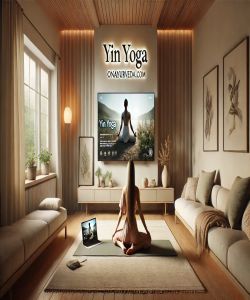
1. Overview of Yin Yoga
Yin Yoga represents a fundamental departure from the dynamic, muscle-centric (Yang) forms of yoga that dominate contemporary practice. It is an uncompromisingly slow, passive, and deeply introspective discipline designed to target the body’s deep connective tissues—specifically the fascia, ligaments, tendons, and joints—which are largely neglected in more active physical regimens. The practice is characterised by floor-based postures that are held for extended periods, typically ranging from three to five minutes or longer, with the muscles remaining relaxed to permit a gentle, therapeutic stress on the targeted tissues. This prolonged, passive loading hydrates the connective tissues, restores their elasticity, and enhances joint mobility. Philosophically rooted in Taoist principles, Yin Yoga works with the body’s meridian system, intending to clear energetic blockages and facilitate the smooth flow of Qi (life force). It is not a practice of aesthetic achievement or muscular strength but one of surrender, patience, and profound internal awareness. The practitioner is challenged not to push through physical barriers but to find a sustainable ‘edge’ of sensation and remain in stillness, observing the subtle shifts within the body and mind. It is, therefore, as much a meditative practice as it is a physical one, demanding mental fortitude and cultivating a state of calm receptivity. It serves as a critical counterbalance to the incessant activity of modern life, promoting systemic equilibrium, nervous system regulation, and a deeper connection to the self.
2. What are Yin Yoga?
Yin Yoga is a distinct and specific modality of yoga practice, defined by its passive nature and its targeted physiological and energetic objectives. It is fundamentally a practice of yielding, not of striving, and its methodology is built upon a clear understanding of tissue differentiation within the human body. Unlike Yang practices, which focus on rhythm, repetition, and muscular contraction, Yin Yoga applies long, static stresses to the deeper, more plastic connective tissues. To understand its essence, one must consider its defining characteristics:
- Passive Postures: The 'asanas' or poses in Yin Yoga are almost exclusively performed on the floor—seated, supine, or prone. The practitioner is instructed to relax the muscles surrounding the targeted area, using props such as bolsters and blocks for support. The objective is to surrender to gravity and allow the body to open organically rather than forcing it into a shape.
- Prolonged Duration: Each posture is held for a significant duration, typically no less than three minutes and often extending to five minutes or more for experienced practitioners. This extended timeframe is not arbitrary; it is the minimum duration required to apply a safe and effective 'stress' to the dense, low-metabolic-rate connective tissues, stimulating cellular regeneration and increasing hydration.
- Targeting Connective Tissues: The explicit goal of Yin Yoga is to affect the body’s fascial networks, ligaments, and joints. These ‘Yin’ tissues respond best to slow, steady loads, which helps to maintain and restore their natural range of motion and tensile strength. Muscular engagement is consciously minimised to ensure the stress bypasses the muscles and reaches these deeper structures.
- Meditative Focus: The stillness required in the physical body is mirrored by a demand for stillness in the mind. Yin Yoga is an exercise in interoception—the practice of turning one’s awareness inward to observe physical sensations, thought patterns, and emotional states without judgement. It is a potent tool for cultivating mindfulness and nervous system regulation.
3. Who Needs Yin Yoga?
- Athletes and Individuals Engaged in High-Intensity (Yang) Activities: These individuals often develop tight, constricted fascial tissues and limited joint mobility due to repetitive, muscle-focused movements. Yin Yoga provides an essential counterbalance, restoring elasticity to connective tissues, improving range of motion, and accelerating recovery, thereby reducing the risk of injury. It is not a sign of weakness but a strategic component of a sophisticated training regimen.
- Sedentary Professionals and Office Workers: Those confined to desks for prolonged periods frequently suffer from postural imbalances, chronic back pain, and stiff hips and shoulders. Yin Yoga directly targets and releases the deep-seated tension in these areas, counteracting the detrimental effects of a static posture and improving overall structural integrity.
- Individuals Experiencing High Levels of Stress, Anxiety, or Burnout: The slow, meditative nature of the practice has a profound down-regulating effect on the sympathetic nervous system (the 'fight or flight' response). By activating the parasympathetic nervous system, Yin Yoga calms the mind, reduces cortisol levels, and fosters a deep sense of mental and emotional equilibrium.
- Practitioners of Meditation and Mindfulness: For those seeking to deepen their meditative practice, Yin Yoga is an invaluable tool. The physical discomfort and mental challenge of holding poses for extended periods provide a potent training ground for developing unwavering focus, equanimity, and the ability to remain present with intense sensations without reacting.
- Ageing Individuals: As the body ages, ligaments and tendons naturally shorten and tighten, and joint cartilage can dehydrate, leading to stiffness and reduced mobility. Yin Yoga provides a safe and effective method for hydrating these tissues and maintaining joint health, ensuring functional mobility and vitality are preserved.
- Individuals Seeking Greater Self-Awareness and Emotional Processing: The practice creates a contained space for introspection. The physical stillness often allows suppressed emotions and subconscious thought patterns to surface. Yin Yoga provides a framework for observing and processing these internal experiences in a non-reactive, compassionate manner, leading to profound personal insight.
4. Origins and Evolution of Yin Yoga
The conception of Yin Yoga as a formalised practice is a relatively recent development, though its foundational principles are deeply rooted in ancient traditions. Its primary architect in the Western world was Paulie Zink, a martial arts champion and Taoist yoga expert. In the late 1970s, Zink began teaching a synthesis of Hatha yoga with Taoist principles and animal-inspired movements, which included the core Yin concepts of holding floor poses for long durations to cultivate a deeper flexibility and energetic balance. This practice, which he called "Taoist Yoga," contained the philosophical and practical seeds of what would later become known as Yin Yoga.
The evolution and popularisation of the discipline must be credited to two other key figures: Paul Grilley and Sarah Powers. Grilley, a student of Zink’s, brought an intense academic rigour to the practice. With his deep knowledge of anatomy and physiology, particularly the work of Dr. Hiroshi Motoyama on meridians and Dr. James Oschman on the bio-mechanics of connective tissue, Grilley deconstructed the practice. He systematically articulated why holding passive stretches was so effective, shifting the focus to the physiological benefits for fascia and joints. He stripped back some of Zink’s more dynamic elements to codify a purely passive, quiet practice, and it was he who first coined the term "Yin Yoga" to differentiate it from the more muscular, active "Yang" styles.
Sarah Powers, another of Grilley’s students, further refined the practice by integrating her extensive knowledge of Buddhist psychology and meridian theory from Traditional Chinese Medicine. Powers emphasised the potent meditative and psychological dimensions of Yin Yoga, framing it as an essential practice for cultivating mindfulness and emotional equilibrium. She skilfully wove together the anatomical insights of Grilley with targeted meridian stimulation and Buddhist mindfulness techniques, creating a holistic system that addresses the body, heart, and mind. Through the distinct contributions of these three pioneers, Yin Yoga evolved from its eclectic Taoist origins into the anatomically precise, psychologically profound, and structurally defined practice that is recognised globally today.
5. Types of Yin Yoga
Whilst Yin Yoga is a specific style in itself, its application and emphasis can vary, leading to several distinct approaches or 'types' taught by different instructors. These are not officially separate schools but rather represent different instructional frameworks.
- Anatomical Yin Yoga: This approach, heavily influenced by the teachings of Paul Grilley, places its primary emphasis on the physical body. The selection and modification of postures are dictated by a rigorous understanding of skeletal variation and fascial anatomy. The core objective is to apply therapeutic stress to specific target areas—such as the hip joint capsule or the lumbar fascia—to improve tissue health and increase functional range of motion. The language used is precise and clinical, focusing on concepts like compression, tension, and the unique skeletal structure of each practitioner.
- Energetic Yin Yoga: This type focuses on the Taoist philosophical underpinnings of the practice, particularly the system of meridians, or energy channels, as understood in Traditional Chinese Medicine. Postures are chosen and sequenced specifically to stimulate certain meridians to unblock and enhance the flow of Qi (life force). The practice becomes a form of needle-less acupuncture, aiming to balance the body's energetic systems and support the health of the internal organs associated with each meridian. Instructors will often discuss the qualities of Yin and Yang and the five elements.
- Mindfulness-Based Yin Yoga: Pioneered by figures like Sarah Powers, this approach integrates principles of Buddhist meditation with the physical practice. The long holds are explicitly framed as opportunities for formal mindfulness training (Vipassanā). Practitioners are guided to maintain a non-judgemental, moment-to-moment awareness of physical sensations, emotions, and thoughts as they arise. The primary goal is not just physical release but the cultivation of mental equanimity, compassion, and insight into the nature of the mind.
- Traditional Taoist Yoga (Yin and Yang Yoga): This is the style from which modern Yin Yoga emerged, as taught by Paulie Zink. It is a more holistic and dynamic practice that does not isolate Yin from Yang. A class will typically include the long, passive holds characteristic of Yin, but these will be interwoven with more active, flowing movements (Yang) and animal-inspired forms. The aim is to create a balanced practice that develops the full spectrum of physical and energetic qualities.
6. Benefits of Yin Yoga
- Enhances Connective Tissue Health and Joint Mobility: By applying long, passive stress to the deep connective tissues—fascia, ligaments, and tendons—the practice stimulates the production of hyaluronic acid, which hydrates these tissues and improves their elasticity. This directly translates to an increased functional range of motion in the joints and a reduction in stiffness.
- Improves Flexibility on a Deeper Level: Unlike dynamic stretching which primarily affects the elastic muscle fibres, Yin Yoga targets the less pliable plastic nature of our fascial network. This systematic and gentle loading encourages the fascia to remodel and lengthen over time, resulting in a more profound and lasting increase in flexibility.
- Stimulates the Parasympathetic Nervous System: The slow, quiet, and introspective nature of the practice powerfully counteracts the body's stress response. It shifts the autonomic nervous system from a sympathetic ('fight or flight') state to a parasympathetic ('rest and digest') state, reducing cortisol levels, lowering blood pressure, and promoting deep relaxation.
- Cultivates Profound Mindfulness and Interoception: The requirement to remain still for several minutes with potentially intense physical sensations is a formidable training ground for the mind. It develops the capacity for focused attention, non-reactive awareness, and a heightened sensitivity to the body's internal landscape (interoception).
- Balances the Body's Energetic System: Rooted in Taoist philosophy, Yin Yoga postures are designed to stimulate the meridian pathways through which Qi (life force) is said to flow. By compressing and stretching tissues along these lines, the practice helps to clear energetic blockages, promoting systemic balance and supporting the health of the internal organs.
- Develops Patience, Surrender, and Mental Resilience: The practice challenges the modern impulse for immediate gratification and constant striving. It demands patience and the ability to surrender control. Consistently sitting with discomfort teaches the practitioner mental fortitude and the equanimity to handle life’s challenges with greater calm.
- Provides a Critical Counterbalance to Yang Lifestyles: In a world dominated by activity, stress, and muscular effort, Yin Yoga offers an essential antidote. It restores balance to the body and mind, preventing the burnout, chronic tension, and physical degradation that result from a perpetually 'Yang' state of being.
7. Core Principles and Practices of Yin Yoga
- Come into the Pose to an Appropriate Depth: The initial principle is to approach each posture with intelligence and self-awareness. One must move slowly into the shape until a significant sensation—a discernible stress or stretch—is felt in the target area. This is the ‘first edge’. It is critical not to push to one’s maximum range immediately or to a point of sharp, searing pain. The appropriate depth is a place of mild, therapeutic discomfort that can be sustained for a prolonged period.
- Resolve to Remain Still: Once the appropriate edge is found, the second and most challenging principle is to commit to absolute stillness. Any fidgeting, shifting, or muscular adjustment dissipates the targeted stress and undermines the practice's purpose. Stillness applies not only to the gross physical body but also to the subtle movements of the breath and mind. This unwavering stillness is what allows the stress to penetrate beyond the muscles and into the deep fascial tissues. It is a discipline of non-reaction.
- Hold the Pose for Time: The third non-negotiable principle is duration. The Yin tissues of the body—fascia, ligaments, and joints—are less vascular and less elastic than muscle tissue. They respond not to brief, repetitive movements but to a long, steady, and gentle load. A hold of three to five minutes is standard, as this is the duration required to initiate a physiological response at the cellular level, encouraging the tissues to hydrate, strengthen, and lengthen. Time, not intensity, is the primary catalyst for change.
- Release the Pose with Care: Following a prolonged hold, the tissues are in a vulnerable state. It is imperative to exit each posture with slow, deliberate, and mindful movement. Abrupt or careless transitions can risk injury. The release is as much a part of the practice as the hold itself and must be executed with the same level of conscious attention.
- Experience the Rebound: After releasing a pose, there is a mandatory period of rest and integration, typically in a neutral position like a supine Savasana or a prone position. This is known as the ‘rebound’. During this time, the practitioner observes the subtle cascade of sensations as blood flow returns to the compressed areas and Qi redistributes throughout the body. This is a crucial phase for energetic integration and for observing the immediate effects of the posture.
8. Online Yin Yoga
- Unparalleled Accessibility and Convenience: The primary advantage of an online format is its removal of geographical and logistical barriers. Practitioners can access high-calibre instruction from globally recognised teachers without the need for travel. It allows the practice to be integrated seamlessly into a demanding schedule, performed within the controlled and familiar environment of one's own home. This autonomy is a powerful facilitator of consistent practice.
- Creation of a Personalised, Controlled Sanctuary: Practising online grants the individual absolute control over their environment. This includes the ability to regulate lighting, temperature, and sound to create an optimal atmosphere for deep introspection. It eliminates the potential distractions or social pressures of a public studio, fostering a more private and profoundly personal experience. This self-curated space is highly conducive to the surrender required by Yin Yoga.
- Emphasis on Self-Reliance and Interoceptive Skill: Without the physical presence of an instructor for hands-on adjustments, the online practitioner is compelled to cultivate a heightened sense of internal awareness (interoception). One must learn to listen intently to the body's signals, to distinguish between therapeutic stress and harmful pain, and to self-adjust based on internal feedback. This fosters a sophisticated level of self-reliance and bodily intelligence that is central to the practice.
- Cost and Resource Efficiency: Online platforms often provide a more economically viable alternative to physical studio memberships. Furthermore, the practitioner can utilise household items—cushions, pillows, thick books—as effective substitutes for specialised yoga props, although professional-grade props are recommended for an optimal practice. This reduces the initial barrier to entry and makes the discipline accessible to a wider demographic.
- Access to a Vast and Diverse Library of Content: The online sphere offers an extensive repository of classes catering to specific needs, from sessions targeting hip mobility to sequences designed for stress reduction. This allows the practitioner to select a class that precisely matches their physical or emotional state on any given day, offering a level of customisation that a fixed studio schedule cannot match. This on-demand availability ensures the practice remains relevant and responsive to the individual's evolving needs.
9. Yin Yoga Techniques
- Posture Selection and Entry: Begin by selecting a posture that targets a specific area of the body (e.g., Butterfly Pose for the inner thighs and groin, or Sphinx Pose for the lumbar spine). Move into the chosen shape slowly and deliberately, without ambition or haste. The entry is a process of exploration, not a race to a predetermined end-point.
- Finding the First Edge: Continue to ease into the posture until you feel a distinct and noticeable sensation of stretch or mild compression in the target area. This is your 'first edge'. It is not a point of intense pain or maximum effort. It is a sustainable level of discomfort that signals the therapeutic stress is being correctly applied. Stop here. Pushing beyond this point is counterproductive and risks injury.
- Muscular Relaxation and Surrender: Consciously scan the body and intentionally relax all muscles, particularly those in and around the targeted area. The objective is to let the skeletal structure, supported by props if necessary, bear the load. Surrender the body's weight to gravity. This muscular passivity is non-negotiable; it is what allows the stress to bypass the muscles and penetrate the deeper connective tissues.
- Committing to Stillness: Once settled at your edge with muscles relaxed, make a firm resolution to remain absolutely still. Resist every impulse to fidget, shift your weight, or adjust the position. This physical stillness is a discipline that calms the nervous system and is essential for the physiological effectiveness of the pose. Any movement dissipates the stress from the target tissues.
- Holding for a Predetermined Duration: Maintain the posture in stillness for a significant period, typically between three and five minutes. Use a timer if necessary, but avoid looking at it. During this time, focus your attention on the breath and the physical sensations arising in the body. Observe them with a calm, non-reactive mind.
- Mindful Exit: When the time has concluded, exit the posture with extreme care and slowness. The tissues are temporarily vulnerable after being held under sustained load. Move deliberately and mindfully, reversing the way you entered the pose. A fast or jerky exit is a primary cause of injury.
- Observing the Rebound: Immediately after exiting the pose, assume a neutral, restful position, such as lying flat on your back or stomach. Remain here for one to two minutes, staying still and observing the subtle flow of sensations through the body. This is the 'rebound', a critical phase for energetic and physical integration.
10. Yin Yoga for Adults
Yin Yoga offers a uniquely potent and necessary practice for the adult body and mind, addressing the specific physiological and psychological challenges that accumulate over time. For adults, the practice ceases to be a mere physical exercise and becomes a strategic tool for long-term health maintenance, stress mitigation, and mental maturation. Physiologically, as the body ages, a natural decline occurs in the hydration and elasticity of connective tissues, leading to the pervasive stiffness and reduced joint mobility that many accept as inevitable. Yin Yoga directly confronts this process. By applying gentle, prolonged stress to the fascial networks, ligaments, and joint capsules, it systematically restores hydration, encourages cellular repair, and preserves, or even recovers, functional range of motion. It is a direct intervention against the physical limitations imposed by a sedentary lifestyle or the repetitive strain of certain careers. Mentally, the adult mind is often burdened by accumulated stress, ingrained behavioural patterns, and the relentless pace of modern responsibilities. Yin Yoga provides a sanctioned space for profound stillness and introspection. The long, quiet holds create a container in which the practitioner must confront their own mental chatter, restlessness, and emotional holdings. This practice cultivates a robust capacity for non-reactive awareness and emotional regulation, skills that are indispensable for navigating the complexities of adult life with equanimity and wisdom. It is not about achieving pretzel-like flexibility, but about cultivating a resilient, adaptable, and self-aware inner state, making it a mature practice for a mature stage of life.
11. Total Duration of Online Yin Yoga
The standard, professionally mandated duration for a comprehensive online Yin Yoga session is one hour (1 hr). This specific timeframe is not an arbitrary allocation but a carefully considered structure designed to facilitate the full physiological and psychological benefits of the practice. A one-hour session allows for a complete and unhurried progression through the essential phases of a Yin sequence. It provides adequate time for an initial period of centering and breath awareness, which is critical for transitioning from the active (Yang) state of the day into a receptive (Yin) state of mind. Following this, the main body of the practice, comprising a series of long-held postures, can be executed without haste. The 1 hr duration permits the targeting of several key areas of the body—for instance, the hips, spine, and shoulders—with each posture being held for the requisite three to five minutes. This ensures that the connective tissues receive the sustained, therapeutic stress necessary for genuine change. Crucially, this timeframe also safeguards sufficient space for the indispensable 'rebound' periods between postures, allowing for the physical and energetic integration that is central to the practice's efficacy. Finally, it culminates in a final, extended Savasana (corpse pose) or seated meditation, which is non-negotiable for consolidating the practice's effects on the nervous system. Any duration significantly shorter than this compromises the integrity of the practice, rushing the holds and eliminating the vital periods of rest and integration, thereby diminishing its profound restorative potential. The one-hour structure is the professional standard for a complete and effective session.
12. Things to Consider with Yin Yoga
Engaging with Yin Yoga demands a shift in mindset and a rigorous attention to internal signals; it is not a practice to be undertaken casually. A primary consideration is the absolute distinction between therapeutic sensation and pain. Practitioners must cultivate a sophisticated awareness to differentiate the dull, achy feeling of a beneficial fascial stretch from any sharp, stabbing, burning, or tingling sensations, which are unequivocal signals of potential nerve impingement or joint damage and demand immediate, mindful withdrawal from the posture. Furthermore, the principle of skeletal variation is paramount. No two individuals have the same bone structure, meaning a pose will look and feel different for every person. The pursuit of an aesthetic ideal or forcing one’s body to match a textbook image is not only futile but dangerous. The focus must remain internal, on the sensation within the target area, not the external shape. The use of props is not optional or a sign of weakness; it is an intelligent application of support to help the muscles relax completely and to accommodate individual skeletal structures, ensuring the stress is applied appropriately. Finally, one must consider the state of the tissues upon exiting a pose. After a long hold, the connective tissues are in a temporarily fragile state. A slow, deliberate, and mindful exit is non-negotiable to prevent injury. The practice requires patience and a profound respect for the body's boundaries, demanding a move away from the ego-driven striving common in other physical disciplines toward a more intuitive and compassionate approach.
13. Effectiveness of Yin Yoga
The effectiveness of Yin Yoga is unequivocal, provided its principles are correctly applied and its objectives are properly understood. Its efficacy lies in its specific and targeted methodology, which is grounded in functional anatomy and physiology. Unlike dynamic forms of exercise that primarily condition the elastic, resilient muscle tissues, Yin Yoga’s long, static holds apply a gentle but persistent tensile and compressive stress to the body's deeper, plastic connective tissues. This sustained load is precisely what is required to stimulate fibroblasts—the cells responsible for producing collagen and other components of the fascial matrix. This stimulation leads to a cascade of benefits: increased hydration of the tissues, enhanced collagen production, and the gentle breaking down of fascial adhesions. The result is not merely a temporary feeling of openness, but a genuine, long-term improvement in joint mobility, fascial health, and functional range of motion. On a neurological level, its effectiveness is equally profound. The practice's insistence on stillness and quiet introspection provides a powerful stimulus for the parasympathetic nervous system, effectively deactivating the body's chronic stress response. This leads to measurable reductions in heart rate, blood pressure, and cortisol levels. Therefore, its effectiveness should not be judged by metrics of calories burned or muscles built, but by its proven ability to restore tissue health, regulate the nervous system, and cultivate a deep, resilient state of mental calm. It is a highly effective modality for achieving goals that other practices simply do not target.
14. Preferred Cautions During Yin Yoga
A rigorous adherence to specific cautions is non-negotiable for a safe and effective Yin Yoga practice. The foremost directive is to honour the body’s signals with uncompromising integrity, especially the distinction between therapeutic discomfort and injurious pain. Any sensation that is sharp, shooting, burning, or electric in nature is an absolute contraindication for continuing in a posture; it signals nerve impingement or excessive strain and requires immediate and mindful retreat. Individuals with pre-existing joint issues, such as hypermobility, joint replacements, or severe arthritis, must approach the practice with extreme caution, utilising extensive propping and potentially shorter hold times to avoid exacerbating their condition. Consultation with a qualified medical professional before commencing the practice is imperative for these populations. Similarly, pregnant practitioners must modify the practice significantly, avoiding deep twists, any compression of the abdomen, and prolonged periods lying supine. The use of props to elevate the torso and support the body is mandatory. Furthermore, one must be acutely aware of the vulnerability of tissues, particularly the knees and spine, and ensure that stress is being applied to the intended target area, not being shunted into a fragile joint. For example, in a hip-opening pose, the sensation should be in the hip, not the knee. If pain arises in a non-target area, the pose must be adjusted or abandoned. Finally, exiting a pose requires as much care as holding it; a slow, deliberate release is crucial, as the tissues are temporarily fragile and susceptible to injury from abrupt movements. Ego has no place in this practice; caution and self-respect are the governing principles.
15. Yin Yoga Course Outline
1: Foundational Principles and Philosophy
Introduction to the concepts of Yin and Yang.
The Taoist roots of the practice.
The Three Core Tattvas (Principles) of Yin Yoga: Finding the Edge, Stillness, and Time.
Distinguishing Yin Yoga from Restorative and Yang styles.
2: The Anatomy of Yin—Bones and Fascia
Understanding connective tissues: fascia, ligaments, tendons, and joints.
The science of tissue stress: tension and compression.
The concept of skeletal variation and its critical importance in practice.
Identifying the primary target areas of the body in Yin Yoga.
3: The Core Postures—Lower Body
Detailed breakdown of primary lower-body Yin postures (e.g., Butterfly, Saddle, Dragon, Swan).
Instruction on alignment, target areas, and contraindications for each pose.
Systematic exploration of propping and modifications to accommodate all body types.
Sequencing for targeting the hips, groin, hamstrings, and quadriceps.
4: The Core Postures—Upper Body and Spine
Detailed breakdown of primary spinal and upper-body Yin postures (e.g., Sphinx/Seal, Melting Heart, Cat Tail).
Instruction on safe and effective techniques for spinal flexion, extension, and twisting.
Targeting the shoulders, chest, and the entire length of the spine.
Integrating upper and lower body poses into a cohesive practice.
5: The Energetic Body—Meridians and Qi
Introduction to Traditional Chinese Medicine (TCM) meridian theory.
Mapping the primary meridian lines relevant to Yin Yoga postures.
Understanding how specific poses stimulate certain energy channels and organ systems.
Sequencing classes with an energetic focus (e.g., for liver/gallbladder or kidney/urinary bladder).
6: Mindfulness, Meditation, and The Rebound
Techniques for cultivating mindfulness during long holds.
Working with thoughts, emotions, and intense physical sensations.
The importance and practice of the 'rebound' for physical and energetic integration.
Structuring Savasana and concluding meditations.
7: The Art of Sequencing and Practice
Principles of intelligent sequencing for anatomical and energetic goals.
Developing a personal home practice.
Safety protocols, contraindications, and managing common issues.
Final integrated practice session combining all learned elements.
16. Detailed Objectives with Timeline of Yin Yoga
- Weeks 1-2: Foundational Embodiment and Safety.
- Objective: To establish a non-negotiable understanding of the core principles: finding a sustainable edge, committing to stillness, and respecting duration. The practitioner will learn to differentiate between therapeutic stress and injurious pain.
- Timeline Action: Focus exclusively on basic postures with extensive use of props. Hold times will be limited to a maximum of three minutes to build tolerance and awareness. The primary goal is safety and developing interoceptive listening skills.
- Weeks 3-4: Anatomical Intelligence and Skeletal Self-Awareness.
- Objective: To move beyond generic alignment cues and develop an understanding of one's unique skeletal structure. The practitioner will learn to modify poses to suit their own body, focusing on the sensation in the target area rather than the external shape.
- Timeline Action: Systematically explore major lower-body target areas (hips, spine). Experiment with variations of poses like Dragon and Swan, noting how small adjustments in position change the felt sensation.
- Weeks 5-6: Deepening Duration and Mental Fortitude.
- Objective: To cultivate the mental resilience required to hold postures for longer durations. The practitioner will work on maintaining focus and equanimity when faced with increasing physical discomfort and mental distraction.
- Timeline Action: Gradually increase hold times in familiar postures to four, then five minutes. Introduce mindfulness techniques, such as breath counting or body scanning, to anchor the mind during the holds.
- Weeks 7-8: Exploring the Energetic Dimension.
- Objective: To gain a functional understanding of the meridian system and how Yin postures influence energetic flow. The practitioner will learn to sequence and practice with an energetic intention.
- Timeline Action: Practice sequences designed to stimulate specific meridian pairs (e.g., Kidney/Bladder for winter, Liver/Gall Bladder for spring). Pay attention to the 'rebound' to notice subtle energetic shifts.
- Weeks 9-10: Upper Body and Spinal Articulation.
- Objective: To apply Yin principles to the complex structures of the spine and shoulder girdle. The practitioner will learn to safely articulate the spine in flexion, extension, and rotation.
- Timeline Action: Focus on postures such as Melting Heart, Sphinx/Seal, and gentle twisting poses. Emphasise meticulous propping and slow, controlled movements to protect the vertebral column.
- Weeks 11-12: Integration and Autonomy.
- Objective: To integrate all learned aspects—anatomical, energetic, and meditative—into a cohesive, self-directed practice. The practitioner will be capable of creating a safe and effective Yin sequence based on their own needs.
- Timeline Action: Develop and execute personal practice sessions. The focus shifts from following instruction to intuitive self-guidance, demonstrating mastery of the core principles.
17. Requirements for Taking Online Yin Yoga
- A Non-Negotiable Commitment to Self-Discipline: The online environment lacks the external accountability of a physical studio. The practitioner must possess the internal discipline to dedicate a protected, uninterrupted block of time to the practice, free from digital and domestic distractions. This commitment is foundational.
- An Unwavering Willingness to Cultivate Interoception: Without a teacher present for physical adjustments, the practitioner becomes solely responsible for their own safety. This requires a heightened and honest ability to listen to the body's internal feedback—to distinguish clearly between the productive stress of a stretch and the sharp warning signal of pain.
- Possession of or Access to Essential Props: While improvisation is possible, an effective practice necessitates proper support. The minimum requirements are:
- A firm bolster (or several dense, tightly rolled blankets).
- Two yoga blocks (or a stable stack of large, hardcover books).
- At least one thick blanket. These tools are not accessories; they are integral for relaxing the muscles and accommodating individual anatomy.
- A Stable Internet Connection and Reliable Device: The technological requirement is absolute. A consistent, high-speed internet connection is necessary to stream the class without buffering or interruption, which would disrupt the meditative state. A device with a screen large enough to clearly view the instructor’s demonstrations is also essential.
- A Dedicated and Sufficiently Sized Practice Space: The practitioner must designate a physical area that is quiet, private, and large enough to allow for full extension of the limbs in all directions without obstruction. This space should be consistently available and perceived as a sanctuary for practice.
- An Appropriate Mindset of Surrender, Not Striving: The participant must be prepared to abandon the ego-driven, competitive mindset that may be prevalent in other physical activities. The objective is to yield, not to conquer. A mindset rooted in patience, self-compassion, and curiosity is a prerequisite for a beneficial experience.
- Sufficient Physical Health for a Passive Practice: While gentle, the practice is not suitable for everyone without modification. Individuals with acute injuries, severe joint instability, or specific medical conditions must have clearance from a medical professional before beginning.
18. Things to Keep in Mind Before Starting Online Yin Yoga
Before commencing an online Yin Yoga practice, it is imperative to establish a framework of rigorous self-responsibility and realistic expectations. You are assuming the dual roles of student and safety monitor. The convenience of practicing at home must not lead to complacency. Your primary task is to cultivate an unwavering internal vigilance, learning to interpret your body’s signals with absolute honesty. You must internalise the critical difference between the dull, achy sensation of a therapeutic stretch and the sharp, burning, or tingling report of pain that signals you must retreat immediately. There is no instructor to correct your alignment or prevent you from pushing too far; that duty falls entirely upon you. Prepare your space and your props before the session begins. A frantic search for a block mid-pose defeats the entire purpose of the practice, which is rooted in stillness and calm. Understand that progress in Yin Yoga is not measured by how deeply you can fold or how long you can hold a pose in agony. It is measured by the quality of your attention, your ability to remain still and present, and the long-term restoration of your body’s functional range of motion. Finally, select your online instructor with discernment. Seek out teachers who prioritise anatomical knowledge, safety cues, and the importance of skeletal variation over those who simply demonstrate impressive flexibility. Your online practice will only be as effective as your commitment to these foundational principles.
19. Qualifications Required to Perform Yin Yoga
The qualifications required to perform, or more accurately, to teach Yin Yoga with authority and integrity are multifaceted, extending beyond a standard yoga teacher certification. While a foundational 200-hour Yoga Teacher Training (YTT) certificate is a common prerequisite, it is fundamentally insufficient on its own, as most such courses barely touch upon the specific anatomical and philosophical underpinnings of Yin Yoga. A qualified instructor must have undertaken dedicated, advanced training specifically in the Yin modality, typically comprising at least 50 to 100 hours of specialised study with a reputable lineage-holder or senior teacher.
Within this specialised training, several core competencies must be demonstrated:
- Advanced Anatomical Knowledge: A deep and functional understanding of connective tissue physiology, fascial anatomy, and joint mechanics is non-negotiable. The instructor must be able to articulate precisely why a pose is being held and which tissues are being targeted. A critical component of this is a thorough grasp of the principle of skeletal variation—the understanding that bone structure is unique to each individual and dictates the safe and effective expression of a pose.
- Proficiency in Yin Philosophy and Theory: The instructor must be well-versed in the Taoist principles of Yin and Yang, and often, the basics of Traditional Chinese Medicine (TCM) meridian theory. This knowledge informs the energetic intention and sequencing of the practice.
- Mastery of Postures, Modifications, and Propping: A qualified teacher will have an exhaustive knowledge of the core Yin postures and, crucially, a wide array of modifications and propping techniques to ensure the practice is safe and accessible for all body types and physical limitations.
- Demonstrated Personal Practice: Authentic teaching arises from deep personal experience. A credible instructor must have a consistent and long-standing personal Yin Yoga practice. This embodied understanding allows them to guide students from a place of genuine insight, not just theoretical knowledge.
Therefore, a truly qualified instructor is one who has invested significantly in specialised education, possesses a sophisticated understanding of functional anatomy, and teaches from a place of deep personal immersion in the practice.
20. Online Vs Offline/Onsite Yin Yoga
Online
The online modality for Yin Yoga offers a distinct set of advantages and challenges centred on autonomy and accessibility. Its primary strength lies in its supreme convenience, allowing practitioners to engage with the practice without geographical or scheduling constraints, from within a self-controlled environment. This personal sanctuary can be optimised for quiet, introspection, and privacy, free from the potential social distractions of a group setting. Financially, it often presents a more sustainable model. However, this autonomy demands a high degree of self-discipline and interoceptive awareness. The practitioner is solely responsible for their safety, as there is no instructor present to offer hands-on adjustments, correct misalignments, or provide immediate verbal feedback tailored to their specific experience. The absence of shared group energy, which can be a powerful motivator and calming influence, is another significant difference. Furthermore, the practice is mediated through a screen, which can feel impersonal and may present technical difficulties that disrupt the meditative flow. The onus is entirely on the individual to remain focused and self-regulating.
Offline
An offline, or onsite, Yin Yoga practice provides a structured, communal, and directly guided experience. The most significant benefit is the physical presence of a qualified instructor who can provide real-time verbal cues, offer precise hands-on adjustments, and ensure the safe use of props. This direct feedback is invaluable for refining one's practice and preventing injury, particularly for beginners. The shared environment creates a palpable sense of community and collective energy, which can deepen the meditative experience and provide a strong sense of accountability. Studios also offer a full range of high-quality, specialised props, which may not be available to the home practitioner. The primary drawbacks are logistical and financial. Onsite classes require travel, adhere to a fixed schedule, and typically involve a greater financial investment. The environment, while communal, offers less privacy and personal control over factors like temperature and ambient noise, which can be distracting for some individuals seeking deep introspection. The practitioner must adapt to the group environment rather than curating their own.
21. FAQs About Online Yin Yoga
Question 1. Is online Yin Yoga safe for beginners? Answer: Yes, provided the beginner chooses a reputable instructor who emphasises safety, modifications, and the difference between pain and sensation. The beginner must commit to practicing with extreme caution and self-awareness.
Question 2. What props are absolutely essential? Answer: A bolster (or dense pillows/blankets), two blocks (or sturdy books), and a blanket. These are not optional; they are required for safety and effectiveness.
Question 3. How do I know if I am doing a pose correctly without a teacher present? Answer: You focus on the internal sensation, not the external look of the pose. If you feel a therapeutic, interesting sensation in the specified target area, you are doing it correctly for your body.
Question 4. What if I feel a sharp, shooting pain? Answer: You must back out of the pose immediately and mindfully. Sharp pain is a signal to stop; it is not part of the practice.
Question 5. Can I do Yin Yoga on my bed? Answer: It is not recommended. A bed is too soft and does not provide the stable, firm foundation needed to effectively stress the targeted connective tissues. Practice on the floor.
Question 6. How long should I hold the poses? Answer: Follow the instructor’s guidance. A typical range is three to five minutes. Never force yourself to stay longer if you are in pain.
Question 7. What is the 'rebound'? Answer: It is the period of rest in a neutral position after a pose. It is a critical time for the body to absorb the benefits of the posture and for you to observe the flow of energy. Do not skip it.
Question 8. What is the difference between Yin Yoga and Restorative Yoga? Answer: Yin Yoga applies therapeutic stress to tissues to increase mobility. Restorative Yoga uses props to completely support the body in order to achieve deep relaxation with zero stress.
Question 9. How often should I practice online Yin Yoga? Answer: Two to three times per week is an effective frequency for most people to see and feel benefits.
Question 10. What if my mind is too busy and I cannot stay still? Answer: That is part of the practice. The goal is not to have an empty mind, but to notice the mind's activity without reacting to it. The stillness is in the body, not necessarily the mind.
Question 11. Why are the muscles supposed to be relaxed? Answer: To allow the stress of the pose to bypass the muscles and be absorbed by the deeper connective tissues (fascia, ligaments), which is the primary goal.
Question 12. Can I eat before an online class? Answer: It is best to practice on a relatively empty stomach, waiting at least two hours after a main meal.
Question 13. My internet cut out mid-class. What should I do? Answer: Mindfully exit your current posture, rest in the rebound, and then hold a simple Savasana (corpse pose) until you can reconnect or until the class time has elapsed.
Question 14. Do I need to be flexible to do Yin Yoga? Answer: No. The practice is designed to help you become more mobile and flexible. You start from wherever you are.
Question 15. Is it normal to feel emotional during or after a practice? Answer: Yes, it is very common. The practice can release stored physical and emotional tension. Allow the feelings to arise and pass without judgement.
Question 16. What if I fall asleep? Answer: This indicates you may need rest more than a Yin practice at that moment. If it happens consistently, ensure you are sufficiently propped up to avoid collapsing in a pose.
22. Conclusion About Yin Yoga
In conclusion, Yin Yoga must be understood not as a softer or easier alternative to dynamic yoga, but as its essential and sophisticated counterpart. It is a rigorous, intelligent, and profoundly effective discipline grounded in functional anatomy and timeless Taoist wisdom. The practice demands a radical shift in approach—away from muscular effort and aesthetic achievement, and toward passive surrender, internal awareness, and unwavering stillness. Its deliberate methodology of applying long, static loads to the deep connective tissues offers a unique and powerful solution for restoring joint mobility, enhancing fascial health, and counteracting the chronic physical and mental stress endemic to modern life. While its benefits are tangible and scientifically supported, its true potency lies in the cultivation of mental fortitude, patience, and a deep, intuitive understanding of one’s own body and mind. It is a practice of substance, not of spectacle. Whether engaged in online or in a studio, its core principles remain uncompromising. To engage with Yin Yoga is to commit to a path of deep physical restoration and profound psychological inquiry, making it an indispensable tool for anyone serious about achieving genuine, holistic well-being. It is, quite simply, the other half of a complete practice.