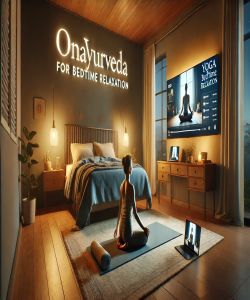
1. Overview of Yoga for Bedtime Relaxation
Yoga for Bedtime Relaxation constitutes a highly specific and targeted application of yogic principles, engineered to systematically down-regulate the body’s sympathetic nervous system—the mechanism responsible for the 'fight or flight' response—and activate the parasympathetic nervous system, which governs the 'rest and digest' state. This is not a diluted or simplified form of yoga; rather, it is a potent, non-pharmacological methodology for preparing the mind and body for restorative sleep. The practice intentionally eschews dynamic, heat-building sequences (vinyasa) and complex, stimulating postures in favour of a curated selection of static, supported, and passive poses (asanas). These are executed in conjunction with deliberate breath control techniques (pranayama) and mindfulness-based meditation. The core objective is to dismantle the physiological and psychological architecture of stress that accumulates throughout the day. By consciously releasing muscular tension, slowing the heart rate, and reducing the circulation of stress hormones such as cortisol, the practitioner creates the optimal internal environment for the natural onset of sleep. It functions as a structured transition, a deliberate buffer zone between the cognitive and physical demands of waking life and the complete surrender required for deep sleep. This discipline is therefore a strategic intervention in sleep hygiene, directly addressing the root causes of restlessness and insomnia, rather than merely masking the symptoms. It is a rigorous practice of unwinding, demanding mental focus and physical stillness to achieve a state of profound calm conducive to nocturnal recovery.
2. What are Yoga for Bedtime Relaxation?
Yoga for Bedtime Relaxation is a formalised system of practices designed with the singular purpose of facilitating the transition from a state of wakeful alertness to one of deep rest. It is a composite discipline that draws from several yogic traditions, re-engineered to counteract the hyper-arousal endemic to modern life. It is fundamentally a process of physiological and neurological deceleration. This is achieved through a precise combination of specific elements. The practice is characterised by its emphasis on floor-based postures that require minimal muscular exertion, thereby signalling to the body that it is safe to release tension. Unlike more athletic forms of yoga, the objective is not to build strength or flexibility, but to cultivate a state of passive release.
Key components of this practice include:
- Restorative Asanas: These are postures, often held for extended periods, where the body is completely supported by props such as bolsters, blankets, and blocks. This support eliminates muscular effort, allowing the nervous system to shift into a deeply restful state. Poses like Supported Child's Pose (Salamba Balasana) or Legs-Up-the-Wall Pose (Viparita Karani) are archetypal examples.
- Yin Yoga Principles: Whilst distinct from a full Yin practice, the bedtime application borrows its principle of applying gentle, long-held stress to connective tissues. This promotes a deep release that goes beyond superficial muscle, targeting fascia and ligaments where chronic tension is often stored.
- Targeted Pranayama: Breathing techniques are central. The focus is exclusively on practices that calm the nervous system, such as Diaphragmatic Breathing (directing breath into the belly) or Ujjayi Pranayama (Victorious Breath) performed with a soft, quiet quality. Stimulating breathwork is strictly avoided.
- Mindfulness and Meditation: The practice incorporates guided meditation or focused awareness to quieten the relentless stream of thoughts, a primary inhibitor of sleep. This mental discipline trains the mind to disengage from rumination and anxiety, creating cognitive space for rest.
3. Who Needs Yoga for Bedtime Relaxation?
- Professionals in High-Stress Environments: Individuals engaged in mentally demanding or high-pressure careers, such as corporate executives, legal professionals, or emergency service workers, accumulate significant daily stress. This results in elevated cortisol levels and a hyper-stimulated nervous system that persists into the evening, directly impeding sleep onset and quality. This practice provides a structured, non-pharmaceutical mechanism to actively discharge this accumulated tension and enforce a clear demarcation between work and rest.
- Individuals with Chronic Sleep Disturbances: Those diagnosed with or experiencing symptoms of insomnia, frequent nocturnal awakenings, or non-restorative sleep require a consistent, reliable tool for improving sleep hygiene. Bedtime yoga directly addresses the psycho-physiological arousal that underpins many sleep disorders. It functions as a behavioural intervention that retrains the body and mind to associate the pre-sleep period with calmness rather than anxiety.
- Athletes and Physically Active Individuals: Rigorous physical training places immense stress on the musculoskeletal and nervous systems. This discipline is essential for accelerating recovery. By promoting parasympathetic dominance, it enhances tissue repair, reduces inflammation, and alleviates the deep muscular tension that can interfere with sleep, which is the primary period for physical regeneration. It is a critical component of a comprehensive recovery protocol.
- Sufferers of Anxiety and Rumination: Individuals prone to anxiety disorders or obsessive thought patterns find the evening hours particularly challenging, as the lack of external distractions allows the mind to race. The practice mandates a shift in focus from cognitive loops to somatic sensation and regulated breathing, effectively interrupting the patterns of worry and creating a state of mental quietude necessary for sleep.
- Individuals Undergoing Significant Life Transitions: Periods of major life change, whether positive or negative, are inherently stressful and disruptive to established routines, including sleep. This practice offers a grounding, stabilising ritual that provides a consistent anchor of calm amidst external chaos, helping to regulate the nervous system and maintain essential self-care during turbulent times.
4. Origins and Evolution of Yoga for Bedtime Relaxation
The conceptual roots of Yoga for Bedtime Relaxation are deeply embedded in the classical traditions of Hatha yoga. Ancient texts such as the Hatha Yoga Pradipika and the Gheranda Samhita describe practices intended to pacify the mind and regulate 'prana', or life force energy. The principles of 'sthira' (steadiness) and 'sukha' (ease) in a posture, as outlined in Patanjali's Yoga Sutras, form the philosophical bedrock. These foundational texts, however, did not codify a specific "bedtime" sequence; rather, they provided the tools for calming the 'vrittis', the fluctuations of the mind, which is the ultimate prerequisite for any state of deep rest, including sleep. The aim was spiritual advancement through mastery of the self, with physiological calm being a consequential benefit.
The evolution into a distinct, targeted practice is a modern phenomenon, emerging in the mid-to-late 20th century. This development was driven by the confluence of two major forces. Firstly, the transmission of yoga to the West, where its therapeutic and stress-reducing applications were emphasised over its spiritual dimensions. Influential teachers began to adapt and sequence ancient postures to address the specific ailments of modern industrialised society, with stress and sleeplessness being paramount among them. The work of B.K.S. Iyengar, with his revolutionary use of props to support the body and enable passive, long-held stretches, was instrumental. This innovation paved the way for what would become Restorative Yoga, a primary component of any bedtime practice.
Secondly, the burgeoning field of sleep science and psychoneuroimmunology provided a robust clinical framework that validated these adapted yogic techniques. Scientific understanding of the autonomic nervous system, the hypothalamic-pituitary-adrenal (HPA) axis, and the role of cortisol in the stress response gave a new language and legitimacy to what yogis had known experientially for centuries. This scientific validation led to the formalisation of bedtime yoga as a specific, evidence-informed intervention. It evolved from a general principle of yogic calm into a codified discipline, featuring curated sequences and techniques explicitly designed to trigger the physiological relaxation response and optimise the body's internal environment for sleep.
5. Types of Yoga for Bedtime Relaxation
- Restorative Yoga: This is the quintessential form of yoga for pre-sleep preparation. Its defining characteristic is the extensive use of props, including bolsters, blankets, blocks, and straps, to completely support the body in every posture. The objective is to eliminate all muscular effort, allowing the practitioner to surrender fully to gravity and release deep-seated tension. Postures are held for extended durations, often for many minutes at a time. This sustained passivity signals safety to the nervous system, facilitating a profound shift from sympathetic (fight-or-flight) to parasympathetic (rest-and-digest) dominance, which is the physiological gateway to sleep.
- Yin Yoga: Whilst some stimulating Yin postures exist, a carefully selected Yin sequence is highly effective for bedtime. Yin targets the deep connective tissues—fascia, ligaments, and joints—rather than the muscles. This is achieved through long-held, passive floor poses that apply a gentle, sustained stress to these tissues. This process releases chronic tension patterns and can have a deeply meditative and grounding effect. By focusing on areas like the hips and spine, where much emotional and physical stress is stored, Yin promotes a significant release that prepares the body for stillness.
- Gentle Hatha Yoga: A slow-paced, non-strenuous Hatha class can be adapted for bedtime. The focus must remain on mindful movement linked with breath, avoiding any postures that are overly energising or demanding. The sequence would prioritise gentle spinal movements, mild hip openers, and forward folds, all performed with an emphasis on softness and internal awareness rather than achieving perfect form. The goal is gentle mobilisation to release the day's physical stagnation without elevating the heart rate or stimulating the nervous system.
- Yoga Nidra: Translated as "yogic sleep," this is a powerful guided meditation technique performed whilst lying down in Savasana (Corpse Pose). It is not a physical practice in terms of movement but a systematic method of inducing complete physical, mental, and emotional relaxation. The practitioner is led through a structured sequence of breath awareness, body scanning, and visualisations. This process systematically withdraws the senses and quiets the conscious mind, guiding the individual into a state of consciousness between waking and sleeping, which is profoundly restorative and an ideal precursor to actual sleep.
6. Benefits of Yoga for Bedtime Relaxation
- Systematic Down-Regulation of the Autonomic Nervous System: The practice actively shifts the body from a state of sympathetic dominance (the 'fight or flight' response) to one of parasympathetic dominance (the 'rest and digest' response). This is a direct physiological intervention that lowers heart rate, reduces blood pressure, and signals to every system in the body that it is time to switch from a state of high alert to one of recovery and repair.
- Reduction of Circulating Stress Hormones: By inducing a state of deep relaxation, the practice helps to lower levels of cortisol, the body’s primary stress hormone. Chronically elevated cortisol disrupts the natural sleep-wake cycle (circadian rhythm) and inhibits the production of melatonin, the hormone that governs sleep. Consistently reducing cortisol in the evening restores this natural hormonal balance.
- Alleviation of Musculoskeletal Tension: The long-held, passive stretches and supported postures directly target areas of the body where physical tension accumulates, such as the neck, shoulders, and lower back. Releasing this physical constriction not only provides immediate comfort but also removes a significant source of physical 'noise' that can prevent the mind from settling.
- Improved Sleep Onset Latency and Sleep Quality: By creating the optimal physiological and psychological conditions for sleep, the practice has been shown to reduce the time it takes to fall asleep. Furthermore, by calming the nervous system, it promotes deeper, more continuous, and more restorative sleep phases, reducing the likelihood of nocturnal awakenings.
- Interruption of Anxious Rumination: The mandatory focus on breath and bodily sensation provides an effective tool for breaking the cycle of anxious, racing thoughts that often plague individuals at bedtime. This practice of mindfulness trains the brain to disengage from worry and future-planning, creating the mental silence necessary for sleep to occur.
- Enhanced Body Awareness (Somatic Intelligence): Regular practice cultivates a heightened sensitivity to the body’s signals of stress and tension. This allows individuals to become more proactive in managing stress throughout the day, rather than waiting until it reaches a critical point at night. This awareness is a foundational skill for long-term self-regulation.
7. Core Principles and Practices of Yoga for Bedtime Relaxation
- Parasympathetic Dominance as the Primary Objective: The singular goal that governs every choice of posture, breath, and focus is the activation of the parasympathetic nervous system. Any technique that is stimulating, heat-building, or requires significant muscular effort is antithetical to this principle and must be excluded. The practice is engineered for calming, not for athletic or aesthetic achievement.
- Ahimsa (Non-Harming) Towards the Self: This foundational yogic principle is paramount. The practitioner must approach every posture with an attitude of gentleness and acceptance, never forcing the body into a position that causes sharp pain or strain. The practice is one of surrender, not conquest. Listening to the body's limitations and respecting them is a non-negotiable aspect of the discipline.
- Sthira and Sukha (Steadiness and Ease): Every posture must embody a balance of these two qualities. 'Sthira' is the steadiness and focus required to remain still, whilst 'Sukha' is the quality of comfort, release, and ease within that stillness. In this context, 'Sukha' is prioritised. Props are utilised extensively to maximise ease and minimise the effort required for steadiness.
- Pranayama for Deceleration: Breath control is not merely an accompaniment but a central mechanism of the practice. The focus must be exclusively on breathing techniques that lengthen the exhalation, as this directly stimulates the vagus nerve and triggers the relaxation response. Diaphragmatic (belly) breathing is a cornerstone practice, slowing the respiratory rate and calming the mind.
- Pratyahara (Withdrawal of the Senses): The entire practice is a structured exercise in Pratyahara. This involves intentionally drawing one's awareness away from external stimuli—sights, sounds, and other distractions—and turning it inward. This is facilitated by low lighting, a quiet environment, and often, closing the eyes. This internalisation is crucial for quieting the mind's constant chatter.
- Emphasis on Being, Not Doing: The mindset must shift from active 'doing' to passive 'being'. The practitioner is not trying to achieve a perfect pose or push their limits. Instead, the intention is to arrange the body in a supported shape and then simply observe the subtle processes of release and relaxation as they unfold. The work is in the stillness and the patient observation, not in the physical effort.
8. Online Yoga for Bedtime Relaxation
- Unmatched Accessibility and Convenience: The primary advantage of the online format is its removal of logistical barriers. Practitioners are not bound by studio schedules or geographical proximity. The practice can be undertaken in one's own home at the precise time it is most needed—immediately before sleep. This eliminates the stimulating effects of travel and transitioning from a public to a private space, which can counteract the very relaxation the practice aims to induce.
- Absolute Environmental Control: The practitioner has complete authority over their practice environment. This allows for the optimisation of all sensory inputs to promote relaxation. Lighting can be dimmed to personal preference, ambient temperature can be set for maximum comfort, and any chosen sounds or silence can be employed without consideration for others. This level of customisation is impossible to achieve in a group studio setting and is critical for deep relaxation.
- Enhanced Privacy and Reduced Self-Consciousness: The solitude of an online practice removes the element of social comparison or performance anxiety that can be present in a group class. This privacy is essential for bedtime yoga, where the goal is complete surrender and release. Practitioners are free to utilise as many props as needed, modify poses without judgement, and even allow for emotional release without the fear of being observed, fostering a deeper and more authentic practice.
- Reinforcement of the Sleep-Sanctuary Association: Practising in or near the bedroom helps to powerfully condition the brain to associate that specific environment with calm, relaxation, and sleep. The practice becomes part of a potent pre-sleep ritual within the very space dedicated to rest. This strengthens the psychological cues for sleep, a cornerstone of effective cognitive behavioural therapy for insomnia (CBT-I).
- Consistency and Repetition: Online platforms provide access to a vast library of recorded sessions. This allows the practitioner to find a specific class or instructor that is particularly effective and repeat it consistently. Repetition of a familiar sequence can be deeply soothing, as it removes the mental effort of anticipating new instructions and allows the mind to settle more quickly and profoundly. This consistency builds a reliable and predictable pathway to relaxation.
9. Yoga for Bedtime Relaxation Techniques
Step 1: Environment Curation and Preparation: Before commencing any physical practice, one must engineer the environment for maximal tranquillity. This is a non-negotiable prerequisite. Dim all artificial lighting, especially blue-light emitting screens. Ensure the room is at a comfortable, slightly cool temperature. Eliminate all potential sources of noise and interruption. Assemble all required props—mat, bolsters, blankets, blocks—within easy reach to avoid disruptive movements during the practice.
Step 2: Initial Centring and Breath Synchronisation: Begin in a comfortable seated or reclined position. Close the eyes and consciously release the jaw, shoulders, and brow. Bring all awareness to the natural rhythm of the breath without attempting to change it. After several cycles, initiate diaphragmatic breathing: place one hand on the abdomen and deliberately inhale so the belly expands, then exhale completely so it falls. The exhalation must be passive and slightly longer than the inhalation. Maintain this for several minutes to signal the initial shift to the parasympathetic nervous system.
Step 3: Gentle Articulation of the Spine: Transition to a hands-and-knees position for Cat-Cow stretches (Marjaryasana-Bitilasana). Link the movement inextricably to the breath: inhale to arch the spine and lift the gaze, exhale to round the spine and draw the chin to the chest. The movement must be slow, deliberate, and fluid, intended only to release spinal tension, not to build heat or challenge flexibility.
Step 4: Sequence of Supported, Passive Postures: This forms the core of the practice. Move sequentially through a series of two to four restorative or yin-style poses. Each posture must be held for a sustained period, typically between three and ten minutes.
Supported Child's Pose (Salamba Balasana): Place a bolster lengthwise on the mat and rest the torso and head upon it, allowing the arms to relax.
Supported Reclining Bound Angle Pose (Supta Baddha Konasana): Recline over a bolster placed beneath the spine, with blocks supporting the outer thighs.
Legs-Up-the-Wall Pose (Viparita Karani): Lie on the back with the legs extended vertically up a wall, a folded blanket supporting the lower back.
Step 5: Final Relaxation in Savasana (Corpse Pose): Conclude by lying flat on the back. Ensure complete comfort by placing a bolster under the knees and a blanket over the body for warmth. Allow the breath to return to its natural rhythm. Systematically release any final vestiges of tension. Remain in absolute stillness for at least five to ten minutes, fully absorbing the effects of the practice before transitioning directly to bed.
10. Yoga for Bedtime Relaxation for Adults
Yoga for Bedtime Relaxation for adults is a sophisticated and necessary tool for navigating the unique physiological and psychological burdens of mature life. Adulthood is characterised by a convergence of responsibilities—professional pressures, financial obligations, and familial duties—that maintain the nervous system in a state of chronic, low-grade activation. This sustained sympathetic tone directly degrades sleep quality and, by extension, overall health and cognitive function. The practice is therefore not a luxury but a strategic form of self-regulation. It provides a structured protocol to consciously counteract the relentless accumulation of stress. For the adult body, which may be contending with the onset of chronic stiffness, old injuries, or reduced mobility, the gentle, supportive nature of this yoga is particularly salient. It offers a method to release deep-seated musculoskeletal tension without the risk of strain or impact associated with more vigorous exercise. Psychologically, it addresses the adult tendency towards rumination and future-oriented anxiety. By mandating a focus on the present moment—the sensation of the breath, the feeling of a stretch—it forcibly interrupts the mental loops of worry about work, finances, and other complex life issues. It is an exercise in reclaiming agency over one's own internal state, a mature recognition that restorative rest is not a passive event but an outcome that must be actively cultivated. It is a discipline that respects the complexities of adult life by offering a potent, self-administered antidote to its inherent pressures, fostering resilience and preserving long-term wellbeing.
11. Total Duration of Online Yoga for Bedtime Relaxation
The total duration of an online Yoga for Bedtime Relaxation session is optimally structured to be a comprehensive 1 hr programme. This specific timeframe is not arbitrary; it is deliberately calibrated to allow for the full, unhurried progression through the necessary physiological and psychological stages of unwinding. A session of this length permits a systematic and effective down-regulation of the nervous system, which cannot be reliably achieved in a truncated format. The initial portion of the hour is dedicated to environmental settling, mental centring, and the establishment of conscious, diaphragmatic breathing. This foundational phase is critical for signalling to the body and mind that a transition from activity to rest is commencing. The central, most substantial part of the 1 hr is allocated to the practice of a curated sequence of long-held restorative or yin-style postures. Holding each pose for several minutes is essential for accessing the deep connective tissues and triggering a profound parasympathetic response; this process requires time. Rushing through these postures would be counterproductive, reintroducing an element of stress and negating the primary objective. The final segment of the hour is reserved for Savasana (Corpse Pose) or a short Yoga Nidra practice, allowing for the complete integration of the practice's effects and a seamless transition towards sleep. A session shorter than 1 hr risks becoming a superficial stretching routine, whereas this duration ensures a deep, therapeutic impact, making it a robust and definitive pre-sleep ritual.
12. Things to Consider with Yoga for Bedtime Relaxation
Prior to engaging in Yoga for Bedtime Relaxation, several factors must be rigorously considered to ensure both its efficacy and safety. The foremost consideration is the absolute necessity of creating a sanctuary-like environment, completely insulated from the demands of the day. This involves a non-negotiable disengagement from all electronic devices, particularly those emitting blue light, for a significant period before the practice begins. The psychological boundary is as critical as the physical one; one must consciously decide that the time allocated for the practice is sacrosanct and protected from interruption. Furthermore, it is imperative to manage expectations. This is a practice, not a panacea. Its benefits are cumulative and contingent upon consistency, not a single session. The practitioner must cultivate an attitude of patience and self-compassion, understanding that some nights the mind will be quieter than others. On a physical level, one must commit to listening intently to the body's signals, rigorously adhering to the principle of non-harm (Ahimsa) by never pushing into sensations of sharp or electrical pain. The goal is a gentle unwinding, not a forceful opening. One should also consider the timing of the last meal, ensuring it is consumed well in advance of the practice to avoid digestive discomfort. Finally, the practitioner must be prepared for the profound quietude the practice can induce, which can sometimes bring unresolved emotions to the surface. This is a natural part of the process and requires a mindset of observation without judgement.
13. Effectiveness of Yoga for Bedtime Relaxation
The effectiveness of Yoga for Bedtime Relaxation is not a matter of subjective belief but is grounded in demonstrable psycho-physiological mechanisms. Its potency lies in its direct and systematic influence over the autonomic nervous system, the body’s primary control system for stress and relaxation. The practice's combination of slow, mindful movement, sustained passive stretching, and elongated exhalations acts as a powerful stimulus for the vagus nerve. Vagal nerve stimulation is a primary driver for shifting the body out of the sympathetic 'fight-or-flight' state and into the parasympathetic 'rest-and-digest' state. This is a measurable physiological event, resulting in a lowered heart rate, reduced blood pressure, and decreased muscle tension. Concurrently, the discipline effectively reduces the production and circulation of cortisol, the main stress hormone that, when elevated in the evening, directly interferes with sleep architecture and melatonin production. On a neurological level, the intense focus required for the practice—on breath, on sensation—interrupts the ruminative thought patterns processed by the default mode network in the brain, which is often hyperactive in individuals with insomnia or anxiety. The effectiveness of the practice is therefore threefold: it dismantles the physiological scaffolding of stress, rebalances the hormonal environment to be conducive to sleep, and provides a powerful cognitive tool for quieting a racing mind. Its efficacy is, however, conditional upon correct and consistent application; it is a skill-based intervention whose results compound over time.
14. Preferred Cautions During Yoga for Bedtime Relaxation
It is imperative that the practice of Yoga for Bedtime Relaxation be approached with stringent caution and an uncompromising respect for the body’s limitations. This is not a competitive endeavour; any ego-driven impulse to push beyond a point of gentle sensation must be rigorously suppressed. The practitioner must remain vigilant against mistaking the deep, dull ache of a productive stretch in connective tissue for the sharp, radiating, or electrical pain that signals potential injury. If such pain arises, one must immediately and intelligently withdraw from the posture. Individuals with pre-existing medical conditions—particularly those involving the spine (such as herniated discs), joints (such as acute arthritis), or cardiovascular system (such as uncontrolled high blood pressure or glaucoma, especially in inversions like Legs-Up-the-Wall)—must seek explicit clearance from a qualified medical professional before commencing this or any yogic practice. Pregnant individuals must also seek expert guidance, as certain postures, especially those involving deep twists or pressure on the abdomen, are contraindicated. Furthermore, one must exercise caution in the use of props, ensuring they provide stable and adequate support, rather than creating an unstable or awkward position. The practice should never be performed under the influence of alcohol or sedatives, as this impairs the ability to perceive the body’s crucial feedback signals, significantly increasing the risk of injury. The ultimate caution is one of self-awareness: the practice must be abandoned or modified if it induces anxiety or distress rather than calm.
15. Yoga for Bedtime Relaxation Course Outline
1: Foundational Principles & The Primacy of Breath:
Introduction to the parasympathetic nervous system and the physiology of the stress response.
Core principles: Ahimsa (non-harming), Sthira/Sukha (steadiness/ease), and Pratyahara (sensory withdrawal).
Mastery of Diaphragmatic Breathing: technique, practice, and application for calming the mind.
Establishing the pre-practice ritual: creating a sanctuary for sleep.
2: Introduction to Restorative Postures & Prop Usage:
Systematic introduction to the correct and safe use of props: bolsters, blocks, blankets, and straps.
Detailed instruction on foundational restorative postures: Supported Child's Pose (Salamba Balasana), Supported Bridge Pose (Salamba Setu Bandhasana).
Focus on alignment for maximum release and minimal effort.
Practice of a 20-minute guided restorative sequence.
3: Deepening Release with Yin Yoga Principles:
Understanding the distinction between Yin (targeting connective tissue) and Restorative (promoting nervous system calm) yoga.
Introduction to key Yin postures suitable for bedtime: Butterfly Pose (Baddha Konasana), Sphinx Pose (Salamba Bhujangasana).
The art of holding postures for extended duration: managing discomfort and finding stillness.
Sequencing Yin and Restorative postures for a comprehensive pre-sleep practice.
4: Integrating Mindfulness & The Power of Yoga Nidra:
Techniques for managing a racing mind during practice: anchoring to breath and sensation.
Introduction to the practice of Yoga Nidra (Yogic Sleep) as the ultimate relaxation technique.
Guided practice of a full Yoga Nidra session.
Learning to observe thoughts and emotions without engagement or judgement.
5: Developing a Personalised & Sustainable Pre-Sleep Ritual:
Principles of intelligent sequencing: how to create a personal practice based on daily needs.
Strategies for maintaining consistency and overcoming barriers to practice.
Integrating the practice seamlessly into one's evening routine.
Final project: design and execute a self-guided 45-minute bedtime yoga session.
16. Detailed Objectives with Timeline of Yoga for Bedtime Relaxation
Weeks 1-2: Objective - Establish Foundational Competency in Breath Control and Somatic Awareness.
Timeline: By the end of week two, the practitioner will be able to initiate and sustain diaphragmatic breathing for a continuous five-minute period without cognitive strain. They will be able to identify and consciously release tension in primary stress-holding areas (jaw, shoulders, brow) on command. The practitioner will have successfully established a consistent, non-negotiable time and space for practice.
Weeks 3-4: Objective - Achieve Proficiency in the Safe Execution of Core Restorative Postures.
Timeline: By the end of week four, the practitioner will demonstrate competent use of props (bolsters, blocks, blankets) to enter, hold, and exit three foundational restorative postures (e.g., Supported Child's Pose, Reclining Bound Angle Pose, Legs-Up-the-Wall) safely and effectively. They will be able to remain in each posture for a minimum of five minutes whilst maintaining relaxed, diaphragmatic breathing.
Weeks 5-6: Objective - Integrate Yin Principles and Deepen the Capacity for Stillness.
Timeline: By the end of week six, the practitioner will be able to hold two key yin postures for their recommended duration (3-5 minutes), demonstrating the ability to differentiate between productive stress on connective tissue and harmful pain. The objective is to cultivate the mental fortitude to remain still and present with sensation, without fidgeting or mental distraction.
Weeks 7-8: Objective - Attain the Ability to Self-Guide a Complete Sequence and Utilise Mindfulness.
Timeline: By the end of week eight, the practitioner will be able to independently sequence and execute a 30-minute practice comprising breathwork, gentle movement, and two to three restorative/yin poses, without reliance on external guidance. They will also demonstrate the ability to utilise mindfulness techniques to manage intrusive thoughts during the practice, consistently returning their focus to the breath or body.
Weeks 9-12: Objective - Consolidate the Practice into a Sustainable, Personalised Ritual.
Timeline: By the conclusion of the third month, the practitioner will have fully integrated the practice into their lifestyle. The objective is to have a personalised, intuitive understanding of what their body needs on any given night, and to have experienced a measurable improvement in sleep onset latency or overall sleep quality, thereby solidifying the practice as an indispensable tool for self-regulation.
17. Requirements for Taking Online Yoga for Bedtime Relaxation
- Technical and Equipment Provision: A non-negotiable requirement is access to a reliable, high-speed internet connection and a device with a screen of sufficient size to clearly view instructional details. Sub-standard technology that results in buffering or poor audio-visual quality will disrupt the state of relaxation and render the practice ineffective. Furthermore, the practitioner must procure the necessary props before commencing. This includes, at a minimum, a yoga mat, one to two firm bolsters (or dense pillows), two yoga blocks (or thick books), and several blankets. Attempting the practice without adequate support is unsafe and counterproductive.
- A Dedicated and Sanctified Space: The practitioner must designate a physical space for the practice that can be consistently used and kept free from clutter and intrusion. This space must be private, quiet, and large enough to accommodate the full length of the body on the mat with arms extended. The environment is not an optional extra; it is an integral component of the practice's efficacy.
- Unwavering Commitment to Consistency: Online practice demands a higher degree of self-discipline than in-person classes. The practitioner must possess the internal commitment to show up for the practice consistently, even when motivation wanes. This requires scheduling the session as a non-negotiable appointment with oneself. Sporadic engagement will not yield the cumulative physiological benefits.
- Physical and Medical Self-Awareness: The individual must possess a baseline level of body awareness and take full responsibility for their own safety. This includes the ability to distinguish between discomfort and pain, and the maturity to modify or cease a posture when necessary. Individuals with any pre-existing medical conditions are required to obtain medical clearance from a qualified physician prior to participation.
- Psychological Readiness for Quietude: The practitioner must be mentally prepared to be still and quiet. This requires a willingness to disengage from the constant stimulation of daily life and to confront the mental chatter that may arise in the silence. The practice is not an escape, but a confrontation with one's own internal state, and this requires a degree of mental fortitude.
18. Things to Keep in Mind Before Starting Online Yoga for Bedtime Relaxation
Before embarking on an online Yoga for Bedtime Relaxation programme, it is critical to internalise several key principles to maximise its benefit and ensure a safe, effective experience. One must fundamentally understand that the online environment places the onus of responsibility squarely upon the practitioner. Unlike an in-person studio where an instructor can provide hands-on corrections, the online participant is solely responsible for interpreting instructions and monitoring their body’s feedback. This necessitates a heightened sense of somatic awareness and an unwavering commitment to prioritising safety over ambition. It is imperative to select an instructor with clear, precise cuing and a strong emphasis on foundational alignment. Furthermore, the digital space itself must be meticulously prepared to serve, not hinder, the practice. This means silencing all notifications, closing extraneous applications, and positioning the camera and screen in a way that does not require disruptive movement to view. The practitioner must also cultivate a robust sense of self-accountability. The convenience of practicing at home can easily devolve into inconsistency if not treated with the same seriousness as an external appointment. One must establish a firm ritual, creating a distinct transition from the day's activities into the practice space, even if they are only feet apart. Finally, it is crucial to remember that the goal is physiological down-regulation, not the perfect execution of a pose as seen on screen. The internal experience of release and calm is the only valid metric of success, and this must be the unwavering focus throughout every online session.
19. Qualifications Required to Perform Yoga for Bedtime Relaxation
The instruction of Yoga for Bedtime Relaxation demands a level of qualification that extends significantly beyond a basic yoga teacher certification. It is a specialised discipline requiring a deep understanding of anatomy, physiology, and the nervous system. An instructor lacking these credentials poses a risk to participants and is incapable of delivering the practice’s intended therapeutic benefits. A truly qualified instructor must possess a verifiable and robust set of credentials, which are non-negotiable.
The essential qualifications include:
- 1. Foundational Certification (RYT-200/500): A minimum baseline of a 200-hour, and preferably a 500-hour, Registered Yoga Teacher (RYT) certification from an internationally recognised body like Yoga Alliance is the absolute starting point. This ensures a fundamental grasp of asana, philosophy, and teaching methodology. However, this alone is insufficient for this specialisation.
- 2. Advanced Specialised Training: The instructor must have completed advanced, in-depth training specifically in Restorative Yoga and/or Yin Yoga. These are distinct modalities, and certification in them demonstrates an understanding of the use of props, the physiology of the relaxation response, and the principles of long-held passive stretching. A weekend workshop is inadequate; a comprehensive certification programme of 50 hours or more is the standard.
- 3. Knowledge of Trauma-Informed Principles: As a practice that encourages deep internal states, it is critical that the instructor is trained in trauma-informed or trauma-sensitive yoga. This ensures they use language and techniques that create a sense of safety and agency for all participants, avoiding potentially triggering cues.
- 4. Demonstrable Experience and Anatomical Knowledge: Beyond certificates, the instructor must have substantial, verifiable experience teaching these specific styles. They must be able to articulate complex anatomical and physiological concepts with clarity and precision, such as explaining the role of the vagus nerve or the function of the parasympathetic nervous system, as this knowledge underpins the entire practice.
Without this multi-layered qualification, an individual is merely guiding stretching, not competently facilitating a therapeutic, nervous-system-focused practice.
20. Online Vs Offline/Onsite Yoga for Bedtime Relaxation
Online
The online modality for Yoga for Bedtime Relaxation offers unparalleled advantages in terms of logistics and environmental customisation. Its primary strength lies in its supreme convenience, eliminating travel time and allowing the practice to be integrated seamlessly as the very last activity before sleep. This immediate transition from mat to bed is a powerful benefit, reinforcing the association between the practice and rest without the jarring interruption of a journey home. The practitioner exercises complete control over the sensory environment, optimising lighting, temperature, and sound to create a personal sanctuary, a level of customisation unattainable in a shared space. Furthermore, the privacy of the online setting removes performance anxiety and self-consciousness, fostering a deeper state of surrender and release. This format requires a high degree of self-discipline and somatic awareness, as the practitioner is solely responsible for their alignment and safety without the benefit of hands-on adjustments from an instructor. The potential for technical disruptions also exists as a minor drawback.
Offline/Onsite
Offline, or onsite, practice provides a distinct set of benefits centred on direct human interaction and a dedicated, communal space. The presence of a qualified instructor who can offer personalised, physical adjustments and verbal cues is a significant advantage, particularly for beginners or those with physical limitations. This direct feedback ensures safer alignment and can facilitate a deeper release in postures. The energy of a group practicing together can create a powerful, collective sense of calm and focus, and the scheduled class time enforces a commitment that some may find difficult to maintain on their own. The studio environment is purpose-built for practice, free from the distractions of home life. However, the onsite model has inherent disadvantages for this specific practice. The necessity of travel to and from the studio can be stimulating, potentially counteracting the relaxation achieved during the class. Fixed schedules may not align with an individual’s ideal bedtime, and the presence of others can, for some, be a source of distraction or mild inhibition.
21. FAQs About Online Yoga for Bedtime Relaxation
Question 1. Do I need to be flexible to do this? Answer: No. Flexibility is not a prerequisite. The practice uses props to support the body, and the goal is release, not achieving a particular shape.
Question 2. What if I fall asleep during the practice? Answer: This is a sign of success, indicating deep relaxation. It is perfectly acceptable and is the ultimate objective of the practice.
Question 3. Can I practise this on my bed? Answer: It is strongly discouraged. A bed is too soft to provide the stable support needed for proper alignment and can strain joints. A firm surface like the floor with a mat is required.
Question 4. Is this suitable for absolute beginners? Answer: Yes. It is one of the most accessible forms of yoga, as it is slow, gentle, and non-strenuous.
Question 5. How long before bed should I practise? Answer: The practice should be the very last activity before getting into bed. The transition should be immediate.
Question 6. What if my mind is too busy to relax? Answer: This is normal. The practice is not about stopping thoughts, but about learning not to engage with them. Consistently returning focus to the breath is the technique.
Question 7. Do I need expensive, official yoga props? Answer: No. Whilst official props are ideal, firm pillows, couch cushions, stacks of books, and blankets can be used effectively as substitutes.
Question 8. Is it better to have the camera on or off for an online class? Answer: This is a personal choice. Camera-on allows for instructor feedback, whilst camera-off enhances privacy. For this practice, privacy is often prioritised.
Question 9. Will this cure my insomnia? Answer: It is not a cure, but a powerful management tool. It addresses the physiological and psychological factors that contribute to insomnia.
Question 10. Can I do this if I am pregnant? Answer: You must consult your doctor and a qualified prenatal yoga instructor, as many standard postures require modification.
Question 11. What is the difference between this and just stretching? Answer: This practice is a systematic down-regulation of the nervous system using breathwork, stillness, and mindfulness, which is fundamentally different from simple stretching.
Question 12. How often should I practise for results? Answer: Consistency is key. A minimum of three to four times per week is recommended to experience cumulative benefits.
Question 13. Is it normal to feel emotional during the practice? Answer: Yes. The deep relaxation can allow suppressed emotions to surface. This is a natural part of the release process.
Question 14. Can I eat or drink right before? Answer: It is best to avoid a heavy meal at least two hours before practice. A small amount of water is acceptable.
Question 15. What if a pose is painful? Answer: You must immediately and slowly come out of the pose. Pain is a signal to stop; it should never be pushed through.
Question 16. Is a longer session always better? Answer: A well-structured 45-60 minute session is optimal. A consistent 20-minute practice is more effective than an inconsistent 90-minute one.
22. Conclusion About Yoga for Bedtime Relaxation
In conclusion, Yoga for Bedtime Relaxation must be understood not as a passive or gentle hobby, but as a rigorous and strategic discipline of physiological and psychological self-regulation. It is a targeted intervention, specifically engineered to dismantle the architecture of stress and hyper-arousal that characterises modern life and sabotages restorative sleep. Through the deliberate and systematic application of supported postures, conscious breath control, and focused mindfulness, the practice forces a tangible shift in the autonomic nervous system, moving the body from a state of high alert to one of profound rest. This is not mere stretching; it is a non-pharmacological method for rebalancing the endocrine system, reducing cortisol, and creating the precise internal conditions necessary for sleep onset and maintenance. The practice demands consistency, self-awareness, and a commitment to creating a sanctuary for rest, free from the incursions of the waking world. Its benefits are not instantaneous but cumulative, building somatic intelligence and mental resilience over time. Ultimately, it represents a powerful assertion of personal agency over one's own wellbeing, a recognition that quality sleep is not a matter of chance but a state that can, and must, be actively and intelligently cultivated. It is an essential tool for anyone serious about optimising their health, performance, and overall quality of life.