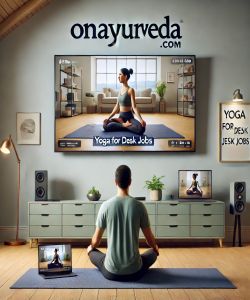
Overview of Yoga for Desk Jobs
Yoga for Desk Jobs constitutes a highly specialised and pragmatic adaptation of classical yogic principles, meticulously redesigned to counteract the pervasive physiological and psychological detriments of a sedentary professional existence. This is not a diluted or simplified form of yoga; it is a targeted, strategic intervention engineered to address the specific biomechanical stresses and mental fatigue endemic to the modern workplace. The practice mandates a focus on correcting postural misalignments, decompressing the vertebral column, releasing tension in the neck, shoulders, and hips, and mitigating the onset of repetitive strain injuries. It moves beyond mere physical stretching, integrating controlled breathing techniques (pranayama) and mindfulness to enhance mental clarity, bolster concentration, and regulate the nervous system’s response to occupational stress. This discipline is therefore positioned as an essential component of corporate wellness and a non-negotiable tool for any professional committed to long-term health, performance, and career sustainability. It serves as a powerful prophylactic measure against chronic pain and burnout, transforming the static, restrictive environment of the desk into a platform for physical restoration and cognitive enhancement. The implementation of such a programme is not a concession to comfort but a decisive investment in human capital, directly impacting productivity, reducing absenteeism, and fostering a culture of resilience and well-being. Its principles are grounded in anatomical science and its application is direct, functional, and stripped of extraneous spiritualism, making it an entirely appropriate and effective modality for the secular, results-driven corporate world. This is a robust system for optimising the human body and mind to withstand and ultimately thrive within the demanding confines of desk-bound labour, making it an indispensable asset for the modern professional.
What is Yoga for Desk Jobs?
Yoga for Desk Jobs is a precise, functional, and highly targeted modality of yoga, specifically adapted to address and systematically dismantle the deleterious effects of prolonged sedentary work. It is not a generalised wellness practice but a focused system of movements, postures, and breathing exercises designed to be performed in a corporate environment, often utilising the desk and chair as supportive props. The fundamental premise of this discipline is to provide an immediate and accessible antidote to the physical and mental strain imposed by hours of static posture, repetitive motion, and high-pressure cognitive tasks. It is fundamentally characterised by its emphasis on practicality and efficiency, delivering maximum therapeutic benefit with minimal disruption to the professional workflow. The practice intentionally eschews complex, esoteric postures in favour of anatomically intelligent movements that directly target the areas most compromised by desk work: the cervical and lumbar spine, the shoulders and upper back (trapezius and rhomboids), the hip flexors, and the wrists.
Key components of this practice include:
Postural Realignment: A series of movements and static holds designed to re-educate the body’s neuromuscular patterns, encouraging a neutral spinal alignment and correcting the forward-head posture and rounded shoulders common among office workers.
Micro-interventions: Short, potent sequences of stretches and movements, lasting only a few minutes, designed to be integrated seamlessly throughout the workday to break the cycle of physical stagnation and mental fatigue.
Ergonomic Integration: The practice teaches individuals to develop a heightened awareness of their physical state, enabling them to make constant, subtle adjustments to their posture and workspace setup for optimal biomechanical health.
Breath-Centred Regulation: Utilising specific pranayama (breathing) techniques to down-regulate the sympathetic nervous system (the ‘fight-or-flight’ response), thereby reducing stress, enhancing focus, and improving cognitive function under pressure.
Who Needs Yoga for Desk Jobs?
Corporate Executives and Senior Management: Individuals in high-stakes leadership roles who endure immense mental pressure and long hours seated in meetings or at their desks. This practice is imperative for maintaining cognitive sharpness, emotional regulation, and physical resilience required for effective decision-making.
Information Technology Professionals: Programmers, data analysts, and system administrators who are tethered to their workstations for extended, uninterrupted periods. They are at extreme risk for repetitive strain injuries, eye strain, and severe postural degradation, making targeted yoga a critical preventative measure.
Administrative and Support Staff: Personnel who perform extensive data entry, typing, and other desk-bound tasks. This demographic faces significant risk of carpal tunnel syndrome, neck pain, and lower back issues, for which this yoga provides direct, remedial action.
Financial Analysts and Traders: Professionals operating in high-stress, fast-paced environments where physical stillness is paradoxically combined with intense mental activity. The practice is essential for managing stress-induced physical tension and maintaining the focus needed for complex analytical work.
Call Centre Operatives: Employees who remain seated with headsets for entire shifts, often adopting poor posture to manage their equipment. They require this intervention to counteract chronic neck, shoulder, and jaw tension, as well as the mental fatigue of repetitive communication.
Graphic Designers and Architects: Creative professionals who spend long hours leaning over desks or focusing intently on screens. They are highly susceptible to upper back and neck strain, making postural correction and tension release exercises a professional necessity.
Remote and Home-Based Workers: The rapidly growing workforce operating from non-optimised home office environments. Without the structure of a formal workplace, they are at increased risk of poor ergonomics and physical neglect, mandating a self-directed practice for physical maintenance.
Academics and Researchers: Individuals engaged in prolonged periods of reading, writing, and computer-based research. The sustained forward-leaning posture is a direct precursor to chronic spinal issues, which this discipline is specifically designed to prevent and ameliorate.
Origins and Evolution of Yoga for Desk Jobs
The genesis of Yoga for Desk Jobs is not found in ancient yogic texts but is a distinctly modern synthesis, born from the collision of ancient physiological wisdom and the pathologies of the twentieth and twenty-first-century workplace. Its roots lie in the classical tradition of Hatha yoga, which established a sophisticated understanding of posture (asana), breath control (pranayama), and mind-body integration. For millennia, these practices were developed for spiritual aspirants and individuals leading physically varied lives. The core principles of alignment, breath-led movement, and internal awareness provided a robust framework for physical and mental well-being.
The evolution into a specialised corporate modality was catalysed by the profound shift in human labour following the Industrial Revolution and, more acutely, the digital age. The rise of the "knowledge worker" created an unprecedentedly large population segment engaged in sedentary, desk-bound occupations. This societal change introduced a new set of chronic, work-related ailments: repetitive strain injury (RSI), chronic lower back pain, tension headaches, and a host of musculoskeletal disorders directly attributable to prolonged sitting and poor ergonomics. Traditional medicine often treated these as isolated symptoms, failing to address the systemic, postural root cause.
It was within this context, primarily from the latter half of the twentieth century, that forward-thinking yoga teachers, physical therapists, and ergonomists began to recognise the applicability of yogic principles to this modern affliction. They started a process of deconstruction and adaptation, stripping away the more complex or spiritually-oriented elements of classical yoga and re-engineering its fundamental techniques for a corporate setting. The focus shifted from achieving advanced postures to executing simple, anatomically precise movements that could be performed in office attire, often while seated. The chair, once a symbol of physical confinement, was repurposed as a yoga prop. This evolutionary process has accelerated with the rise of corporate wellness programmes, transforming the practice from a niche intervention into a recognised and essential tool for occupational health, performance optimisation, and preventative care in the modern professional landscape.
Types of Yoga for Desk Jobs
Chair Yoga (Seated Asana): This is the foundational modality. It involves the adaptation of traditional yoga postures to be performed whilst seated in an office chair. The chair provides support and stability, making the practice accessible regardless of fitness level or flexibility. It focuses on spinal mobility (seated cat-cow), hip opening (seated pigeon pose), and shoulder and neck releases. Its primary function is to provide a full-body stretch and strengthening sequence without the need to leave the workstation.
Postural Realignment and Ergonomic Yoga: This type is less about flowing sequences and more about targeted, therapeutic intervention. It consists of specific exercises and sustained holds designed to actively correct common postural deviations like forward head posture, kyphosis (rounding of the upper back), and pelvic tilt. It teaches heightened proprioceptive awareness, enabling the individual to recognise and correct their posture throughout the day, effectively integrating the practice into every moment of their work.
Micro-break Yoga (Desk-Based Sequences): This involves ultra-short, highly efficient sequences of movement and stretching, typically lasting between two and five minutes. These are designed to be interspersed throughout the workday to punctuate long periods of sitting. Techniques include wrist and finger stretches to combat RSI, eye yoga (palming) to relieve digital eye strain, and standing desk stretches like calf raises or a supported forward fold using the desk.
Mindfulness and Breathwork (Pranayama for Professionals): This form concentrates exclusively on the mental and nervous system benefits. It employs specific breathing techniques, such as diaphragmatic breathing or box breathing, to mitigate the body's stress response, enhance focus, and improve cognitive clarity. It is often practised discreetly at the desk, providing a powerful tool for managing pressure and maintaining composure during demanding tasks or meetings, without any overt physical movement.
Restorative Desk Yoga: This gentle practice utilises office furniture like the desk or chair to support the body in passive stretches. The objective is deep relaxation and the release of chronic tension held in the fascia and muscles. A typical posture might involve resting the forehead on folded arms on the desk in a modified child's pose to release the back and calm the mind. It is a vital tool for mental and physical recovery during the workday.
Benefits of Yoga for Desk Jobs
Systematic Correction of Postural Deviations: Actively counteracts the detrimental effects of prolonged sitting, such as forward head posture and kyphosis, by strengthening posterior chain muscles and re-establishing neutral spinal alignment, thus mitigating chronic pain.
Prophylaxis Against Musculoskeletal Disorders: Directly targets the root causes of conditions like carpal tunnel syndrome, sciatica, and tension headaches through specific stretches and movements that improve circulation and reduce nerve impingement.
Enhanced Cognitive Function and Concentration: Utilises controlled breathing (pranayama) and mindfulness techniques to regulate the autonomic nervous system, leading to a demonstrable improvement in focus, memory retention, and problem-solving capabilities under pressure.
Effective Stress and Anxiety Mitigation: Down-regulates the production of stress hormones like cortisol by activating the parasympathetic nervous system, equipping professionals with a potent tool for managing occupational stress and preventing burnout.
Increased Physical Energy and Reduced Fatigue: Combats the lethargy associated with physical inactivity by stimulating blood flow, improving oxygen uptake, and releasing endorphins, resulting in sustained energy levels throughout the workday without reliance on stimulants.
Improved Flexibility and Range of Motion: Systematically releases tension in chronically tight areas such as the hip flexors, hamstrings, and pectoral muscles, restoring functional movement patterns and reducing the risk of injury both within and outside the workplace.
Augmented Productivity and Professional Performance: By addressing the physical discomfort and mental fog that impede workflow, the practice directly contributes to higher output, reduced error rates, and greater overall professional effectiveness.
Cultivation of Mind-Body Awareness: Fosters a heightened sense of proprioception and interoception, enabling individuals to become more attuned to their body’s signals of stress or strain, leading to proactive self-care and ergonomic adjustments.
Core Principles and Practices of Yoga for Desk Jobs
Primacy of Alignment: The absolute focus is on precise, biomechanically sound alignment over the depth or aesthetic appearance of a posture. The practice mandates meticulous attention to joint stacking and spinal neutrality to ensure safety and maximise therapeutic benefit, correcting rather than reinforcing poor postural habits.
Breath as the Primary Modulator: Every movement is initiated and synchronised with the breath. The breath (prana) is not an afterthought but the central tool used to regulate the nervous system, deepen stretches safely, and anchor the mind in the present moment, transforming mechanical exercise into a mindful practice.
Function over Form: The practice is ruthlessly pragmatic. Poses are selected and modified based on their direct applicability to alleviating the specific strains of desk work. Esoteric or complex postures are eliminated in favour of functional movements that directly target afflicted areas like the cervical spine, wrists, and hip flexors.
Integration, Not Segregation: The techniques are designed to be woven into the fabric of the workday, not set apart from it. This principle champions the use of micro-breaks and discreet seated movements, fostering a continuous practice of mindfulness and physical self-regulation rather than a single, isolated session.
Proprioceptive Education: A core objective is to re-educate the body's awareness of itself in space. The practice trains the individual to recognise the subtle onset of postural fatigue and muscular tension, empowering them to make immediate, conscious corrections long before discomfort escalates into chronic pain.
Discretion and Accessibility: The practice must be adaptable to a professional environment. Movements are designed to be performed in work attire, often while seated, without requiring special equipment or a large space. This ensures low barriers to entry and encourages consistent, daily application.
Mindful Presence and Non-Striving: Whilst the goals are tangible (pain reduction, improved focus), the practice itself is approached with an attitude of non-striving (aparigraha). The focus is on the process and the internal sensations, cultivating a state of calm, focused awareness that is in itself a powerful antidote to workplace stress.
Online Yoga for Desk Jobs
Unrivalled Accessibility and Convenience: Online platforms eliminate all geographical and logistical barriers. Professionals can access high-calibre instruction directly at their workstation, regardless of their location, negating travel time and the need for a dedicated studio space. This allows for immediate intervention the moment physical discomfort or mental fatigue arises.
Absolute Discretion and Privacy: The online format affords a level of privacy that is impossible in a group or onsite setting. This is critical in a corporate environment where individuals may feel self-conscious practising in front of colleagues. It allows for full engagement without fear of judgment or interruption, fostering a more effective practice.
On-Demand Availability and Flexibility: Unlike fixed-schedule onsite classes, online resources are available 24/7. This empowers the individual to integrate the practice into their unique workflow, utilising short breaks, lunch periods, or moments of low demand as opportunities for restoration, rather than being constrained by a rigid, externally imposed timetable.
Customisation and Personalised Pacing: Online platforms often provide a vast library of sessions targeting different needs (e.g., neck tension, wrist pain, stress reduction) and durations. This enables the user to select precisely what they need on any given day and to progress at their own pace, repeating sessions as necessary to master techniques.
Significant Cost-Effectiveness: For both individuals and organisations, online yoga programmes represent a substantially more economical solution than arranging for in-person instruction. It eliminates instructor travel costs, the need for a physical space, and allows for scalable deployment across an entire workforce at a fraction of the cost.
Reinforcement Through Repetition: The ability to replay sessions allows for the meticulous study and perfection of form. An individual can review instructions on alignment and technique multiple times, ensuring they perform the movements safely and effectively, a benefit not readily available in a live, one-off class.
Immediate Application in the Relevant Environment: Practising yoga at the very desk where the physical issues originate creates a powerful and direct link between the problem and the solution. It facilitates the immediate application of ergonomic insights and postural corrections within the actual work context, enhancing long-term habit formation.
Yoga for Desk Jobs Techniques
Step One: Seated Spinal Mobilisation (Cat-Cow): Begin seated with feet flat on the floor, knees aligned over ankles, and hands resting on the thighs. On an inhalation, arch the spine, drawing the chest forward and lifting the gaze slightly, creating a gentle backbend (Cow pose). On an exhalation, round the spine, drawing the navel towards the back of the chair, tucking the chin to the chest (Cat pose). Repeat this fluid movement for 8-10 breath cycles to articulate and lubricate each vertebra.
Step Two: Cervical Spine and Trapezius Release: Sit tall, extending the crown of the head upwards. Gently lower the right ear towards the right shoulder, keeping the left shoulder relaxed and down. To deepen the stretch, extend the left arm out to the side, flexing the wrist. Hold for five deep breaths. Slowly return to centre and repeat on the left side. Follow this by tucking the chin to the chest to stretch the posterior neck muscles.
Step Three: Thoracic Spine and Pectoral Opening: Remain seated or stand. Interlace the fingers behind the back. Squeeze the shoulder blades together and, if possible, straighten the arms, lifting the hands away from the lower back. This action powerfully counteracts the forward slump of the shoulders by opening the chest and stretching the pectoral muscles. Hold for 30 seconds, breathing steadily into the chest.
Step Four: Hip Flexor and Gluteal Stretch (Seated Pigeon): While seated, cross the right ankle over the left knee, keeping the right foot flexed to protect the knee joint. Sit tall to create length in the spine. For a deeper stretch, gently hinge forward from the hips, maintaining a flat back. Hold for 5-8 breaths to release deep tension in the right glute and piriformis. Repeat on the other side.
Step Five: Wrist and Forearm Decompression: Extend one arm forward at shoulder height, palm facing up. With the opposite hand, gently press down on the fingers, drawing them towards the floor to stretch the wrist flexors. Hold for 30 seconds. Then, flip the hand so the palm faces down and gently press the back of the hand towards the body to stretch the extensors. Repeat on the other arm.
Yoga for Desk Jobs for Adults
The application of Yoga for Desk Jobs for adults is a strategic imperative, not a discretionary wellness activity. For the adult professional, years, often decades, of cumulative physical and mental stress have forged entrenched patterns of postural dysfunction and nervous system dysregulation. This discipline directly confronts this reality. It is not about attaining acrobatic flexibility but about systematic, intelligent deconstruction of harmful habits and the restoration of functional, pain-free movement. For the adult body, which may be contending with pre-existing conditions, reduced mobility, or the simple biomechanical wear and tear of age, the practice offers a low-impact, highly adaptable methodology for rebuilding core strength, re-establishing spinal integrity, and enhancing joint health. It acknowledges the unique pressures of adult responsibilities—career demands, financial obligations, and familial duties—by providing a toolkit that is efficient, discreet, and can be integrated into a crowded schedule. The psychological dimension is equally critical. The adult mind is often burdened by chronic stress, which manifests physically as muscular tension and mentally as diminished focus or anxiety. The deliberate, breath-synchronised movements and mindfulness components of this practice provide a powerful mechanism for down-regulating the stress response, cultivating mental resilience, and sharpening the cognitive faculties essential for navigating a complex professional landscape. It is a mature practice for a mature demographic, demanding consistency and self-awareness but delivering profound, tangible returns in the form of sustained health, enhanced performance, and professional longevity. This is preventative medicine and performance optimisation in a single, coherent system.
Total Duration of Online Yoga for Desk Jobs
The standard and most efficacious total duration for a comprehensive online Yoga for Desk Jobs session is 1 hr. This specific timeframe is not arbitrary; it is a calculated allocation designed to facilitate a thorough and systematic address of the multifaceted issues stemming from sedentary work, without demanding an impractical commitment. A session of 1 hr allows for a structured progression through several critical phases. It provides sufficient time for an initial period of centering and breathwork to transition the mind from a state of occupational stress to one of focused presence. This is followed by a comprehensive warm-up and mobilisation of all major joints, a crucial step for injury prevention. The core of the 1 hr is dedicated to targeted postures and dynamic sequences designed to decompress the spine, open the hips and shoulders, and actively correct postural imbalances. Crucially, this duration permits holding poses for a therapeutically effective length of time, enabling deeper release of muscular and fascial tension. The session concludes with a dedicated cool-down period and a final relaxation or mindfulness practice, which is vital for integrating the physical work and calming the nervous system before re-engaging with professional tasks. While shorter micro-sessions have their place for maintenance, the full 1 hr session acts as a fundamental weekly or bi-weekly reset, providing the depth and comprehensiveness required to make a significant and lasting impact on one's physical and mental well-being. It represents a serious, non-negotiable investment in one's personal capital.
Things to Consider with Yoga for Desk Jobs
Engaging in Yoga for Desk Jobs demands a pragmatic and informed approach, moving beyond the mere execution of movements to a more holistic consideration of its implementation. Foremost is the imperative to respect one's own physical limitations and pre-existing medical conditions. This practice is therapeutic, not a competitive sport; any movement that elicits sharp or shooting pain must be ceased immediately. It is not a panacea for severe injuries, which require professional medical diagnosis and treatment. Secondly, consistency is paramount. Sporadic, infrequent practice will yield negligible results. The cumulative nature of desk-bound strain requires a correspondingly consistent and disciplined response; short, daily interventions are demonstrably more effective than a single, lengthy session once a week. The environment itself must also be considered. While the practice is adaptable, a space with minimal distractions is essential for achieving the mindfulness component. One must also consider the office culture and ensure that practising, even discreetly, aligns with workplace norms or is conducted during appropriate break times. Furthermore, the choice of instruction is critical, particularly in an online context. It is essential to engage with qualified, experienced instructors who possess a strong understanding of anatomy and the specific biomechanics of sedentary work. Finally, one must manage expectations. This practice provides powerful tools for mitigation and management, but it cannot entirely negate the consequences of a fundamentally unhealthy work pattern. It must be viewed as one crucial component of a broader wellness strategy that also includes regular ergonomic assessments, sufficient breaks, and non-sedentary activity outside of work hours.
Effectiveness of Yoga for Desk Jobs
The effectiveness of Yoga for Desk Jobs is unequivocal and substantiated by fundamental principles of anatomy, physiology, and neuroscience. Its potency lies in its direct, multi-faceted assault on the pathologies of a sedentary work life. Physiologically, the practice is demonstrably effective at reversing the process of adaptive shortening in muscles like the hip flexors and pectorals, while strengthening the chronically weakened posterior chain muscles, such as the rhomboids and glutes. This biomechanical rebalancing is the most direct method for correcting poor posture, alleviating spinal compression, and reducing the incidence of chronic back and neck pain. The inclusion of targeted stretches for the forearms and wrists directly mitigates the precursors to repetitive strain injuries. Neurologically, the practice’s emphasis on diaphragmatic breathing and mindfulness has a profound and measurable impact on the autonomic nervous system. It actively shifts the body from a state of sympathetic ("fight-or-flight") dominance, characteristic of high-stress work environments, to a parasympathetic ("rest-and-digest") state. This shift results in a lower heart rate, reduced blood pressure, and a significant decrease in circulating stress hormones like cortisol. The outcome is enhanced cognitive function, improved emotional regulation, and a fortified defence against occupational burnout. The practice is not a passive remedy; it is an active system of re-education that empowers the individual with heightened body awareness, enabling them to make continuous, subconscious postural adjustments. Therefore, its effectiveness is not merely palliative; it is corrective, preventative, and performance-enhancing, making it a non-negotiable tool for professional sustainability.
Preferred Cautions During Yoga for Desk Jobs
It is imperative that the practice of Yoga for Desk Jobs be undertaken with stringent self-awareness and a non-negotiable respect for the body's structural limitations. This is not a domain for ego or aggressive striving. The primary caution is to unequivocally avoid any sensation of sharp, shooting, or electrical pain; this is a definitive signal of potential nerve impingement or tissue damage, and the posture must be abandoned immediately. Muscular sensation should be one of a deep stretch, not agony. Individuals with pre-existing conditions, particularly spinal issues such as herniated discs, or those with acute injuries, must seek explicit clearance from a qualified medical professional before commencing any practice. Self-diagnosis is unacceptable. Furthermore, hypermobility in joints should be managed with extreme care; the objective is stability and strength, not pushing joints to their end range of motion, which can lead to instability and long-term damage. One must resist the temptation to emulate images of extreme flexibility, as form and alignment are always prioritised over depth. Breath-holding is to be strictly avoided, as it increases intra-abdominal pressure and stress; the breath must remain fluid and constant. Finally, it is crucial to recognise that this practice is a potent supplement to, not a replacement for, professional medical advice and a holistically healthy lifestyle. It will not cure serious pathology, nor will it compensate for a complete lack of movement outside of work hours. Prudence is mandatory.
Yoga for Desk Jobs Course Outline
Module 1: Foundational Principles and Postural Assessment
Introduction to the core tenets: breath, alignment, and mindfulness.
Self-assessment of common desk-related postural deviations (e.g., forward head, kyphosis).
Mastery of diaphragmatic breathing as a tool for stress regulation.
Introduction to neutral spine alignment while seated and standing.
Module 2: The Decompressed Spine - Mobility and Release
Seated Cat-Cow: Articulating the vertebral column.
Gentle seated spinal twists for rotational mobility and organ health.
Techniques for releasing the Quadratus Lumborum (QL) to alleviate lower back tension.
Introduction to supported forward folds using the desk for lumbar decompression.
Module 3: Liberating the Shoulders, Neck, and Upper Back
Targeted stretches for the cervical spine and trapezius muscles.
Pectoral-opening postures to counteract shoulder rounding (e.g., doorway stretches).
Strengthening exercises for the rhomboids and mid-trapezius to improve posture.
Techniques for releasing jaw tension (TMJ) related to stress.
Module 4: Unlocking the Hips and Legs
Seated Pigeon pose and other external hip rotators to release the glutes and piriformis.
Active stretches for the hip flexors (psoas) to correct anterior pelvic tilt.
Hamstring stretches utilising the chair or desk.
Ankle and foot mobilisation to improve circulation.
Module 5: Combating Repetitive Strain - Wrists, Hands, and Eyes
A comprehensive series of wrist and finger flexor and extensor stretches.
Nerve gliding exercises for the median nerve (carpal tunnel prevention).
Eye Yoga (palming, focus shifting) to reduce digital eye strain.
Self-massage techniques for the forearms.
Module 6: Integration and Mindful Workflow
Designing personalised 5-minute and 10-minute micro-break routines.
Mindfulness techniques for maintaining focus and managing cognitive load.
Breathwork practices for high-pressure situations (e.g., box breathing).
Developing a sustainable, long-term practice for continued professional well-being.
Detailed Objectives with Timeline of Yoga for Desk Jobs
Weeks 1-2: Establishment of Foundational Awareness. The primary objective is to establish a consistent mind-body connection. By the end of week two, the practitioner will be able to maintain a neutral seated posture for a minimum of ten consecutive minutes without prompting and will have mastered the technique of diaphragmatic breathing, capable of using it consciously to mitigate moments of acute stress.
Weeks 3-4: Mastery of Core Mobilisation Sequences. The focus shifts to active intervention. By the end of the first month, the individual will demonstrate proficient and safe execution of foundational spinal mobility exercises (Seated Cat-Cow, simple twists) and key stretches for the neck and shoulders, integrating them into at least two daily micro-breaks.
Month 2: Demonstrable Improvement in Postural Endurance. The objective is measurable change. By the end of the second month, a noticeable reduction in the habitual forward-head and rounded-shoulder posture will be evident. The practitioner will report a decrease in the frequency and intensity of upper back and neck tension, supported by increased strength in postural muscles.
Month 3: Proactive Pain and Strain Management. The practice becomes preventative. By the end of the third month, the individual will possess a toolkit of specific techniques to proactively address the onset of discomfort. They will be able to independently select and apply the appropriate stretch or movement to counteract wrist, hip, or lower back strain as it arises, preventing it from escalating.
Months 4-6: Integration and Autonomous Practice. The objective is full autonomy and habituation. By the six-month mark, the practice will be a fully integrated and non-negotiable part of the professional's daily routine. The practitioner will be able to design their own short sequences based on their body's needs, and the principles of mindful posture and movement will have become second nature, leading to a sustained state of reduced physical pain and enhanced mental clarity.
Requirements for Taking Online Yoga for Desk Jobs
A Stable and High-Speed Internet Connection: This is non-negotiable. An unreliable connection that causes buffering or dropouts will disrupt the flow of the class, compromise the ability to follow instruction, and nullify the stress-reducing benefits of the practice.
A Functional Computing Device: A laptop, tablet, or desktop computer with a sufficiently large screen to clearly view the instructor's demonstrations is mandatory. A smartphone is a suboptimal alternative due to its small screen size, which can encourage poor neck posture while trying to follow along.
An Appropriate and Private Physical Space: The individual must have access to a space around their desk that allows for basic movement without obstruction. It must be a private area where they will not be interrupted, ensuring the focus required for a safe and effective mindfulness practice.
A Standard, Sturdy Office Chair: A stable chair, preferably without wheels or with lockable wheels, is required. It will be used as a primary prop for both seated and standing-support postures. Unstable or overly reclined chairs are a safety hazard and are unsuitable.
Unrestricted, Professional-Appropriate Attire: While specialised yoga wear is unnecessary, clothing must allow for a full range of motion. Restrictive suits, skirts, or fabrics that do not stretch are unacceptable as they will inhibit movement and prevent the correct execution of postures.
A Commitment to Self-Discipline and Punctuality: The online format demands a high degree of personal accountability. The participant must possess the discipline to log in on time, minimise personal distractions (e.g., email notifications, mobile phone), and remain engaged for the full duration of the session.
An Attitude of Receptivity and Self-Responsibility: The individual must be prepared to listen intently to alignment cues and take full responsibility for their own body. Without a physically present instructor, the onus is entirely on the participant to avoid overexertion and to work within their own safe limits.
Things to Keep in Mind Before Starting Online Yoga for Desk Jobs
Before commencing an online Yoga for Desk Jobs programme, it is imperative to adopt a mindset of proactive self-management and disciplined engagement. The absence of a physically present instructor places the full onus of safety and correct execution upon the practitioner. One must commit to listening with forensic attention to the verbal cues provided, prioritising the instructor's guidance on alignment over any attempt to replicate a posture's visual form perfectly. It is essential to create a "digital sanctuary" for the duration of the session; this means silencing all notifications, closing unnecessary browser tabs, and communicating to colleagues or family that you are unavailable. This is not a passive, multi-tasking activity. The practitioner must conduct a rigorous self-assessment for any pre-existing injuries or conditions and be prepared to modify or omit postures accordingly, without ego or external pressure. Understand that progress is measured not in dramatic increases in flexibility but in the subtle, incremental reduction of daily discomfort and the enhanced ability to maintain focus. The online format demands a greater degree of intrinsic motivation. Therefore, one must establish a rigid schedule for practice, treating these sessions with the same gravity as a critical business meeting. Ultimately, success in this medium hinges on the individual’s ability to transition from a passive recipient of information to an active, responsible, and engaged participant in their own well-being. This requires a mental shift from expecting to be corrected to cultivating the deep internal awareness needed for self-correction.
Qualifications Required to Perform Yoga for Desk Jobs
The performance and instruction of Yoga for Desk Jobs demand a specific and rigorous set of qualifications that extend far beyond a standard yoga teaching certificate. The instructor must be viewed not merely as a guide but as a specialist in occupational wellness and applied anatomy. It is insufficient to simply adapt a generic yoga class; the role requires a deep, evidence-based understanding of the distinct pathologies associated with sedentary work. The foundational, non-negotiable qualification is a baseline certification from a reputable governing body, but this is merely the entry point.
The essential, advanced qualifications include:
Registered Yoga Teacher (RYT) Certification: A minimum of an RYT-200, and preferably an RYT-500, from an organisation like Yoga Alliance, which ensures a comprehensive understanding of asana, pranayama, and teaching methodology.
Specialised Training in Anatomy and Kinesiology: This is paramount. The instructor must possess an advanced, practical knowledge of the musculoskeletal system, specifically how prolonged sitting affects the spine, pelvis, and shoulder girdle. Certifications in functional anatomy or therapeutic yoga are highly desirable.
Certification or Advanced Training in Chair Yoga or Corporate Yoga: Dedicated training in these modalities is critical. It equips the instructor with the specific skills needed to modify postures for a seated position, utilise office furniture as props, and structure classes appropriate for a professional environment.
A Demonstrable Understanding of Ergonomics: While not a certified ergonomist, the instructor must be well-versed in the principles of workplace ergonomics to provide relevant cues and help individuals integrate postural awareness directly into their workstation setup.
Possessing these qualifications ensures the instructor can deliver a programme that is not only effective but, most importantly, safe. They must be capable of providing clear, precise instructions, offering appropriate modifications for different body types and physical limitations, and articulating the 'why' behind each movement in a professional, secular language.
Online Vs Offline/Onsite Yoga for Desk Jobs
Online
The primary advantage of the online modality is its unparalleled convenience and accessibility. It eradicates geographical limitations, allowing individuals or entire corporate teams, regardless of location, to access expert instruction. This format offers absolute scheduling flexibility, with on-demand resources enabling practice to be integrated seamlessly into the workday during opportune moments, rather than being confined to a fixed, externally dictated timetable. Discretion is another significant benefit; professionals can practise in the privacy of their own office or home without the potential self-consciousness of a group setting. For organisations, online programmes are a highly scalable and cost-effective solution, eliminating the logistical complexities and expenses associated with securing a physical space and instructor for onsite sessions. The ability to replay sessions allows for meticulous reinforcement of technique and alignment cues. However, the online format’s principal drawback is the absence of direct, hands-on feedback. The instructor cannot provide physical adjustments to correct misalignment, placing a greater burden of self-awareness and responsibility on the practitioner. Furthermore, it requires a higher degree of self-discipline to remain focused and avoid distractions from the immediate work environment.
Offline/Onsite
The offline, or onsite, delivery of Yoga for Desk Jobs offers distinct advantages centred on direct human interaction and environmental control. The most critical benefit is the presence of the instructor, who can provide immediate, tactile feedback and hands-on adjustments. This physical guidance is invaluable for correcting subtle misalignments, ensuring safety, and helping individuals achieve a deeper understanding of the postures. The group setting fosters a sense of community and shared commitment, which can be highly motivating and can contribute to team cohesion and corporate culture. An onsite session also creates a clear, demarcated time and space dedicated solely to the practice, removing the practitioner from their immediate workstation and its associated digital distractions, thereby allowing for deeper mental immersion. The primary disadvantages are logistical and financial. Onsite sessions are inherently less flexible, requiring all participants to be available at a specific time. They demand a suitable, dedicated physical space within the office, which may not be available. For the organisation, the cost per head is significantly higher than online alternatives, and the geographical reach is limited to a single physical location, making it unsuitable for distributed teams.
FAQs About Online Yoga for Desk Jobs
Question 1. Do I need any previous yoga experience?
Answer: No. Online Yoga for Desk Jobs is designed for all levels, particularly beginners. The focus is on simple, functional movements, not complex postures.
Question 2. What equipment is required?
Answer: A stable internet connection, a computer or tablet, and a sturdy office chair are the only requirements. No yoga mat or special props are necessary.
Question 3. Can I practise in my work clothes?
Answer: Yes. The movements are designed to be performed in professional attire, provided it is not overly restrictive.
Question 4. How long are the sessions?
Answer: Sessions vary. Many platforms offer a range of durations, from 5-minute micro-breaks to comprehensive 1 hr classes.
Question 5. Will I get sweaty?
Answer: It is highly unlikely. The practice focuses on stretching, mobility, and mindfulness, not strenuous cardiovascular exercise.
Question 6. Is it safe to practise without an instructor physically present?
Answer: Yes, provided you listen carefully to alignment cues, respect your body's limits, and never push into pain. The responsibility for safety rests with you.
Question 7. How often should I practise?
Answer: Consistency is key. Short, daily sessions of 10-15 minutes are more effective than one long session per week.
Question 8. Can this replace my regular exercise routine?
Answer: No. This is a targeted therapeutic practice to counteract sitting. It is a supplement to, not a replacement for, regular cardiovascular and strength-training exercise.
Question 9. Will my colleagues see me?
Answer: That depends on your office layout. Many choose to practise during lunch breaks, in an empty meeting room, or with their camera off in a virtual class for privacy.
Question 10. What if I have a pre-existing injury?
Answer: You must consult a medical professional before starting. During practice, you are responsible for modifying or skipping any movements that cause discomfort.
Question 11. What are the main physical benefits?
Answer: Reduced back and neck pain, improved posture, increased flexibility in the hips and shoulders, and prevention of repetitive strain injuries.
Question 12. Are there mental benefits as well?
Answer: Yes. The primary mental benefits are significant stress reduction, enhanced focus and concentration, and improved emotional regulation.
Question 13. How quickly will I see results?
Answer: You may feel an immediate sense of release after a single session. However, tangible, lasting changes in posture and pain levels typically require several weeks of consistent practice.
Question 14. Can this help with tension headaches?
Answer: Yes. By releasing tension in the neck and shoulders, which is a common cause of tension headaches, this practice can be highly effective.
Question 15. Is this different from a regular online yoga class?
Answer: Absolutely. It is highly specialised, using the desk and chair as props and focusing exclusively on the problems caused by sedentary work.
Question 16. Do I need to turn my camera on?
Answer: This depends on the platform or instructor's policy, but many classes allow the camera to be off to protect privacy.
Question 17. Can I practise at my standing desk?
Answer: Yes, many techniques can be adapted for a standing position, which is highly encouraged.
Conclusion About Yoga for Desk Jobs
In conclusion, Yoga for Desk Jobs must be re-contextualised from a peripheral wellness perk into a core strategic component of modern professional life. It is a non-negotiable, high-impact intervention meticulously engineered to dismantle the severe physiological and psychological consequences of a sedentary career. The practice represents a potent synthesis of ancient wisdom and modern anatomical science, providing a pragmatic, accessible, and ruthlessly efficient system for postural correction, pain mitigation, and cognitive enhancement. Its implementation is not an admission of weakness but a declaration of strategic foresight, empowering individuals to maintain their physical and mental capital in the face of relentless occupational demands. For the individual, it is the key to professional longevity and a pain-free existence. For the organisation, it is a direct investment in the resilience, focus, and productivity of its workforce, yielding tangible returns in reduced absenteeism and heightened performance. To dismiss this discipline is to wilfully ignore a powerful tool for sustaining the very assets upon which professional success is built. Therefore, the adoption of a consistent and disciplined Yoga for Desk Jobs practice is not a matter of choice, but an imperative for any serious professional committed to thriving, not merely surviving, in the modern corporate environment.