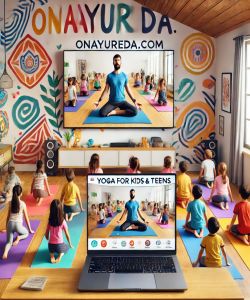
1. Overview of Yoga for Kids and Teens
Yoga for kids and teens is a highly specialised and adapted discipline designed to address the unique physiological, psychological, and emotional needs of developing individuals. It is not merely a simplification of adult yoga; rather, it is a sophisticated pedagogical framework that translates the profound principles of classical yoga into an accessible, engaging, and age-appropriate format. This practice systematically introduces foundational concepts of physical postures (asanas), controlled breathing exercises (pranayama), and mindfulness techniques to cultivate a robust foundation of physical health, mental clarity, and emotional resilience. The core objective is to equip young people with a durable toolkit for navigating the complexities of modern life, from academic pressures and social dynamics to the internal challenges of self-regulation and identity formation. The methodology prioritises safety, inclusivity, and positive reinforcement, utilising storytelling, interactive games, and thematic sequences to maintain engagement whilst delivering substantive benefits. It operates on the principle that early intervention in physical literacy and emotional intelligence yields lifelong advantages, fostering enhanced body awareness, improved concentration, and a greater capacity for managing stress. By integrating movement with mindfulness, the discipline provides a holistic system for nurturing a balanced and well-adjusted individual, establishing healthy habits and coping mechanisms that will serve them through adolescence and into adulthood. This is not a recreational activity but a structured developmental programme with demonstrable outcomes in cognitive function, emotional stability, and physical wellbeing, making it an indispensable component of a comprehensive approach to youth development and preventative health.
2. What are Yoga for Kids and Teens?
Yoga for kids and teens constitutes a purpose-built system of physical and mental conditioning, meticulously adapted from traditional yogic practices to suit the developmental stages of children and adolescents. It is a structured modality that integrates physical postures, breathing techniques, and mindfulness exercises in a manner that is both engaging and educationally sound. The practice is fundamentally different from adult yoga in its delivery and focus. Instead of long, static holds and complex philosophical discourse, it employs dynamic movement, thematic storytelling, and interactive elements to teach core concepts. The physical component, or asanas, are often named after animals or elements of nature to make them relatable and memorable for younger participants. These postures are selected to support the development of motor skills, enhance flexibility, build strength, and improve posture and balance. The breathing exercises, or pranayama, are simplified and introduced as tools for calming the nervous system, managing energy levels, and improving focus. Mindfulness and relaxation techniques are woven throughout the practice, teaching children and teens to observe their thoughts and feelings without judgement, thereby fostering emotional regulation and reducing anxiety. It is, therefore, a multi-faceted discipline with clear objectives: to build a strong and healthy body, to cultivate a focused and calm mind, and to develop a resilient and self-aware emotional landscape. It functions as a proactive, non-competitive form of physical education that simultaneously addresses the pressing mental and emotional health needs of contemporary youth.
3. Who Needs Yoga for Kids and Teens?
- Children and Adolescents Exhibiting High Levels of Stress or Anxiety. The discipline provides a structured, non-pharmacological methodology for managing the physiological and psychological symptoms of stress. It equips them with tangible techniques for self-soothing and nervous system regulation, which are critical for navigating academic and social pressures.
- Individuals with Attentional Deficits or Hyperactivity. Yoga demands a synthesis of movement and focused awareness. This dual requirement serves to channel excess energy constructively whilst simultaneously training the cognitive faculties of concentration and impulse control, offering a powerful complementary approach to managing such conditions.
- Young People with Low Self-Esteem or Negative Body Image. The practice is inherently non-competitive and focuses on internal benchmarks of progress and self-awareness rather than external comparison. This fosters a positive relationship with one's own body, celebrating its capabilities and cultivating self-acceptance and confidence.
- Children Requiring Enhanced Gross and Fine Motor Skill Development. The diverse range of physical postures systematically challenges and refines balance, coordination, strength, and spatial awareness. This physical literacy is foundational for athletic pursuits and everyday functional movement.
- Adolescents and Children with Poor Emotional Regulation. By teaching mindfulness and breath awareness, yoga provides a direct mechanism for identifying, processing, and managing emotions. It creates a necessary pause between emotional stimulus and reaction, empowering individuals to respond with greater intention and control.
- Youth Engaged in Competitive Sports. Yoga serves as an essential tool for cross-training, improving flexibility, core strength, and balance, which are vital for performance enhancement and injury prevention. It also provides mental conditioning for focus under pressure.
- Individuals with Sedentary Lifestyles. In an era dominated by screen-based activities, yoga counteracts the detrimental effects of prolonged sitting by promoting active movement, improving posture, and increasing overall physical vitality and energy levels.
4. Origins and Evolution of Yoga for Kids and Teens
The formalisation of yoga for kids and teens is a relatively recent phenomenon, yet its roots are deeply embedded in the ancient traditions of classical yoga. Historically, yogic knowledge was transmitted within familial or monastic lineages, with children learning through observation and gradual immersion. There was no distinct, codified "children's yoga" programme; rather, the practice was an integrated aspect of life and education. The principles of ethical conduct (Yamas and Niyamas) and physical discipline were considered foundational for a virtuous and focused life, regardless of age.
The evolution into a specialised discipline began in the latter half of the twentieth century, concurrent with the proliferation of yoga in the Western world. As adults embraced the practice for its stress-reducing and health-enhancing benefits, pioneering educators and yoga practitioners began to recognise its profound potential for youth. They observed that the direct application of adult-centric methods was inappropriate and ineffective for a younger demographic. This realisation catalysed a period of innovation, where the core tenets of yoga were systematically deconstructed and reassembled into a new pedagogical framework.
This new approach abandoned rigid austerity in favour of playfulness, creativity, and age-appropriate instruction. Educators like Marsha Wenig and Sonia Sumar were instrumental in developing structured methodologies that translated complex asanas and pranayama into engaging, accessible formats. They integrated storytelling, music, and games, not as mere entertainment, but as sophisticated teaching tools to convey the underlying principles of balance, focus, and self-awareness.
The discipline has since continued to evolve, integrating contemporary knowledge from child psychology, neurobiology, and educational theory. Modern programmes are increasingly evidence-based, designed to target specific developmental objectives such as improving executive function, enhancing emotional regulation, and addressing the mental health challenges prevalent amongst today's youth. From its informal, traditional roots, it has transformed into a highly professionalised and essential modality for holistic child development.
5. Types of Yoga for Kids and Teens
- Hatha Yoga (Adapted). This is the foundational style from which most kids' yoga is derived. For children, it involves basic, static postures held for short durations. The focus is on correct alignment and body awareness. For teens, it can be slightly more challenging, introducing longer holds and more complex poses to build strength and concentration. The emphasis remains on a slow, deliberate, and mindful approach.
- Vinyasa or Flow Yoga (Simplified). This type links movement with breath in a continuous sequence. For younger children, this is often presented as a "journey" or story, where each pose flows into the next to narrate an adventure. For teens, it becomes a more dynamic and athletic practice, helping to build cardiovascular health, strength, and coordination, whilst the focus on breath-synchronised movement acts as a form of moving meditation.
- Restorative Yoga (Youth-Focused). This practice utilises props like bolsters, blankets, and blocks to support the body in gentle, restful poses. It is specifically designed to activate the parasympathetic nervous system, promoting deep relaxation and stress relief. It is exceptionally beneficial for teens experiencing anxiety, academic pressure, or physical fatigue from sports.
- Mindfulness and Meditation for Youth. While not a physical "type," this is a critical component integrated into all forms of kids' yoga. It involves practices specifically designed to train attention and awareness. This can include guided visualisations, simple breath-counting exercises, and sensory awareness activities (e.g., mindful listening), all tailored to the cognitive capacity of the age group.
- Themed and Storytelling Yoga. Predominantly for younger children (pre-teen), this type structures the entire class around a central theme or narrative, such as a trip to the jungle or space. Each yoga pose represents a character or object within the story. This creative framework is a highly effective pedagogical tool for teaching postures, breathing, and moral lessons in a captivating and memorable manner.
6. Benefits of Yoga for Kids and Teens
- Enhanced Physical Literacy and Health. Cultivates superior balance, coordination, flexibility, and strength. It improves posture by strengthening core musculature, counteracting the negative effects of a sedentary lifestyle and promoting lifelong habits of physical wellbeing.
- Improved Concentration and Cognitive Function. The requisite focus on breath and alignment during postures directly trains the brain's attention networks. This practice enhances academic performance by improving focus in classroom settings and increasing the capacity for sustained mental effort.
- Superior Stress and Anxiety Management. Provides a direct, tangible toolkit of breathing and mindfulness techniques to regulate the nervous system. It teaches young people how to proactively manage stress, rather than simply reacting to it, fostering profound emotional resilience.
- Development of Emotional Intelligence and Regulation. Fosters a heightened awareness of internal emotional states. By observing feelings without immediate judgement or reaction, individuals develop the capacity for self-regulation, reducing impulsivity and promoting considered responses to challenging situations.
- Boosted Self-Esteem and Positive Body Image. The non-competitive nature of yoga encourages self-acceptance and a focus on personal progress. It helps children and teens appreciate their bodies for their strength and capability, rather than judging them by external aesthetic standards.
- Cultivation of Discipline and Patience. The consistent practice of holding poses and working towards more challenging ones instils a sense of discipline and perseverance. It teaches that progress is a result of steady, patient effort, a valuable lesson applicable to all areas of life.
- Fostered Empathy and Social Awareness. Group classes and partner poses encourage cooperation, respect, and an understanding of others. The core yogic principles of kindness and non-harm (Ahimsa) are often woven into classes, promoting positive social interaction and compassion.
7. Core Principles and Practices of Yoga for Kids and Teens
- Age-Appropriate Adaptation. This is the foremost principle. All practices, from physical postures (asanas) to philosophical concepts, must be rigorously translated into a language and format that is comprehensible and engaging for the specific developmental stage of the child or teen. This involves simplifying complexity without sacrificing the integrity of the core principle.
- Prioritisation of Safety and Non-Competition. The environment must be established as a non-judgmental space. Instructors must emphasise that yoga is a personal practice, not a competition. Physical safety is paramount, with a strong focus on correct alignment, offering modifications, and discouraging any movement that causes pain.
- Integration of Play and Imagination. Particularly for younger children, abstract concepts are taught through tangible, creative means. Storytelling, music, animal sounds, and imaginative journeys are not frivolous additions; they are sophisticated pedagogical tools used to teach postures, breathing techniques, and mindfulness in a memorable and effective way.
- Emphasis on Breath Awareness (Pranayama). Simplified breathing exercises are a cornerstone of the practice. Children are taught to notice their breath and use it as an anchor for focus and as a tool for self-regulation. This may be introduced as "balloon breathing" or "snake breath" to make it accessible and practical.
- Cultivation of Body Awareness (Proprioception). The practice systematically develops an internal sense of the body's position and movement. This is achieved by guiding attention to specific body parts during poses and transitions, fostering a strong mind-body connection that is foundational for physical control and self-awareness.
- Introduction to Mindfulness and Relaxation. Every session must incorporate elements of mindfulness, teaching children to observe their thoughts, emotions, and physical sensations without judgement. A concluding relaxation period (Savasana) is essential, providing an opportunity to integrate the practice and cultivate a state of calm repose.
- Fostering of Positive Social and Emotional Skills. The practice actively promotes principles such as kindness (Ahimsa), truthfulness (Satya), and respect. Partner poses and group activities are utilised to teach cooperation, communication, and empathy, contributing to holistic social and emotional development.
8. Online Yoga for Kids and Teens
- Unparalleled Accessibility and Convenience. Online platforms eliminate geographical and logistical barriers. Families are no longer constrained by proximity to a qualified instructor or the complexities of transport and scheduling. This provides access to high-quality, specialised instruction for children in remote areas or those with demanding extra-curricular schedules, ensuring continuity of practice.
- Creation of a Secure and Familiar Environment. Practising within the home can significantly reduce the anxiety some children and teens feel in new or group settings. This familiar environment allows them to engage more freely and authentically, without the pressure of social comparison, which can be particularly beneficial for introverted or self-conscious individuals.
- Facilitation of Family Participation. The online format provides a unique opportunity for parents and siblings to participate alongside the child. This shared experience can strengthen family bonds, normalise the practice of wellness, and provide parents with direct insight into the techniques their child is learning, enabling them to support the practice outside of formal class time.
- Flexibility and Customised Pacing. Many online offerings include access to recorded sessions, allowing participants to revisit classes at their convenience. This empowers them to practise at their own pace, repeat challenging sections, or select sessions that suit their mood or energy level on a given day, fostering autonomy and personal responsibility for their practice.
- Access to a Wider Range of Specialised Instructors. The digital landscape transcends local limitations, providing access to a global pool of highly specialised instructors. A family can select a teacher who has specific expertise in areas such as yoga for anxiety, yoga for athletes, or yoga for children with specific neurodevelopmental conditions, ensuring a precisely targeted and effective instructional experience.
- Development of Digital Literacy and Self-Discipline. Engaging with a structured online course requires a degree of self-discipline and technical competence. Participants learn to manage their schedule, set up their practice space, and engage respectfully in a digital forum, cultivating valuable life skills that are increasingly relevant in the modern world.
9. Yoga for Kids and Teens Techniques
- Establish a Dedicated and Safe Practice Space. The initial step is to designate a clear, uncluttered area for the practice. This space must be free from distractions and potential hazards. Ensure the surface is non-slip; a yoga mat is mandatory. This act of setting up the space signals a mental transition into the practice.
- Commence with Centring and Breath Awareness. Begin each session seated in a comfortable position. Guide the participant to close their eyes or soften their gaze. Direct their attention to the sensation of their breath entering and leaving the body. For children, use tangible cues like "smell the flower, blow out the candle" to teach controlled inhalation and exhalation. This anchors the mind and prepares the body.
- Engage in Dynamic Warm-ups. Never move directly into complex postures. Initiate with gentle, dynamic movements to prepare the muscles and joints. This includes neck rolls, shoulder shrugs, wrist and ankle circles, and Cat-Cow stretches (Marjaryasana-Bitilasana). These movements increase circulation and synovial fluid, reducing the risk of injury.
- Introduce Asanas (Postures) through Thematic Sequencing. Structure the core of the practice around a series of postures. For kids, link them with a story or theme (e.g., Mountain, Tree, Downward-Facing Dog). For teens, create a logical flow that builds in intensity. Provide clear, concise alignment cues for each pose, emphasising foundation and stability. For example, in Warrior II, instruct to press into the outer edge of the back foot and extend the arms with energy.
- Incorporate Balancing and Core-Strengthening Poses. Dedicate a segment to postures that challenge stability, such as Tree Pose (Vrksasana) or Boat Pose (Navasana). These are critical for developing physical control and mental focus. Encourage a steady gaze (Drishti) on a fixed point to aid balance.
- Transition to Cooling Down and Stretching. Following the peak of the practice, transition to seated or supine stretches. Poses like a seated forward bend (Paschimottanasana) or a gentle twist are used to lengthen muscles and begin the process of calming the nervous system.
- Conclude with Final Relaxation (Savasana). The final, non-negotiable step is a period of rest in Savasana (Corpse Pose). Guide the participant to lie flat on their back, completely still, and allow the body to absorb the benefits of the practice. A short, guided meditation or a period of silence is essential for integration and deep rest.
10. Yoga for Kids and Teens for Adults
The term "Yoga for Kids and Teens for Adults" refers not to adults performing children's yoga routines for their own benefit, but to the specialised training and pedagogical approach that adults—specifically instructors, educators, and parents—must master to effectively and safely teach yoga to young people. It is a distinct field of professional development that demands a comprehensive understanding of how to deconstruct and translate the sophisticated science of yoga into a language and format appropriate for developing minds and bodies. This discipline requires adults to move beyond their personal yoga practice and adopt a teacher’s mindset, one that is grounded in child psychology, anatomy, and physiology. It involves learning how to manage a group of children with varying energy levels and abilities, how to use storytelling and games as legitimate teaching tools, and how to create a classroom environment that is simultaneously structured, safe, and engaging. The curriculum for such training is rigorous, covering topics like age-specific contraindications, the developmental stages of motor skills, and techniques for fostering emotional regulation and mindfulness in youth. An adult undertaking this specialisation must learn to prioritise the child's experience over the aesthetic perfection of a pose, celebrating effort and self-awareness above all else. It is about acquiring the skill set to be a facilitator of a child's self-discovery, not merely a demonstrator of postures. Therefore, this is not a style of yoga for an adult's personal practice, but rather a professional qualification and a sophisticated educational philosophy that equips adults with the mandatory competence to guide the next generation in the practice of yoga.
11. Total Duration of Online Yoga for Kids and Teens
The total duration of an online yoga session for kids and teens must be meticulously calibrated to the specific age group and developmental stage of the participants, with a standard class typically structured around a 1 hr timeframe for older children and adolescents. However, this 1 hr block is a guideline and not a rigid mandate for all, demanding intelligent adaptation. For younger children, particularly those in the pre-school or early primary school years, a full hour of sustained focus is a significant cognitive and physical demand. In such cases, sessions are often abbreviated to shorter, more concentrated durations to maintain engagement and prevent fatigue. Conversely, for teens, the 1 hr session provides an adequate container to move through a comprehensive practice, including a thorough warm-up, a challenging sequence of postures, and a sufficient period for cooling down and final relaxation. Within any given session, the pacing is critical; it is not a monolithic block of activity. The instructor must skilfully modulate the energy, interspersing dynamic, high-energy movements with moments of calm, focused breathing and quiet reflection. This prevents attentional drift and burnout. Therefore, whilst a typical online class is scheduled for a duration of up to 1 hr, the effective time-on-task and the internal structure of that period are the true determinants of the session's success. The ultimate objective is not to fill a time slot, but to deliver a potent, well-paced, and developmentally appropriate experience that leaves the young participant feeling energised, centred, and accomplished, a goal that requires a professional and nuanced approach to time management.
12. Things to Consider with Yoga for Kids and Teens
It is imperative to approach the implementation of yoga for kids and teens with a high degree of diligence and professional consideration. Firstly, the qualification and experience of the instructor are paramount. One must rigorously vet the instructor’s credentials, ensuring they possess specialised certification in children’s yoga, not merely a general adult yoga qualification. This specialisation is non-negotiable as it covers critical knowledge of child development, age-appropriate anatomy, and classroom management techniques specific to youth. Secondly, the content and structure of the class must be scrutinised for developmental appropriateness. A one-size-fits-all approach is a definitive indicator of a substandard programme. The practice must be tailored, with clear distinctions in methodology and expectations for a five-year-old versus a fifteen-year-old. The environment, whether physical or virtual, must be unequivocally safe and non-competitive. It is essential to ensure that the ethos of the class promotes self-acceptance and personal exploration, actively discouraging any form of comparison or pressure to perform. Furthermore, one must consider the individual child’s physical condition, temperament, and any pre-existing health issues. Open communication with the instructor about these factors is mandatory for ensuring a safe and beneficial experience. Finally, the objective of the practice must be clear. Yoga for youth is not about achieving perfect postures; it is a developmental tool for building resilience, focus, and self-awareness. Any programme that overemphasises advanced physical feats at the expense of mindfulness and emotional wellbeing must be viewed with extreme caution.
13. Effectiveness of Yoga for Kids and Teens
The effectiveness of yoga for kids and teens is substantial and robustly supported by a growing body of empirical evidence across psychological, physiological, and educational domains. This is not a speculative or alternative wellness trend; it is a highly efficacious intervention with demonstrable, positive outcomes. Physiologically, consistent practice yields measurable improvements in flexibility, balance, core strength, and motor coordination, establishing a foundation of physical literacy and mitigating the risks associated with a sedentary lifestyle. Neurologically, the discipline has a profound impact. The integrated practice of postures, breathing, and mindfulness enhances executive functions, including attentional control, working memory, and cognitive flexibility. This translates directly into improved academic focus and performance. On a psychophysiological level, yoga is exceptionally effective in modulating the autonomic nervous system. It provides children and adolescents with tangible skills to self-regulate, down-regulating the stress response (sympathetic nervous system) and activating the relaxation response (parasympathetic nervous system). This results in a marked reduction in reported anxiety, improved mood regulation, and greater emotional resilience in the face of academic and social pressures. The practice also fosters significant gains in interoceptive awareness—the sense of the internal state of the body—which is a cornerstone of emotional intelligence and self-regulation. Consequently, the effectiveness of this discipline is not limited to a single dimension but represents a holistic and powerful modality for enhancing the complete wellbeing of a developing individual, equipping them with a durable skill set for navigating a complex world.
14. Preferred Cautions During Yoga for Kids and Teens
A stringent and uncompromising approach to safety is mandatory when conducting yoga for kids and teens. The primary caution is to prohibit any form of physical adjustment administered by an instructor without explicit, prior consent and a clear understanding of the youth’s physical limitations. Unsolicited or improperly executed adjustments pose a significant risk of injury and can be emotionally intrusive. It is imperative that instructors rely on verbal cues and demonstration as the primary mode of guidance. Furthermore, any posture that places excessive strain on developing joints and growth plates, particularly deep spinal twists, unsupported headstands or shoulder stands, and aggressive backbends, must be strictly avoided or significantly modified. The developing musculoskeletal system is vulnerable, and the pedagogical focus must be on safe, foundational poses, not on achieving extreme ranges of motion. A critical caution relates to breathing exercises; advanced pranayama techniques involving long breath holds (kumbhaka) are contraindicated for children and must be absolutely forbidden. Their respiratory and nervous systems are not equipped for such intense practices. The psychological environment also demands caution. A non-competitive and non-judgmental atmosphere is not a preference but a requirement. Any language or action that fosters comparison, perfectionism, or body-shaming is profoundly detrimental and must be eliminated. Instructors must be vigilant in creating an emotionally secure space where effort is celebrated over outcome. Finally, one must be cautious of pushing a child or teen beyond their expressed physical or emotional boundaries. The principle of ‘listening to one’s body’ must be consistently reinforced, empowering the participant to opt out of any activity that feels unsafe or uncomfortable.
15. Yoga for Kids and Teens Course Outline
1: Foundational Principles and Safe Practice.
Introduction to the concept of yoga as a non-competitive, personal practice.
Establishing the safe space: mat etiquette, spatial awareness, and respecting boundaries.
Core safety cues and the principle of listening to the body.
Introduction to simple, foundational seated and standing postures (e.g., Sukhasana - Easy Pose, Tadasana - Mountain Pose).
2: The Power of Breath (Pranayama).
Understanding the connection between breath, energy, and emotion.
Introduction to age-appropriate breathing techniques: Belly Breathing (Diaphragmatic Breathing), Bee Breath (Bhramari), and Cooling Breath (Sitali).
Practising the use of breath as a tool for calming and focusing the mind.
3: Asana Exploration - Strength and Balance.
Systematic introduction to standing postures that build strength and stability (e.g., Warrior series, Triangle Pose).
Dedicated practice of balancing poses to enhance focus and proprioception (e.g., Tree Pose, Eagle Pose).
Introduction to core-strengthening poses (e.g., Boat Pose, Plank Pose).
4: Asana Exploration - Flexibility and Release.
Focus on seated and supine postures that promote flexibility in the hamstrings, hips, and spine (e.g., Seated Forward Bend, Butterfly Pose).
Introduction to gentle backbends (e.g., Cobra Pose, Bridge Pose) to promote spinal health.
Practice of gentle twists for detoxification and spinal mobility.
5: Mindfulness and Mind-Body Connection.
Introduction to the concept of mindfulness: paying attention on purpose, in the present moment.
Guided sensory awareness exercises (mindful seeing, listening, feeling).
Practice of walking meditation and mindful movement.
6: The Art of Relaxation.
Understanding the importance of rest and integration.
Techniques for progressive muscle relaxation.
Guided visualisations and imagery to promote deep rest.
Mastery of Savasana (Final Relaxation Pose) as a tool for complete repose.
7: Integration and Partner/Group Yoga.
Sequencing postures into a simple, coherent flow (Vinyasa).
Introduction to partner and group poses to build trust, communication, and cooperation.
Review of all concepts and creation of a personal practice toolkit.
16. Detailed Objectives with Timeline of Yoga for Kids and Teens
- Initial Phase (First Quarter): Foundational Skill Acquisition.
- Objective: To establish a baseline of physical safety, body awareness, and basic breath control. Participants will master at least five to seven foundational yoga postures with correct alignment cues. They will be able to demonstrate diaphragmatic breathing and understand the core principle of non-competition.
- Timeline: Weeks 1-4. Focus is on repetition, positive reinforcement, and creating a secure learning environment.
- Developmental Phase (Second Quarter): Expansion of Asana Vocabulary and Concentration.
- Objective: To expand the repertoire of postures to include basic balancing poses and simple dynamic flows. Participants will aim to hold a balancing pose (e.g., Tree Pose) for a sustained period and link three to four postures with the breath. The ability to maintain focus for longer intervals during instruction will be a key metric of progress.
- Timeline: Weeks 5-8. Introduction of thematic sequences and slightly more complex instructions to challenge cognitive engagement.
- Consolidation Phase (Third Quarter): Deepening the Mind-Body Connection and Emotional Regulation.
- Objective: To shift focus from purely physical execution to the internal experience. Participants will learn to identify the effects of different poses and breathing techniques on their emotional and energy state. They will be introduced to simple mindfulness concepts and will be able to articulate how the practice makes them feel. They will practise using a specific breathing technique to self-soothe when feeling agitated.
- Timeline: Weeks 9-12. This phase incorporates more quiet reflection and guided relaxation, solidifying the link between physical practice and mental wellbeing.
- Integration Phase (Fourth Quarter): Autonomy and Application.
- Objective: To empower participants with the ability to apply their learned skills independently. They will be able to guide themselves through a short sequence of familiar poses. They will demonstrate the ability to use mindfulness or breathing techniques in response to a real or hypothetical stressful situation.
- Timeline: Weeks 13-16. Focus shifts to practical application, partner work that reinforces teaching, and solidifying a personal "toolkit" of wellness practices for use outside the formal class setting.
17. Requirements for Taking Online Yoga for Kids and Teens
- A Stable, High-Speed Internet Connection. This is a non-negotiable technical requirement. The connection must be robust enough to support uninterrupted, high-quality two-way video streaming. Lag, freezing, or dropped calls will compromise the instructional quality and, more critically, the instructor’s ability to monitor participant safety.
- A Functional Computing Device with Camera and Microphone. Participants must possess a laptop, tablet, or desktop computer with a fully operational webcam and microphone. A smartphone is not a suitable primary device due to its small screen size, which hinders the participant's ability to see demonstrations clearly and the instructor's ability to observe the participant's alignment. The camera must be enabled at all times for safety monitoring.
- A Dedicated, Uncluttered, and Safe Practice Space. A clear, quiet area large enough for the participant to move freely without risk of collision with furniture or other objects is mandatory. The space must be free from distractions such as television, pets, or other household activities during the session.
- An Appropriate Practice Surface. A non-slip yoga mat is an essential piece of equipment. Practising on socks, polished floors, or thick carpets is a safety hazard that increases the risk of slipping and injury. The mat defines the practice space and provides necessary grip and cushioning.
- Suitable Attire. Participants must wear comfortable, non-restrictive clothing that allows for a full range of movement. Baggy clothing can obscure alignment and pose a tripping hazard, whilst overly restrictive clothing can inhibit movement and breathing.
- Parental/Guardian Supervision (For Younger Children). For participants under a certain age, typically pre-teen, the presence of a responsible adult in the home is required. This adult does not need to participate but must be available to provide technical assistance and to ensure the child remains on-task and safe throughout the session.
- Commitment to Punctuality and Digital Etiquette. Participants are required to log in to the session a few minutes prior to the start time to resolve any technical issues. They must understand and adhere to basic digital etiquette, such as muting their microphone when not speaking, to ensure a respectful and focused learning environment for all.
18. Things to Keep in Mind Before Starting Online Yoga for Kids and Teens
Before committing to an online yoga programme for a child or teen, a rigorous assessment of its suitability and structure is not merely advisable, but essential. The primary consideration must be the verification of the instructor’s qualifications. It is insufficient for an instructor to hold a standard adult yoga certification; one must demand evidence of specialised, accredited training in children’s and/or teen yoga. This ensures they are proficient in age-appropriate pedagogy, safety protocols, and the unique developmental anatomy of youth. Secondly, one must evaluate the technological platform and class structure. A professional programme will utilise a stable, secure video conferencing service and will have clear protocols for managing the virtual classroom, including how the instructor will monitor students for safe alignment. It is crucial to ascertain the class size; an excessively large class prohibits the individual attention necessary for safe and effective instruction. Furthermore, the parent or guardian must take full responsibility for creating a conducive home environment. This involves designating a permanent, hazard-free practice space and eliminating all potential distractions during the class period. The expectation of self-directed, focused participation in a home setting must be realistic and aligned with the child's age and temperament. One must also have a frank conversation with the child or teen to ensure their genuine interest and willingness to participate. Forced engagement is counterproductive and will negate any potential benefits. Finally, it is imperative to set clear goals. Understand whether the primary aim is physical conditioning, stress management, or improved focus, and select a programme that explicitly targets those objectives.
19. Qualifications Required to Perform Yoga for Kids and Teens
The performance of yoga instruction for kids and teens is a professional responsibility that demands a specific and robust set of qualifications, far exceeding those required for teaching adults. A general certification is categorically insufficient. The foundational, non-negotiable qualification is a specialised certification from a reputable and accredited training programme focused exclusively on children's yoga. Such programmes provide essential, specialised knowledge in several key areas:
- Child and Adolescent Development: A qualified instructor must possess a deep, working knowledge of the physiological, cognitive, and emotional developmental stages of youth. This includes understanding the developing musculoskeletal system, growth plates, and the unique neurological landscape of children and teens.
- Age-Appropriate Pedagogy: The instructor must be trained in the specific teaching methodologies required to engage young people. This involves the skilled use of storytelling, games, music, and thematic learning to translate complex yogic concepts into accessible and effective lessons.
- Safety, Contraindications, and Modifications: The training must rigorously cover safety protocols, including which postures are contraindicated for different age groups and how to provide effective, safe modifications for all body types and abilities.
- Classroom Management for Youth: A certified instructor is trained in techniques for managing group dynamics, varying energy levels, and maintaining a focused, respectful, and inclusive learning environment, whether online or in person.
Beyond this core certification, a strong instructor will often have a background in education, child psychology, or a related field. They must possess a current Disclosure and Barring Service (DBS) check (or equivalent background verification) to ensure they are cleared to work with children. Finally, personal attributes are critical; the instructor must exhibit immense patience, creativity, clear communication skills, and a genuine passion for supporting the wellbeing of young people. This combination of formal certification, supplementary knowledge, and personal aptitude constitutes the minimum standard required to perform this specialised role safely and effectively.
20. Online Vs Offline/Onsite Yoga for Kids and Teens
Online
Online yoga for kids and teens offers a paradigm of accessibility and convenience that is unmatched by traditional models. It eradicates geographical constraints, granting access to specialised instructors regardless of a family’s location. This format provides significant logistical advantages, eliminating travel time and simplifying scheduling for busy families. The home environment can be a sanctuary for self-conscious or anxious children, allowing them to practise without the perceived social pressure of a group setting. Furthermore, the availability of recorded sessions offers a level of flexibility that promotes consistency; a missed class can be made up, and challenging concepts can be revisited at the participant’s own pace. This fosters autonomy and self-directed learning. However, the online model is critically dependent on technology and requires a high degree of self-discipline. The instructor’s ability to provide hands-on, physical corrections is entirely absent, necessitating an increased reliance on precise verbal cueing and participant attentiveness. The potential for digital distractions is high, and it demands a committed effort from both the participant and guardian to create a focused practice space.
Offline/Onsite
Offline, or onsite, yoga provides an immersive, multi-sensory experience that is difficult to replicate digitally. The instructor’s physical presence allows for immediate, nuanced feedback, including safe and appropriate hands-on adjustments that can deepen a student’s understanding of a posture. The group dynamic of an in-person class fosters a tangible sense of community and shared energy, which can be highly motivating. Social skills such as cooperation and respectful communication are actively developed through partner poses and group activities in a direct, interactive manner. The dedicated studio space is professionally designed to be a distraction-free zone, inherently promoting a greater sense of focus and ritual. However, offline classes are bound by rigid schedules and geographical location, which can present significant logistical hurdles. The group environment, while beneficial for some, can be intimidating for others. There is less flexibility in scheduling, and the cost structure may be less adaptable than some online alternatives. The choice between the two is therefore a calculated decision based on the individual child’s temperament, learning style, and the family’s logistical realities.
21. FAQs About Online Yoga for Kids and Teens
Question 1. Is online yoga as effective as in-person yoga for kids? Answer: Yes, it can be highly effective, provided the instructor is skilled in virtual teaching and the student is engaged. It excels in convenience and accessibility, though it lacks the hands-on correction of in-person classes.
Question 2. What technology is absolutely essential? Answer: A stable internet connection and a device with a good quality camera and microphone, such as a laptop or tablet, are mandatory.
Question 3. Is it safe for my child to practise online? Answer: Yes, with a qualified instructor who prioritises safety cues and a supervised, clear practice space at home. The instructor must be able to see the child clearly.
Question 4. What age is appropriate to start online yoga? Answer: Programmes exist for children as young as three or four, but parental involvement is higher. Independent engagement is more realistic from age seven upwards.
Question 5. How long is a typical online class? Answer: Sessions are usually 30-45 minutes for younger children and 45-60 minutes for teens to match their attention spans.
Question 6. What if we have technical difficulties? Answer: Professional programmes have clear protocols. It is wise to test your setup and log in a few minutes early.
Question 7. Can parents participate? Answer: This depends on the instructor’s policy, but it is often encouraged, especially for younger children, to foster a family wellness culture.
Question 8. How does an instructor manage a virtual class? Answer: Through clear verbal cues, screen-sharing, spotlighting demonstrators, and using interactive tools like the mute function.
Question 9. What qualifications should I look for in an online instructor? Answer: A specialised certification in children's yoga is non-negotiable, in addition to a standard adult yoga certification.
Question 10. What if my child is a complete beginner? Answer: Most online courses are designed for beginners and offer modifications for all levels.
Question 11. Does my child need a yoga mat? Answer: Yes, a non-slip yoga mat is essential for safety and to define the practice space.
Question 12. What should my child wear? Answer: Comfortable, non-restrictive clothing that allows for a full range of movement.
Question 13. How can an instructor correct my child's posture online? Answer: Through precise, expert verbal cueing and by having the child watch their own form on the screen.
Question 14. Are private online sessions available? Answer: Yes, many instructors offer one-to-one sessions for more personalised attention and tailored instruction.
Question 15. What are the main benefits specific to online practice? Answer: Unmatched convenience, access to global specialists, and a comfortable home environment.
Question 16. How do I keep my child focused at home? Answer: Create a dedicated, distraction-free zone and establish that class time is protected time.
Question 17. Can online yoga help with my teen's anxiety? Answer: Yes, the focus on breathwork and mindfulness is a powerful, evidence-based tool for anxiety management.
22. Conclusion About Yoga for Kids and Teens
In conclusion, yoga for kids and teens must be recognised not as a diluted version of an adult pastime, but as a robust and highly specialised discipline for developmental conditioning. It is a powerful, proactive intervention designed to fortify the physical, mental, and emotional foundations of young people. The practice systematically imparts a durable toolkit of skills—physical literacy, attentional control, and emotional regulation—that are fundamentally essential for navigating the escalating pressures of modern adolescence and for establishing a trajectory of lifelong wellbeing. The meticulous adaptation of ancient techniques into age-appropriate, engaging formats demonstrates a sophisticated pedagogical understanding of youth development. Whether delivered through the immersive community of an onsite class or the accessible convenience of an online platform, the core objective remains unwavering: to cultivate resilient, self-aware, and balanced individuals. The demand for qualified, specialist instructors and rigorously structured programmes is therefore not a matter of preference but a mandate for ensuring the safety and efficacy of the practice. To dismiss this discipline as mere stretching or recreational activity is to fundamentally misunderstand its profound potential. It stands as an essential component of a comprehensive, intelligent approach to raising a generation equipped to thrive both internally and externally. The integration of yoga into the life of a child or teen is an investment in their present stability and their future capacity.