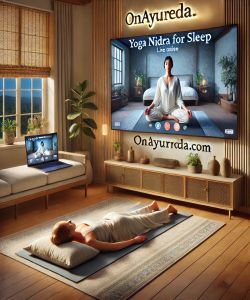
Overview of Yoga Nidra for Sleep
Yoga Nidra, frequently translated as ‘yogic sleep’, is a formidable and highly structured meditation technique designed to induce a state of profound consciousness that exists between wakefulness and sleep. It is not an act of slumber, but rather a systematic method of complete physical, mental, and emotional relaxation, executed whilst maintaining a subtle yet distinct thread of awareness. The practice is conducted in a supine position, typically Savasana (corpse pose), and involves a guided journey through the layers of the self, known as the pancha maya kosha. Its primary objective within the context of sleep remediation is to dismantle the deep-seated tensions, anxieties, and physiological hyper-arousal that constitute the principal barriers to restorative rest. By systematically disengaging the mind from the external environment and the incessant chatter of thought, the practitioner is guided into the hypnagogic state—a liminal threshold where the body can achieve the deep, cellular-level repair normally associated with sleep, yet the mind remains lucid. This process directly counteracts the effects of the sympathetic nervous system’s fight-or-flight response, which is chronically activated in individuals suffering from sleep disorders, and instead stimulates the parasympathetic nervous system, responsible for rest and digestion. It is a potent, non-physical discipline that accesses and reconditions the subconscious mind, dissolving the mental imprints (samskaras) that perpetuate patterns of poor sleep. Through the disciplined application of its techniques, including the formulation of a positive resolve or sankalpa, Yoga Nidra serves not merely as a temporary palliative but as a fundamental re-calibration of the individual’s entire sleep-wake mechanism, fostering a state of enduring tranquillity and effortless transition into natural, healthy sleep.
What is Yoga Nidra for Sleep?
Yoga Nidra for Sleep is a specific application of the ancient tantric practice of yogic sleep, tailored explicitly to address and rectify sleep-related disorders, including insomnia, fragmented sleep, and chronic stress-induced restlessness. It is a guided, non-somatic meditation that systematically induces a state of deep physiological rest and heightened psychic awareness, far surpassing the relaxation achieved through conventional means. The practitioner lies in a comfortable, supine position, remaining as still as possible, and follows a set of verbal instructions delivered by a qualified instructor. These instructions are not arbitrary; they follow a precise, immutable sequence designed to withdraw the senses (Pratyahara) and quieten the conscious mind.
The core of the practice involves a structured rotation of consciousness through the different parts of the body, a process known as nyasa. This meticulous body scan is followed by specific breath awareness exercises, the evocation of opposite sensations (such as heat and cold, or heaviness and lightness), and guided visualisations. A central and powerful component is the use of a sankalpa, a short, positive statement of resolve, which is mentally repeated at the beginning and end of the practice. This resolve is embedded deep within the subconscious mind when it is most receptive, acting as a command to reorganise the mental and emotional patterns that disrupt sleep.
Fundamentally, Yoga Nidra is not about forcing sleep. Instead, it creates the ideal conditions for sleep to arise naturally and effortlessly. It operates on the principle that the root of most sleep problems is not physical exhaustion but mental and emotional tension. By systematically de-exciting the nervous system and guiding the brain into alpha and theta wave states—characteristic of deep relaxation and the pre-sleep phase—it teaches the body and mind to let go. It is a powerful, passive, and accessible tool for anyone seeking to restore their natural sleep cycle without recourse to external aids or pharmaceutical interventions.
Who Needs Yoga Nidra for Sleep?
Individuals experiencing chronic or acute insomnia, including difficulties with sleep onset (initiating sleep), sleep maintenance (staying asleep), and early morning awakening.
Professionals in high-stress occupations, such as executives, emergency service workers, and military personnel, who exhibit hyper-arousal of the sympathetic nervous system, preventing mental and physiological shutdown at night.
Persons suffering from anxiety disorders, panic attacks, or generalised anxiety, where incessant worry and racing thoughts form a primary barrier to achieving a state of rest.
Those managing Post-Traumatic Stress Disorder (PTSD), as the practice provides a safe and controlled method for processing subconscious anxieties and reducing the hypervigilance that often disrupts sleep.
Individuals undergoing significant life transitions, emotional turmoil, or grief, where the resultant emotional dysregulation directly impacts the ability to achieve restorative sleep.
Sufferers of chronic pain or physical discomfort, for whom conventional sleeping positions are challenging and pain signals continually disrupt the sleep cycle. Yoga Nidra offers a means of transcending physical sensation.
Anyone reliant on or seeking to reduce their dependency on sleep medication, offering a non-pharmacological and sustainable alternative for sleep regulation.
Athletes and individuals engaged in intense physical training, who require optimal recovery and cellular repair, which is significantly enhanced by the deep rest state induced by the practice.
Students and academics facing intense periods of cognitive load and mental fatigue, whose overactive minds prevent them from disengaging from their work.
Individuals with irregular schedules or shift workers, whose circadian rhythms are frequently disrupted, necessitating a powerful tool to induce rest on demand.
Perimenopausal and menopausal women experiencing sleep disturbances due to hormonal fluctuations, hot flushes, and associated anxiety.
Any person seeking to proactively enhance their mental resilience, emotional balance, and overall quality of life by mastering the art of conscious relaxation and improving sleep efficiency.
Origins and Evolution of Yoga Nidra for Sleep
The conceptual underpinnings of Yoga Nidra are ancient, with its roots deeply embedded in the esoteric tantric traditions of India. The foundational technique, known as nyasa (meaning ‘to place’ or ‘to take the mind to that point’), involved the practice of consciously placing and feeling mantras in different parts of the body. This was a complex ritualistic practice designed for spiritual awakening and the purification of the subtle body, not explicitly for sleep. It was a rigorous discipline demanding intense concentration, aimed at transcending ordinary consciousness to unite with a higher reality. The state of ‘yogic sleep’ was understood as a profound level of samadhi, a state of meditative absorption far removed from ordinary slumber.
The modern formulation of Yoga Nidra, as it is widely practised today, was systemised and popularised in the mid-20th century by Swami Satyananda Saraswati of the Bihar School of Yoga. Whilst serving at the ashram of his guru, Swami Sivananda, he reportedly experienced a state of profound awareness and learning whilst seemingly asleep during early morning chants. This experience prompted him to research the ancient tantric scriptures, including the Yoga Sutras of Patanjali and various Tantras, to understand this liminal state of consciousness. He deconstructed the complex rituals of nyasa and other tantric practices, stripping them of their esoteric symbolism and re-structuring them into a clear, sequential, and accessible system.
Swami Satyananda’s great innovation was to translate these advanced spiritual techniques into a therapeutic modality that could be utilised by anyone, regardless of their background or belief system. He created a fixed, eight-stage structure that guided the practitioner systematically from the outer world to the deepest levels of the psyche. It was this secular, systematic approach that allowed Yoga Nidra to evolve from a niche spiritual practice into a globally recognised tool for deep relaxation and stress management. The specific application for sleep disorders is a natural and potent evolution of this work, leveraging the practice's profound ability to pacify the nervous system and re-programme the subconscious mind to overcome the anxieties and tensions that are the primary culprits behind modern sleep deprivation.
Types of Yoga Nidra for Sleep
Satyananda Yoga Nidra: This is the most traditional and structured form, developed by Swami Satyananda Saraswati. It follows a precise and non-negotiable eight-stage sequence: Internalisation, Sankalpa (resolve), Rotation of Consciousness, Breath Awareness, Manifestation of Opposites, Visualisation, Sankalpa (repetition), and Externalisation. Its rigid structure is designed to systematically guide the practitioner through the layers of consciousness (koshas) to achieve a state of pratyahara (sense withdrawal). For sleep, this methodical approach is highly effective at de-exciting the nervous system.
iRest (Integrative Restoration) Yoga Nidra: Developed by psychologist Dr. Richard Miller, iRest is a contemporary, secular adaptation designed for modern therapeutic settings, particularly for managing PTSD, anxiety, and insomnia. Whilst it shares foundational principles with the Satyananda method, it places greater emphasis on self-inquiry and welcoming all emotions and thoughts without judgment. It focuses on concepts like an ‘Inner Resource’ (a safe mental space) and working with dualities of emotion and belief, making it particularly potent for resolving the underlying psychological distress that inhibits sleep.
Amrit Method of Yoga Nidra: Created by Yogi Amrit Desai, this method places a strong emphasis on disengaging from the "ego-mind" and entering the "zero-stress zone." It is characterised by its focus on intent and the felt sense of energy in the body. The guidance often directs the practitioner to observe thoughts and sensations from a place of detached awareness, with the specific goal of transcending the mental chatter that prevents sleep. It is less about a strict rotation and more about surrendering to a deeper state of being.
Himalayan Tradition (Swami Rama): This approach, whilst a form of guided relaxation, often integrates deeper meditative and philosophical concepts from the Himalayan sages. The practice is used as a gateway to more advanced meditative states. For sleep, it works by guiding the practitioner to a point of such profound stillness and inner silence that the transition to sleep becomes a natural, seamless continuation of the meditative state. It is often more subtle and less prescriptive in its verbal cues than the Satyananda method.
Benefits of Yoga Nidra for Sleep
Systematic Nervous System Regulation: Directly activates the parasympathetic nervous system (the ‘rest and digest’ response), counteracting the chronic hyper-arousal of the sympathetic nervous system (‘fight or flight’) that is a primary cause of insomnia and sleep anxiety.
Reduction in Sleep Onset Latency: By systematically relaxing the body and mind, the practice significantly shortens the time required to fall asleep, training the brain to transition from wakefulness to sleep more efficiently.
Improved Sleep Quality and Continuity: Minimises nocturnal awakenings and periods of light, restless sleep by guiding the brain into sustained delta and theta wave states, which are associated with the deepest, most restorative phases of the sleep cycle.
Alleviation of Stress and Anxiety: Provides a structured method for processing and releasing deep-seated mental and emotional tensions that accumulate during the day, preventing them from surfacing as racing thoughts or anxiety at bedtime.
Subconscious Reprogramming: The use of a sankalpa (positive resolve) during the highly receptive state of Yoga Nidra allows for the powerful reprogramming of negative thought patterns and beliefs about sleep, replacing anxiety with a sense of security and trust.
Enhanced Emotional Regulation: Regular practice cultivates a state of detached awareness, allowing individuals to observe their emotions without being overwhelmed by them, a critical skill for managing the frustration and distress associated with sleeplessness.
Cognitive Restoration: Induces a state of rest that is reported to be as restorative as several hours of conventional sleep, helping to clear mental fog, improve concentration, and enhance memory consolidation, even if a full night’s sleep is not achieved.
Physiological Benefits: Contributes to the reduction of cortisol levels (the primary stress hormone), the lowering of blood pressure, and the stabilisation of heart rate, creating an internal environment conducive to healing and deep rest.
Transcendence of Physical Discomfort: Teaches the practitioner to dis-identify from physical sensations, offering a powerful tool for individuals whose sleep is disrupted by chronic pain or bodily discomfort.
Core Principles and Practices of Yoga Nidra for Sleep
Total Physical Stillness (Sthirata): The practitioner must commit to absolute stillness in a supine position (Savasana). Any physical movement disrupts the process of sensory withdrawal and keeps the mind tethered to bodily awareness, preventing the deeper stages of relaxation from being reached. The body must become an object of awareness, not an agent of action.
Systematic Withdrawal of the Senses (Pratyahara): The entire practice is an exercise in Pratyahara. By focusing intently on the internal landscape—the guide’s voice, bodily sensations, the breath—the connection to external stimuli (sounds, light, touch) is deliberately and progressively severed. This is the crucial first step to quietening the mind.
Rotation of Consciousness (Nyasa): The core practice involves a structured, sequential journey of awareness through every part of the body. This is not a muscular tensing and relaxing; it is a rapid, non-analytical movement of pure consciousness. This process serves to map the motor cortex in the brain, inducing profound physiological relaxation and unifying the mind-body connection.
The Role of the Sankalpa (Resolve): A short, positive, present-tense statement of intent is formulated by the practitioner and silently repeated at the beginning and end of the session. This is the most potent tool for transformation. Planted in the subconscious mind when it is most fertile and receptive, the Sankalpa acts as a powerful directive to reshape ingrained habits and beliefs, particularly those surrounding sleep anxiety.
Maintaining Lucid Awareness (The Witness State): The fundamental principle is to remain awake and aware throughout. The goal is not to fall asleep during the practice, but to hover on the threshold between wakefulness and sleep. This state of ‘yogic sleep’ allows for conscious access to the subconscious and unconscious realms, where deep healing and reprogramming can occur. Falling asleep signifies a loss of this crucial witness consciousness.
Breath as an Anchor (Pranayama): Simple, non-manipulative breath awareness is used as a tool to further deepen relaxation and focus the mind. The practitioner is guided to observe the natural, spontaneous flow of breath without attempting to control it, which calms the autonomic nervous system and pacifies mental fluctuations.
Cultivation of Opposites (Dvandva): The practice often involves the deliberate evocation of contrary physical or emotional sensations (e.g., heaviness/lightness, heat/cold, anxiety/calm). This practice trains the mind in emotional equanimity and demonstrates its power to create and dissolve internal states, thereby reducing the practitioner’s reactivity to negative states that disrupt sleep.
Online Yoga Nidra for Sleep
Unparalleled Accessibility and Consistency: The online format eradicates geographical and logistical barriers, permitting individuals to undertake the practice from any location with an internet connection. This consistency is paramount for sleep remediation, as it enables the practitioner to establish a rigid, daily routine at bedtime, reinforcing the association between the practice and the onset of sleep without the disruption of travel.
Creation of a Personalised Sanctuary: Practising online allows the individual to conduct the session within their own bedroom or a designated quiet space. This fosters a profound sense of security and comfort, which is essential for the complete surrender required by Yoga Nidra. The environment can be meticulously controlled—temperature, lighting, blankets—to create the optimal conditions for deep relaxation, free from the potential distractions or self-consciousness of a group studio setting.
Immediate Transition to Sleep: A critical advantage for sleep-specific practice is the ability to transition directly from the state of deep relaxation induced by Yoga Nidra into actual sleep. In a studio environment, the process of externalisation is followed by the need to travel home, an activity that re-engages the mind and nervous system. Online, the practitioner can simply remove their headphones and allow the state of profound rest to merge seamlessly into a night of restorative sleep.
Anonymity and Reduced Performance Anxiety: For individuals new to meditative practices or those feeling vulnerable due to sleep deprivation and anxiety, the anonymity of an online session is a significant benefit. It removes any perceived pressure to ‘perform’ relaxation correctly or any self-consciousness about sounds like snoring, allowing for a more authentic and uninhibited experience of letting go.
Access to a Wider Range of Specialist Instructors: The digital platform provides access to a global pool of highly qualified and experienced Yoga Nidra instructors who specialise in therapeutic applications for sleep. Practitioners are not limited to local availability and can select a guide whose voice, pacing, and methodology are best suited to their individual needs, which is a critical factor in the efficacy of the practice.
Yoga Nidra for Sleep Techniques
Preparation and Settling: Assume the Savasana (corpse pose), lying flat on your back with arms slightly away from the body, palms facing up, and feet falling open naturally. Ensure the body is maximally comfortable and warm, using blankets and props as necessary. Make a conscious commitment to remain absolutely still for the duration of the practice. Close your eyes and allow the body to settle, becoming aware of the sounds outside and gradually drawing your awareness inwards.
Formulation of the Sankalpa (Resolve): Mentally formulate a short, positive statement in the present tense that reflects your deepest need regarding sleep. Examples include, "I sleep peacefully and deeply," or "I welcome restorative rest." Repeat this resolve to yourself with complete conviction three times, planting it as a seed in your subconscious mind.
Systematic Rotation of Consciousness: Follow the verbal guidance as it directs your awareness to different parts of the body in a specific, non-negotiable sequence. Move your mind from point to point without physical movement. This journey typically begins with the right hand thumb, moves through all the fingers, palm, wrist, and up the arm, then repeats on the left side, followed by the back, front, and legs, and finally the head and face. Do not linger or analyse; simply move your awareness.
Breath Awareness: Bring your attention to the natural flow of your breath. Observe the breath moving in and out of the nostrils, the sensation of the air in the throat, and the rise and fall of the abdomen. You may be guided to mentally count the breaths backwards from a set number, such as 27, without error. If you lose count or your mind wanders, you must begin again. This focuses the mind and deepens relaxation.
Evocation of Opposites and Visualisations: The guide will instruct you to experience pairs of opposite sensations, such as intense cold throughout the body followed by intense heat, or a feeling of extreme heaviness followed by weightlessness. This balances the brain hemispheres and cultivates emotional mastery. This may be followed by a series of rapid, potent visualisations of specific images or a guided journey through a tranquil landscape, designed to access and purify the subconscious mind.
Repetition of Sankalpa and Externalisation: At the conclusion of the practice, repeat the same Sankalpa you formulated at the beginning three times, reinforcing the positive command. Then, gradually and slowly, begin to bring your awareness back to the external world. Become aware of your breath, your body lying on the floor, and the sounds in the room. Only when you are fully aware of your surroundings should you begin to gently move your fingers and toes, slowly reawakening the body before opening your eyes.
Yoga Nidra for Sleep for Adults
For the adult population, particularly those contending with the cumulative pressures of professional careers, financial obligations, and familial responsibilities, Yoga Nidra for sleep is not a mere relaxation technique but a strategic tool for neurological and psychological restoration. The adult mind is frequently ensnared in a state of chronic hyper-vigilance, driven by the relentless demands of modern life. This results in an overactive sympathetic nervous system and elevated cortisol levels, a physiological state directly antagonistic to the onset and maintenance of restorative sleep. Yoga Nidra provides a direct and systematic antidote. It is a non-pharmacological, skill-based intervention that empowers the individual to consciously down-regulate their own nervous system. The practice guides the adult brain from the high-frequency beta waves of active, anxious thought, through the calming alpha waves of relaxation, and into the theta waves characteristic of the pre-sleep state and deep meditation. This process is particularly crucial for adults, as it actively dismantles the patterns of rumination and anticipatory anxiety that so often plague the mind at night. By systematically disengaging from the analytical, problem-solving mind and entering a state of lucid, receptive awareness, the adult practitioner can access and process deep-seated stressors without being overwhelmed by them. It is an exercise in profound self-care, providing a sanctuary of stillness in which the body can initiate its natural healing processes and the mind can recalibrate, ultimately restoring the innate ability to sleep deeply and wake rejuvenated, better equipped to face the complexities of their lives.
Total Duration of Online Yoga Nidra for Sleep
The standard and required total duration for a complete and effective online Yoga Nidra for sleep session is precisely 1 hr. This specific timeframe is not arbitrary; it is a meticulously calculated duration necessary to guide the practitioner through all the requisite stages of the practice without haste, ensuring a systematic and profound descent into the state of yogic sleep. The 1 hr allocation provides sufficient time for the initial preparation and settling of the physical body, the crucial formulation and implantation of the Sankalpa, the detailed and unhurried rotation of consciousness through the entire body, and the subsequent phases of breath awareness, sensation-pairing, and visualisation. Rushing these stages would compromise the integrity of the practice, preventing the brain from transitioning through the necessary wave states (from beta to alpha and theta) required for deep relaxation and subconscious access. The final part of the hour is reserved for the gentle and gradual process of externalisation, which is critical for bringing the practitioner back to full waking consciousness without a jarring shock to the nervous system. For sleep-specific applications, this 1 hr structure allows the individual to achieve a state of profound rest from which they can seamlessly transition into natural sleep. A shorter duration would be insufficient to dismantle deep-seated tension, whilst a longer one is generally unnecessary and may not be sustainable for a consistent daily practice. Therefore, the 1 hr duration is the established benchmark for optimal efficacy.
Things to Consider with Yoga Nidra for Sleep
Before embarking on the practice of Yoga Nidra for sleep, several critical factors demand careful consideration to ensure both its efficacy and safety. Foremost is the practitioner's intention; one must understand that the primary goal is conscious relaxation, not the act of falling asleep during the session itself. The objective is to cultivate a state of profound rest that facilitates natural sleep afterwards. Falling asleep during the practice indicates a loss of the crucial witness-consciousness and, whilst restful, negates the deeper reprogramming benefits. The environment must be meticulously prepared: it must be a quiet, warm, and secure space where interruptions are impossible. The choice of instructor and recording is paramount. The guide’s voice, pacing, and script must resonate with the individual; a voice that is irritating or a pace that is too fast or slow will create agitation rather than tranquillity. It is also imperative to manage expectations. Yoga Nidra is a practice, not a panacea. Whilst benefits may be felt immediately, the profound, lasting changes to sleep architecture and anxiety levels are cumulative, requiring disciplined and consistent application over time. Individuals with a history of severe trauma or psychosis should proceed with caution and preferably under the guidance of a therapist trained in trauma-sensitive meditative techniques, as the deep subconscious access afforded by the practice can occasionally bring unresolved material to the surface. Finally, one must commit to absolute physical stillness, as any fidgeting or movement will anchor the mind to the body and prevent the essential withdrawal of the senses.
Effectiveness of Yoga Nidra for Sleep
The effectiveness of Yoga Nidra for sleep is substantial and multifaceted, grounded in its direct influence on the autonomic nervous system and brainwave activity. Its efficacy stems from its systematic, structured approach to inducing a state of deep relaxation that is physiologically antithetical to the state of hyper-arousal characterising most sleep disorders. By guiding the practitioner’s awareness through a specific sequence of body scanning, breath awareness, and visualisation, the practice facilitates a down-regulation of the sympathetic nervous system (the body's stress response) and a corresponding up-regulation of the parasympathetic nervous system (the 'rest and digest' response). This physiological shift is marked by a decrease in heart rate, blood pressure, and cortisol levels, creating the ideal internal conditions for sleep. Neurologically, the guided process encourages a transition in brainwave patterns from the alert, high-frequency beta waves to the slower, more relaxed alpha waves, and ultimately to the theta waves associated with the hypnagogic state—the threshold of sleep. This state is profoundly restorative and allows for the processing of emotional and mental stress without the interference of the conscious, analytical mind. The inclusion of the sankalpa, or resolve, further enhances its effectiveness by operating as a form of cognitive reprogramming, embedding positive affirmations about sleep directly into the highly receptive subconscious mind. Its power lies not in forcing sleep, but in methodically dismantling the physical, mental, and emotional barriers that prevent sleep from occurring naturally, making it a highly effective and sustainable long-term solution.
Preferred Cautions During Yoga Nidra for Sleep
It is imperative to approach the practice of Yoga Nidra with disciplined caution to maintain its integrity and safety. The primary caution is against an ambition to achieve a specific outcome; striving or effort is directly counterproductive to the state of surrender that is required. The practitioner must simply follow the instructions without analysis or expectation. A critical point of vigilance is managing the transition into the practice, especially for individuals with significant anxiety, as the initial stillness can sometimes amplify anxious thoughts before relaxation sets in. In such cases, a gentle focus on the physicality of the breath is advised. For those with a history of severe trauma or diagnosed psychiatric conditions such as psychosis or dissociative disorders, undertaking this practice without the explicit approval and potential supervision of a qualified mental health professional is strongly discouraged. The process delves into the subconscious, and without proper support, it could potentially surface deeply buried material in a manner that is destabilising. Furthermore, whilst the environment must be comfortable, it should not be so excessively comfortable that it invariably induces sleep. The aim is to remain consciously aware on the edge of sleep. If one consistently falls asleep within the first few minutes, the practice loses its transformative power and becomes a mere prelude to a nap. Therefore, maintaining a thread of alert awareness, a state of non-judgmental witnessing, is the most crucial and continuous act of caution required throughout the session. This ensures the practice remains a potent therapeutic tool rather than a simple sleep aid.
Yoga Nidra for Sleep Course Outline
Module 1: Foundational Principles and Preparation
Introduction to the theory and purpose of Yoga Nidra for sleep.
Understanding the distinction between Yoga Nidra and sleep/hypnosis.
Instruction on creating the optimal environment for practice.
Guidance on the correct physical posture (Savasana) and the importance of stillness.
Module 2: The Sankalpa – Crafting Your Resolve
The psychological power and function of the Sankalpa.
Principles for formulating a personal, effective, and positive resolve for sleep.
Practical workshop on creating and refining one’s Sankalpa.
Technique for implanting the Sankalpa at the correct stages of the practice.
Module 3: The Body Scan – Rotation of Consciousness
Detailed explanation of the nyasa technique and its neurological effects.
Guided practice focusing solely on the systematic body scan.
Troubleshooting common issues: losing focus, physical sensations.
Mastering the art of moving awareness without physical tension.
Module 4: Breath and Energy Awareness
Introduction to non-manipulative breath awareness (Pranayama).
Techniques for using the breath as an anchor for the mind.
Guided practice incorporating breath counting to deepen concentration.
Exploring the subtle energy body (Pranamaya Kosha) during the practice.
Module 5: Managing the Mind – Sensations and Visualisations
The principle of pairing opposites (e.g., heat/cold, heaviness/lightness) to balance the brain.
Techniques for observing thoughts and emotions without engagement (the Witness state).
Introduction to the visualisation stage (Chidakasha) and its role in subconscious processing.
Guided practice integrating all stages learned thus far.
Module 6: Integration and Consistent Practice
Guidance on seamlessly integrating the full Yoga Nidra sequence.
Strategies for establishing a consistent, daily practice for long-term results.
Addressing common challenges: falling asleep too early, mental resistance.
Full-length (1 hr) guided Yoga Nidra for sleep session and final Q&A.
Detailed Objectives with Timeline of Yoga Nidra for Sleep
Week 1: Establishment of Foundational Discipline
Objective: To establish a consistent daily practice schedule and master the physical stillness of Savasana. The practitioner will learn to remain motionless for a minimum of 30 minutes.
Timeline: By day 7, the practitioner will have successfully completed a guided session each evening and will be able to identify and create a personal Sankalpa for sleep.
Week 2: Deepening Bodily Awareness and Relaxation
Objective: To master the rotation of consciousness (body scan) without losing focus or falling asleep. The goal is to move awareness swiftly and precisely through all indicated body parts.
Timeline: By day 14, the practitioner will be able to complete the full body scan sequence whilst maintaining a state of relaxed awareness, noting a discernible reduction in physical tension before sleep.
Week 3: Mastery of Breath and Mindful Observation
Objective: To integrate breath awareness techniques, such as reverse counting, to further stabilise the mind and deepen the relaxation response. The practitioner will learn to observe thoughts without engagement.
Timeline: By day 21, the practitioner will report a noticeable decrease in sleep onset latency (the time taken to fall asleep) and a reduction in the intensity of racing thoughts at bedtime.
Week 4: Integration of Sensation and Visualisation
Objective: To comfortably navigate the stages of paired opposite sensations and guided visualisations, developing greater emotional equanimity and subconscious access.
Timeline: By day 28, the practitioner will experience longer periods of uninterrupted sleep and report feeling more rested upon waking, demonstrating an improved sleep architecture.
Weeks 5-6: Consolidation and Autonomy
Objective: To consolidate all stages into a seamless, integrated practice. The practitioner will begin to internalise the process, relying less on the guide and more on their own trained awareness.
Timeline: By the end of week 6, the practitioner will have established Yoga Nidra as a robust, autonomous tool for sleep management, reporting a significant and stable improvement in overall sleep quality and a reduction in sleep-related anxiety.
Requirements for Taking Online Yoga Nidra for Sleep
A Secure, Isolated, and Uninterrupted Environment: The primary requirement is a dedicated space where the practitioner will not be disturbed for the full duration of the session. This space must be private, quiet, and free from potential intrusions from family members, pets, or external noise.
A Stable High-Speed Internet Connection: Uninterrupted audio streaming is non-negotiable. Any buffering, lagging, or disconnection of the audio guide will immediately shatter the state of deep relaxation and render the practice ineffective. A reliable connection is paramount.
High-Quality Audio Equipment: A pair of comfortable, high-fidelity headphones or earbuds is mandatory. This serves two purposes: it delivers the guide's voice directly and clearly to the practitioner, and it helps to block out any residual ambient noise, further facilitating the process of sensory withdrawal (Pratyahara).
A Comfortable, Flat Surface: The practitioner requires a surface upon which to lie for an extended period without discomfort. A yoga mat on a carpeted floor is standard, but a firm mattress is also acceptable, provided it does not encourage immediate sleep.
Appropriate Physical Supports: Essential props must be available. This includes a thin cushion or folded blanket for under the head (to keep the neck in a neutral position) and a bolster or rolled blanket under the knees (to release tension in the lower back). At least one warm blanket is required to cover the body, as body temperature naturally drops during deep relaxation.
Commitment to Stillness and Non-Interference: The practitioner must possess the discipline and intent to remain physically still throughout the guided instruction. They must also commit to not pausing, stopping, or otherwise interfering with the audio stream once the session has commenced.
Sufficient Time Allocation: The individual must allocate a protected block of time, typically one hour, where they can fully engage with the practice and the transition period afterwards without pressure or rush.
Things to Keep in Mind Before Starting Online Yoga Nidra for Sleep
Before commencing an online Yoga Nidra regimen for sleep, it is critical to adopt a mindset of disciplined patience and realistic expectation. This is not a passive activity but an active training of consciousness that demands consistency. The digital environment, whilst convenient, requires stringent personal management to eliminate all potential technological and domestic distractions; notifications on all devices must be silenced, and the physical space must be secured against any form of interruption. You must understand that the objective is not to force sleep during the practice itself, but to cultivate a state of profound neurological rest from which sleep can naturally arise. Falling asleep prematurely is a common but ultimately unproductive outcome that bypasses the deeper, reprogramming stages of the practice. Therefore, a firm intention to remain awake and aware is paramount. The selection of a guided recording is a crucial decision; it is advisable to sample several instructors to find a voice, pace, and script that promotes relaxation rather than irritation. Be prepared for the possibility that the mind will initially resist the stillness, potentially amplifying anxious thoughts. This is a normal phase of the process, and the correct response is not to fight these thoughts, but to acknowledge them and persistently return your focus to the guide’s voice. The most profound benefits of Yoga Nidra are cumulative, built upon the foundation of regular, unwavering practice. It is a long-term strategy for nervous system regulation, not an instantaneous cure for a single night of poor sleep.
Qualifications Required to Perform Yoga Nidra for Sleep
The performance and guidance of Yoga Nidra, particularly in a therapeutic context for sleep disorders, demand rigorous and specific qualifications far exceeding those of a standard yoga instructor. The practitioner leading the session must possess a robust understanding of both the yogic philosophical framework and contemporary neurophysiology. The foundational requirement is a comprehensive certification in Yoga Nidra from a reputable, established lineage, such as the Satyananda tradition (Bihar School of Yoga) or a similarly structured and in-depth programme like iRest (Integrative Restoration). Key qualifications include:
Advanced Formal Certification: A minimum of 100 hours of dedicated Yoga Nidra training is considered the baseline. This training must cover the eight-stage system in detail, the science behind brainwave entrainment, the function of the autonomic nervous system, and the psychology of the subconscious mind.
Specialised Therapeutic Application Training: For addressing specific issues like sleep, the instructor must have undertaken further training in the therapeutic application of Yoga Nidra. This includes understanding the mechanisms of insomnia, anxiety, and PTSD, and how to subtly adapt the script and pacing to be trauma-sensitive and maximally effective for these conditions.
Extensive Personal Practice: A qualified guide must have a deep and sustained personal practice of Yoga Nidra. This experiential knowledge is non-negotiable, as it provides the authentic understanding necessary to hold space for others and guide them through potentially challenging internal states.
Understanding of Scope of Practice: The instructor must demonstrate a clear understanding of the boundaries of their qualification. They must recognise that they are a facilitator of a relaxation technique, not a medical doctor or a psychotherapist, and must be prepared to refer clients to appropriate healthcare professionals when necessary.
Merely reading from a script is insufficient and potentially irresponsible. A truly qualified guide embodies the practice and possesses the nuanced skill to deliver it with precise language, tone, and rhythm, creating a safe and powerful container for the practitioner’s journey inwards.
Online Vs Offline/Onsite Yoga Nidra for Sleep
Online
The primary advantage of engaging in Yoga Nidra for sleep online is the unparalleled control it affords the practitioner over their environment and the subsequent transition to sleep. The session can be undertaken in the absolute privacy and comfort of one’s own bedroom, a sanctuary meticulously prepared for optimal relaxation. This eliminates the performance anxiety and potential distractions inherent in a group setting. Most critically, upon conclusion of the practice, the state of profound neurological calm can be preserved. There is no disruptive requirement to rouse oneself, gather belongings, and travel home—an activity that inevitably re-engages the sympathetic nervous system. The practitioner can simply remove their headphones and allow the deep restfulness to merge seamlessly into natural, restorative sleep, thereby maximising the therapeutic benefit for insomnia. Furthermore, the online format provides access to a global roster of specialist instructors, allowing the individual to select a guide whose voice and method are perfectly suited to their needs, rather than being limited by geographical proximity. Consistency, which is key to reprogramming sleep patterns, is also more easily maintained without the logistical hurdles of attending a physical class.
Offline/Onsite
An offline, or onsite, Yoga Nidra session offers a different set of advantages, primarily centred on the energy of a shared space and the direct presence of a qualified instructor. Being physically present in a dedicated studio environment, guided by an experienced teacher in real-time, can create a powerful, palpable atmosphere of collective stillness and intention that may be difficult to replicate alone. The instructor can observe the group and subtly modulate their tone and pacing in response to the perceived energy in the room. For novices, the structured, in-person setting enforces a level of discipline, removing the temptations and distractions of the home environment. Any immediate questions or concerns can be addressed directly with the teacher before or after the session. The physical act of travelling to a specific location for the practice can also serve as a powerful ritual, creating a clear psychological demarcation between daily life and the period of deep rest. However, for the specific purpose of sleep, the aforementioned necessity of post-session travel remains a significant and undeniable drawback, potentially undoing some of the deep relaxation achieved.
FAQs About Online Yoga Nidra for Sleep
Question 1. Is this just a form of sleep or hypnosis?
Answer: No. It is a state of conscious, lucid awareness on the threshold of sleep. Unlike sleep, you remain aware. Unlike hypnosis, you are in complete control and the guidance is a structured map, not a series of suggestions for behavioural change.
Question 2. What if I fall asleep during the online session?
Answer: Whilst you will still gain some physical rest, you will have missed the most potent, conscious stages of the practice. The goal is to remain awake. If you consistently fall asleep, try a slightly less comfortable position.
Question 3. Do I need any prior experience in yoga or meditation?
Answer: Absolutely not. Yoga Nidra is a guided practice that requires no prior experience. The only requirement is the ability to lie still and follow verbal instructions.
Question 4. Must I practise this in bed?
Answer: It is recommended to practise on a yoga mat on the floor to create a slight distinction between the practice space and the sleeping space. However, if your intention is to transition immediately to sleep, practising in bed is permissible.
Question 5. What technology is required?
Answer: A reliable internet connection, a device for streaming audio (phone, tablet, computer), and a comfortable pair of headphones are all that is necessary.
Question 6. How can it be effective if the instructor isn’t physically present?
Answer: The practice is entirely auditory. The instructor’s physical presence is irrelevant; the power lies in the precision of the verbal instructions and your ability to follow them.
Question 7. Is Yoga Nidra a religious practice?
Answer: No. While its origins are in ancient yogic philosophy, the modern practice as taught for sleep is entirely secular and psychological. It requires no specific beliefs.
Question 8. Can I move if I become uncomfortable?
Answer: You must make every effort to remain completely still. However, if discomfort becomes a significant distraction, you should make a slow, minimal, and conscious adjustment before returning to stillness.
Question 9. Will I see immediate results for my insomnia?
Answer: Some individuals report immediate benefits. However, for chronic conditions, the effects are cumulative. Consistency is more important than immediate perfection.
Question 10. How often should I practise?
Answer: For significant results in combating sleep issues, daily practice, preferably just before bedtime, is the required standard.
Question 11. Can this practice bring up difficult emotions?
Answer: It is possible, as you are accessing the subconscious. The instruction is to observe these emotions as a detached witness, without engagement. If it becomes overwhelming, consult a professional.
Question 12. Is it safe for pregnant women?
Answer: Yes, with modifications. After the first trimester, it is recommended to lie on the left side, supported by cushions, rather than flat on the back.
Question 13. What is a Sankalpa?
Answer: It is a short, positive, present-tense statement of your resolve. It is a powerful tool for reprogramming the subconscious mind.
Question 14. Can I listen to my own music instead of a guide?
Answer: No. Music does not provide the specific, structured neurological guidance that is the foundation of the Yoga Nidra technique.
Question 15. What is the difference between this and a body scan meditation?
Answer: A simple body scan is just one component of Yoga Nidra. Yoga Nidra is a more complex, multi-stage practice that includes the Sankalpa, breath awareness, pairing of opposites, and visualisation.
Question 16. Can my children do this practice?
Answer: Yes, there are specific Yoga Nidra scripts and guides designed for children, which are typically shorter and use more accessible language.
Question 17. How should I feel after a session?
Answer: You should feel profoundly calm, clear-headed, and deeply rested, as if you have had a long, restorative sleep.
Conclusion About Yoga Nidra for Sleep
In conclusion, Yoga Nidra for sleep stands as a uniquely potent, systematic, and non-pharmacological modality for addressing the pervasive issue of sleep deprivation. It is not a passive relaxation exercise but a rigorous and disciplined training of consciousness that directly targets the root causes of insomnia: a dysregulated nervous system and a hyperactive mind. By systematically guiding the practitioner through the layers of being, from the physical body to the deep subconscious, it engineers a state of profound physiological rest that is more restorative than fragmented, anxious sleep. Its efficacy is rooted in its ability to de-activate the chronic stress response and facilitate the brainwave states conducive to natural, effortless sleep. The structured use of the sankalpa elevates it beyond a mere palliative, transforming it into a strategic tool for reprogramming the deeply ingrained negative beliefs and anxieties that perpetuate the cycle of sleeplessness. The practice demands consistency, stillness, and a clear intention to remain aware, but its rewards are substantial and enduring. It restores not only the ability to sleep but also an individual's fundamental sense of inner peace and resilience. For those seeking a sustainable, self-empowering solution to sleep disorders, Yoga Nidra offers a formidable and time-tested path to reclaiming the vital function of rest.